
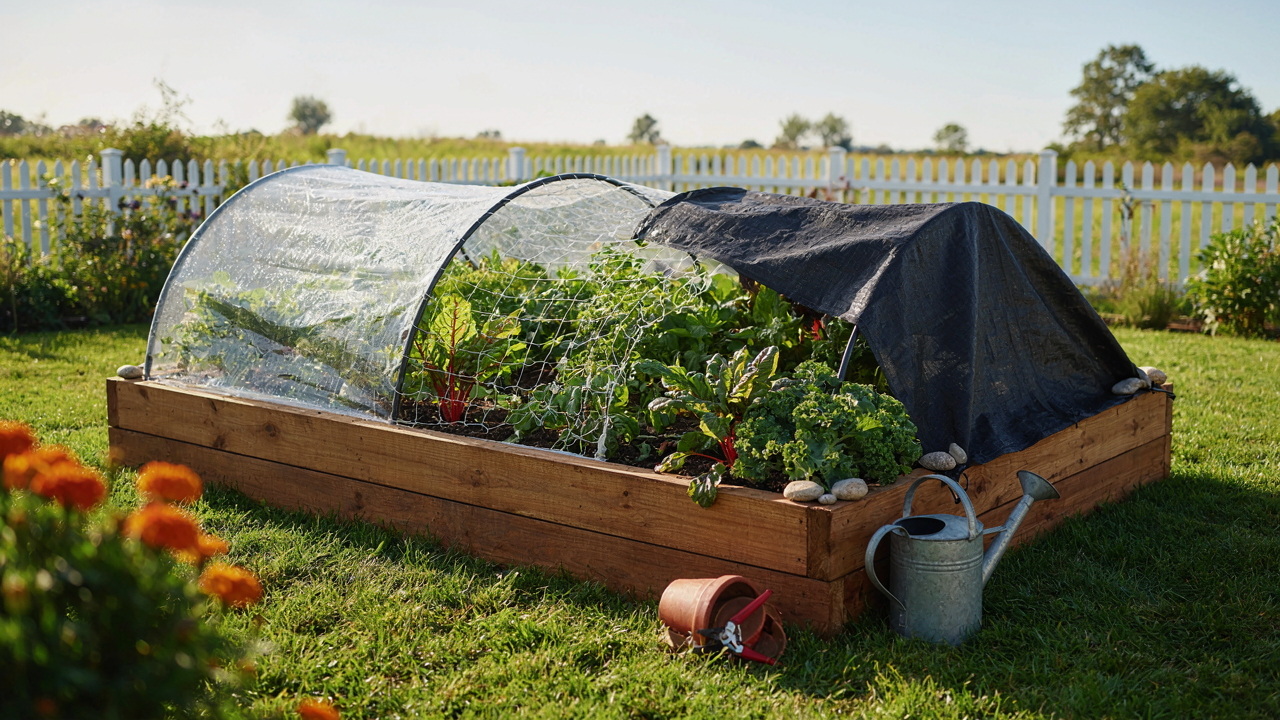
The Illusion Of Open Air Gardening: Why Your Raised Beds Are Underperforming

Exposed Beds: A Historical Accident, Not Optimal Design
You want to believe your open raised bed works because you built it right. It doesn’t. The mechanism is simple: most gardeners copied a design born from necessity, not optimization. Medieval monastery gardens and Victorian kitchen gardens used open beds because covers were labor-intensive to construct and maintain. The design stuck. Nobody questioned whether it was actually the best way to grow food.
An exposed raised bed is an uncontrolled system. Rain washes nutrients straight through the soil. Sun bakes the top layer. Wind carries moisture away. Cold nights crash temperatures. You’re fighting physics instead of working with it. The bed that looks “natural” is actually the one requiring the most intervention to keep producing.
Temperature Swings, Nutrient Loss, And Pest Entry
Thermodynamics governs what happens in your soil. Open beds experience wild temperature flux because air moves freely through and around them, creating swings that stressed plants can’t stabilize against. A covered bed locks thermal mass. Soil beneath a cover maintains steadier temperatures, allowing roots to work efficiently instead of surviving shock cycles between day and night.
Uncovered soil hemorrhages nutrients. Rain leaches nitrogen, potassium, and other soluble minerals downward faster than plant roots absorb them. Without a barrier, you’re replacing nutrients constantly or watching yields drop. Pests find open beds immediately because they encounter zero friction. Beetles, moths, and larvae land directly on exposed plants. A cover doesn’t guarantee pest exclusion, but it forces insects to navigate an extra layer instead of treating your bed like a restaurant.
The Microclimate Mandate: How Covered Raised Garden Beds Supercharge Growth
Heat And Humidity Control
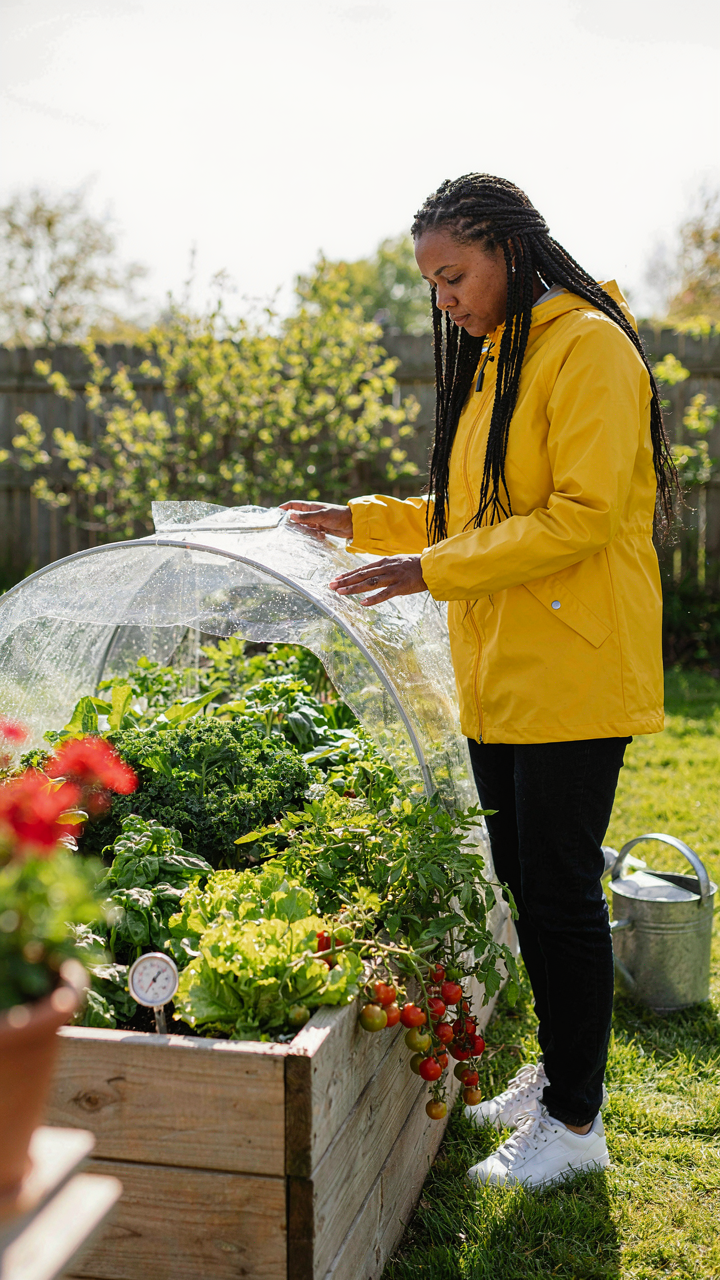
You want to believe your plants just need sun and water. That’s denial. A covered raised bed is a thermal battery. Borrowing from thermodynamics, a cover creates a closed system where infrared radiation enters but doesn’t escape—the greenhouse effect operating at bed scale. Fabric, plastic, or glass traps warmth while the soil mass below absorbs and holds it. This isn’t magic. It’s physics: contained air temperature rises, humidity stabilizes, and transpiration loss from foliage drops by 30 to 50 percent depending on cover material.
The mechanism is straightforward. Heat enters during the day. The bed’s soil acts as thermal mass, absorbing that energy. At night, the cover prevents rapid heat loss to the sky. Plants metabolize faster in stable, warm conditions. Humidity stays elevated, reducing plant stress from drying. This controlled environment accelerates photosynthesis and nutrient uptake. You’re not adding fertility or magic nutrients. You’re removing the variable that kills most beginner gardens: environmental chaos.
Growing Earlier And Later In The Season
Every season has a hard stop defined by frost dates. A cover removes that ceiling and floor. Spring frost can annihilate seedlings in a single night. Fall frost ends harvest weeks before it should. A raised bed cover, especially one with polycarbonate or heavyweight fabric, buffers soil temperature swings by 5 to 15 degrees Fahrenheit. This extends your viable growing window by 3 to 6 weeks on each end of the season.
Here’s what that means operationally: plant cool-season crops like lettuce and peas 2 to 3 weeks earlier in spring than unprotected beds. In fall, harvest tomatoes and peppers until hard frost arrives instead of stopping at first frost. You don’t harvest more from the same plant. You harvest the same plants for longer, and you start with a larger total crop from those earlier plantings. The cover pays for itself through extended productivity, not yield magic.
The Bio Dome Blueprint: Engineering Optimal Garden Bed Cover Ideas
What Nature Already Solved
You want a cover that works without fiddling. Here’s the mechanism: nature doesn’t optimize for one variable. It stacks systems. Biology teaches us that organisms don’t survive by doing one thing well, they survive by creating redundancy across layers. Your raised bed cover operates the same way. A single sheet of plastic fails because it’s a single point of failure. A layered system with air gaps, reflective surfaces, and ventilation pathways mirrors how ecosystems actually maintain stability. The structure itself becomes the insulation.
Most growers treat covers as barriers. Wrong frame. A cover is a microclimate regulator. It manages moisture, temperature, and gas exchange simultaneously, the way a forest canopy does for the understory. You’re not blocking the environment, you’re editing it. The geometry matters more than the material. An arched or peaked cover creates convection zones that a flat sheet cannot. Air rises at the peak, cools, descends at the edges, and moves soil moisture where it needs to go without human intervention.
Trapping Heat Without Trapping Problems
Thermodynamics has a clear rule: temperature differentials drive energy transfer. Your cover must exploit that. South-facing surfaces absorb solar radiation during the day. North-facing surfaces face the cold sky at night and radiate heat away fast. Most beginners use uniform covers and wonder why frost still kills plants. You need asymmetry. A clear cover on the south side lets solar radiation penetrate. A reflective or opaque surface on the north blocks radiative loss. This isn’t advanced, it’s just paying attention to which direction the sun is actually coming from.
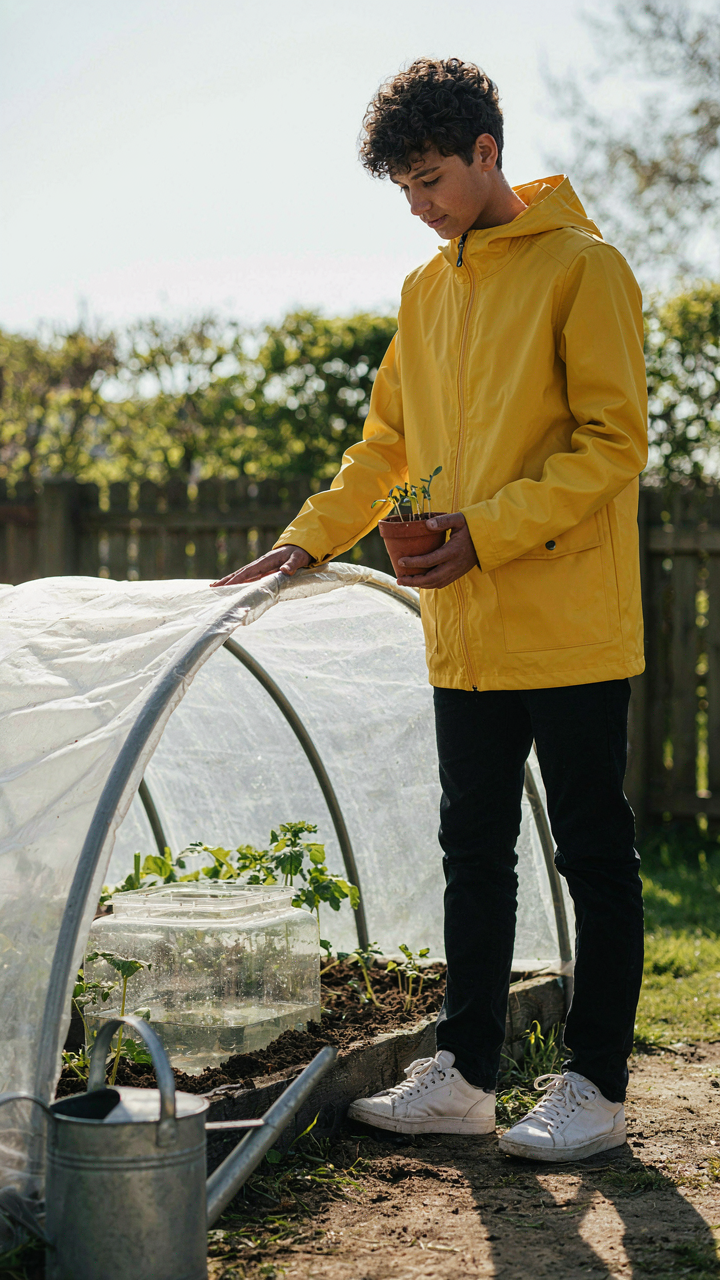
The passive solar gain stacks when you add thermal mass below the cover. Soil itself holds heat, but water holds more. A dark container inside the bed—filled with water—absorbs radiation all day and releases it at night. The cover slows that release by blocking convection to the open air. Combine peak geometry for air circulation with selective transparency for radiation management, and you create a system that self-regulates. Measure soil temperature at dawn and dusk for two weeks with any cover configuration to see the actual differential. That number tells you whether your design is working or just looking the part.
The “Cover Up” Protocol: Essential Raised Garden Bed Covers Every Beginner Needs
Hoop Houses: Lightweight Frames For Any Material
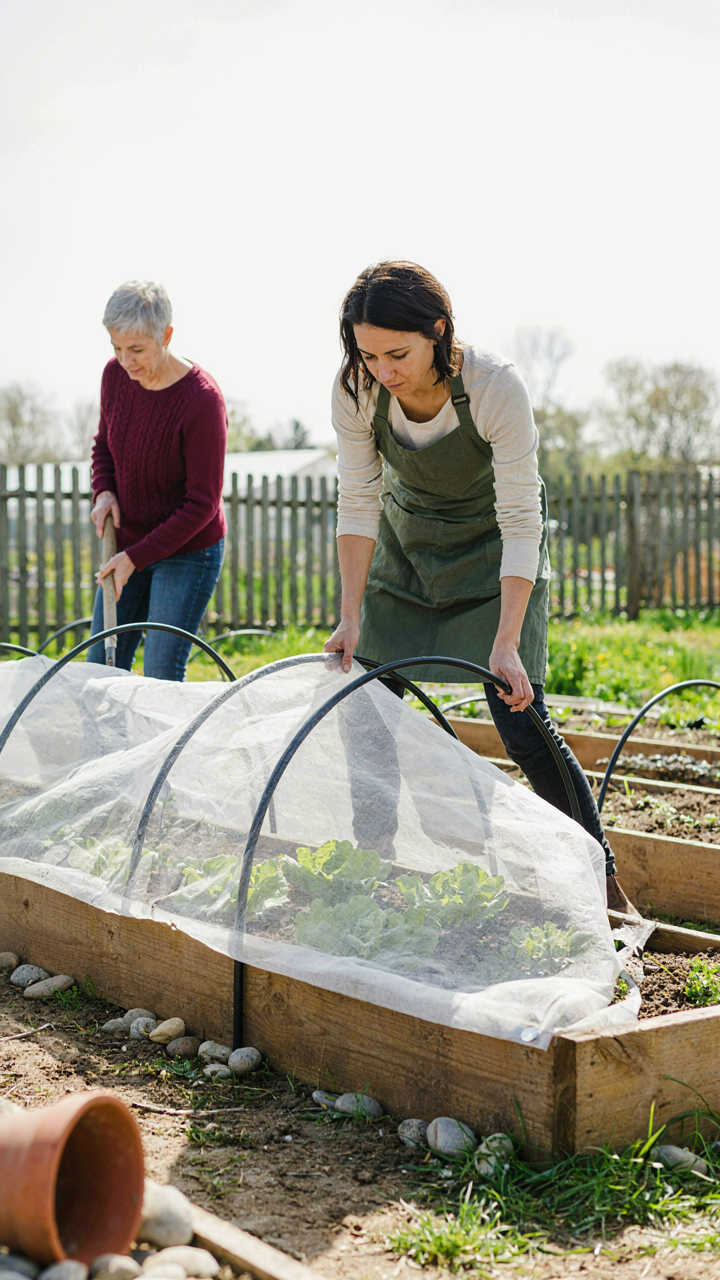
You want a cover system that doesn’t require carpentry skills or a second mortgage. Hoop houses solve this by using the engineering principle of load distribution: bend a material into an arc and it holds weight across a wide span instead of collapsing at a point. A hoop house is a half-circle frame, typically PVC pipe or metal rebar, anchored into your raised bed. The frame itself is not the cover. It’s the skeleton that lets you attach fabric, plastic, or netting without sagging.
- PVC Pipe Hoops: Affordable and easy to cut. Use half-inch diameter for most home beds. Anchors into the soil or bed frame without tools.
- Metal Rebar Hoops: More durable than PVC. Resists UV degradation over multiple seasons. Costs more but lasts longer in full sun.
- Fiberglass Rods: Lightweight and flexible. Won’t crack in cold like PVC. Harder to source and more expensive than pipe options.
- Fabric Row Cover Material: Spun polypropylene stretched over hoops. Allows light and water through. Typical weight is 0.55 to 1.5 ounces per square yard.
- Clear Plastic Sheeting: Creates a greenhouse effect for heat retention. Requires venting on warm days to prevent overheating. Traps moisture inside the bed.
Build hoops by bending your chosen material into a U-shape and driving the ends into the soil on opposite sides of your bed. Space multiple hoops every two to three feet along the length. Lay your cover material over the frame and secure it with clips, clamps, or soil weight at the edges. This setup takes fifteen minutes to assemble and requires no permanent installation.
Row Covers: Barriers That Regulate What Enters
Row covers work as a physical filter. They block flying insects from landing on plants while still allowing water and most light to penetrate. Common fabric weights are 0.55 ounces per square yard for lightweight versions and 1.5 ounces for heavier density. The heavier the fabric, the more frost protection it offers, but also the more it reduces light transmission. Most beginners choose 1-ounce fabric as a middle ground for spring and fall crops.
Lay row cover directly over plants or drape it loosely over soil before seeding. Secure edges with soil, rocks, or garden staples so insects cannot slip underneath. Remove or vent the cover once plants flower if your crop requires pollinator access. Early-season vegetable protection from cabbage moths, flea beetles, and squash bugs works for six to eight weeks before the cover becomes unnecessary or counterproductive.
DIY Garden Bed Cover: Building Your Own Environmental Edge

The Math Behind Material Choice
You want to build a cover that doesn’t feel cheap because cheap covers fail and waste your time. The real mechanism is spectral selectivity: you’re filtering light wavelengths to control what reaches your plants, and different materials do this at different costs. Polycarbonate transmits 88% of light while blocking UV. Row covers transmit 95% but offer no frost protection. PVC film transmits 92% but degrades in two seasons. Your material choice determines how many replacement cycles you absorb before the cover pays for itself.
Cost per year matters more than upfront price. A polycarbonate sheet costs three times what plastic film costs, but lasts five years instead of two. That’s 40 cents per year versus 75 cents per year. The durability difference tracks with thickness and UV stabilizer content. Thicker materials hold their light transmission longer. Thinner materials yellow and become opaque faster. Select based on your climate’s UV intensity and your tolerance for replacement labor, not on sticker price alone.
Simple Tools For Rigid Construction
Skip the advice about needing a power drill and circular saw. You don’t. The real requirement is tension and anchoring points that won’t degrade. Polycarbonate and rigid plastic covers need rigid frames because wind creates lateral forces, not just downward weight. Use a handsaw, a measuring tape, and a level. Those three tools let you cut lumber, verify dimensions, and ensure your frame sits flat so water doesn’t pool and collapse your cover.
Aluminum angle iron beats wood for frame construction even though wood seems cheaper. Aluminum doesn’t rot, doesn’t need sealing, and bolts together without hardware failure from wood expansion. Use corner brackets and lag bolts to create the frame perimeter. Attach the panel material with compression strips rather than fasteners through the sheet itself. Fasteners create stress points where material cracks. Compression strips distribute tension evenly across the edge and extend material life by three to four years. Bolt the entire assembly to your raised bed frame at four corners to anchor against wind lift.
Beyond Protection: Advanced Strategies For Covered Raised Garden Beds

When Air Stops Moving, Your Plants Die
You want to look like you have everything dialed in, but most people suffocate their gardens under covers without realizing it. The mechanism here is basic thermodynamics: trapped air heats faster than it cools, and stagnant moisture breeds fungal disease. Your cover is a greenhouse, not a sealed box. Without deliberate ventilation, you’re trading frost protection for mold and heat stress.
Lift one side of your cover on warm days. This isn’t optional maintenance—it’s the difference between thriving plants and a petri dish. Early morning venting prevents condensation from settling on leaves, which is where fungal spores germinate. Prop your cover open with a stick or hinge it so air flows underneath. The goal is airflow, not perfect sealing. Many beginners run cloth covers tight to the frame and wonder why powdery mildew appears by mid-season.
Controlling Sun Before It Becomes The Problem
Shade cloth solves what frost cloth cannot: the 95-degree day in late spring that scorches lettuce and bolts spinach. This is materials science applied to garden beds. Your cover material now has two jobs instead of one. Frost cloth is designed for insulation and traps heat. Shade cloth is designed for opacity and reduces light penetration by 30 to 70 percent depending on weave density.
The move is simple: layer shade cloth over your existing frame on days when temperatures spike. Don’t wait until heat damage appears. Check the forecast. When daytime highs hit 85 degrees and your soil is shallow, deploy the cloth in the morning and remove it by late afternoon so plants access direct light when it’s cooler. Your soil temperature matters more than air temperature in shallow raised beds, so monitor that first.
Common Mistakes & The Unspoken Truth About Garden Bed Covers
Ventilation And Material Are Not Interchangeable
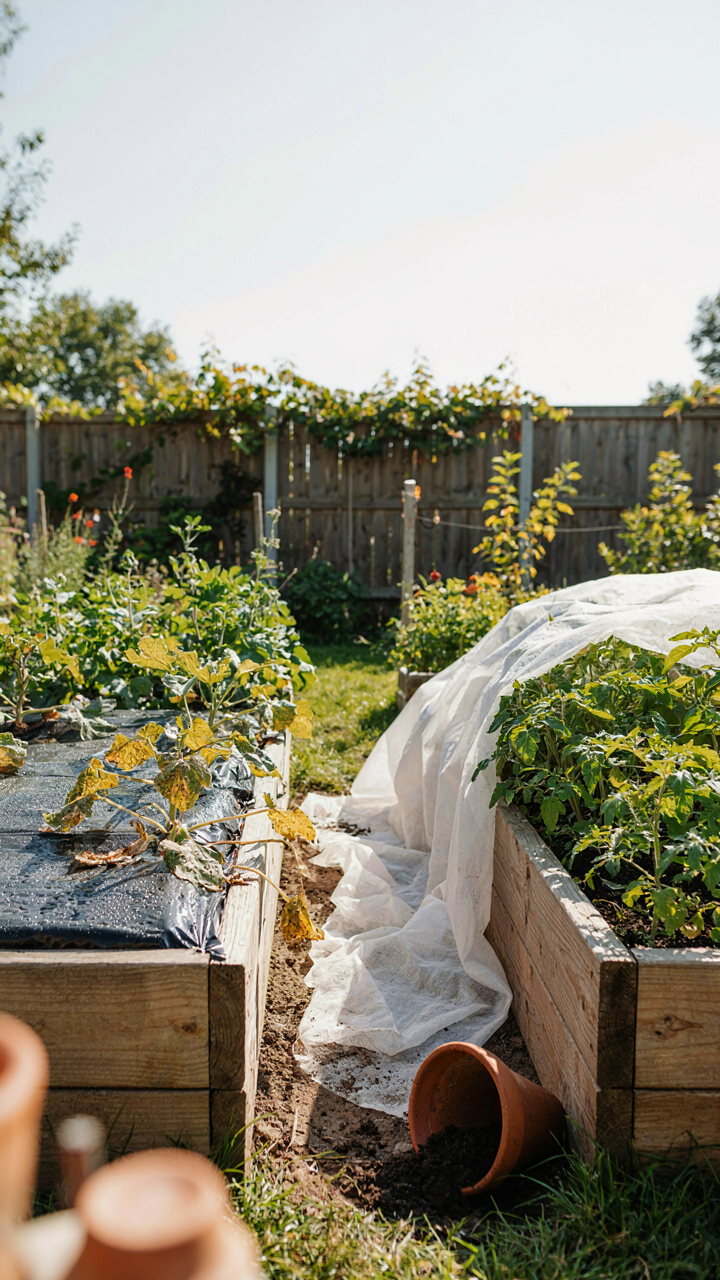
You care about this section because you’re afraid of wasting money on the wrong cover. Here’s the mechanism: thermodynamics treats your raised bed like a closed system. Temperature, humidity, and gas exchange form a feedback loop. Pick the wrong material and you’ve created a microclimate that either bakes seedlings or rots them. Fabric row covers breathe. Plastic sheeting doesn’t. This distinction matters more than brand or price.
Beginners stack mistakes here by confusing “protection” with “insulation” and buying thick plastic for everything. Rigid polycarbonate panels trap heat and condensation on the underside. Lightweight spun fabric allows airflow while blocking pests and frost. The goal isn’t total coverage—it’s controlled exchange. Your bed needs to shed moisture on warm days and retain heat on cold nights. Material choice determines which one happens. Test your cover’s weight and permeability before committing to a full season.
The Uncovered Bed Silently Costs You
Most advice pretends covers are optional upgrades. They’re not. An uncovered raised bed surrenders 30 to 40 percent of its potential yield across a growing season due to pest damage, weather stress, and shortened growing windows. Insects establish colonies unchallenged. Unexpected frost kills established plants. Rain pounds tender seedlings into the soil. You’re paying for soil, seeds, and water while competing with every environmental factor simultaneously.
A cover doesn’t fix poor soil or bad timing, but it removes friction. Early spring planting becomes viable because soil warms faster under fabric. Late-season crops extend because frost arrives later under protection. Pest pressure drops measurably when barriers block insects at the entry point. The math is simple: covered beds produce more per square foot than uncovered ones. Start covering by mid-spring and maintain coverage through fall to capture the yield difference that makes the investment worthwhile.
The Unfair Advantage: How Raised Beds With Covers Outperform
Yield Maximization Through Environmental Control
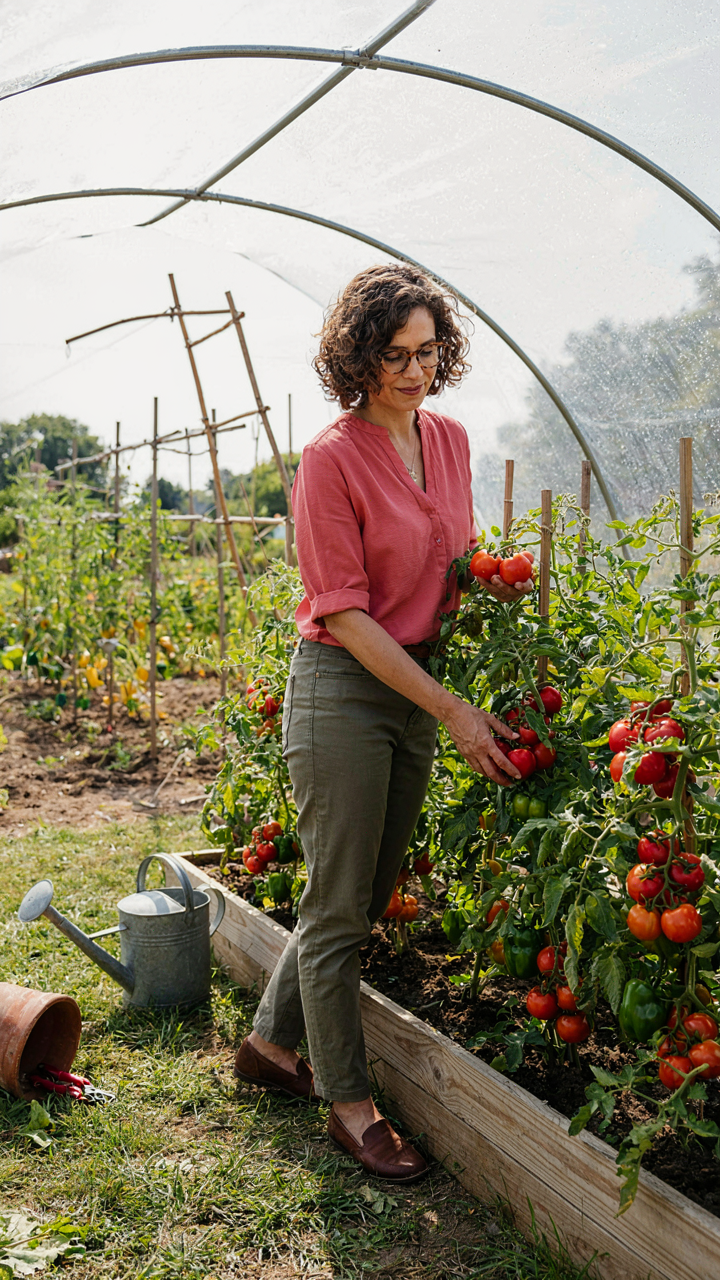
You want proof that your effort matters. Here it is: covered raised beds produce more because they eliminate the variables that kill plants. Think of thermodynamics—the study of energy transfer. A cover functions as a thermal regulator, trapping heat during cold snaps and moderating temperature swings that stress plants. The mechanism is direct. Stable temperature equals predictable growth. Predictable growth equals harvestable volume.
Covers extend your growing season by 2 to 4 weeks on either end depending on your climate and cover type. Row covers trap heat without blocking light. Shade cloth prevents heat stress in summer. Cold frames retain warmth in spring and fall. Each serves a specific function, and stacking them strategically—using row covers early season, then removing them as temperatures stabilize—produces the abundance beginners expect but rarely achieve without this knowledge. The difference between a sparse harvest and a full one comes down to protecting plants when they’re vulnerable.
Efficiency Gains That Compound Over Time
The common advice says covers “reduce water loss.” That’s incomplete. Covered beds fundamentally alter the water cycle by preventing direct evaporation while allowing soil moisture to move upward through capillary action. Plants absorb what they need; the rest stays in the soil. You water less frequently and use less volume per watering event.
Pest pressure drops because covers act as a physical barrier. Insects that devastate uncovered beds cannot reach seedlings protected by row covers or mesh. This eliminates the need for repeated pesticide applications, reducing cost and toxicity exposure. When you combine thermal stability with pest prevention and water conservation, your plants grow faster with fewer inputs. The protocol: install covers immediately after planting or transplanting, remove them once plants establish and weather stabilizes, then reapply during vulnerable growth phases. This cycle repeats across seasons and compounds yield improvements year after year.
The True Limitation Isn’t Your Green Thumb; It’s Your Failure To Engineer Environmental Advantage

Most gardeners treat raised bed covers like optional accessories. They’re not. Covers are the system that turns your raised bed from a gambling operation into a controlled environment. You don’t need better seeds or more patience. You need to stop fighting nature and start designing with it. Today, measure your bed and order one cover. That single decision separates hobbyists from people who actually harvest food. Your plants don’t care about your effort, only about the conditions you engineer.



