
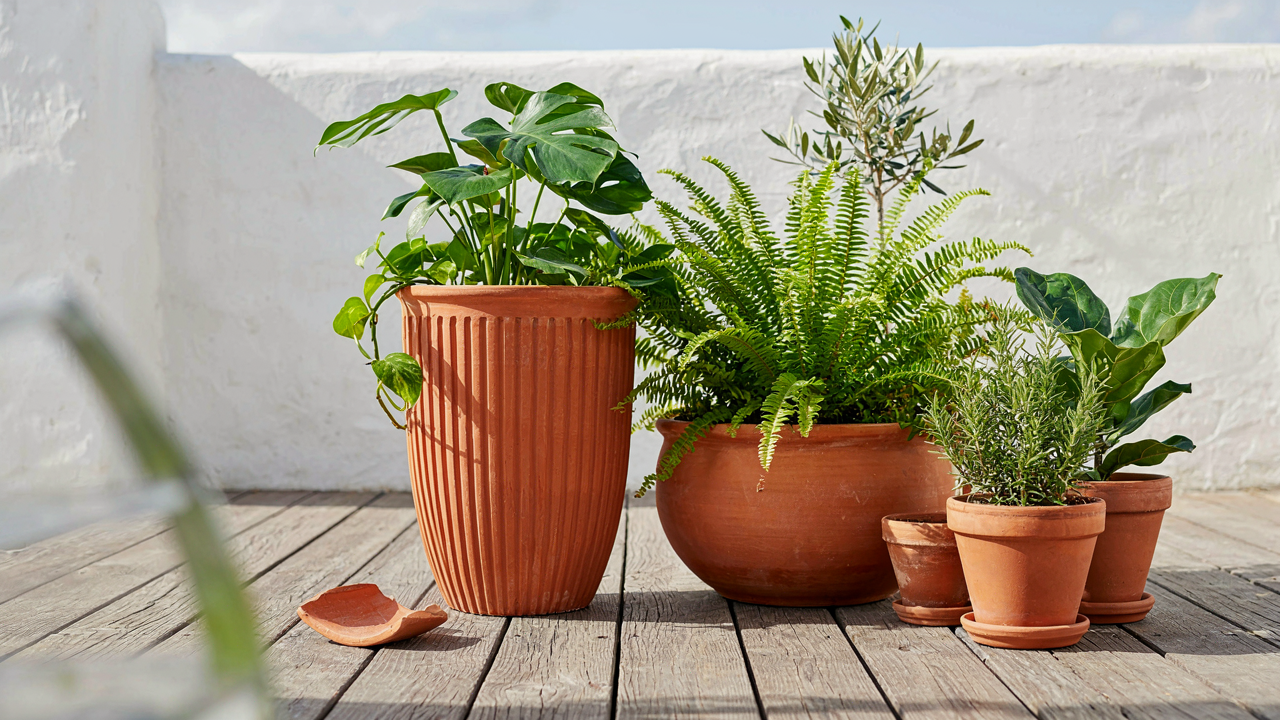
The Myth Of Terracotta Pots As Mere Decoration

Porous Material Science Unlocks Root Health
You want terracotta to look good in your space. That’s fine. But here’s what actually matters: terracotta works through physics, not aesthetics. The material functions as a semi-permeable membrane, the same principle that governs osmosis in biology. Water moves through terracotta walls, which means oxygen reaches the root zone consistently. Clay particles are fired at temperatures between 1,000 and 1,200 degrees Celsius, creating a structure porous enough to breathe yet dense enough to hold soil.
Most people think terracotta pots are fragile decoration. They’re not. The porosity is structural purpose. Roots need oxygen as much as water. Plastic pots trap moisture and create anaerobic zones where roots suffocate. Terracotta prevents this. The porous walls allow gas exchange between soil and air, which keeps roots active and healthy. This is why terracotta planters outperform glazed or sealed pots in long-term plant survival rates. Check soil moisture by weight, not guesswork, since terracotta’s breathability means faster evaporation than other materials.
Evaporative Cooling Regulates Plant Temperature
Terracotta doesn’t just hold plants. It regulates their microclimate through evaporative cooling, the same thermodynamic principle cooling towers use. Water inside the soil moves through the porous walls and evaporates on the exterior. This phase change pulls thermal energy from the pot and soil, lowering internal temperature naturally. The effect matters most in heat-stressed environments or during peak sun hours when soil temperature rises faster than plant tolerance allows.
Rustic terracotta planters work hardest in direct sunlight or hot climates. As moisture evaporates, the pot surface stays cooler than ambient air. Plastic pots absorb and retain heat, cooking roots. Terracotta dissipates it. This cooling effect extends plant dormancy periods and reduces stress on shallow-rooted plants. You can measure this by comparing soil temperatures inside terracotta versus plastic pots in identical conditions. The terracotta will read 5 to 10 degrees Fahrenheit lower, which directly extends growing seasons and reduces watering frequency. Choose unglazed terracotta over sealed versions to maximize evaporative surface area.
The Ancient Engineering Of Rustic Plant Pots

Why Terracotta Outlasts Trends
You want rustic terracotta planters because they signal permanence—the opposite of disposable. Here’s what actually matters: terracotta survives through porosity, not despite it. The material breathes. Water evaporates through the clay walls, which prevents root rot and mineral salt buildup that kills plants in sealed containers. Romans figured this out two thousand years ago and never improved the formula because there was nothing to improve.
Terracotta’s longevity isn’t romantic storytelling. The fired clay structure remains stable across temperature swings because it has no synthetic binders to degrade. Pieces excavated from Pompeii still hold soil. That’s not durability marketing—that’s physics. The porous structure also means the planter moderates soil moisture naturally, which is why gardeners still choose terracotta over plastic for serious plant work, regardless of aesthetic preference.
Handmade Versus Everything Else
The industry won’t tell you this plainly: mass-produced terracotta and handmade terracotta are different materials wearing the same name. Industrial kilns fire fast at high temperatures to maximize output. This creates brittle, non-porous clay that chips easily and doesn’t breathe properly. Rustic handmade pieces fire slower in smaller batches, which allows water to escape gradually during the process, creating denser, more resilient walls that actually function as intended.
Handmade planters show tool marks and irregular thickness. This isn’t imperfection—it’s the evidence of intentional construction. The craftsperson leaves clay thicker where stress concentrates at the base and rim, thinner where it matters less. Mass production eliminates this. When you buy rustic terracotta, you’re paying for engineering embedded in form, not for a story. Check the planter’s weight relative to its size. Heavier means denser clay, which means it will outlast cheaper alternatives by decades.
The Mediterranean Garden Design Protocol
How Terracotta Traps Water Where It Counts
You want your garden to look effortless and alive without checking soil moisture every morning. The real mechanism here is physics: terracotta functions as a semi-permeable membrane. Water moves through the porous clay walls via capillary action, which means moisture distributes evenly through the soil profile instead of pooling at the bottom where roots rot.
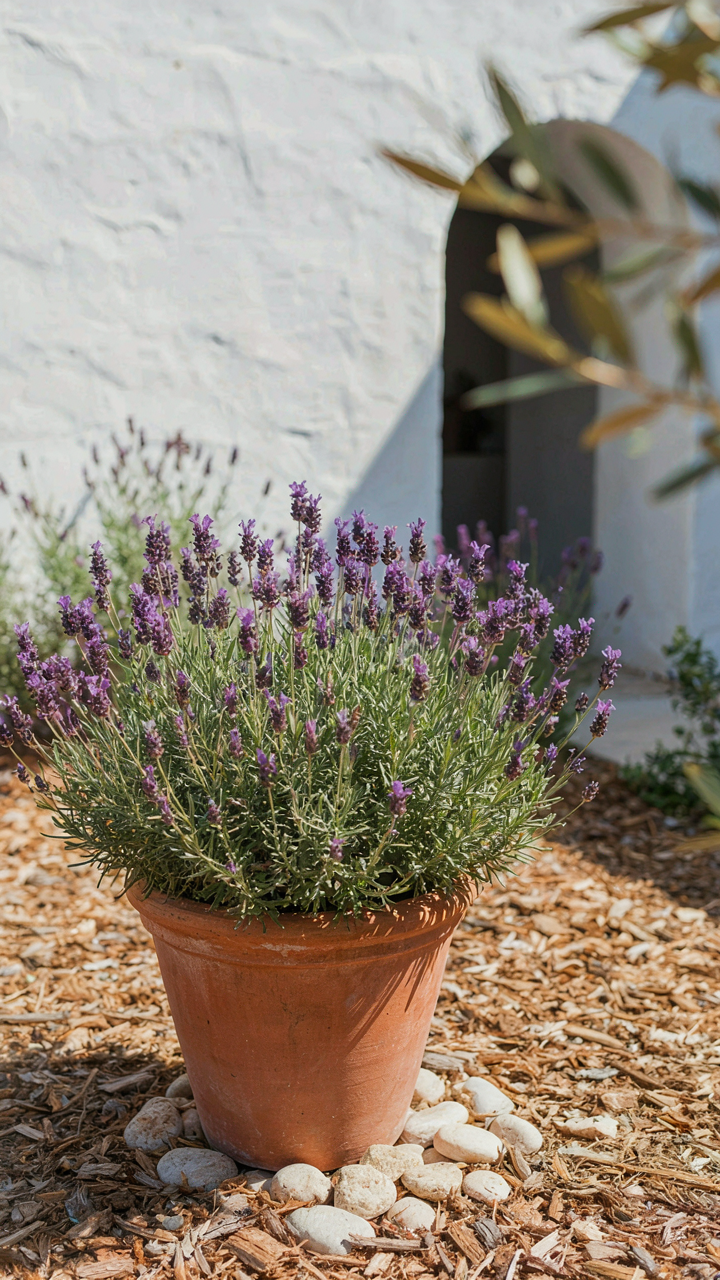
Mediterranean climates demand drainage, but they also demand water retention during dry spells. Terracotta solves both problems simultaneously. The material breathes, preventing waterlogging, while its porous structure keeps soil from drying into a brick. Bury the pot slightly deeper into mulch, and you’ve created a microclimate that mimics hillside growing conditions where these plants originated.
Plant Species That Thrive In Terracotta
Terracotta isn’t neutral. Its alkalinity and porosity create conditions that favor specific plant families. Succulents and Mediterranean herbs exploit this relationship because they evolved in similar soil chemistry and drainage patterns. You don’t pair random plants with terracotta and hope for harmony.
Lavender, rosemary, and santolina establish symbiosis with terracotta because all three tolerate high pH and prefer fast drainage that the material naturally provides. Sedum and sempervivum root systems shrink the substrate during dry periods without dying back completely, a survival trait that works with terracotta’s water-shedding behavior rather than against it. Match the plant’s need for drainage to the pot’s ability to deliver it, and you stop fighting against your own setup.
Beyond Terra Cotta Pot: The Unseen Benefits For Plant Health

Porous Walls That Actually Work
You want to believe your plants thrive because you care about them. The real reason is physics. Terracotta functions as a semi-permeable membrane, allowing gas exchange through its walls—something plastic and glazed ceramics simply cannot do. This porosity lets oxygen reach the root zone continuously, not just when you water.
Waterlogging kills roots faster than drought. Terracotta’s capillary structure wicks excess moisture outward through the pot walls, evaporating it before anaerobic conditions develop. This passive drainage mechanism operates independent of drainage holes. A terracotta pot with compromised drainage still outperforms a plastic pot with perfect holes because the material itself removes standing water before it damages root tissue.
How Terracotta Changes Soil Chemistry
Terracotta is calcium carbonate with trace minerals. As water moves through the porous walls, it picks up these compounds and deposits them into the soil, subtly raising pH and introducing bioavailable calcium. This isn’t decoration. It’s a slow nutrient delivery system built into the container itself.
Soil biology responds to this mineral presence. Beneficial microbes colonize terracotta environments at higher densities than they do in inert plastics. The mineral exchange creates conditions where nutrient uptake improves without additional fertilizer. Terracotta doesn’t just hold soil. It participates in it.
Large Terracotta Pots: The Gravity Principle In Design

Weight Distribution Determines Stability
You want large terracotta pots because they signal permanence and investment in your space. But here’s what matters: physics governs whether your planter stays upright or becomes debris. Think of mass distribution like load-bearing walls in architecture. A terracotta pot’s stability depends entirely on its center of gravity relative to its base footprint and the root mass you place inside it.
Large terracotta pots are heavy when dry, heavier when wet. The wider the base relative to height, the lower the center of gravity sits. A pot standing eight inches tall on a six-inch base is stable. One standing sixteen inches on the same base inverts under wind or root pressure. Soil weight adds 40 to 50 pounds per cubic foot. Calculate backward: if your pot holds 20 gallons of soil, you’re managing roughly 150 pounds moving through space, and the clay itself adds another 30 to 40 pounds depending on wall thickness.
Visual Anchoring Through Scale
Scale shapes how rooms breathe or compress around objects. A single large terracotta pot creates a spatial anchor that small pots cannot. The mechanism is straightforward: our eyes register mass first, then fill in spatial relationships around it. A 24-inch terracotta planter occupies roughly four times the visual real estate of a 12-inch one, but it requires only twice the floor space. This disproportionate visual weight means one large pot does the work of four small ones without clutter.
Position matters more than decoration. Place a large terracotta pot in a room corner and it grounds that zone. Place it center-left in an entryway and it narrows the perceived hallway width, directing foot traffic. Place it against a blank wall and it stops your eye from drifting. The pot itself doesn’t need ornamentation because its scale performs the design work already. Your job is placement: identify where your eye needs to land, then put the pot there.
Terracotta Planter Longevity: An Investment, Not An Expense
Protecting Against Cracks And Weather Damage
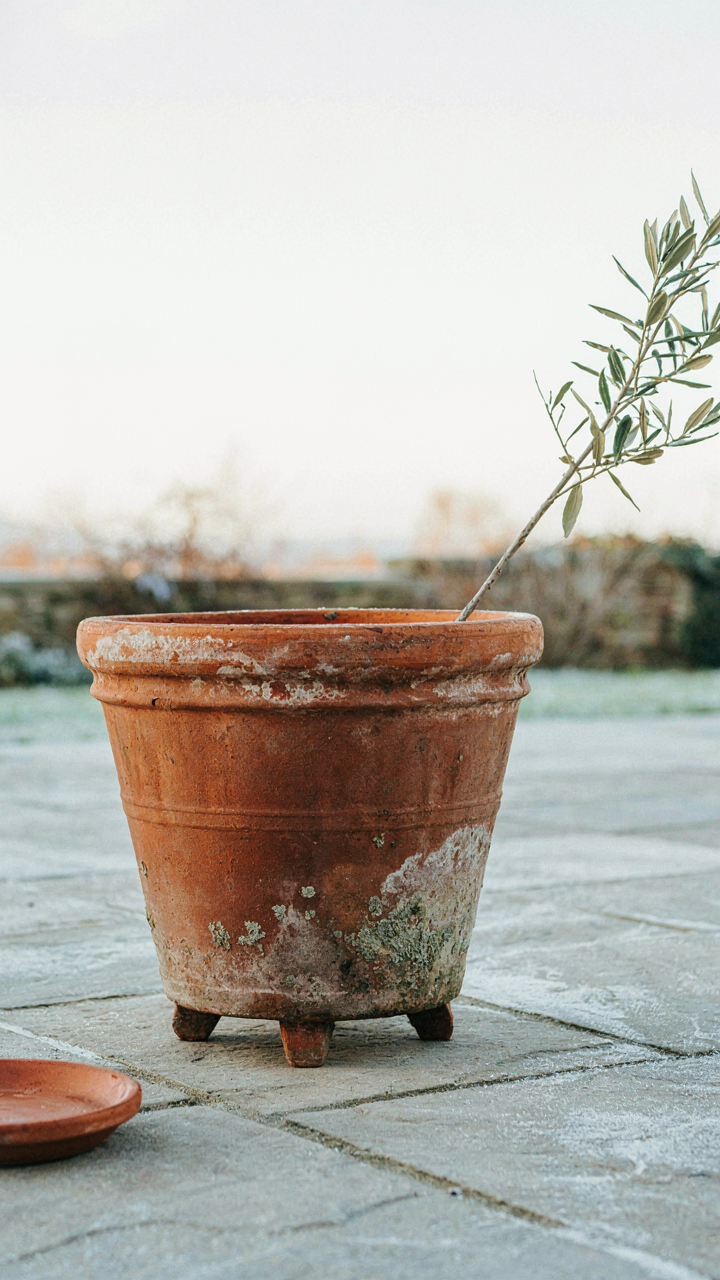
You want terracotta to last because replacing it feels like failure. Here’s the actual mechanism: terracotta is porous ceramic fired at low temperatures. Water enters the clay body, freezes in cold climates, expands, and splits the walls from inside. This isn’t a surface problem you can paint away. The damage starts where you can’t see it.
- Winter drainage holes: Empty pots completely before frost arrives. Standing water in the base guarantees cracks when temperatures drop below freezing.
- Pot elevation: Place planters on feet or risers to prevent water pooling beneath them. Direct ground contact wicks moisture upward into the clay constantly.
- Sealant application: Apply a breathable terracotta sealer annually. This reduces water absorption without trapping moisture that causes internal pressure damage.
- Shelter placement: Position planters against walls or under eaves in freeze-thaw zones. Exposed pots cycle through wet and frozen states more aggressively.
- Crack inspection: Check the pot weekly for hairline fractures, especially at the base and rim. Early detection lets you move the pot before structural failure spreads.
The common advice says “just bring them inside.” That works if you have space and remember to do it. Most people don’t. The real protocol: inspect weekly, drain before the first hard freeze, elevate off ground, and seal every twelve months. This takes an hour per season, not a weekend project.
The Authentic Character Of Aging
Patina isn’t just what happens when terracotta gets old. In metallurgy and material science, patina represents the surface layer that forms through oxidation and weathering, and it actually protects the underlying material. Terracotta develops the same principle: mineral deposits, algae, and weathering create a protective coating that slows further degradation while marking time visually.
This is why expensive planters look cheap when new and cheap planters look expensive at ten years old. The aging process signals authenticity because it cannot be faked without looking forced. A terracotta planter that’s been outdoors for three seasons shows salt deposits, lichen, and color variation that no factory finish can replicate. The aesthetic doesn’t come from Instagram filters or styling. It comes from real exposure. The planter becomes a visible record of seasons passed, which is exactly why designers prize aged terracotta. You’re buying into the future state of the object, not its current one. Every crack and stain is proof it survived.
The Spanish Garden Aesthetic: Beyond Superficial Styling
Where You Place The Pot Matters More Than The Pot
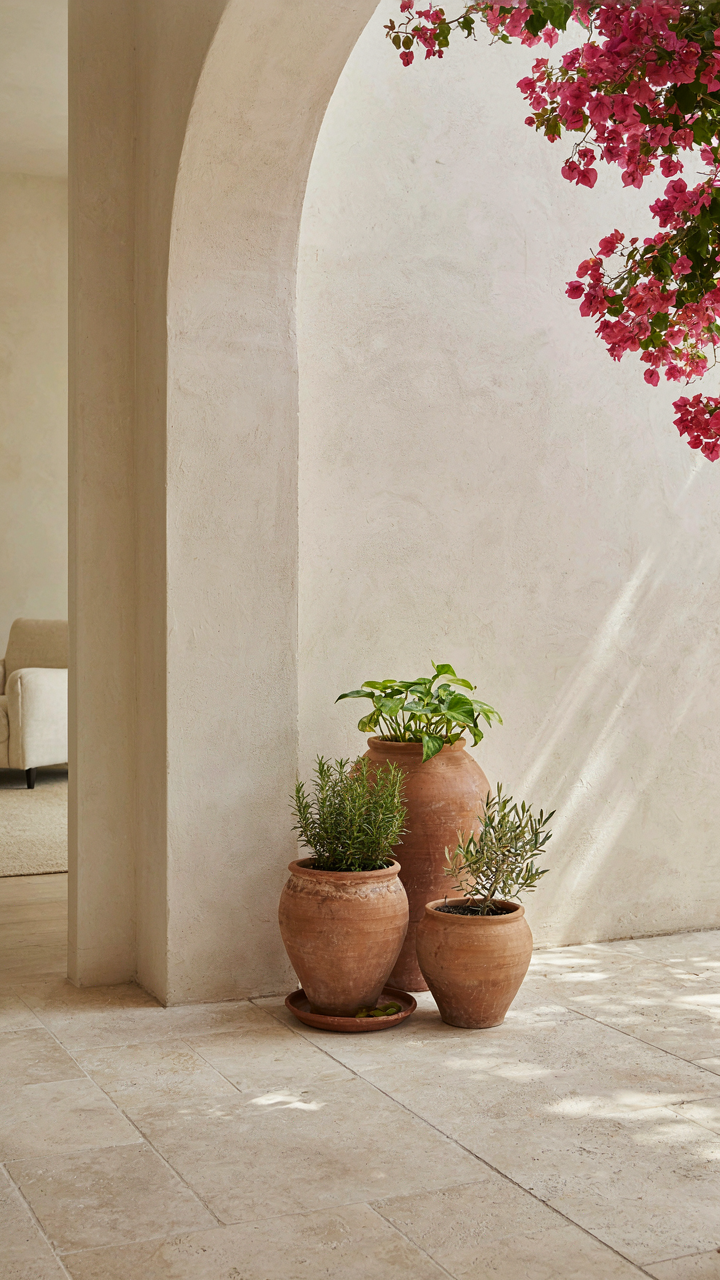
You want the aesthetic without the work. That’s the real reason you’re reading this. Here’s what matters: terracotta placement functions like real estate economics. Location determines value. A terracotta planter sitting alone on concrete reads as decoration. The same pot clustered with two others at a corner threshold, with sight lines into both rooms, becomes architectural. Spanish garden design treats terracotta groupings as spatial anchors that redirect movement and sight lines. You’re not just styling. You’re designing traffic patterns.
Effective placement requires one rule: cluster terracotta pots at transition points where two spaces meet. Doorways, corner thresholds, and the junction where a patio meets a home’s exterior wall are optimal. The pots create a visual buffer that signals a shift from one zone to another. Spanish estates use this technique to blur the distinction between interior living and outdoor space. Plant something alive in at least one pot in each cluster. Dead arrangements collapse the whole mechanism. The grouping works because movement toward it feels intentional, not random.
Walls Become Continuity
Spanish architecture doesn’t separate indoors from outside with hard stops. Terracotta planters on pedestals or ground level align with the existing material palette of walls and stone. When a terracotta planter’s color matches the mortar or adobe finish of your home’s exterior, they stop reading as pots and start reading as built-in architectural features. This is the mechanism: material continuity erases the visual boundary. Your eye no longer sees a distinct object against a backdrop. It sees an extension of the building itself.
Position terracotta at the base of exterior walls or along windowsills where they echo the vertical rhythm of the structure. Use groupings of matching heights to create a baseline that your eye can follow. This technique works in modern homes too, not just period Spanish properties. The pots become visual anchors that tie ground-level plantings to the upper mass of the building. Repeat the same terracotta style and plant height at least twice along the same wall face. Repetition completes the architectural illusion.
Terracotta Planters As A Micro Ecosystem: A Biological Imperative

Where Microbial Life Actually Happens
You want terracotta because it feels authentic, but what you’re really after is the invisible work happening inside the pot. In biology, we call this the rhizosphere: the zone where soil organisms and plant roots exchange nutrients and compounds. Terracotta’s porous structure creates exactly this environment. The material breathes. Oxygen moves through the clay walls, fueling aerobic bacteria and fungi that break down organic matter into usable nitrogen, phosphorus, and potassium. Without this microbial activity, your soil is just inert substrate.
The mechanism is straightforward. Terracotta’s fired clay contains microscopic air channels. Water and gases move through these channels constantly. This creates oxygen-rich conditions that favor beneficial microbes over anaerobic pathogens. Glazed ceramic or plastic pots trap moisture and oxygen, suffocating the microbial network. Your plant doesn’t just sit in soil with terracotta. It sits in a living system that actively feeds it.
How Stress Rewires Plant Growth
This contradicts what most plant guides tell you: they claim terracotta dries too fast and stresses plants. That’s half true and dangerously incomplete. In plant physiology, stress hormones like abscisic acid trigger adaptive responses. Terracotta’s air permeability creates mild, controlled water stress that signals the plant to develop stronger root systems. The plant builds resilience instead of sprawling softly in waterlogged soil.
The growth pattern shifts. Roots in terracotta grow denser and deeper because the plant must work harder to find moisture. This creates a robust root-to-shoot ratio. Above ground, leaves harden and develop thicker waxy coatings. The plant matures faster. You observe this as stockier, more vigorous growth compared to identical plants in plastic. The stress isn’t damage. It’s biological programming that makes the plant capable.
Your Pursuit Of ‘stylish’ Isn’t The Problem; It’s Your Blind Faith In Superficiality. Master The Fundamentals, And Style Follows

Most people buy rustic terracotta planters and wonder why their space still feels hollow. The planter isn’t the problem. You are. Stop chasing aesthetic trends and start understanding proportion, material quality, and intentional placement. Pick one room today. Move three planters. Notice what actually changes. Style isn’t something you buy. It’s what remains when you strip away everything that doesn’t belong.



