

The Mediterranean Fallacy: Unpacking Rosemary’s True Habitat Needs
Sunlight Intensity: Replicating Its Native Brilliance
You want to believe rosemary is forgiving because it grows in the Mediterranean, so you place it in partial shade and wait for the miracle. Here’s the mechanism: rosemary evolved under relentless UV exposure on rocky hillsides. Apply the physics principle of energy threshold—the plant requires a minimum photosynthetic input to trigger normal growth. Below that threshold, it survives but doesn’t thrive.
Rosemary demands six to eight hours of direct sunlight daily. This isn’t preference. This is baseline function. Indoor windowsills typically deliver two to four hours of usable light. South-facing outdoor placement or full-spectrum grow lights become non-negotiable for genuine health. Anything less produces weak stems, sparse foliage, and eventual decline.
Soil Drainage: Why Wet Feet Are A Death Sentence
Conventional advice tells you rosemary tolerates poor soil and irregular watering. That’s incomplete and dangerous. Rosemary kills itself in wet conditions faster than most plants because it adapted to drought, not resilience to moisture. The soil must drain in seconds, not minutes.
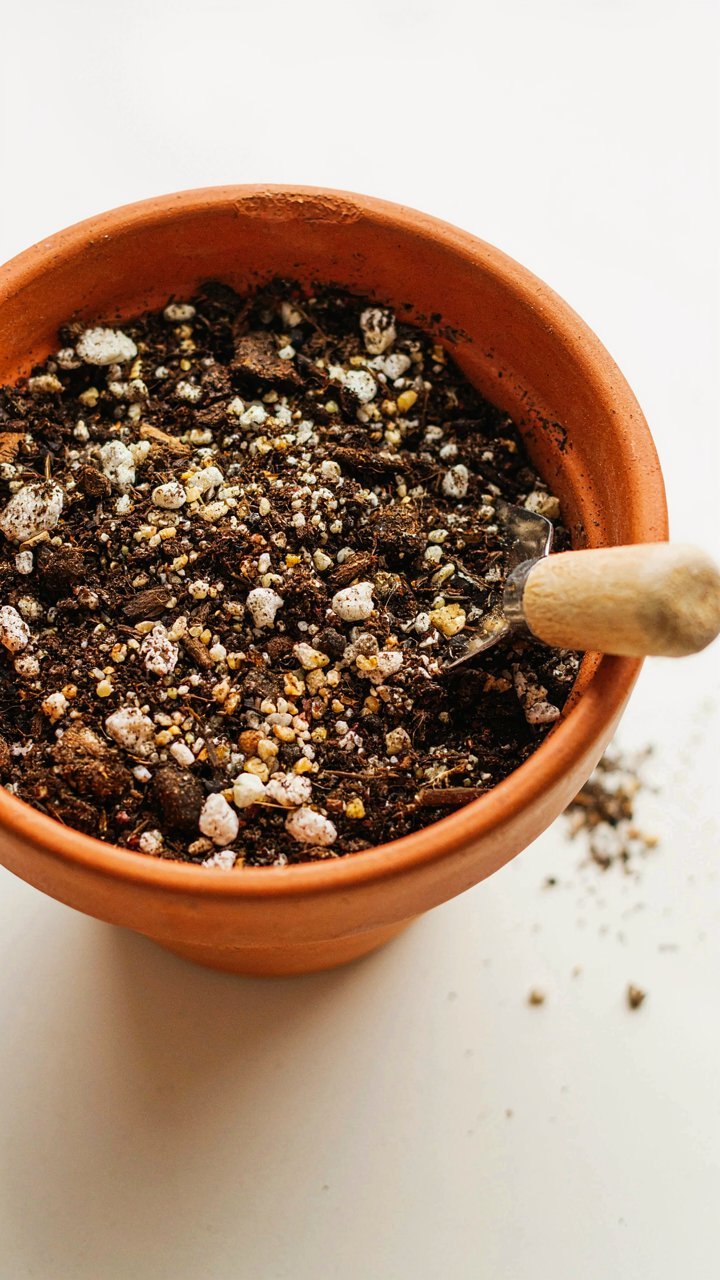
Standard potting soil murders rosemary. You need gritty, mineral-heavy mix: one part compost, one part perlite, two parts coarse sand or pumice. The plant’s root system expects air pockets. Saturated roots rot within days because the plant has no metabolic pathway to handle constant moisture. After watering, the pot should feel light within hours. If it stays heavy, your drainage is failing.
The “Neglect” Protocol: When Less Rosemary Plant Care Means More

Dry Cycles Build Stronger Roots
You want your rosemary to survive without constant attention because you have other priorities. That’s not laziness, it’s resource allocation. The mechanism is physiological: roots expand deeper into soil when water becomes scarce, not when it’s abundant. Shallow watering trains roots to stay near the surface where they’re vulnerable.
Rosemary evolved in Mediterranean climates where rain is infrequent and soil dries fast. Let the top inch of soil dry completely between waterings. This triggers root growth downward, building a system that pulls water from deeper reserves. Overwatering kills rosemary faster than neglect ever could. Check soil moisture with your finger before watering, not on a schedule.
Nutrient Minimalism Works Better Than Feeding
The common advice is wrong: rosemary does not need regular fertilization. Most gardeners overfeed their plants out of guilt, not necessity. Rosemary thrives in poor to moderate soil because rich soil triggers excessive leaf growth at the expense of oil concentration and root depth.
Use a balanced, slow-release fertilizer once in spring, nothing more. If your rosemary is already established in decent soil, skip fertilizer entirely. Too much nitrogen pushes soft foliage that attracts pests and dilutes the essential oils that make the plant valuable. Feed the soil minimally and the plant will feed itself through deeper root systems, concentrating flavor and hardiness instead of wasting energy on rapid growth.
Growing Rosemary Indoors: The Simulation Of Outdoor Extremes
The Light Spectrum Problem
You want indoor rosemary because it sounds convenient, but you’re about to waste six months watching it decline. Here’s the mechanism: rosemary evolved under Mediterranean full sun, which delivers 30,000 to 50,000 lux. Your indoor window gives 500 to 2,500 lux on a good day. That gap isn’t minor. It’s the difference between a plant that thrives and one that stretches, weakens, and dies from the inside out.
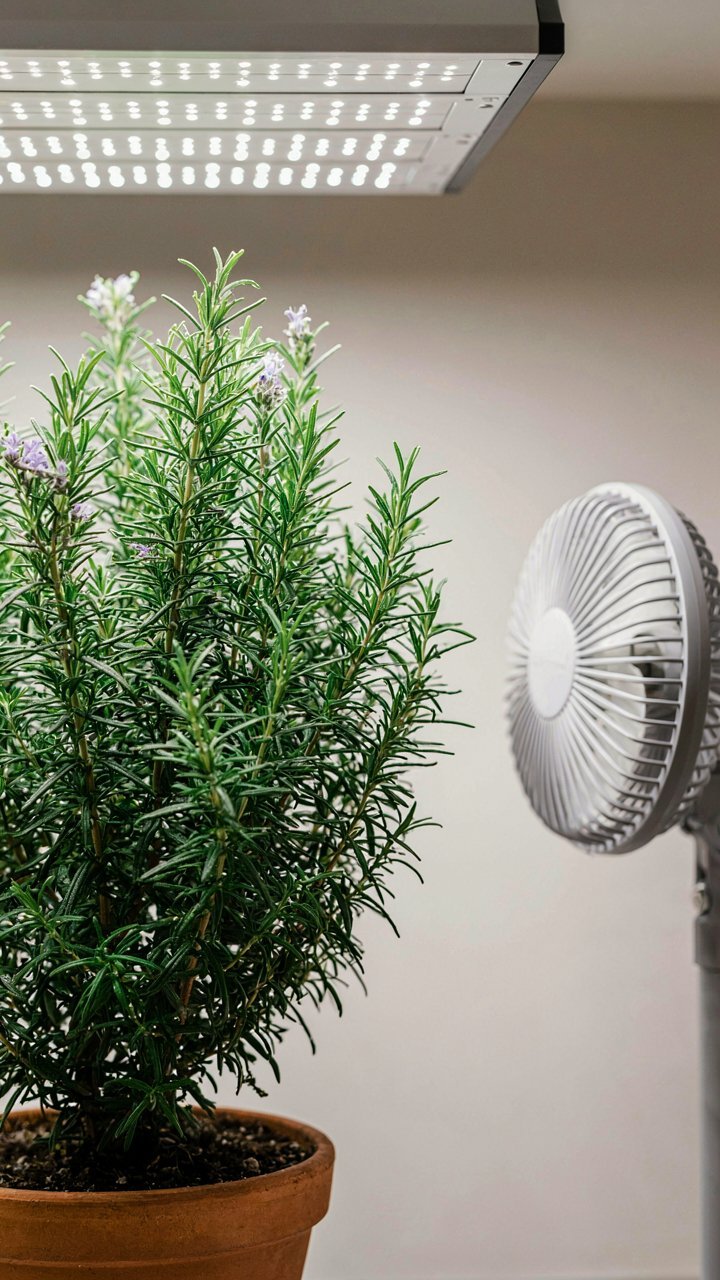
Grow lights solve this, but most people buy the wrong spectrum. Rosemary doesn’t care about color temperature the way Instagram herbalists claim. It needs photosynthetically active radiation (PAR) between 400 to 700 nanometers, with emphasis on the red and blue wavelengths that drive growth and essential oil production. A full-spectrum LED rated for 12 to 16 hours daily at 18 to 24 inches above the plant works. Position it close enough that the plant receives 800 to 1,200 lux minimum. Anything less and you’re just running an expensive nightlight.
Air Movement Without Negotiation
Stagnant indoor air kills rosemary faster than underwatering because it creates a microclimate where fungal spores settle and humidity hovers at the leaf surface. Borrow from ventilation engineering: rosemary needs turbulent flow, not dead zones. A small oscillating fan on low speed, positioned 3 to 4 feet away and angled to move air across the plant without directly blasting it, prevents mold and strengthens stems by forcing them to work against resistance.
Run the fan for 4 to 6 hours daily, ideally during daylight hours when the plant is photosynthesizing and can handle the stress. Don’t place the fan so close that leaves shred or so far that you feel nothing at plant level. Your hand should detect consistent gentle movement when held at the canopy. This isn’t optional if your indoor space lacks natural air exchange from windows or vents. Air circulation is the mechanism that separates surviving rosemary from thriving rosemary.
The Pruning Paradox: When To Prune Rosemary For Vigor, Not Weakness

Strategic Cuts For Dense Growth
You want your rosemary to look abundant because sparse plants signal failure, and failure means you’ve wasted months. Here’s the mechanism: rosemary grows from apical dominance, meaning the top shoot suppresses lateral buds below it. Remove that top shoot and you release the plant’s natural branching response. Cut just above leaf nodes, never into bare woody stem. Each cut point becomes a branch point.
The difference between a leggy plant and a dense one isn’t luck or genetics—it’s removing apical dominance before the plant gets tall. Start pruning when stems reach six inches. Remove the top quarter inch above a leaf node, angled downward. This forces energy into side growth instead of vertical stretch. A pruned rosemary fills its space; an unpruned one reaches for the sky and leaves dead wood underneath.
Timing Cuts Around Growth Cycles
The conventional advice says prune in spring. That’s incomplete and misses the mechanism. Rosemary responds to photoperiod and temperature, not arbitrary seasons. In warm climates where rosemary grows year-round, you can prune almost anytime after new growth appears. In cold zones, prune after the last frost when growth accelerates, never in fall when the plant is hardening off for dormancy.
Harvest aggressively during peak growth from late spring through early summer. This is when rosemary recovers fastest from cuts and produces new shoots consistently. Avoid heavy pruning within six weeks of your first frost date—the plant needs time to harden tissue before cold arrives. The protocol: prune when growth is visible and active, never when the plant shows slowed metabolism or wood that snaps cleanly instead of bending.
Rosemary Container Culture: The Art Of Restrictive Growth
Terracotta Breathes, Plastic Doesn’t
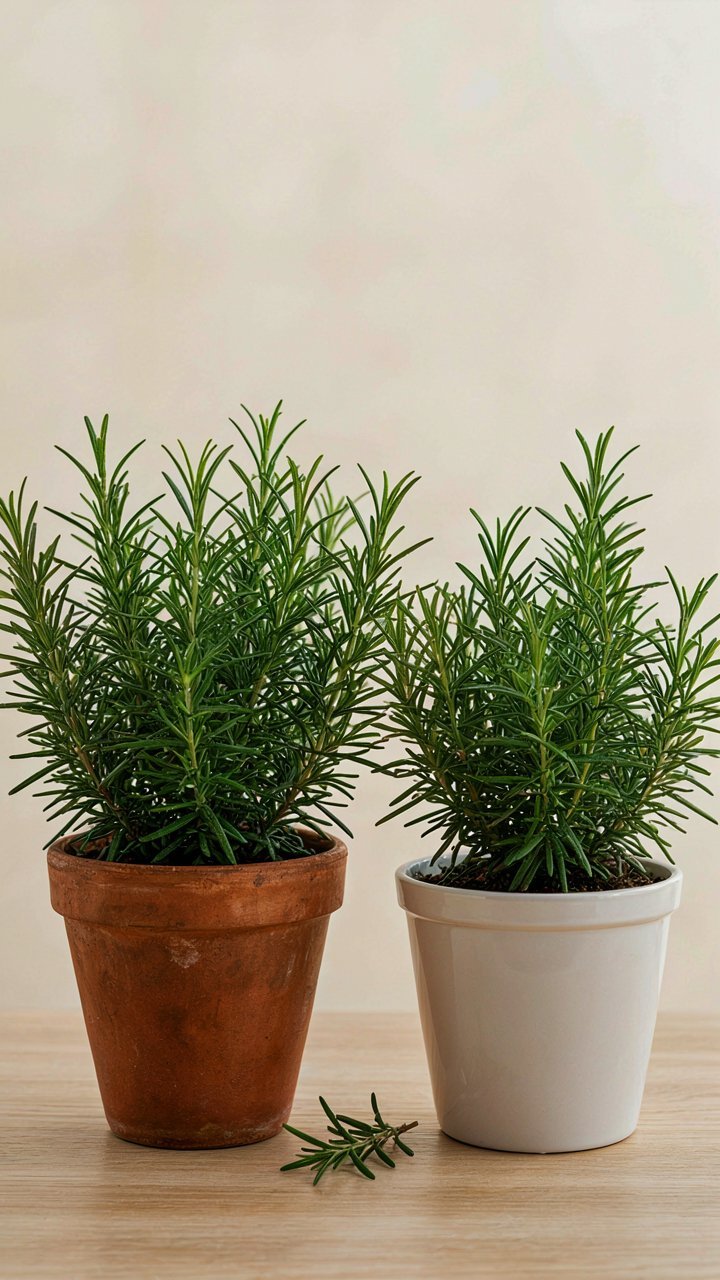
You want container gardening to feel effortless because you’re busy. Here’s what actually matters: porosity determines root health through gas exchange. Terracotta is porous. It lets oxygen and moisture move through the pot walls. Plastic is a vapor barrier. Roots in plastic stay wetter longer because water has nowhere to go but down. Rosemary evolved in Mediterranean climates where air moves constantly around root systems. Container material either supports or fights that biology.
Terracotta dries faster than plastic, which means you water more often but with less risk of root rot. This isn’t a downside for rosemary. The plant tolerates frequent watering as long as drainage happens. Plastic requires you to be more precise with watering intervals because the pot traps moisture. Choose terracotta if you’re inconsistent. Choose plastic only if you’ve built a watering routine you actually follow.
Fast Drainage Isn’t Optional, It’s Mandatory
Generic potting soil kills rosemary slowly. Most bagged mixes hold too much water because they’re engineered for tropical houseplants. Rosemary needs substrate that drains inside of seconds, not minutes. This means you’re not using standard potting soil straight from the bag. You’re engineering the mix yourself by combining base soil, perlite, and coarse sand in ratios that prevent water from pooling around roots.
The mechanism is simple: rosemary’s roots rot when water sits in the substrate. A 60-20-20 ratio of quality potting soil to perlite to coarse sand creates air pockets that water passes through immediately. Your mix should feel gritty and loose when wet. If it clumps or holds together after watering, the drainage speed is too slow. Adjust the perlite and sand ratios higher until water drains completely within five seconds of watering.
The Antifragile Herb: Building Rosemary Resilience

Stress As A Growth Catalyst
You want a rosemary plant that survives neglect so you look less irresponsible. The mechanism is this: rosemary evolved in Mediterranean climates where drought is the norm, not the exception. Scarcity drives adaptation. Plants that never face resource limitation never develop the root depth or oil concentration that makes them resilient. Stress doesn’t damage rosemary—it hardens it.
The common advice to keep rosemary consistently moist is incomplete and backwards. Rosemary thrives under periodic drought stress. When soil dries between waterings, the plant deepens its root system and concentrates its essential oils as a survival response. This makes the plant both tougher and more flavorful. Inconsistent watering produces stronger rosemary than consistent watering ever will.
Systemic Robustness For Survival
Building rosemary resilience means designing the growing environment to survive your absence, not engineering perfect conditions. You stop overwatering because the plant doesn’t want perfection—it wants challenge. The goal is a system where the plant self-selects for survival traits rather than a system where you manually compensate for every variable.
- Drainage as the foundation: Use gritty, fast-draining soil with coarse sand or perlite. Clay soil kills rosemary through suffocation, not through toxicity. Inert drainage material forces the plant to develop robust roots.
- Light intensity over duration: Place rosemary in full direct sun, minimum six hours daily. Insufficient light causes weak growth; more hours won’t compensate for low intensity. South or west-facing exposure works best.
- Air circulation as stress: Position plants where air moves freely around foliage. Stagnant air creates fungal vulnerability. A slight breeze mimics Mediterranean conditions and hardens the plant against disease.
- Temperature variance, not warmth: Rosemary tolerates cold better than constant heat. Fluctuation between day and night temperatures strengthens cell structure. Avoid heated indoor environments that eliminate natural stress cycles.
- Minimal fertilizer strategy: Use low-nitrogen feeding once per growing season. Excess nitrogen produces soft, disease-prone growth. Nutrient scarcity forces the plant to concentrate its defensive compounds.
Rosemary doesn’t need you to manage it into submission. It needs you to remove obstacles and then step back. The plant handles everything else through built-in survival protocols developed over millennia. Set the drainage, establish the light, and let resource scarcity do the work.
Dispelling “Herb Plant Care Tips” Myths For Rosemary

Why Generic Herb Advice Breaks Rosemary
You want to believe one watering schedule works for all herbs because it simplifies your life. It doesn’t. The mechanism is this: rosemary evolved in Mediterranean climates with infrequent rainfall and fast soil drainage. Generic herb care assumes consistent moisture. Rosemary demands the opposite. It tolerates drought better than it tolerates wet roots. Most growers kill rosemary by following universal watering rules designed for basil or mint, which are thirstier plants entirely.
The real failure happens underground. Rosemary roots rot in soggy soil faster than any herb you’ve heard of. Standard advice says “water when the top inch feels dry.” For rosemary, that’s too frequent. The plant’s physiology expects long dry periods between deep waterings. Overwatering is the leading cause of death in container rosemary. You’re not bad at this. The advice you received was built for plants with different root systems and different survival strategies.
Align Your Protocol To Rosemary’s Actual Physiology
Think of rosemary as operating under scarcity economics, not abundance economics. In biological terms, it’s a drought-adapted species with a shallow, fibrous root system designed to extract water from minimal moisture then go dormant during dry spells. This shapes everything: soil structure, watering frequency, pot size, light exposure, and even feeding schedules. You must reverse the logic of generic herb care and build a protocol around water scarcity instead of water availability.
Start here: use a pot with drainage holes. Fill it with a fast-draining mix, 60 percent coarse sand or perlite and 40 percent potting soil. Water deeply until it drains from the bottom, then let the soil dry completely before watering again. This might mean 10 to 14 days between waterings in winter, 5 to 7 days in summer growing season. Check soil moisture by inserting your finger two inches down. If it’s still damp, wait another day. Only water when it feels bone dry. This single adjustment eliminates 80 percent of rosemary failures.
Mastering The How To Prune Rosemary Plant Blueprint

Light And Air Flow Through Strategic Cuts
You want your rosemary to look like someone cares for it, which is really about preventing the death spiral that kills most indoor plants. Think in terms of fluid dynamics: air and light move through a plant canopy the same way water flows through a river. Blocked channels create stagnation, and stagnation breeds mold and pest vulnerability. Structural pruning removes crossing stems and dense interior growth to open corridors for both resources to penetrate.
Make cuts at a 45-degree angle just above a leaf node, angling away from the node itself. Remove any stem thinner than a toothpick and any branch rubbing against another. The goal is visibility through the plant’s center, not stripping it bare. Most people either don’t prune enough or hack it into a stick. Do this in spring when new growth emerges, targeting 20 to 30 percent of the plant’s overall volume per year.
Bringing Dead Wood Back To Life
The common advice here is garbage: people tell you rosemary doesn’t recover from hard pruning, so don’t try it. That’s incomplete. Rosemary absolutely regenerates from old wood if you understand the timeline and don’t expect instant results. Rejuvenation cuts target the woody, leafless base to force branching from dormant buds buried in the stem.
Cut these thick stems back by one-third to one-half their length, leaving at least two to three inches of growth. Make one hard cut per plant cycle, not multiple severe cuts in one season. New shoots emerge within four to six weeks. Only do rejuvenation pruning in late winter or very early spring when the plant has full energy reserves. Skip this step in summer or fall, when the plant can’t recover before dormancy.
The Real Obstacle Isn’t Care, It’s Your Need To Control A Plant Designed For Self-sufficiency

You kill rosemary because you mother it. The plant thrives on neglect, yet you obsess over watering schedules and perfect humidity levels. Stop. Go underwater your rosemary today by 40 percent. Let the soil dry. Watch it survive, even strengthen. The shift from caretaker to observer changes everything. Rosemary doesn’t need you to manage it into thriving. It needs you to get out of the way.