

Beyond “Information”: The Social Signaling Of Your Pollinator Habitat Sign

The Visual Hierarchy Says What Words Don’t
You want people to think your garden is intentional and valuable, not abandoned or poorly maintained. Here’s what actually moves behavior: typography and placement operate like dominance hierarchy in animal communication. The largest, most visible element on your sign isn’t just informing—it’s declaring priority. Most pollinator signs bury the actual call to action under decorative headers and “fun facts” nobody reads. The mechanism is attention economics. Your eye lands on what’s biggest first, and that spatial real estate determines what your audience believes matters most about this space.
Material choice reinforces this signal before a single word registers. Weathered wood with hand-painted text reads “labor of love.” Laminated inkjet on PVC reads “municipal checkbox.” Neither is wrong, but each communicates competence and commitment differently. People trust spaces that show they’ve been maintained. Your sign’s surface condition—whether it resists weathering or visibly degrades—tells visitors whether this garden is active or abandoned. Choose materials that age gracefully under your local climate, not materials that look neglected after one season of sun exposure.
Unspoken Messages In Color, Material, And Placement
Signage color isn’t decoration—it’s classification. Across environmental contexts, people recognize color-coded systems instantly: green signals growth or safety, brown suggests natural or rustic, blue implies authority or information. Wrong color creates cognitive friction. A pollinator sign rendered in corporate blue with sans-serif type reads as regulatory compliance, not ecological stewardship. Warm earth tones with serif or hand-lettered typography trigger different associations than bright Pantone colors. The goal isn’t beauty. The goal is instantaneous recognition that this garden operates by different rules than the lawn next to it.
Placement reveals your actual commitment to pollinator protection. A sign mounted on the garden’s perimeter—visible from the street—signals the garden exists for observation, not ecological function. A sign placed where visitors naturally congregate or touch plants communicates different information: this space requires behavioral boundaries. Signs positioned low, near ground level, reach children and create intimacy with the space itself. Signs at eye level from five feet away prioritize readability from afar. Your sign’s physical location tells the truth about whether this garden prioritizes education, liability management, or actual pollinator habitat integrity.
The Echo Chamber Effect: Why Most Pollinator Friendly Garden Signs Fail

You’re Talking To People Who Already Agree With You
You want the sign to validate your identity as an environmentally conscious person. Here’s what actually happens: pollinator garden signs reach almost exclusively the people who planted the garden in the first place, plus neighbors who already care about native plants. This is basic attention economics. The sign does zero work on the person who sees it for three seconds while walking past. Your audience isn’t broad. It’s vanishingly narrow.
The mechanism mirrors the echo chamber in media consumption. Just as algorithms show you content you’re predisposed to engage with, your sign only registers with people predisposed to read garden labels. Everyone else filters it out as visual noise. You’re broadcasting to the converted because they’re the only ones paying attention. The sign doesn’t expand your reach. It reinforces it among people who were already sold.
Reaching The Skeptics Requires A Different Signal Entirely
Most advice tells you to make signs more educational or prettier. That’s incomplete. The real problem is you’re using the wrong language for a hostile audience. A skeptic doesn’t care that your garden supports monarch butterflies. They see an unmowed plot and assume neglect. Educational signage doesn’t convert skepticism. It triggers defensive dismissal.
To reach outside your bubble, stop teaching and start translating. Frame the garden in terms that matter to the unconvinced: property values, disease control, or pest management. A neighbor worried about mosquitoes cares about natural predators, not pollinator habitat. Change the sign’s premise from “this is good for butterflies” to “this solves your problem.” The mechanism is simple: people respond to perceived self-interest, not abstract virtue.
The “Certified Pollinator Garden Sign” Illusion: Status Vs. Substance

What Certification Actually Signals
You want the sign because you want proof you’re doing something right. Here’s the mechanism: certification creates a permission structure. When an official body stamps your garden, you’ve outsourced the burden of judgment to someone else. The sign becomes a badge that says “I’m compliant” rather than “my garden works.” Certification programs like those from the National Wildlife Federation or Audubon Society operate on a checklist model. You meet the criteria, you get the credential. The criteria exist. But criteria and outcomes are not the same thing.
The psychology cuts deeper than vanity. Certification reduces cognitive load. Instead of asking “Is this actually helping pollinators?”, you ask “Did I check the boxes?” The sign promises legitimacy. It promises you didn’t waste time. It promises you belong to something larger and more credible than your own judgment. What it doesn’t promise is that a single pollinator visited your garden yesterday. The sign is reassurance, not evidence.
When The Sign Outperforms The Garden
Common advice says a certified sign proves environmental commitment. That’s incomplete. A certified sign can mask a garden that does almost nothing. You can install native plants correctly, space them according to guidelines, provide water, and still attract minimal pollinator activity if you’ve chosen the wrong species for your region or timing. The certification doesn’t measure behavior change. It measures compliance with a standard. A garden with an uncertified sign and three years of adaptive management based on observation often outperforms a certified garden installed last spring and left unchanged.
The real mechanism: certification creates complacency. The sign becomes the endpoint instead of a checkpoint. Once you’ve earned it, the incentive to experiment, adjust, and improve vanishes. You’ve achieved the status marker. Certification programs work best when gardeners treat the sign as a starting point, not a destination. If your goal is genuine pollinator attraction, the sign should trigger deeper work, not conclude it. The most effective approach is treating certification as a baseline standard and building observation protocols on top of it. Track what actually shows up. Change the garden based on data, not compliance.
The Native Pollinator Sign As A Trojan Horse: Covert Influence

Tell A Story, Then Ask For Action
You want to feel like you’re running a garden that matters, not just a lawn that happens to have flowers. The mechanism borrowed from persuasion psychology is embedding the ask inside narrative instead of stating it plainly. A sign that reads “Plant native milkweed for monarchs” converts fewer people than one that narrates the monarch’s journey: “This milkweed feeds monarch caterpillars during their 3,000-mile migration. Add it to your yard.” The second sign buries the action request inside a story, which bypasses the resistance people feel toward direct commands.
The difference is cognitive load. A command forces the reader to decide immediately. A narrative lets them absorb information first, then the action feels like a natural conclusion rather than an imposition. Your sign becomes a thought completion rather than a sales pitch. When the visitor finishes reading, they’ve already mentally placed the plant in their own garden before they consciously registered they were being persuaded to do so.
Status Through Implied Standards
Signage works best when it signals that other people have already decided what’s correct. This is conformity pressure, borrowed directly from sociology, where the sign becomes a norm-setter rather than an educator. A pollinator garden sign that lists “Native plants chosen by certified ecologists” positions participation as a mark of sophistication, not obligation. The visitor doesn’t read this as instruction; they read it as evidence that thoughtful people make this choice.
The covert mechanism: implied community standards make individual adoption feel automatic rather than deliberate. Install signage that references local conservation groups, university partnerships, or neighborhood participation rates. This doesn’t shame the reader into compliance. Instead, it normalizes the behavior as something people like them already do. When someone learns their neighbor planted native species, they’re more likely to follow. Your sign manufactures that neighbor effect by proxy.
The Scarcity Principle In Pollinator Garden Sign Placement
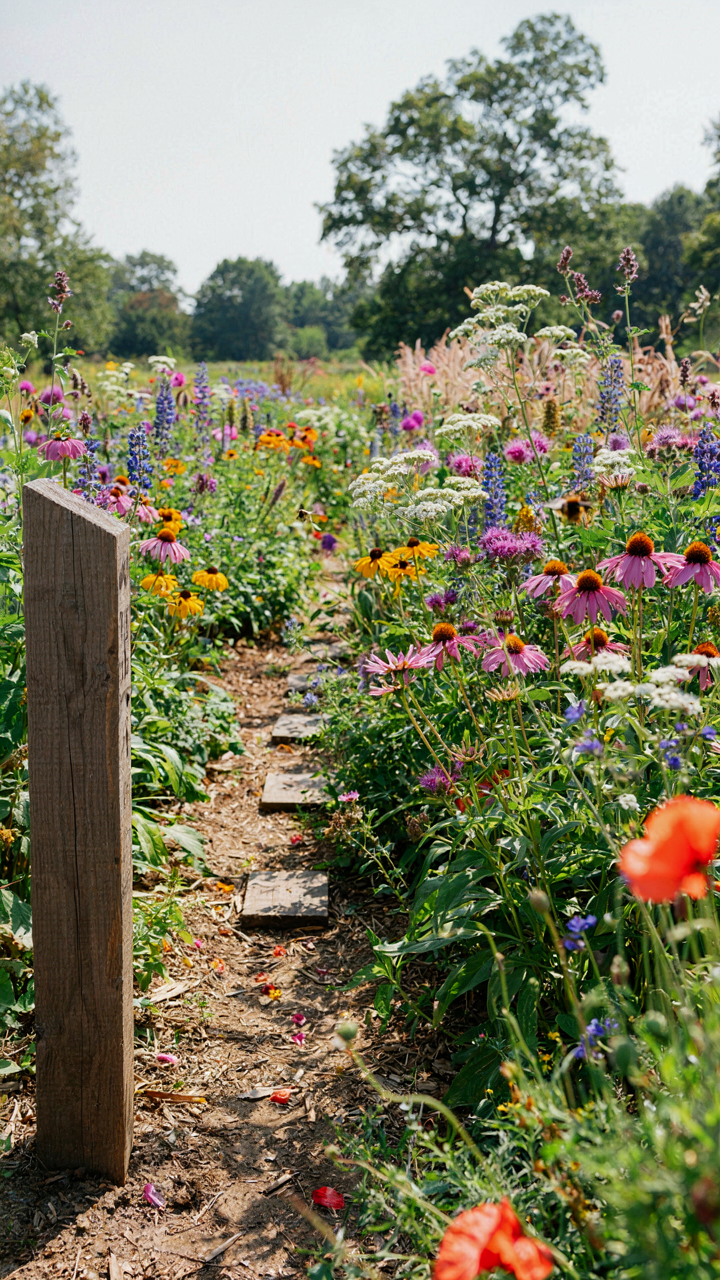
Where Your Sign Actually Gets Seen
You want people to notice your sign because you’ve invested time and money, and invisible communication feels like failure. Here’s the real mechanism: scarcity in economics states that value increases when supply decreases. Apply this to signage placement and the inverse becomes true—signs everywhere become invisible because attention itself is scarce, not the sign. The human brain filters repetition. One sign in the right spot triggers response. Ten signs scattered across the garden trigger nothing.
Most gardens make the mistake of spacing signs evenly, as if symmetry builds authority. Wrong. Dense sign placement trains the eye to skip them entirely. Sparse, intentional placement forces the visitor to slow down and process each one. A single sign at the garden entry creates scarcity of information, which creates urgency to read it. The mechanism works because the brain perceives information restriction as valuable information.
Concentration Over Distribution
Placing multiple signs at high-traffic nodes concentrates visitor attention rather than diluting it. Entry points, intersections, and seating areas command natural pause moments. That’s where your sign placement wins. A sign at the entrance has authority because it controls the frame before the visitor forms assumptions. A sign buried in the flower beds competes with flowers for attention and loses.
Strategic clustering also builds credibility through apparent authority. When three related signs sit together—one explaining native plants, one listing pollinators, one providing bloom times—the cluster reads as curated expertise, not random garden decoration. This concentrated approach reverses the diminishing-returns problem: each additional sign in that cluster increases the perceived value of the group. The placement decision itself becomes the message: we’re organized, we know what matters, read this.
Digital File Pollinator Garden Sign: The “Less Is More” Protocol

Signal Hierarchy Beats Visual Noise
You want your sign to look sophisticated. That’s the real reason you’re reading this. Here’s what actually works: graphic design borrows from information theory, which states that every element competes for cognitive load. Your pollinator sign has maybe three seconds of attention. Overload it with facts, colors, and imagery and you’ve wasted the entire medium. Visitors stop reading when their brain hits friction.
The mechanism is simple. One dominant visual element. One supporting element. One call to action. That’s the stack. Everything else gets cut. Your font choice, color palette, and spacing become the real decisions because they’re all that remains. When you remove decoration, you’re forced to clarify hierarchy. Most signs fail here because they add more instead of subtracting better.
Clutter Kills The Core Message
The common advice says “keep it informative.” That’s lazy thinking. Informative and readable are not the same. A sign packed with plant names, pollinator facts, watering schedules, and safety warnings accomplishes nothing because nothing stands out. The viewer defaults to scanning mode and retains zero. You need one true message per sign.
Determine what changes behavior. If your goal is visitor engagement, lead with “Identify Native Pollinators Here.” If it’s education, lead with “Milkweed Supports Monarchs.” If it’s fundraising, lead with your organization’s name. Everything else supports that one sentence. Delete the rest. Your file should contain only elements that reinforce this single message, which means ruthless editing during the design phase before printing.
The Pollinator Pathway Sign In Garden: Network Effects And Dominance Hierarchies
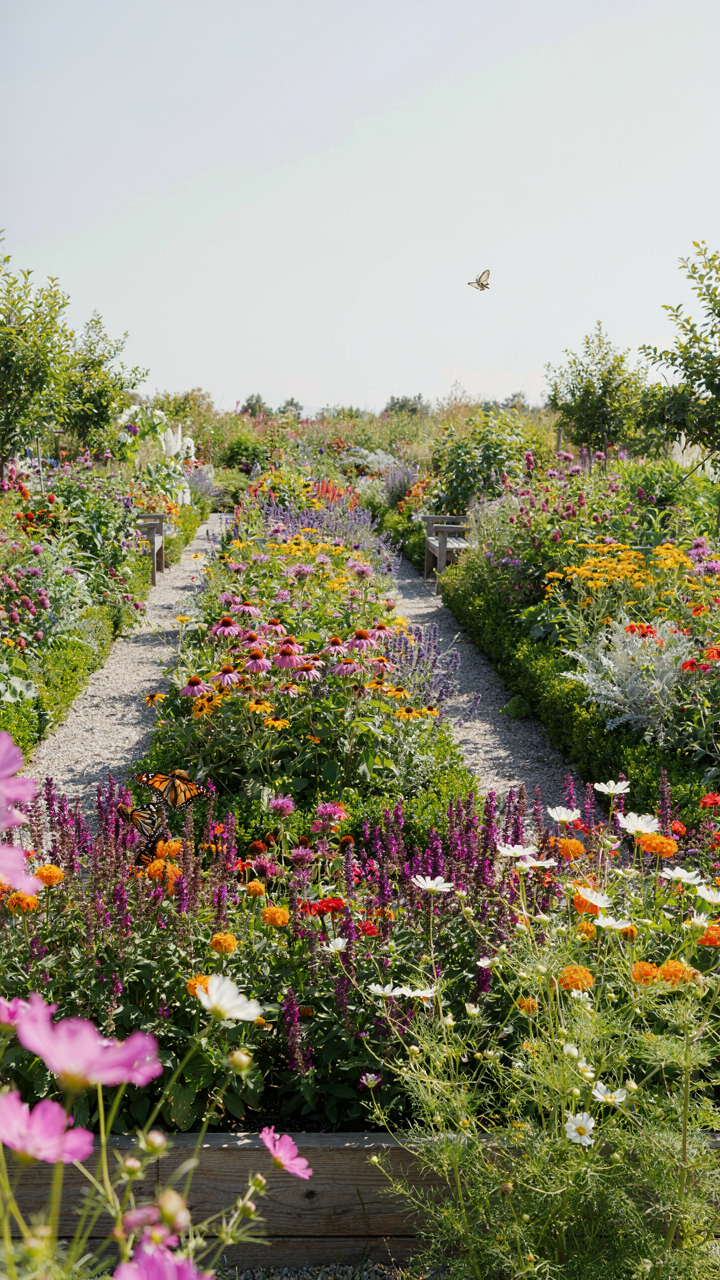
How Signals Compound Across Connected Spaces
You want your garden to matter. Not just to pollinators, but to the people who see it and talk about it. That requires understanding network effects, the same principle that made Facebook valuable: one user means nothing, but users connected to other users create exponential value. In pollinator garden signage, this means your signs must function as nodes in a larger system, not standalone markers. Each sign reinforces the others. Each one signals that pollinators move through a deliberate pathway, not random plants in isolation.
The mechanism is simple. A single sign in a single garden changes nothing about pollinator behavior. But when signs across multiple gardens identify the same plants, the same timing, the same visual markers, they create what ecologists call a corridor. Bees and butterflies recognize consistency. They navigate by pattern recognition and learned routes. Your signage accelerates this learning by making the pattern explicit and repeatable across space. This is why the most effective pollinator gardens cluster their signs to create visual rhythm and why isolated gardens with generic single signs get ignored by both insects and people.
Establishing Authority Through Specificity
Evolution rewards organisms that dominate their niche. Applied to signage design: dominance means being the garden everyone else references. This happens through specificity, not breadth. The common advice says “educate people about pollinators.” Wrong. Narrow your signage to one or two native species, one bloom season, one visual identity. This creates a defensible position. When your garden becomes known as “the native milkweed garden” or “the early spring nectar stop,” you’ve stopped competing with every other garden and started owning a specific ecological role.
The proof is visible in public gardens that outperform others. Their signage doesn’t list every plant. It makes a claim: monarch waystation, native bee hotel, or seasonal bloom guide. This specificity does two things. First, it makes your garden memorable and referable. People tell others about a specific thing, not a generic pollinator space. Second, it establishes you as the authority on that specific niche, which means your signage design, plant selection, and maintenance standards become the template others copy. Dominance in garden signage means being specific enough that you become the reference point everyone else measures against.
The Aesop’s Fable Method For Pollinator Signs: Story, Not Stats
When The Narrative Hooks Faster Than Data
You want your sign to work because you need proof the garden matters—that your effort wasn’t wasted on something people ignore. Here’s the mechanism: storytelling hijacks attention in a way raw information cannot. Narrative uses a different neural pathway than statistics. When someone reads a story, their brain doesn’t just receive data—it activates sensory and emotional regions simultaneously. A pollinator garden sign that leads with “Monarchs fly 3,000 miles on wings thinner than paper” triggers engagement faster than “This garden supports native species.”
The difference isn’t subtle. Aesop’s fables worked for centuries because they embedded moral logic into character action, not exposition. Your sign operates the same way. Instead of listing facts about pollination rates, show a single decision point or consequence. The reader experiences the stakes without resistance. A well-crafted ecological parable on a garden sign makes the visitor feel like they discovered something true rather than being lectured. That shift from passive reception to active recognition is what makes people actually look, read, and remember.
When Emotion Moves Gardens More Than PhDs
Common advice tells you to trust science and assume people want the facts. That’s backwards. People avoid facts that don’t connect to something they already feel. Jargon creates distance. A sign that says “This space provides essential nectar resources for Lepidoptera during critical migration periods” loses most readers before the second word. The same sign that says “Without this garden, monarchs starve before reaching Mexico” changes behavior because it names a real cost.
The mechanism here borrowed from narrative psychology: stakes determine attention. You’re not competing with a textbook—you’re competing with a phone in someone’s pocket. Emotional resonance means the sign answers one unspoken question: “Why should I care this person planted this?” Connect the butterfly to a consequence. Connect the consequence to the reader’s world. Keep the language at a fifth-grade level without patronizing. The sign works when someone leaves thinking about what happens next, not when they finish reading.
The Omission Bias: When Not Having A Pollinator Garden Sign Is Strategic

The Power Of Implied Action
You want permission to skip the sign because you’re worried it won’t look professional without one. Here’s the mechanism: omission bias in design is borrowed from behavioral economics, where people assume absence means failure. Applied to signage, the inverse is true. A garden that runs without explanation forces visitors to observe actual pollinator behavior instead of reading about it.
Most pollinator gardens fail because they rely on signage to compensate for poor design. The sign becomes a crutch that masks weak plant selection, spacing errors, or dead zones. A garden designed well enough to speak for itself needs no explanation. Your visitors will notice native plants blooming on schedule, bees working specific flowers, and butterflies returning daily. That’s stronger than any text can deliver.
When Results Replace Words
Virtue signaling through signage is transparent and forgettable. A sign announcing pollinator support reads like marketing. A garden where someone can watch a bee move between three native plants in sixty seconds proves commitment without speaking. The sign becomes unnecessary noise when the mechanism is already visible.
The practical move: build your garden first. Plant densely enough that pollinator activity is obvious within the first month of bloom season. Only install signage if you need it to manage foot traffic, explain specific plant choices, or meet educational requirements. Otherwise, let the space function as its own advertisement. A garden that produces results speaks louder than a garden that produces words about results.
Beyond Signage: True Pollinator Garden Impact

What Actually Moves The Needle
You want the sign to do the work so you don’t have to. It won’t. Signage is a communication tool, not a ecological intervention. The real mechanism here is borrowed from systems biology: feedback loops. A sign creates zero feedback. A garden structure creates measurable ecological response. Your sign tells people what matters. Your design choices prove it matters.
Plant composition determines everything. Native flowering plants, bloom sequencing, and host plants for larvae decide whether pollinators show up or leave. A sign explaining this next to monoculture turf accomplishes nothing. You need the substrate first, the communication second.
- Establish Native Plant Layers: Ground covers, mid-story shrubs, and canopy plants that bloom across seasons, not a single spring burst that ends in June.
- Remove Chemical Inputs Entirely: No herbicides, pesticides, or synthetic fertilizers within the garden perimeter and 15 feet beyond. Pollinators metabolize these compounds.
- Install Water Sources: Shallow basins with pebbles or floating cork, refilled every two days during dry periods. Many pollinators dehydrate before starvation.
- Create Nesting Habitat: Dead wood piles, bare ground patches, and hollow stems for cavity-nesting bees that represent 30 percent of wild bee species.
- Eliminate Turf Grass Entirely: Replace with perennial groundcovers or mulch. Turf requires mowing, which kills nesting sites and low-flying insects weekly.
These interventions generate observable pollinator activity within weeks. A sign explaining them generates awareness. One creates change. The other creates the feeling of change, which is precisely why people rely on it.
Metrics That Actually Matter
Count insects, not visitors. Measuring real ecological success means tracking pollinator abundance and diversity across seasons using consistent methodology. You can observe this yourself without hiring researchers. Record species seen weekly, note bloom timing, document nesting activity. This data shows whether your garden functions or just looks intentional.
Common advice here is useless: “You’ll see more butterflies.” Vague. Unmeasurable. Wrong framework. Measure like a population biologist measures. Track the same transect weekly. Note flowering plant coverage percentages. Record weather conditions alongside observations. After eight weeks, patterns emerge. You identify which plants attract which pollinators. You spot gaps in bloom sequence. You see whether bare ground remains suitable for ground-nesting species or if it’s compacting from foot traffic. This tells you whether to add plants, adjust signage visibility, or redesign the entire layout. Adjust based on data, not assumptions.
The Real Obstacle Isn’t Sign Design; It’s Your Desire For External Validation Over Actual Ecological Impact

You’ll build pollinator garden signage to impress neighbors, not to move insects. That distinction kills most projects before they start. Your sign means nothing if bees never show up. Stop designing for Instagram and start designing for function. Put your shovel in the ground today and plant native species. Everything else follows. A garden that works needs no explanation.



