

The Illusion Of Lawn: Why Your Green Carpet Is A Status Trap

The True Cost Of Conformity
You care about this because your neighbors have a lawn and you don’t want to be the person on the block who doesn’t. The mechanism is simple: lawn maintenance is a visible weekly ritual that signals control, resources, and participation in the consensus. It costs you time every Saturday, money for equipment and inputs, and ecological damage through monoculture demands. A conventional lawn requires mowing, fertilizer, pesticide applications, and water to maintain its visual uniformity. None of this produces anything but the appearance of compliance.
The economics of lawn ownership are hidden in plain sight. You spend 40 to 50 hours annually mowing. Add equipment depreciation, fuel, fertilizer, and eventual replacement costs. The real expense isn’t the lawn itself but the perpetual maintenance tax you pay to keep it looking like everyone else’s. Meanwhile, that same land produces zero food, zero habitat, and zero ecological benefit. You’re paying to subtract value from your property.
Reclaim What The Monoculture Stole
The shift from lawn to no mow pollinator landscape isn’t aesthetic rebellion, it’s resource recovery. You get back your Saturdays. You eliminate the fertilizer spend. You stop buying gasoline for a machine that turns your yard into a carbon-emitting rectangle. A no mow pollinator lawn uses native plants that establish themselves once established, requiring intervention only during establishment years. After that, the system runs on its own ecological logic instead of your labor.
The design shift is straightforward: replace monoculture grass with diverse native wildflowers, sedges, and low-growing plants that bloom across seasons. This approach satisfies pollinators while eliminating the weekly mowing obligation. Your yard becomes a functional ecosystem instead of a status display. The conversion requires upfront planning and establishment care, but the maintenance curve drops sharply after year two. You’ve moved from ownership through perpetual work to stewardship through design.
No Mow Lawn: The Anti Establishment Aesthetic For A Biodiverse Lawn

Stop Fighting Your Lawn
You want permission to stop maintaining something that never asked to be maintained in the first place. The real mechanism here is that a monoculture lawn demands constant inputs—mowing, fertilizer, water—to stay artificial. A no mow pollinator lawn inverts this logic. Instead of fighting ecological succession, you let it work for you. Native plants, clover, and wildflowers establish themselves once you stop the weekly blade work. The ecosystem does the maintenance. You just stop paying the cost.
Most people think a no mow lawn means neglect. Wrong. It means removing the wrong inputs and letting the right ones operate. Ecological succession isn’t chaos. It’s a predictable sequence where pioneer plants stabilize soil, then perennials establish, then the system reaches a stable state. You’re not abandoning your lawn. You’re switching from constant intervention to strategic non-intervention. The plants that survive are the ones that actually belong in your climate and soil type.
Order Through Restraint, Not Control
Controlled chaos doesn’t mean random. Military doctrine calls this “commander’s intent”—you set the parameters, then let your operators execute within that framework. Apply that to your lawn: you define the boundary, choose whether to allow woody plants, and decide mowing frequency if any. Everything else follows the rules of plant competition and pollinator preference. Native species outcompete invasives when you stop artificially maintaining monoculture conditions.
The sterile order aesthetic fails because it requires endless work. A no mow pollinator lawn succeeds because the system feeds itself. You’ll see varied heights, textures, and bloom times. This looks intentional to anyone who understands ecology. The visible diversity signals competence, not neglect. The action step: define your lawn edges clearly, remove one invasive species if present, then stop mowing for one season and observe what establishes.
The Permaculture Protocol: Designing Your No Mow Garden Ecosystem
Where To Plant What, And Why It Matters
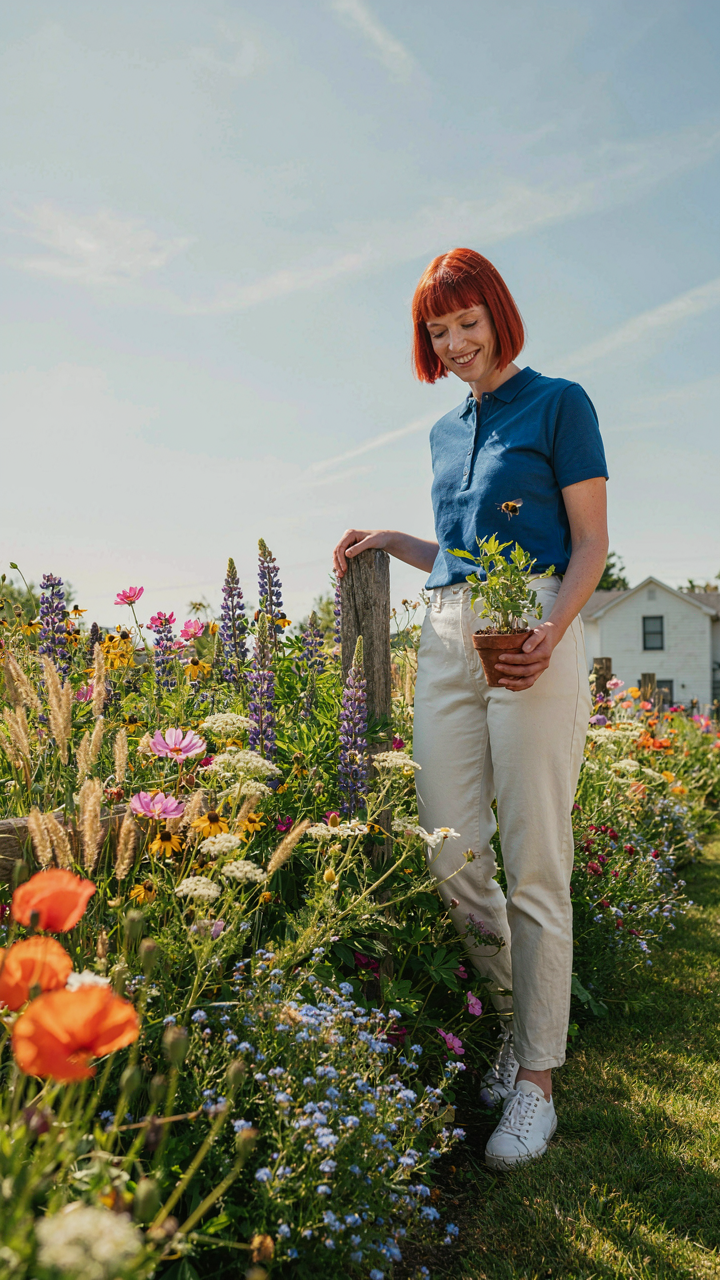
You want this to look intentional, not abandoned. That’s the real fear driving zone questions. The mechanism is simple: permaculture zones measure distance from your house based on intervention frequency, not aesthetic whim. Zone 0 sits at your door. Zone 5 sits at your property edge. No mow pollinator lawns belong in Zones 2 and 3, where you visit occasionally but don’t manage daily. This placement separates your cultivated space from your wild space structurally.
The common mistake is treating zone planning like garden art. It’s not. Zones exist because human energy is finite and travel time is real. Place your no mow areas where you naturally walk less. This alignment removes the friction between what you intended and what actually happens. You stop fighting the layout.
Plants That Earn Their Space
Each plant must solve more than one problem, or it wastes resources. This is the principle of stacking functions, borrowed directly from systems design. A native flowering plant that serves pollinators simultaneously provides structure, builds soil, suppresses weeds, and feeds insects that control pests. You’re not planting flowers. You’re installing a mechanism that does multiple jobs at once.
- Native wildflowers (Coreopsis, Rudbeckia, Echinacea): Feed pollinators while establishing a self-seeding base that reduces annual replanting effort and creates consistent bloom.
- Nitrogen-fixing legumes (Clover, Vetch species): Pollinators visit them, their roots improve soil biology, and they suppress aggressive grasses without chemical intervention.
- Low-growing sedges and native grasses: Create structure and habitat density, slow water runoff, feed specialist insects that control common lawn pests.
- Berry-producing shrubs (Serviceberry, Chokeberry): Pollinators use the flowers, birds disperse seeds, leaf litter builds soil, minimal pruning needed once established.
- Deep-rooted perennials (Liatris, Phlox species): Access nutrients below surface, create visual hierarchy without mowing, flowers last weeks, roots prevent soil compaction.
The stacking principle eliminates the garden that requires constant intervention to look “intentional.” Plants that naturally coexist in your region need no referee. They compete, establish dominance, and stabilize into a system. Your job shifts from manager to observer. Plant density matters more than variety. Bare soil invites weeds. Dense planting crowds them out.
Beyond Grass: Optimal Alternative Lawn Ideas For Impact
Native Groundcovers That Actually Survive
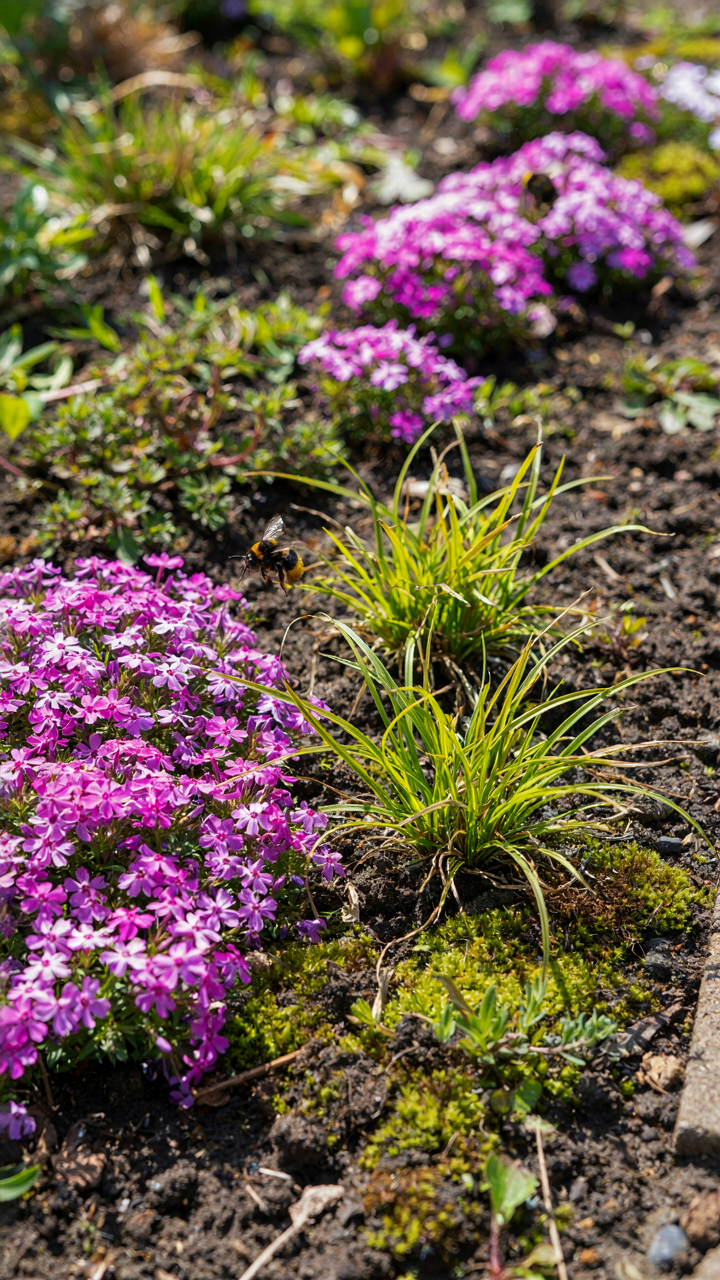
You want the aesthetic of a manicured lawn without the maintenance burden—that’s the real draw here, and it matters because time is what you’re actually protecting. Ecology borrowed the concept of succession from observation: plant communities replace themselves over time through predictable stages. Native groundcovers operate as ecological succession accelerators—they establish the pioneer species that suppress weeds, build soil structure, and reduce your intervention to near-zero while hosting pollinators natively adapted to your region.
The consensus advice about groundcovers misses the mechanism: most recommendations treat them as decorative carpet replacements, ignoring soil preparation and species matching to your actual climate zone. The real work happens before planting. Select species native to your bioregion—not just your state—then prepare soil by removing sod and adding compost. Creeping phlox, sedge species, and native mosses establish deep root systems that outcompete invasives without chemical input. Once established, these require no mowing, no fertilizer, and minimal water beyond normal rainfall.
Succession Planning For Visual Continuity
Year-round interest demands you think in phenological layers, not static moments. Stack bloom times across spring bulbs native to your region, early-flowering groundcovers, mid-summer asters, and fall seed heads that shelter overwintering pollinators. Design backwards from November—that’s your hardest month visually—and work toward spring. Use structural elements like seed head architecture rather than relying on continuous flower color to carry visual weight through dormancy.
Most landscape design ignores the pollinator calendar entirely, creating gaps where bare soil shows in August or dead zones in October. Build your planting matrix by documenting what blooms when in your specific location, then layer species to fill every gap. Rough fescue, native asters, and goldenrod provide September-November coverage while feeding migrating pollinators. The protocol is simple: map bloom times on a calendar for your zone, identify the gaps, then fill those months with species you know will establish in your soil type and hardiness range.
Biodiversity Lawn Multipliers: Attracting The Right Allies
How Predators Replace Your Pesticide Budget
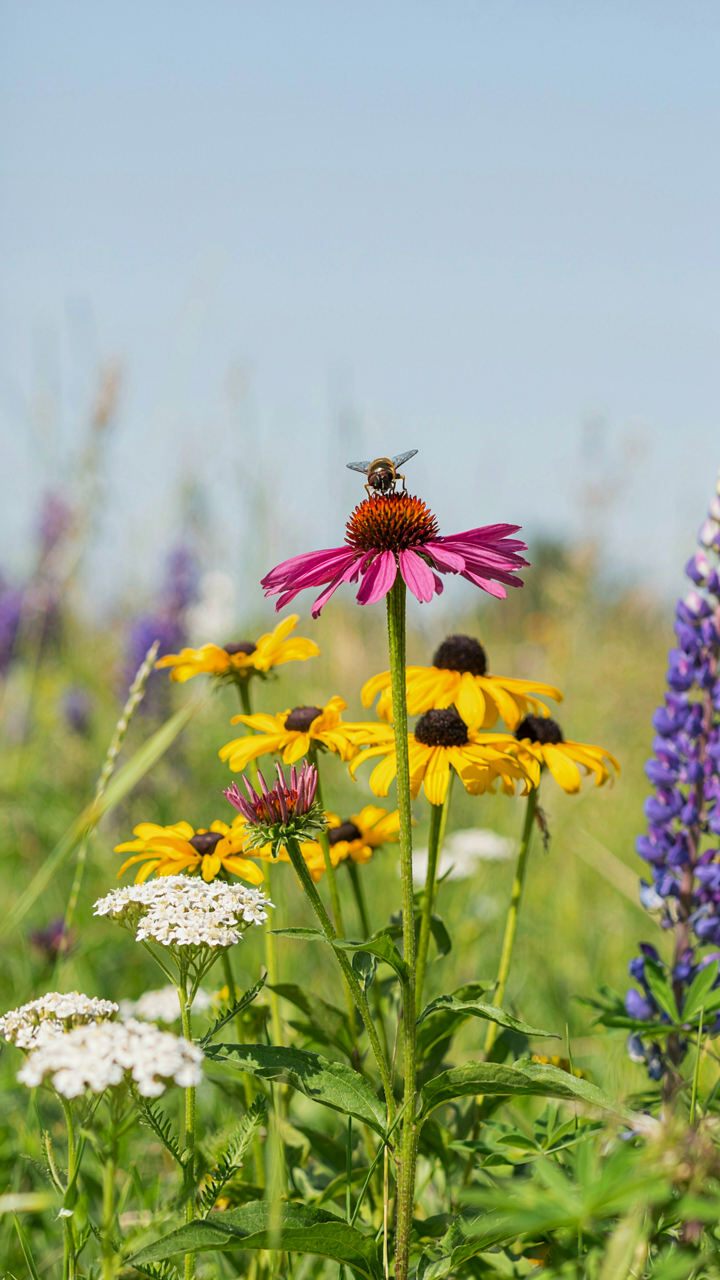
You want this lawn to look intentional, not abandoned. That’s the real reason you care about what insects show up. Here’s the mechanism: beneficial insects consume the pests that would otherwise force you to maintain it. Entomology reveals this simple trade—parasitic wasps, ground beetles, and hoverflies don’t just coexist in no mow lawns. They establish predator-prey relationships that keep aphids, grubs, and other damaging species below the threshold where visible damage occurs. You stop fighting the lawn and let the insects fight each other instead.
The common advice stops at “pollinators are good.” That’s incomplete. What actually matters is creating habitat depth for predatory species that eat the things eating your plants. A no mow pollinator lawn with varied plant heights, leaf litter, and exposed soil gives ground beetles and spiders the hunting grounds they need. Without this structural diversity, beneficial insects move elsewhere. With it, you trade chemical inputs for biological pest suppression that costs nothing after establishment and compounds year over year.
Anchor Species Build Ecosystem Walls
Ecology teaches resilience through the concept of load-bearing walls: remove one and the structure fails. Keystone species function identically in ecosystems, and no mow pollinator lawns depend on identifying which plants and insects anchor everything else. Native wildflowers like Black-eyed Susan, Coreopsis, and native milkweeds don’t just feed pollinators. They feed the insects that feed the predators that prevent population collapse of any single species. Loss of one keystone cascades through the system and weakens the entire lawn’s stability.
Resilience requires redundancy at the keystone level. Plant multiple species of native flowering plants rather than one dominant type, and you create overlapping food sources that sustain populations through seasonal gaps. When early-spring food sources end, mid-summer bloomers take over. When summer flowers fade, fall asters provide the final fuel before winter dormancy. This staggered availability keeps beneficial insect populations alive through the full year, ensuring they’re present when pest pressure spikes rather than arriving too late to matter.
The No Lawn Investment: Sustainable Lawn Practices For The Long Game

Build Soil Like You Build Capital
You want this section to justify your spending, to prove you’re not just being lazy about mowing. The actual mechanism is this: soil biology compounds. Borrowing from finance, your no mow pollinator lawn operates like a compounding asset. You stop tilling, stop spraying, stop disrupting. Mycorrhizal networks expand underground. Microbial populations stabilize. Each season the substrate holds more carbon, more water, more fertility. You’re not maintaining anymore. You’re accumulating.
Most lawn advice ignores soil because soil changes take two to three years to show visual results. By then people have already switched strategies or sold the property. The payoff isn’t immediate, so it gets dismissed. Skip that noise. A no mow pollinator lawn on degraded soil starts weak. But after year two, the organic matter content increases, water infiltration improves, and you need zero inputs beyond the initial planting. Native species thrive in that environment because they evolved in it. The system stabilizes because the soil structure itself now supports the plants instead of fighting against them.
Water Scarcity Favors The Patient
Conventional turf demands consistent watering to maintain that monoculture aesthetic. A no mow pollinator lawn reverses this through resource arbitrage: you’re trading establishment labor upfront for permanent water autonomy. Deep-rooted native species access water the shallow grass roots cannot reach. Once established, they extract moisture from soil depths conventional lawns never penetrate. You stop paying for irrigation. You stop competing with municipal water systems during drought cycles.
The establishment phase matters here. Year one requires supplemental watering during drought windows to ensure seedlings root deeply. Year two needs less. Year three needs almost nothing if you selected species matched to your regional rainfall patterns. This isn’t theoretical. Native plants evolved under local precipitation regimes. Bluebells in temperate zones, coneflowers in prairies, desert marigolds in arid regions all handle regional water stress because they developed root systems for it. Set the species correctly at planting. After that, the soil itself holds water more efficiently because biological activity improves aggregate stability and organic matter retention. Water conservation becomes automatic, not a daily decision.
Scaling Down: Micro Gardens And The Art Of Strategic Neglect

Small Spaces Demand Concentrated Purpose
You want proof that your property matters without maintaining a half-acre meadow. Here’s the mechanism: micro-gardens concentrate pollinator resources in visible zones, which means you get measurable ecological return on minimal square footage. A 200-square-foot native plant cluster attracts more bees and butterflies per plant than a sprawling mowed lawn because density forces feeding efficiency. The plants work harder because they have to compete for the same pollinators. You’re not scaling down effort. You’re scaling up density.
Container gardens and border strips eliminate the false choice between “manicured” and “wild.” A 4-by-8-foot native planting bed in the front yard produces visual structure while supporting 30-plus pollinator species in a season. The key is plant selection tied to your bloom calendar, not random native species dumped into soil. Spacing matters more at this scale because every inch counts for sight lines and nectar continuity.
Precision Planting Over Passive Waiting
The standard advice is to just plant natives and let nature happen. That’s incomplete. Strategic placement means positioning your micro-garden where it creates a visual anchor, not a neglected afterthought. Early spring bloomers near the entry, mid-season peak density in central zones, late-season nectar sources along the edge. This sequence sustains pollinator activity across months without the lawn maintenance cycle everyone else runs.
Focused effort means deadheading spent flowers to extend blooms, pulling competitor weeds in year one, and verifying soil drainage before planting. You’re not hands-off. You’re hands-on for 60 days, then hands-off forever. Document your bloom phases by photographing the garden on the same date monthly. This data shows you where density gaps exist and which species underperform in your specific microclimate, turning next season into a refinement cycle rather than a restart.
Maintenance Minimalism: The New Aesthetic Of Effortless Beauty

Stop Fighting The Seasons
You want a beautiful yard without the guilt of constant upkeep. The real mechanism here is thermodynamic: you’re fighting entropy every time you mow. A no mow pollinator lawn flips that. Instead of removing growth, you direct it. Native wildflowers and grasses follow ecological succession patterns that stabilize themselves. Spring brings emergence. Summer brings density. Fall brings seed production. Winter brings dormancy. You stop treating seasonal change as failure and start treating it as design. The lawn does the work. You observe the cycles and intervene only at strategic points, not continuously.
Continuous intervention is the enemy of style because it broadcasts anxiety. A well-managed no mow pollinator lawn reads as intentional restraint, not neglect. The owner made a choice to work with natural systems instead of against them. Dead stems in winter aren’t ugliness, they’re structure for overwintering insects. Bare patches aren’t failure, they’re preparation zones for spring germination. Once you accept this frame, maintenance becomes curating the edges and timing, not battling the entire system monthly. The aesthetic shift happens when you stop viewing anything that’s not mowed lawn as temporary disorder.
Design Through Subtraction
Curating nature doesn’t mean hands off. It means strategic intervention at moments that matter. The common advice here is wrong: people think no mow means no management. Reality is you’re replacing frequency with precision. You remove invasive woody species before they establish. You thin dense patches to prevent competition choking out your pollinator plants. You collect and scatter seeds from high-performing native plants. You cut back dead material once yearly, typically in early spring before new growth. These actions compound because you’re working with ecological momentum instead of against it.
The visual difference between curation and neglect is contrast and intention. A neglected lot has confusion. A curated no mow pollinator lawn has rhythm. Some areas stay dense with flowering plants. Others open into gaps where bare soil shows. Pathways develop naturally or you create them deliberately. You control composition the way a designer controls a room: by choosing what stays, what goes, and where sight lines lead. Install a spring cutting protocol and stick to it. This single action separates “this person understands design” from “this yard got away from them.”
The Real Obstacle Isn’t The Dirt; It’s Your Resistance To Seeing Abundance In Imperfection

Your neighbors won’t understand. Your parents will call it lazy. But a no mow pollinator lawn isn’t neglect, it’s a choice to stop performing for people who don’t matter. You’re trading the tyranny of control for actual life. Butterflies, bees, and biodiversity don’t care about your lawn’s edges. Pick one corner of your yard this week and stop mowing it. Watch what grows. The only thing standing between you and a wild, stunning yard is your willingness to let go of what dead grass represents to you.



