

The Illusion Of Aesthetics: Why Your Pollinator Garden Fails

Design Mistakes That Signal Wrong Intentions
You want it to look good on Instagram before the bees ever arrive. Here’s the mechanism: most garden layouts treat pollinator attraction as a visual problem when it’s actually an ecological one. The standard advice says plant flowers in drifts and add height variation. Half of that gets you nowhere if the plants don’t bloom when pollinators are active, if the nectar isn’t accessible to the insect’s mouth structure, or if you’ve planted sterile cultivars bred for color instead of pollen production.
The real design mistakes aren’t aesthetic failures. They’re functional blindspots. You’ll space plants by how they photograph, not by bloom sequence. You’ll choose a flowering shrub because the nursery labeled it “butterfly bush” without checking whether local butterflies actually use it. You’ll add gravel mulch in full sun, which heats soil and stresses plants that pollinators depend on. These aren’t style errors. They’re rejection mechanisms disguised as design choices.
Human Gaze Versus Ecological Need
Garden design borrowed from landscape architecture, which borrowed from painting. In painting, the rule is composition, focal points, visual balance, foreground and background depth. Apply those same rules to a pollinator garden and you’ve already lost. A pollinator doesn’t care about your focal point. It cares about whether the next food source is within its flight range and whether it blooms when hunger peaks.
The conflict appears when you want a “clean” garden with open sight lines. Pollinators need density and layering. A sparse, manicured layout with specimen plants isolated by lawn reads as elegant to a human eye. To a bee it reads as isolation. The plant that produces the most nectar per square foot is often weedy, leggy, or homely in the off-season. If your garden layout prioritizes removing visual clutter, you’ve removed the plants doing the work. The protocol is simple: design for insect ecology first, then add only the visual refinement that doesn’t compromise bloom timing, bloom density, or plant accessibility.
The Bio Mimicry Protocol: Designing For Instinct

Replicate Native Ecosystem Structure
You want this garden to feel effortless, like you didn’t have to think about it. That’s the real sell. The mechanism is simple: pollinators evolved in specific plant communities over thousands of years. They recognize those patterns at an instinctual level. Copying the layered structure of a native ecosystem—canopy, understory, ground cover, bare soil—triggers recognition faster than any individual plant species can. Your garden becomes readable to insects instantly.
Native ecosystems don’t exist as flat, uniform plantings. They stack. Tall plants anchor the back. Shrubs fill the middle. Low perennials and groundcovers occupy the base. Bare patches of soil stay visible. This vertical arrangement maximizes foraging routes and creates microclimates that different pollinator species prefer. When you replicate this structure, you’re not decorating. You’re building a system that functions because it mirrors what already works in nature.
Decode Pollinator Preferences And Behavior Patterns
The common advice here is backward. Most guides tell you to plant “pollinator-friendly flowers” and call it done. That’s incomplete. Behavior ecology—the study of how organisms act within their environment—reveals that pollinators don’t choose plants randomly. They respond to specific signals: flower shape, color wavelength, nectar accessibility, and bloom timing. You must map these preferences onto your layout strategically, not hope they figure it out.
Bees navigate by ultraviolet markings invisible to humans. Butterflies need landing platforms. Hoverflies prefer small, clustered blooms. Beetles gravitate toward pollen-heavy flowers. Grouping plants by pollinator type, not just by height or color, creates efficiency. A bee can work a cluster of native asters without wasting energy traveling to incompatible flowers. This clustering accelerates pollinator movement through your garden and increases reproductive success for your plants. The layout becomes a navigation system, not a decoration.
Unseen Infrastructure: The Foundation Of A Thriving Pollinator Garden
Soil Health Runs Your Garden Economy
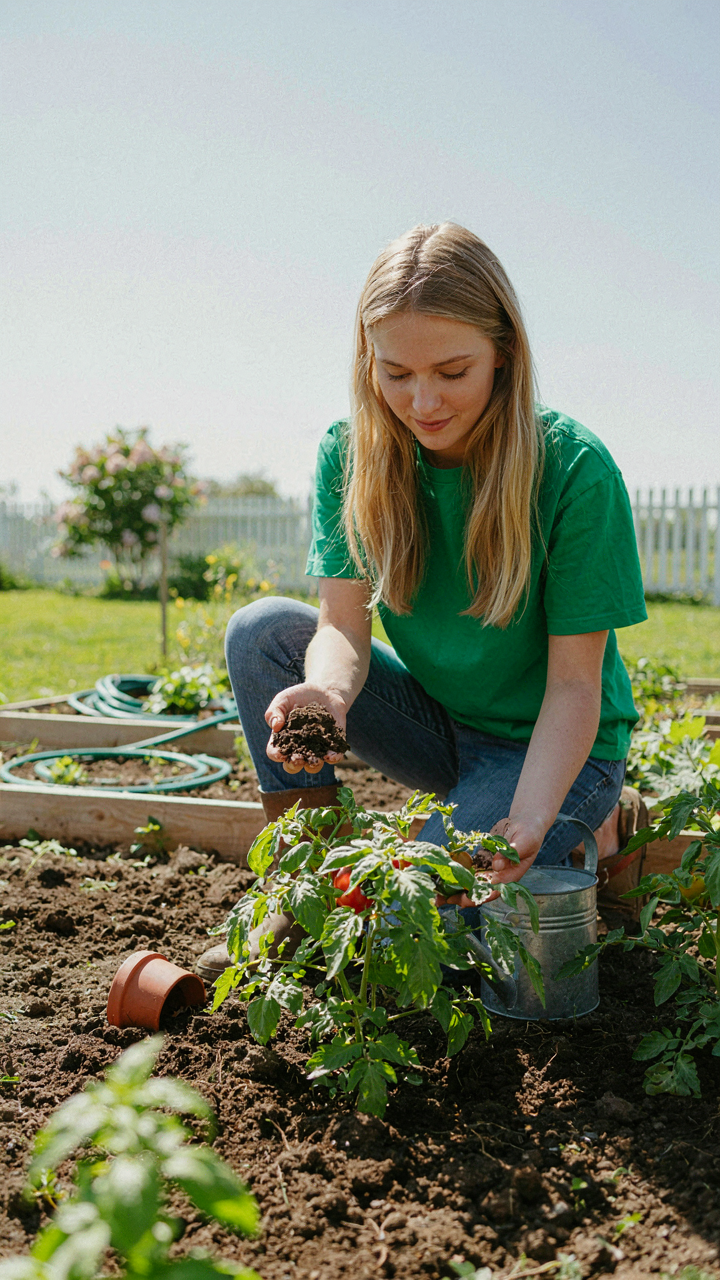
You want pollinators to show up because it validates your effort. Here’s what nobody says: soil health is a compound interest problem. Pollinators don’t come to poor soil. They come to plants that thrive in it. The plants thrive because the soil feeds them properly. That’s the chain. Your garden layout means nothing if the ground beneath it starves everything you plant.
Soil biology moves like an economy. Microorganisms, fungi, and organic matter function as capital. You either invest or you withdraw. Most garden advice treats soil as inert dirt you buy by the bag. That’s why gardens collapse after two seasons. Build soil structure through decomposition cycles. Add organic matter annually. Test your pH. Stop waiting for magic and start building fungal networks that actually feed your plants year after year.
Water Timing Determines Bloom Duration
Water management isn’t romantic. It’s a delivery system with one job: keep flowering plants blooming when pollinators need food. The common mistake is watering on a schedule instead of reading what the soil actually needs. Inconsistent moisture kills bloom cycles. Pollinators vanish when flowers stop opening because you flooded the bed, then let it crack.
Pollinator plants need established root systems before they flower hard. Water deeply but less frequently during establishment. This forces roots down, not out. Once plants are rooted, adjust watering to match bloom phases. Most native plants flower when soil moisture peaks in spring, then again after mid-summer rains. Mimic that pattern. Water in early morning. Measure soil moisture three inches deep before watering again. Get this right and your garden maintains continuous bloom without waste.
The Strategic Layering Method: Building A Multi Dimensional Pollinator Garden Design

Height Zones Create Foraging Territories
You want this to look effortless and abundant, which means you’re avoiding the hard truth: most pollinator gardens fail because they’re flat. Ecology borrowed the concept of stratification from forest structure, and your garden operates the same way. The canopy layer, understory, and ground cover aren’t decorative choices, they’re functional territories. Different pollinators forage at different heights. Bees work flowers at varying levels depending on body size and tongue length. A single plane of blooms starves half your potential visitors before they arrive.
Build three distinct height tiers using actual plant architecture, not forced supports. Place tall perennials and small shrubs in back or center (24 to 48 inches), mid-range flowering plants in the middle (12 to 24 inches), and ground huggers in front (under 12 inches). This isn’t aesthetic layering, it’s resource distribution. The layering creates microclimates too, reducing wind stress on delicate flowers and holding moisture longer. Each tier flowers on its own schedule, which directly feeds into your succession strategy.
Bloom Sequencing Prevents Resource Gaps
The consensus says plant a mix of spring, summer, and fall bloomers. That’s incomplete. You need to map actual flowering windows across species because a two week gap in May destroys a thriving population. Think of succession planting as inventory management for nectar and pollen. You’re stocking shelves continuously, not restocking once a season.
Start by cataloging bloom dates for every plant you’re considering. Overlap them aggressively at transition points, spring to early summer and summer to fall. Early bloomers should still be producing when mid season flowers peak. This requires naming specific cultivars with documented flowering ranges, not just “tulips” or “asters.” Plant in clusters of three to five of the same species to create visual targets and minimize pollinator search time. The mechanism is simple: continuous availability means pollinators establish residency instead of moving elsewhere.
The Energy Transfer Model: Optimizing Your Pollinator Garden Layout For Efficiency
Plant Choices Maximizing Nectar And Pollen Output
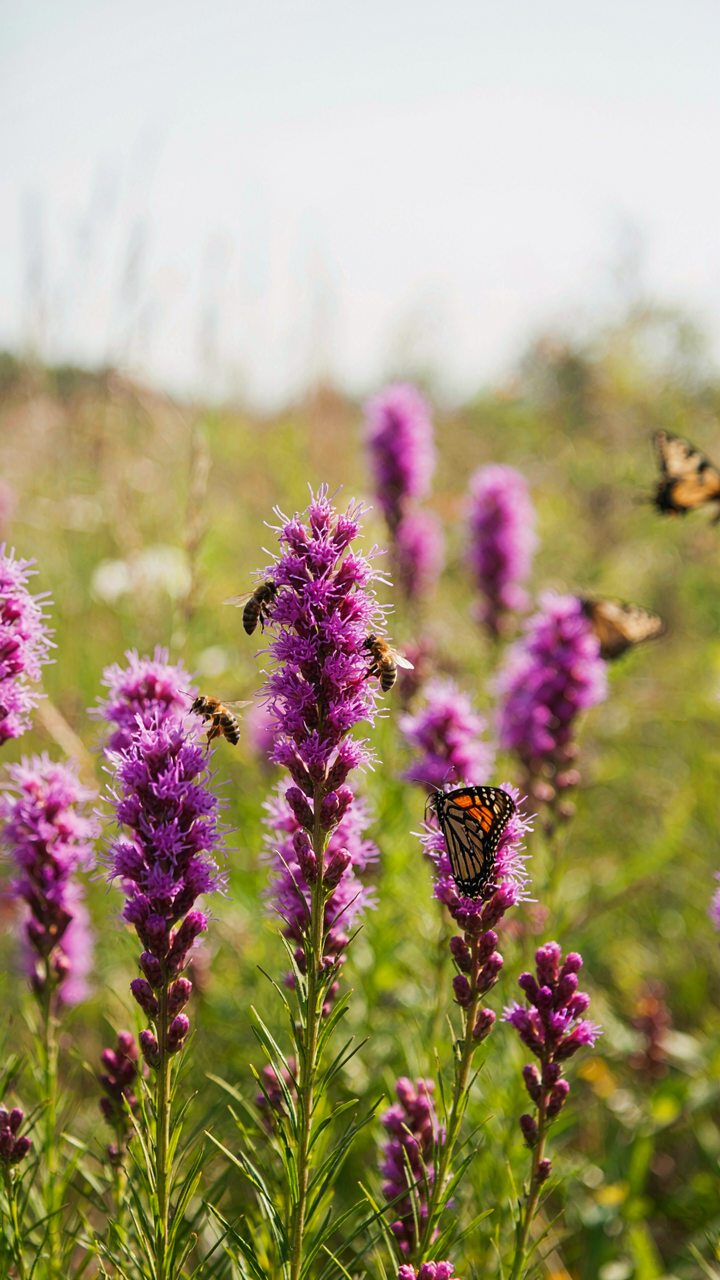
You want pollinators to show up and stay, which means you’re really asking: how do I make my garden worth their metabolic investment? Thermodynamics teaches us that energy transfer efficiency depends on the quality and quantity of fuel available—in a pollinator garden layout, this translates directly to nectar sugar concentration and pollen protein density. Most gardeners plant whatever blooms prettily and wonder why bees don’t stick around. That’s lazy.
The mechanism is simple: pollinators calculate nectar energy payoff against flight cost. High-yield plants force them to return repeatedly and recruit nestmates to your garden. Native milkweed, blazing star, and bergamot deliver both nectar and pollen reliably across seasons. Avoid hybrid ornamentals bred for visual appeal but sterile or low-nectar. Cluster these high-output plants in patches rather than scattered singularly—this reduces search time and confirms the pollinator’s choice to forage here over the neighbor’s lawn.
Flower Density And Proximity For Efficient Foraging Routes
Network theory reveals that foraging efficiency climbs when nodes cluster tightly enough to minimize travel distance between reward points. Your pollinator garden layout functions as a network where flowers are nodes and flight paths are edges. The common mistake: spacing plants “for visual balance” or following generic 12-inch rules. Wrong. Dense clustering of blooms creates what pollinators perceive as a single profitable patch, not scattered opportunities.
Test density by standing in your garden and counting blooms within a 3-foot radius. Optimal zones contain 8-12 open flowers per 3 feet during peak season. Plant in blocks of 3-5 specimens per species minimum, positioning bloom times to overlap so pollinators encounter continuous reward. This forces them to establish a foraging route through your garden instead of treating it as one stop among many. Measure your layout by counting daily pollinator visits before and after density adjustment—this is the only metric that matters.
Beyond Flowers: Integrating Host Plants In Your Pollinator Garden Plans

What Caterpillars Actually Need To Survive
You want pollinators. What you really want is proof your garden works. The mechanism nobody states: butterflies and moths don’t eat nectar during their caterpillar stage. They eat specific host plants, period. No host plants, no caterpillars. No caterpillars, no butterflies. You can fill your garden with every flowering plant on earth and produce zero butterflies because you skipped the one plant that feeds their larvae.
Host plants are non-negotiable for completing the life cycle. Each butterfly and moth species evolved to lay eggs only on plants their caterpillars recognize as food. A monarch caterpillar will starve surrounded by milkweed relatives if you plant the wrong species. Milkweed, parsley, fennel, nettles, and lupines aren’t decoration. They’re the infrastructure. Allocate 30 to 40 percent of your garden space to host plants, not flowers. This is the trade most gardeners refuse to make because host plants often look unremarkable.
The Tension Between Looking Good And Actually Working
Common advice says plant everything close together for visual impact. That’s incomplete. Biology calls this principle “resource partitioning,” and it applies directly to pollinator garden layout: you must separate nectar sources from host plant zones or sacrifice both functions to visual mediocrity.
Host plants need space to grow their full structure without competition. They need room for caterpillars to feed without overcrowding, which triggers disease and predation losses. Plant host plants in loose clusters at the garden’s edges or in dedicated zones. Position nectar flowers in front where they read visually, but keep the supporting infrastructure visible and functional behind them. Your garden won’t photograph as an Instagram moment. It will produce pollinators. Measure success by caterpillar count and emergence dates in spring, not by how the layout appears in a single season photo.
The Front Yard Garden Revolution: Redefining Public Spaces
When Your Lawn Becomes Radical
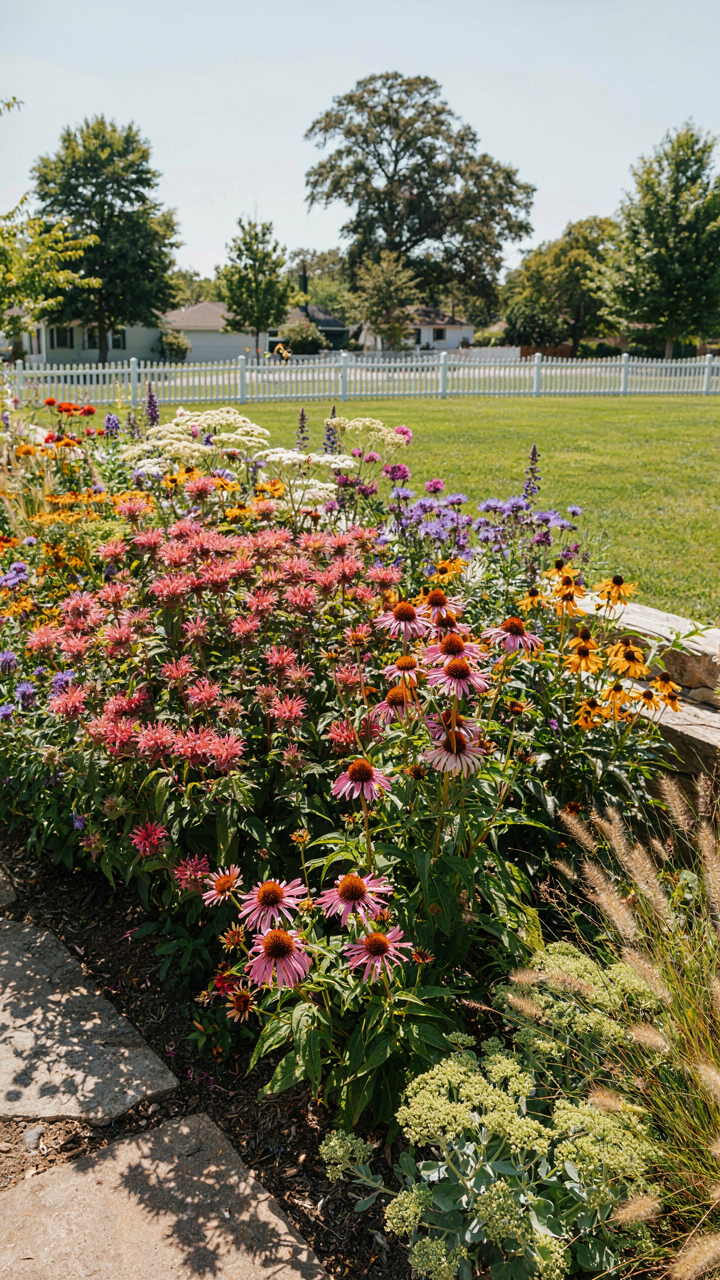
You want permission to break the rules without facing consequences. Here’s the mechanism: HOA restrictions exist because boards equate uniformity with property values, not because ecological design destroys them. Landscape ecology shows that edge habitat—the transition zone where two ecosystems meet—generates the highest biodiversity. Your front yard is an edge. The board sees monoculture as control. You see it as waste.
Most HOA conflicts stem from vague language in covenants. Words like “maintained” and “attractive” are interpretable. Native pollinator gardens can satisfy both if you frame them correctly. Plant densely enough that the space reads as intentional, not abandoned. Use hardscaping to signal deliberation. Document that native plants reduce water usage and maintenance costs, turning ecological choice into financial argument. This changes the conversation from rebellion to stewardship.
Visible Gardens Move Neighbors
People don’t adopt behaviors they can’t see working. A pollinator garden in your front yard functions as proof of concept for your street. Neighbors witness monarch chrysalises, bumblebees, native bee activity, and the absence of pesticide dependency. When they see tangible results instead of hearing abstract sustainability talk, adoption follows.
The mechanism is social proof applied to land use. Visibility accelerates community shift more than any newsletter or town hall. Start with high-traffic sight lines. Choose plants that flower in succession so the garden never looks dormant. Within two seasons, neighbors ask questions. Within three, you’ll see similar plantings emerge. Install your garden as the visible experiment that gives others permission to stop maintaining dead lawns.
Maintenance: The Unsexy Truth Of A Lasting Pollinator Garden

Know When To Leave It Alone
You want a garden that runs itself so you feel like you’ve hacked nature. That’s the real reason maintenance matters to you. The mechanism is this: a pollinator garden doesn’t fail because pollinators leave. It fails because you keep solving problems that don’t exist. Over-management kills the system faster than neglect ever could. Most gardeners treat their pollinator space like a lawn, intervening weekly. The opposite approach works better. Identify what actually breaks the garden’s function, then ignore everything else.
Benign decay supports more insects than perfection does. Dead stems, leaf litter, and bare soil patches aren’t signs of failure. They’re habitat. Native bees need hollow stems for nesting. Ground-nesting species need compacted soil with minimal vegetation. Overwintering insects shelter under fallen leaves. Pull weeds that choke your planted species. Leave the rest. Your job is removing competitors, not managing appearance.
Strategic Weed Management For Beneficial Insects
Common advice says eliminate all weeds. That’s incomplete. Some weeds feed pollinators better than your planted species do. Dandelions, chickweed, and clover provide early-season nectar when nothing else blooms. The distinction between weed and wildflower is cosmetic, not ecological. What matters is timing and density. Remove weeds that establish before your natives do, blocking light and water. Keep weeds that bloom in gaps between your planned species’ flowering windows. This is triage, not eradication.
- Spring ephemerals: Clover, vetch, and chickweed bloom early when pollinators emerge hungry. Let them grow until your planted species take over, then pull selectively.
- Bare soil gaps: Weeds colonizing bare patches prevent erosion while hosting ground-nesting bees. Remove only if they shade adjacent plantings.
- Perennial competitors: Bindweed, thistle, and bramble choke plantings by outcompeting for water and light. These require removal every season, usually by cutting below the soil line.
- Seasonal pull timing: Pull weeds after rain when soil is soft, reducing disturbance to ground-nesting tunnels. Mid-summer removal is safer than spring, when nesting activity peaks.
- Edge management: Leave weeds at garden margins and borders. These buffer zones protect interior plantings while providing structural refuge for beneficial insects during storms.
Maintenance is leverage management, not labor. Remove what actively prevents your system from functioning. Everything else generates value you can’t buy. Mark your calendar for two removal sessions per year: early spring before nesting season intensifies, and late summer before fall dormancy. This cadence keeps competitors down while preserving the chaos that makes a pollinator garden actually work.
The Unspoken Advantage: Your Pollinator Garden As A Personal System

What Watching Actually Teaches You
You want a pollinator garden because it makes you look intentional. Here’s what actually happens: you stop being passive about cause and effect. Every day you observe a system you designed, you train your brain to spot patterns nobody else notices. This is feedback loops from systems thinking applied directly to your space. You plant clustered nectar sources and watch which bloom sequence pulls which insects. You move things. You see results. This builds something most people never develop: the ability to iterate on reality instead of theory.
The garden becomes a laboratory where you’re both scientist and subject. You learn to read environmental signals. Drought stress shows up in flower timing before it shows up in headlines. Pest pressure appears in specific zones before spreading. You start noticing microclimates you didn’t know existed. This isn’t meditation or mindfulness wrapped in marketing language. It’s operational intelligence about how systems respond to inputs. Your pollinator garden becomes the evidence that your decisions matter.
Adaptation Through Seasonal Tracking
Most gardeners plant once, then wonder why yields drop. Real observation means tracking what blooms when, what insects arrive in what order, and which layout choices failed. Resilience isn’t about adding more redundancy. It’s about reading the system’s actual performance data and adjusting before failure hits. You document which plants thrived during dry years and which collapsed. You note when pollinators appeared and disappeared. You move underperforming zones and reinforce what worked. This is empirical learning, not guessing based on seed packets.
The mechanical protocol is simple but demands discipline. Keep a dated photo journal of your garden every two weeks during growing season. Note which plants flowered, which insects appeared, and any layout issues you observe. After season one, you have baseline data. Season two, you modify one or two elements per zone and track outcomes. By year three, your garden becomes a refined system that responds to your local conditions, not generic design advice. You’ve built resilience through observation, not through hoping the original plan holds.
The Real Obstacle Isn’t Your Green Thumb; It’s Your Inability To See The Garden As A Complex Adaptive System

Most people treat pollinator garden layout like following a recipe. They don’t. Your garden breathes, shifts, and demands you respond to what’s actually happening, not what a guide told you should happen. Stop designing on paper. Walk your space tomorrow morning and map which spots get sun, where water pools, where wind hits hardest. Let the land dictate your layout, not your expectations. A garden only thrives when you stop trying to control it and start working with its actual rules.



