

Beyond Blooms: The Hummingbird Garden Ecosystem Fallacy

Garden Advice Strips Away The Real Problem
You want a hummingbird garden because it signals you have taste and ecological awareness. But here’s what nobody admits: most guidance tells you to buy specific flowers without explaining why hummingbirds actually visit your yard. The mechanism is territorial attraction, not plant collection. Hummingbirds defend feeding zones aggressively. They return to spaces where they’ve nested, fed, or fought rivals before. A random assortment of red blooms won’t trigger this behavior.
The standard advice lists trumpet vine, bee balm, salvia, and cardinal flower as if checking boxes matters. This approach misses the real variable: continuity and density. Hummingbirds need reliable nectar availability across the entire active season in your region, not just during peak bloom. One trumpet vine blooming in July doesn’t sustain a hummingbird population. You need overlapping bloom times and concentrated flower clusters that reward territorial defense.
Nectar Concentration Beats Nectar Counting
Biology teaches resource distribution theory, and hummingbird gardens follow this principle exactly: birds establish territories around resource density, not resource variety. You can plant twenty species with sparse blooms, or four species with dense clusters. The dense option wins every time because hummingbirds calculate energy return per defensive action. A hummingbird burns calories patrolling territory. If your flowers are scattered, the energy cost of defense exceeds the nectar gain. Clustered blooms flip this equation.
Most gardens fail because people underestimate the scale required. Hummingbirds need high nectar concentration in a small space to justify territorial investment. Plant salvias in groups of three to five, not singles. Deadhead spent flowers constantly to force reblooming rather than seed production. Space plants close enough that a hummingbird can defend multiple feeders from a single perch. This isn’t decoration strategy. It’s resource management that determines whether hummingbirds stay or migrate elsewhere.
The Inverted 80/20 Hummingbird Plants Principle

The Five Plants That Actually Work
You want to feel like you’ve done something thoughtful without admitting you’re overwhelmed by choice. Here’s the mechanism: hummingbirds respond to nectar density and flower shape, not variety. Borrow from economics—the Pareto principle applies here too. Five plant species will generate 80 percent of your hummingbird visits. The rest is decoration that costs maintenance and garden space.
Most gardeners plant twelve to fifteen species hoping to “maximize attraction.” Wrong. They dilute their effort. A hummingbird reads your garden as a food source or it doesn’t. Concentrated abundance beats scattered mediocrity. These five species do the heavy lifting because they flower in succession, offer high-sugar nectar, and match hummingbird feeding behavior across seasons.
- Trumpet Vine (Campsis radicans): Produces tubular orange-red flowers packed with nectar. Blooms mid-summer through fall. Requires full sun and spreads aggressively, so contain it with raised beds or trellises.
- Bee Balm (Monarda didyma): Dense clustered flowers in red, pink, or purple varieties. Blooms July through September. Tolerates partial shade and spreads via rhizomes. Divide every three years.
- Salvia (Salvia splendens or Salvia guaranitica): Tall spire flowers in red, blue, or purple. Long blooming window from early summer through frost. Annual in cold climates, perennial in zones 9 and above.
- Cardinal Flower (Lobelia cardinalis): Tall spikes of scarlet flowers. Blooms late summer through fall. Prefers moist soil and partial shade. Native to eastern North America.
- Zinnias (Zinnia elegans): Compact, dahlia-like flowers in red and orange. Annual with reliable nectar production. Plant in succession every two weeks for continuous bloom through fall frost.
These five give you coverage from June through the first frost. Plant them in clusters, not scattered across beds. Hummingbirds navigate by sight and memory. A tight grouping tells them: this is the refueling station. One trumpet vine, three bee balm plants, five zinnias in rotation—this is the actual protocol that moves the needle.
What To Cut From Your Garden
Most advice about hummingbird gardens ignores the damage caused by filler plants. Ornamental grasses, many perennials marketed as “hummingbird-friendly,” and low-nectar flowers create visual noise without function. They compete for water, nutrients, and space while producing almost nothing a hummingbird needs. This isn’t being selective—it’s being honest about ROI.
Petunias, marigolds, and cosmos get recommended constantly. They don’t work. Hummingbirds visit them rarely because the flower structure and nectar reward don’t match their feeding mechanism. They evolved for tubular, trumpet, or dense clustered shapes with specific nectar depths. A petunia funnel doesn’t align with their beak length or feeding angle. Cut them. Plant what works instead. Your garden becomes functional instead of decorative, and maintenance drops by half because you’re watering strategically around actual performers.
Designing A Hummingbird Garden Plan For Lazy Brilliance
The Geometry Of Attraction
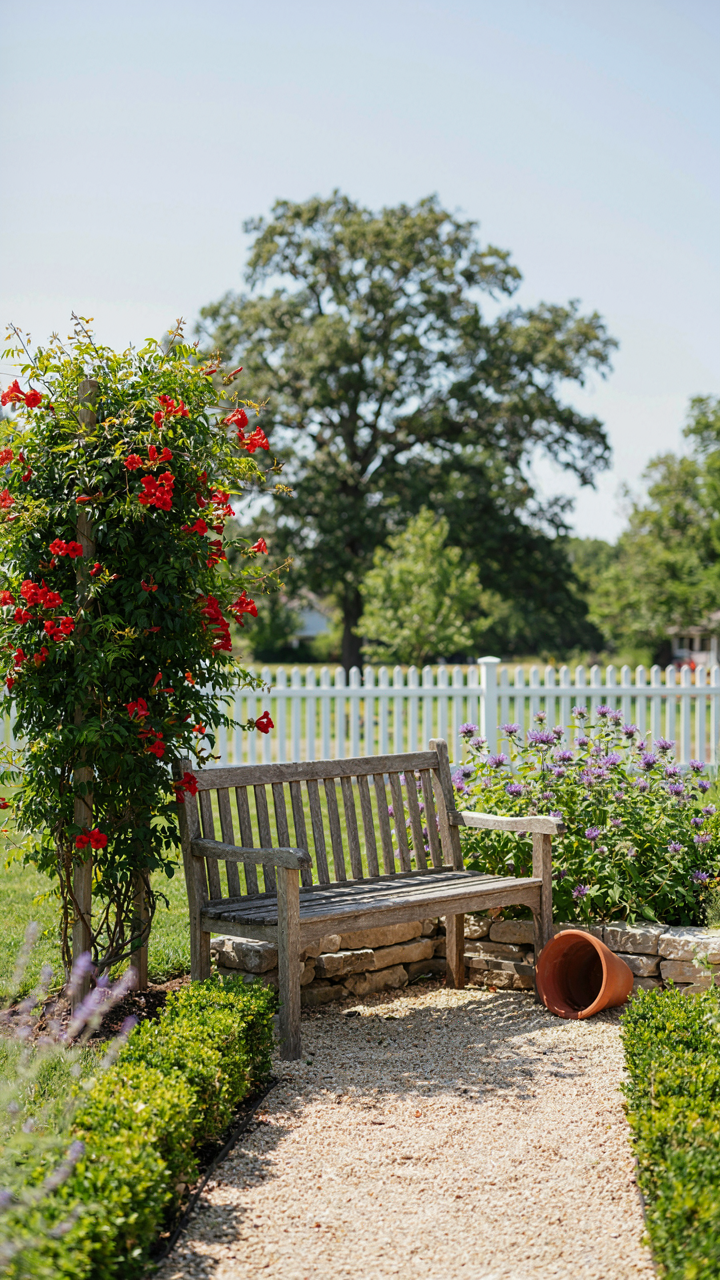
You want a garden that looks intentional without requiring constant fussing. Here’s what nobody says: hummingbird gardens work on the same principle as retail store layouts. Retailers use proximity clustering to force foot traffic patterns. You cluster flowers by bloom time and nectar production to concentrate hummingbird activity in zones you can actually see and maintain.
Most people scatter plants randomly and wonder why birds ghost their garden. The mechanism is simple: hummingbirds follow predictable feeding routes based on flower density. Plant high-nectar species in tight groupings near viewing areas. Space clusters eight to ten feet apart so birds establish feeding circuits. This compounds visual impact while cutting maintenance zones in half.
The Species Stack For Longevity
Nobody teaches this correctly: choose flowers based on bloom sequence and drought tolerance, not color alone. Trumpet vine flowers from mid-summer through fall. Bee balm peaks in summer. Salvias and penstemons extend into autumn. Stagger these by species and cultivar, and your garden feeds hummingbirds from May through November without replanting.
Flowers that demand rich soil and constant water make you a servant to the garden. Trumpet vine, native salvias, and hardy penstemons thrive in poor soil with minimal watering once established. Plant them in April or September. Water weekly for the first four weeks only. After that, they survive on rainfall in most climates. This removes the friction that kills most hummingbird gardens.
The Bio Attraction System: Engineering Pollinator Garden Flow
How Hummingbirds Actually Search For Food
You want this garden to feel effortless, like the birds just “found” your flowers naturally. What you’re really after is the appearance of zero friction. Here’s the mechanism: hummingbirds don’t forage randomly. Evolutionary biology calls this “optimal foraging theory” and it applies directly to how hummingbirds navigate your garden. They follow energy gradients, moving to densest flower clusters first, then branching outward to sparser zones. They’re running a cost-benefit calculation on every wingbeat.
Most gardeners space flowers randomly and wonder why hummingbirds miss half the garden. The error is treating plant placement as decoration instead of logistics. Hummingbirds establish mental maps of high-reward zones and revisit them obsessively. Cluster your highest-nectar flowers in a visible entry point, then create a deliberate path of decreasing density outward. This isn’t beautiful garden design. It’s a supply chain that hummingbirds can’t ignore.
Flight Paths And Recovery Zones
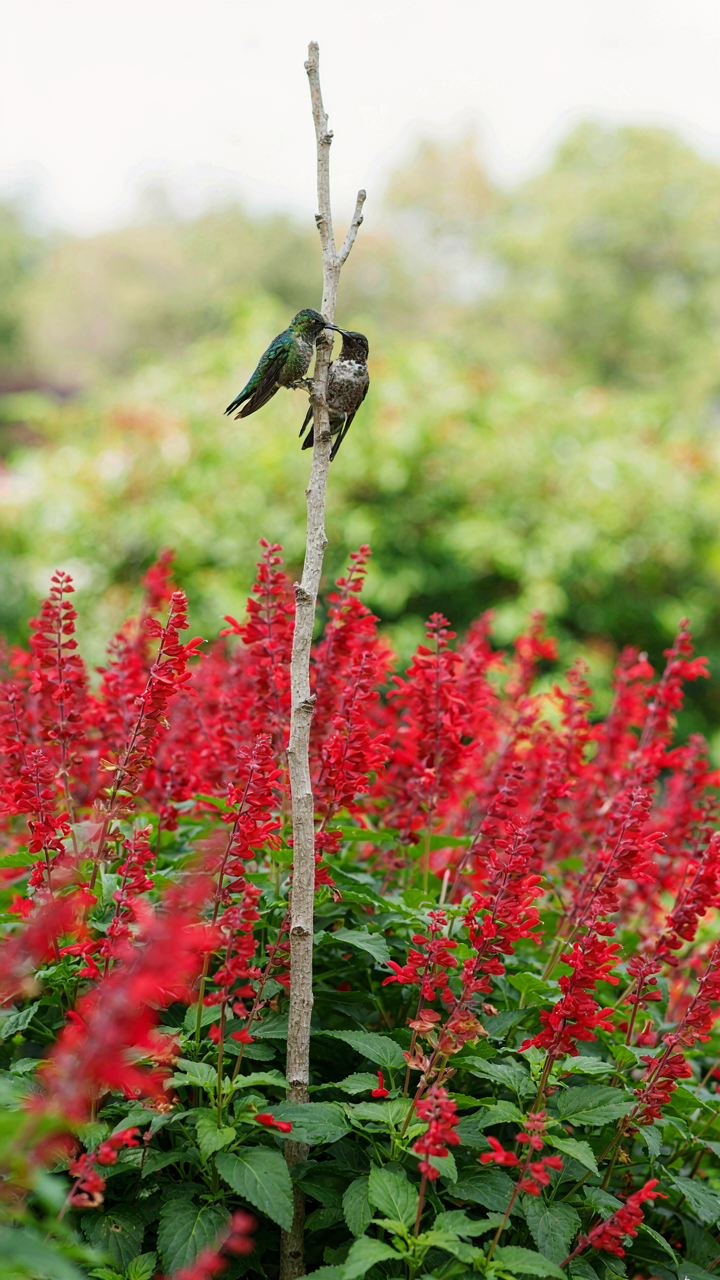
Rest zones aren’t a luxury hummingbirds tolerate. They’re a requirement. After sustained hovering, a hummingbird’s heart rate drops from over 500 beats per minute to under 50 during torpor. They need perching branches that sit within direct sightlines to flower clusters, not hidden in dense foliage where they lose visual reference to nectar sources.
Position flowering shrubs and small trees so their thin branches provide visible landing spots between flower groups. Hummingbirds read your garden in vectors and waypoints, not wandering paths. A branch placed six to eight feet from a dense trumpet vine or bee balm cluster becomes a refueling station they’ll use consistently. The bird approaches the branch, recovers energy, then launches to the next high-value zone. Repeat this pattern across your garden in a rhythm that mimics their natural territory mapping.
Perennial Hummingbird Garden: The Long Term Game

Build Systems That Sustain Themselves
You want a garden that works without you. That’s the real reason you care about perennials instead of replanting every spring. The mechanism here borrowed from ecology is succession: the natural process where plant communities evolve toward stability. Perennial hummingbird flowers create a self-reinforcing ecosystem where deep roots hold soil, attract consistent pollinators, and crowd out weeds. You plant once. The system compounds.
Perennials establish root systems that deepen over years, storing energy and water underground. This means less watering, less fertilizer, fewer decisions. Trumpet vine, bee balm, and coneflower don’t just survive a second season—they grow stronger. The soil biology shifts in your favor. Mycorrhizal networks form around established roots, improving nutrient uptake for the hummingbirds’ food sources. Your work decreases while output increases.
Stop Treating Annuals As A Default
The common advice says plant annuals for color. That’s incomplete and costs you time and money every single year. Annuals demand replanting, soil amendments, and constant deadheading. They’re cognitive debt disguised as flexibility. Yes, annuals bloom faster and flower longer within a single season, but perennials bloom reliably once established, require minimal intervention, and cost less over five years.
Perennial hummingbird flowers like salvia, phlox, and cardinal flower establish faster in year two and three than any annual ever will. They return without your input. You skip the spring panic of “what should I plant this year.” The garden becomes a decision you made once, not a recurring problem. Set your perennial beds in autumn or early spring, add mulch to regulate soil temperature, and the system handles itself for months.
Beyond Flowers: Unseen Factors Driving Hummingbird Garden Success

The Hidden Infrastructure That Matters More Than Blooms
You’re fixating on flowers because they’re visible and measurable, but that’s the trap. Hummingbirds need water and shelter as badly as they need nectar, and most gardens deliver neither. Think of this in ecological terms: a flower garden without refuges is a trap, not a habitat. Hummingbirds require constant access to shallow water for bathing and drinking, which regulates their body temperature during high-metabolism flights. A simple dripper or mister placed near flowering areas changes everything—they’ll return daily.
Shelter operates on the same principle as water: it’s non-negotiable. Hummingbirds need dense shrubs, small trees, or even bamboo clusters within fifteen feet of feeding zones. These aren’t decorative additions. They provide perching spots between feeding bouts and protection from predators and wind. Without shelter, hummingbirds burn calories faster than they consume them and abandon the garden within days.
The Pesticide Trap That Kills The Real Food Source
The standard advice tells you to keep insects away. This is backwards. Hummingbirds eat insects constantly, not just nectar. Small gnats, flies, and spiders provide essential protein and nutrients that flowers alone cannot supply. Chemical insecticides eliminate the entire food chain, starving birds in a garden that looks perfect on the surface.
Switch to zero-spray protocols immediately. Stop using broad-spectrum treatments even if you see minor pest damage. Let natural predators establish populations. Spiders, parasitic wasps, and predatory beetles control populations without collapsing the entire ecosystem. The garden gets messier. Hummingbirds get fed properly. This is the actual trade-off nobody admits.
Hummingbird Flowers: The Color Code Debunked
Shape Beats Color Every Time
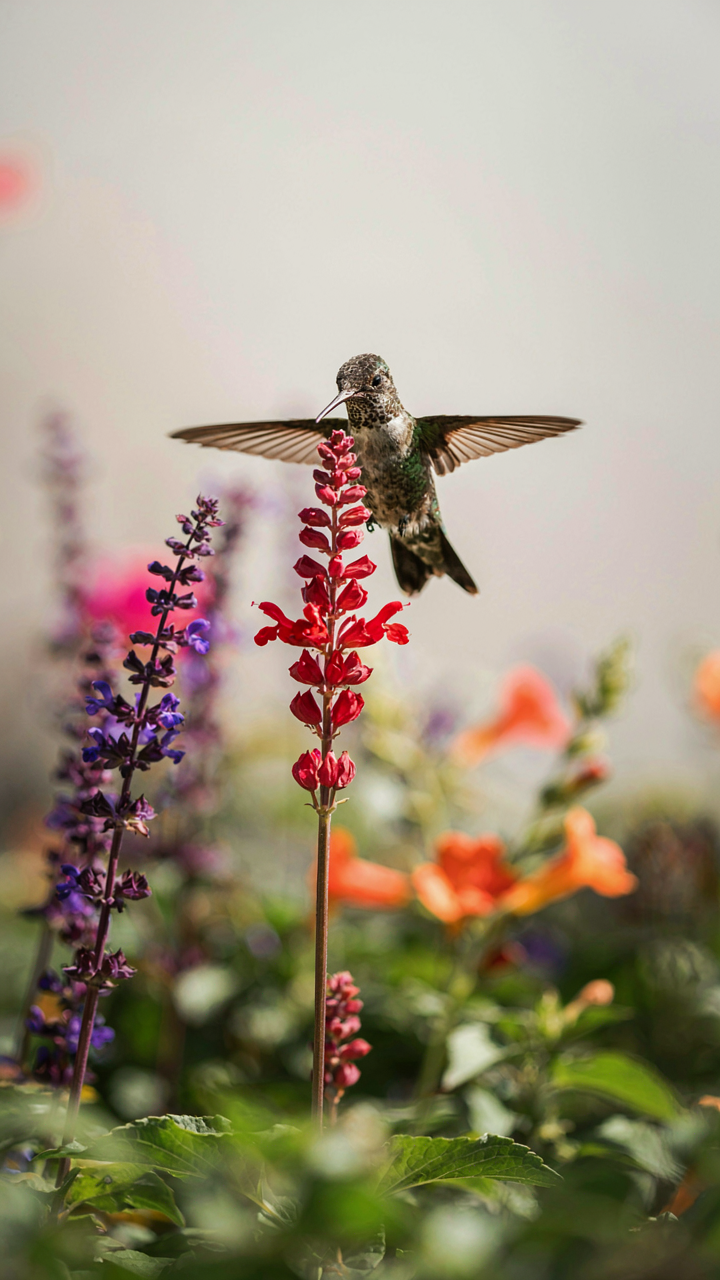
You want permission to plant whatever color makes your garden look Instagram-worthy without feeling like you’re doing it wrong. The real mechanism is this: hummingbirds don’t see red the way humans do. They see ultraviolet wavelengths humans can’t perceive. But here’s what actually matters—they care about shape. Tubular flowers with narrow openings work. Wide, flat blooms don’t. Red flowers happen to trend tubular, which is why the myth stuck.
Salvia, trumpet vine, and bee balm work because their form channels the bird’s beak straight to nectar. Orange zinnias and pink petunias will sit untouched in your garden not because of color, but because they’re architecturally wrong. The bird’s feeding apparatus evolved to match specific flower geometry, not wavelengths. Plant for structure first, then choose whatever color palette serves your design. This separation matters because it kills the false constraint that’s probably stopped you from plants you actually wanted to grow.
Bloom Sequence Creates The Attendance Pattern
Think of your flowering calendar like military logistics—supply chain timing. You don’t stockpile everything at once. You need rotation. Hummingbirds migrate on schedules. Early spring migrants hit different plants than late summer residents. If everything blooms in July, you’ve created a gap in March and September when birds pass through looking for fuel.
Start with early bloomers like currant and manzanita in spring. Layer salvias and penstemons into early summer. Finish with zinnias and cosmos in late August through frost. This staggered supply keeps hummingbirds visiting your space across their entire seasonal window instead of abandoning it when one flower type fades. The bird returns because you’ve engineered scarcity into continuity. Plot your blooms backward from your region’s migration dates, then select cultivars that fill those gaps.
Garden Flower Beds: The Neglected Structural Advantage

Positioning Beds For Light And Shelter
You want your garden to look intentional because chaos reads as neglect, and neglect kills hummingbird plants faster than any pest. The real mechanism here is microclimate design borrowed from agriculture: you’re creating zones of thermal and wind stability the same way farmers protect crops. Hummingbird flowers need six to eight hours of direct sun, but placement matters more than raw hours. A bed positioned on the east side of a structure gets morning sun without afternoon scorch. South-facing beds amplify heat in cold climates. North-facing placements work only for species like bee balm that tolerate partial shade.
Wind exposure determines whether your flowers survive or get shredded. Hummingbirds struggle to feed in gusts above eight miles per hour, which means your bed positioning is actually about their feeding efficiency, not aesthetics. Place beds within arm’s reach of a wall, fence, or dense shrub buffer on the windward side. Don’t cluster all beds in open lawn where wind rips through unobstructed. The physical structure around a bed matters more than the soil you fill it with.
Soil Foundation Before You Plant Anything
Everyone says “good soil is important” and then spreads two inches of topsoil over clay and wonders why plants fail. Soil health isn’t decoration. It’s the delivery system for every nutrient and water molecule your hummingbird flowers access. Dense, compacted soil doesn’t drain or retain nutrients evenly. Hummingbird flowers like salvia, trumpet vine, and zinnias need soil that drains well but holds enough moisture during hot spells. Test your bed soil before planting. Clay requires organic matter worked deep to break compaction. Sandy soil needs compost to hold nutrients. Loam still benefits from additional structure.
Build your beds six to eight inches high and fill with a mix of existing soil amended with three to four inches of compost worked in. The compost feeds soil microbes that make nutrients available to roots. Don’t buy “hummingbird soil” blends. Buy quality compost and work it in yourself. Refresh beds annually with half an inch of compost on top. This single protocol prevents ninety percent of plant vigor problems before they start.
The Real Obstacle? Believing You Need More Than Nature Already Provides

You don’t need a perfect garden. You need one flower. Plant a single trumpet vine or bee balm today. Watch what shows up. The hummingbirds don’t care about your design plan. They care that you stopped overthinking and started planting. Everything else compounds from that first choice. Your garden grows the moment you stop waiting for the right conditions and create conditions that work.



