
The Myth Of More: Why Less Pollinator Garden Means More

Density Over Sprawl
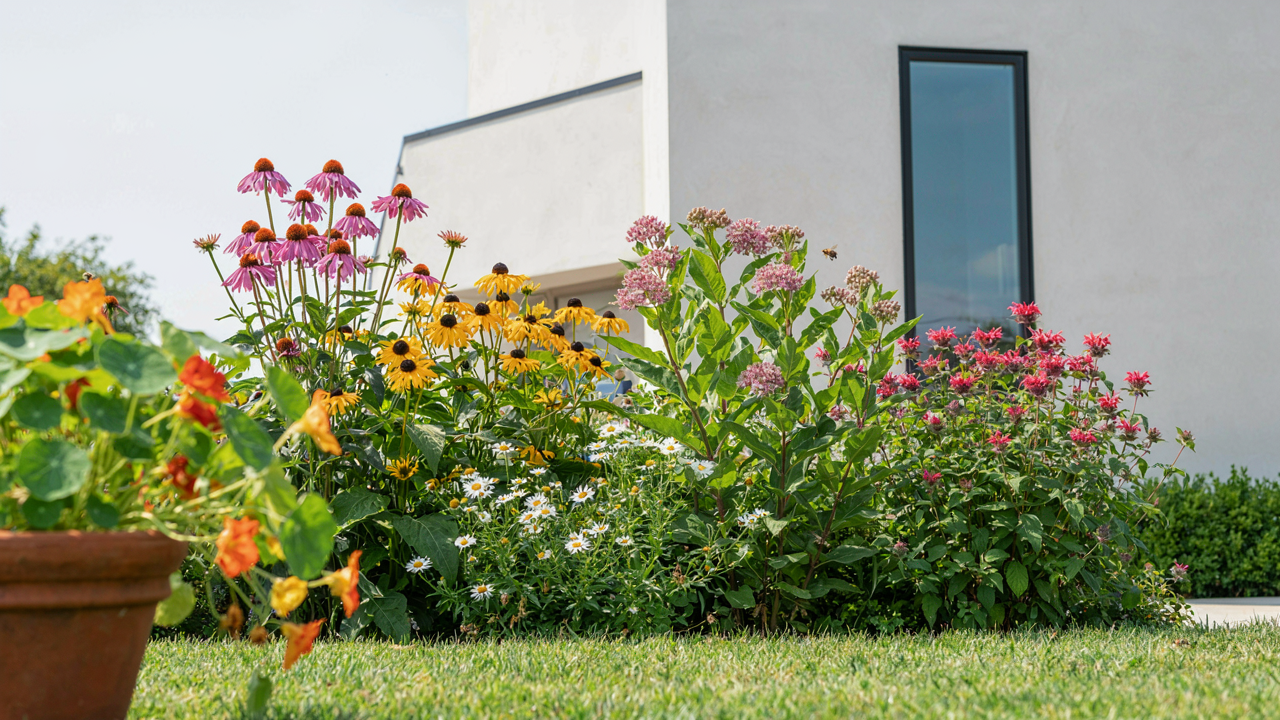
You want to cram everything in because you think abundance proves you’re doing it right. That’s the real tell. Here’s what actually works: ecology operates on concentration, not distribution. A small yard with high plant density in the right species beats a sparse larger space every time. You’re not building a museum. You’re building a food source with landing pads.
Three to five native plants selected for continuous bloom across seasons outperform ten random ornamentals. The mechanism is simple. Pollinators need reliable fuel within a tight search radius. They won’t work harder than necessary. Dense clustering of the right plants means they find food, stay longer, and return repeatedly. That’s where reproduction happens.
Native Plants First, Everything Else Second
Everyone says plant natives, then plants something halfway native and calls it close enough. That’s lazy. Native plants evolved with your region’s pollinator species over millennia. They have the nectar chemistry, bloom timing, and pollen structure those insects expect. A non-native flowering shrub might look identical to a native one. It won’t work the same way.
Your small yard requires precision because you have zero room for mistakes. Research the three to five native species that bloom at different times in your specific hardiness zone and soil type. Plant them densely. Skip the filler. This is where most people fail: they add decorative plants for visual continuity instead of sticking to the pollinator calendar. The calendar always wins.
Architectural Pollinator Garden Design: Form Follows Function
Geometric Spacing And Visual Rhythm
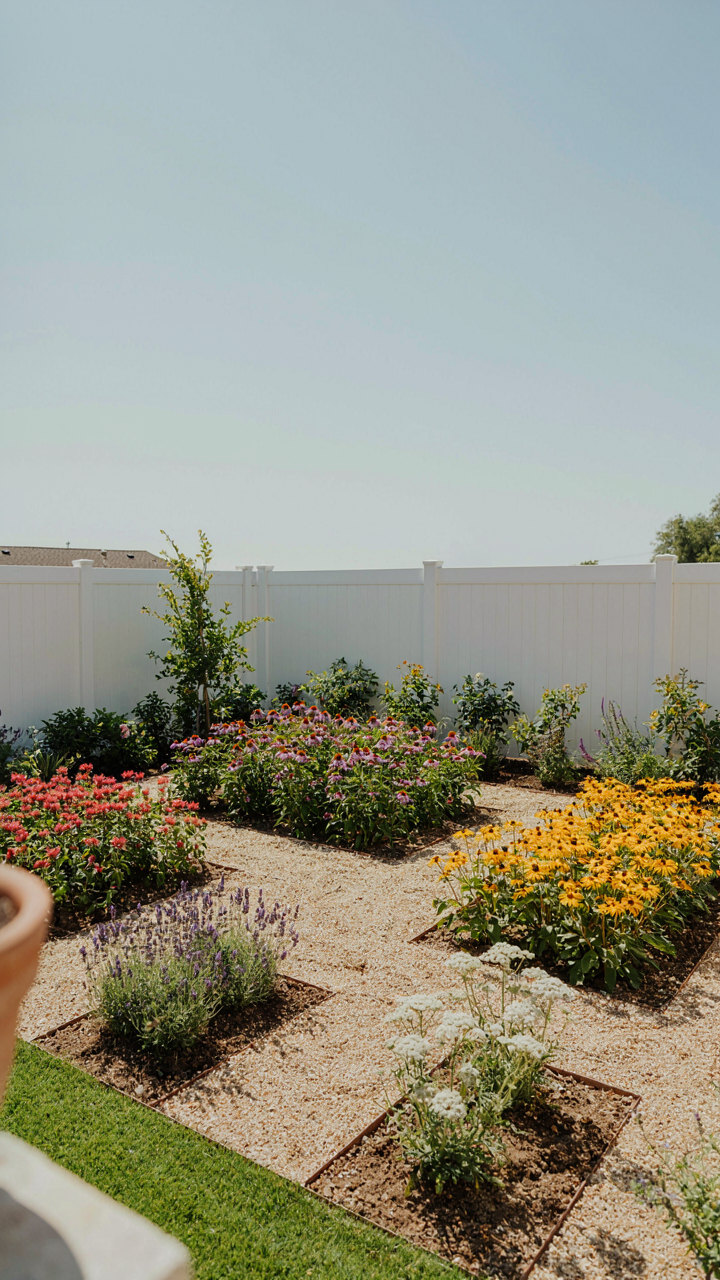
You want this to look intentional, not like you’re trying. That’s the real motive here—status through restraint. The mechanism is rhythm. In design theory, rhythm is the predictable repetition that signals control. Apply it to plant placement: use the same plant species in odd-number clusters (three, five, seven) spaced at consistent intervals across your beds. This creates visual continuity without looking scattered or desperate.
The grid is your friend. Small yards demand every square foot to work. Lay plants on intervals—12 inches, 18 inches, 24 inches depending on mature size—and repeat the pattern. Variegated foliage breaks up monotony without breaking the grid. Your eye reads order. Bees read abundance.
Stone, Mulch, And The Architecture Underneath
Hardscaping isn’t decoration. It’s bee infrastructure and the visual anchor that makes pollinator plants read as designed rather than overgrown. Use permeable materials—gravel, decomposed granite, flagstone with joints—that let water through and create microclimates. Heat-absorbing stone warms the ground for ground-nesting bees. Dark mulch does the same. You’re not just filling space between plants; you’re building nesting substrate.
The spacing between hardscape elements matters more than the elements themselves. Leave 3-6 inch gaps between stones or pavers. Bees need exposed soil to tunnel into. Bundle small branches or leave hollow stems upright in your beds—these become tube nests for mason bees and other cavity nesters. Hardscape anchors the design; exposed soil and gaps make it functional.
The Biomimicry Blueprint: Mimicking Wild Pollinator Habitats

Vertical Structure Creates Feeding Zones
You want this to look intentional, not accidental. That’s the real reason you care about layering. Ecology calls this “vertical stratification”—the principle that different species occupy different heights in a habitat. A pollinator garden for small yards works the same way: you stack plants at three heights to maximize the number of pollinators your space can support without wasting square footage.
Most people dump plants at one level and call it done. Wrong. Ground covers, mid-height shrubs, and tall perennials create separate feeding and nesting zones. Bees don’t forage at one height. Native plants evolved in layers, and pollinators evolved to work those layers. Stack them and you multiply your garden’s carrying capacity without expanding your footprint.
Native Plant Communities Over Aesthetic Clusters
Garden centers sell you monoculture blocks: five coneflowers, six black-eyed Susans, three zinnias. This is retail logic, not ecological logic. Native plant communities developed together over centuries. They share soil chemistry, root depth, and pest-management relationships you can’t replicate by picking pretty individual plants from different nurseries.
Research what native plants grew together in your region before development. Plant them in clusters of three to five the way they occurred naturally, not as specimen showpieces. This replicates the chemical and microbial relationships pollinators and plants depend on. Your small yard becomes a functioning ecosystem fragment, not a decorative arrangement that happens to have flowers.
Strategic Pollinator Plant Selection: High Impact, Low Maintenance Pollinator Garden
Native Plants Win The Ecological Argument
You want a garden that proves you understand something most neighbors don’t. That’s the real reason this section matters. Native plants aren’t trendy—they’re the baseline that works because they evolved with your region’s pollinators. The mechanism is simple: native plants and local pollinators co-evolved over millennia, so they need minimal intervention to function. A native plant doesn’t require extra water, fertilizer, or pest management because the insects that pollinate it already know how to find it.
Most advice tells you to “plant native” without explaining why non-natives fail. Non-native plants often bloom at the wrong time, produce nectar the wrong insects recognize, or require constant maintenance to survive your climate. Native species skip all this friction. Your small yard doesn’t have room for plants that need babysitting, which makes natives the only rational choice for low-maintenance pollination. Research your USDA zone and regional native plant societies—they publish species lists specific to your area, eliminating guesswork.
Bloom Succession Creates Continuous Nectar Supply
Think of your pollinator garden like a supply chain in economics: gaps in supply crash demand. A pollinator that finds nectar in April but nothing in July moves to another yard. Bloom succession means staggering your plant selections so something flowers every month the pollinators are active, typically March through November depending on region. This isn’t decoration—it’s the survival mechanism that keeps populations stable in small spaces.
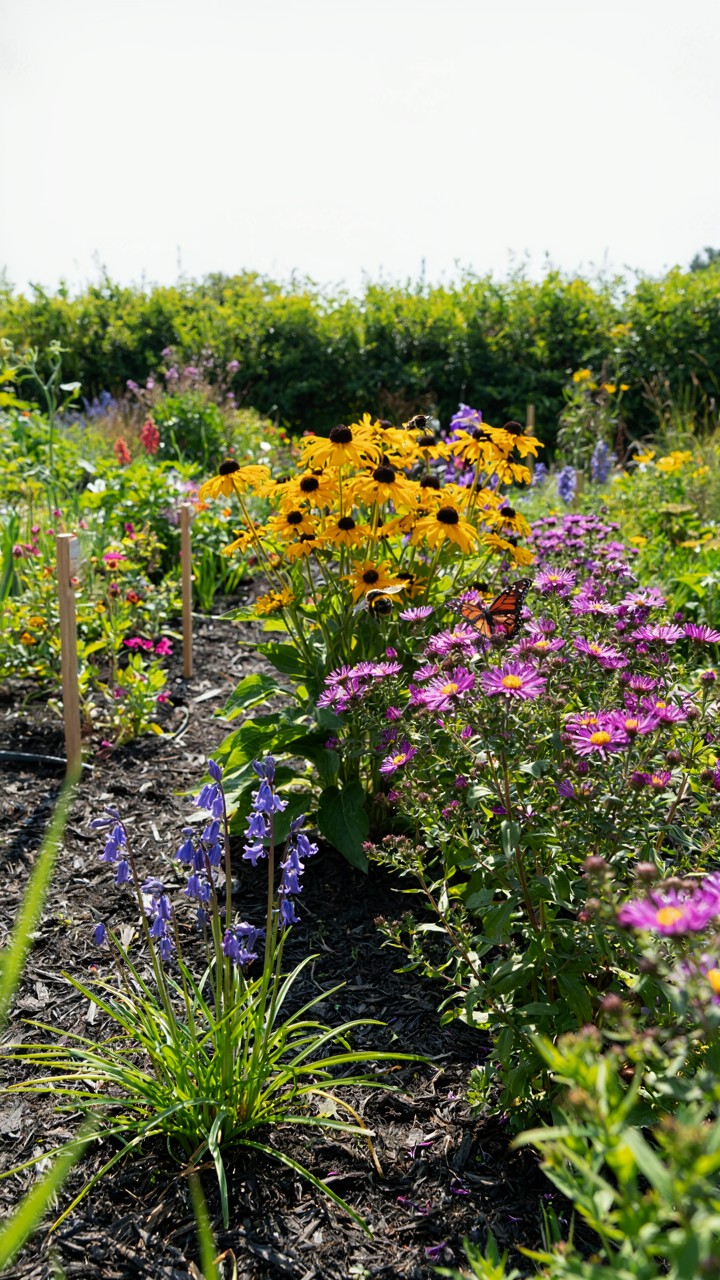
Most gardeners plant what looks good together without considering timing. They end up with everything blooming in June and nothing in September. The fix: choose native plants across early, mid, and late-season flowering windows. Early bloomers like Virginia bluebells, mid-season options like black-eyed Susans, and fall bloomers like New England asters create a three-phase nectar stream. Map bloom times on a calendar before you plant, then space your selections to cover gaps. This single protocol transforms a small yard from a seasonal pit stop into a reliable food source.
The “Edge Effect” Garden Layout Protocol
Where Pollinators Actually Spend Their Time
You want your small yard to look intentional, not like you threw plants at a fence and hoped. The mechanism nobody mentions: pollinators don’t work the middle of your garden. They work the edges. In ecology, the “edge effect” describes how species concentrate at habitat boundaries where two ecosystems meet. In a small pollinator garden, your edges are where nectar and shelter intersect, making them the high-traffic zones that determine success. Stop treating edges as afterthoughts.
The reason most small pollinator gardens fail is structural. Gardeners fill the center and leave the perimeter thin. This inverts where the work happens. Pollinators follow wind breaks, move along sight lines, and cluster where host plants meet landing zones. Your garden boundary isn’t decoration. It’s your primary real estate. Zone your plants by edge proximity, not by aesthetic symmetry.
Concentrate Resources Where Movement Happens
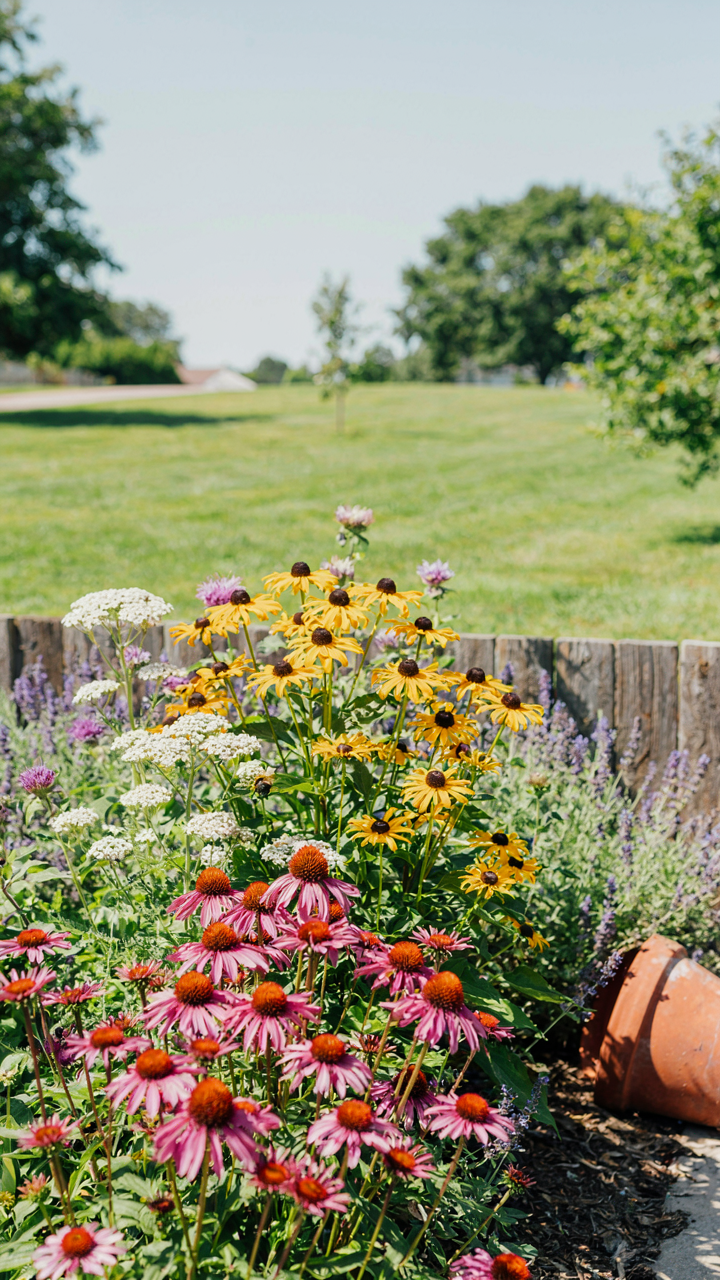
Military strategy teaches resource allocation through “lines of effort”—concentrating force along critical paths rather than spreading thinly across terrain. Apply this to your garden borders. Your edges are the lines of effort. Dense clustering of flowering plants along yard edges, fence lines, and pathways creates the conditions pollinators seek. They navigate using visual landmarks and scent corridors, both of which concentrate at boundaries. This isn’t theoretical. It’s how they move through space.
Most advice tells you to “add native plants around the edge.” That’s incomplete. You need layered plant heights, staggered bloom times, and tactile variation all compressed into your boundary zones. A single row of six-inch flowers fails. Three overlapping layers—ground cover, mid-height, and tall—work. Position dense clusters every three to four feet along edges to create repeated stopping points. Pollinators land, feed, shelter, then move to the next cluster. That rhythm is what transforms a garden into functional habitat.
Beyond Flowers: Essential Pollinator Garden Ideas

Water And Shelter Matter More Than You Think
You want pollinators to show up and stay, but you’re only planting flowers and hoping. That’s incomplete. Ecology borrowed from systems thinking shows us that pollinators need three layers: food, water, and refuge. Most small-yard designs fail because they treat flowers as the only variable. Water sources and nesting habitat are the infrastructure that keeps populations stable year-round, not seasonal visitors passing through.
- Shallow water dishes: Pollinators drown in deep water. Use saucers, bird baths with pebbles, or shallow basins filled to one inch. Change water every two days to prevent mosquito breeding.
- Native bee hotels: Drilled wooden blocks or hollow reeds provide nesting tunnels for solitary bees. Mount them on south-facing walls, six feet high, shaded from afternoon heat.
- Dead wood piles: Leave branches and logs on the ground or stacked loosely. Carpenter bees and beetles need them for larvae development and shelter.
- Brush piles: Stack pruned branches in a corner. They create insect habitat and windbreaks that pollinators use during temperature drops.
- Undisturbed mulch zones: Leave areas of mulch untouched through winter. Many native bees overwinter in loose soil and leaf material at ground level.
Most gardeners obsess over bloom timing but ignore that pollinators need year-round structure. A water source dries up in summer heat if you don’t refresh it. Nesting sites get destroyed by autumn cleanup. The mechanism is simple: shelter + water creates residency. Pollinators stay and reproduce in your yard instead of moving to the neighbor’s. That’s the difference between decoration and a functional ecosystem.
Bare Ground And Leaf Litter Are Not Neglect
Clearing every inch of soil to plant densely is the conventional move. It’s also why your pollinator garden fails to sustain populations. Seventy percent of native bees nest in bare or sparsely vegetated ground, not in structures you build. They need exposed earth to tunnel into, and they need the leaf litter left behind to overwinter successfully.
The real work happens in the margins. Leave patches of bare soil undisturbed through the season—no mulch, no planting, no “tidying up” in fall. Many native bee species lay eggs in burrows they dig themselves. Leaf litter that most gardeners rake away is actually maternity ward and shelter combined. A small-yard pollinator garden should have at least thirty percent of its square footage as unmulched ground or covered leaf litter. That feels wasteful until you realize it’s the only reason bees return the next season. Without it, you’re replanting annual flowers instead of building permanent habitat.
The DIY Garden Projects: Building Your Pollinator Sanctuary
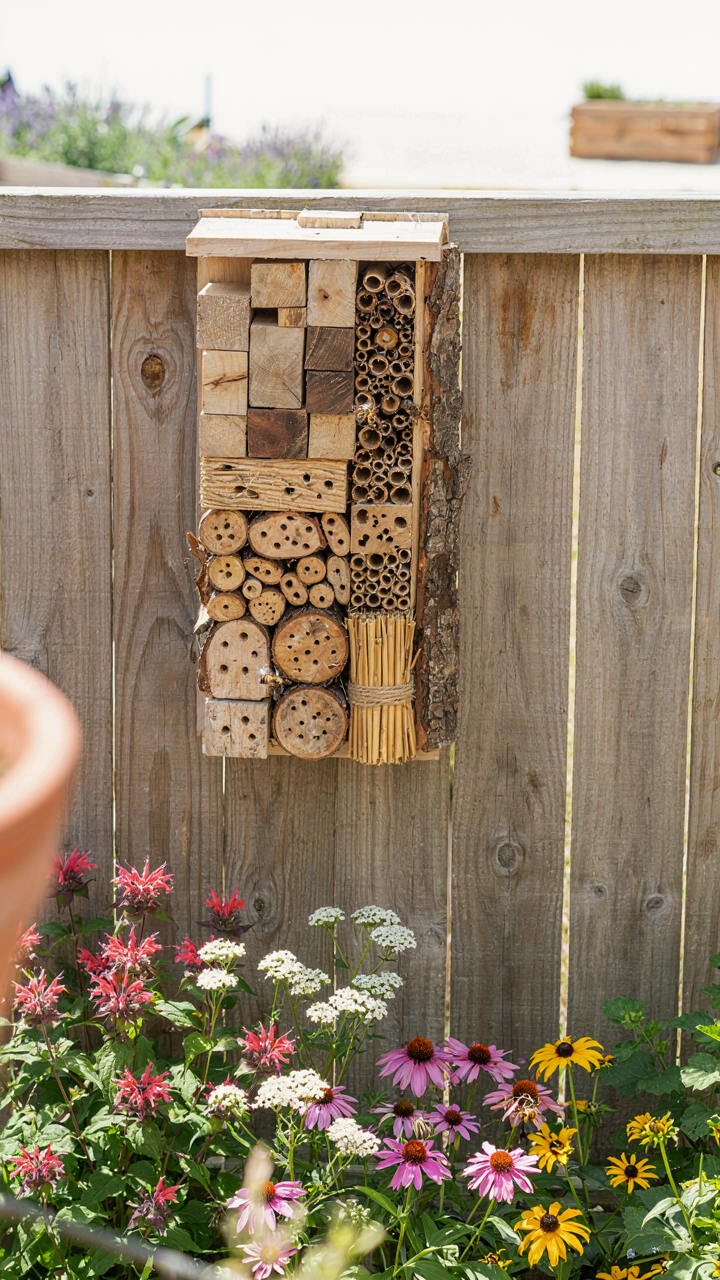
Structures That Actually Work
You want proof you did something. That’s the real reason you’re reading this. The mechanism is simple: pollinators need shelter from wind and rain, and they need it in the exact spot where they’re foraging. An insect hotel placed strategically becomes functional infrastructure, not decoration. A shallow bird bath serves the same logic as a watering hole in ecology—it’s a resource node that draws activity to your garden. Both structures solve a real problem: insects overheat and dehydrate, especially in small yards with limited cover. You build them because they compress ecological value into a small footprint.
Insect hotels don’t need to be complicated. Stack wood blocks with gaps, hollow stems bundled tight, bark sheets, and straw between a wooden frame. Position it within six feet of flowering plants so pollinators minimize travel distance. Bird baths work best when shallow, two to three inches deep, with a sloped bottom for grip and pebbles for landing spots. Placement matters more than aesthetics—put it near water-loving plants and shaded areas where insects shelter during heat. The structure itself is the payoff.
Reclaimed Materials Build Momentum
Common advice says upcycled materials are “sustainable and eco-friendly.” That’s marketing language. The real reason to use them is cost elimination and the physics of material density. Reclaimed wood, terracotta pots, slate, and bricks absorb and radiate heat differently than new materials, creating thermal zones that shelter insects and regulate soil temperature. You also solve the practical problem instantly: you already have these materials or can acquire them free. A pollinator garden funded through salvage scales faster than one waiting for budget.
Use reclaimed wood for raised beds or hotel frames because it weathers naturally and provides texture for crawling insects. Old terracotta pots stack into shelter units or crack open for crevice spaces. Broken slate and bricks layer as mulch or pathways that create gaps where ground-nesting bees burrow. Copper wire and metal screening from old hardware become structure fasteners. The mechanism is simple: constraints force specificity, and specificity builds systems faster than blank-check shopping lists. Source materials first, then design around what you have.
Maintenance Minimalism: The Art Of Productive Neglect

When To Cut, When To Leave Alone
You want a pollinator garden that runs itself so you can take credit without the work. Here’s the mechanism: pollinators need dead plant material for shelter and nesting sites through winter. The common advice to “clean up everything in fall” actively sabotages your garden’s function. Leave seed heads, hollow stems, and leaf litter in place until late spring when soil temps consistently hit 50 degrees. Cut back only what blocks new growth or creates disease vectors like dense, wet mats against crowns.
Timing matters because you’re reading a biological calendar, not following arbitrary rules. March and April cleanup gives overwintering insects time to emerge before you disturb their habitat. Remove diseased foliage immediately when you spot it, regardless of season. Leave everything else standing through winter. This single protocol change cuts your maintenance time in half while doubling pollinator density in small yards.
Reading The Garden, Not Managing It
Observational gardening borrows its logic from ecology: you’re monitoring feedback loops, not imposing control. Most gardeners intervene constantly because inaction feels like failure. The real mechanism is that native plants evolved to handle local conditions without your input. Spend two weeks simply watching what thrives, what struggles, and where pollinators congregate. Notice which flowers get visited first and which sit untouched. Document which plants spread aggressively and which stay contained.
This data replaces guesswork. If a plant underperforms in year one, remove it in year two before wasting more resources. If a species dominates the corner, you’ve found a low-maintenance anchor. If pollinators ignore a flower you planted, it’s poorly matched to your local insect population. Stop deadheading every bloom obsessively. Let plants set seed naturally and establish their own rhythm. This shifts you from manager to observer, which is where efficiency lives.
The Unseen Dividend: Beyond The Buzz
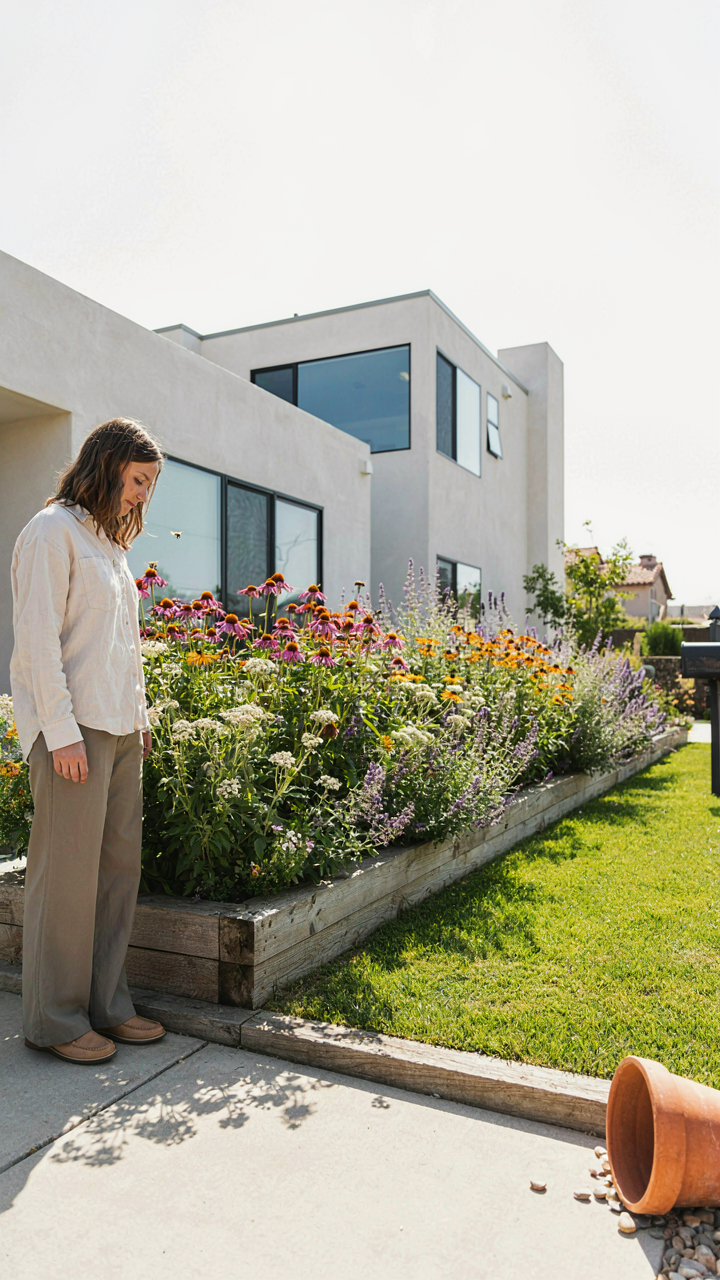
Your Yard Just Became An Asset
You want to know if this matters financially because you’re thinking about selling or you’re tired of your yard looking like everyone else’s on the block. Real estate agents call it “curb appeal,” but that’s marketing speak for a concrete mechanism: buyers equate visual distinctiveness with property maintenance and care. A pollinator garden signals investment and intentionality in a way a lawn does not. Homes with mature, designed landscaping command measurable premiums in competitive markets, not because flowers are objectively worth thousands, but because buyers read them as proof of ownership discipline.
The value compounds when your garden becomes a talking point during showings. Prospective buyers see native plants thriving in a small space and immediately think “this owner understands their property.” That perception translates to negotiating power. You’re no longer selling a yard with a garden; you’re selling evidence of competence. Documentation matters here: photograph your pollinator garden in peak bloom, note which plants attract which species, and keep maintenance records. This becomes part of the property narrative.
The Accountability Of Attention
Most people skip past this part because admitting you want connection to natural cycles sounds sentimental, which feels weak. It’s not. Ecology builds obligation, and obligation builds discipline. When you watch a specific pollinator return to your garden on schedule, you’ve created a contract with something real. That’s a psychological anchor most people never experience in their own yards.
The mechanism is straightforward: routine observation of your garden’s cycles forces you into slower decision-making. You notice when plants need deadheading because you’re watching for pollinators, not because a care schedule told you to. You recognize seasonal shifts earlier. You stop treating your outdoor space as background decoration and start treating it as a working system you maintain. This rewires how you approach small-space design entirely. The garden becomes a feedback loop, not a project.
The True Obstacle Isn’t Your Yard Size; It’s Your Addiction To Unnecessary Complexity

You don’t need a master plan. You don’t need native plant encyclopedias or soil pH meters or Instagram-worthy designs. Plant three things that feed pollinators. Water them. Let them live. Most people kill their pollinator garden before it starts because they treat a small yard like a design project instead of an ecosystem. Your job isn’t to create perfection. Your job is to create opportunity. Start today by buying one native plant and putting it in the ground. Everything else is just expensive procrastination dressed up as preparation.



