
The Monarch Myth: Why Your “Good Intentions” Kill Butterflies

You’re Planting The Wrong Thing At The Wrong Time
You want to feel like you’re saving something. That’s the real driver here, not the butterflies. The mechanism is simple: most people plant milkweed in spring, watch it grow through summer, then expect monarchs to show up on schedule. They don’t. Timing in a monarch butterfly garden follows the same principle as supply chain logistics—you need inventory positioned before demand arrives, not after. Monarchs migrate on photoperiod cues and temperature drops, not on your garden’s readiness.
Monarchs need nectar sources and milkweed at specific windows. Spring milkweed planting often misses the early migration in fall when monarchs head south. They’ll pass your garden before your plants mature enough to support caterpillar development. Fall-planted milkweed faces winter die-off in many regions, leaving nothing for spring migrants. The gap between what you planted and when monarchs actually need it kills your purpose before it starts.
Pesticides Hide In Plain Sight
You’ve eliminated the obvious killers—no bug spray, no fungicide. But your garden still poisons monarchs because you didn’t audit every input. Neonicotinoid residues persist in commercial plants from nurseries that treat seeds and soil before sale. Monarchs consume contaminated nectar and milkweed, their nervous systems fail, and they can’t migrate or reproduce. One application of systemic insecticide can render a milkweed plant lethal for weeks.
Fertilizers and herbicide drift from neighboring yards compound the problem. Herbicides kill milkweed before monarchs find it. Fertilizer runoff triggers algae blooms in water sources monarchs drink from during migration. Most people never consider these layers exist. Your monarch butterfly garden sits inside a chemical ecosystem you don’t control. Stop importing plants from commercial nurseries treated with systemic chemicals. Grow from seed or verify with your supplier that zero neonicotinoids touched the plant at any stage.
The Symbiotic System: Engineering A True Butterfly Habitat

Native Plants Drive The Entire Lifecycle
You want a monarch garden that actually works instead of becoming an expensive decoration. The mechanism is this: monarchs don’t just visit plants, they depend on specific native species to complete their life cycle. Without the right host plants, no caterpillars survive to become butterflies. Without nectar sources, adults starve. Milkweed is non-negotiable. Monarchs lay eggs exclusively on milkweed species, and caterpillars eat only milkweed leaves. Common milkweed, swamp milkweed, and showy milkweed are native across North America and produce the toxins that make monarch caterpillars unpalatable to predators.
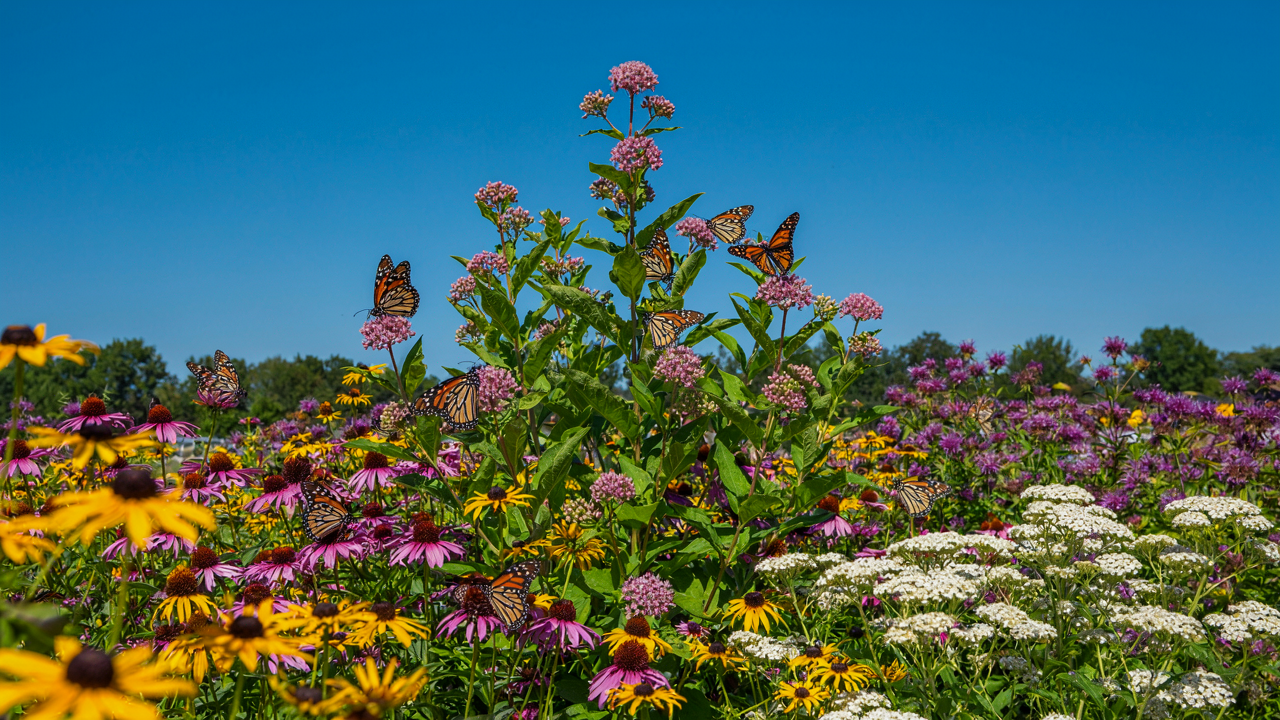
Native flowering plants create the nectar pipeline adults need before migration and during breeding. Black-eyed Susans, coneflowers, blazing star, and joe-pye weed bloom at staggered intervals through the season, preventing the gaps where hungry monarchs find nothing to eat. When you plant native species together, you replicate the plant community that evolved with monarchs over thousands of years. This isn’t sentimentality. It’s the difference between a garden that supports reproduction and one that merely attracts passing insects.
Microclimate Engineering: The Physics Of Survival
Microclimate thinking borrows from physics—the study of how energy and mass interact in confined spaces. Your garden’s microclimate is the localized weather system you create through placement, barriers, and ground management. Monarchs need specific energy inputs to thrive: sun exposure for wing development and thermoregulation, wind protection from storms and dehydration, and water access without drowning risk. A southern-facing bed gets 6 to 8 hours of direct sun, warming pupae and accelerating development. A northern exposure runs too cool for caterpillar growth.
Place dense shrubs or native grasses on the north and west edges to block prevailing winds that dehydrate caterpillars and exhaust migrating adults. Create shallow water sources using stones in bird baths or saucers so butterflies drink without falling in. Low areas collect water during rain; ensure drainage so roots don’t rot and standing water doesn’t breed mosquitoes that compete for nectar. Position milkweed in mixed sun and dappled shade to prevent leaf scorch in extreme heat while maintaining enough warmth for egg-laying females to locate host plants by sight and smell.
The Ecological Niche Protocol: Beyond Generic Pollinator Garden Design
What Monarchs Actually Need To Survive
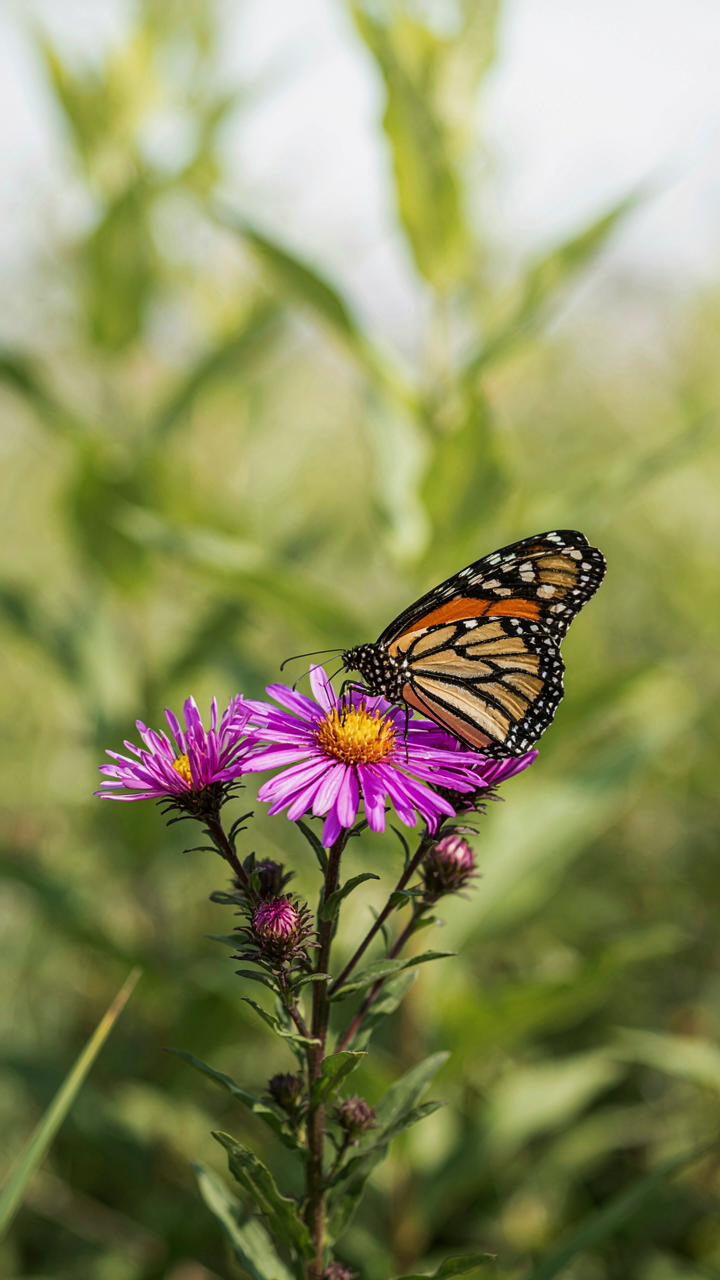
You want to feel like you’re doing something good without reading the actual biology. Here’s the mechanism: Monarchs need two completely different plant categories, and most garden guides blur them together into useless mush. Adult butterflies drink nectar for energy. Monarch caterpillars eat only milkweed leaves—nothing else works. Your garden fails the moment you treat these as interchangeable “pollinator plants.” The caterpillar stage is the bottleneck. No milkweed host plants means no reproduction, just adults passing through.
Milkweed species vary by region and bloom time. In the Northeast, common milkweed flowers June through August. Swamp milkweed blooms slightly later, extending the window. Showy milkweed works in drier regions. The specific species matters because local Monarch populations evolved to time their migration with native milkweed availability. Plant the wrong species and you feed caterpillars that can’t develop properly or at rates mismatched to your region’s Monarch generation cycle. Regional extension services list which milkweed species support Monarch populations in your specific zone—use that data, not national guides.
Continuous Bloom Through Host And Nectar Layering
Building layered bloom requires treating your garden as a production schedule, not an aesthetic display. You need milkweed plants flowering when eggs hatch and caterpillars feed, plus nectar sources throughout spring migration, summer breeding, and fall migration. This is sequential resource management applied to botany. Here’s the framework:
- Spring Nectar (April-May): Plant Virginia bluebells, wild lupine, and phlox to fuel arriving adults before milkweed emerges. These flower 3-4 weeks before most milkweed species leaf out.
- Early Milkweed Flush (May-June): Showy milkweed and butterfly weed provide host plants and early nectar for first-generation caterpillars. They establish the breeding cycle.
- Mid-Summer Hosts (June-August): Common and swamp milkweed sustain second and third generations. Their peak corresponds to peak Monarch breeding in most regions.
- Late Nectar Sources (August-October): Asters, blazing star (Liatris), ironweed, and Joe-Pye weed fuel southbound migration. These extend well past milkweed senescence.
- Native Wildflowers (Throughout): Black-eyed Susans, coneflowers, and bee balm provide secondary nectar when primary sources dip, preventing migration fuel gaps.
The timing trap most gardeners miss: milkweed stops flowering by August in many regions, but Monarchs still need nectar through October for migration energy storage. If your garden goes silent after July, migrating butterflies starve. Plant late bloomers aggressively—asters and ironweed are non-negotiable for fall populations.
The Unseen Warfare: Protecting Your Butterfly Garden From Predators

Build Defenses By Doing Less
You want a garden that looks managed and intentional because chaos feels like failure. But the real mechanism works backward: predators hunt in sterile, visible spaces. Dense native plantings create optical confusion and physical barriers that deter birds, wasps, and spiders from targeting monarchs efficiently. A garden that looks slightly wild is harder to hunt in.
Monoculture gardens and cleared ground telegraph easy prey. Monarchs evolved in diverse plant communities where visibility matters for survival. Plant milkweed in clusters rather than scattered rows. Add native flowering plants that create layered canopy: low ground cover, mid-level shrubs, tall native plants. Predators need clear sight lines and open approach routes. You eliminate those by accident when you stop trying to organize everything.
Let Competing Insects Do The Work
Ecology operates on predator-prey balance, not removal. Parasitic wasps, ladybugs, ground beetles, and spiders target the same pests that threaten monarchs: aphids, mites, flies. The mistake most gardeners make is assuming predator control means eliminating predators. It means cultivating competing predators that keep pest populations fractured. A wasp hunting an aphid is a wasp not hunting a caterpillar.
Introduce native flowering plants that bloom at different times to sustain beneficial insects year-round. Shallow-flowered plants like yarrow, coneflower, and zinnias feed parasitic wasps and small beetles through extended seasons. Stop using any pesticide, even organic ones, for at least one season. Beneficial insect populations need runway time to establish density. Your only job is providing shelter and continuous food. The predators handle the rest.
The Evolutionary Imperative: Designing For Monarch Resilience

Stacking Milkweed For Genetic Insurance
You want your garden to feel stable and permanent. That’s fear. The mechanism is this: monarchs don’t survive on one milkweed species. Biology calls this genetic diversity. In your garden, it translates to planting multiple milkweed species across different zones. Each species has different soil requirements, bloom times, and chemical defenses. When one fails due to drought or disease, others sustain the population.
Plant native milkweed species suited to your region. Asclepias incarnata tolerates wet soil. Asclepias syriaca thrives in poor ground. Asclepias tuberosa prefers dry, sandy patches. Showy milkweed works in western gardens. This isn’t redundancy. It’s biological redundancy as engineering principle. One species flowering late covers gaps when early bloomers fade. Your garden becomes a hedge against single-point failure.
Culling Weak Stock, Keeping Strong Genetics
The common advice says to help every plant survive. That’s wrong. Natural selection works through elimination, not rescue. Monarchs evolved alongside milkweed by eating the strongest, most defended plants. Those plants passed resistance genes forward. In your garden, remove milkweed that underperforms. Pull plants that struggle with pests. Let aggressive, healthy specimens dominate and self-seed.
Stop watering weak plants trying to nurse them back. Stop fertilizing to force growth in poor soil placement. The plants that thrive without intervention carry the genetics your caterpillars need. Let the strong plants thrive, and they’ll colonize your garden faster. Next season, you’ll have denser milkweed from seed that already adapted to your specific conditions. This is how you build a monarch garden that runs itself.
The Minimalist Monarch Butterfly Garden: Maximizing Impact, Minimizing Effort

Concentrate Your Milkweed, Not Your Effort
You want the garden to look intentional without becoming a second job. Here’s what nobody says plainly: plant density beats plant count. Monarchs use echolocation-like mechanisms to locate milkweed patches, and they respond to visual clustering. One dense milkweed stand draws monarchs better than five scattered plants across your yard. Biology here operates on signal strength, not variety. Place milkweed in the sunniest, most sheltered corner of your property.
The placement strategy compounds over seasons. Monarchs returning to your garden in subsequent years lay eggs near where they found them before. A concentrated patch becomes a reliable waypoint during migration. You get reproductive payoff without expanding maintenance footprint. This means less weeding, less staking, less watering across distributed areas. One zone demands attention. Everything else stays low-friction.
Volunteer Plants Are Free Labor
Most gardening advice treats weeds as failure. That’s incomplete. Native plants you didn’t plant have already adapted to your soil, water table, and microclimate. Milkweed itself volunteers in many regions. If common milkweed, showy milkweed, or swamp milkweed germinates on its own, you remove nothing. You reduce it if it crowds your intentional plantings, but a volunteer patch at the garden’s edge costs you zero effort while feeding caterpillars.
The real mechanism is opportunity cost calculation. Pulling volunteer milkweed to “keep things tidy” trades free production for zero gain. Monarchs cannot distinguish between planted and volunteer plants. They lay eggs on both. Your job becomes selective, not total, removal. Keep volunteers that stay contained. Remove only those that strangle your intentional species or encroach into unwanted zones. This shifts maintenance from constant weeding to seasonal triage.
The Data Driven Pollinator Garden: Measuring Real Impact, Not Just Hope

What You’re Actually Tracking
You want proof your garden works because admitting you don’t know feels like failure. Here’s the mechanism: monarch presence follows milkweed density and nectar availability, not sentiment. Track what matters by counting milkweed plants per square foot, recording adult monarch visits weekly, and noting egg counts on leaf undersides during peak season. Document weather conditions alongside observations because temperature and rainfall shift monarch behavior directly.
Measurement separates gardens that attract monarchs from gardens that merely look like they should. Use a simple notebook or spreadsheet. Record date, time, temperature, plant species in bloom, and monarch sightings. Count eggs on milkweed plants bi-weekly during July and August when females actively lay. Note which milkweed varieties host the most eggs. This data reveals whether your garden functions or merely exists.
Design Iteration Through Observation
Systems thinking demands feedback loops that adjust outputs based on measured results. In garden ecology, your feedback loop is the monarch lifecycle itself. If you observe few eggs in July, your milkweed spacing or quality needs work. If adults visit but lay nothing, nectar sources nearby are insufficient or timing is off. Increase milkweed density by 20 to 30 percent the following season if egg counts stayed below five per plant. Plant early-blooming nectar species like wild bergamot if monarchs arrive before your main flowers open.
Your garden evolves or stagnates based on what the data shows, not what you hoped. If a specific milkweed cultivar attracts zero eggs while common milkweed thrives, remove the underperformer. If monarch visits spike when certain asters bloom, expand that planting. If late-season caterpillars starve, your milkweed matured too early and died back. Adjust harvest timing or add a fall-blooming milkweed variety. Review your notes each winter and implement one structural change per season.
Beyond The Garden: Scaling Your Butterfly Habitat Influence

Building Networks That Actually Move Monarchs
You want to matter beyond your backyard. The real motive here is seeing your work replicate in other yards, other neighborhoods, other regions. That only happens if you stop treating your garden as an island. Think of this through network topology: a single node has zero influence. A connected node becomes a transmission point. Your garden becomes a hub when you document what works, share the exact milkweed species that thrived in your zone, and create a repeatable framework others can copy without guessing.
The mechanism isn’t complicated: people copy what they see work. Start a neighborhood milkweed propagation swap where residents exchange seedlings you’ve grown. Document your planting map and soil conditions, then post it somewhere accessible so neighbors replicate your layout in their yards. Host a single fall monarch tagging session where residents learn to identify monarchs ready for migration. None of this requires charisma. It requires showing up with seeds, data, and a willingness to answer the same question five times.
The Real Cost Of Habitat Protection Rhetoric
Most habitat protection talk skips the hard part: milkweed doesn’t grow where farmers spray glyphosate. Agricultural policy, not pretty gardens, determines whether monarchs survive. Common advice says plant native milkweed and feel good about contributing. The truth is blunt. Your garden matters for monarch reproduction, but it won’t fix the Midwest corridor where 90 percent of monarchs breed. That requires advocacy that makes farming communities uncomfortable because it challenges subsidy structures and pesticide dependency.
Focus your advocacy on municipal roadsides and unused public land where milkweed can establish without competing against herbicide applications. Document the species of milkweed native to your region and approach city planners with a specific proposal: replace one mowed section of highway median with native milkweed. Provide seeds or seedlings. Give them a maintenance calendar. Make it administrative work, not a philosophical argument. This shifts monarch habitat from private passion project to public infrastructure.
The Real Obstacle: Your Need For Control, Not The Butterflies’ Needs

You want your monarch butterfly garden to perform. To look perfect. To guarantee results. That need kills it. Monarchs don’t follow your timeline or aesthetic. They follow survival instincts. The shift happens when you stop designing for Instagram and start designing for chaos. Plant milkweed today, not next month. Then let go. The garden that thrives is the one you stop trying to manage.



