
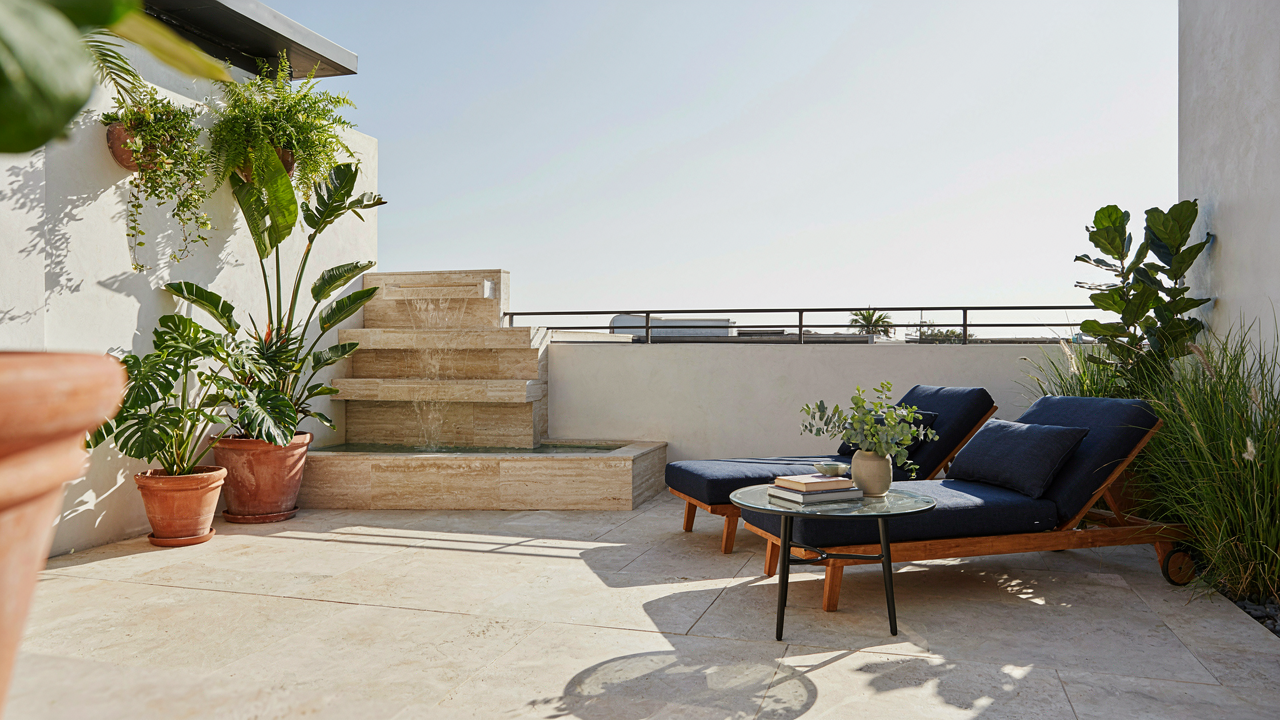
The Myth Of “Maintenance Free” Garden Water Features
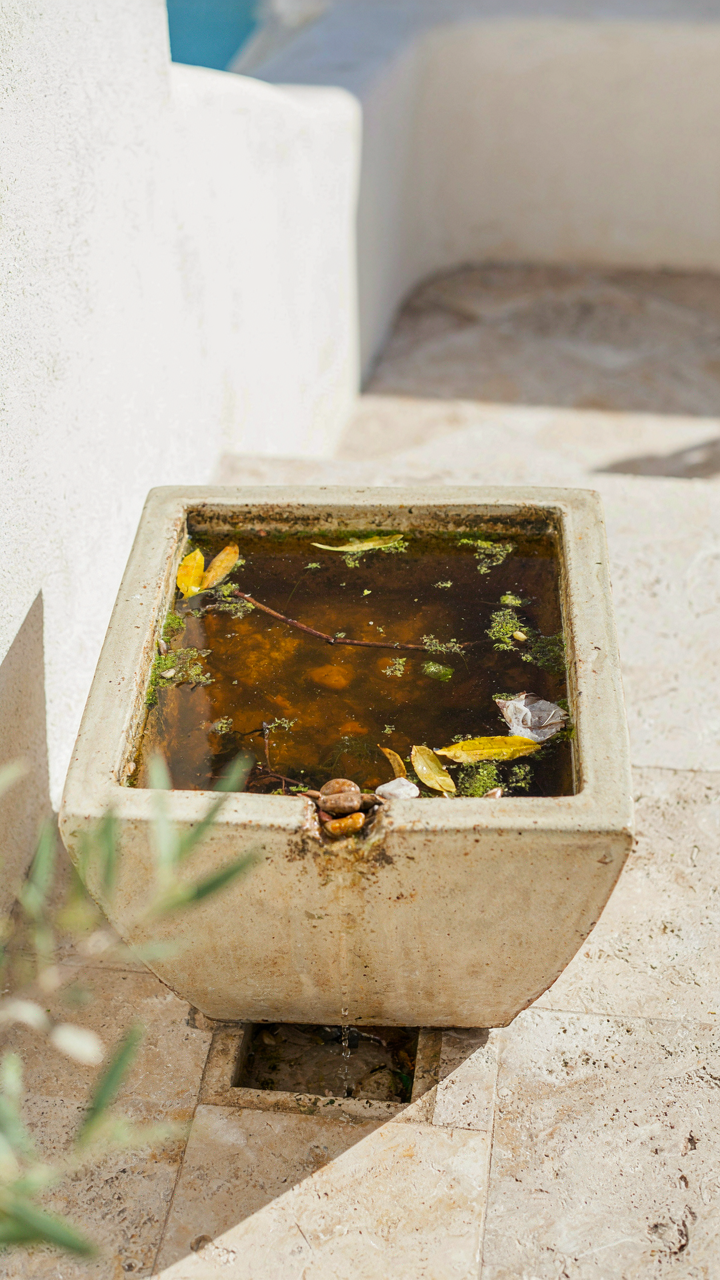
Water Features Require Active Systems
You want to buy a fountain, put it on your patio, and never think about it again. That’s the real appeal. The mechanism you’re fighting is entropy. Water features are open ecosystems exposed to sunlight, debris, and microorganisms. Without intervention, they decay. A fountain sitting static becomes a mosquito breeding ground in weeks. The pump clogs. Algae blooms. The water turns brown. Calling any system “maintenance-free” is a sales tactic, not physics.
The problem with most patio water feature advice is it stops after aesthetics. Install this basin, add that pump, done. Wrong. You need to understand the actual energy requirement. Think of it like plumbing’s concept of “head”—the vertical distance water must travel against gravity. Your feature needs sufficient pump capacity to move water vertically and overcome friction loss through the recirculation line. Undersized pumps fail silently. Water output diminishes. The feature looks dead after three months.
Biological Filtration Prevents The Algae Trap
Algae growth is a biological process, not a design flaw. It happens because your water contains nitrogen and phosphorus from debris breakdown, plus sunlight exposure. Standard advice says “use a filter.” That’s incomplete. You need biological filtration, which means establishing bacteria colonies that consume excess nutrients before algae can. This is the same mechanism aquarium hobbyists use: beneficial bacteria outcompete algae for resources.
Most patio features skip this step entirely. They rely on mechanical filtration alone—just trapping particles. That fails because dissolved nutrients still feed algae. Install a biofilter or UV clarifier to interrupt the nutrient cycle. Better: use a settling basin that lets heavy debris drop before water recirculates. Change water every two to four weeks depending on climate and debris load. The protocol is simple: assess your feature’s surface area and sunlight exposure, then select filtration accordingly.
Why Most Backyard Water Features Are Money Pits
The Real Cost Of Cutting Corners On Materials
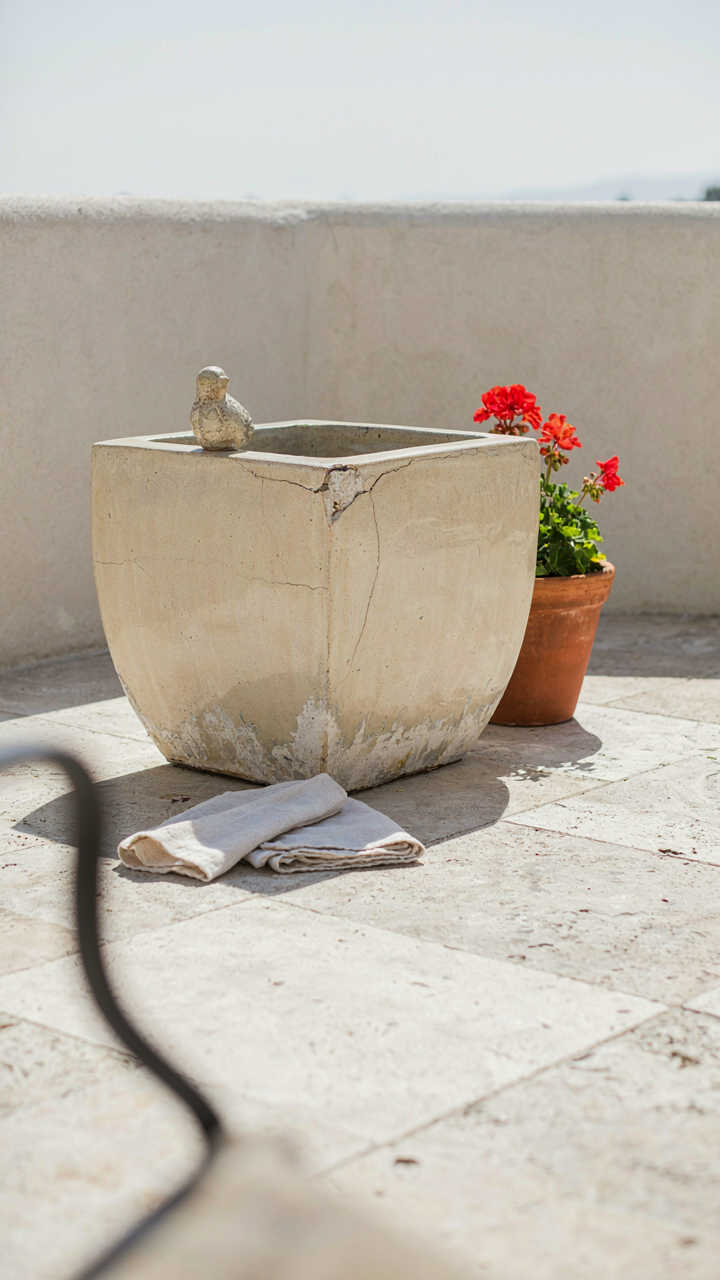
You want the aesthetic without the maintenance headache. That desire kills most water features before year two. Cheap polyresin, fiberglass, and thin-gauge metal corrode fast. Concrete cracks from freeze-thaw cycles in cold climates. Acrylic fountains yellow and become brittle under UV exposure. The problem isn’t that these materials fail—it’s that their failure mode is invisible until replacement becomes the only option. You’re not buying a water feature; you’re buying the maintenance contract you didn’t read.
Poor design compounds the damage. Most mass-produced features have inadequate drainage, trapping water in crevices where it expands and breaks structural integrity. Basin depth matters. Shallow basins concentrate minerals and algae growth, forcing constant chemical treatment. Plumbing placement in budget units creates impossible access for repairs. When the pump dies in year three—and it will—you’ll discover the manufacturer designed it to be unrepairable, not unreplaceable. Buy once, cry once applies here more than anywhere else in outdoor design.
Pump Selection Determines Your Operating Cost
Treat pump efficiency like mechanical advantage from physics: the wrong tool requires exponentially more energy to move the same volume of water. A poor-efficiency pump moving water at low head height still consumes 200-400 watts continuously. Run it eight hours daily at regional electricity rates, and you’re paying 200-300 dollars annually just to keep water circulating. Most residential water features ship with the cheapest submersible pumps available, rated for lifespan, not longevity.
The real mechanism: pump wattage correlates directly to flow rate and head height, but manufacturers list only flow in gallons per hour. You need both numbers to calculate actual operating cost. A feature requiring 1500 GPH at three feet of head demands a different pump class than one needing 500 GPH at one foot. Oversized pumps waste money. Undersized pumps create stagnant water and algae blooms. Check the pump’s actual wattage rating before purchase, calculate monthly runtime cost, then decide if the feature makes financial sense.
The Echo Chamber Effect: Copying Bad Water Fall Ideas

Pinterest Trends Aren’t Design Principles
You want your patio to look like it belongs in a magazine, not like everyone else’s. Here’s the mechanism: social platforms reward visual sameness, so the features that get engagement are the ones already proven popular, which trains your eye to think those are the only options worth considering. You’re not actually choosing a water feature based on your space. You’re choosing based on algorithmic repetition.
The tiered fountain with LED lights appears everywhere online because it photographs well under certain conditions, not because it solves actual design problems. Most people copy it without understanding why the original worked in its context. They see the image, feel the aspiration, and order the same thing. This is how mediocre design becomes invisible as a choice and starts feeling like the default.
Novelty Versus Structural Fit
Innovation in water features isn’t about adding features you haven’t seen. It’s about matching the mechanism of water movement to your actual site conditions. A recirculating stream that works in your neighbor’s shaded yard fails in direct afternoon sun because algae growth accelerates, maintenance doubles, and the sound gets masked by wind patterns unique to your exposure.
Real innovation means testing how water behaves in your specific microclimate, material choices, and foot traffic patterns before you build. Most online inspiration shows finished projects without showing the failed attempts or the site analysis that preceded them. Start by mapping sun exposure, wind patterns, and sound reflection in your space. Then choose a feature type that leverages those conditions, not fights them. That’s when you move from copying to designing.
The 3 Stage Acoustic Design Protocol For Water Features In The Garden
Frequency Isolation And Sound Dampening
You want your water feature to sound expensive, not like a broken gutter. That’s the real reason this matters. Sound engineering borrows from architectural acoustics, where frequency isolation means controlling which sound wavelengths escape your space. A water feature’s acoustic profile depends on three variables: the material composition of the basin, the distance sound travels before hitting reflective surfaces, and the water depth itself.
Most people dump a fountain in their yard and hope. The mechanism is simple: hard surfaces amplify and scatter sound frequencies, while soft materials and distance absorb them. Use fibreglass or concrete basins with internal dampening rather than bare stone. Position the feature away from hard exterior walls by at least eight feet. Water deeper than eighteen inches naturally dampens high frequencies that travel upward, creating a lower, more controlled tone.
Splash Velocity And Flow Rate Architecture
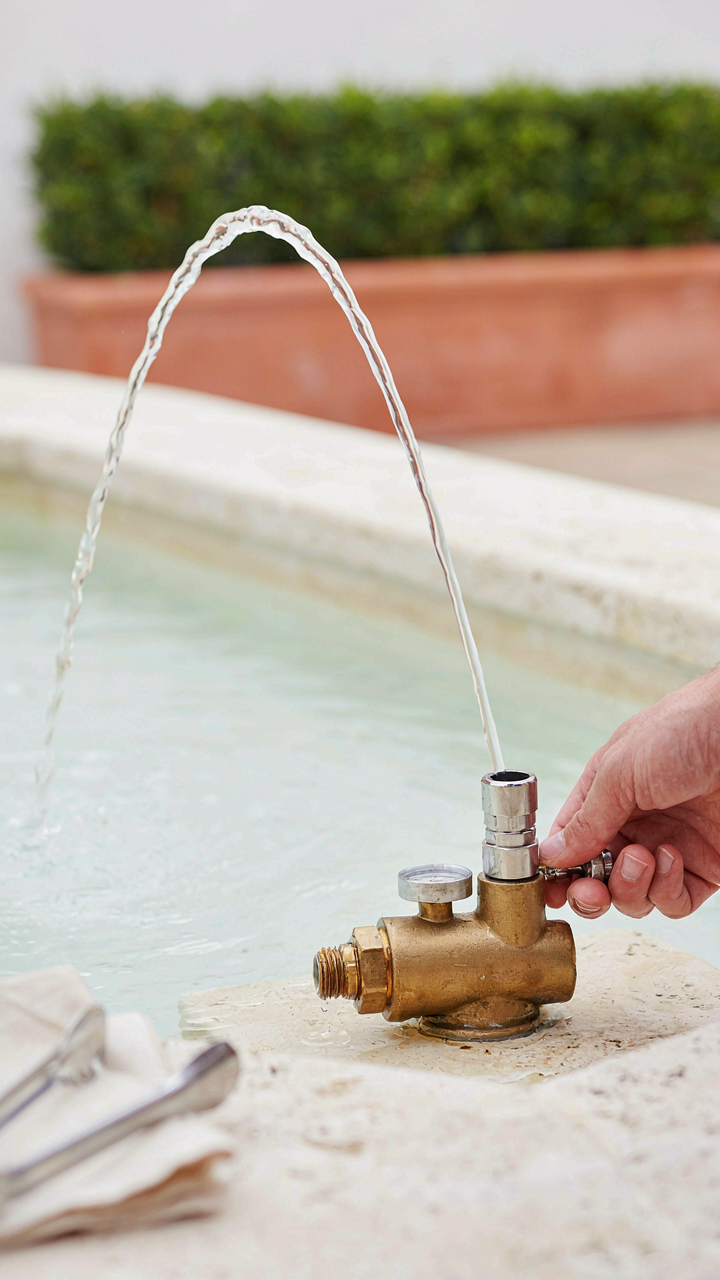
The pitch and volume of your water feature live in the flow rate and drop height, not the aesthetic design. Acoustic physics teaches us that sound pressure increases with velocity. A pump delivering water at half the flow rate produces sound roughly four decibels quieter than one running at full capacity. You control this through pump selection and internal valve adjustment.
Drop height determines frequency. Water falling from six inches produces higher frequencies. Water cascading from three feet produces lower frequencies that feel deeper and more deliberate. Adjust your pump’s flow control valve downward until you hear the acoustic profile you want. Most installers never touch this dial. They install the pump at factory settings and call it done. The difference between a pleasant sound and an annoying one lives in thirty minutes of valve tuning.
Beyond Visuals: The Sensory Impact Of Cool Water Features

How Water Cools Your Actual Microclimate
You want a water feature because it looks good on Instagram, but what you really want is permission to spend money without feeling like you wasted it. Here’s the mechanism: evaporative cooling works through thermodynamics. Water releases latent heat as it evaporates, pulling thermal energy from surrounding air. A fountain or pond creates a localized temperature drop within a three to six foot radius, depending on water surface area and air movement. This isn’t decoration doing emotional work. This is physics doing labor.
The cooling effect scales with two variables: water volume and exposure surface area. A small tabletop feature produces negligible temperature change. A pond with a fountain circulating 500 gallons per hour, positioned where prevailing breezes move air across the water surface, can lower ambient temperature by two to four degrees Fahrenheit in the immediate zone. Placement matters tactically. Position the feature downwind from your seating area so the cooler air column reaches where people actually sit. Circulating water amplifies the effect because moving water evaporates faster than still water. Static ponds cool less effectively than fountains or cascades.
Plant Vitality And Humidity Dynamics
The advice that water features “help plants” is incomplete. Humidity doesn’t float randomly across your patio. Water features establish a localized humidity envelope through consistent evaporation into the air column directly above and adjacent to the water. This targeted moisture benefits container plants and delicate foliage positioned within two to four feet of the feature. Tropical or shade-loving plants respond most noticeably because they evolved in high-humidity environments. The effect diminishes rapidly with distance and wind. You’re not humidifying your entire patio. You’re creating one small zone.
Evaporating water also reduces the rate at which soil in nearby containers dries out. A potted plant five feet from an active fountain loses moisture slower than an identical plant positioned fifteen feet away. This extends the window between watering cycles by a day or two in warm months. More importantly, sustained humidity around foliage reduces transpiration stress on the plant itself. Leaves lose water through stomata more slowly in humid air, which means the plant expends less metabolic energy maintaining hydration. To maximize this benefit, position your water feature where it receives morning sun so evaporation peaks during the heat of midday, when plants experience peak stress.
Garden Water Fountains: The Minimalist’s Approach

Impact Over Clutter
You want people to notice your taste without you having to explain it. The mechanism here comes from visual hierarchy, borrowed from graphic design: a single strong focal point beats scattered decoration every time. Garden fountains in the minimalist tradition work because they occupy one defined space and force everything else to organize around them. A small, well-proportioned fountain does more visual work than three mediocre pieces fighting for attention. The constraint is the strategy.
Most people misunderstand minimalism as emptiness. It’s not. It’s removing everything except what commands attention. A single limestone or concrete fountain with clean geometry draws the eye because nothing competes with it. Material matters more than size. A 24-inch fountain in raw stone reads stronger than a 48-inch plastic piece covered in ornament. The fountain becomes an anchor. Everything your eye lands on next is intentional.
Sightline Placement Strategy
Where you put the fountain determines whether guests see it first or stumble into it. Position it where it naturally aligns with the view from your main seating area, your back door, or the point where someone enters the patio. This isn’t decoration placement. It’s spatial problem-solving. The fountain should be visible from at least two sightlines without requiring someone to turn their head past 90 degrees. If it’s a secondary discovery, it fails.
Height and distance work together. A fountain at ground level needs to be closer to seating to register. A raised fountain or tiered piece works from farther away and across varied sight angles. The strongest move is placing the fountain off-center on your patio, roughly aligned with the golden ratio point of your space. Not dead center. Not hidden in a corner. That off-center position creates visual tension that makes the piece feel intentional rather than accidental.
Waterfalls Backyard: Integrating With Existing Ecosystems

How Water Movement Shapes Habitat
You want this to look intentional, not like you hired someone who didn’t know what they were doing. The mechanism here comes straight from hydrology: laminar versus turbulent flow. Most people build waterfalls that crash and scatter. Natural waterfall ecosystems depend on controlled descent that oxygenates without destroying the substrate. Your backyard waterfall either creates conditions where life settles or it prevents settlement entirely.
The difference is slope angle and drop height. A 45-degree angle with water moving 2 to 3 feet per second mimics stream behavior where aquatic insects establish. Steeper angles accelerate water past the point where organisms can anchor. The substrate below matters equally—rocks of varied sizes create micro-pockets where debris accumulates and becomes food for macroinvertebrates. Design the fall first, then build the catchment basin deep enough to support a true ecosystem, not just standing water.
Creating Space For Pollinators And Predators
Shallow ledges around your waterfall do the actual work here. Bees, butterflies, and beneficial wasps need landing zones near water—they don’t drink from open pools. Ground-nesting bees require bare soil or gravel within three feet of moisture. Predatory insects like dragonflies need emergent vegetation where nymphs crawl out to molt. Most backyard waterfall designs skip this entirely because nobody talks about it plainly.
Build a terraced approach around the feature with mixed materials: stones, mulch, and low vegetation. Dragonflies breed in standing water; create a shallow shelf, 6 to 12 inches deep, where aquatic plants root. Plant native flowering species within arm’s reach of these zones. The pollinator activity compounds over a season—you’re not decorating, you’re building a functional water station that attracts the insects that pollinate your actual plants. Establish this structure before filling, not after.
Modern Water Fountain: The Systems Thinking Approach

Energy Flow And Material Movement
You want a fountain that looks effortless, but you’re actually hoping it runs without your constant attention. That’s the real problem. Cybernetics teaches us that any system requires input (energy, water) and output (evaporation, spillage, heat loss). A modern fountain isn’t beautiful because it cascades—it’s effective because its designer understood the energy state at every point in the loop.
The pump moves water uphill against gravity. That’s your primary energy cost. The higher the cascade, the more power required. But most people ignore the secondary output: evaporation rates shift with humidity, temperature, and wind exposure. In arid climates, you lose two to four gallons daily from a modest three-tier fountain. That’s not poetic loss. That’s system bleed that forces refilling.
Closed Loop Maintenance Without Drama
Most advice says “add a timer” or “use a quality pump.” That’s incomplete. Real control comes from feedback mechanisms that adjust inputs based on outputs. A circulation fountain with an integrated water level sensor doesn’t just alert you—it modulates pump speed or triggers refill cycles automatically. When water drops one inch, the system responds before you notice degradation.
Evaporation and splash-out create the same outcome: system imbalance. The mechanism that catches this early is simple monitoring tied to action. Install a check valve to prevent backflow into your supply line, use a debris skimmer that removes leaves before they clog the pump intake, and calibrate refill frequency based on seasonal evaporation rates, not guesswork. Without feedback loops, your fountain becomes a maintenance burden that breeds neglect.
Durability Over Decor: The True Measure Of A Garden Waterfall

Material Science For Longevity And Resilience
You want a waterfall that looks expensive because you think that signals quality. It doesn’t. What signals quality is understanding material science: how different compounds respond to freeze-thaw cycles, UV exposure, and mineral-laden water over five to ten years. This is the actual mechanism separating a feature that survives versus one that becomes a crumbling eyesore.
- Reinforced Concrete: Porous and vulnerable to water infiltration. Requires sealant reapplication every two to three years. Budget for maintenance or watch hairline cracks expand into structural failures within five years.
- Fiberglass Composite: Resists UV and freeze damage better than concrete. Maintains integrity through temperature swings. More expensive upfront but adds five to seven years of reliable performance before recoating needs consideration.
- Natural Stone (Slate, Granite): Density varies by source. Granite handles freeze-thaw better than softer slate. Both require professional sealing annually. Improper sealing leads to water absorption and spalling in northern climates.
- Stainless Steel Frames: Resists corrosion from mineral deposits and chlorinated water. 304-grade outperforms 201-grade in harsh conditions. Oxidation still occurs but at a slower rate, extending the feature’s usable life.
- Copper Elements: Develops patina rather than rust, which protects underlying metal. Naturally antimicrobial, reducing algae buildup. Costs more but delivers aesthetic consistency for fifteen plus years without coating reapplication.
Most advice stops at “pick natural stone” without naming the real problem: mineral deposits and freeze damage. Your water quality determines material survival more than the material itself. Hard water deposits accelerate deterioration on porous surfaces. Choose dense, non-porous options in climates with hard water or plan aggressive cleaning schedules.
Structural Integrity Against Environmental Stressors
Water pressure is physics in motion. A waterfall pump running continuously creates hydrostatic load on your structure’s base and spillway. That load intensifies during freeze events when water expands. Most builders ignore this reality until the base cracks or shifts. The mechanism that matters is foundation stability and pump capacity matching.
The base must extend below the frost line in cold climates. A shallow foundation heaves during freeze-thaw cycles, cracking spillways and misaligning pump intake. Pump sizing matters equally: an oversized pump forces excessive water velocity against stones, eroding mortar joints and destabilizing stacked elements. Undersized pumps create poor visual effect but extend feature longevity. The trade-off is deliberate. Recirculating systems need flow rates between 500 to 1500 gallons per hour for residential features, not the 3000 GPH that Instagram features showcase. Lower flow preserves structure and reduces water loss through evaporation and splashing.
The Illusion Of Style In Patio Water Features
Permanence Over Trend Cycles
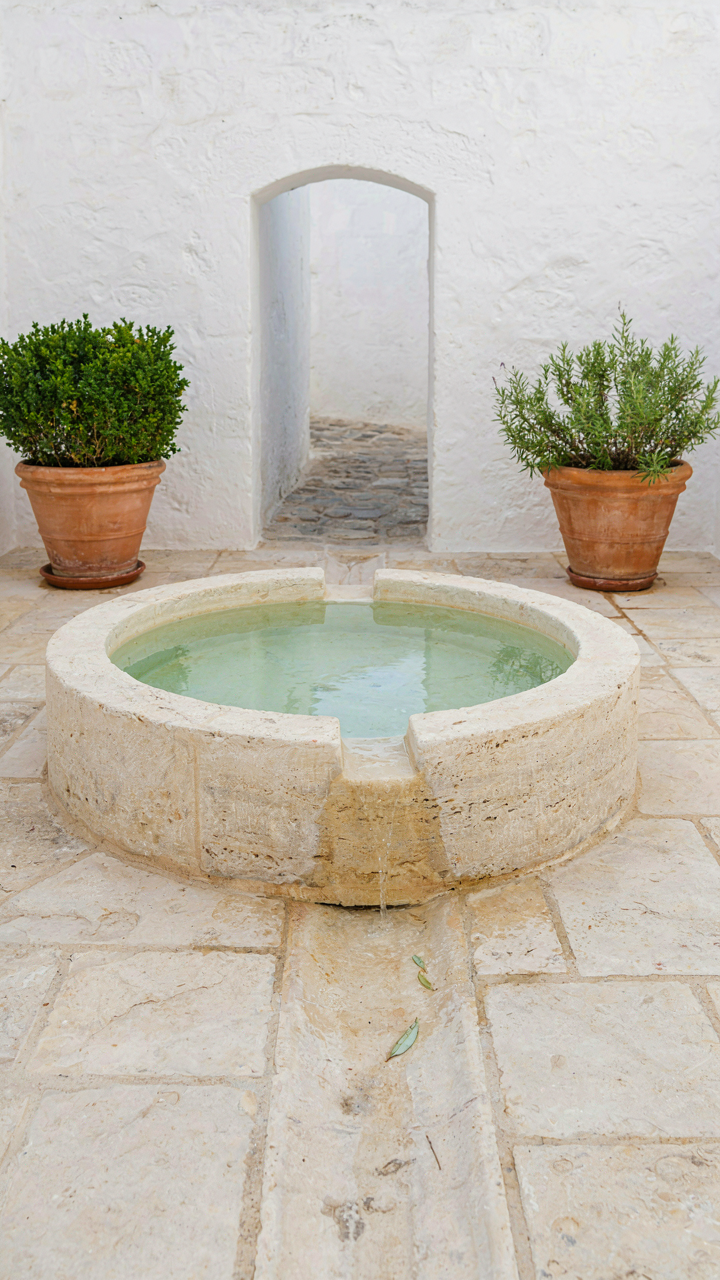
You want people to think your taste is refined, but you’re actually afraid your choices will look dated in five years. Here’s the mechanism: trend-driven design in water features fails because water itself has no expiration date. Modernism, brutalism, and minimalism all came and went, but a well-proportioned fountain still reads as intentional, not fashionable. The difference is constraint. Trends reward novelty. Timeless design rewards proportion, material quality, and functional clarity. A stone basin that catches rain and moves water has worked for centuries across cultures because it solves a problem elegantly, not because it chased an aesthetic moment.
The common advice here is backwards. Design blogs tell you to match your water feature to your patio’s “vibe.” Wrong. Start with what water actually does in your space. Evaporation, spray patterns, seasonal changes, maintenance demands. Build the visual language from these constraints, not the other way around. A feature that handles winter freeze cycles without cracking, that doesn’t clog with debris, that actually cools the surrounding air through evapotranspiration, will always look deliberate. The style follows the engineering.
Function Becomes The Statement
Economics calls it revealed preference: what people actually choose under constraint shows their real values, not what they claim to value. Apply this to water features and the mechanism becomes obvious. A feature that requires weekly pump maintenance and constant chemical balancing isn’t a style choice. It’s a liability masquerading as design. Owners abandon these. They crack, they stagnate, they become eyesores. Meanwhile, a gravity-fed fountain using recirculation, placed where natural drainage patterns already exist, stays relevant because it solves the problem it was designed to solve.
Style in patio water features is the byproduct of solving real problems well. A raised basin catches runoff naturally. A permeable substrate below it prevents pooling and structural damage. A pump sized correctly for your basin volume keeps the water moving without noise or energy waste. These decisions aren’t trendy. They’re intelligent. The visual refinement people respond to isn’t the shape or material you chose first. It’s the evidence that someone thought through the system before thinking about Instagram. Build the mechanism, then let the style emerge from its efficiency.
Your Real Obstacle Isn’t Choosing A Water Feature, It’s A Lack Of Design Principles

Most people buy a water feature and hope it fixes their patio. It won’t. The real problem is they never defined what their space actually needs. Before you spend money, walk outside and ask yourself three questions: What mood do you want? What’s your light like at different times? How does this piece connect to everything around it? Answer those first. Then pick your feature. The water feature isn’t the solution to a dead patio. Clear thinking is.



