
The Conventional Birdbath Fountain Is A Lie

Aesthetics Hide What Actually Works
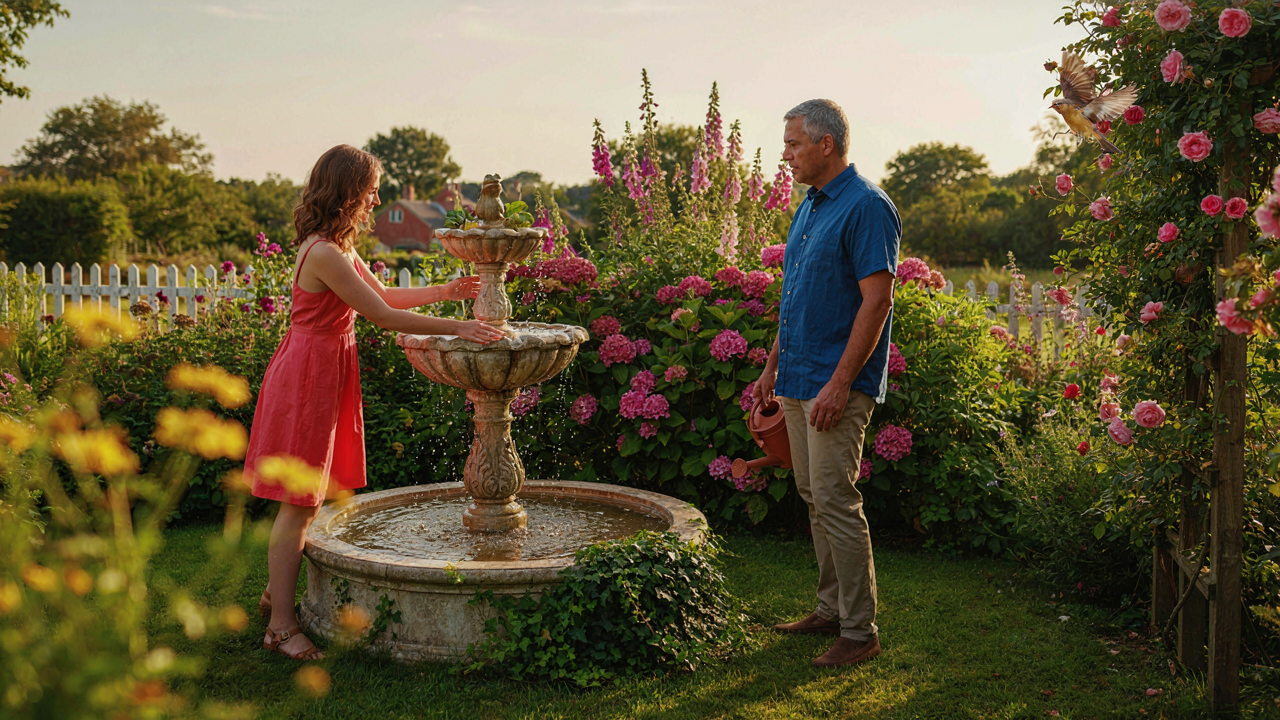
You want the Instagram version because you think it proves you have taste. Here’s the mechanism: most birdbath fountains prioritize visual appeal over the one thing that determines success—water movement that birds can detect and trust. Conventional designs treat the fountain as decoration first, bird tool second. The result is a stagnant centerpiece that repels the wildlife it was built to attract.
The garden design industry borrowed from landscape architecture’s “focal point” doctrine, which assumes human visual hierarchy matches animal behavior needs. Birds don’t care about symmetry or material finish. They need water that moves predictably, stays clean, and signals safety through sound and visible circulation. A fountain that looks polished but recirculates the same bacteria-laden water weekly fails at its actual job, regardless of finish quality.
Static Water Defeats The Entire Purpose
Most basic fountain designs fail because they create dead zones where water pools without genuine circulation. Birds evolved to recognize moving water as clean water. Standing water triggers avoidance—it signals mosquito larvae, algae bloom, and contamination. A fountain pump that runs on low speed or a design with poor water flow coverage leaves most of the basin untouched, making it functionally worse than a simple still birdbath.
The physics principle at work here is laminar flow—water must move consistently across surfaces to disrupt stagnation. Birds approach water edges to gauge depth and safety before entering. If 60 percent of your fountain basin sits static while one corner gets recirculated, you’ve created an illusion of function while birds make the rational choice to drink elsewhere. Install a pump with adequate GPH rating and design the basin to ensure water reaches every zone of the bird’s landing area.
The Avian Attraction Protocol: Beyond Water

What Actually Moves Birds To Your Fountain
You want birds to show up because it proves your garden works. Here’s what nobody admits: birds don’t come for the water alone. They come because the fountain signals safety, food proximity, and escape routes. In behavioral ecology, this is called the predation risk assessment—birds weigh the cost of exposure against the benefit of resources. Your fountain either passes this test or it doesn’t.
The mechanism is simple. A fountain with clear sightlines to cover (trees, shrubs, structures within 10-15 feet) lets birds spot threats before committing. Water movement and sound mask predator approach, which paradoxically makes birds more confident, not less. Still water is dead water to birds. They interpret silence as exposure. Add current and you’ve eliminated the primary objection keeping them at ground level.
Layering Your Garden For Actual Results
The common mistake: treating the birdbath fountain as a standalone feature. It fails because birds operate in systems, not objects. Your fountain sits inside a habitat network. Placement determines whether birds trust it or avoid it.
Position your fountain within sight of protective planting but not so close that predators hide in dense cover. Fifteen to twenty feet from deciduous trees creates the optimal zone. Birds need the psychological anchor of nearby shelter without sacrificing visibility. If your fountain sits in open lawn with nothing within thirty feet, it becomes a trap. Birds evolved to recognize exposure. No amount of fountain design compensates for poor positioning in the broader garden structure.
Deconstructing The Garden Bird Bath Myth

Where You Place It Matters More Than What You Place
You want your birdbath to look intentional, like you understand design. That’s the real driver here. But placement is tactical, not aesthetic. Think in terms of sight lines from predator ecology: hawks and cats need clear approach routes to hunt. Your fountain becomes a trap if birds can’t see danger coming.
Position your birdbath within 10 to 15 feet of dense shrubs or trees, but never directly under them. Birds need an escape route that doesn’t funnel them into cover where predators wait. Open ground around the basin forces birds to assess threats before landing. This isn’t optional decoration theory—it’s predator-prey mechanics applied to backyard setup.
Stone, Ceramic, Metal: The Material Filter
Generic advice says pick whatever matches your patio. Wrong. Material determines bacterial growth, freeze damage, and how often you refill. Ceramic cracks in freeze-thaw cycles. Cheap metal rusts and leaches into water. Stone is durable but porous, which means algae colonizes faster.
Concrete and reinforced stone outperform novelty materials because they resist temperature shock and handle stagnant water longer before degrading. The thermal mass keeps water cooler in direct sun, which slows algae bloom. If your fountain cycles water, the circulation matters more than material choice, but if it’s static, material becomes the hygiene variable that controls whether birds drink safely or ingest bacterial colonies.
Solar Water Feature: The Energy Efficiency Fallacy

When Solar Stops Working
You want the story of a solar birdbath fountain to end with you sitting back, smug, knowing you’ve removed yourself from the grid. The real mechanism is simpler and more brutal: solar panels output power proportional to direct sunlight intensity, and water flow stops the moment clouds pass overhead or evening falls. There’s no battery storage in most consumer models, so you get sporadic circulation, not the consistent water movement birds actually expect and depend on for landing cues.
The efficiency claim isn’t false—it’s incomplete. A solar panel converts sunlight to electricity with zero fuel cost, which is genuinely true. But apply systems thinking here: the birdbath fountain only functions when conditions align. In climates with consistent cloud cover, low winter sun angles, or shade from trees, you’re running a decorative object that doesn’t deliver water movement reliably. Birds stop visiting when the flow becomes unpredictable, which defeats the entire purpose of a fountain.
Sustainability Requires Honest Trade Offs
Solar sounds sustainable because it avoids the power grid. It sounds sustainable because marketing says so. What actually matters is whether the fountain achieves its function—attracting birds through consistent water circulation—or whether you’ve bought a status symbol that performs inconsistently. A low-voltage electric fountain plugged into an outdoor outlet consumes negligible power and runs 24/7 if you want it to. A solar fountain sits idle half the day and consumes nothing but also delivers nothing.
The genuine sustainability play depends on your specific environment and use case. If you live in a high-altitude, consistently sunny region with zero shade, solar makes sense. If you’re in most other climates, accept that a reliable fountain requires either consistent sunlight or mains power. The real lever isn’t the energy source—it’s whether the device functions when birds arrive. Choose the option that keeps water moving reliably, and you’ll actually have a birdbath that works instead of one that requires apologies.
DIY Birdbath: The Illusion Of Effortless Creation
Engineering Before Aesthetics
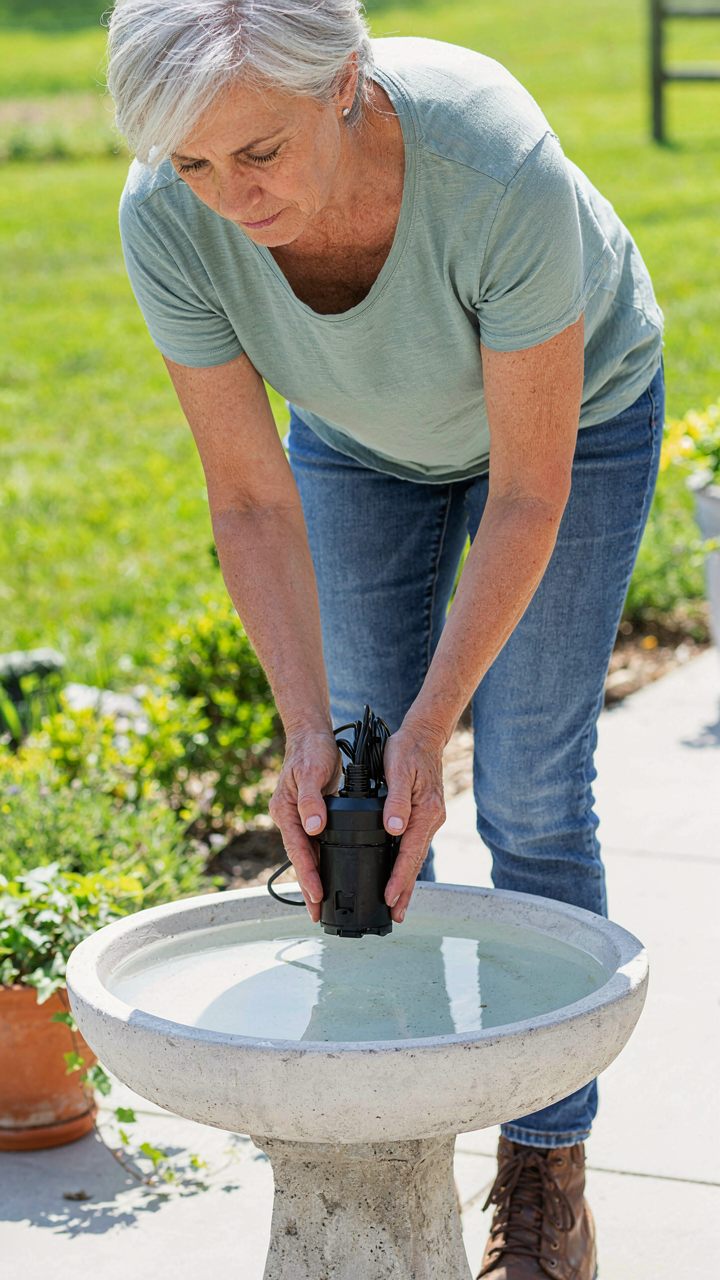
You want to build one yourself because you think you’ll save money and get bragging rights. The real mechanism at work is fluid dynamics—specifically, how water moves through a closed loop without leaking, stalling, or destroying your pump in three months. Most DIY guides skip this entirely and show you pictures instead.
The pump is the only component that actually matters. Everything else is decoration around a engineering problem. You need a submersible pump rated for continuous operation (not intermittent), minimum 500 GPH flow rate for visible circulation, and a cord long enough to reach an outlet without running across foot traffic. The basin must slope toward a drain or overflow point. The fountain head restricts flow, so oversizing your pump by 30 percent prevents performance loss over time as debris accumulates.
- Pump Selection: Choose submersible, continuous-duty rated. Intermittent pumps fail under constant load. Verify GPH rating matches your basin size, not the manufacturer’s marketing claims.
- Water Circulation Path: Map where water enters the basin, where it exits through the fountain head, and where overflow drains. Gravity does the work if you design the slope correctly.
- Basin Depth and Volume: Shallow basins evaporate faster and require daily topping off. Calculate minimum volume to sustain 4-6 hour operation cycles without pump cavitation.
- Material Compatibility: Concrete, stone, and fiberglass handle constant wet exposure. Untreated wood rots. Metal rusts unless sealed or stainless steel. Match materials to your climate’s freeze-thaw cycles.
- Electrical Safety: Use a GFCI outlet. Run cord through conduit if exposed. Keep transformer or plug connections 3 feet minimum from standing water to prevent accidental contact.
The mistake isn’t ambition. It’s treating the pump as an afterthought instead of the load-bearing structure of the entire system. Buy the pump first, then design the basin around its specifications, not the other way around.
Time Cost Versus Material Cost
Building a birdbath fountain trades your labor for cash, but the math breaks down if you’re not honest about what your time is worth. A finished ceramic fountain costs 150 to 400 dollars and arrives functional. A DIY project eats 20 to 40 hours across planning, material sourcing, assembly, and problem-solving when something doesn’t fit or leaks.
If you bill yourself conservatively at 25 dollars per hour, you’ve already spent 500 to 1,000 dollars in opportunity cost before you touch a tool. Materials for a mid-range DIY build run 200 to 350 dollars. The real decision isn’t whether DIY saves money. It’s whether you’re building for the skill acquisition or the object itself. If you’re building for the object, buy the finished piece. If you’re building for the process and want to learn pump installation, basin construction, and electrical integration, the project justifies itself through competence gained, not dollars saved.
The Bird Bath And Feeder Ideas: A Symbiotic Ecosystem
Why Birds Actually Congregate At Your Setup
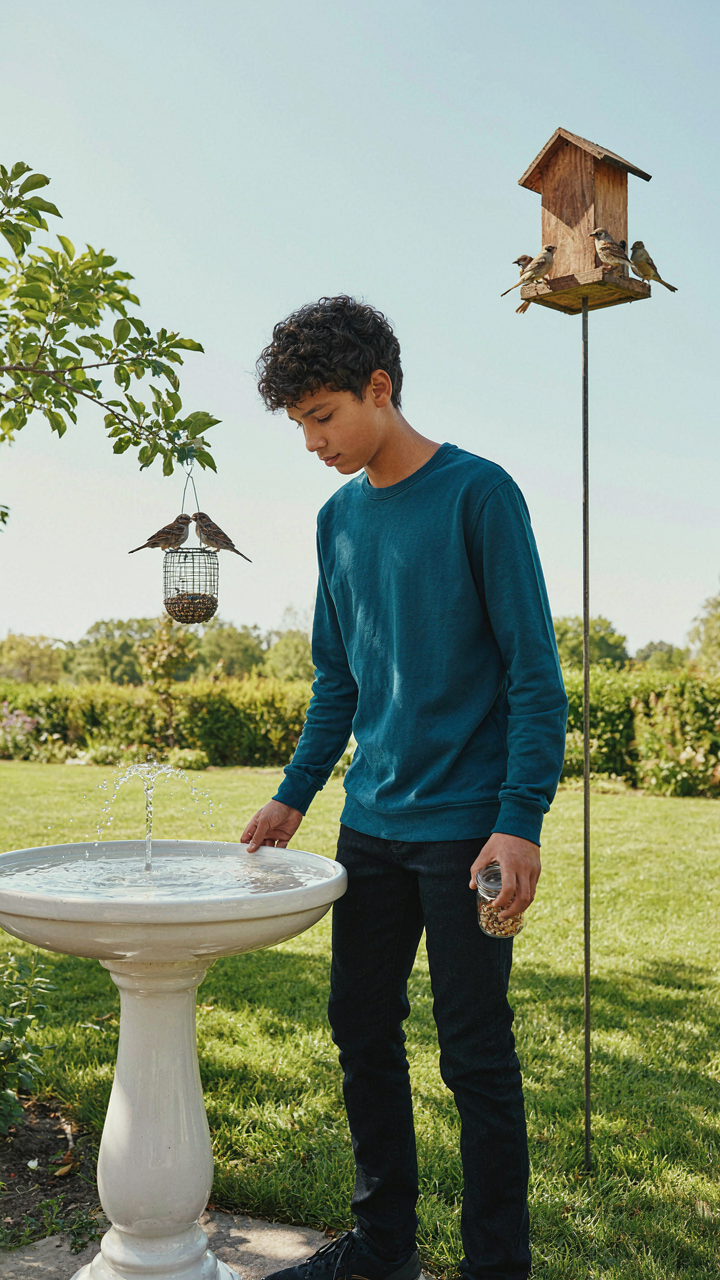
You want them to show up consistently so you feel like you’ve built something worthwhile. Here’s the mechanism: birds operate on resource clustering. Ecology calls this the “aggregation principle”—organisms concentrate where multiple survival needs exist in one location. A fountain provides water for drinking and bathing. A feeder supplies calories. Together, they reduce search time, which means birds visit more frequently and stay longer. Solo water or solo food creates spotty traffic. Both together creates a destination.
Birds reading this setup don’t see beauty. They see efficiency. The fountain aerates water and catches light, signaling freshness. The feeder stores calories without effort. When these systems sit within sight lines of each other—usually 8 to 15 feet apart—birds don’t waste energy moving between separate zones. They complete multiple tasks in one trip. Smaller species like finches gain security because they can drink, feed, and retreat to cover in a compact radius. Larger birds like cardinals get the same benefit on their own terms. Position your fountain where it provides sight lines to the feeder, not behind it.
Spacing And Species Specificity
Proximity destroys hierarchy. Birds are territorial during certain seasons, and forcing them into tight quarters creates conflict that suppresses visits from subordinate species. Songbirds avoid feeders where aggressive jays dominate. Platform feeders attract different species than tube feeders. Shallow fountain basins suit small species; deeper ones suit medium birds. The mistake most people make is cramming everything into one visual cluster and wondering why only cardinals show up. Real diversity demands strategic separation with overlapping sightlines.
Set your fountain 12 to 18 feet from your primary feeder if you want mixed-species traffic. Place a secondary smaller feeder or shallow dish 6 to 8 feet from the fountain on the opposite side of your feeder. This creates a triangle. Smaller, subordinate species use the secondary setup while dominant species use the primary feeder. All species access water without interference. Your fountain becomes the central neutral zone—the one resource no bird competes over. That positioning is the mechanism that actually drives diversity, not vague talk about “attracting more birds.”
Garden With Bird Bath: Integrating For Impact, Not Decoration

Function Drives Form, Always
You want your birdbath fountain to look good because you think that’s what makes it work. It doesn’t. In ecology, there’s a principle called niche specification: an organism thrives when its environment matches its actual needs, not our aesthetic preferences. A birdbath fountain succeeds when birds use it consistently because water movement, depth, and placement solve their survival problems first. Beauty follows usefulness, never the reverse.
The mechanism is simple. Birds need moving water to hear it and to feel safer while drinking and bathing. Still water attracts predators and carries disease faster. If your fountain’s design prioritizes visual appeal over water circulation, bird activity drops regardless of how it photographs. Placement matters more than finish: near cover but not so close predators hide there. Stack these variables correctly and the birdbath becomes magnetic to local species. Aesthetics emerge naturally from these decisions.
Design Once, Maintain Never
Everyone sells you the fantasy of a low-maintenance birdbath. Most maintenance comes from poor material selection and weak engineering, not the concept itself. Concrete, ceramic, and untreated wood degrade fast in weather cycles. Pumps with thin seals fail within seasons. The better move is picking materials that actually resist time and building redundancy into the system so one failure doesn’t crater the whole setup.
Stainless steel, proper stone, and sealed basins last decades with minimal intervention. Use a pump with replaceable cartridges, not sealed units. Position the fountain where you can access it for cleaning without gymnastics. Build the basin slightly oversized so water loss from evaporation and bird splashing doesn’t force daily refills. Every design decision should reduce future friction. The best birdbath fountain is the one you stop thinking about after month two.
Beyond ‘Bird Bath Ideas’: The Micro Climate Principle

How Water Movement Shapes Air Around Your Fountain
You want birds to stay longer because it makes your yard feel alive and purposeful. The mechanism is thermodynamics. A fountain creates what physicists call a microclimate—a localized atmospheric zone with measurable differences in humidity and temperature from the surrounding air. Moving water evaporates constantly. That evaporation pulls heat energy from the environment, dropping air temperature by 2-5 degrees Fahrenheit within a few feet of the fountain’s spray zone.
Birds detect this shift instantly. They’re drawn to the cooler, more humid pocket because it reduces their metabolic stress, especially during heat. In summer months, this matters tactically. Position your fountain where afternoon sun creates maximum evaporation—typically the western or southwestern exposure. The water movement also increases ambient humidity by 10-15 percent in the immediate radius, which birds need for feather maintenance and respiratory function. This isn’t decoration. It’s a climate lever you control.
Plant Placement For Shelter And Thermal Regulation
The common advice is to surround your fountain with plants for “aesthetics.” Wrong. Plants function as thermal buffers and predator screens. Strategic placement creates a microclimate within the microclimate. Dense shrubs on the north and east sides of your fountain block wind and reduce evaporative cooling loss. On the south and west, use semi-dense foliage that filters intense sun without blocking the beneficial evaporative zone entirely.
Specific choices matter more than quantity. Native shrubs with dense branching—like boxwood, privet, or serviceberry—provide quick escape routes. Birds need visual cover within 3-6 feet of water, not a jungle 20 feet away. Position low perches at fountain height so birds can survey for threats before committing to water access. Layer your plantings by height: low ground cover for entry, mid-level shrubs for perching, and taller canopy plants for retreat. This creates decision pathways birds follow instinctively, which keeps them returning to your fountain rather than the neighbors’.
Curating Your Niche: Avoiding Generic Birdbath Fails

Match Your Space To Actual Bird Behavior
You’re scared you’ll buy the wrong thing and waste money on something birds ignore. That fear is justified, but most people solve it backwards. They pick a fountain style first, then hope birds show up. Ornithology tells us birds need specific water depth and edge texture to land safely. The mechanism is simple: shallow water with rough landing surfaces beats deep, smooth basins every time. Your fountain fails not because it’s ugly, but because the bird can’t use it.
Most birdbaths ship at depths between 2 and 4 inches. Birds require 1 to 2 inches maximum to bathe without drowning risk. A fountain that maintains that depth band while offering textured edges attracts species. A fountain that ignores these constraints sits empty regardless of price tag or material. Test your setup by observing which birds approach within the first week. If nothing lands, adjust depth or add stones for grip, not the entire fixture.
Eliminate Trends Masquerading As Function
Generic advice says pick materials that “match your garden aesthetic.” That’s how you end up with a polished marble basin that birds fear and water stagnates in. Aesthetics follow function in this category, not the other way around. Porous materials like concrete, ceramic, or textured resin actually work better because they provide grip and water absorption that keeps the surface from becoming slippery. Smooth finishes look expensive but fail operationally. A weathered concrete fountain outlasts a glossy one because birds use it, which means maintenance matters and bugs stay managed through natural activity.
The real constraint is maintenance frequency, not appearance. High-gloss surfaces require weekly cleaning to prevent algae buildup. Textured surfaces self-clean through bird activity and water movement. If you can’t commit to cleaning twice weekly, eliminate any fountain with a sealed or polished finish. Pick materials that need less intervention. Rough concrete, natural stone, or aged terracotta demand cleaning once monthly, not multiple times weekly. Choose function first, then buy in the material that delivers it with the lowest maintenance burden.
The Real Obstacle Isn’t Finding Ideas; It’s Your Inability To Commit To A Truly Distinct Vision

You’ve read about cascading tiers, mosaic designs, and solar-powered options. You know what works. The problem is you’re waiting for perfect certainty before you build anything. Stop. Pick one birdbath fountain idea today and order the materials. Not next week. Not after more research. The gap between knowing and doing kills more projects than bad design ever will. Your backyard doesn’t need another generic fountain. It needs the one you actually build.



