
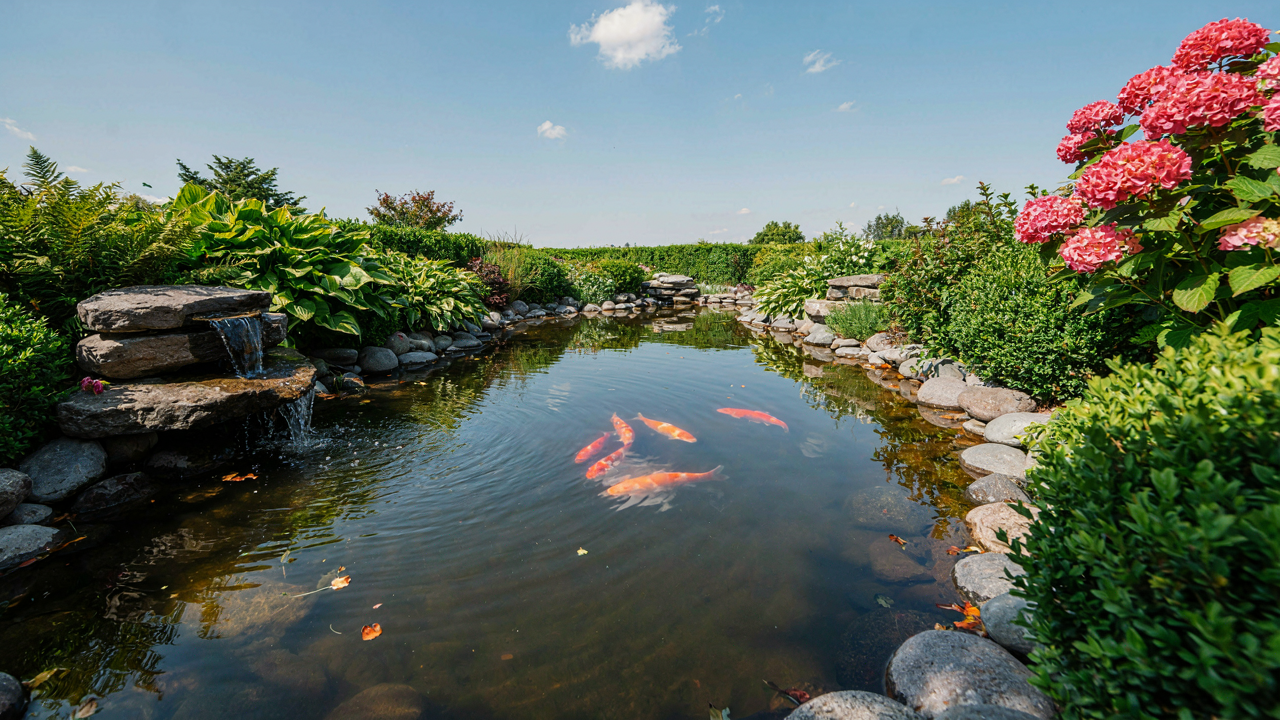
The Ecosystem First Doctrine: Beyond Pretty Rocks

Water Chemistry: The Three Numbers That Actually Matter
You want a pond that looks good without constant maintenance. That’s the real reason you’re reading this. Here’s the mechanism: water chemistry is a closed-loop system. Three measurable variables control whether your koi survives or dies. pH determines bacterial enzyme function. Ammonia is the poison fish produce. Nitrates are what plants consume. Most beginners obsess over aesthetics and ignore these three numbers until fish die.
pH needs to stay between 7.0 and 8.0 for koi. Ammonia must remain below 0.25 parts per million. Nitrates should sit below 40 ppm but ideally under 20 ppm. You test these weekly for the first month, then monthly after stability. A basic API test kit costs thirty dollars and catches problems before they become irreversible. Don’t skip this step based on “feeling” or reputation. Test strips lie. Liquid test kits don’t.
Beneficial Bacteria: The Engine Running Invisibly
Microbiology teaches us about nitrogen cycles. In your pond, beneficial bacteria are the catalytic converter. Nitrosomonas bacteria convert ammonia into nitrite. Nitrobacter converts nitrite into nitrate. Most people think rocks and filters do the cleaning. They don’t. Bacteria do. The bacteria colonize your filter media and substrate. Without them, ammonia accumulates and kills fish within weeks.
You can’t buy quality bacteria and install them instantly. Colonization takes three to four weeks minimum. This is why cycling a new pond before adding koi matters, though most beginners skip it and lose fish. Add ammonia source or small amounts of food daily. Test ammonia and nitrite daily during this period. Once ammonia drops to zero and nitrite spikes then drops to zero, bacteria populations are established. Your filter media becomes the real engine. Protect it by never cleaning it in tap water.
Site Selection: Your Pond’s Real Estate Strategy

The Sun Exposure Trade Off
You want your pond to look pristine without constant maintenance because you’re afraid a green soup reflects poorly on your competence. That fear is the mechanism working here. The real dynamic comes from biology: photosynthesis. Just like in ecology where light energy drives primary production, sunlight drives both desirable plant growth and undesirable algae blooms in your pond. More sun means faster metabolism for everything in the water.
Full sun (6+ hours daily) accelerates algae reproduction but also powers water lilies and marginal plants that compete for nutrients algae needs. Partial shade (3-6 hours) slows both simultaneously. Most koi pond designers land at 4-5 hours of direct sun as the operational sweet spot because it supports plant growth without creating an algae management crisis. This isn’t a compromise. It’s the actual biological equilibrium point where plant competition outpaces algae reproduction.
Drainage Patterns And Water Contamination
The conventional advice says “avoid low spots” and stops there. That’s incomplete. You need to map the watershed around your pond site, not just the visible terrain. Surface runoff carries sediment, leaf debris, and chemical residue from surrounding soil and landscaping directly into your water column. This isn’t a minor detail. Heavy metals, fertilizer, and organic matter degrade water quality faster than any internal pond mechanism can compensate for.
Place your pond on slightly elevated or neutral ground where rainwater flows away naturally rather than toward it. If your property slopes toward the pond site, install a shallow drainage swale or French drain uphill to intercept runoff before it reaches the water. Test your soil drainage by digging a hole at your intended site, filling it with water, and observing how long it takes to drain. Poor drainage means standing water pools near your pond structure, creating stagnant zones that breed anaerobic conditions and push maintenance costs up indefinitely.
The Gravity Flow Protocol: Pond Filter Ideas That Actually Work

Remove The Dead Stuff First
You want a filter that won’t fail you because you’re terrified of waking up to dead fish. Here’s the mechanism: mechanical filtration removes solid waste before it decays into ammonia. Skimmers pull debris from the surface. Bottom drains collect waste that settles on the pond floor. Both feed into a filter chamber where foam or brushes trap particles. This happens before any biological work begins. Without mechanical filtration, you’re just moving poison around.
The placement matters more than the equipment brand. Position your skimmer on the downwind side of the pond where wind pushes floating debris toward it. Run your bottom drain to the lowest point, typically the center of an lined pond. Gravity does the work here. Connect both lines to a settlement chamber that lets solids drop before water enters the biological filter stage. A clogged mechanical filter is better than a clogged biological one because you can clean it without crashing your bacteria colony.
Convert Ammonia Into Harmless Nitrogen
Biology does what chemistry cannot. Beneficial bacteria consume ammonia and nitrite, converting them into less toxic nitrate. This is the nitrogen cycle at work in your pond, and it’s the only reason your fish survive beyond weeks. The bacteria colonies live on filter media surfaces, not in the water. They need oxygen flow, stable pH between 7 and 8, and established residence time. You cannot rush this process or buy it faster.
Your biological filter media should have high surface area. Lava rock, bioballs, and ceramic tubes all work. The water must flow through slowly enough for bacteria to process waste. Fast flow means bacteria get starved contact time. Most beginners run their pump too aggressively, thinking more circulation equals cleaner water. It doesn’t. Calculate your gallons per hour at the biological stage and aim for one full pond turnover every hour, not three. Slower flow through the biofilter, faster circulation return to the pond.
Planting For Synergy: More Than Just Decoration

The Water Engine Behind Oxygen
You want plants in your pond because it looks complete. The real reason they matter is survival. Oxygenating plants work like a biological filtration system—borrow the term from engineering: they’re the “load-bearing” component of water quality. They consume carbon dioxide and release oxygen directly into the water column, not just the surface. Submerged plants like anacharis, cabomba, and ludwigia do the actual work. They grow entirely underwater and process waste faster than marginal plants stationed at the edges.
The mechanism works in two directions. These plants absorb excess nitrogen and phosphorus from fish waste before algae colonizes the water. Algae blooms happen because oxygenating plants aren’t present in sufficient density. Stock 50 to 60 percent of your pond surface area with oxygenating plant coverage to establish equilibrium. Without them, you’re running a mechanical filter at 200 percent capacity to achieve what plants accomplish for free.
Marginal Plants: The Nutrient Sinks
Marginal plants do what oxygenating plants cannot: they sit at the water line and create structural habitat while outcompeting algae for nutrients. Think of nutrient uptake like supply-chain logistics—marginal plants are the distribution centers that intercept resources before they reach the problem zone. Their root systems dangle into the water and pull nitrogen directly from fish waste. They give young koi fry shelter and reduce predation pressure. Common marginal plants include water iris, pickerel rush, water hawthorn, and cardinal flower.
- Water Iris: Tall stems provide shade and structural anchoring for fry; roots absorb phosphorus efficiently from shallow margins.
- Pickerel Rush: Dense foliage creates predator obstruction; purple flowers provide visual distinction in pond design schemes.
- Water Hawthorn: Blooms in cooler water temperatures; flowering indicates seasonal transition and nutrient cycle timing.
- Cardinal Flower: Shallow root penetration works for smaller ponds; attracts beneficial insects and indicates pH stability visually.
- Arrowhead: Quick stem growth captures excess nutrients; flexible positioning adapts to seasonal water level fluctuations.
Position marginal plants in planting baskets around the pond shelf at 6 to 12 inches deep. They’ll grow aggressively, which is the point—aggressive growth means aggressive nutrient extraction. Trim them once monthly during growing season to prevent overgrowth into the central basin. This prevents the root competition that forces your koi to outcompete plants for oxygen supply.
Fish Load Economics: The True Cost Of Too Many Koi
Pond Volume To Fish Ratio
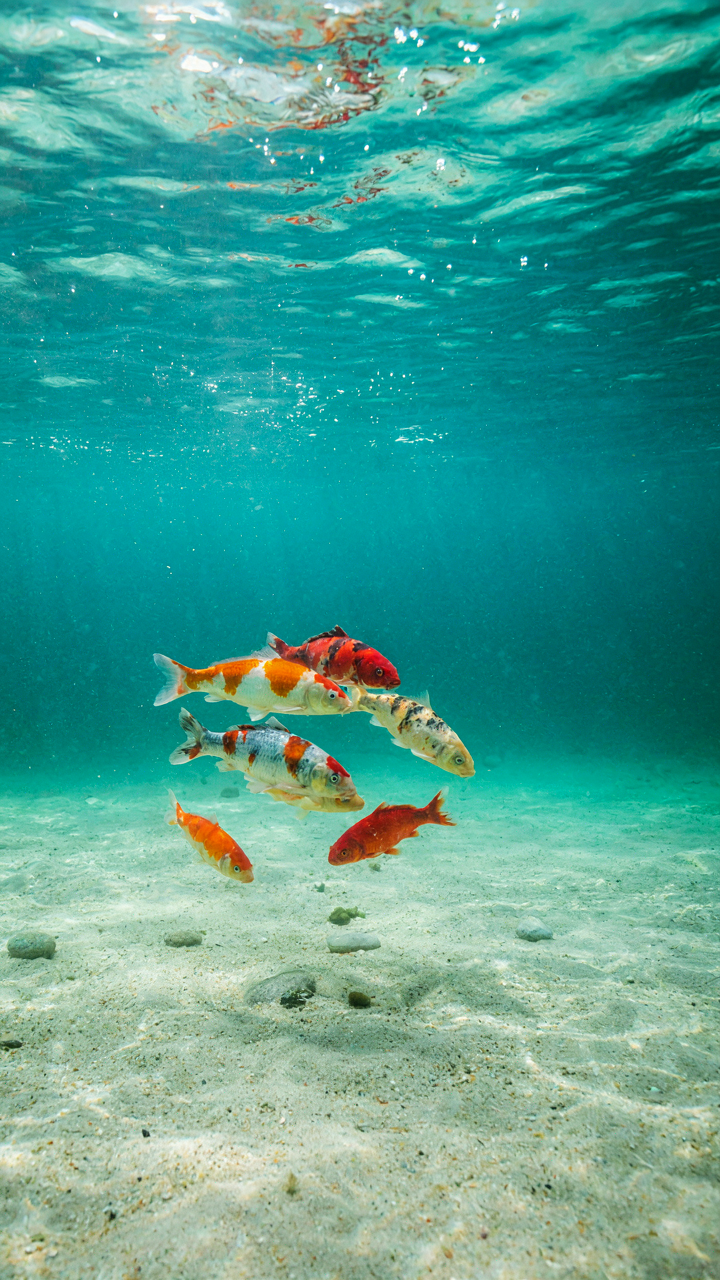
You want to believe your pond can handle more fish because more fish means more beauty, more status, more return on your investment. It can’t. Biology doesn’t negotiate. The limiting factor in koi systems is oxygen depletion, not tank space. One pound of koi per 100 gallons is the floor, not the target. Most beginners run double or triple this load within two years and wonder why their fish die in summer or after feeding.
The mechanism is simple: more fish equals more waste, waste becomes ammonia, ammonia consumes oxygen faster than your system can replace it. A 1,000-gallon pond at three pounds per gallon will crash in heat. Your filter, aeration, and bacterial colony can only handle so much decomposition at once. Overload the system and you don’t get gradual decline, you get collapse. Stock conservatively, then watch your water chemistry for six months before adding anything.
Growth Rates And Future Bioload
People ignore this calculation entirely and end up shocked. A koi grows one inch per month in optimal conditions for the first year, then continues adding length for years. That juvenile you bought at six inches becomes a two-footer within 36 months. Your bioload doesn’t stay static, it scales with the fish. A 6-inch koi produces a fraction of the ammonia that a 20-inch koi produces.
Plan your stocking density for the fish at full adult size, not their size on purchase day. If your pond maxes out at three pounds of fish, and you stock five juveniles at half a pound each, you’ve already exceeded capacity once those fish mature. Calculate what your pond will hold when every koi reaches 18 to 24 inches, then stock accordingly today. This prevents the hard choice of culling or rehoming fish in two years.
The Cybersystem Of Water Movement: Backyard Stream Landscaping Principles
How Flow Rate Determines Oxygen Saturation
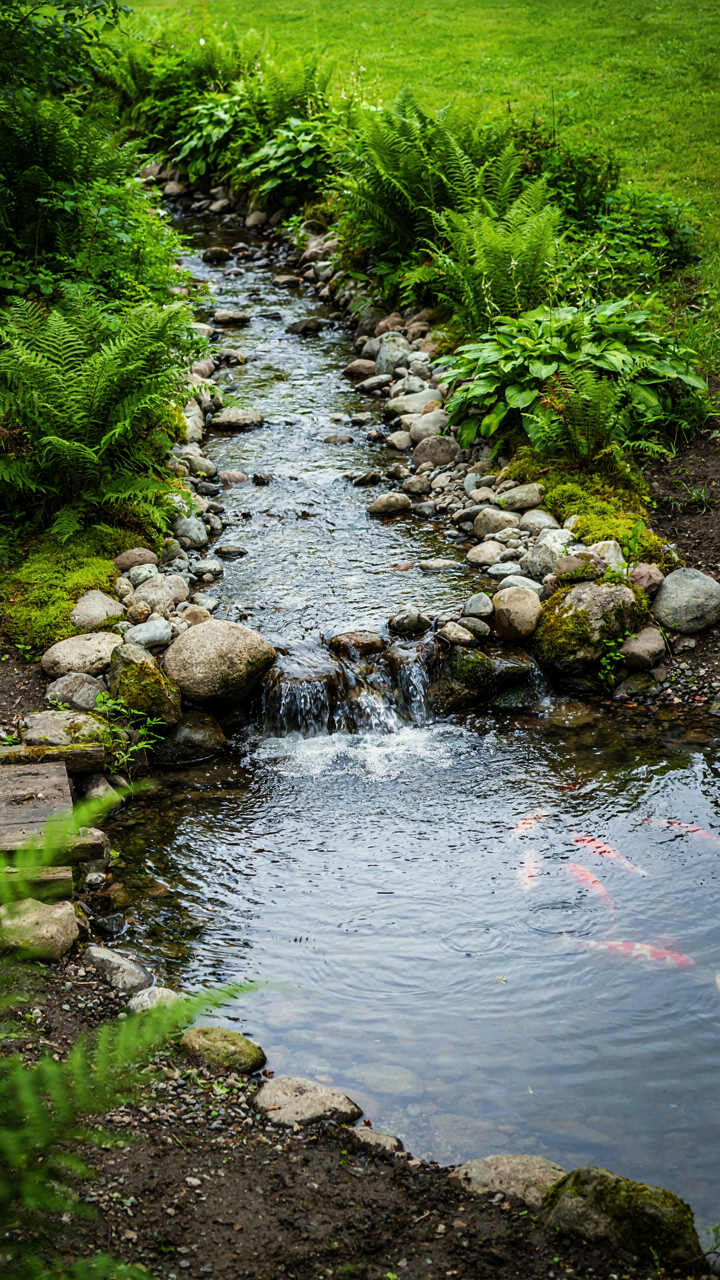
You want a peaceful backyard that also keeps your koi alive. The real mechanism is this: dissolved oxygen in static water drops fast, and koi need constant replenishment. Fluid dynamics borrowed from hydraulic engineering teaches us one core principle: flow velocity directly correlates with gas exchange at the water surface. Most beginners ignore this and add a pump that moves water too slowly to matter, or too fast to control.
The calculation is straightforward. A koi pond needs between 5 to 10 complete water turnovers per 24 hours for adequate oxygenation. That means if your pond holds 1000 gallons, your pump must circulate 5000 to 10000 gallons daily. A 2000 GPH pump recycling a 1000 gallon system achieves roughly two turnovers per day, which is why your koi gasp at the surface despite running “circulation.” You size the pump first, then the stream, not backward.
Waterfall Height And Stream Angle Create The Oxygen Lift
The waterfall is not decoration masquerading as function. It’s the actual engine of aeration, and the geometry matters more than the aesthetics. Water falling from height creates turbulence and breaks surface tension, forcing air into the column. A 12 inch drop creates measurable oxygen gain. A 24 inch drop creates substantially more. Stream angle matters equally: a shallow 15 degree slope slows water and reduces aeration; a 30 to 45 degree angle accelerates flow without causing erosion or noise.
The placement also drives function. Position your waterfall or stream return at the pond’s far end from the intake. This forces water to travel the longest path through the system, maximizing residence time and debris filtration before it cycles back. Most designs place the return and intake close together, creating dead zones where detritus accumulates and oxygen stagnates. The stream should move visible water, not trickle. If someone standing 10 feet away can’t hear or see the water moving, your design is too passive to support fish.
Winterizing Your Garden Koi Pond: The Seasonal Strategy

Temperature Considerations: Protecting Koi In Cold
You’re worried about losing your koi because you’ve invested time and money into them. Here’s what actually matters: koi don’t die from cold water itself. They die from the metabolic shock of rapid temperature swings and the stress of oxygen depletion underneath ice. The mechanism is simple. Koi are ectothermic, meaning their body temperature matches their environment. As water temperature drops below 50 degrees Fahrenheit, their metabolism slows dramatically, their immune system weakens, and they stop eating. They enter a state of dormancy where they demand almost nothing from their environment except stable conditions.
The mistake most beginners make is treating cold as the enemy instead of treating temperature instability as the enemy. Your job is not to keep the water warm. Your job is to keep the water from fluctuating wildly and to prevent it from freezing solid. In zones where winter temperatures drop hard, you need a pond depth of at least three feet. Koi move to the deepest part of the pond where water stays slightly warmer and more stable. Shallow ponds freeze through completely, eliminating this refuge. Build depth into your design before winter arrives.
De Icers And Aerators: Preventing Toxic Gas Buildup
This is where the biology gets brutal. Decomposing organic matter under ice consumes oxygen and produces gases like ammonia and methane. Stagnant water under a frozen surface becomes a toxic chamber. The fix isn’t complicated but it’s non negotiable: you need water movement and oxygen exchange before the pond freezes solid. De-icers and aerators solve this through different mechanisms. A de-icer maintains a small opening in the ice surface, allowing gas exchange and preventing total stagnation. An aerator pumps air into the water column, replacing oxygen that microbes consume.
Most people buy a de-icer and call it done. That’s incomplete. A de-icer alone keeps a hole open but doesn’t inject oxygen. An aerator alone can actually work against you if installed wrong, because rising air bubbles pull colder surface water down while warmer, denser water from below gets displaced upward and exposed to freezing air. Install your aerator near the pond bottom with the output directed upward at a gentle angle, not violently. Run it continuously from mid fall through early spring. This maintains oxygen levels and keeps enough water moving that toxic gases escape through the opening created by your de-icer.
A House With A Pond: Integrating Into The Village Garden Design

The Pond As Acoustic Anchor
You want your pond to feel intentional, not like an accident that happened in your yard. The mechanism is simple: sound travels differently over water than over land, and sight lines create psychological boundaries. Water amplifies noise in unpredictable ways. A poorly positioned pond reflects street noise back into your seating area instead of absorbing it. Position the water body perpendicular to noise sources, not parallel. The water surface itself becomes a barrier that interrupts sound waves before they reach the house. This is basic acoustics applied to landscape architecture.
The koi pond also functions as a visual anchor that reorients how people perceive your property edges. When placed strategically between the house and neighboring properties, it creates a focal point that naturally draws the eye inward rather than toward boundary lines. The sound of moving water covers ambient noise and masks neighbor activity. Strategic placement transforms the pond from decoration into a working noise buffer that costs nothing beyond its initial installation. Position depth and width to match your property’s acoustic weak points, not for aesthetic balance alone.
Paths, Seats, And The Logic Of Movement
Most beginner pond designs fail because they treat hardscaping as decoration instead of a circulation system. Pathways aren’t about being pretty; they’re about controlling where people actually walk and where they stop to look at the water. Stone or gravel paths that lead directly to viewing points force engagement with the pond at specific angles where sightlines work best. Build the path network first, then position the pond to align with natural stopping points. A bench or seating area placed at the path terminus becomes the reason someone walks out there, not an afterthought.
Hardscaping integration means the pond doesn’t sit isolated in the middle of the yard. Connect it to the house entry, to side yards, and to existing garden beds using pathways that make functional sense. Japanese garden design uses this principle deliberately: every stone placement affects traffic flow and determines where the eye focuses. Your koi pond works the same way. Edging materials should transition smoothly from path materials to water edge so the boundary feels intentional, not accidental. Concrete, slate, or timber edges work best when they match or complement your existing hardscape palette.
The Real Obstacle Isn’t The Pond; It’s Your Desire To Control Nature Instead Of Cultivating It
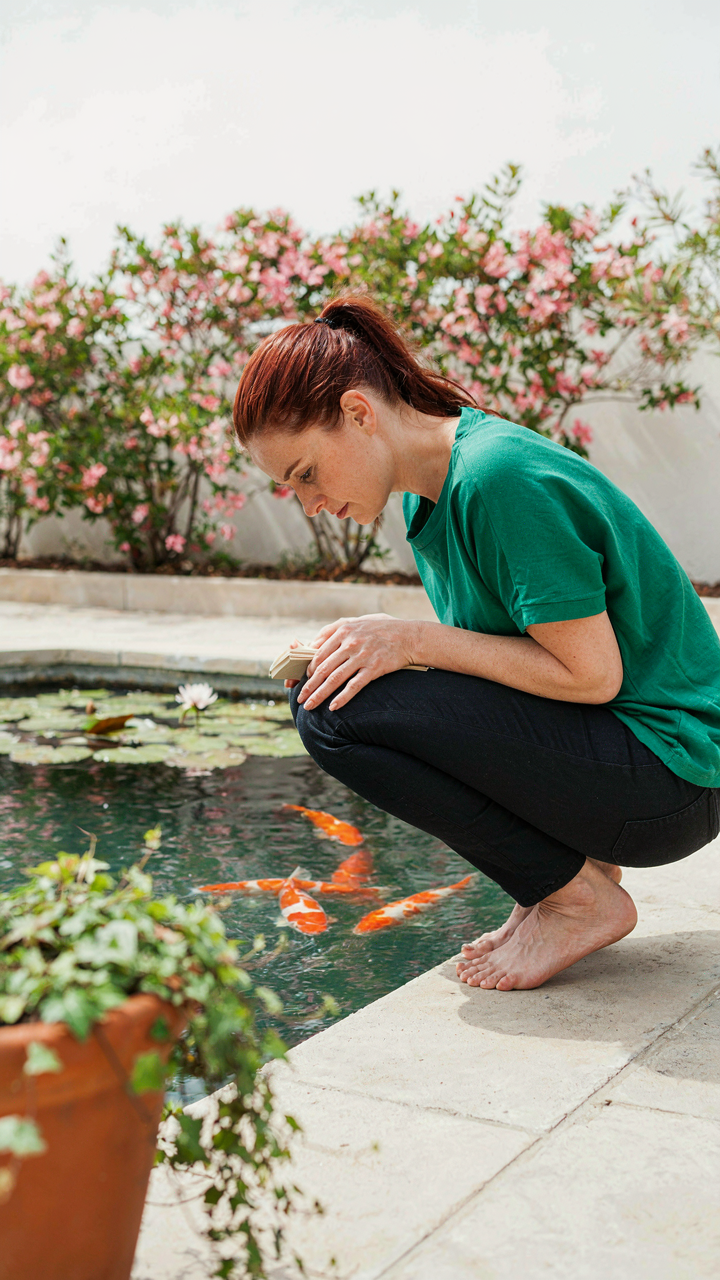
Most beginners fail because they fight the system instead of working with it. You don’t design a koi pond. You design the conditions where a koi pond designs itself. Stop planning every rock placement and start observing water movement, plant behavior, and fish patterns. Your job shifts from architect to gardener. Open your phone right now and sketch one thing you’ll observe in your yard this week, not build. That single shift from control to cultivation separates ponds that thrive from ponds that die.



