
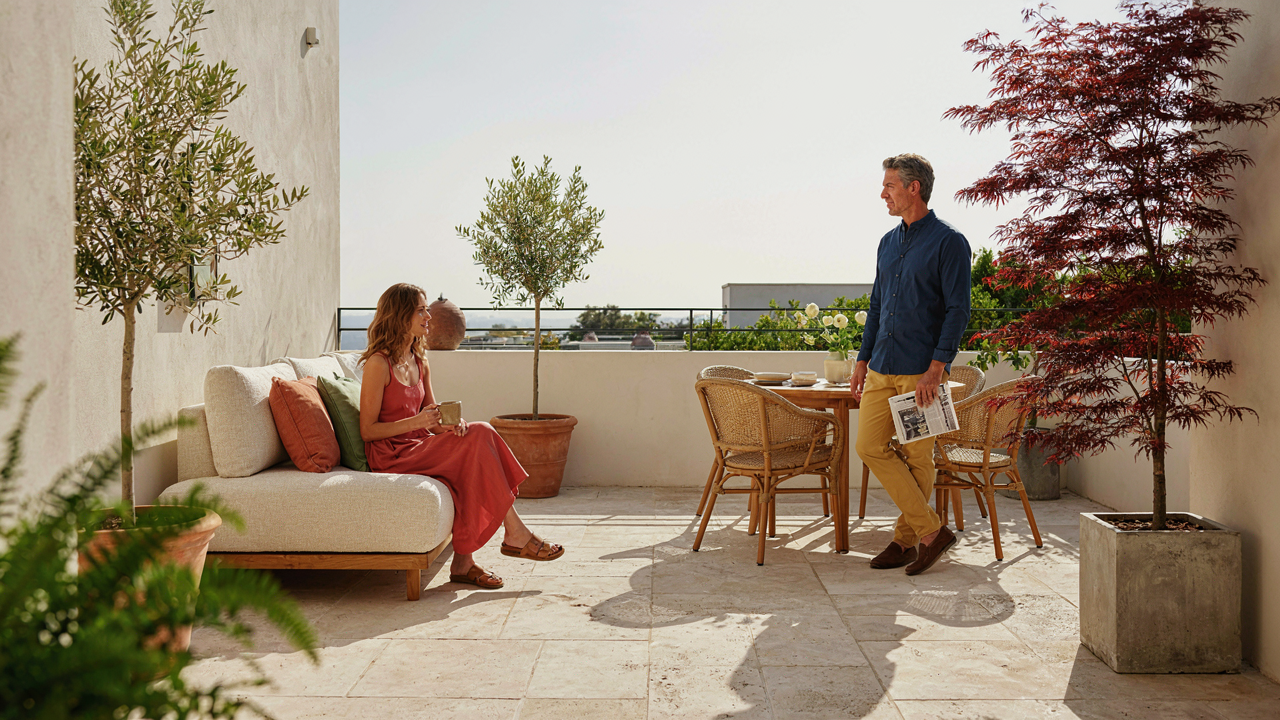
The Strategic Patio Tree: Beyond Basic Balcony Trees Ideas
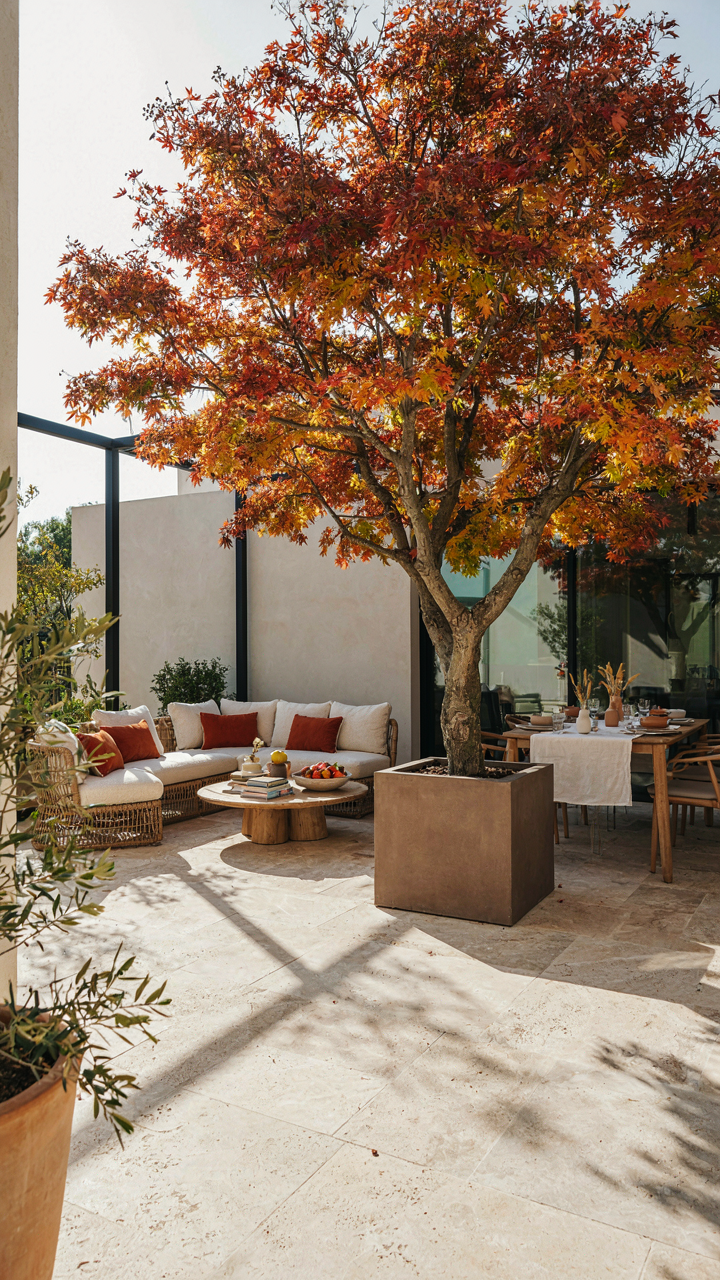
Patio Trees As Social Currency
You want people to notice your space and assume you have taste, money, or both. That’s the real reason this matters. The mechanism is simple: a potted tree signals intentionality. Most patios get a chair and call it done. A specimen tree—one chosen with constraint and placed with purpose—reads as curated. This distinction matters because it operates on the same principle as fashion: context and scarcity create value. A common shrub in a nursery pot is invisible. The same species in a large architectural container, positioned as a focal point, becomes the story of your patio.
The move is to pick a tree that performs double duty: it has to work aesthetically and it has to be the right scale for your space. Oversized containers with established specimens beat small trees every time because they communicate investment. Most people reverse this. They buy small and hope it fills space. You’re buying maturity and presence instead.
Atmosphere Engineering For The Occasion
Event design borrows from theater: you control what the audience sees first, what they linger on, and what they remember. Your potted tree is a stage element. A flowering specimen three weeks before a spring gathering transforms the patio from generic to intentional. The tree anchors the narrative of that day. Winter entertaining? A structural evergreen with clean bones reads as sophisticated restraint. Summer dinner? A Japanese maple or ornamental cherry creates dappled light and focal depth without the mess of a full canopy overhead.
The protocol: identify the date and mood you’re designing for, then work backward to pick the tree. A Crape Myrtle blooms in late summer, so it’s useless for spring events but perfect for fall. Columnar forms like Sky Pencil Holly work for narrow patios where you need vertical drama without footprint. A single well-chosen tree placed 48 hours before guests arrive does the work of a designer without the cost.
The Low Effort Legacy: Evergreen Trees For Planters
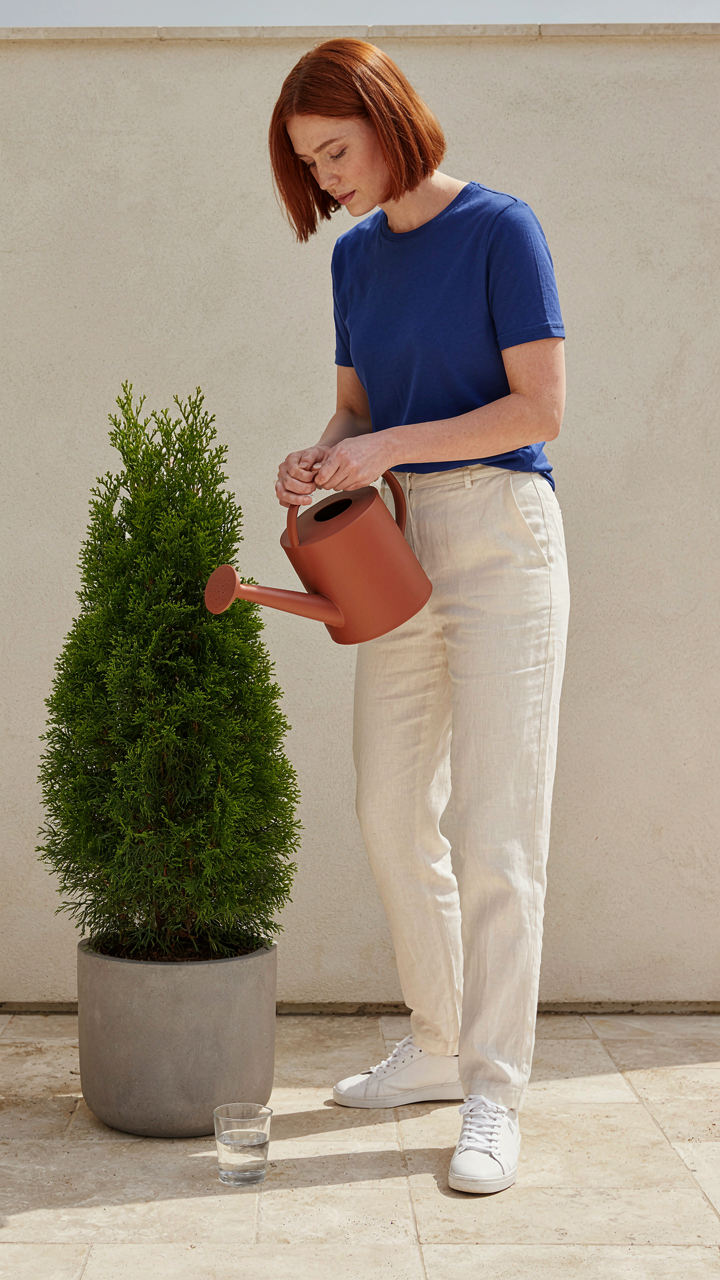
Resilience Over Rotation
You want a tree that won’t die the week after your dinner party ends. That’s the real problem here—not aesthetics, but the fear of failure masquerading as a design choice. Biology teaches us about competitive advantage through adaptation. Evergreens achieve this by retaining foliage year-round, eliminating the metabolic cost of seasonal regrowth. They survive neglect because they’ve evolved to conserve resources, not spend them chasing seasonal cycles.
Boxwood, privet, and dwarf conifers like Emerald Green arborvitae handle container life because their root systems don’t demand constant feeding or fussing. They tolerate irregular watering better than deciduous trees. Plant them in quality potting soil mixed with perlite for drainage, and they’ll sit in a planter for years without drama. The mechanism is simple: shallow, consistent stress beats feast-and-famine cycles every time.
Presence That Persists
Evergreens solve the visibility problem most people won’t admit to. A bare tree branch in January screams neglect. A green planter says you have it handled. This matters for patios because the tree becomes infrastructure, not decoration—it works twelve months instead of six, which means your investment compounds instead of evaporating.
Holly varieties, bay laurel, and Hinoki cypress deliver structure when nothing else does. They don’t demand seasonal pruning cycles or cleanup routines. Water them when soil surface dries, feed them twice yearly with balanced fertilizer, and rotate the planter quarterly for even light exposure. That’s the full protocol. Nothing else changes the outcome.
The “Event Horizon” Protocol: Trees For Planters
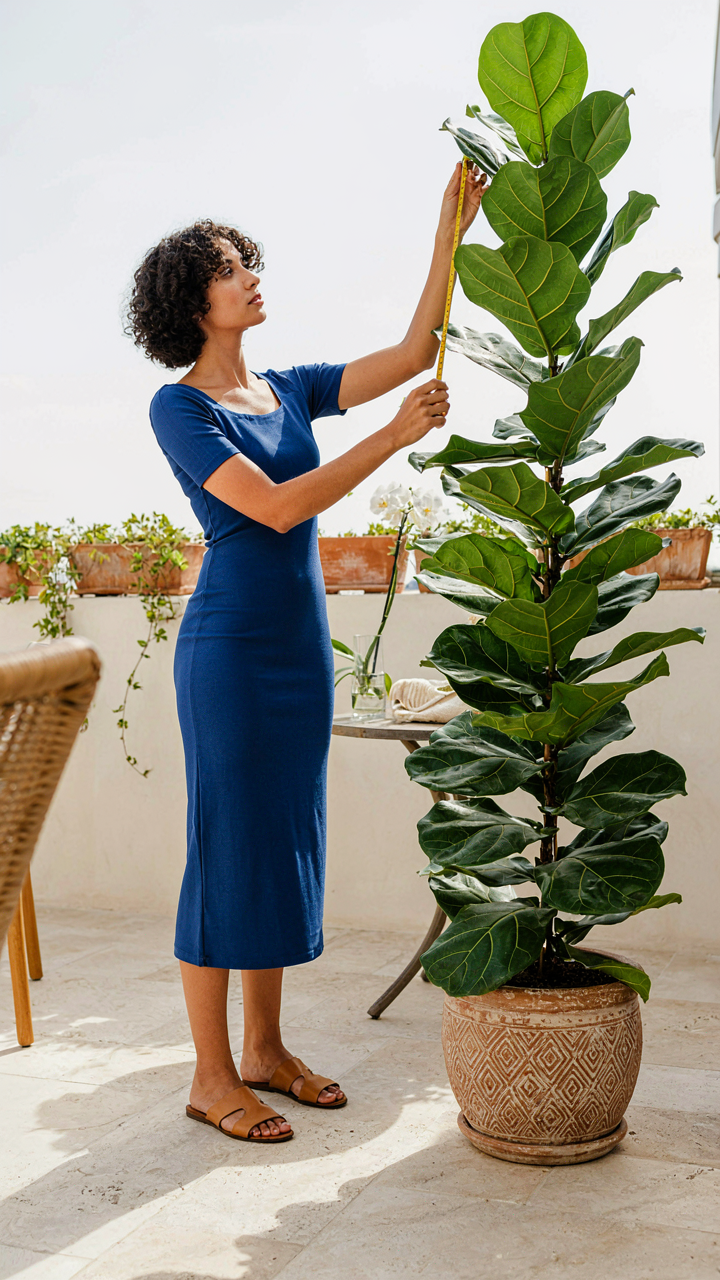
Scale Determines Visual Dominance
You want the tree to do the heavy lifting so guests notice it instead of noticing you’re trying too hard. This is a physics problem dressed as horticulture. In orbital mechanics, an object’s gravitational pull correlates to mass and proximity. A potted tree’s visual pull correlates to height relative to sightline distance and container footprint relative to available space.
A six-foot Ficus lyrata dominates a 12-by-12 patio. The same tree drowns in a 40-by-60 event space. Measure your venue’s longest sight line first. The tree’s total height should occupy between 15 and 25 percent of that distance when viewed from the entry point. A 10-foot line of sight demands a 18-to-24-inch tree in a five-gallon container. A 30-foot sight line needs a 6-to-8-foot specimen. Undersizing kills impact. Oversizing creates claustrophobia and blocks sightlines.
Container diameter matters as much as tree height. A standard three-gallon pot reads as flimsy at events. Move to a 12-to-18-inch ceramic or composite planter. The visual weight of the container must support the canopy without appearing top-heavy. This ratio is non-negotiable: if the container doesn’t visually anchor the tree, guests unconsciously register instability, and the entire piece fails regardless of the specimen’s quality.
Staging For Maximum Temporary Return
People expect potted patio trees to look established, not nursery-fresh. The common advice is to just place the tree and let it sit. That’s lazy. A newly potted specimen needs two to four weeks to acclimate, establish root contact with soil, and show full canopy density. You don’t have two weeks before an event.
Select pre-grown specimens from growers who’ve already hardened them off in outdoor conditions. Trees grown outdoors in containers are denser and fuller than greenhouse stock. Request trees that have been in their current pots for at least three months. Check the root ball by tilting the pot; healthy roots should be visible at drainage holes but not circling the perimeter excessively. Position the tree in your event space 48 hours before guests arrive. This gives the plant time to adjust to light and temperature without the stress of being moved multiple times. Water deeply 24 hours prior, never on event day. Wet soil creates a mud hazard and weakens the container’s structural integrity. The tree’s visual return peaks when it’s acclimated, stable, and positioned to catch natural or ambient lighting from the side, not front.
The Perennial Performance: Trees That Can Be Planted In Pots
Build Assets That Survive The Event
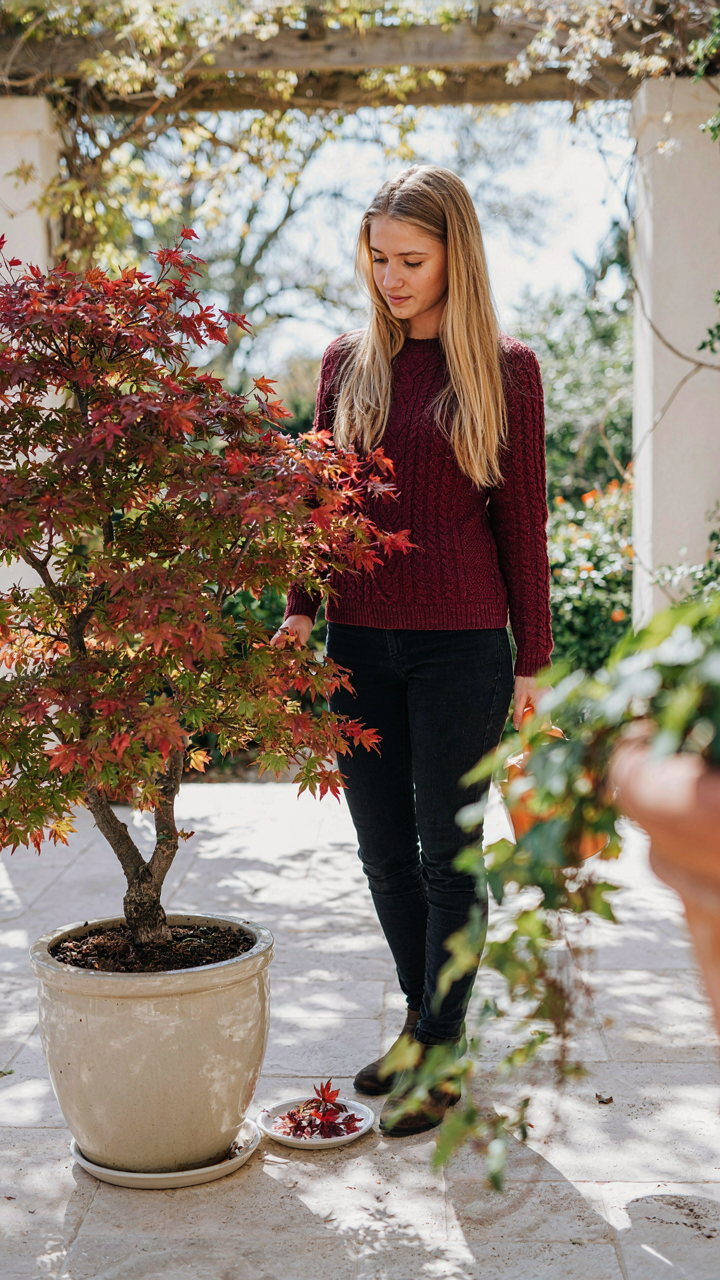
You want a potted tree that justifies the expense after the party ends. That’s the real question nobody asks directly. The mechanism is simple: trees with strong root systems in containers either establish themselves for years or they decline. A tree that survives in a pot long-term requires a species with moderate vigor, good drainage tolerance, and the ability to handle root constraint without strangling itself. Japanese maple, serviceberry, and boxwood thrive because they evolved in conditions that mimicked container life: rocky slopes, shallow soils, competition for resources.
Most advice treats potted trees as single-use props. Wrong. A 5-gallon boxwood planted in an 18-inch pot with quality drainage can perform at three events per year for a decade if you manage water and soil refresh between seasons. The cost per occasion drops to nearly zero after year two. The real discipline is upgrading soil annually and moving the tree to dappled shade during peak summer heat, even if it sits on your patio for months. This turns the tree into infrastructure, not decoration.
Reposition Without Replanting
Container trees solve the staging problem that in-ground trees cannot. Mobility is the advantage. You move the pot to the entryway for one event, shift it to the corner for another, rotate it to frame a seating area for a third. The tree’s root system stays undisturbed. This is fundamentally different from replanting, which stresses the tree each time. A potted 8-foot Crape myrtle can be wheeled to four different locations in a single season without shock.
Water becomes the constraint, not location. A tree in a container loses moisture faster than ground trees because soil volume is limited and air exposure increases evaporation. Track your specific tree’s watering cycle for each location. An eastern-facing patio requires different watering than a western-exposed deck. Document this in one place. The reusability multiplies only if you match the tree’s water demand to its current position and adjust accordingly before stress shows. This is the protocol that separates people who get years from a potted tree from those who replace them annually.
The “Aesthetic Amplification” Method: Small Flowering Trees For Pots
How Constraint Creates Visual Weight
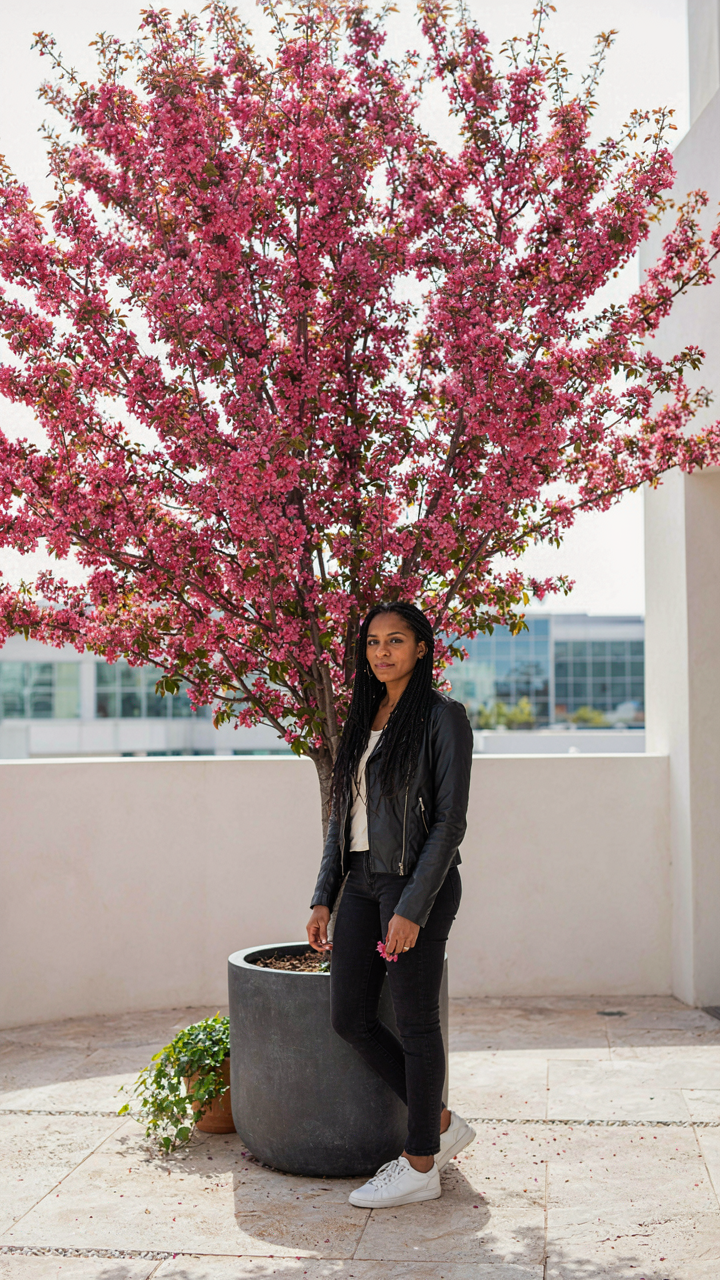
You want people to notice what you’ve done without announcing it, which is why a single small flowering tree in a pot stops the eye in ways a full landscape cannot. Visual hierarchy works like military strategy: concentrate force where it matters. A potted flowering tree becomes a focal point because it violates the expectation of formlessness. The patio becomes a stage, and the tree becomes the prop that commands attention.
Flowering trees in containers work because they occupy vertical space and draw the eye upward, breaking the monotony of horizontal surfaces. Most people fill patios with scattered furniture and call it done. The mechanism here is simple: one object that demands visual processing triggers pattern recognition in the viewer’s brain faster than ambient clutter. A single Magnolia or Crabapple in a large pot reads as intentional, which reads as control, which reads as status.
Contrast And Placement As Strategic Tools
Color and form don’t function in isolation; they function against their background. A white flowering Serviceberry against a dark fence wall creates contrast that makes the blooms impossible to ignore. Against a light wall, you need deeper foliage or darker blooms to achieve the same effect. Form works the same way: a columnar tree reads differently than a spreading one, not because of aesthetics, but because vertical lines pull attention differently than horizontal lines do in spatial perception.
Placement determines whether your tree amplifies the space or becomes furniture. Position flowering trees at sight lines, not corners. At corners, they fade into the architecture. At the end of a sightline or at the juncture where two patios meet, the tree becomes unavoidable. The mechanism is spatial psychology: forced visual contact creates perceived value. This is why entrance positioning matters more than pot size. Move the tree to where people must process it when entering or exiting the space, and the entire patio gains perceived sophistication.
The “Decoy Effect” Technique: Patio Trees & Patio Inspiration
Why Choice Architecture Matters More Than The Trees Themselves
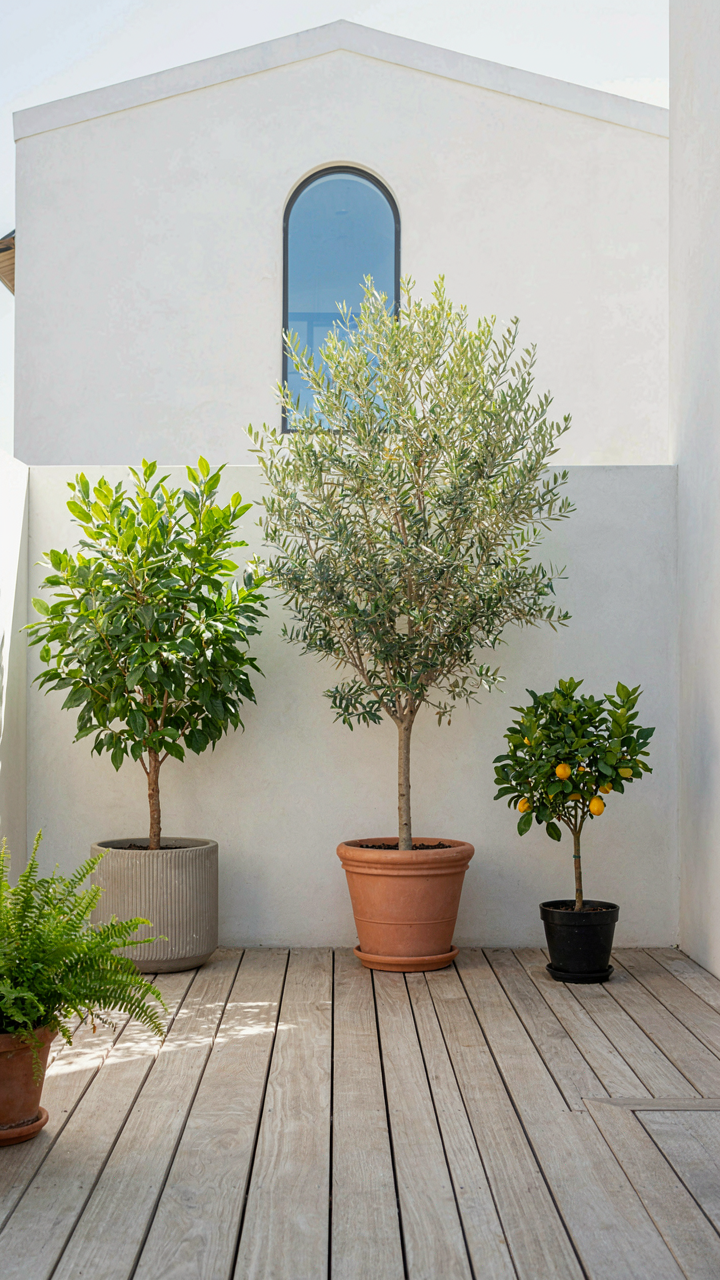
You want people to pick the tree you actually want them to choose, not wander through indecision. Economics calls this the decoy effect: introducing a third option that makes one choice look obviously better by comparison. Place a mid-size Ficus next to an expensive specimen olive and a cheap dwarf citrus. The olive suddenly seems reasonable. Your guest picks it without realizing the comparison just moved their perception.
Most advice says “curate your selection carefully.” That’s incomplete. The real mechanism is comparative framing. You’re not selling trees. You’re selling a decision architecture that channels preference toward a target. The Ficus becomes the anchor, the olive becomes the prestige play, the citrus becomes the budget escape hatch. None of these exist for their own merit in this setup—they exist to make one choice feel inevitable. Size, price point, and visual weight all factor into how visible the contrast becomes.
Position Controls Perception And Desire
Placement isn’t decoration—it’s directional force. Military strategy teaches positioning: you don’t win by spreading resources evenly. You concentrate force at the point of decision. On a patio, the entry point is where guests form first impressions. Put your statement tree there. Not the backup option. The specimen people remember.
Eye level matters more than designers admit. A large potted tree at shoulder height dominates attention. One tucked into a corner reads as secondary. A tree placed where natural light hits it first appears healthier and more valuable than identical genetics in shade. This isn’t psychology—it’s basic perception. The spatial hierarchy you create through placement rewires how guests assess options. A single strategic repositioning can shift which tree becomes the focal point without changing the trees themselves.
The Selection Grid: Trees That Do Well In Pots
Hardiness Zones And Container Reality
You want the guarantee that your tree survives winter without becoming a problem for next spring. Here’s the mechanism nobody states plainly: hardiness zones measure ground soil behavior, not container soil behavior. A potted tree in zone 5 freezes faster and deeper than the same species in the ground because container soil lacks earth’s insulating mass. Your zone number is a starting point, not a finish line.
- Dwarf Calamansi (Citrus microcarpa): Thrives zones 9-11 in pots; zone 8 requires winter protection indoors or in unheated structures to prevent root damage.
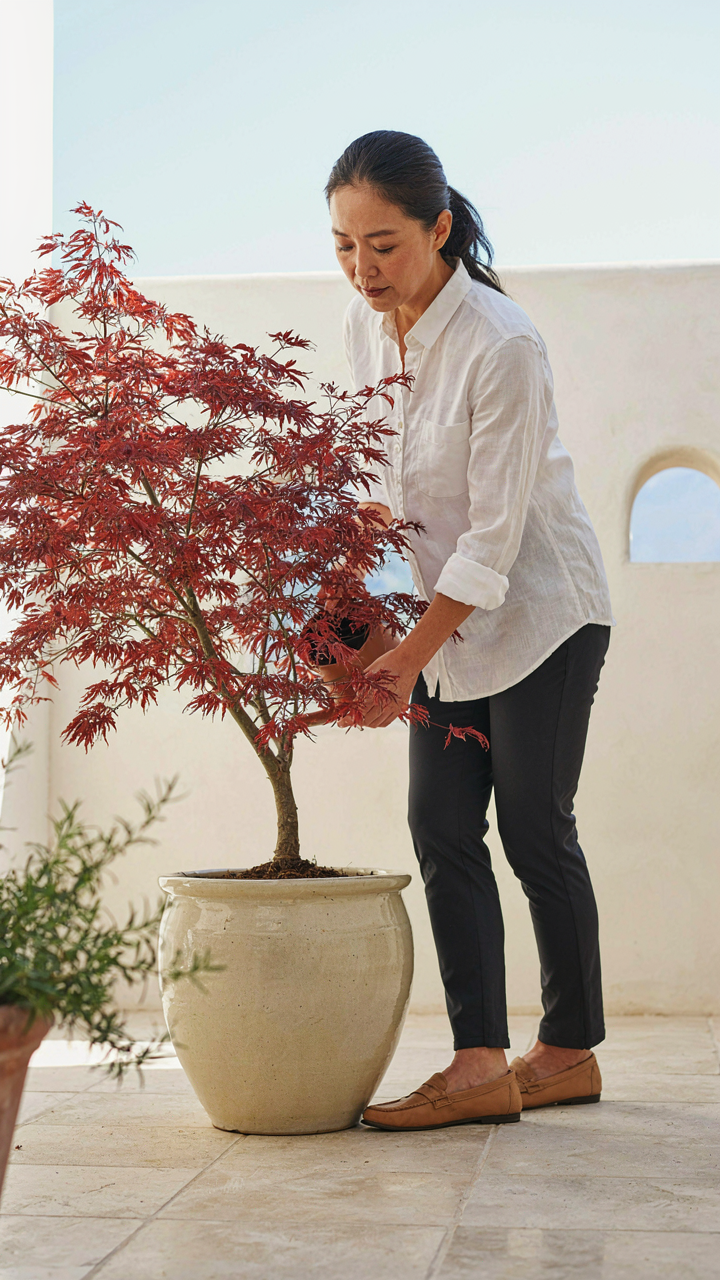
- Japanese Maple (Acer palmatum): Hardy zones 5-9 in ground, but potted specimens need one-zone warmer placement; roots stay vulnerable to frost damage in containers.
- Fig (Ficus carica): Zone 5-9 hardy in soil; containerized figs need consistent drainage and zone 7+ winter dormancy conditions to survive outdoors.
- Crape Myrtle (Lagerstroemia): Zones 6-11 in ground become zones 7-11 in containers; pot size matters more than variety for winter survival.
- Olive (Olea europaea): Zone 8-11 in pots; young potted olives are less cold-tolerant than mature trees despite identical genetics.
Container trees live in accelerated seasons. Soil warms faster in spring, dries quicker in summer, and freezes solid in winter. You move one zone colder with a standard 15-gallon pot, two zones colder with smaller containers. Select species one full zone warmer than your location’s minimum winter temperature, then verify the specific cultivar’s actual cold tolerance through growers, not seed catalogs.
Shallow Roots Win Container Wars
Container trees face a bottleneck that ground trees never encounter: confined root systems cannot search for water or escape compacted soil. The biology of roots teaches us about limitation through density. A tree adapted to shallow root systems solves this constraint before it becomes a problem.
Fibrous-rooted trees and dwarf cultivars dominate successful potted specimens. They branch laterally instead of driving downward, creating efficiency within borders. Trees with deep taproots fail in pots because they hit the container bottom and circle endlessly, strangling themselves. This isn’t a preference issue. It’s structural. Japanese maples, sourwoods, and smaller dogwoods thrive in 18-24 inch containers because their roots evolved to spread sideways. Magnolias and walnuts suffocate in the same space regardless of care quality. A shallow-rooted tree in a pot outperforms a deep-rooted tree in ground-sized soil simply because its anatomy matches the constraint. Check your target species’ root architecture before purchase, then match pot depth to root behavior, not to visual proportions.
The Minimalist’s Advantage: Trees To Grow In Pots

Keep Trees Small Through Strategic Cuts
You want the visual payoff of a mature tree without the space commitment or the guilt of killing something massive. Here’s the mechanism: pruning pots into shape works like mechanical constraints in engineering—you’re not fighting the tree’s growth, you’re redirecting it into a finite volume. The tree adapts by growing denser, not taller.
Most people prune for appearance. That’s backward. Prune for size control first, aesthetics second. Cut the terminal shoot (the tip) on your ficus, maple, or bay laurel in early spring when growth accelerates. The tree responds by pushing lateral branches instead of vertical height. Repeat this annually and you lock the tree into a five to seven foot functional height inside a pot, indefinitely.
Automate What Fails First
Watering kills more potted trees than cold, pests, or disease combined. The real problem isn’t laziness—it’s inconsistency. One day soaked, three days dry, one day waterlogged. Build a protocol, not a habit. Set a watering day. Check soil moisture at two inches deep. Water until it drains from the bottom pot hole, then stop. Same day, same method, every week.
For trees that need it, install drip irrigation on a basic timer. Olive, pomegranate, and citrus in pots respond to this immediately—they’ll outlast hand-watered versions by years. You’re not trying to be smart about when to water. You’re removing the decision entirely. The tree gets what it needs on schedule, and you stop guessing.
The Real Obstacle Isn’t Your Black Thumb, It’s Your Failure To See Plants As Strategic Assets

Most people treat potted patio trees like decorations they tolerate. You need to flip that. A strategically placed tree solves problems: it screens an ugly neighbor’s fence, creates shade that cuts your cooling costs, or becomes the centerpiece that finally makes your patio worth using. Stop buying trees because they look nice. Buy them because they do work. Right now, walk outside and identify one problem your patio has. Then find the tree that fixes it. A potted tree isn’t an accessory, it’s a tool deployed with intention.



