
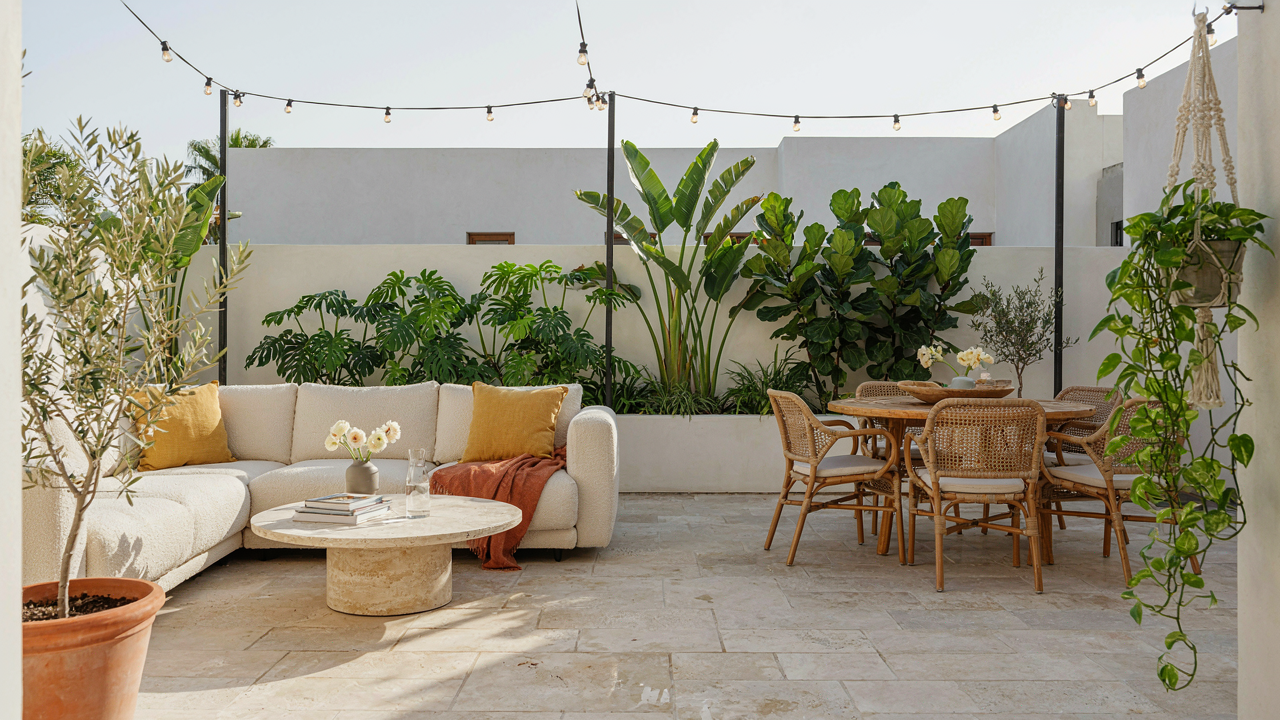
The Function First Protocol: Beyond Pretty Pictures
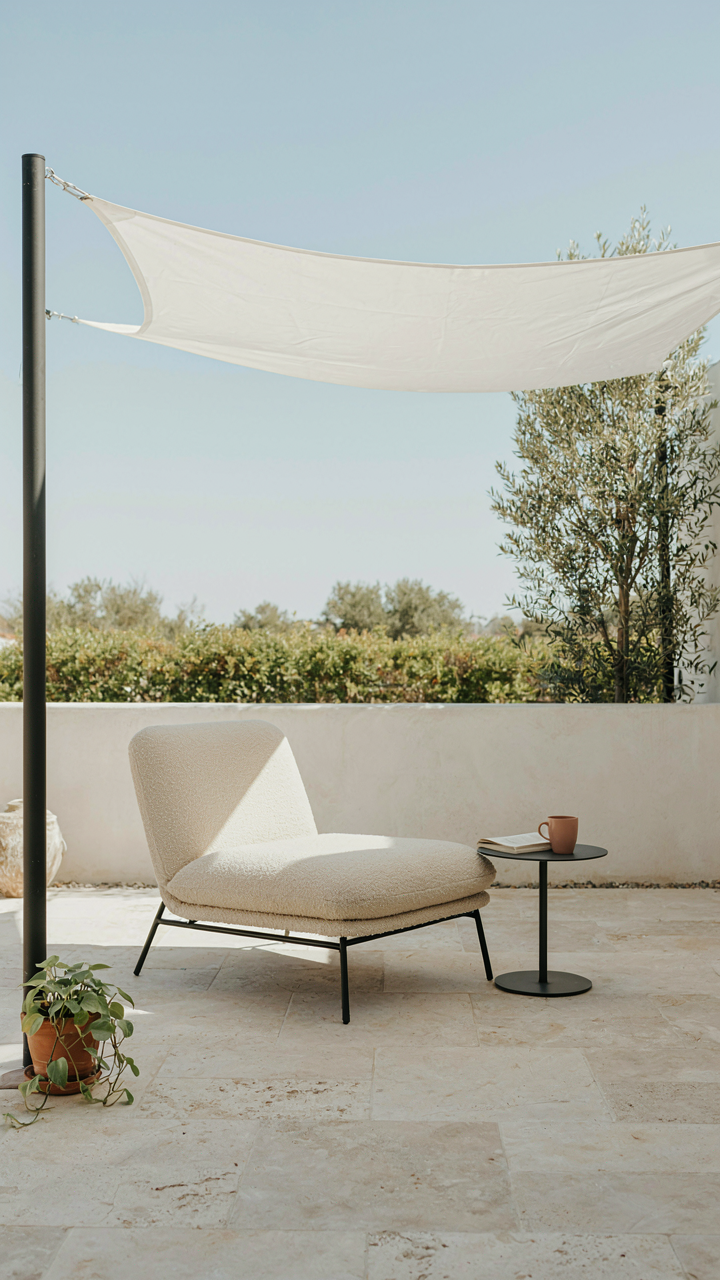
Start With What You Actually Do Outside
You want your patio to look intentional. What you’re really avoiding is the sinking feeling of wasted money on furniture nobody uses. Here’s the mechanism: your outdoor space won’t function until you name its primary activity. Not aspirationally. Actually. Are you eating out there? Working? Reading alone? Hosting groups? The answer dictates every material choice, layout, and piece you buy. Without this anchor, you’ll chase trend photos and end up with a showroom nobody sits in.
Most people skip this step because naming one thing means excluding ten others. That feels limiting. It’s not. It’s the only filter that prevents decision paralysis. A dining table demands different dimensions, weight capacity, and weatherproofing than a lounge chair. A workspace needs surface stability and proximity to power or natural light. A reading nook requires shade and sightlines away from foot traffic. Define the primary use first. Everything else follows from that decision, not from Instagram aesthetics.
Remove Everything That Doesn’t Earn Its Place
The common advice says to “start with a budget and buy quality pieces.” That’s backwards. You end up with quality clutter. The real protocol: eliminate before you acquire. Walk your patio. Every item there should answer one question directly: does this support my primary outdoor activity or does it create friction? A side table next to your dining set earns its place if you actually set drinks on it. Decorative planters earn their place only if you maintain them. An unused bench doesn’t get a pass because it’s well-built.
This comes from inventory management in manufacturing: remove waste before optimizing for speed. Apply that to your patio. Furniture you don’t use is waste. It blocks movement, collects debris, and trains you to ignore your own space. Start by removing one item you haven’t sat on or used in a month. Then remove another. Only then buy replacements that directly serve your stated activity. Your patio functions when every piece has a job. Nothing else matters.
Outdoor Furniture Ideas: The Archetypes, Not The Hype

Form Over Trend
You want permission to buy something that won’t look stupid in three years. That’s the real question here. The mechanism is simple: trends in patio furniture follow the same lifecycle as fashion, but your deck doesn’t get replaced annually. Timeless forms outlast aesthetic cycles because they solve a basic human need without relying on novelty. Mid-century modern lines, transitional silhouettes, and classical proportions have survived decades because they work structurally and visually. They don’t depend on being “of the moment.”
Most advice tells you to “choose what you love,” which is useless because love changes with Instagram. Instead, identify archetypes: the lounge chair, the dining set, the sectional. These categories predate current design movements. A well-proportioned teak lounge chair from 1960 still functions identically to one sold today. The shape solved a problem then and solves it now. Buy furniture that matches the form category you need, not the brand that’s trending on design blogs.
Wood, Metal, And Wicker In Reality
Material resilience isn’t about aesthetics—it’s about material science and environmental stress. Wood, metal, and wicker fail for specific, predictable reasons when exposed to outdoor conditions. Teak and cedar naturally resist rot because their cellular structure contains oils that inhibit moisture absorption. Aluminum doesn’t rust but conducts heat and can corrode in salt environments. Wicker, whether natural rattan or synthetic resin, degrades under UV exposure and water pooling. Know the failure mode of your choice before you buy it.
Your actual decision framework: use wood where you want tactile warmth and can commit to maintenance, metal where you need durability in moderate climates, and synthetic wicker where you prioritize longevity over authenticity. Cast aluminum costs more upfront but outlasts stained wood by a decade. Natural wicker costs less but requires seasonal storage or replacement every five to seven years in humid climates. Match the material to your climate zone and maintenance tolerance, not to what looks premium in a catalog photo.
Backyard Seating: Engineering Social Interaction
How Distance Controls Conversation
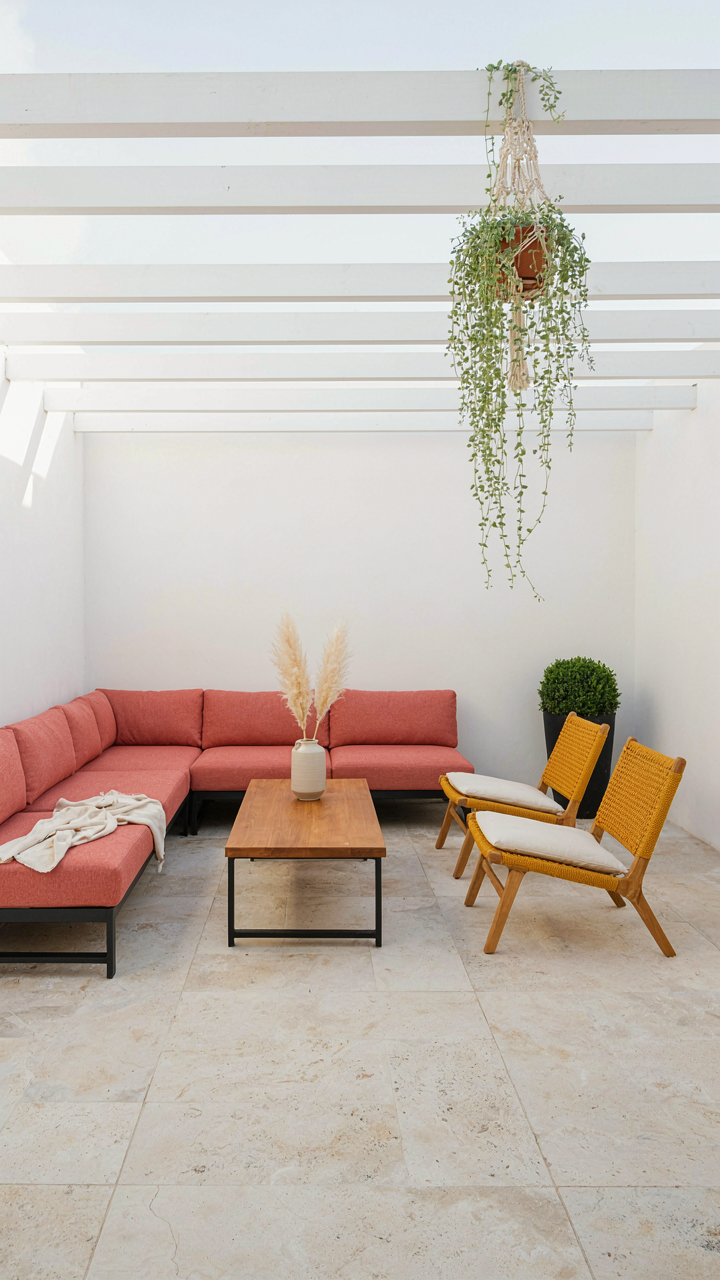
You want people to think your patio is naturally conducive to connection. The real driver is geometry. Proximity operates like physics: conversation quality degrades with distance. Seating arrangements either enable or block eye contact and voice projection. Most people space furniture wrong because they treat outdoor areas like indoor rooms, ignoring that wind and ambient noise demand tighter clustering. Position seats within 6 to 8 feet of each other, angled toward a center point rather than parallel. This forces engagement instead of allowing people to retreat into their phones.
The furniture arrangement itself becomes the social architecture. An L-shaped sectional or two facing chairs with a low table between them creates an enclosed conversational node that feels intentional without being cramped. Avoid spreading pieces across open space. The gaps between furniture are wasted conversation zones where people either shout or disengage. Test your layout by sitting in each seat and asking: can I hear someone speak at normal volume from every other seat? If the answer is no, move furniture closer.
Comfort That Demands Nothing From You
Comfort furniture that requires constant fidgeting is just camouflaged discomfort. The mistake is treating patio seating like interior furniture where you can add throw pillows infinitely. Outdoor pieces need built-in support because weather exposure degrades cushions faster than indoor use. A chair with proper lumbar support and appropriate seat depth lets people stay seated for hours without repositioning. This sounds obvious until you realize most patio sets fail at basic ergonomics: shallow seats, upright backs, inadequate armrest height.
Material choice directly affects usability. Teak and powder-coated aluminum require minimal maintenance while maintaining structural integrity across seasons. Rope weaving on modern outdoor chairs distributes weight evenly and resists sagging unlike fabric slings that stretch over time. Seat height matters too. Standard dining chairs sit around 18 inches; lounge seating should be 15 to 17 inches so legs rest naturally without dangling. The friction between good ergonomics and low maintenance is where real comfort lives—not in decorative elements that need constant attention.
Backyard Furniture As A System: Lessons From Military Logistics

Build Furniture That Moves With You
You want your patio to feel intentional without looking overthought, but what you’re really after is control—the ability to reshape your space without replacing everything. Military logistics borrowed a concept from physics called “economy of motion”: accomplish maximum output with minimum wasted movement. Apply this to patio furniture through modularity. Modular pieces reduce friction when you rearrange. A sectional with detachable cushions, a dining table with removable leaves, or stackable chairs don’t just save space. They let you adapt the entire system to seasonal use, entertaining patterns, or property changes without starting over.
The furniture industry sells you the opposite: matching suites designed to stay put. That’s marketing, not strategy. Real flexibility comes from choosing individual components that interlock by dimension, not brand. Measure your space first, then buy pieces that serve multiple configurations. A console table becomes extra dining surface or bar seating depending on arrangement. Wheeled bases on heavier items make repositioning practical, not theoretical. This isn’t decoration. This is infrastructure that earns its cost by adapting instead of becoming obsolete.
Durability Wins Through Simplified Maintenance
Most advice on outdoor furniture durability misses the actual problem: maintenance friction is what kills longevity. People don’t abandon quality pieces because they fail. They abandon them because upkeep becomes a recurring tax they resent paying. Teak and powder-coated aluminum dominate commercial outdoor spaces for one reason: they require minimal intervention to stay functional. Teak sheds tannins and weathers to silver without rotting. Powder-coated aluminum resists rust when the coating stays intact. Both outlast cheaper alternatives because the owner’s effort stays near zero.
Choose materials that degrade gracefully or resist degradation entirely. Concrete and stone patinas improve with time. Stainless steel hides salt spray damage better than mild steel. Cushion covers that unzip beat glued upholstery because you replace only the fabric, not the frame. Before buying, ask one question: what fails first, and can I replace it without replacing the whole piece? If the answer requires refinishing, repainting, or professional repair, the furniture is expensive to own regardless of purchase price. Select pieces where the maintenance task is removal and replacement, not restoration.
Outdoor Comfort: The Myth Of Endless Pillows
Quality Over Clutter
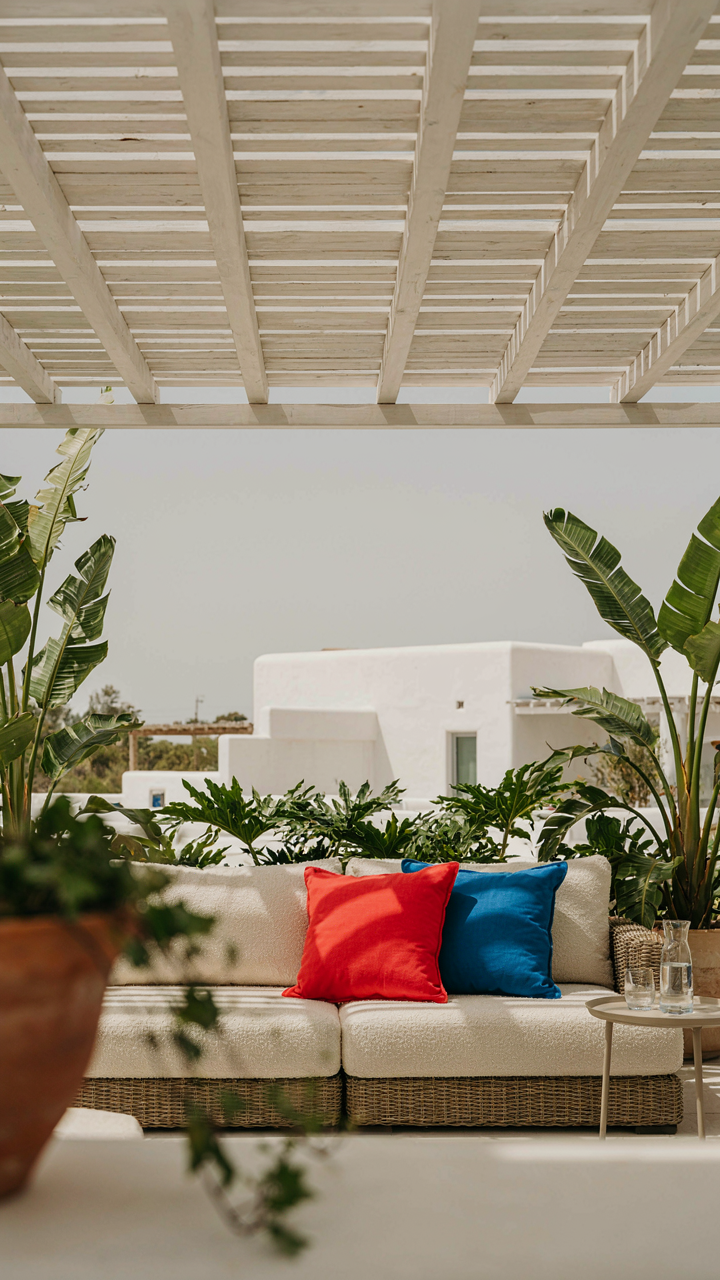
You want your patio to look magazine-ready because you think comfort requires visual abundance. It doesn’t. The mechanism is simple: more textiles trap moisture, degrade faster in sun exposure, and force you into constant maintenance cycles that kill actual relaxation. Strategic layering means selecting one high-performance fabric type per seating zone, then committing to it.
Two quality outdoor pillows in solution-dyed acrylic or performance polyester outlast eight cheap ones and look intentional instead of cluttered. The fabric choice matters more than quantity. Solution-dyed fibers resist fading and mildew because the color runs through the material, not printed on top. Rotate them seasonally and store them when unused. This discipline prevents your patio from becoming a textile graveyard.
Making Heat Work For You
Comfort is not temperature neutral. It’s microclimate design, borrowed from agricultural science where strategic placement of structures creates usable zones instead of uniform exposure. One dense shade element redirects direct solar load and extends usable hours by four to six hours per day in most climates.
A pergola with adjustable louvers, a shade sail, or even a strategically placed umbrella shifts the problem from fighting heat to channeling it. Pair shade with airflow. Position seating to catch prevailing breezes and away from heat reflection off walls or paving. The real move: create a thermal boundary between sun-exposed zones and shaded seating. This separation lets people choose their own comfort level instead of forcing compromise.
Patio Furniture Sets: The Cohesive Collection Fallacy

Buy Individual Pieces, Not Collections
You want the matching set because it removes the burden of choice and signals that you have taste. The mechanism is risk aversion dressed up as design. Most “patio furniture sets” ship as coordinated units, which means you’re paying for uniformity instead of function. Mixing materials—wood frames with metal legs, concrete tables with upholstered seats—creates visual hierarchy and prevents the yard from feeling like a showroom. Curated pieces beat matched collections because they force intentional decisions about what actually belongs in your space.
The real cost of a cohesive set is invisibility. Your patio becomes a catalog page instead of a place you’ve actually thought about. Teak, aluminum, woven synthetic, and powder-coated steel each solve different problems: weather resistance, weight, maintenance, durability. When you select each piece independently, you’re building a system that serves your actual use, not the designer’s vision. That’s how you end up with a patio people actually want to sit in.
Proportion Creates Usable Space, Not Pretty Space
Scale is physics applied to furniture arrangement. Too many pieces packed into a small yard creates bottlenecks and dead zones. Most people underestimate how much space a chair actually occupies once someone sits in it—you need clearance for legs, tables within arm’s reach, pathways that don’t require navigation. A single oversized sectional often works better than four individual chairs because it defines a zone without fragmentation. The goal isn’t filling the space; it’s creating breathing room.
Overcrowding happens because people fear empty space and mistake it for waste. A 12-by-14-foot patio with a table, four chairs, and two loungers is already full. Add planters, a fire pit, and an outdoor bar, and you’ve created a furniture storage unit. Start with one functional grouping, then add a second only if the space genuinely supports it. Measure twice, place furniture, sit for a week, then decide if you need more. That’s the only protocol that works.
Outdoor Living Set: Extending Interior Intentions

Where Your Interior Ends And Strategy Begins
You want your patio to feel like a natural extension of your home because you know visitors notice the gap. Most people get this wrong by treating the patio as decoration instead of real estate that requires intentional design. Think in terms of spatial architecture: your interior and exterior occupy different physical zones but operate on the same psychological plane. The furniture you choose either bridges that gap or announces it.
The mechanism is simple. Furniture scale, material language, and color palette must echo what’s inside without copying it. A living room with warm wood tones and neutral upholstery demands patio pieces that respect that vocabulary, not contradict it. Concrete: if your interior uses mid-century modern lines, your outdoor seating should follow similar proportions and angles. The patio becomes an expansion of your home’s identity, not a departure from it.
- Material Continuity: Match wood species or tones from interior furnishings in outdoor frames and tables. Teak, cedar, or treated hardwoods echo indoor warm finishes without requiring exact replication.
- Color Family Alignment: Pull your patio’s dominant colors from your interior palette. Neutrals dominate both spaces; accent colors appear sparingly in both zones to create visual flow.
- Furniture Proportion: Scale outdoor seating to match interior furniture sizing. Oversized or undersized pieces disrupt the transition and make the patio feel disconnected.
- Upholstery Language: If your interior uses geometric patterns or specific textile weights, choose outdoor fabrics that suggest the same aesthetic even if performance demands differ.
- Hardware and Details: Drawer pulls, arm treatments, and decorative elements visible on both indoor and outdoor pieces should share design DNA for visual continuity.
The real work happens at the threshold. A patio with no clear sightline to the interior is just a yard with furniture. Orient your seating to face inward or create a pathway that makes the connection visual. Install doors, large windows, or clear sightlines that force the eye from inside to outside. Doorways become transition points where materials, colors, and furniture style shift gradually, not abruptly. When someone stands at your glass door looking out, the patio should feel like a logical next room, not a foreign country.
Lighting That Functions Before It Decorates
Lighting design borrows from physics: you need ambient light for general visibility, task light for specific activities, and accent light for layering. Most people skip the planning phase and end up with either a dark patio or one that looks like a parking lot.
Ambient lighting establishes the baseline. String lights, overhead structures, or recessed fixtures create usable illumination without shadows or harsh contrasts. The purpose is simple: you need to see what’s in front of you. Task lighting comes next and targets specific zones where people actually do things, like dining tables or reading corners. A single overhead source fails because it casts shadows across seating and creates strain. Layered lighting means you adjust brightness and mood based on time of day or activity. Morning coffee needs less intensity than evening entertaining. Install dimmers or separate circuits so you control what activates when.
Accent lighting shapes atmosphere without announcing itself. Uplighting on plants or architectural features creates depth and visual interest. Wall lights flanking a seating area add definition without glare. Pathway lights prevent trips while guiding movement naturally. The mistake everyone makes is confusing brightness with quality. A 2000-lumen floodlight drowns out detail and makes the patio feel exposed. Layered, dimmed sources at varying heights feel intentional instead of industrial. Control color temperature too, warm tones around 2700K for evening spaces, cooler tones around 4000K where task work happens.
Courtyard Chairs & Terrace Furniture Design: Verticality And Viewpoints

How Small Spaces Demand Functional Sacrifice
You want more seating without looking cramped. Here’s what actually happens: small patios force you to choose between flexibility and permanence. The mechanism is constraint. When square footage is limited, every piece must earn its place through utility or vanish. Folding chairs, nesting tables, and storage benches aren’t compromises—they’re the only rational moves. Fixed furniture in tight spaces creates dead zones that psychologically shrink the area further. The real skill is selecting pieces that stack, store, or convert without looking temporary.
Modular seating systems solve this more efficiently than scattered individual pieces. L-shaped sectionals that break into standalone units, ottomans that function as tables or extra seats, and chairs with built-in storage all compress functionality into compact footprints. The best small patio furniture works the same way a Swiss Army knife does: every component serves multiple purposes. You avoid clutter by designing elimination into the piece itself, not by restraint or minimalism as aesthetic choice.
Sight Lines Before Aesthetics
Furniture placement isn’t interior design—it’s real estate strategy. You’re purchasing views and controlling what the eye lands on first. Frame your best natural vista by positioning seating to face it directly, with the chair’s back toward the boundary wall or fence. This channels attention outward and makes the patio feel larger because the eye extends beyond the physical space into the landscape. Poor placement wastes expensive views and traps attention on neighbors’ fences or utility areas instead. Strategic viewpoint design is what separates functional patios from ones that feel like holding pens.
High-backed or tall chairs create natural sight lines by forcing users into a specific gaze direction. Placement trumps price—a fifty-dollar chair positioned correctly outperforms a five-hundred-dollar piece facing the wrong direction. Measure sightlines before you buy anything. Stand where people will sit and note what fills your peripheral vision and what demands your direct focus. Arrange seating to frame, not fight, your environment.
The Obstacle Isn’t Your Budget; It’s Your Scarcity Mindset Of Design
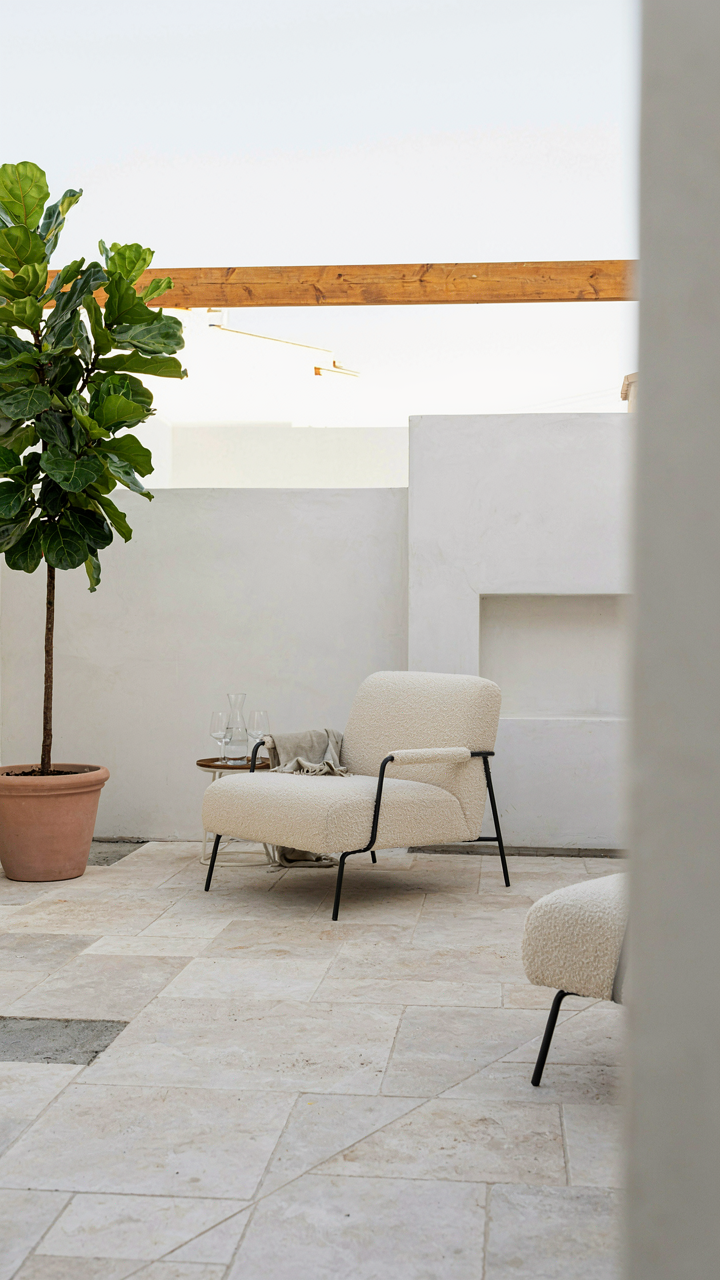
Most people wait for permission to design their patio. They wait for money, the perfect season, or some external validation that they deserve a space that works. Stop waiting. Pick one piece today. One chair. One table. One thing that makes you want to sit outside. Your patio doesn’t need to be finished to be functional. It needs to be started. Design compounds when you actually move furniture instead of researching it.



