
Beyond “Simple”: The Succulent Garden DIY Deception

The Entry Point Lie
You want to believe this is effortless because admitting complexity means you might fail. The mechanism is simple: marketing inverts the actual difficulty curve. Everyone says succulents need nothing, so when yours die, you blame yourself instead of the false premise. Succulents survive neglect better than most plants, yes. But thriving requires specific understanding of soil drainage, light intensity, and watering frequency that contradicts the “set and forget” narrative.
The real constraint isn’t care—it’s decision-making. You must choose a container with drainage holes, select soil composition intentionally, position the garden where light patterns match species requirements, and adjust watering to seasons and humidity. Most failures happen because people inherit the “low maintenance” story and skip these steps. Neglect works only after you’ve built the conditions correctly.
The Hidden Complexity Of Minimal Care
Neglect in systems design looks like efficiency until the system fails. Think in terms of engineering tolerances: succulents have a narrow margin before stress signals appear, yet people interpret this margin as infinite slack. The actual mechanics are unforgiving. Overwatering kills through root rot. Underwatering in winter while dormant still stresses the plant. Poor drainage converts any watering into a slow suffocation. Too little light causes etiolation, where the plant stretches and weakens regardless of soil quality.
Minimal care doesn’t mean no decisions. It means making the right decisions once, then sustaining them consistently. You must diagnose your light conditions by hours, measure soil moisture before watering, and know which species tolerate your specific humidity and temperature. The work is front-loaded. Skip it, and you pay in plant death and wasted money. Check your soil moisture with your finger one inch deep before every watering cycle.
The “Dish Garden” Fallacy: Why More Isn’t Better
When Density Becomes The Real Problem
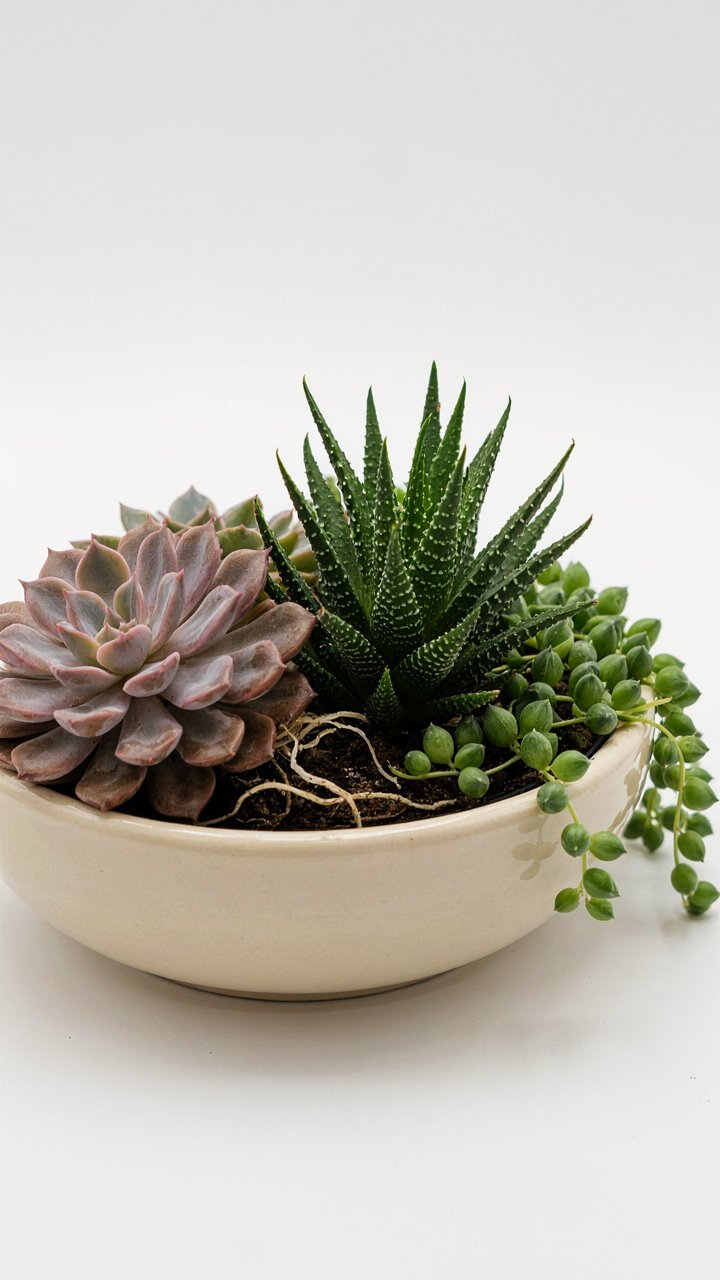
You want to pack a shallow dish with six or seven varieties because it looks fuller and feels like you’re getting your money’s worth. The real mechanism is this: you’re confusing visual abundance with functional design. Horticulture teaches us about carrying capacity—the maximum load a system can sustain. In a mini succulent garden, carrying capacity isn’t about weight. It’s about root space and water retention. Too many plants in one container means each plant competes for both, and all of them lose.
The common advice says “group plants by water needs.” That’s incomplete. Even succulents with identical watering schedules will strangle each other’s roots in a cramped dish. Roots need surface area to spread. They need drainage paths. When you stack five plants into a four-inch pot, you’re not creating a garden—you’re creating a pressure cooker. Each plant gets less substrate to anchor into and less ability to pull nutrients when the soil dries. The result is stunted growth across the board, not the thriving arrangement you imagined.
The Invisible Cost Of Root Crowding
When roots compete for nutrients and moisture in shallow soil, the weaker plants decline first while the stronger ones still underperform. Nutrient scarcity in tight spaces works like a commons tragedy: every plant extracts what it needs, but the total draw exceeds what the limited substrate can replenish between waterings. Add slow drainage to shallow soil, and you’ve created conditions where roots rot before they can absorb anything. One overcrowded dish often fails completely within two to three growth cycles because the system collapses under its own density.
Strategic placement means thinking in terms of plant size at maturity, not at purchase. A single larger specimen—like a mature Echeveria or jade plant—actually performs better alone in a small dish than three smaller plants squeezed together. If you want variety, use separate containers. This isn’t about aesthetics losing to function. It’s about recognizing that one thriving plant tells you the system works, while three struggling plants tell you nothing except that you overloaded it. Space is the constraint that matters most.
The Water Paradox: Succulent Gardening Without Drowning

Desert Hydrology In Miniature
You want proof your mini succulent garden won’t die on you, so you’re looking for the one rule that makes watering bulletproof. The real mechanism comes from desert hydrology: soil acts as a water reserve tank, and your job is matching the refill rate to the plant’s actual demand cycle. Succulents store water in their leaves and roots. They evolved to survive months between rainfall events. This isn’t a design flaw you need to work around. It’s the entire operating system.
Most advice says “water when soil is bone dry” then leaves you guessing what that feels like. Here’s what actually matters: soil in a mini container dries faster than you think because surface area to volume ratio works against you. A two-inch pot loses moisture through evaporation and drainage five times faster than outdoor ground soil. Check the soil one inch below the surface with your finger. If it still holds moisture, wait another three to five days. Watering on a schedule kills more mini succulents than neglect ever will.
Drainage: The Survival Metric
Drainage determines whether your container becomes a water trap or a functional growing environment. Install drainage holes in the bottom of every pot, no exceptions. A single hole works. The hole’s job is to prevent water from pooling at the root zone where it causes rot within days. Succulents can’t extract oxygen from waterlogged soil, so roots suffocate and decay.
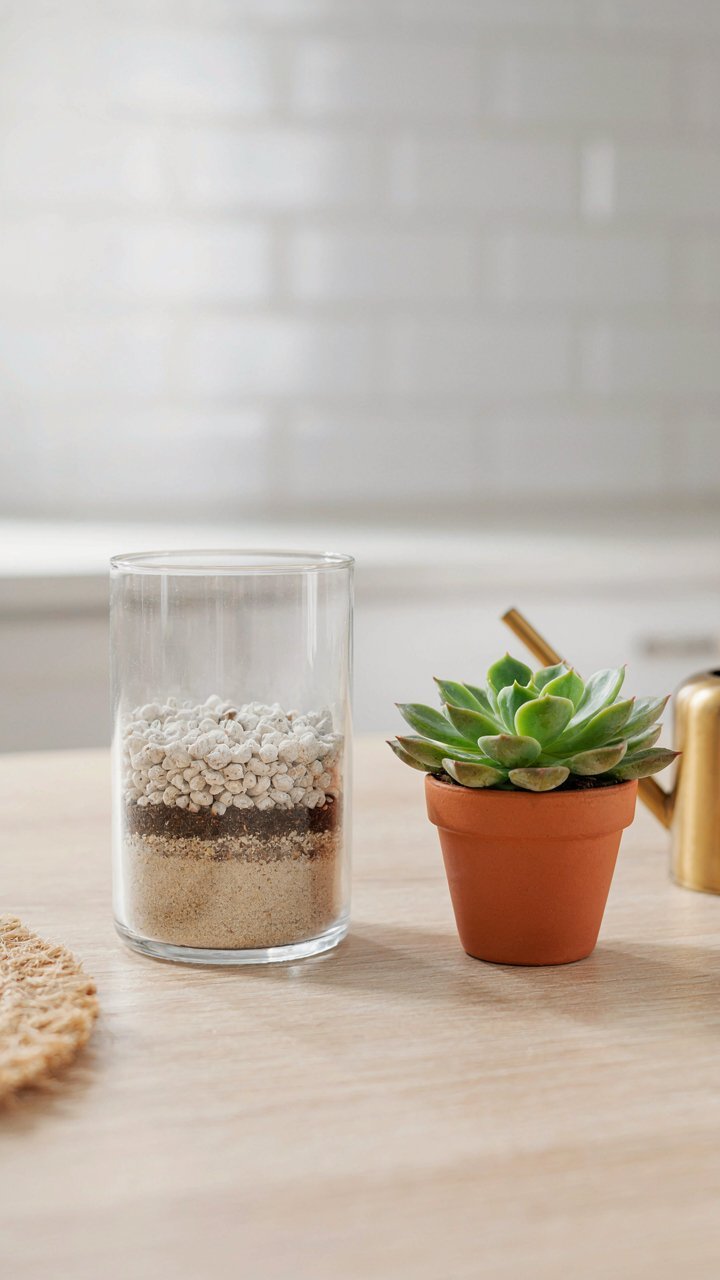
The soil mix itself is your second drainage layer. Standard potting soil holds too much water. Mix one part standard potting soil with one part coarse sand or perlite. Coarse sand adds weight and structure. Perlite adds air pockets. The mixture should drain water in under five seconds when you pour it into a pot. If water sits on the soil surface for more than a few seconds, your mix is too dense. Repot with a faster-draining formula immediately.
The Light Equation: Optimizing Your Succulent Display

When Stems Stretch And Your Setup Fails
You want your succulents to look tight and sculptural. What you’re actually afraid of is killing them by accident and looking incompetent. Here’s what’s happening: etiolation is the biological response to insufficient light, where plants stretch their stems to chase a light source. Your succulents aren’t being dramatic—they’re starving. The plant elongates because it’s rationing energy, hoping the extra height gains access to better light. This isn’t reversible once it starts. Prevention is the only real answer.
Most advice says “put them in a window.” That’s incomplete. Direct sun through glass filters UV wavelengths and reduces intensity by 30 to 50 percent depending on angle and season. A south-facing window in summer performs differently than winter. Indoor-only setups almost always fail because ambient room light doesn’t match the foot-candle levels succulents evolved to expect. Your eyes adjust to low light; your plants don’t. Check for stretching every two weeks. If stems space further apart than before, your light situation is failing and needs correction before the damage compounds.
Brightness, Duration, And The Wavelengths That Matter
Light intensity, measured in foot-candles or lux, has a direct relationship to plant metabolism—borrowing from agricultural science, intensity is the equivalent of nitrogen in soil. Most mini succulent gardens need 2,000 to 5,000 foot-candles minimum. A bright windowsill provides 500 to 2,000. Grow lights bridge this gap, though they’re not interchangeable. LED panels rated for horticulture output the spectral mix succulents use most efficiently. Cheap household LEDs don’t. Position lights 6 to 12 inches above plants, depending on wattage.
Duration matters as much as intensity. Succulents need 12 to 14 hours of daily light to maintain compact growth. Shorter winter days demand supplemental light if you’re indoors. Spectrum—the color temperature—affects shape. Red wavelengths promote flowering and dense structure. Blue encourages smaller, tighter rosettes. A balanced full-spectrum light handles both, but if you’re optimizing one goal, adjust accordingly. Set a timer. Consistency beats guessing. Run it daily without variation for six weeks, then assess stem spacing and color. Tighter stems mean your protocol is working.
The Substrate Scam: What Your Mini Succulent Garden Really Needs
Why Drainage Kills Plants You Thought Were Dead
You want to believe your succulents died from neglect. The truth is crueler: they drowned in soil that held water like a sponge. Drainage isn’t a feature. It’s the primary mechanism that keeps roots alive. Succulents evolved in arid environments where water moves through soil fast and air reaches roots immediately. Soil composition controls this rate. A dense, organic-heavy mix suffocates roots in days. A porous mix keeps roots dry between waterings.
The standard recommendation to “just use cactus soil” fails because most commercial cactus mixes contain too much bark and peat. They work for large pots with frequent air exposure but collapse in mini containers where moisture concentrates. You need soil that drains in under five minutes and dries completely within three to five days. Test your mix by pouring water through it in a small cup. If it pools or drains slower than a few seconds, add more inorganic material now.
The Grit To Organic Ratio That Actually Works
This is where most guides lie through omission. They say “well-draining soil” like it’s one thing. It isn’t. The mechanism is simple: inorganic particles create air pockets. Organic matter retains moisture. Soil composition is an equation, not a philosophy. Too much perlite or sand and nutrients leach too fast. Too much compost or bark and water stays trapped.
The working ratio for mini succulent gardens is 60 to 70 percent inorganic material and 30 to 40 percent organic matter. Inorganic material means perlite, pumice, coarse sand, or turface. Organic matter means high-quality potting soil or coco coir, never garden soil or topsoil. Mix these two groups first, then add your succulents. Measure by volume, not weight. A coffee can of inorganic plus half a can of organic gives you the right base for a mini container setup.
The “Fairy Garden Crafts” Trap: Aesthetics Over Ecology
Decorative Elements That Strangle Growth
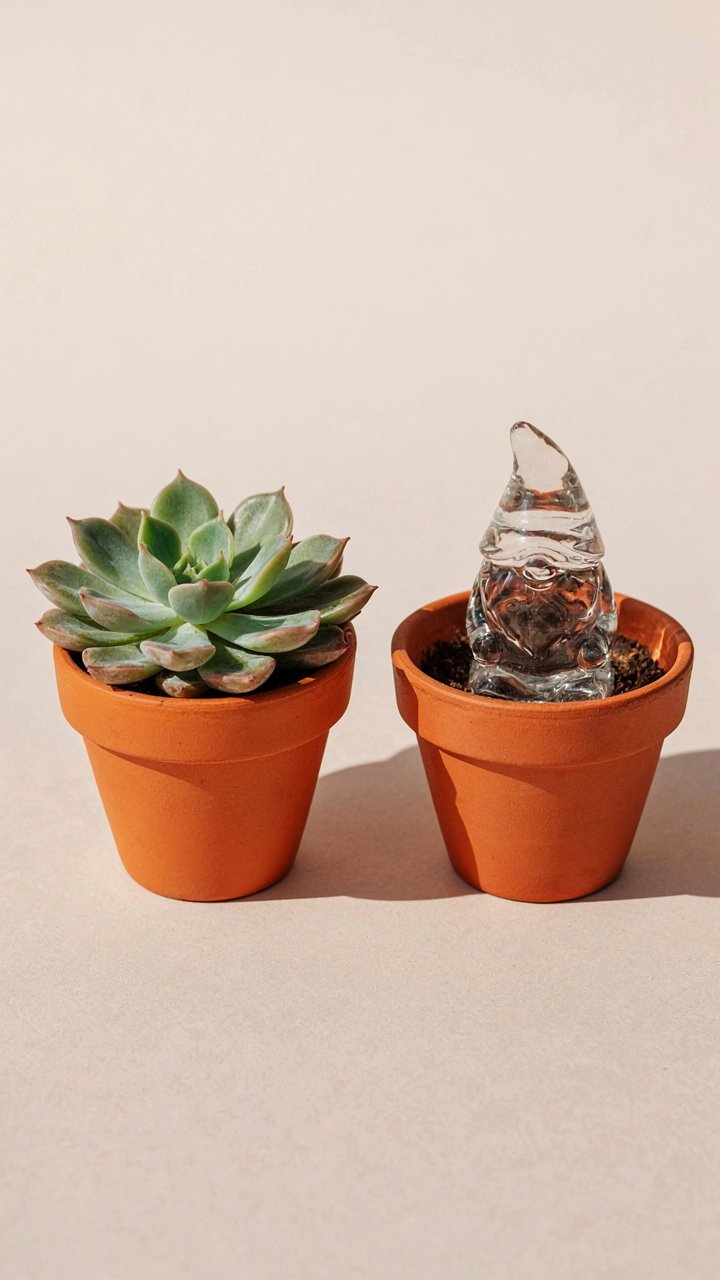
You want this to look Instagram-ready because a dead plant in a boring pot feels like failure, but a dead plant in a cute pot feels like art. The mechanism is simple: every decorative object you add to a mini succulent garden competes for the same finite resource—light, airflow, and root space. Treat this like resource allocation in a closed system. Tiny figurines, moss-covered bridges, and decorative pebbles don’t just sit there. They shade lower leaves, trap moisture against soil, block air circulation, and physically displace growing medium that roots need. The succulents survive despite the aesthetics, not because of them. Common advice says “balance design with function,” which is weak. The real answer is function first, decoration second, and only then if it doesn’t compromise either water drainage or light penetration.
A mini succulent garden in a six-inch pot has maybe two square inches of prime light-exposure per plant. Shade half of it with a ceramic mushroom and you’ve cut effective growing area by fifty percent. That’s not poetic. That’s sabotage. The plant doesn’t know you spent fifteen dollars on that piece. It knows it’s getting half the photosynthetic opportunity. Remove every decorative element that sits above soil level or blocks light from any angle between nine AM and three PM. If you keep it, accept that you’re growing a decoration, not a healthy garden.
Plant Health Over Trinket Collection
The common move is to treat succulents as props in a landscape diorama. Stop. A succulent’s job is to photosynthesize and store water. Your job is to give it the conditions to do both. That means bare soil, exposed leaves to direct light, and space between plants so air moves through. Every trinket you add is friction in that system. Decorative elements that touch soil create microclimates where water sits too long, breeding rot. Decorative elements that sit on leaves block photosynthesis. Decorative elements that crowd plants together prevent air from evaporating excess moisture around the base. These aren’t minor trade-offs. They’re the difference between a garden that holds for months and one that collapses in weeks.
Design a mini succulent garden as a functional object first, then add one or two inert decorative touches if they genuinely don’t interfere with light, airflow, or drainage. Use a clear pot so you can monitor soil moisture and root development. Arrange plants by water need, not by symmetry. Group fast-draining varieties together, slow-draining varieties in their own zone. Check light availability at three different times of day, not once in the morning. A thriving garden that looks basic beats a beautiful garden that dies in six weeks.
The Succulent Arrangements Protocol: A Minimalist Approach

Choose One Type Per Container
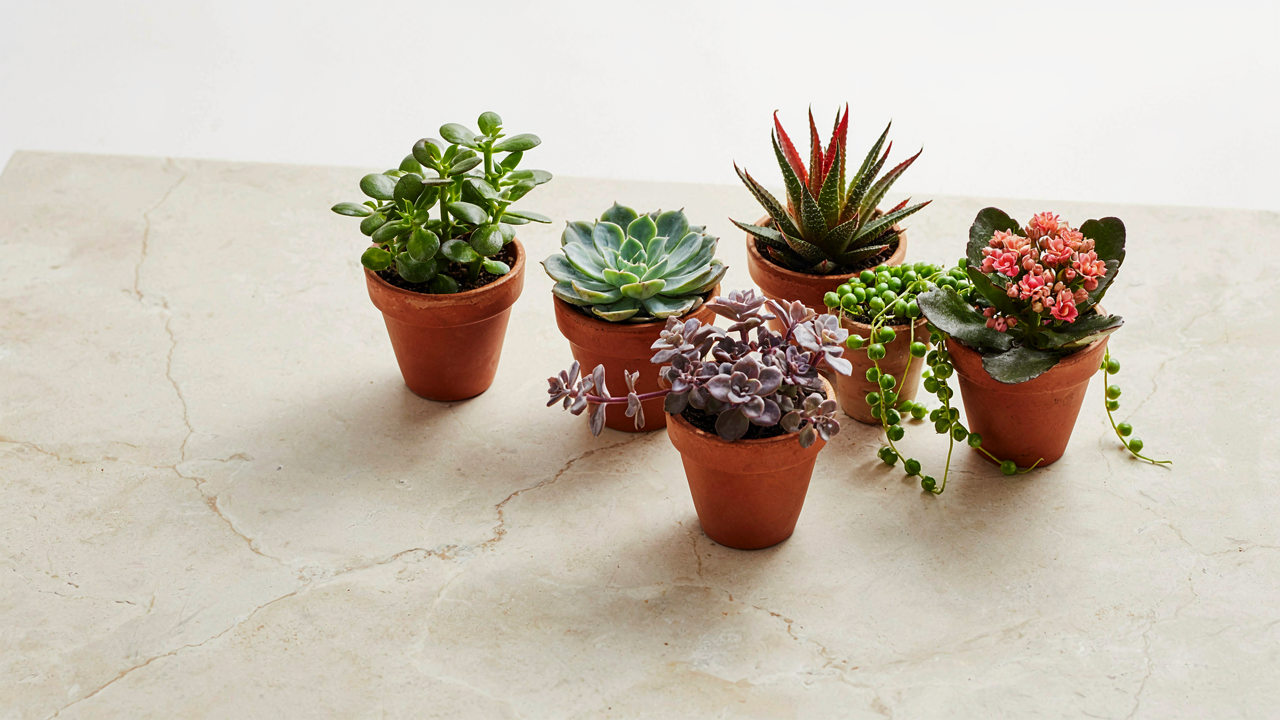
You want your arrangement to look intentional, not like you grabbed whatever was on sale. That’s the real fear. The mechanism is constraint. In design, constraint forces clarity. Pick one succulent species per pot, then repeat that species across multiple small containers if you want variety. This isn’t about being boring. It’s about letting each plant’s actual form read instead of creating visual noise that cancels itself out.
Monoculture arrangements win because they eliminate the fight for attention. A single echeveria in a small pot draws the eye faster than five species competing for dominance. Scale matters here too. Small containers demand smaller plants or single rosettes, not a crowded committee. The arrangement works because you stopped trying to fit everything into one space.
Distribute Odd Numbers Across The Space
Group three or five pots together, never four or six. Odd numbers create tension and rhythm. Even numbers feel accidental or institutional. Place them on a shelf or tabletop with intentional gaps between each pot. The gaps matter as much as the plants. They give each arrangement breathing room and make the entire display feel curated instead of cluttered.
Spacing follows the same logic that applies to page layout in design work. Your eye moves through the arrangement faster when there’s white space. Set containers at staggered heights using small risers or books under some pots. This vertical variation multiplies visual interest without adding more plants. The protocol: group odd-numbered containers, vary their heights, leave gaps between them.
The Iteration Cycle: Cultivating Your Succulent Garden

Plants Talk Back If You Listen
You want proof that you’re doing this right. That’s the real reason you care about feedback loops. Plants don’t lie, and cybernetics—the study of systems that self-regulate through information—applies directly here. Your succulent garden operates as a closed-loop system where the plant’s condition sends signals, you receive them, you adjust inputs, and the plant responds. This cycle never stops. Most people skip it entirely and wonder why their plants die.
The mechanism is simple. A succulent in poor conditions sends visible data: leaf color shift, stem elongation, slower growth, leaf drop. These aren’t problems to panic about. They’re input signals telling you which variable needs adjustment. Water frequency, light exposure, soil drainage, or temperature—one of these is wrong. The plant reveals which one through its appearance. You observe, identify the signal, change one variable, wait for response, observe again. That’s the full cycle. No guessing required.
Reading Plant Signals Without Overthinking
Forget the generic “water when soil is dry” advice. It misses the actual read. Your plant signals distress through specific morphology, not guesswork. Translucent leaves mean overwatering. Wrinkled leaves mean underwatering. Pale color with weak growth means insufficient light. Brown tips with soft stems mean soil stays wet too long. Stretched, thin growth means light deprivation. Each signal points to one variable.
Document what you observe weekly. Note leaf color, firmness, growth rate, and soil moisture at depth. After two to three weeks of data, patterns emerge. You’ll see which adjustments work and which don’t. The iteration cycle accelerates once you stop treating plant care as intuition and start treating it as information collection. Adjust one variable at a time, wait ten days, assess, then adjust again. That pace is how you learn what your specific environment demands.
The Rock Garden Revelation: Mimicking Natural Habitats
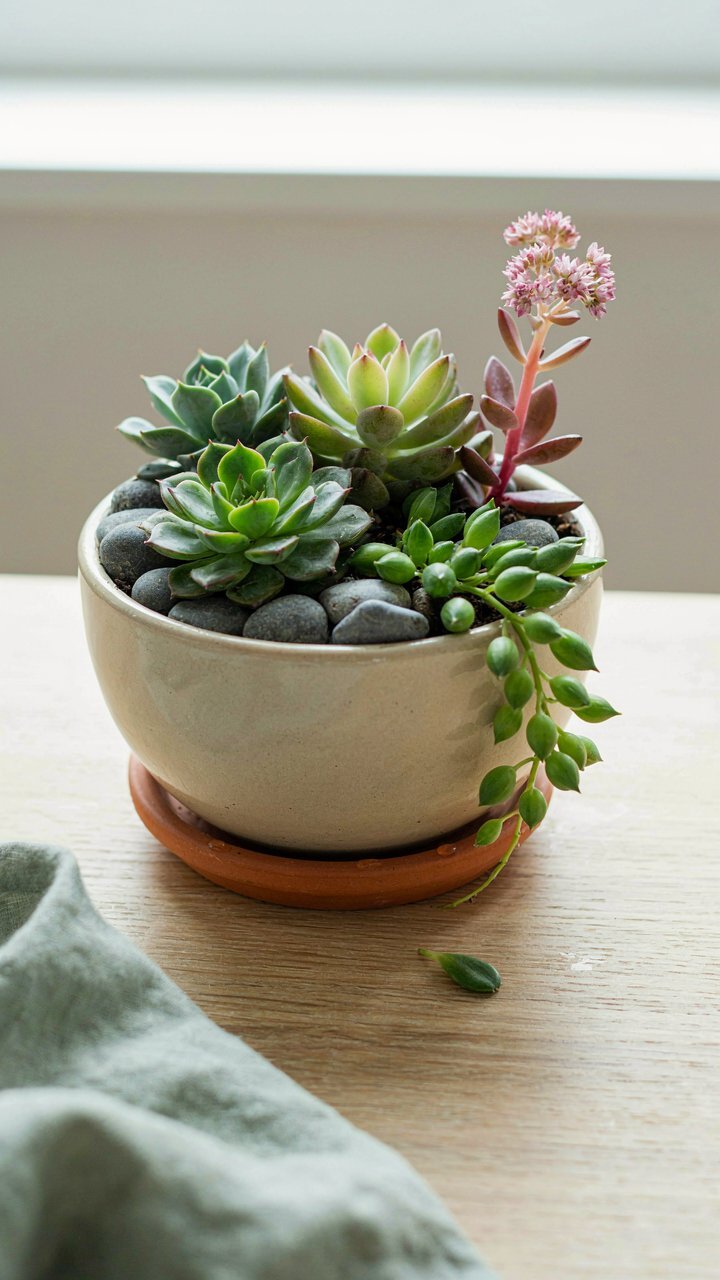
How Rocks Regulate Temperature And Protect Roots
You want your succulents to survive without constant fussing because tending them daily feels like failure. The mechanism is thermal mass: rocks absorb heat during the day and release it slowly at night, stabilizing soil temperature swings that kill shallow-rooted succulents. This isn’t ornamental. Rocks are infrastructure.
In natural desert habitats, succulents cluster under larger stones that moderate extreme temperature shifts. When you place rocks around your mini garden, they buffer the microenvironment against rapid cooling or overheating. This reduces stress on roots and slows water evaporation from soil. The result is a plant that demands less intervention and survives neglect better. Rock placement is the difference between a setup that works and one that requires constant adjustment.
Strategic Rock Placement Creates Pockets Of Stability
First paragraph goes here about the concept and why common advice fails. Rocks aren’t just decoration. They’re tools for engineering distinct microclimates within a single container or small garden bed.
- North-facing rock placement: Blocks intense afternoon sun and keeps soil cooler in hot climates, extending the window before roots stress from heat.
- Elevated rock positioning: Lifts soil away from standing water and improves air circulation around stems, reducing rot risk in humid conditions.
- Layered rock depth: Larger stones on bottom layer anchor smaller pebbles, creating air pockets that prevent soil compaction and promote drainage.
- Gap spacing between rocks: Intentional 1-2 inch gaps allow water to flow through without pooling, mimicking how desert scree drains after rain.
- Rock color selection: Lighter colored rocks reflect more solar radiation, while darker rocks absorb it, letting you dial in temperature for different succulent species.
The compounding effect matters: each rock works as both thermal regulator and drainage facilitator. When you map out placement before planting, you’re not decorating. You’re designing the exact conditions each species needs to thrive. Position larger stones first to establish thermal zones, then fill gaps with smaller pebbles that lock moisture and prevent soil erosion during watering.
The Pruning Principle: Shaping Your Succulent Ecosystem
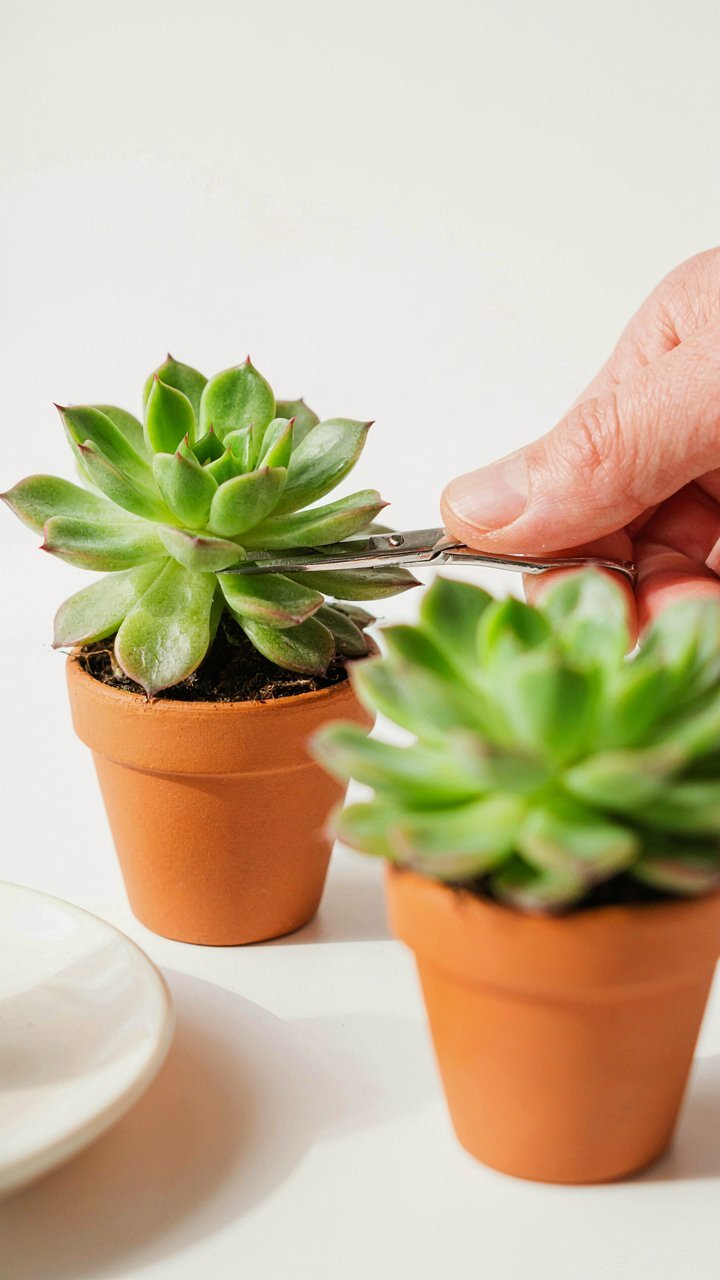
When Cutting Back Stops The Rot
You want your succulents to look full and Instagram-worthy without admitting you’re afraid they’ll die if you touch them. The real mechanism is this: succulents don’t need pruning to survive, but they need it to prevent the exact death spiral you’re trying to avoid. Overgrown stems block airflow to the base. Blocked airflow traps moisture. Trapped moisture breeds rot from the inside out.
Pruning removes dead or diseased leaves before infection spreads through the plant. Cut off any leaf that’s translucent, mushy, or discolored at the connection point. Use clean scissors or a knife. The cut seals itself within days. Without intervention, that single rotted leaf becomes a rotted stem, then a dead plant. Timing matters: prune in spring or early summer when the plant has energy to heal.
Propagation Through Leaf Separation
This borrows from horticulture’s principle of vegetative reproduction, where a single plant tissue can regenerate into a complete organism without seeds. One healthy leaf from your succulent becomes one new plant. That’s not multiplication for show. That’s insurance against loss and a mechanism for filling your garden faster than growth alone allows.
Remove leaves by twisting them gently from the stem until they snap clean at the base. The leaf needs the white callus tissue at its base to root. Lay leaves on dry soil and mist them every five to seven days until roots appear. Roots emerge in two to four weeks. Once rooted, water sparingly. Each propagated leaf becomes a mature plant within three to six months, ready to replace any plant that fails or to expand your collection with zero additional cost.
The Real Obstacle Isn’t Your Green Thumb, It’s Your Unexamined Assumptions About Control

You think mini succulents fail because you’re bad at plants. They fail because you’re suffocating them with attention. You water too much. You move them constantly. You obsess over perfect conditions that don’t exist in nature. Stop managing and start observing. Pick one corner of your home today and place three succulents there. Then ignore them for two weeks. You’ll discover the same truth every successful gardener learns: the plants you ignore thrive while the ones you coddle collapse.