
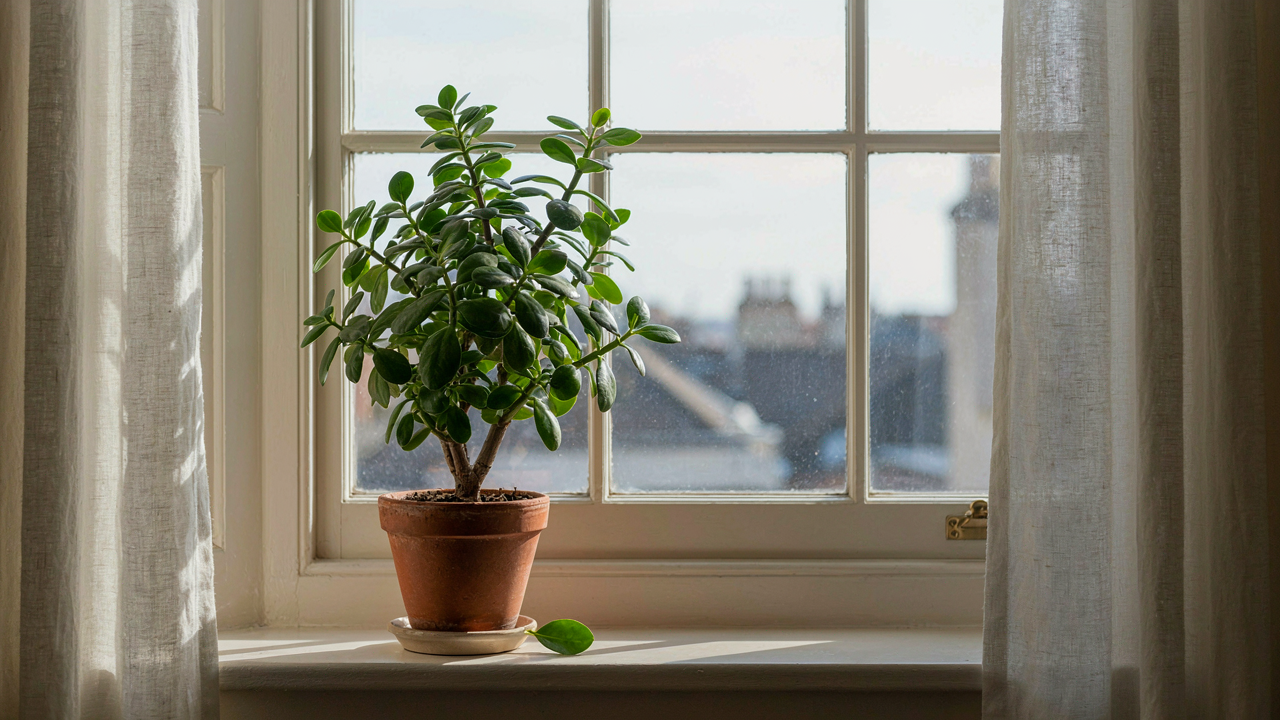
The Light Equation: Unmasking Your Jade Plant’s Photosynthetic Power
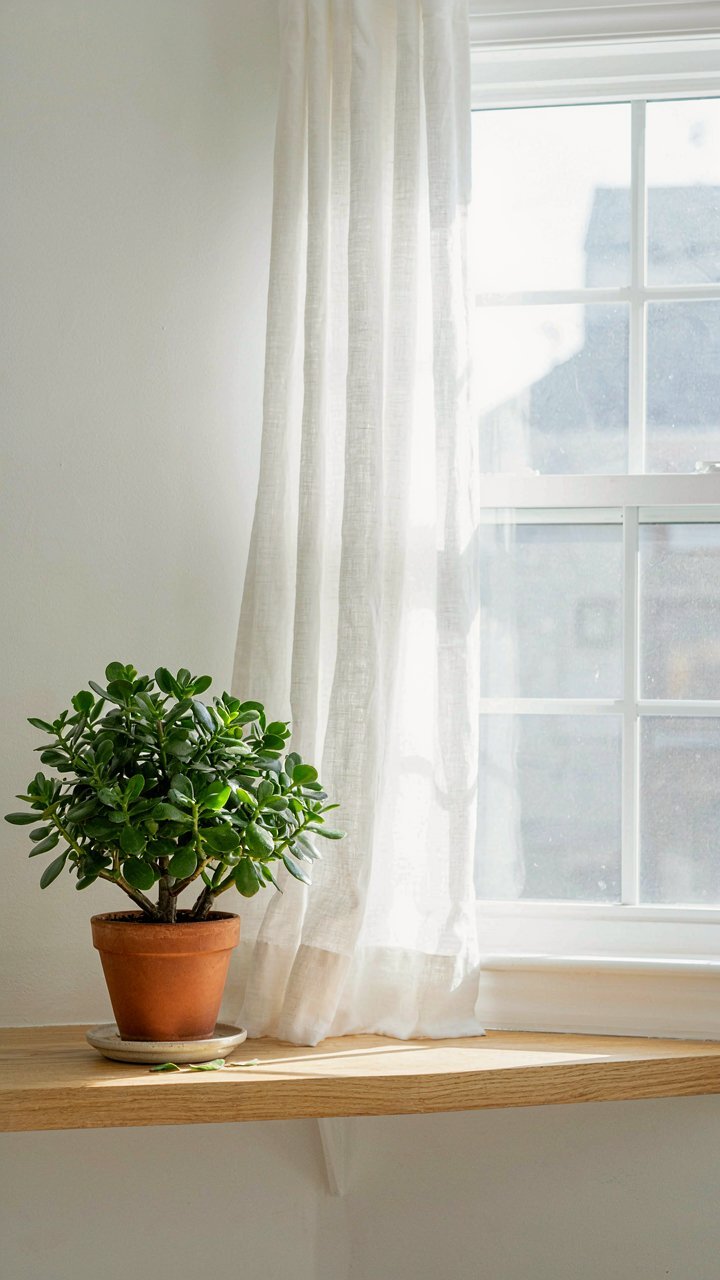
Direct Sun Versus Indirect: What Your Jade Actually Craves
You want to know the right answer so you don’t kill your plant and feel like you failed at something simple. Here’s the mechanism: jade plants operate on a light threshold system borrowed from botany. Think of it like minimum viable sunlight. Your jade needs at least four to six hours of direct sun daily to photosynthesize efficiently and maintain compact growth. Indirect light alone produces leggy, stretched plants that look weak because they are weak.
The common advice says jades tolerate low light. That’s incomplete. They survive in low light the way humans survive on fast food. The plant stretches toward available light, weakens structurally, and becomes vulnerable to rot and pests. Direct sun exposure triggers the physiological response you want: tight nodes, thick leaves, and the ability to store water and nutrients without decline. Place your jade in a south or west-facing window where sunlight hits it unobstructed.
Seasonal Light Shifts: Adapting Placement For Year Round Growth
Your jade plant’s light needs don’t stay constant because the sun’s angle and intensity shift with seasons. Winter provides weaker, lower-angle sunlight in most climates, so the plant requires repositioning closer to windows or into south-facing exposure to maintain photosynthetic output. This isn’t optional adjustment. It’s the difference between dormancy and stagnation versus continued, healthy growth.
Summer demands the opposite move. Intense midday sun can scald jade leaves, particularly if the plant transitions from indoor winter conditions without acclimation. The fix is simple: move it back from direct afternoon rays in June through August, or provide afternoon shade from a sheer curtain. When autumn arrives, shift the plant back toward maximum direct exposure. Monitor leaf color and compactness monthly as your seasonal benchmark. If the plant tightens and stays green, your light placement is correct for that season.
Watering Protocol: The Art Of Thirst And Strategic Drought For Jade Succulent
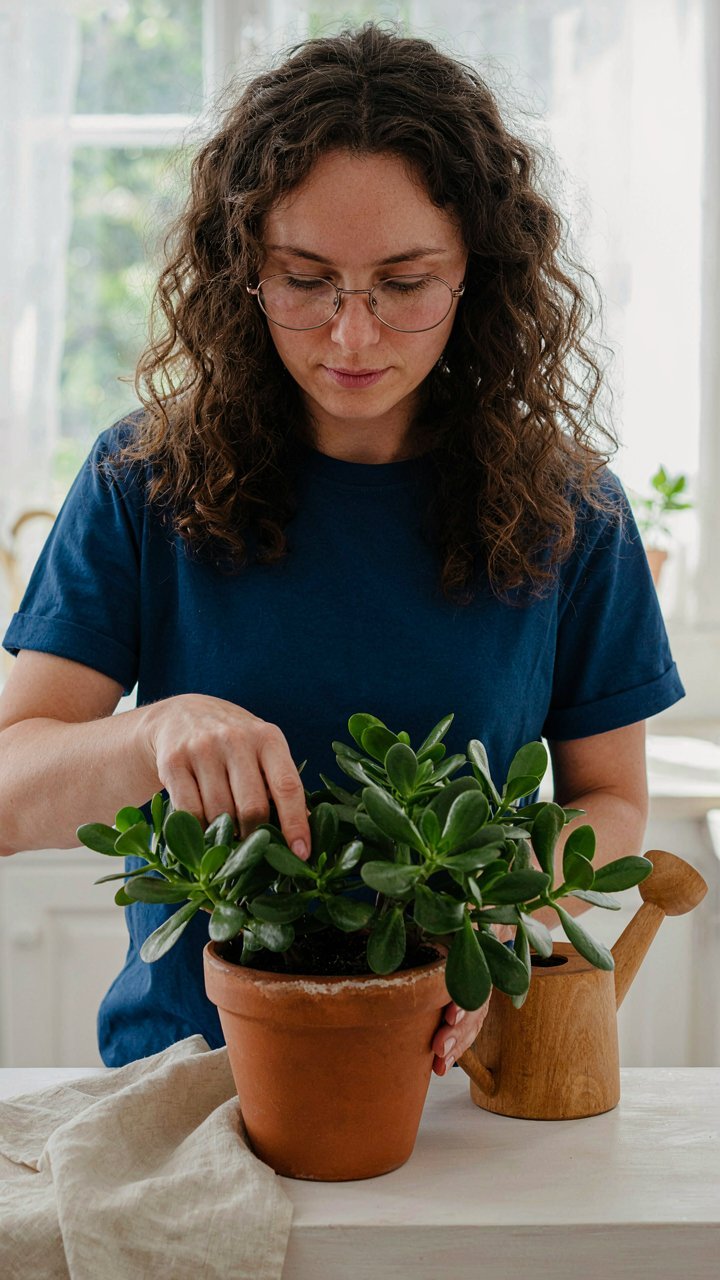
Check The Soil Before You Water
You’re hoping a schedule exists so you can stop thinking about this. It doesn’t. Jade plants store water in their leaves and stems, making them a living bank account for drought periods. This is the core mechanism: you’re not watering on a calendar. You’re responding to the plant’s actual water reserves. Stick your finger two inches into the soil. If it’s dry, water. If it’s moist, wait. The plant tells you when it needs water through soil moisture, not through a day of the week.
The common advice says water every two weeks. That’s lazy. Your home’s humidity, pot size, soil composition, and season all shift the timeline. Winter slows growth and water needs drop by half. A small pot dries faster than a large one. Potting soil that drains well empties quicker than dense soil that holds moisture. Track what you observe, not what you read. This builds the actual skill of plant ownership instead of dependency on external rules.
Overwatering Kills Faster Than Drought
Root rot is the end result of a single error made repeatedly: you’re solving for love instead of plant survival. Biology teaches us about saturation. When soil stays wet, oxygen can’t reach roots. Anaerobic bacteria colonize the root system and destroy it from the inside. The plant drowns. You can’t see this happening until the damage is irreversible, so most people keep watering a dying plant thinking it needs more help.
Jade plants survive weeks without water. They die in days with constant moisture. This isn’t opinion. The plant’s physiology demands it. If you water and the soil is still moist from the last watering, you’ve created the conditions for root rot. If leaves turn translucent or mushy, the rot has already started. The recovery protocol is simple: repot into fresh, dry soil immediately, trim any black or soft roots with clean scissors, and don’t water again until the new soil dries out completely.
Soil Composition: Beyond Dirt – Building The Right Foundation For Jade Plant
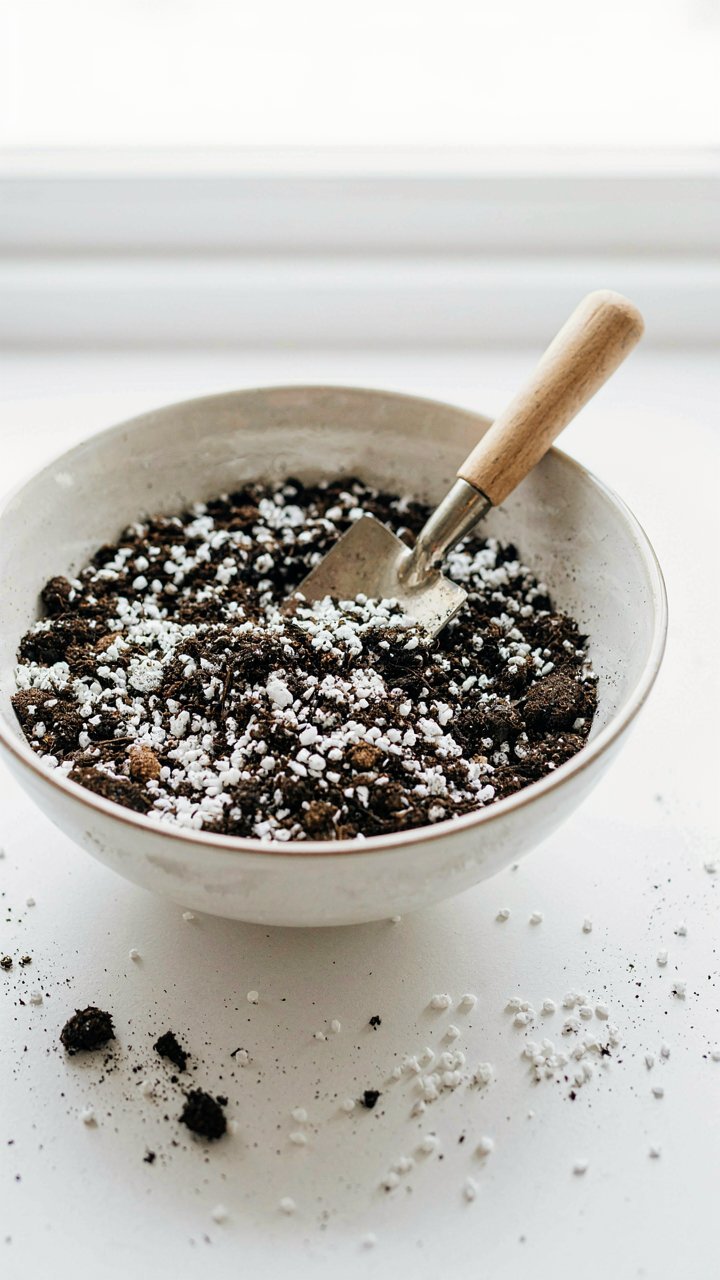
Drainage Imperative: Why Aeration Prevents Plant Demise
You want your jade to survive so you don’t feel like you killed another plant. Here’s the mechanism: jades are succulents, which means they store water in their leaves and stems. In physics, we call this the principle of capillary action – water moves upward through soil against gravity. Standard potting soil reverses this in jades because it holds too much moisture, forcing roots to sit in standing water. Roots suffocate. The plant rots from the inside out.
Forget generic advice about “well-draining soil.” Use a 1:1 ratio of standard potting soil to inorganic material like perlite, coarse sand, or pumice. The inorganic material creates air pockets that prevent water from pooling around the root zone. This isn’t optional – it’s the structural difference between a living plant and a brown mush in six months. Add drainage holes to your pot. Ensure water exits completely within 30 seconds of watering.
Nutrient Scarcity: Less Is More For Long Term Vitality
The common advice is wrong. Most people think jades need regular fertilizing because other houseplants do. Jades evolved in poor, rocky soil in South Africa and Madagascar. They’re engineered for nutrient scarcity, not abundance. Overfertilizing creates soft growth, weak cell walls, and plants that collapse under their own weight while looking “lush.”
Feed your jade once in spring and once in summer with diluted liquid fertilizer at half strength. That’s it. If your soil has any organic matter, the plant pulls what it needs from decomposition. Jades prioritize survival over growth – that’s the actual design. Underfed jades develop slower but build dense, resilient tissue that lasts decades.
Jade Plant Pruning: The Sculptor’s Edge – Shaping For Strength, Not Just Aesthetics

Where To Cut For Branching
You want a bushier plant that looks intentional, not sparse. That’s the real reason you’re reading this section. Here’s the mechanism: jade plants grow from a single main stem by default. To force branching, you cut above a node—the slight bump where leaves attach. The plant responds by releasing two new shoots from that point, not one. This is basic plant biology: remove apical dominance, and lateral buds activate. Make cuts clean, with sharp pruners, just above the node at a slight angle. The plant heals faster and branches emerge within two to three weeks.
Timing matters more than most guides admit. Prune during the growing season, spring through early summer, when the plant has energy to respond. Cutting in fall or winter wastes the plant’s effort because it’s already slowing down. Each cut should reduce the stem by one-third of its length at most. Aggressive pruning stresses the plant and delays branching. Remove dead or diseased wood first, then shape for structure. The goal is a framework that supports itself without leaning toward light.
Open Canopy For Moving Air
Dense foliage looks full but traps moisture and invites fungal infection. Borrowing from fluid dynamics: airflow prevents stagnation. Inside a jade plant’s canopy, still air becomes a medium for disease. Thinning the interior removes competing stems and opens gaps where air moves freely. This isn’t about aesthetics—it’s about removing the conditions fungi need to colonize. Remove crossing branches and any stems growing inward toward the center. Space remaining stems so light reaches the interior without obstruction.
The payoff is lower disease pressure and healthier leaf production over time. Jades don’t need heavy pruning to achieve this. Remove ten to fifteen percent of interior stems annually, focusing on weak or crowded growth. Make each cut count by choosing stems that improve airflow, not random removal. After pruning, the plant should look open enough that you see clearly through it to the soil. This reduces fungal and bacterial problems before they start rather than fighting them after infection.
Fertilization Fallacy: When Feeding Your Household Plants Becomes Fatal
Mimicking Natural Scarcity: The Plant’s True Feeding Schedule
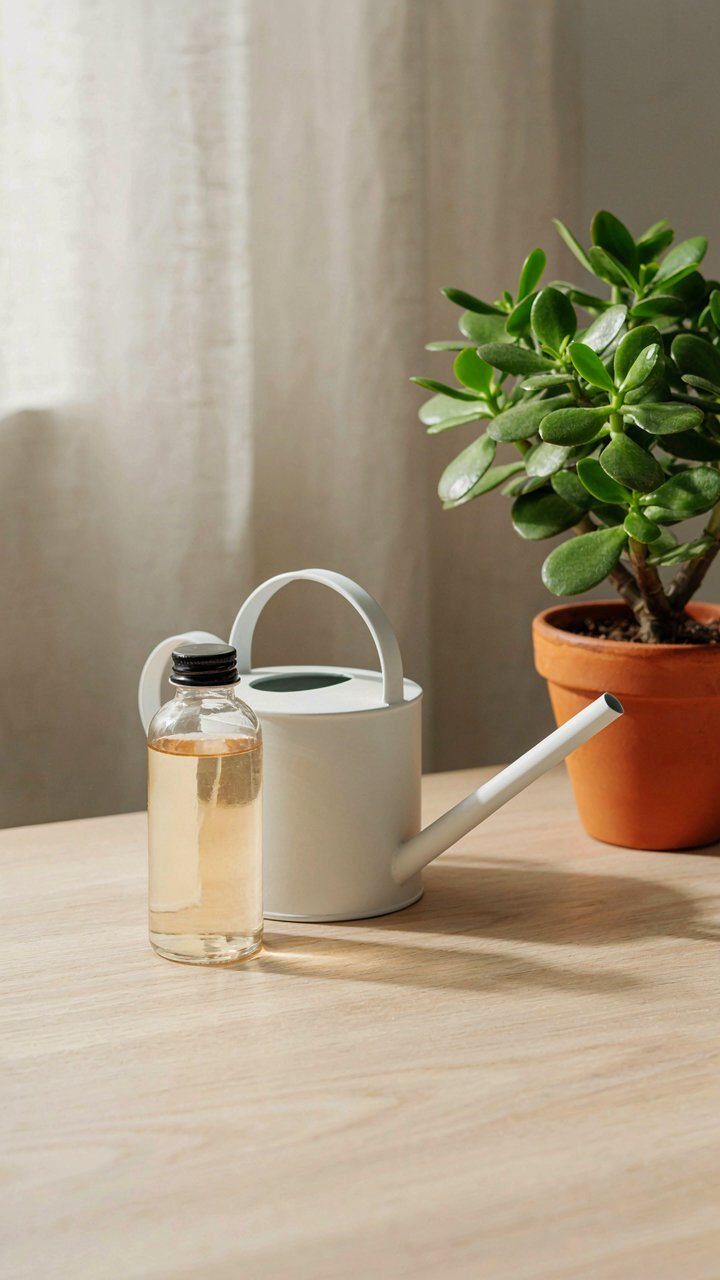
You want fertilizer to work like a shortcut to growth, but that’s backwards. In ecology, scarcity drives adaptation and survival, not abundance. Jade plants evolved in rocky, nutrient-poor soils where they learned to thrive on almost nothing. Your instinct to feed them regularly betrays a fundamental misunderstanding of how they function. They don’t need constant nutrition. They need periodic nutrition aligned with their growth cycle.
Jade plants grow actively in spring and summer, dormant in fall and winter. Feed them only during active growth months, roughly April through September, at intervals of four to six weeks. Use a balanced fertilizer diluted to half strength. In winter, stop feeding entirely. The plant isn’t lazy during dormancy. It’s conserving energy and preparing for the next cycle. Matching your feeding schedule to this rhythm costs nothing and works perfectly.
Toxic Love And Its Hidden Costs
Over-fertilization is the fastest way to kill a jade plant while believing you’re helping it. Most people fertilize monthly or worse, weekly, treating the plant like it’s perpetually starving. It isn’t. Excess fertilizer salts accumulate in the soil, burning the roots and choking water absorption. The plant weakens, not strengthens. Leaves yellow, turn brown, and drop. Stems become mushy. You’ll watch it die and assume you didn’t feed it enough.
The damage compounds because you can’t simply stop and expect recovery. Salt buildup requires intervention. Flush the soil thoroughly with distilled water until liquid runs clear from the drainage hole. Repot the plant in fresh soil if damage is severe. Better: adopt a minimal feeding approach from the start and never create this problem. One light feeding every six weeks beats twelve heavy feedings that you’ll spend months trying to reverse.
Propagation Playbook: Multiplying Your Jade Plant Empire From Cuttings
The Rooting Window That Nobody Talks About
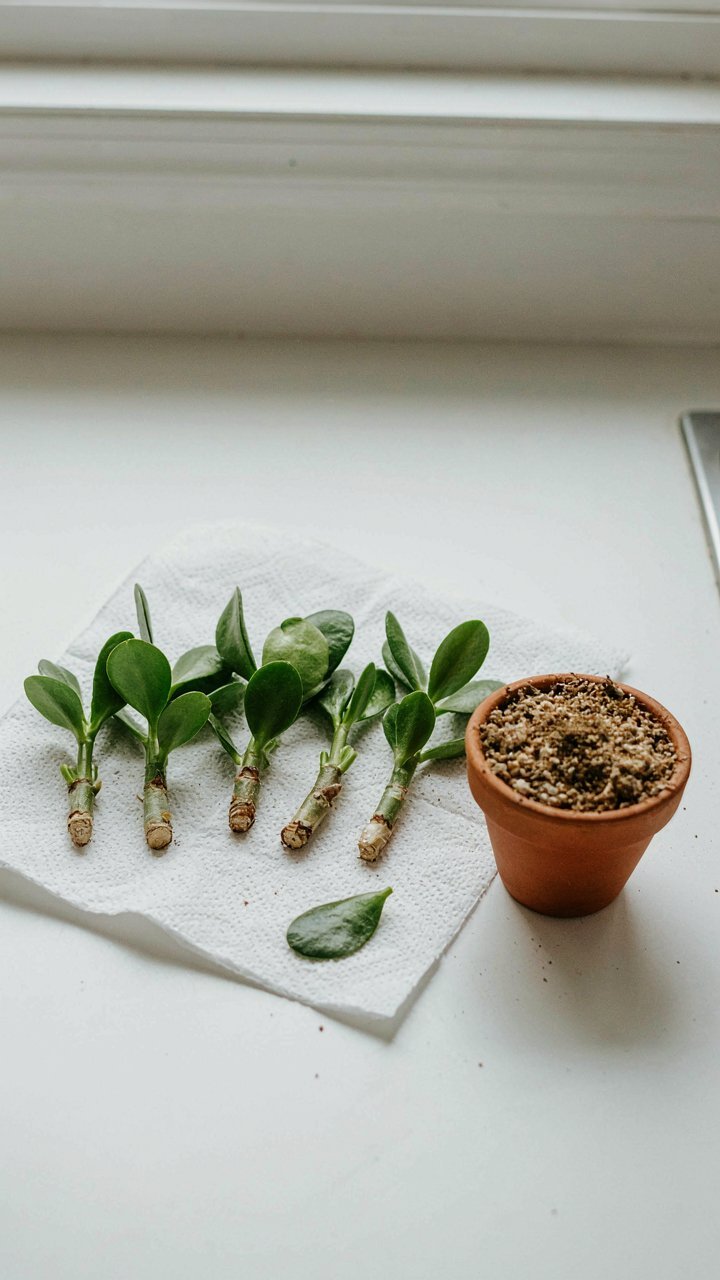
You want free plants. That’s the real driver here, and it works, but most people fail because they don’t understand the actual mechanism: jade cuttings root through callus formation, a biological response to stress and time. Think of it like a wound-healing protocol in medicine. The cutting doesn’t instantly seek water or soil. It first seals itself off with a protective layer of cells. Skip this step or rush it, and you get rot instead of roots.
Take cuttings from healthy stems in spring or early summer when the plant’s growth hormones are active. Cut just below a node using clean shears. Let the cutting sit exposed in dry air for three to seven days. This calluses the wound. The callused surface resists bacterial invasion and initiates root development. Without callusing, you’re fighting biology instead of working with it. This single delay eliminates most propagation failures.
Rooting Mediums And Their Trade Offs
The advice online treats water and soil propagation like they’re equally viable. They’re not. Each medium solves a different problem, and picking wrong wastes your time.
- Water Propagation: Fast visual feedback and minimal equipment, but roots develop thin and fragile. These water roots lack the structure to transition to soil without shock. Use this method only if you’re monitoring daily and willing to baby the transition.
- Cactus or Succulent Soil Mix: Fast-draining and prevents rot, the dominant risk with jade. Roots develop stronger and thicker. The trade-off is slower initial rooting and zero visibility into progress. This is the better choice for reliability.
- Perlite or Pumice Blend: Inert, sterile, and drains instantly. Roots grow robust. The downside is that cuttings need constant humidity checks since the medium dries fast. Best for growers who can monitor regularly.
- Peat or Coconut Coir: Retains moisture longer but increases fungal risk with jade specifically. Use only if you’re in a dry climate and can control watering tightly.
- Rooting Hormone Application: Speeds callus formation and root emergence. Use powder or gel on the callused end before inserting into medium. Not mandatory for jade, but cuts rooting time by roughly half if applied correctly.
Soil propagation outperforms water propagation for jade because it mirrors the plant’s native environment and produces roots that survive transplanting. Place cuttings one inch deep in a small pot. Water lightly once, then do not water again until the soil dries completely. Overwatering kills jade cuttings faster than anything else. Roots emerge in four to six weeks under proper conditions. Once you see new growth at the cutting’s top, roots have established. Move to standard jade care and normal watering schedules.
Pest Patrol: Eradicating Threats With Precision, Not Panic For Your Jade Succulent
Spot Infestations Before They Multiply
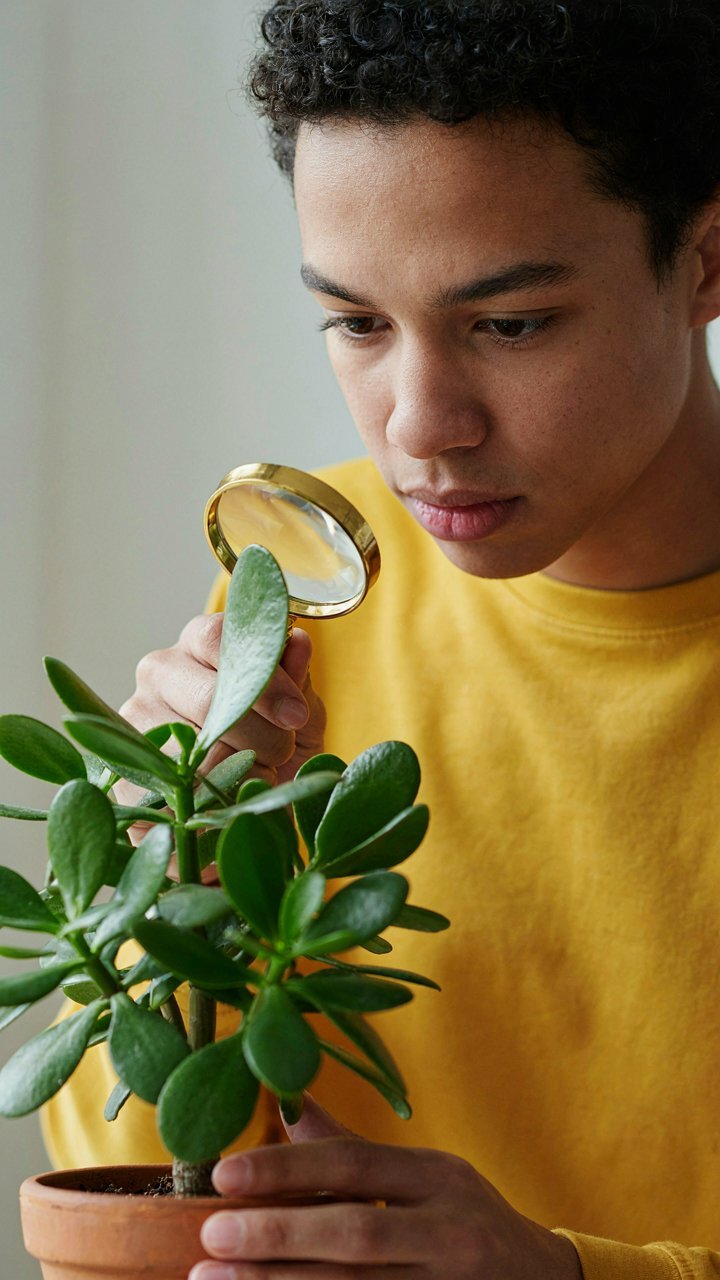
You want to catch this early so you don’t end up with a dead plant and wasted money. Military reconnaissance doctrine applies directly here: you don’t fight an enemy you can’t see, and pest damage on jades compounds exponentially once it reaches critical mass. Inspect leaf undersides and stem joints weekly. Mealybugs, spider mites, and scale insects hide in these exact spots. A magnifying glass reveals what naked eyes miss. Early detection means you stop an infestation when ten pests exist, not ten thousand.
Jades show pest stress through stunted growth, sticky residue on leaves, or webbing between stems. These aren’t aesthetic problems first, they’re resource drainage problems. The plant diverts energy to fighting infestation instead of storing water and growing. A jade with spider mites will collapse faster than a jade with root rot because the damage accelerates. Check your plants the moment you water them. You’re already touching them. Make inspection automatic.
Remove Pests Through Direct Action
The leverage principle from physics applies to pest removal: use the smallest force at the highest mechanical advantage. Most gardeners waste time spraying neem oil or insecticidal soap at mild infestations, which works but delays recovery. For scale insects and mealybugs, physical removal works faster. Dip a cotton swab in 70% isopropyl alcohol and wipe each affected area directly. The alcohol dissolves the pest’s protective coating and kills it on contact within seconds.
For spider mites, isolate the plant and increase humidity by misting the foliage every two days for a week. Spider mites thrive in dry air and die when humidity stays above 50%. This isn’t a spray-and-wait situation, it’s a condition shift. If alcohol treatment or humidity adjustment fails after ten days, spray the entire plant with insecticidal soap, coating all surfaces thoroughly, then repeat in five days to catch newly hatched eggs. One application never works. Pests demand follow-up.
The Jade Bonsai Blueprint: Cultivating Miniature Mastery Through Deliberate Constraint

Trunk Thickening Techniques: Developing A Strong Core
You want a thick trunk because it signals maturity and control. What you’re actually doing is exploiting a botany principle: apical dominance. The main growing tip receives auxin first, but a younger Jade forced to prioritize lateral branches redirects energy downward into trunk expansion. Cut the top growth point cleanly. New shoots emerge below. Repeat this cycle over seasons. The trunk responds by thickening to support the emerging branch structure.
Most people skip this because it feels like killing a healthy plant. It’s the opposite. You’re forcing the plant to invest in structural integrity instead of vertical height. A Jade Bonsai’s trunk thickness compounds with each pruning cycle. Start young plants early, pruning at least twice yearly during the growing season. Thick trunks take years, not months. Accept the timeline or stop pretending you want results.
Wiring Fundamentals: Guiding Growth, Not Strangling Form
Wiring is directional tension, borrowed from structural engineering. You’re creating a load that the plant perceives and responds to, not breaking branches through force. Anodized aluminum wire works best on Jades because it grips without cutting into soft new growth. Wrap the wire in a single, consistent spiral around the branch. The coil should sit snug but allow expansion. Tighten incrementally over weeks, never violently.
Most wiring fails because people don’t re-evaluate. Wire stays on too long and the branch grows around it, creating permanent scarring. Check wired branches every three weeks. Loosen wire when the branch hardens into position. Remove it entirely once the wood set. Jade branches hold shape better than most plants once trained. Two to three months of wiring typically locks in the angle. Stop wiring before damage becomes irreversible.
Winter Survival: The Dormancy Directive For Robust Jade Plant Care
When Growth Stops, You Win
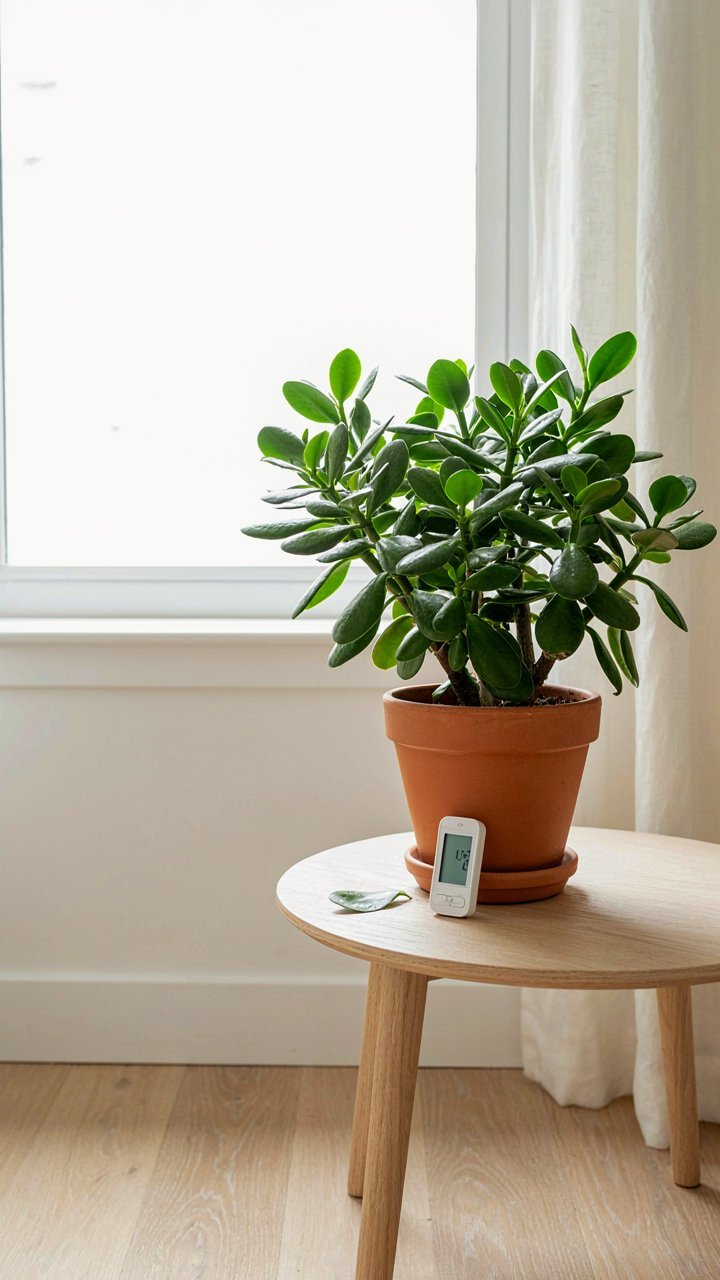
You’re worried winter will kill your jade plant because you think it needs constant care. That’s backwards. Jade plants enter dormancy in winter because they evolved in environments with seasonal drought. During this period, the plant slows metabolism and demands less water and light. This isn’t a problem to solve. It’s a mechanism to respect.
Water less frequently once temperatures drop below 50°F. Most jade plants need water every three to four weeks in winter, not weekly. Check soil moisture before watering. If the top inch feels dry, wait another week. Overwatering kills more dormant jades than any cold snap because saturated soil with low growth triggers root rot.
Frost Lines And Plant Thresholds
Jade plants tolerate cold better than most indoor tropicals, but they have a real limit. Think of temperature tolerance like a load-bearing wall in architecture: there’s a rated capacity, and exceeding it causes structural failure. Jade plants survive down to 50°F without damage. Below that, cell walls freeze, tissue ruptures, and the plant dies.
Keep your jade away from drafty windows, exterior doors, and uninsulated walls during winter. Position it in a room that stays between 50°F and 70°F. If your home dips below 50°F at night, move the plant to a warmer interior room. Check the spot with a thermometer before leaving it there long term. This single step prevents irreversible cellular damage.
Your Plant’s Struggle Isn’t A Flaw In Its Nature; It’s A Mirror To Your Own Over-complication
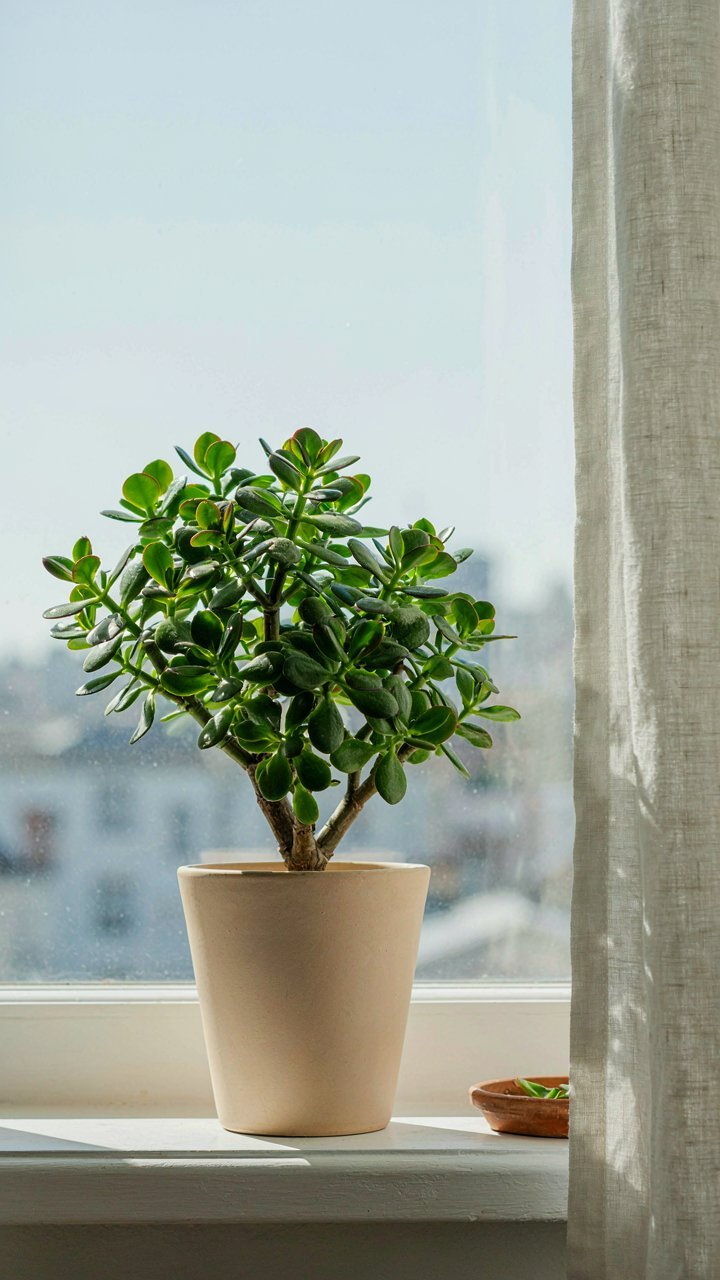
Most people kill jade plants by loving them to death. They water too much, move it constantly, obsess over humidity. The plant doesn’t need your anxiety. It needs you to stop. Pick one sunny spot today and leave it there for two weeks. Watch what happens when you do nothing. Your jade thrives on neglect because you do too.