

The “Disposable Craft” Fallacy: Why Most Flower Crowns Fail To Impress

Materials Drive Output, Not Imagination
You want your kid’s flower crown to look impressive because you think it signals something about parenting or taste. It doesn’t. What actually determines whether a crown looks like craft-store filler or something worth displaying is material selection. Generic materials produce generic output. When you grab tissue paper flowers, plastic stems, and floral foam from the dollar section, you’re not working with neutral tools. You’re working with constraints that telegraph “temporary project” to anyone who sees it.
The difference between a crown that holds up and one that wilts in two hours comes down to material architecture, not artistic skill. Fresh flowers require structural knowledge: water uptake rates, stem flexibility, bloom density. Dried botanicals need understanding of preservation, weight distribution, and how different plants hold their shape. Synthetic alternatives demand knowledge of heat tolerance and UV stability. Pick materials randomly and you’ve already lost before your kid touches the project.
Engagement Happens Through Friction, Not Comfort
The reason most flower crowns bore kids isn’t because flower crowns are boring. Boredom comes from tasks that don’t create friction. When a project becomes too easy or too predetermined, the brain checks out. You hand your kid a pre-assembled crown base, some pre-cut flowers, and a glue gun. They execute. Nothing forces them to problem-solve, decide, or commit to a choice that matters.
Genuine engagement requires stakes and decisions. Should the crown be dense or sparse? How do flowers orient to frame the face? What happens when stems are too thick? Does texture matter? When kids answer these questions through their own material experiments rather than following instructions, they’re building actual judgment. The crown they make becomes theirs because they solved problems, not because they decorated something pre-built. Start with raw materials and let them discover how things fit together.
The Biomimicry Protocol: Engineering Crowns That Last & Evolve
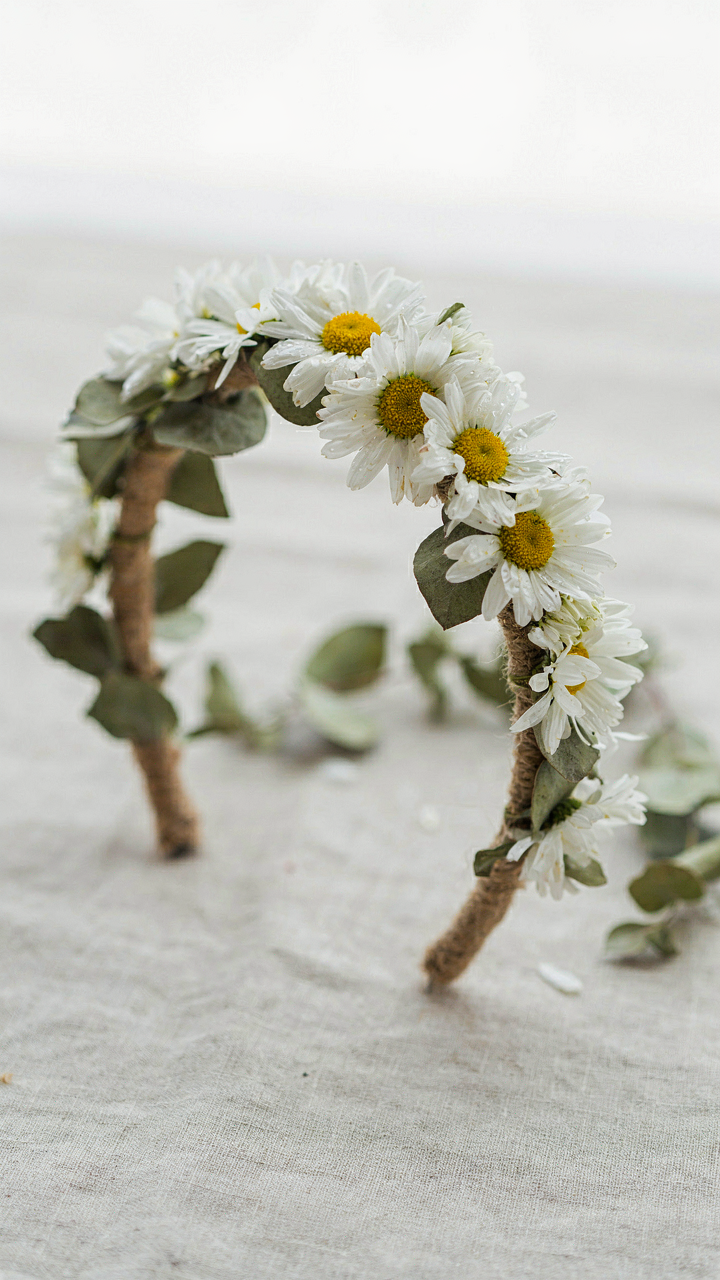
Why Stems Matter More Than Petals
You want a crown that survives the afternoon without falling apart—not because you’re precious about it, but because replacing it signals poor planning. Biomimicry borrowed from nature means copying how plants engineer durability: a flower crown’s stem structure determines everything. Stems hold tension, distribute weight, and anchor blooms without snapping. Florists use floral foam or wire frames because they mimic the stem’s load-bearing job. The mechanism: a rigid core wrapped in soft material absorbs impact and prevents collapse.
Real durability comes from understanding water retention, not just aesthetics. Fresh flowers wilt because stems lose moisture; dried flowers hold shape because they’ve already surrendered water. Hybrid crowns use a mix—fresh blooms on the perimeter for visual impact, dried or treated greens in the structure for stability. This isn’t compromise; it’s engineering. A crown built this way survives three to five hours of active wear without wilting or shedding, which covers birthday parties, outdoor events, and photo sessions.
Working With What The Hair Provides
Different hair types demand different anchor strategies, and standard advice misses this entirely. A thick braided crown works on dense hair but slides off fine hair; a flexible wire crown grips curly hair but tangles straight hair. The real variable isn’t the crown design—it’s the friction coefficient between hair texture and your anchor point. Thicker, curlier hair generates grip naturally; fine or straight hair requires a different mechanical solution. You don’t redesign the crown; you redesign the contact surface.
For fine or slippery hair, use wider bases that distribute grip across more surface area instead of relying on a single tension point. For thick or textured hair, you can use narrower anchors because the hair itself provides enough friction to hold. Secure every crown with bobby pins or a flexible band underneath, not just the decorative top piece. This separates crowns that last from ones your kid abandons after ten minutes. The protocol: test the anchor point on the specific hair type before the event, and adjust width or material accordingly.
Beyond Blooms: Integrating Fabric, Paper Flower Crown Craft, & Found Objects
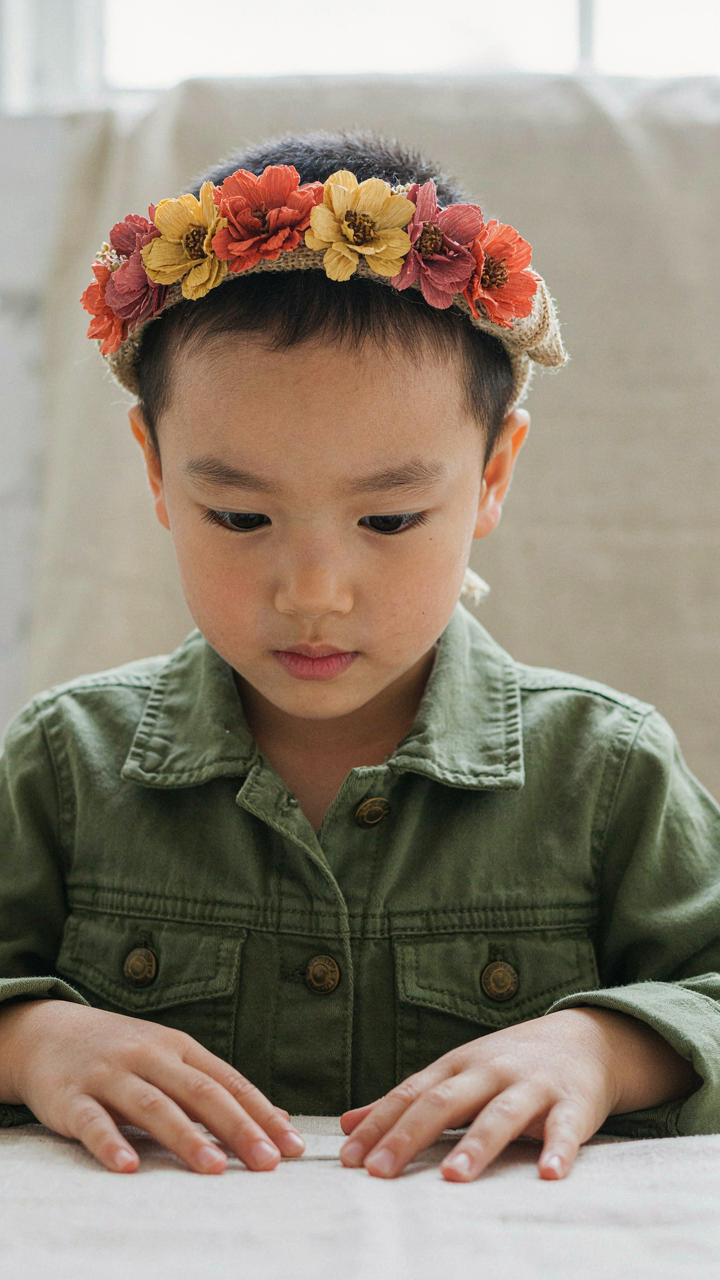
When Texture Beats Color Alone
You want your kid’s crown to stand out at the birthday party or family event. That’s not shallow. The mechanism is contrast. Your brain registers texture before it registers color, which means a crown mixing fabric, paper, and natural materials creates visual weight that flat flowers alone cannot match. Layering materials forces depth perception. This is industrial design thinking applied to crowns: function through material composition.
Most parents default to silk flowers because they’re easy. That’s the problem. Easy reads as boring. The real move is building a structure that combines paper flowers (lightweight, moldable), ribbon or burlap strips (visual anchor), and dried seed pods or small branches (scale variation). These materials have different reflectivity and tactile appeal. A crown with only one material type feels incomplete because it is.
Sourcing From What You Already Have
Sustainability isn’t a marketing term here. It’s a constraint that forces creativity. Every family has fabric scraps, old ribbon, dried flowers from arrangements, and branches from the yard. Using these materials costs nothing and eliminates decision paralysis that comes with buying craft supplies.
Start by collecting. Paper napkins, old newspaper, dried grasses, twine, fabric remnants, and pinecones become building blocks. Sort by texture, not by color. A branch provides skeleton. Fabric strips wrapped around it add dimension. Seed pods and small stones fill gaps. The constraint of using only found materials means your kid’s crown becomes genuinely unique because you’re not pulling from the same supply chain as everyone else. Build the structure first, then layer materials until negative space disappears.
The Skill Stacking Advantage: Flower Crown Craft For Kids As A Foundation
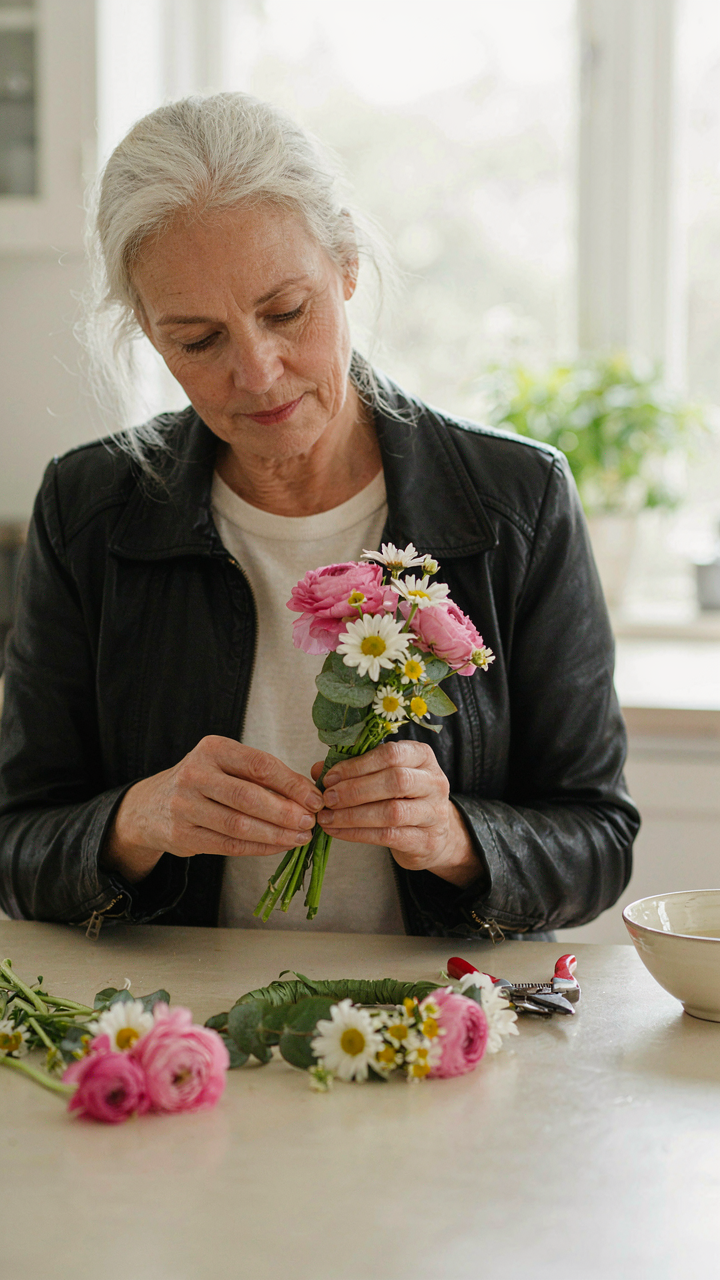
Fine Motor Control Through Repetitive Precision
You want your kid to look competent. That’s the real driver here. Fine motor skills signal intelligence and capability to other parents, teachers, and the kid themselves. The mechanism is simple: flower crown construction demands the exact hand movements that build neural pathways for writing, drawing, and controlled manipulation.
Threading stems through wire or wrapping floral tape requires finger isolation and wrist stability. These aren’t abstract benefits. A child who can thread a delicate flower stem onto a crown base has already practiced the grip, pressure modulation, and hand-eye coordination needed for handwriting. The repetition builds muscle memory faster than worksheets because the outcome is visible and wearable.
Color Relationships And Visual Hierarchy
Color theory comes from design and visual communication fields. Flower crown composition teaches the same principle designers call “dominance”—one color commands attention while others support it. Most parents throw random flowers together and call it done. That’s not teaching anything.
When a child selects one bold color as the anchor (deep purple, bright red) and builds secondary hues around it, they’re learning contrast and emphasis. They see immediately how a yellow flower disappears into a pale background but pops against green foliage. This transfers directly to how they approach composition in art, design, even how they arrange their own room. The learning sticks because the rule is enforced by physics, not instruction.
Styling With Intent: The Flower Crown Hairstyle & Hair Integration
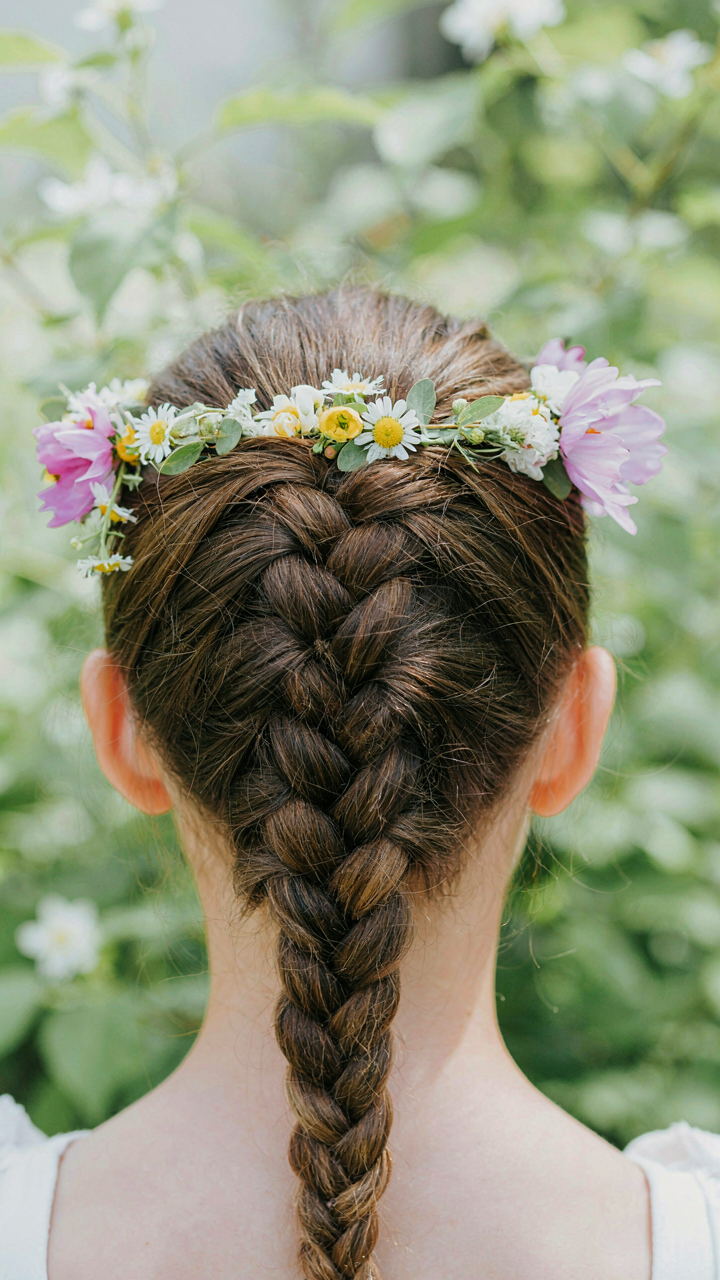
Side Braid, Dutch Braid: Anchoring Mechanisms
You want the crown to stay put without looking like you’ve glued it down. The real issue isn’t the flowers—it’s that most parents treat the base hair as decoration instead of architecture. A side braid or dutch braid functions like a load-bearing beam in construction. It creates a curved anchor point with enough texture and tension to grip the crown’s base without requiring excessive pins or damage to the child’s scalp.
The dutch braid inverts the side braid’s technique—you cross strands under instead of over, creating a raised ridge that sits naturally on the skull. This ridge becomes the crown’s foundation. You thread the floral wire or elastic band directly through the braid’s weave during the final plait, then tuck flowers into the gaps. The braid itself becomes the support structure, not an afterthought beneath the flowers.
Half Up Hair, Crown Braid: Blending With Natural Styles
Most advice says to “just add a crown to any hairstyle.” That’s incomplete. The crown braid method—a thin dutch or french braid that wraps horizontally around the head—works because it mimics the scalp’s natural curvature and distributes weight evenly. Half-up styling lets you place the crown without committing the entire head to an elaborate updo, which matters when a kid needs to move, sit, or play.
A crown braid sits flush against the head because you’re working with the growth pattern instead of against it. Start the braid at one temple, weave horizontally across the back of the head, and finish at the opposite temple. The flowers attach directly to this braid, not floating on loose hair below. This method holds for hours without hairspray, heavy accessories, or frequent readjustment.
Cultivating Agency: The “Flower Girl Crown” Mindset Shift

Let Kids Choose The Materials
You want your child to feel invested because a passive kid produces mediocre output, and mediocre output means you wasted the time and money. Psychology calls this the “locus of control” mechanism—when someone internal selects the variables in a system, they own the result. With flower crowns, this means your child picks the flowers, the base material, and the assembly order instead of you executing a Pinterest template they didn’t ask for.
The moment a kid selects one stem over another, they’ve crossed from consumer to creator. Offer real constraints—budget, available materials, time—but never the illusion of choice where every option leads to your predetermined outcome. Let them reject your favorite flower. Let them choose an awkward color combination. Document the choice, not the result, because the choice is what matters for their future decision-making.
Ownership Starts With Hands On The Supplies
The common advice here is to “make it fun” or “keep it simple for kids.” Both miss the point. Ownership emerges from friction, not ease. When a child wraps floral tape, sources their own stems from a garden or florist, and solves problems like “this crown keeps slipping,” they develop a material literacy that no pre-assembled kit delivers. They learn what works and why.
Give them real tools scaled to their hands, not toy versions. A child’s fingers develop confidence fastest when they handle actual florist wire, real scissors, and genuine stems. The crown becomes theirs because they solved the assembly puzzle themselves, not because you assembled it and they wore it. The ownership protocol is simple: materials first, demonstration second, their hands working while yours stay visible but uninvolved.
The “Display Effect”: Elevating Crowns Beyond The Moment
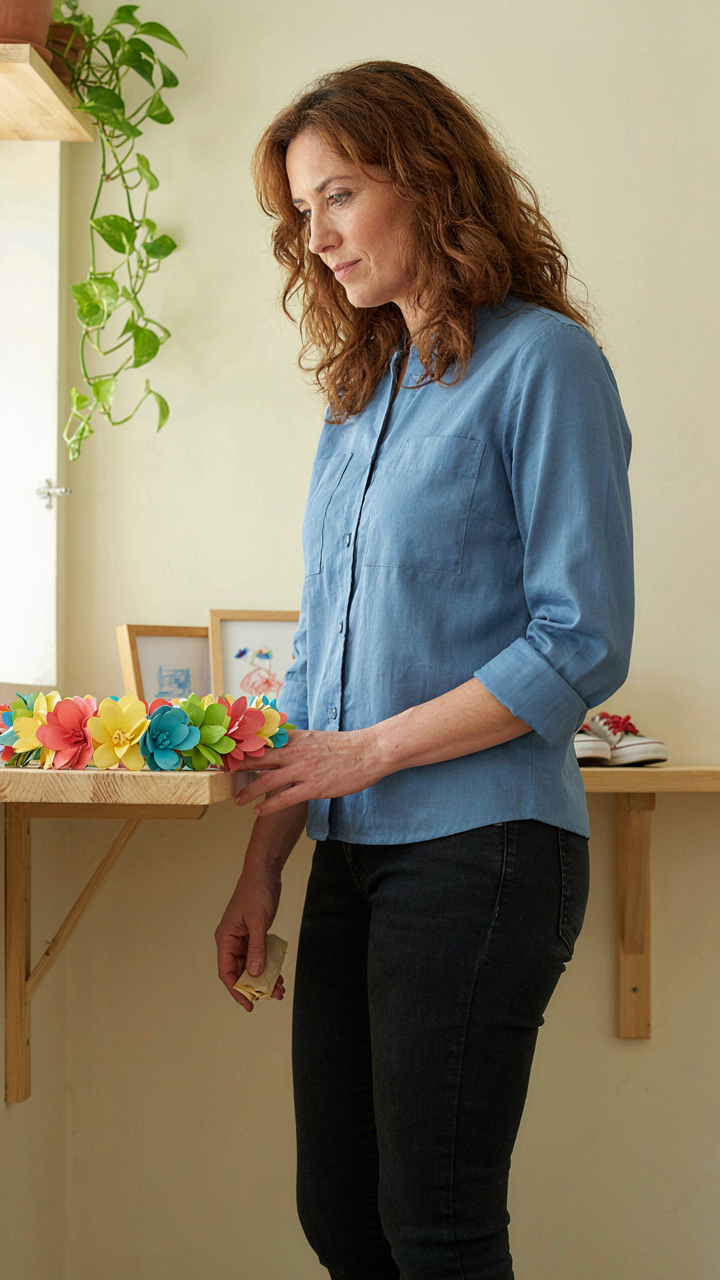
Where Pride Lives On The Wall
You want proof your kid made something worth keeping. That’s the real driver here—not sentiment, but the mechanism of visibility. Display transforms a crown from waste into artifact. The moment a creation moves from the craft table to a deliberate spot in your home, it shifts from temporary to intentional. Your child’s brain registers this as validation. The crown now occupies real space, not a trash bag.
The display effect works because it creates permanent stakes. A crown hung on a bedroom wall or displayed on a shelf changes how family members perceive the maker’s capabilities. Kids notice this. They build more crowns. They refine technique because the previous version is still visible—a comparison point, not forgotten. This mechanism drives iterative improvement faster than praise alone.
Turning Flowers Into Lasting Objects
Most advice says “take photos and move on.” That’s incomplete. Photography preserves nothing about the tactile or spatial reality of what your kid built. Preservation through display keeps the actual object in rotation, where it functions as both decor and reference material.
The practical protocol: designate one wall or shelf as the rotating crown gallery. Use low-damage hanging methods—adhesive hooks, clothespins on a string, or simple shelving. Rotate pieces monthly so no single crown becomes invisible background. This keeps the display fresh, prevents decision fatigue about which crown to show, and forces regular interaction with past work. Your child sees their progression condensed into twelve inches of wall space.
Optimizing For Real World Application: From Craft To Wearable Art
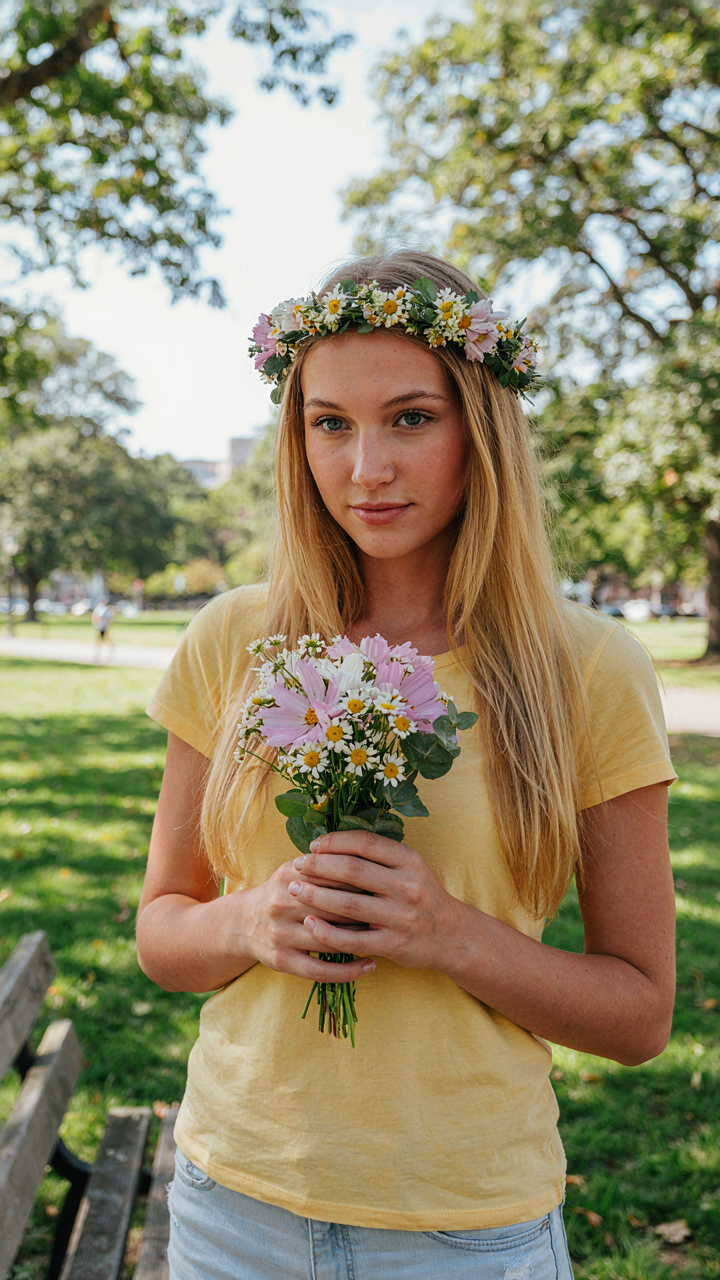
Build For Movement, Not Display
You want your kid to actually wear this thing without it falling apart in three hours. That’s the real problem nobody addresses directly. Engineering principles apply here just like they do to load-bearing structures. A flower crown distributes stress points across the band and flowers, and if you don’t account for active movement, it fails. Kids run, bend forward, sweat, grab at things. Your build method must survive that friction.
- Floral wire gauge 22-24: Thick enough to hold shape through repeated flexing but thin enough for a child’s hand to adjust without tools. Thinner wire breaks under stress.
- Wrapped base construction: Wrap florist tape or fabric around the wire frame before adding flowers. This prevents the band from digging into skin and distributes pressure evenly along the head.
- Flower stem depth: Insert stems at least one inch into the foam or oasis. Shallow insertions pull free when a child tilts their head or leans against something.
- Secure focal points every two inches: Don’t space flowers evenly for aesthetics. Place anchor flowers every two inches around the band to prevent sections from rotating or tilting independent of the crown.
- Hot glue backup points: Apply small dots of hot glue where stems meet the base. Tape and wire alone shift during wear. Glue locks everything in place without adding weight.
The crown stays intact through actual use when the base band bears the load and flowers provide secondary support only. Test your build by holding it firmly and twisting it. If any section moves independently, reinforce that area before handing it to your kid.
The Strap Beats The Band
Most flower crowns sit loose on a child’s head because designers ignore one mechanical fact: children’s head shapes shift during the day through hydration, posture changes, and growth. A band alone relies on friction. You need an anchor. A thin elastic strap that runs from one side of the crown to the other, under the chin or across the back of the head, eliminates the constant micro-adjustments that lead to slipping and discomfort.
Comfort stops being about softness and becomes about stability. When a crown slides or requires constant repositioning, kids take it off. The strap solves this by transferring the weight distribution from pressure points on top of the head to a broader suspension system. Measure from one side of the crown to the opposite side, accounting for the natural curve of a child’s head. Use quarter-inch elastic ribbon, which provides tension without cutting off circulation. Attach it securely to the band using hand-stitching or hot glue reinforced with thread. A child wearing a stable crown forgets they’re wearing it. That’s when it actually gets worn.
The Investment Fallacy: Why Cheap Materials Cost You More Than Money

Time Wasted On Replacements
You’re hoping cheap supplies will save money. That’s not the mechanism at play. Economics calls this opportunity cost, and flower crown materials expose it brutally. Dollar-store stems snap during assembly. Low-grade floral wire tangles and breaks mid-project. Tissue paper petals tear before your child finishes one crown. You buy replacements. Then replacements for those. The math compounds fast.
A single quality stem costs more upfront but survives assembly, storage, and actual wear. Your child completes the project without frustration stops. You don’t repurchase. The real savings isn’t in the first transaction, it’s in the absence of the fifth one. Most parents never calculate this because they only see the shelf price.
What Actually Signals Quality To Kids
The common advice is that kids don’t notice quality. That’s incomplete. Kids notice when something works versus when it fights them. A premium silk flower bends predictably. A cheap synthetic one kinks and won’t reset. Your child perceives this as the material being “broken,” not themselves being clumsy. That perception shapes whether they’ll attempt another crown next month or declare crown-making “too hard.”
Premium materials telegraph competence back to the child. They handle differently. They hold shape. They reward precision instead of punishing it. This isn’t psychology or motivation speak. It’s direct feedback from the materials themselves. When a child experiences materials that respond to their effort, they attempt more complex designs. When materials resist or fail, they stop. The material quality determines the behavior ceiling, not the child’s capability.
The Real Obstacle Isn’t The Craft; It’s Your Underdeveloped System For Cultivating Tangible Skills In A Digital World

Most parents treat flower crowns as a one-off activity. You scroll Pinterest, grab supplies, make something pretty, then forget it existed. The real move is using craft projects to build your kid’s ability to execute ideas from start to finish. That skill transfers everywhere. Make your next flower crown project a system where your kid plans it, sources materials, builds it, and documents the process. Repeat it monthly. Skills compound faster than you think when you stop treating hobbies like entertainment and start treating them like training.



