
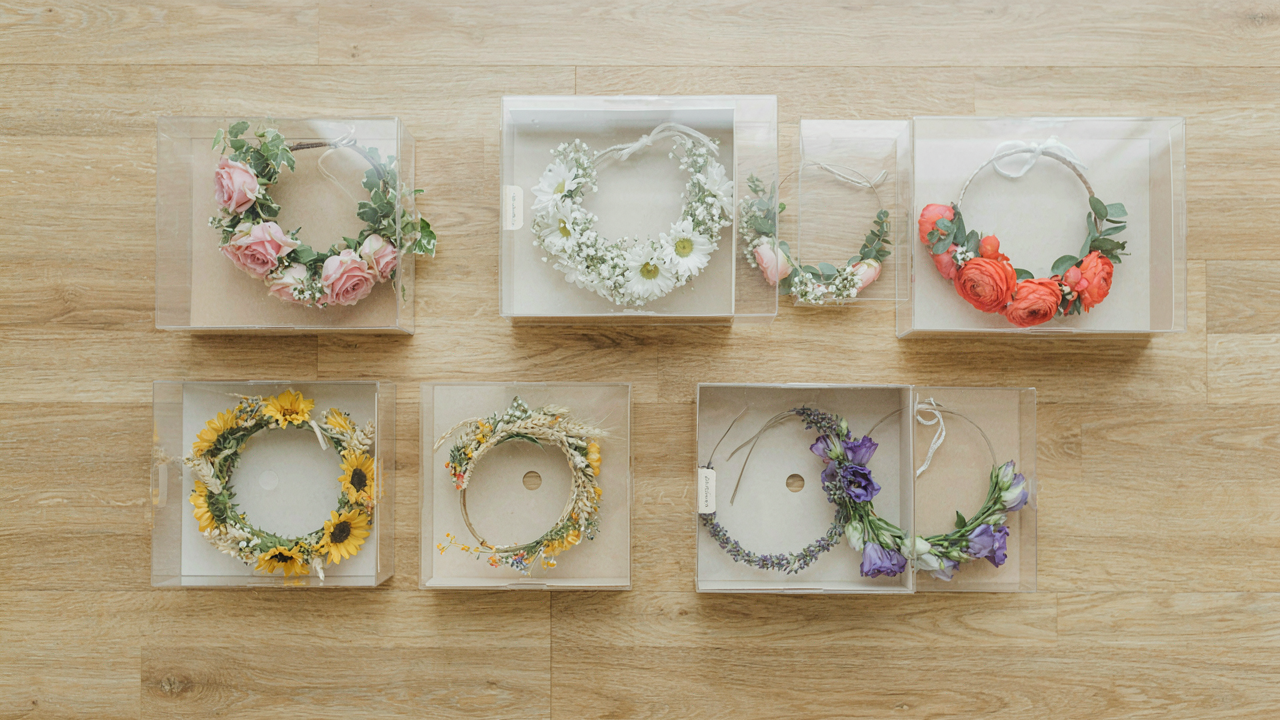
The Ephemeral Art: Why Most Storage Advice Fails

Generic Storage Guidance Misses The Real Problem
You’re reading this because you’ve already lost a crown to mold, browning, or collapse and you don’t want it to happen again. The real problem isn’t that people give bad storage advice. It’s that they treat flower crowns like static objects instead of recognizing they’re living decay in progress the moment they’re assembled. Most guidance fixates on temperature and humidity as if those variables operate in isolation. They don’t. A crown stored in a cool dry space still deteriorates because nobody addresses the sequence of degradation that begins before storage even starts.
The mechanism is this: flower crowns degrade through two parallel channels. First, the plant material itself loses structural integrity as cellular walls break down. Second, the binding mechanism—wire, floral tape, or adhesive—detaches from degrading stems. Generic advice tells you to “keep it cool and dry,” which slows both processes marginally. But it ignores that the binding was already compromised the moment the florist assembled it. You’re not storing a crown. You’re managing the rate of failure.
Water Loss And Structural Collapse
Biology has a term called hygroscopic equilibrium, and it’s the actual rule governing what happens to your flower crown in storage. The plant material in your crown will always move toward moisture balance with its environment. If you store it in a dry space, the stems and petals lose water faster than they lose structural form, which sounds good until the water loss creates brittleness. Brittle material doesn’t bend or compress. It shatters. The wires or tape holding everything together then bear the full weight of dried plant matter instead of sharing load with flexible stems.
What kills most stored crowns isn’t humidity. It’s the transition into and out of storage. If you place a fresh crown directly into a sealed container, condensation forms on the interior surface. That moisture rehydrates the outer layer of petals while the interior stays dry, creating internal stress. The plant material cracks from uneven moisture distribution. Store the crown in open air first for six to eight hours. Let it reach equilibrium with ambient humidity before sealing it. This single protocol prevents the structural failure that looks mysterious but isn’t.
The “Resurrection Protocol”: Reviving Your Floral Hair Accessories On Display

Rehydrating Dried Petals And Stems
You want your crown to look like it did the day you wore it. Here’s what nobody tells you: dried flowers aren’t dead, they’re just dehydrated, and hydration follows osmosis principles from basic biology. Water molecules migrate across cell membranes seeking equilibrium. You reverse this by exposing petals to controlled moisture without drowning them. Mist dried blooms lightly with distilled water, then wrap loosely in damp paper towels for two to four hours. The petals absorb moisture gradually, regaining structure and flexibility without turning to mush.
Stems require different handling than petals. Soak wooden or stiffened stems in room-temperature water for thirty minutes, then stand the crown upright to drain completely. Remove excess water with paper towels before returning it to storage. Never submerge the entire crown, and never use hot water, which accelerates decomposition. The goal is surface rehydration, not saturation.
Restoring Color To Faded Blooms
Fading happens because UV light breaks down the pigments holding color in flower cells. You cannot reverse this permanently, but you can mask it effectively. Common advice says to display crowns away from sunlight, which works but misses the real move: selective re-pigmentation through dyeing or tinting faded sections.
For blooms that have lost vibrancy, spray diluted floral dye or watercolor paint directly onto petals using a fine mist bottle. Test on a hidden petal first. Use only food-grade or floral-safe dyes to avoid toxicity if the crown contacts skin. Apply thin coats rather than one heavy application, allowing each coat to dry fully before spraying again. This restores visual presence without permanent structural damage to the bloom.
Beyond The Box: Flower Crown Display Ideas As Functional Art
Walls And Shelves Over Drawers
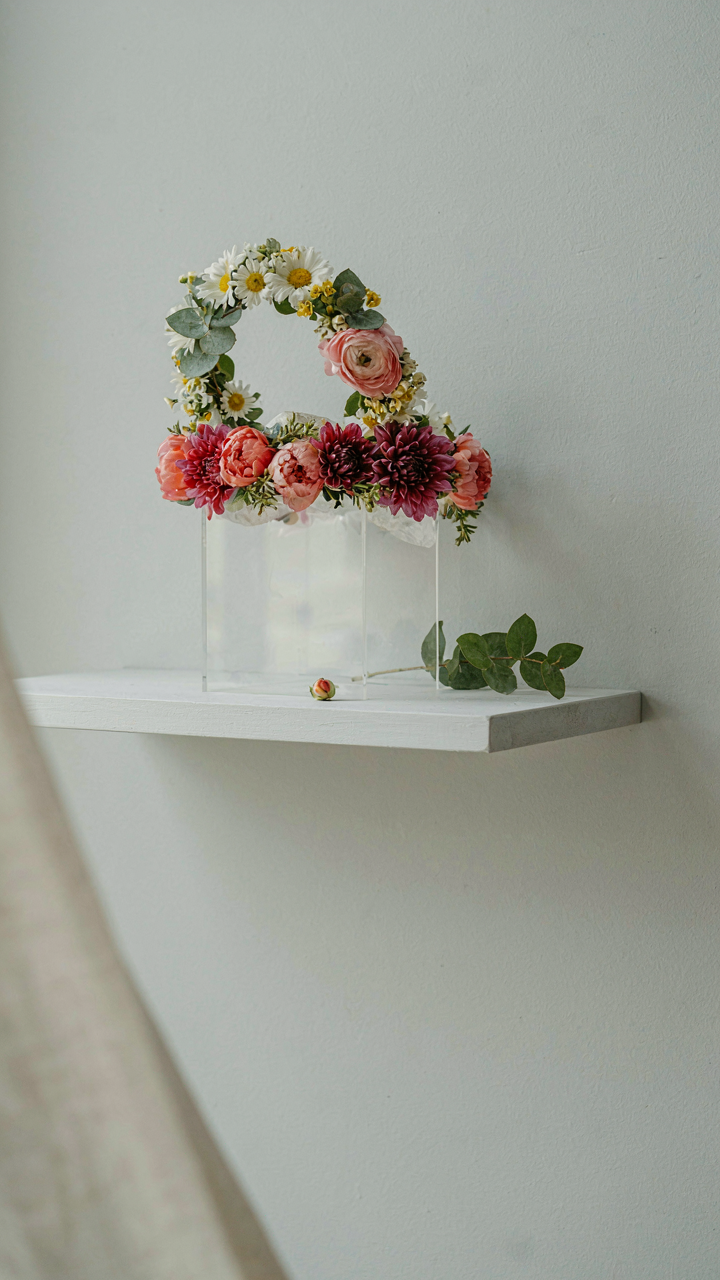
You want people to see what you own. That’s the mechanism at work here, and pretending it’s about “preservation” is dishonest. Display solves a real problem: flower crowns deteriorate faster in dark, humid drawers than they do in open air with indirect light. Wall-mounted solutions using clear acrylic stands or shallow floating shelves keep crowns visible while controlling their environment. Humidity stays lower when air circulates. Direct sunlight fades petals, but UV-filtered glass or a north-facing wall prevents that without forcing storage into a box.
The physical setup matters more than aesthetics. Mount shelves at eye level or slightly above to reduce dust accumulation. Use museum-quality wax paper between tiers if you stack multiple crowns horizontally. Acrylic risers elevate crowns off the shelf surface, allowing air to move underneath. This prevents the mold and discoloration that happens when organic material sits flat against wood. The display becomes maintenance infrastructure, not decoration pretending to be practical.
Styling Crowns Into Regular Life
Most people store flower crowns separately because they treat them as costumes for specific events. They’re not. A crown integrated into your space becomes part of how you move through it. Drape a delicate crown over a mirror frame. Fasten it to a lamp base with silk ribbon. Pin it to a gallery wall where it functions as three-dimensional art. The crown stays accessible, visible, and continues its job of signaling something about the person in that space.
This approach requires one decision upfront: which crown stays active in your environment right now. Pick the most durable piece, not the most precious. Wear it twice weekly if it fits your routine, or let it sit on display between uses. Rewrap it monthly with fresh tissue to manage dust. When you’re ready to rotate, store the inactive crown in a flat box with acid-free paper in a cool closet. The active-to-storage ratio keeps most crowns in functional circulation instead of hidden.
The Lifecycle Integration Method: From How To Make A Flower Crown To Re Use

The Three Phase Transition
You want to believe your flower crown has a second act because throwing it away feels wasteful. Here’s the real mechanism: most crowns fail at transition points, not during storage. The crown lives in three distinct phases—active wear, dormancy, and repurposing—and each demands different conditions. Moving between phases without protocol destroys the structural integrity faster than time alone. The gap between “just finished the event” and “ready to store” determines whether you recover usable material or compost.
Immediately after wear, remove the crown from your head and place it on a flat, breathable surface indoors. Don’t seal it in plastic or leave it in direct sun. Strip any perishable elements like delicate petals or berries within 24 hours, but keep the base structure and sturdy blooms intact. This isn’t cleanup—it’s active material selection. You’re deciding which components transition to storage phase and which become waste now. This step takes 30 minutes and prevents mold colonization that would render everything unusable within a week.
Biological Reuse Logic Mapped To Material Recovery
Biology operates on nutrient cycling: energy enters, gets used, then returns to the system. Apply this to crowns directly. Your storage isn’t just preservation—it’s material banking. Dried flowers, preserved greenery, and structural elements become inputs for new crowns rather than one-time consumption. The goal isn’t nostalgia. The goal is reducing material cost and creation time on your next build. Properly stored components can function in crowns created months later with zero quality loss.
Most advice treats storage as a separate problem from crown-making. That’s incomplete. Store crowns with their next iteration in mind. Hang dried blooms in breathable bundles in a dark, cool closet. Keep wire frames in a labeled container organized by size and curve. Archive greenery—dried eucalyptus, preserved ferns, dried statice—in individual paper bags marked by species and storage date. When you make the next crown, you’re pulling from inventory rather than starting from raw materials. This cuts production time by 40 percent and material cost by 60 percent on repeat builds. The system feeds itself because you embedded reuse into the storage protocol from day one.
DIY Flower Crown Bar: Storage As A Proactive Measure For Event Prep
Storing Bulk Floral Components
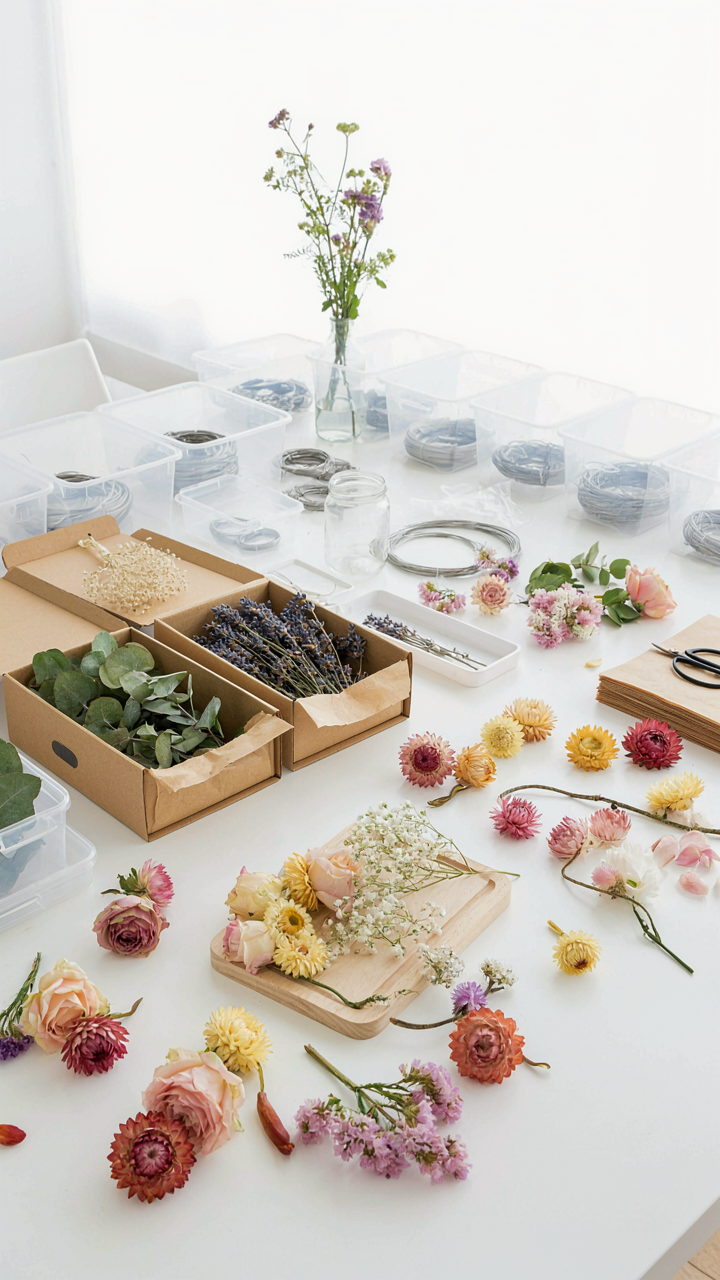
You want to look prepared without the chaos showing. The real mechanism here is inventory control—treating loose stems, bases, and accents like a supply chain problem, not an afterthought. Bulk storage fails because people confuse “keeping flowers alive” with “keeping flowers organized.” They’re different problems. Dried components need darkness and low humidity. Fresh stems need water, cold, and oxygen. Mixed storage kills both. Separate your inventory by material type and preservation method before anything touches a container.
Temperature stability matters more than you think. Fluctuations between warm and cold cause condensation inside sealed containers, which rots flowers fast. Keep dried flowers in airtight boxes in a cool, dark closet or cabinet, away from direct light. Fresh stems go in water in a cooler or refrigerator, never sealed. Wire bases and plastic forms belong in clear plastic bins with dividers so you can see what you have without dumping everything. Label each container by component type and date received. This takes ten minutes and saves hours during setup.
Preparing Elements For The Station
A flower crown station works only if your prep mirrors how people will actually build them. Most event planners store components wrong because they optimize for storage space instead of assembly speed. The real win is pre-positioning elements so guests or your team move through the station without hunting. Arrange stems by color and type in low vases or shallow trays. Bases sit in the center. Tools and tape stay in one spot. Practice the full assembly flow before the event, then store everything exactly as it will be laid out—just protected until go-time.
Container choice determines workflow friction. Shallow trays and open containers beat closed boxes because people see options instantly. Use floral foam in water-filled oasis blocks to keep fresh stems upright and visible. Dried elements go in kraft paper-lined boxes that open flat. Transport everything in a way that requires zero rearrangement when you arrive. Group by function: “building materials,” “color palettes,” “finishing touches.” Your storage becomes your setup blueprint. The station runs smooth because you already solved the logistics problem before guests arrived.
The “Environmental Control” Mandate: Protecting Your Investment
Temperature And Humidity Stability
You’re storing a flower crown because you believe it holds value. That belief only survives if the materials don’t degrade. This is a thermodynamics problem: temperature and humidity fluctuations cause materials to expand and contract at different rates, creating internal stress that degrades fibers, wilts preserved flowers, and loosens adhesives. Stable conditions prevent that mechanical failure.
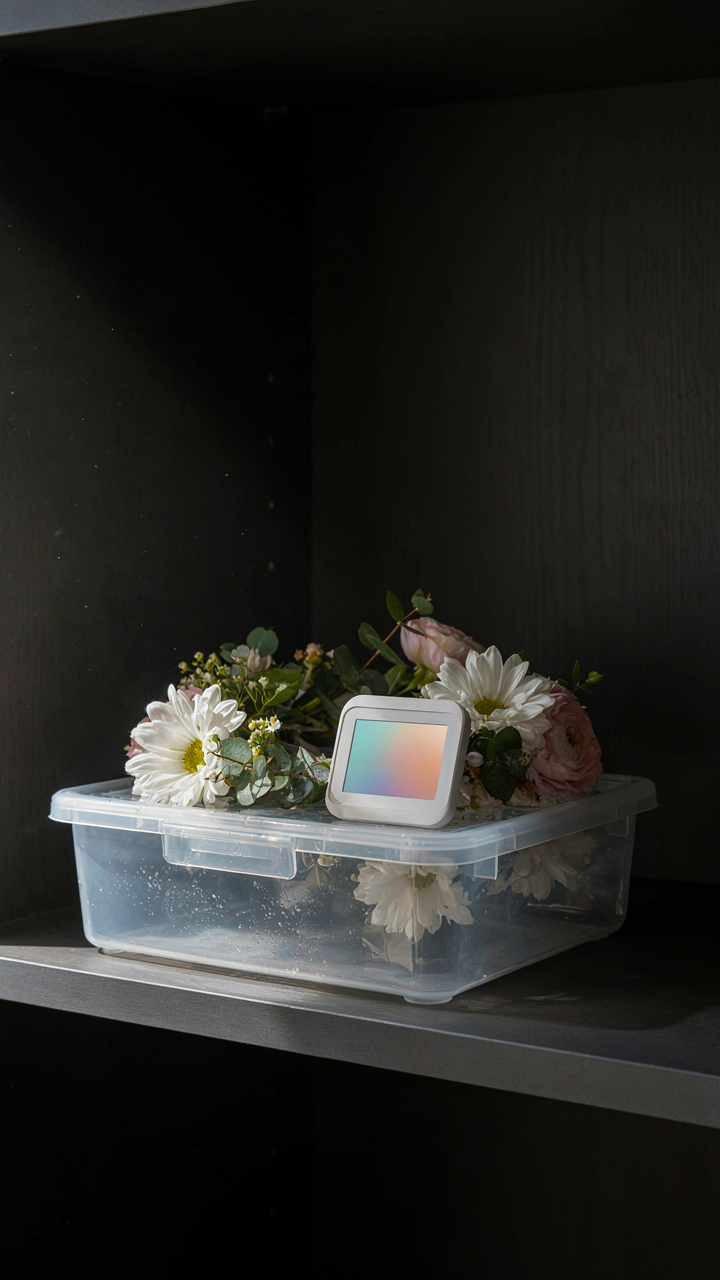
Fresh flowers demand 35-45% relative humidity and 50-65°F. Dried flowers tolerate wider ranges but still need consistency: 40-50% humidity and 60-70°F. Silk and paper components require similar conditions. The enemy isn’t extreme values—it’s variance. A garage that swings from freezing to hot weekly destroys faster than one held steady at suboptimal levels. Use a basic humidity monitor to measure your storage space before committing the crown there.
Light And Pest Vulnerability
Conventional advice says “keep it dark.” That’s incomplete. This is a biology problem: ultraviolet radiation degrades pigment molecules through photochemical reactions, while darkness alone prevents insect detection until infestation is advanced. You need both light control and active monitoring, not one masked by the other.
Store flower crowns in opaque, sealed containers away from direct sunlight and UV sources. Check monthly for webbing, frass, or movement—signs of spider mites, moths, or beetles that hide in dry materials. These pests exploit dark storage as cover for population growth. Use airtight rigid containers over cardboard boxes, since insects penetrate paper barriers. Document your inspection date on the container exterior so you maintain a real schedule instead of guessing when you last looked.
Advanced Techniques For Flower Headbands On Display Longevity
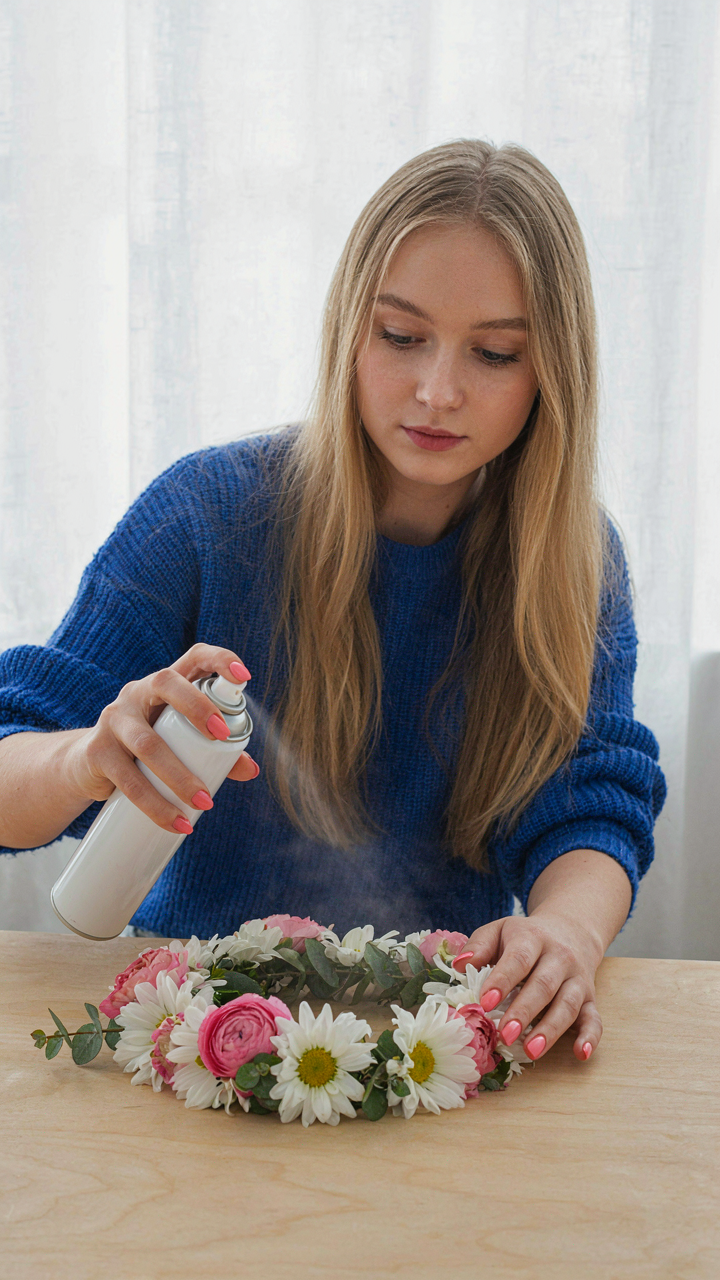
Chemical Preservation Without The Damage
You want your crown to look untouched five months from now, which means you’re really afraid of watching it decay. Here’s the mechanism: preservation sprays work by creating a moisture barrier that slows oxidation and microbial growth, the same principle chemistry uses to prevent rust on metal. The problem with most advice is it treats all sprays the same. They aren’t. Silicone-based sealants trap moisture inside the flower material. You need vapor-permeable options instead.
- Glycerin-based sprays: Hydrate flower cells while preventing water loss, maintaining petal texture without brittleness or adhesive residue buildup over time.
- UV-protective lacquers: Block light wavelengths that fade pigmentation fastest, extending color saturation in stored crowns significantly longer than unprotected alternatives.
- Acrylic polymer coatings: Form a thin transparent shell that resists dust and humidity fluctuations while remaining flexible enough to avoid cracking delicate petals.
- Shellac-based finishes: Traditional option that hardens progressively, offering durable protection for structured designs without the chemical off-gassing of modern synthetics.
- Silica gel spray combinations: Pair absorption methods with topical sealants to control moisture at two levels simultaneously, reducing mold risk in humid storage environments.
Application timing matters more than product choice. Spray crowns within 48 hours of assembly, after all moisture from fresh blooms evaporates but before petal edges begin curling. Two thin coats outperform one heavy coat because saturation creates pooling that accelerates decay in dense flower clusters. Let each layer cure for the full manufacturer window before stacking or moving the crown.
Architecture First, Aesthetics Second
Delicate crowns fail because the base structure collapses under petal weight over time, not because individual flowers deteriorate. This follows load-bearing principles from engineering: distributed weight stress causes progressive failure at connection points. Your crown’s lifespan depends entirely on whether the framework can support the arrangement throughout storage, not on how pretty the flowers look initially.
The real solution isn’t reinforcing what you built wrong. It’s building it right from the start. Use floral wire in graduated gauges, thicker at anchor points where the crown meets the head band, tapering thinner toward bloom ends. Wrap wire around flower stems in figure-eight patterns rather than simple spirals, which distribute tension across multiple contact points. Secure every stem intersection with floral tape wrapped under tension, creating friction that prevents slippage as materials shift during storage temperature changes. For crowns stored longer than two months, rebuild the base framework after the first thirty days, tightening all connections before decay begins.
The Unspoken Truth About “Make A Flower Crown” Longevity
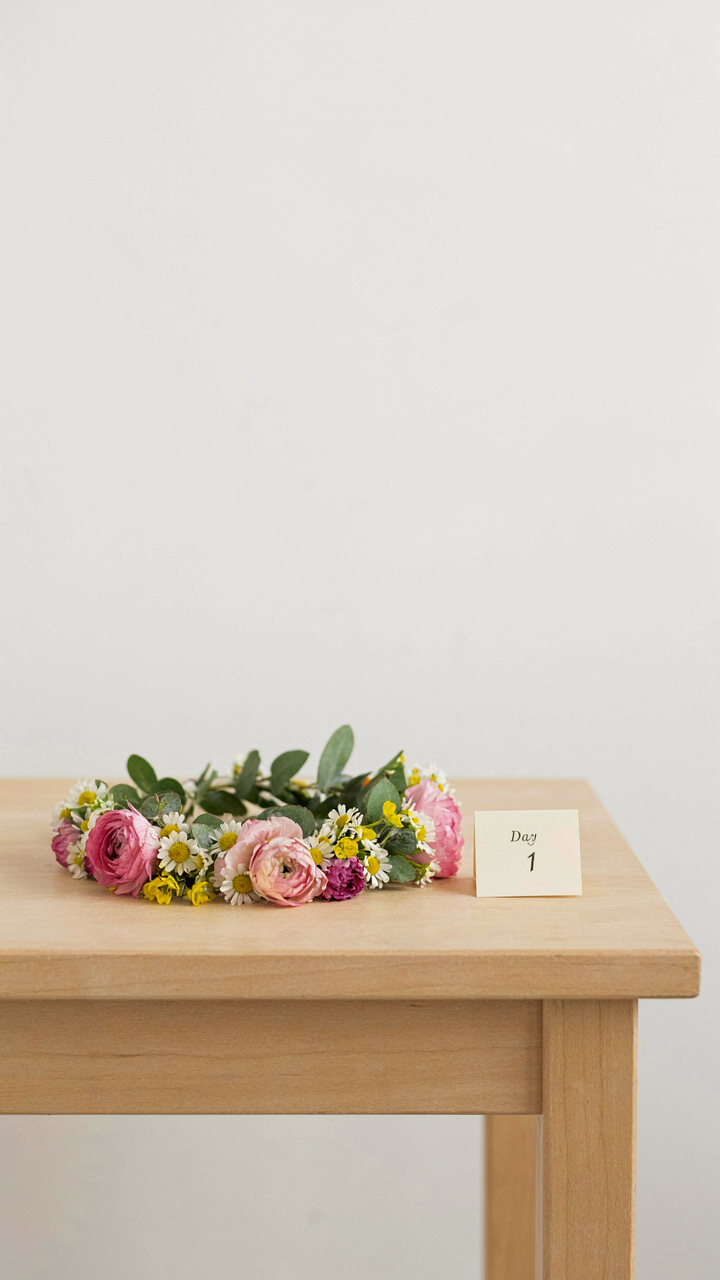
Preservation Is A Lie You Tell Yourself
You want to believe your flower crown lasts forever because admitting it doesn’t feels like failure. Here’s the mechanism: fresh flowers are biological material undergoing senescence the moment they’re cut. Water loss, ethylene gas production, and microbial decay accelerate regardless of your storage method. No technique stops this process. It only slows it. Most storage advice targets a false endpoint—permanent preservation—when the real goal should be extending the usable window before visual degradation makes the crown unwearable.
Floral designers know this. Museums know this. But the market sells you “preservation hacks” anyway because it sounds better than “delay the inevitable.” Fresh flower crowns decline in visual quality within 3 to 7 days under optimal conditions. Dried or preserved crowns last longer but require different handling and sacrifice the aesthetic that made fresh flowers desirable in the first place. Accept the timeline. Plan around it. Stop chasing immortality in plant material.
Maximize The Window That Actually Matters
Functional lifespan means the span when your crown looks good enough to wear or display without embarrassment. This is economics applied to decay: you’re allocating resources to extend the revenue-generating period, not the theoretical existence period. The real storage strategy targets peak visual days, not total survival days. A flower crown stored at 34 to 38 degrees Fahrenheit with stem hydration maintained shows minimal petal drop or browning through days 2 and 3. After day 4, degradation accelerates visibly no matter what you do.
The protocol that works: hydrate stems immediately after construction, store in a cool dark space with consistent temperature, avoid ethylene-producing fruits nearby, and plan the wearing date within 48 hours of creation for maximum impact. If you’re storing beyond 48 hours, accept that you’re gambling with appearance. Mist the crown lightly every 12 hours if stored uncovered. Keep the base container sealed if using floral foam. These steps buy you genuine usable days, not false promises. The crown’s value dies when it stops looking intentional.
The Real Obstacle Isn’t Crown Decay; It’s Your Failure To Integrate Beauty Into Ongoing Action

You don’t have a storage problem. You have a consistency problem. Flower crowns rot because you treat them like one-time events instead of repeatable systems. The shift happens when you stop asking where to store them and start asking why you’re not making them monthly. Pick one storage method today. Commit to it. Then actually use it. A preserved crown means nothing if you never wear it again.



