

Beyond Bulbs: The Psychology Of Luminous Control

Where You Point Light Controls Where People Look
You want people to see your space the way you designed it, not wander attention toward the fence line or that corner you didn’t finish. Lighting isn’t decoration. It’s directional attention architecture. Theater borrowed this from military strategy: commanders used controlled illumination to direct soldier movement without explicit commands. In garden entertaining, light is the silent instruction. You place it, guests follow their eyes there. Everything else recedes.
The mechanism is basic human vision. Your eyes track from dark to bright before they track from bright to bright. This isn’t a preference. It’s biology. A single 40-watt uplighter on a focal tree will pull focus harder than ambient light covering the entire garden. Position lights to frame the seating area, the food station, the conversation zones. Leave the perimeter dark. Dark space makes lit space feel intimate and intentional. You’ve now engineered where attention lives without saying a word.
Absence Creates Comfort More Than Presence Does
Everyone talks about adding more lights. Wrong move. Strategic darkness is the real tool that separates competent entertaining from amateur hour. Harsh, even illumination reads as institutional and kills intimacy. Restaurant and hotel designers learned this decades ago: layered shadow makes people relax because their brain interprets partial darkness as safety and privacy.
Build shadow into your scheme from the start. Under-light plantings so the canopy reads as depth, not a flat wall. Leave sight lines to darker zones where conversations can happen without feeling exposed. Position spotlights to create defined pools of light separated by genuine shadow. This forces guests into the lit zones naturally and gives them psychological permission to not be seen from every angle. The protocol: map your garden zones first, light what matters, leave the rest alone.
The Focal Point Protocol: Commanding Attention In Your Outdoor Areas Backyards
Start With What People Actually Look At
You want your garden to feel intentional and expensive without working harder than necessary. That’s the real driver here—the fear that your space reads as unfinished or worse, that guests see only darkness or visual noise. Lighting hierarchy works like military strategy: concentrate your force where it matters most. Identify the single zone where people spend 80 percent of their time, then build outward. A dining table beats ambient glow every time. A water feature or architectural element beats a floodlit lawn. Focal point lighting creates visual gravity. Everything else supports that pull.
Most people light their entire yard equally, which means nothing dominates and attention fractures. Skip that trap. One well-placed accent light on a tree or architectural feature does more work than six mediocre lights scattered across the space. Choose what deserves the spotlight based on function first, aesthetics second. If guests gather around a seating area, that zone gets layered lighting—overhead task light, subtle accent light on nearby plants, maybe underlit steps leading in. If a water feature exists, one underwater light or carefully angled uplighting transforms it into a draw. Focal point lighting is about subtraction masquerading as addition.
Restraint Creates Impact, Not Fatigue
The common mistake is treating garden lighting like a retail environment where more brightness equals more presence. False. Excessive light creates glare, kills mood, and makes spaces feel commercially lit rather than designed. Restraint is the mechanism. One strong light source with intentional shadows reads as sophisticated. Three competing light sources at the same intensity create confusion and visual fatigue. Your eyes have nowhere to rest, which means your brain stops processing the space as special. Guests feel uncomfortable without knowing why.
Start with 30 percent of the lighting power you think you need, then add strategically. Path lights guide movement without announcing themselves. A single uplighter on a textured wall adds depth without harshness. Under-lighting plants creates silhouettes that suggest scale without flooding the area. Dimming capability matters more than raw wattage. A 50-watt light dialed to 40 percent outperforms a 100-watt light at full strength for entertaining purposes. The protocol: identify your focal zones, place one strong light source per zone, set intensity low, then add supplementary task lighting only where movement or function demands it.
Strategic Illumination: Borrowing From Military Deception Tactics

Light Creates Phantom Space
You want guests to think your garden is bigger than it is. That’s the real reason you care about this section. Military deception uses light to establish false positions—creating the illusion of force where none exists. Garden lighting operates identically. When you illuminate depth strategically, you manufacture perceived size. A narrow garden becomes expansive. A cramped corner becomes a destination. The mechanism is simple: human perception measures space by what it can see. Darkness compresses perceived distance. Light extends it.
Most garden lighting advice treats illumination as decoration. Wrong. Strategic lighting is spatial architecture. You’re not adding light to make things visible—you’re using light to redefine the boundaries of the space itself. Place uplighting on a distant fence and guests estimate the garden extends further than it does. Use path lighting to lead the eye toward illuminated focal points, and movement becomes the measure of size rather than actual square footage. The farther guests walk toward light, the larger the garden feels. This is deception executed through physics, not trickery.
Hide The Margin, Reveal The Center
The common advice is to light everything evenly. This is backwards. You conceal the boundaries—the property line, the fence, the hard edges where your garden ends and the neighbor’s begins. You reveal only the usable entertainment zone. Military strategy calls this “reducing the visible theater of operations” to control perception. In garden terms, it means dark perimeter, bright center. Guests cannot judge the actual footprint of a space they cannot see entirely.
Position your primary lighting in conversation areas, dining zones, and pathways. Leave the garden’s edges in shadow. This accomplishes three things at once: it makes the space feel larger, it prevents guests from seeing beyond your property line, and it focuses attention where you want socializing to happen. A single well-placed downlight on a tree at the garden’s edge will read as a focal point rather than a boundary marker. Darkness is not the absence of design—it’s active concealment working in your favor.
The Unspoken Language Of Light: Guiding Social Flow

Zones For Conversation And Contemplation
You want people to feel like your garden was designed for them specifically, not just lit up like a parking lot. Light creates behavioral zones through intensity and placement, borrowing from urban planning’s concept of “destination nodes”—focal points that pull people toward them. Conversation happens under 50-100 lux where faces read clearly but surroundings blur slightly. Contemplation zones sit at 10-20 lux, dim enough to feel private, bright enough to navigate safely. The mechanic is simple: brighter areas become social magnets. Dimmer areas become refuges. You’re not decorating. You’re programming movement.
Place your primary light source over seating areas where you want sustained interaction. Use downlighting from trees or overhead fixtures to drop light intensity by 30-40 percent as you move away from the central gathering point. Secondary lighting—path lights, uplighting on plants—should register as ambient, not focal. This gradient prevents dead zones where people feel abandoned, and it prevents overly bright perimeter areas that drain intimacy from the core. The result is predictable: people cluster where light says to cluster, and they linger.
Creating Intimacy Within Scale
The standard advice is wrong: don’t light the whole garden equally. Isolation and scale are what kill social momentum in a large space. Deploy localized pools of light using uplighting, spotlighting, or low-level fixtures to carve out distinct pockets, each sized for 3-8 people. A 3-4 watt LED uplight on a specimen tree creates a contained cone of brightness that feels enclosed even in an open garden. Layered lighting at different heights reinforces these boundaries—candles or path lights at ground level, tree uplighting at 8-10 feet, overhead fixtures at 12-15 feet. This vertical separation makes even 2,000 square feet feel like multiple intimate rooms.
Position seating areas so sightlines between pockets remain partial, not complete. Use hardscape, plantings, or pergolas to physically separate zones while keeping them visually connected through shadow and glow. Install dimmable controls on each zone so you can adjust intimacy in real time based on crowd size and energy. Start zones at 60-80 lux, then drop 10-15 percent as evening deepens. Light guides behavior, but dimming maintains it. Adjust your lighting layers weekly during the first month of entertaining to calibrate what actually works in your space, not what looked good in a catalog.
Backyard Lighting As Social Currency: Impress Or Be Forgotten

The Subtle Flex Of A Well Lit Space
You want people to notice your backyard without looking like you’re trying. That’s the real motive here—status without the appearance of effort. The mechanism is scarcity signaling through light control. Most people own yards. Few people own lit yards. When you control light, you control perception, and perception shapes how guests value the space and, by extension, you.
Warm light at 2700K Kelvin draws people in because it mimics firelight, a historically valuable resource. Layered lighting—overhead ambient, task lights on pathways, accent lights on plants—creates depth and makes the space feel intentional rather than accidental. This layering is what separates a backyard from a showroom. The goal isn’t brightness. It’s selectivity.
Mistakes That Signal You Don’t Know What You’re Doing
The common advice is to avoid harsh shadows and go bright. That’s incomplete. The real mistake is uniform lighting. One overhead fixture, one light level everywhere, treats entertainment space like a parking lot. This kills atmosphere and signals carelessness to anyone with a functioning eye.
Avoid over-speccing power and under-speccing placement. A 100-watt fixture in the wrong spot creates glare and kills sightlines. Under-lit pathways create friction in movement and make guests feel unsafe, which tanks social energy. String lights alone look unfinished. Mixing fixture types—bollards, wall sconces, recessed deck lights—signals that you understand the function each serves. The protocol: sketch your sightlines first, place lights at human eye level or below, then adjust color temperature per zone.
The Myth Of “Natural” Light: Shaping Perception At Night
Artificial Light As Design Material
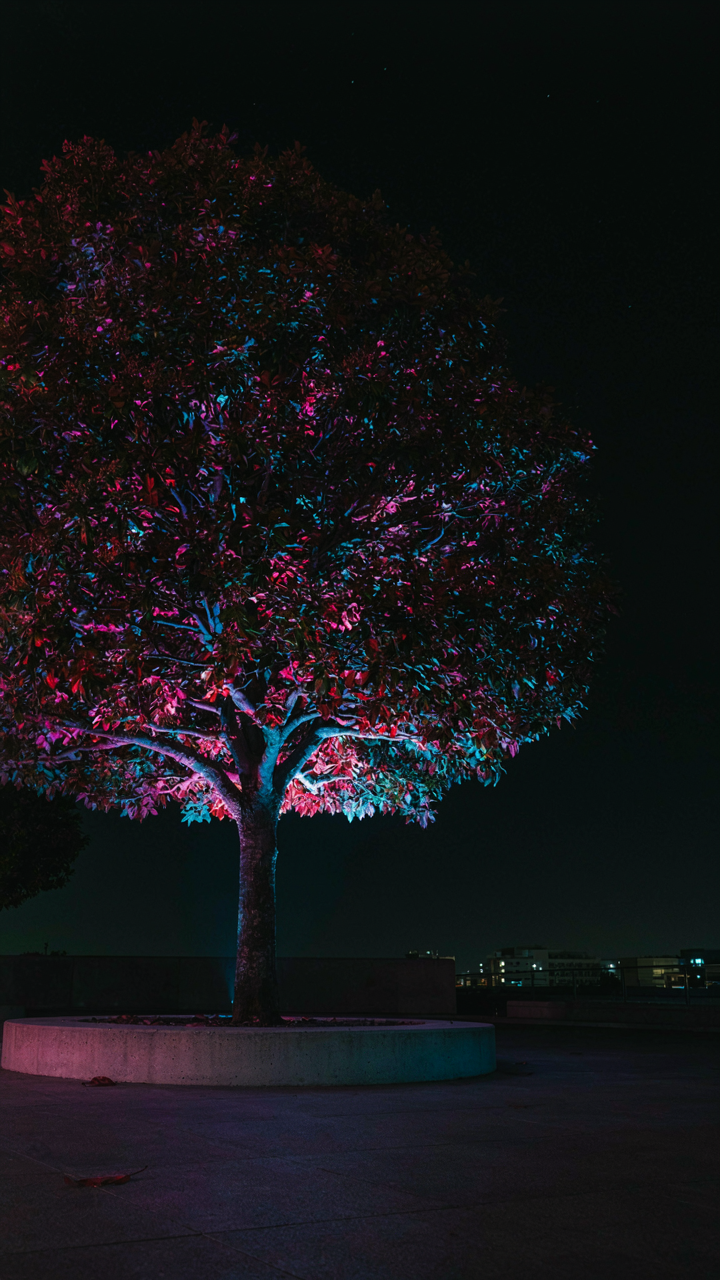
You want people to think your garden looks effortlessly beautiful, untouched by design. That’s the real fear driving this section: the terror that visible effort ruins status. Here’s the mechanism: artificial light doesn’t replace natural elements. It reveals them on your terms. The physics term is “selective illumination.” In garden lighting, selective illumination means you activate specific plants, textures, and depths while leaving others dark, creating perceived depth that doesn’t exist in daylight. Your eye follows light, not space.
Trees, stone, water, and foliage transform under directed light because shadow becomes as important as brightness. A single uplighter behind a specimen tree doesn’t look artificial if it targets the canopy and lets the trunk fade to black. The garden reads as “discovered” rather than “staged” because your brain processes depth cues that daylight erases. Guests move through perceived layers instead of a flat, evenly lit yard. This is why mediocre landscapes vanish at night and average ones become destinations: selective illumination manufactures visual hierarchy that daylight squanders.
Color Temperature Calibrates Emotional Response
The science here is circadian biology meeting psychology. Your nervous system reads color temperature as time of day, which triggers baseline emotional states. Warm light (2700K or lower) signals late evening and triggers parasympathetic activation: relaxation, lowered vigilance, social looseness. Cool light (4000K and above) signals afternoon and keeps guests alert, which kills conversation and makes entertaining feel transactional. The conventional advice says “just use warm light everywhere.” That’s incomplete.
- 2700K and Below: Creates evening mood, slows perception of time passing, pairs with intimate seating and dining. Guests linger because their nervous systems are primed for it.
- 3000K: The compromise zone. Warm enough for relaxation, bright enough for safe movement and food visibility. Standard choice for mixed entertaining spaces.
- 3500K: Bridges warm and cool. Use this on pathways and circulation zones while keeping seating areas at 2700K. Prevents the jarring jump between spaces.
- 4000K and Above: Reserve this for task areas only: grilling zones, bars, preparation surfaces. Cool light here accelerates decision-making and focus, which you want for functional tasks.
- Mixed Color Temperature Strategy: Layer different temperatures by zone. Warm focal areas, neutral transitions, cool functional zones. This invisible architecture controls guest behavior without them knowing why they move and linger where they do.
The error most people make is uniform color temperature across the entire garden. This flattens the space psychologically. You want guests to feel the shift from social zones to movement corridors to activity areas through light, not signage. Calibrate 2700K for your main entertaining area, keep pathways at 3000K to 3500K, and reserve 4000K for practical zones. The goal is behavioral steering through light frequency.
Beyond Ambiance: Functional Lighting For Cool Backyards For Entertaining
Task Lighting Where You Actually Work
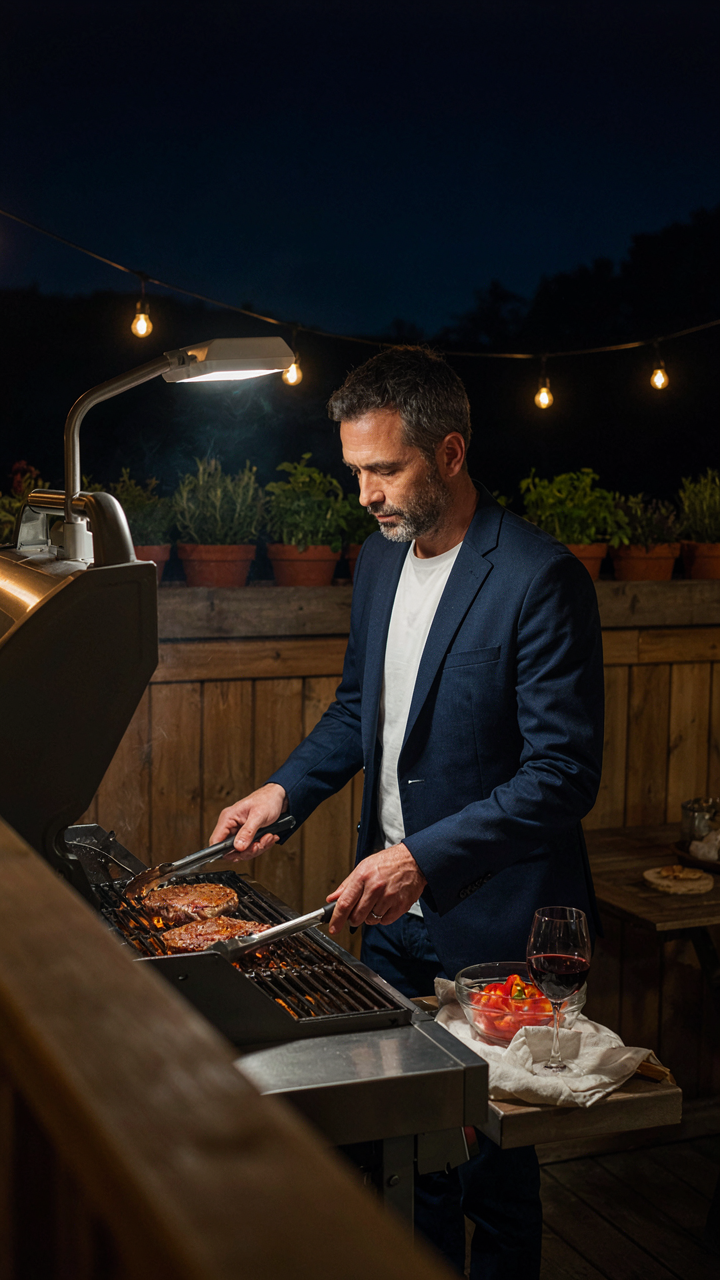
You want people to see you competent, not fumbling in shadow. The real mechanism here is eliminating the gap between intention and execution, and that gap closes under light. Grilling stations need 50 to 100 foot-candles of direct illumination on the cooking surface, which is three to four times brighter than ambient garden lighting. Mount fixtures 7 to 8 feet above the grill to avoid throwing shadows across your work area. Recessed downlights or track-mounted spotlights angled at 45 degrees work best. LED fixtures rated for outdoor use eliminate heat and last through multiple seasons.
Serving stations demand the same logic applied horizontally. Position lights above tables or sideboards so guests see food clearly and you see spills before they happen. A combination of overhead task lighting and subtle under-table ambient light prevents the staged, artificial look while keeping the space functional. The key is separating work zones from social zones through light intensity, not proximity. Bright isn’t obnoxious when it’s targeted.
Navigation Without The Hospital Hallway Effect
Most outdoor lighting designs ignore the physics of vision: humans navigate based on contrast and edge definition, not brightness alone. Pathway lighting that guides movement operates at 2 to 5 foot-candles, far dimmer than task areas, yet still functional. Stake lights or low bollards spaced 6 to 8 feet apart create a visual line without the runway aesthetic. Uplighting on architectural elements like planters or deck edges reinforces spatial boundaries your guests’ eyes already recognize.
Safety is boring only when applied poorly. Step lights embedded into stair risers or deck edges serve a tactical purpose: preventing falls. Transition lighting between light and dark zones matters more than uniform brightness everywhere. If your entertaining area moves from bright task zones to dimmer social spaces, create a graduated transition rather than a hard cutoff. Install dimmers on all ambient circuits so light levels adjust as evening deepens and guest comfort shifts.
Future Proofing Your Yard Renovation Ideas: Smart Lighting Integration

Control Systems That Don’t Require Your Attention
You want this because you’re tired of manually flipping switches and you know automation signals competence. The real mechanism is simple: smart lighting systems use load control—borrowed from electrical engineering—to distribute power across zones so no single fixture overwhelms your setup. You add devices incrementally without rewiring or replacing infrastructure.
Most advice here is incomplete. People talk about “convenience” when the actual win is decoupling control from physical presence. A smartphone app or voice command removes friction between intent and action. You entertain more often when the setup takes seconds instead of minutes.
- Zigbee Protocol: Creates mesh networks where each light acts as a relay, extending range across your entire yard without dead zones or connection drops.
- WiFi-Based Systems: Direct integration with home networks. Simpler setup than Zigbee but dependent on router strength and requires stable internet connectivity.
- Scheduling Features: Pre-program lighting sequences for specific times. Lights activate before guests arrive and dim after they leave without manual intervention.
- Zone Grouping: Control multiple fixtures as one unit. Entertaining area, accent lighting, and pathways respond together to single commands or presets.
- Integration with Existing Smart Home: Connect to platforms like Home Assistant or native ecosystems. Lighting responds to temperature, motion, or time-of-day triggers automatically.
Start with one zone—usually your main entertaining area. Test the system through multiple seasons before expanding. You need real data on performance before committing budget to full-yard automation.
Building Out Without Redesigning Everything
The scalability trap is assuming you’ll know what you need two years from now. You won’t. What works instead is modular architecture: power circuits and control pathways already exist in the foundation, so new fixtures integrate without excavation or rewiring main feeds.
Run conduit—not just wire—during initial installation. Empty conduit costs almost nothing to install but saves thousands later when you add fixtures in new locations. Your future self isn’t guessing at what’s underground. You document the layout now, photograph it, and store the file. When you expand the entertaining space or add an outdoor kitchen, you pull new wire through existing paths instead of cutting trenches.
The Anti Wedding: Dream Wedding Decorations That Aren’t Generic

Lighting For Unforgettable Nontraditional Events
You want people to talk about your event instead of forgetting it three weeks later. The mechanism is simple: consensus lighting kills memory. When every garden looks the same at night, your brain files it away as “nice party” and moves on. Nontraditional events work because they violate expectations. Your lighting should too.
The common advice is to use “warm tones” and “ambient layers.” That’s not wrong, but it’s incomplete. Nontraditional events need lighting that creates cognitive dissonance first, then resolution. This means you deliberately light something nobody expects to see lit, or you remove light from where people assume it should exist. A corporate garden party under blue uplighting on the perimeter walls while the center stays dim creates tension. Your guests notice. They remember.
Crafting Unique Narratives With Light
Narrative design works like semiotics: objects communicate meaning through how you illuminate them. Light an old oak tree with warm sidelight and it means “heritage” or “strength.” Light the same tree with cold blue backlighting and it means “otherworldly” or “unsettling.” Your event’s story hinges on which objects you choose to light and which you leave dark.
Build your narrative by selecting three to five focal points, not ten. Each one should answer a different question your guests unconsciously ask: “Where do I go?” “What’s happening here?” “What’s the mood?” String lights create informality. Spot lights create drama. Silhouettes create intrigue. The specific placement of each fixture writes a sentence in your event’s story. Start by mapping your narrative backward from the moment you want guests to remember most.
The Unseen Architect: How Light Defines Your Backyard Altar Ideas

Sculpting Stone And Steel With Targeted Beams
You want your expensive outdoor pieces to justify their price tag. Here’s what matters: accent lighting works on the principle of contrast, borrowed directly from visual hierarchy in graphic design. A sculpture in flat ambient light reads as decoration. The same piece lit from a single oblique angle at 45 degrees becomes architecture. The shadow it casts becomes as important as the object itself. That shadow tells a story. That shadow proves you understand how to spend money.
Uplighting and downlighting create opposite effects on the same sculpture. Uplighting dramatizes form and introduces mystery, which works for abstract pieces and modern installations. Downlighting from above reveals detail and surfaces, which suits carved stone or textured finishes. Most people light their garden art flat and frontal like a museum display case. Stop doing that. Mount fixtures low and tight to the base, angled upward at 60 degrees minimum, and let the piece emerge from darkness rather than sit in it.
Defining Territory Without Fences
Light establishes perimeter the way walls do, but it works through suggestion rather than physical obstruction. This is boundary-setting through architectural language. When you illuminate a path or patio edge, you create an invisible fence. Guests read these lit zones as “inhabited” and unlit zones as “off-limits.” Your lighting design becomes the actual property line. You don’t need to say anything. The light does the talking.
Path lights spaced twelve to sixteen feet apart work best for linear definition. Uplighting trees at the yard’s edge creates a natural border without barriers. Bollard lights along a patio perimeter compress the entertaining space and make smaller yards feel intentional rather than scattered. The mechanism is simple: lit areas feel safe and social, dark areas feel unfinished. Place your lights first to establish what belongs to your event and what doesn’t.
The Real Obstacle Isn’t Light, It’s Your Refusal To Lead

Most people wait for permission before they entertain. They wait for the perfect setup, the ideal budget, the exact moment. Garden lighting for entertaining isn’t a problem you solve with more research. It’s a problem you solve by hosting someone tonight under whatever lights you have. Your guests don’t care about your setup. They care that you cared enough to invite them. Stop planning the perfect party and throw an imperfect one instead. The only bad lighting is the kind that never turns on.



