

The Illumination Illusion: Why Your “Simple” Lighting Fails

Where Most People Place Their Posts
You want the landscape to look intentional without effort. That’s the real reason you’re reading this. Here’s what fails: most people treat lantern post placement like decoration instead of like light physics. Brightness spreads in inverse square law terms. Move a light source twice as far from a surface and it delivers one-quarter the illumination. A post planted in the middle of a garden bed looks centered but lights nothing effectively. Distance kills output faster than anything else.
The mistake compounds because people confuse visibility with function. You can see a lantern post glowing from across the yard. That doesn’t mean it’s lighting the path, the seating area, or the security line you actually need. Posts placed for visual balance create pools of darkness around the zones you move through at night. Placement solves this before wattage does. Put the post where it lights the transition points: entry gates, deck edges, walkway turns, seating perimeters.
Illumination Does Three Jobs, Not One
Nobody says this plainly: lantern post lighting has three separate functions that rarely align with aesthetic placement. Security lighting needs height and forward throw to catch movement and faces. Utility lighting needs ground-level spread to make pathways readable without tripping. Spatial definition needs low-level ambient glow to show boundary edges and create visual room structure. A single post cannot execute all three equally. You pick which function matters most, then design around that constraint.
This is why cookie-cutter advice fails. “Just add lights for ambiance” assumes one job when you actually need to layer. A 60-watt post at eight feet creates decent ambient mood but insufficient path lighting. A bright utility post at the gate kills the intimate garden feeling. The real mechanism: audit your night movement patterns first. Where do you walk? Where do you sit? What needs to stay visible? Map the actual use, then place posts to serve the dominant function while accepting that the others will suffer slightly.
The “Pathfinder” Protocol For Lantern Post Garden Lighting
Mapping High Traffic Zones
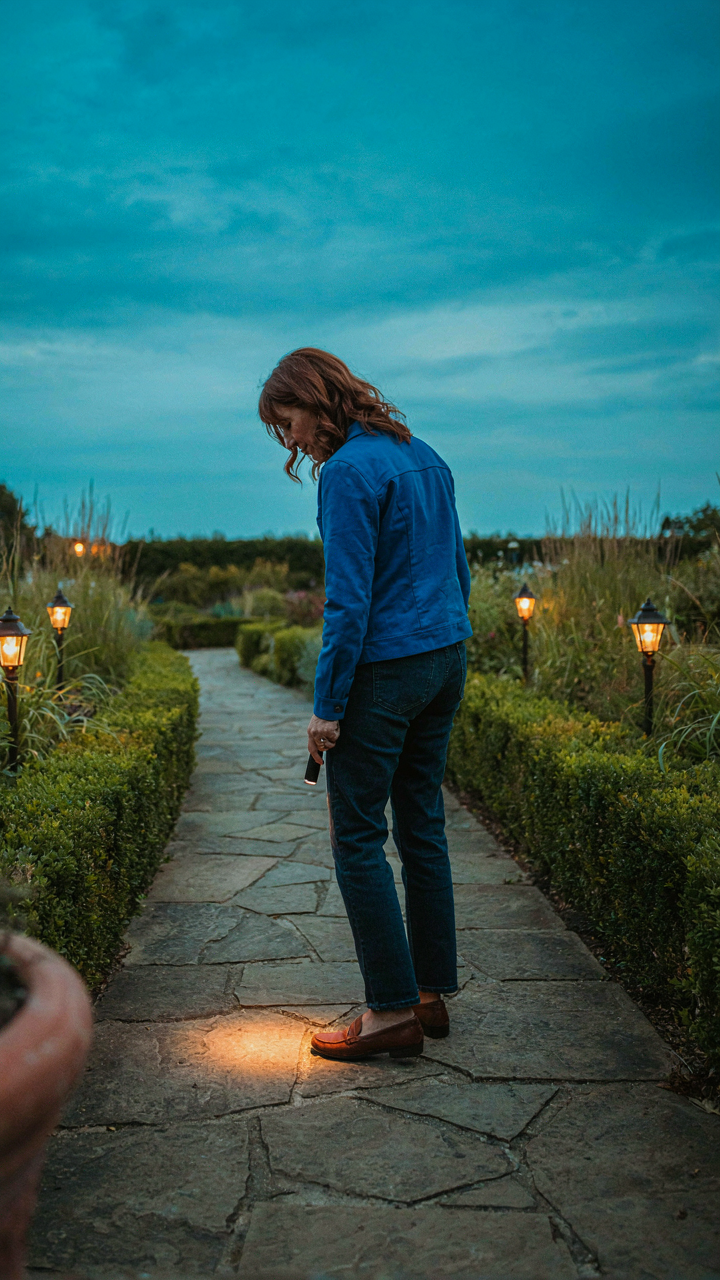
You want people to think your garden is intentional, not that you just threw lights around. The mechanism most people miss: lantern post placement isn’t about aesthetics first—it’s about friction. Eliminate obstacles before you eliminate darkness. Walk your garden at dusk. Note where feet actually go. That’s your heat map. Lantern posts belong on those routes, spaced to break the darkness in human stride intervals, roughly eight to twelve feet apart on main paths.
Most advice says “light the whole garden.” Wrong. Light the walkway. Everything else becomes readable by contrast. Posts placed at path intersections, entrance points, and grade changes do three jobs at once: they guide movement, mark hazards, and anchor sight lines. Position the first post within six feet of your entry point. The last post should lead toward your garden’s intended exit or focal area. This creates flow without feeling engineered.
Guiding Flow With Strategic Illumination
Garden lighting design borrows from wayfinding—the discipline architects use to move people through complex spaces without signage. A lantern post functions as a waypoint. Each post should illuminate the next one slightly, creating a visual chain that pulls the eye forward. Warm color temperature (2700K to 3000K) works better than cool light because it mimics fire, which humans read as a gathering point rather than a warning.
Place posts to frame garden features you actually want seen: specimen plants, water features, seating areas, or architectural elements. A post positioned ten feet back from a planting bed creates depth and draws visitors deeper instead of stopping at the perimeter. Mount lanterns at consistent heights—typically four to five feet above grade—so their light pools predictably. This consistency builds trust. The viewer knows what to expect at the next post. Space posts to leave pockets of soft shadow between them; total illumination feels clinical and kills the garden’s atmospheric draw.
Beyond The Beam: Crafting Ambiance With Exterior Lighting

The Color Temperature That Actually Works
You want people to feel welcome in your space without admitting you care what they think. The mechanism here is biological, not aesthetic. Warm light (2700K-3000K) triggers melatonin suppression less aggressively than cool light, meaning your guests stay comfortable longer instead of getting that institutional fluorescent fatigue. Lantern post garden lighting operates on the same principle as street lamps designed for human circadian rhythm. Your eye registers warm as “safe” and cool as “alert” because that’s how we evolved, not because of interior design theory.
Cool light (4000K-5000K) has its place, but most people default to it out of habit, not intention. Warm dominates residential garden lighting because it actually works. The lantern post’s enclosure matters here. A frosted or amber lens naturally softens cool-spectrum light. If you’re using a clear lens with a warm bulb, you get authenticity. If you’re using a clear lens with a cool bulb, you get a parking lot. Pick one direction and commit to it based on how you want people to feel, not what looks trendy in a catalog photo.
Stacking Light For Real Results
This is where most lantern post lighting fails. People treat it as a single light source instead of an optical system with hierarchy. Architecture calls this layering. You need ambient light (the base level that lets you move safely), accent light (what draws the eye to features), and task light (bright enough to actually read or work). A standard lantern post provides ambient light. It doesn’t solve the problem alone.
Add a second layer by positioning accent lights to highlight pathways, plants, or architectural details. Task lighting comes in as uplighting on the post itself or secondary fixtures near seating areas. The real mechanism is contrast. Your brain perceives depth through light variance, not absolute brightness. One lantern post creates flatness. Three layers create dimension and make the space feel intentional. Stack your light sources at different heights and angles, then adjust intensity so no single element dominates completely.
Securing Your Sanctuary: Outdoor Lamp Posts As Deterrents

Eliminating Shadows: Critical Blind Spots
You want this section because you’re afraid of what you can’t see, and you think better lighting solves it. It doesn’t, unless you understand how predators actually use darkness. They don’t need total blackness. They need shadows deep enough to conceal movement. A single lamp post creates a predictable light cone that leaves everything beyond its radius darker by contrast, not brighter. Your eye adjusts to the lit zone and becomes blind to the perimeter.
Position posts to overlap light patterns rather than space them for even coverage. This eliminates the shadow corridors that frame the edges of each cone. Most homeowners space posts 20 to 30 feet apart and wonder why their yard still has dead zones. The real mechanism is contrast elimination: adjacent light sources merge into a continuous field, removing the shadows criminals use as natural cover. Test this by walking your garden at dusk and noting where your vision drops. Post placement should erase those dead zones completely.
Motion Activated: Smart Integration For Security
This borrows from military doctrine about layered defense, where each layer forces an attacker to commit differently. Motion activation is your second layer. The first layer is static light that deters casual observation. The second layer is sudden activation that signals detection. A motion sensor adds no light value on its own. It adds a behavioral cost to intrusion.
Install motion-activated posts at entry points and along property lines, not in the center of your garden. The goal isn’t to light up your entire yard when movement triggers. It’s to activate light at zones where an intruder must commit to crossing into your space. This forces a choice: abort or proceed knowing they’ve triggered a visible response. Pair motion posts with static posts in a staggered pattern so the motion units aren’t predictable in their placement, and use a sensor delay of 3 to 5 seconds to prevent false triggers from wind or small animals while still catching human-scale movement patterns.
The “Backyard Lamp” Effect: Extending Living Space Outdoors

How Lantern Posts Define Territory
You want people to see you using your backyard. That’s the mechanism. Lantern post garden lighting works like real estate zoning in urban planning: it establishes distinct functional territories that signal intentional use. Without defined zones, your yard reads as empty. With them, it reads as owned and inhabited. Dining zones need overhead lanterns at 7 to 8 feet. Lounging areas work with lower fixtures at 4 to 5 feet. Entertainment spaces benefit from clustered posts that create visual anchors. The placement determines behavior. People gravitate toward light.
Zoning solves a real problem most people ignore: ambiguity. A dark yard has no structure. Visitors don’t know where to stand or sit. Lantern posts solve this by creating visual chapters in your outdoor space. Install posts around dining tables, conversation areas, and pathways. This approach costs less than rewiring your entire yard and produces faster results. The posts become the architecture your yard was missing.
Materials That Don’t Fail In Weather
Ignore the advice about stainless steel being universally better. It corrodes in coastal salt air just like other metals. Real durability comes from matching material to your specific climate. Aluminum fixtures resist rust without constant maintenance. Powder-coated finishes hold up for 5 to 7 years before recoating becomes necessary. Cast iron requires annual treatment but delivers visual weight that aluminum can’t. The trade-off is always between maintenance burden and aesthetic impact.
Choose fixtures that expose fewer crevices where water collects. Post-mounted lanterns with sealed gaskets around lens openings outperform open-frame designs in wet climates. Stainless steel hardware at connection points prevents the corrosion cascade that ruins cheaper fixtures. Test your chosen fixture’s drainage system before installation. Water sitting inside a lantern becomes the mechanism that destroys it from the inside out.
Powering Your Driveway Lighting: Low Voltage Vs. Solar

The Wired Path: Reliability Over Convenience
You want to avoid the embarrassment of dark landscaping when guests arrive. Low-voltage systems work like electrical circuits in miniature. You run a transformer that steps standard household current down to 12 volts, then bury or conceal the wire to your lantern posts. The transformer converts power supply into a constraint that makes the system safe and controllable. Most residential low-voltage landscape lighting uses either 12V or sometimes 24V depending on distance and wire gauge.
The real advantage is consistency. Your lantern posts produce the same light output every night regardless of weather or season. You control brightness, timing, and fixture placement without physics dictating your layout. Install a simple timer or smart relay and your driveway lights operate on a schedule you set. Professional installers prefer low-voltage because it scales linearly: more posts mean more wire and fixtures, not a redesign of the core system. The upfront cost is higher, but you’re buying predictability and zero maintenance beyond occasional bulb replacement.
Solar: Placement Wins, Energy Math Loses
Everyone assumes solar lantern posts solve the problem without wires. That’s incomplete. Solar systems convert sunlight to stored energy through a photovoltaic cell charging an onboard battery. Your post placement is now dictated by sun exposure, not aesthetics or functionality. A lantern post in shade for half the day becomes a liability rather than an asset.
The energy math most marketers skip: a small solar panel charges a small battery that powers a small LED for 8-12 hours nightly. You get moderate output at best. Battery degradation starts immediately after first charge and worsens yearly. After three years, runtime drops noticeably. Solar lantern posts work best in high-light zones where sun hits them directly most of the day, limiting where you can actually place them. If your driveway gets significant afternoon shade from trees or structures, low-voltage outperforms solar every time because solar can’t deliver what it promises in partial shade conditions.
Installation Untangled: Simple Steps For Garden Lamp Design

Ground Work Before You Dig
You want this to look effortless, which means you’re terrified of visible wires and amateurish trenching. That fear is the mechanism that separates a finished installation from one that looks half-done. The real work happens before you touch a shovel. Measure your pathway twice. Mark wire routes with spray paint. Identify underground obstacles—irrigation lines, gas, electric—by contacting your utility locator service first. This prevents expensive mistakes and keeps the installation invisible.
Trenching depth matters because frost heave moves shallow lines, and traffic compacts poor bases. Standard practice runs low-voltage wiring 12 inches deep in most climates, though colder zones demand 18 inches. Dig straight lines between posts. Use landscape fabric to separate soil from the trench bottom, then add 2 inches of sand as a buffer layer. This prevents sharp rocks from damaging wire insulation over time. Post bases need solid footing—either concrete footings below frost line or weighted base plates rated for your post height and wind load.
Wiring Without The Guesswork
Electrical systems follow Ohm’s Law—voltage, current, and resistance determine everything—and lantern post lighting uses this principle to control brightness and prevent fire hazards. Most residential systems run 12 or 24 volts because low voltage eliminates shock risk and permits smaller gauge wire. Get the wiring diagram from your transformer manufacturer. Don’t improvise. The diagram shows you which terminals carry hot, neutral, and ground, preventing reversed polarity that kills lights or damages equipment.
Run wire in conduit when it crosses open ground or near traffic areas. Connect the transformer indoors or in a weatherproof enclosure. Use wire nuts rated for outdoor use, then wrap connections with dielectric grease to block moisture. Test continuity at each fixture before final installation. The protocol is simple: transformer to main run, main run to branch circuits, branch circuits to individual posts. Every connection point must be accessible for future troubleshooting. Bury conduit and finished wiring only after testing confirms zero faults.
The Lights For Garden Ideas Maintenance Paradox

Keep Your Fixtures Running Without Excuses
You want to believe maintenance is optional because admitting otherwise means you’ll actually have to do it. Here’s the mechanism: lantern post garden lighting sits outside in weather. Water, temperature swings, and UV exposure degrade every material on schedule. Neglect accelerates that timeline. Proactive care isn’t about perfectionism. It’s about controlling when replacement happens instead of having it forced on you.
- Bulb replacement every 6-12 months: LED bulbs last longer than incandescent, but lifespan depends on hours burned and heat buildup inside the fixture. Check manufacturer specs for your specific model.
- Glass or acrylic cleaning quarterly: Dirt, pollen, and oxidation reduce light output by 30-50% over time. Use mild soap and soft cloth. Avoid abrasive cleaners that scratch surfaces.
- Weatherproofing seals annually: Check gaskets and caulking around fixture joints. Reapply exterior-grade silicone where water can enter. This prevents corrosion inside the housing.
- Electrical connections inspection before winter: Tighten any loose connections at the post base and underground wiring junctions. Moisture and freeze-thaw cycles loosen hardware over seasons.
- Rust treatment on metal components: If your fixture has steel or iron parts, spot rust early with a wire brush and rust-inhibiting spray. Don’t wait for structural damage.
A maintenance schedule prevents the situation where your fixture fails on the one night you’re hosting people outside. Set calendar reminders for quarterly checks. Document what you find. This data tells you which fixtures fail first and why.
When Your Light Stops Working, Here’s What Actually Matters
The problem isn’t the darkness. The problem is you don’t know if it’s electrical, mechanical, or material failure. Most people guess. Walk through this instead: check if power reaches the fixture using a basic voltage tester at the outlet or wire connection. If power exists, the bulb is burned out or the socket corroded. No power means you have a circuit breaker issue or a break in the underground wire run. These are separate problems with different solutions.
Corrosion is the silent killer in garden lighting. Salt spray environments and high humidity corrode copper sockets and aluminum housings faster than people expect. If a bulb won’t seat properly or flickers, the socket contacts are likely compromised. You can replace the socket assembly without replacing the entire fixture. Bulbs that dim over weeks indicate either a failing power supply or sockets losing conductivity. This matters because it tells you whether you’re replacing a 20 dollar component or rewiring the circuit. Always disconnect power before touching anything inside the fixture.
The Unseen Advantage: Elevating Property Value With Outdoor Lamp Post Ideas

First Impressions Shape Perceived Worth
You want buyers or guests to think your property costs more than it does. That’s the real game. Lantern post garden lighting operates like a pricing signal in economics—it communicates investment and maintenance without a single word spoken. A well-placed lit post at your property’s entrance tells visitors you control the details. It suggests security, intentionality, and care. This matters because perceived value precedes actual value in real estate transactions and social perception.
The mechanism is simple: outdoor lamp posts create visual hierarchy and define the property boundary before someone steps foot on the land. Traditional lantern designs—Victorian, Craftsman, or modern minimalist—anchor the entrance and force the eye upward, enlarging perceived space. Soft lighting at dusk makes grounds appear larger and more refined than they are in daylight. This is why high-end properties cluster lighting near entry points. You’re not selling light. You’re selling the story that someone maintains this place.
Smart Landscape Design Compounds Over Time
ROI on landscape work doesn’t follow linear math. One well-installed lantern post won’t move a property valuation needle. But a cohesive outdoor lighting strategy—lantern posts positioned along pathways, near focal points, and at property edges—compounds in buyer perception over months and years of online listings, showings, and neighborhood reputation. Real estate studies show homes with professional outdoor lighting sell faster and command 5 to 10 percent premiums, though actual returns vary by market and property type.
The protocol for capturing this value: install lantern posts in clusters of three to five along primary sightlines, use warm-toned bulbs (2700K to 3000K) to avoid harsh institutional appearance, and position them to illuminate hardscape or architectural features rather than raw lawn. This focuses attention on intentional design choices. During resale, this becomes narrative ammunition—”professionally designed landscape lighting” registers differently than “some lights in the yard.” The compounding effect activates when maintenance consistency meets strategic placement over seasons and years.
The Real Obstacle Isn’t Installation Difficulty; It’s Your Timid Vision For What A Garden Truly Can Be

Most people don’t fail at lantern post garden lighting because it’s complicated. They fail because they never actually see their garden as a usable space worth investing in. You treat it like decoration instead of real estate. Pull up a photo of your garden right now. Find one spot where you’d actually sit at night if light existed there. Order a lantern post today. Not next month. The difference between people with stunning gardens and people with yards is this: one group stopped waiting for permission to make their space remarkable.



