
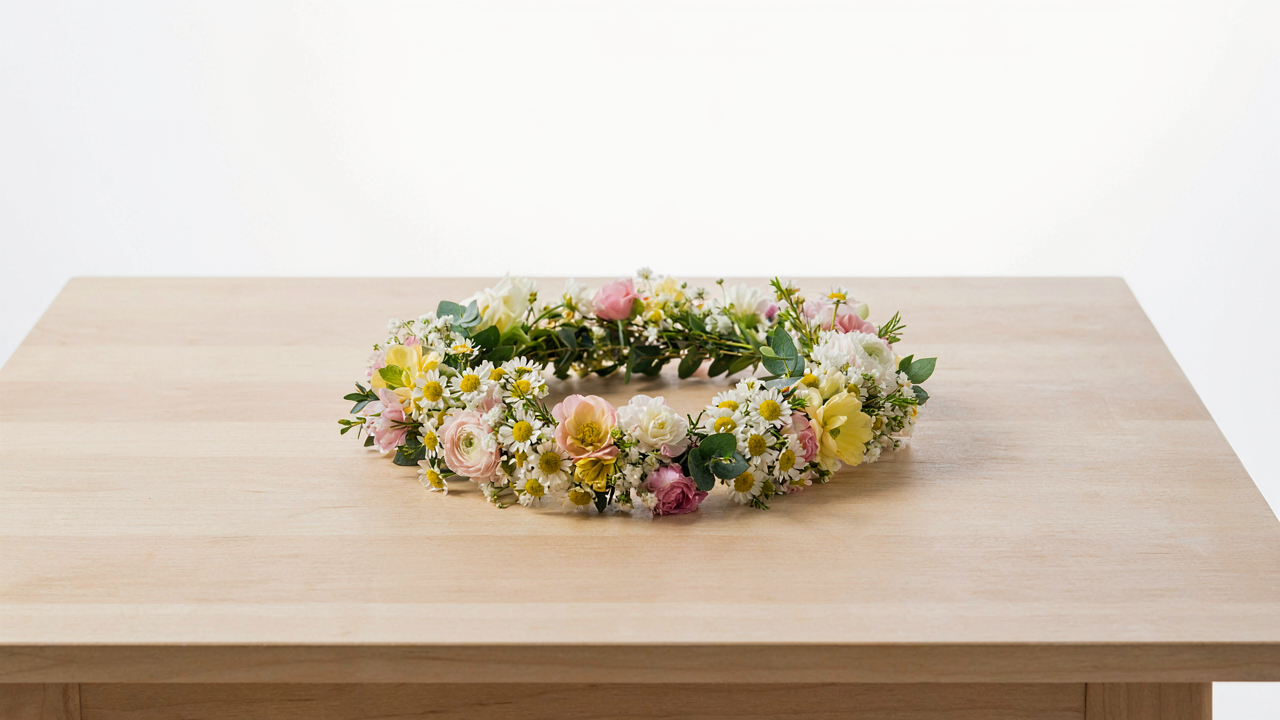
The Illusion Of Fresh: Why Your Flowers Die Prematurely
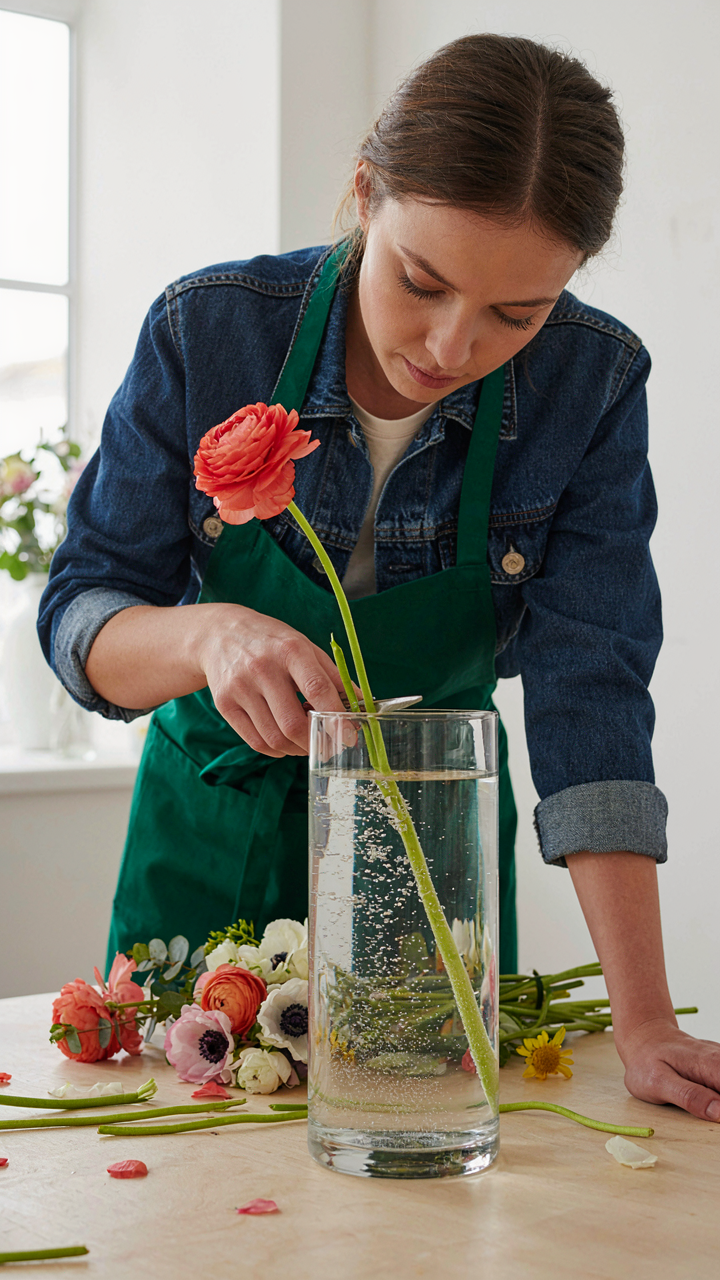
Hydration Is The Only Variable That Matters
You want your crown to last through the event without looking like it spent three days in a car. Here’s what nobody tells you: flower death is a water uptake problem, not a mystery. Florists borrow from plant biology the concept of vascular resistance—the force that prevents water from traveling up the stem. Crush that resistance early, and your flowers actually drink instead of wilt.
Cut stems at a 45-degree angle under running water immediately before arranging. This single action removes the air bubble trapped in the stem’s vascular tissue and exposes maximum surface area for water absorption. Most people cut stems on a dry counter an hour before use. That delay creates an air lock. The flower can’t recover from it, no matter what you do next.
The Real Mistakes Nobody Admits To
The common advice is wrong. Floral foam doesn’t keep flowers fresh—it just holds them in place while they slowly dehydrate. The real mistake is treating the crown like a decorative object instead of a life support system. Your flowers need constant water access, not once-and-done soaking.
Strip all foliage below the waterline before arrangement. Leaves underwater rot and introduce bacteria that clog the vascular system, accelerating wilting. Use flower food only if it contains biocide and carbohydrates; plain water does nothing. Check water levels every four hours on event day. Flowers in a crown consume water faster than in a vase because they’re elevated and exposed to air circulation. Lowering water supply is the fastest way to guarantee failure by mid-ceremony.
Beyond The Bridal Flower Crown: The Unspoken Rules Of Wearability

How The Head Actually Carries Load
You’re worried it’ll slip off. That’s the real problem nobody states plainly. The physics of load distribution applies here the same way it applies to backpacks or helmets: the weight must sit centered on the crown of the skull, not forward on the forehead or back on the occipital bone. Most flower crowns fail because they’re built like decorative sculptures instead of wearable structures. The flowers and greenery add up fast, and if the mass concentrates in the wrong zone, gravity wins within an hour.
The mechanism is simple: anchor points must run along the strongest parts of the head’s surface. Use the temporal area (sides above the ears), the crown, and the back of the skull as your primary load-bearing zones. Distribute flower weight evenly across these three points rather than piling blooms on top like a hat. A crown weighing more than four to six ounces becomes noticeable during movement. Test by wearing it for thirty minutes before an event. If you adjust it more than twice, the weight distribution is wrong.
The Securing Method That Won’t Fail
Everyone recommends floral wire and hopes for the best. That’s incomplete. Wire alone doesn’t grip hair consistently, and it slips on fine or textured hair types without something to increase friction. The real solution combines three mechanisms: wire for structure, hair pins for grip, and a backing band for stability. The backing band runs along the inner edge of the crown, sitting flush against the scalp. This band (typically made from flexible wire wrapped in floral tape or thin ribbon) redistributes pressure and prevents the entire crown from shifting when the wearer moves or tilts their head.
Start by building the structural frame from floral wire, then secure it to the backing band at three points: left temple, right temple, and center back. Weave the backing band into the hair using bobby pins spaced one inch apart. Insert pins horizontally into the hair’s base layer, angling slightly upward so they catch the backing band’s edge. This locks the crown in place without depending on a single anchor. Test stability by having the wearer shake their head side to side and bend forward. The crown should move with the scalp, not shift independently.
The Coroa De Flores Deception: Why “More” Is Often “Less”
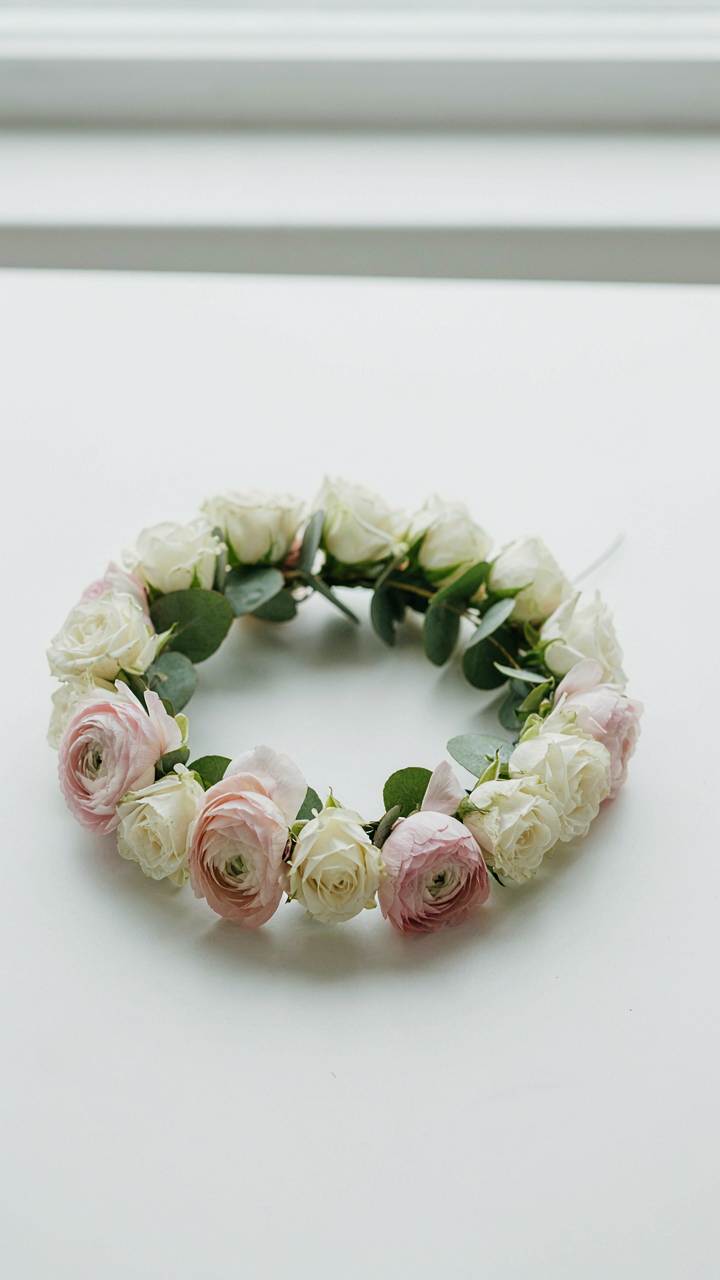
Restraint Over Abundance
You want people to look at your crown and know you have taste. That requires saying no. The design principle from signal processing applies here: noise-to-signal ratio. A flower crown drowning in stems and blooms becomes visual noise. Your eye doesn’t know where to land. The mechanism is simple: constraint forces hierarchy. When you limit your palette to three to five flower types and a single foliage base, each element demands attention instead of competing for it.
Most crowns fail because makers believe density equals impressiveness. It doesn’t. A crown with twelve flower varieties, six filler types, and three ribbon colors reads as chaotic, not luxurious. The restraint model works because it forces intentional selection. You choose roses because they anchor the piece, not because they’re available. You add baby’s breath because it serves structure, not because filling gaps feels productive. Every stem earns its place.
Composition Before Addition
Visual weight matters. Start with your base foliage, then add one feature flower, then one secondary, then one accent. Stop. The second instinct to keep adding is where most crowns die. Work backward from what you remove, not forward from what you add. After the primary structure holds, add filler only where negative space creates visual weakness, not everywhere negative space exists.
This method prevents the common trap of layering incrementally until the crown becomes heavy and formless. Test with the minimum first. Photograph it. Then decide if an addition actually improves balance or just fills time. One additional element changes the entire composition, so each decision carries weight. Build crowns like you’re working under material constraint, even if you aren’t. The discipline produces better results than unlimited addition ever will.
The “Stunning” Fallacy: How To Design With Intent, Not Just Beauty

Focal Point Hierarchy In Floral Crowns
You want people to notice your crown and remember you wore it. That’s the real motive here. Visual hierarchy borrowed from graphic design applies directly: establish a primary focal point that commands attention first, secondary elements that support it, and tertiary details that fill space without competing. Most crowns fail because they treat every flower as equally important. The viewer’s eye has no path.
Start by choosing one statement flower or cluster. This sits at the front or crown of the head, visible from a distance. Everything else around it diminishes in size, color intensity, or visual weight. If you use garden roses at the focal point, surround them with smaller blooms like waxflower or limonium that recede. The crown becomes readable. Without hierarchy, it reads as visual noise.
Emotion Precedes Beauty
Most advice says “match the color palette to the occasion.” That’s incomplete. The real mechanism is this: people feel the crown before they see it. A pale blush and sage crown signals restraint and thoughtfulness. A bold fuchsia and deep purple crown signals confidence and risk. The emotional transmission happens in milliseconds, which means you design the feeling first, then select flowers that carry that frequency.
Test this by removing all the flowers and describing the crown in one word. Romantic. Bold. Mysterious. Serene. If you can’t name the emotion cleanly, your flower choices contradict each other. Once you lock the feeling, you have a filter for every selection. White spray roses and burgundy carnations together don’t work because they pull toward different emotional territories. Pick flowers that reinforce the same emotional current.
The Engineering Of The Head Wreath: Structural Integrity For Longevity
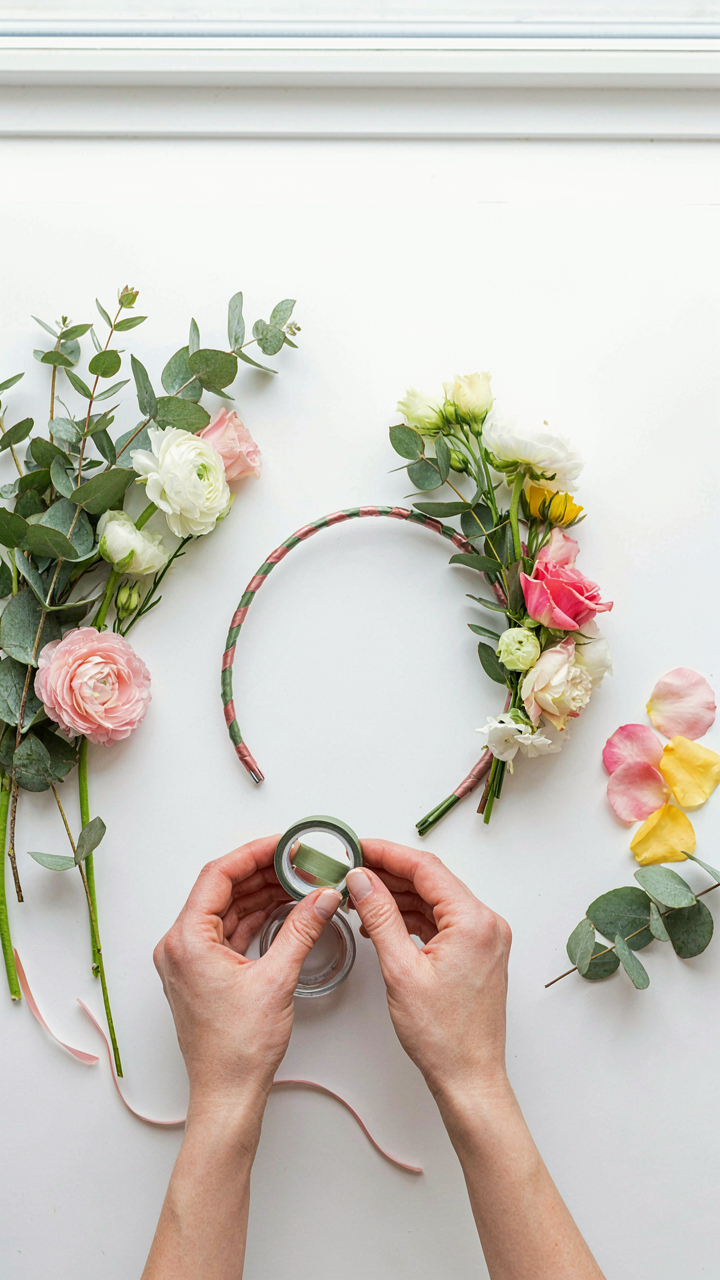
How Nature Builds Without Breaking
You want your crown to last through photos and events without collapsing. That’s not vanity—it’s economics. Biology doesn’t waste energy on structures that fail, so studying how plants support weight teaches you what actually works. A flower crown functions like a tree branch bearing load: the outer rim must distribute stress evenly, the internal matrix absorbs shock, and anchor points prevent collapse when pressure concentrates in one zone. Nature solves this with radial symmetry and graduated density. Your frame needs the same logic.
The base structure you choose determines everything downstream. Floral foam, wire, or moss each handle tension differently, and most people pick based on what’s “traditional” rather than what performs. Use a 1/4-inch gauge wire base for crowns over six inches in diameter—thinner wire buckles under wet flower weight, thicker wire becomes immobile and prone to kinking at connection points. Wrap the wire form with floral tape to reduce moisture absorption and create a tacky surface that holds stems without slipping. This single decision controls whether your crown drops petals at hour three or makes it through eight.
Load Distribution And Material Selection
Material science teaches tensile strength: the maximum force a material handles before breaking. A fresh flower crown’s tensile problem is water weight, not just stem weight. A fully hydrated peony adds three times its dry mass. Most crowns fail not from structural design but from uneven water saturation creating dead zones where petals wilt while others stay crisp. Choose your substrate based on capillary action—floral foam wicks water consistently, moss distributes moisture but dries faster, and bare wire requires manual hydration every ninety minutes. Avoid foam in high-heat outdoor events. It dries at one edge while staying soggy at the other, and that gradient kills flowers.
The frame diameter and circumference determine how many anchor points you need. A crown sized for an adult head spans roughly 18 to 22 inches around. Build your wire base with at least four connection zones spaced equally, then add a secondary internal structure at the center of each zone. This creates redundancy—if one anchor point loosens, the crown doesn’t collapse sideways. Secure stems at two points minimum: once at the base and once three inches up the stem, so weight distributes along multiple planes instead of pivoting from a single insertion point. Test your construction by applying ten pounds of downward pressure with your palm. If it flexes more than half an inch, your support structure is undersized.
The Anti Generic Floral Headpiece Protocol: Unlocking Unique Combinations
Why Most Flower Crowns Look The Same
You want people to notice your crown, not your flowers. That’s the real motive here. Most designers repeat the same pairings because it’s safe, and safety kills distinction. The mechanism is constraint avoidance. People default to what works instead of mapping the actual design space. You need to identify which pairings feel predictable, then systematically dismantle them.
The consensus moves are roses with baby’s breath, peonies with eucalyptus, and sunflowers with filler greenery. These combinations work visually, but they’ve saturated the market. The fix isn’t to reject them entirely. The fix is to understand why they work, then substitute one element strategically. Swap the secondary flower, change the ratio, introduce a contrasting texture. The crown stays cohesive because you altered one variable, not the entire structure.
Deconstructing Predictable Floral Pairings
The real problem with generic pairings is that most florists treat them as finished formulas instead of starting points for variation. You need to break down why a pairing works, then rebuild it with intentional friction.
- Rose and filler combinations: Roses anchor most crowns because of their density and color range. Replace the secondary filler with a textured vine like clematis or jasmine instead of baby’s breath to add structural complexity.
- Peony-dominant builds: Peonies command visual weight, so they pair with airy elements for balance. Swap eucalyptus for silver brunia branches or dusty miller foliage to shift the mood from romantic to architectural.
- Monochromatic approaches: Single-color crowns feel safe but rely on texture variation to survive. Layer different petal structures: dahlias, ranunculus, and spray roses in the same hue create depth through form, not color.
- Greenery as filler: Greenery isn’t filler. It’s structure. Ruscus, salal, and leather leaf are overused because they’re durable. Use Italian ruscus or eucalyptus parvifolia instead to create unexpected line and movement.
- Seasonal default pairings: Spring means tulips and hyacinth, summer means garden roses and lavender. Break the season expectation by sourcing off-season imports or forcing branches that don’t naturally align with the current time.
Predictable pairings exist because florists optimize for availability and longevity, not for design impact. The moment you stop treating these combinations as rules, you see the framework underneath. You can now substitute, invert, or amplify any single element without losing structural integrity.
Introducing Unexpected Elements For Distinction
Contrast works in design because your eye locks onto difference, not similarity. The trick is introducing unexpected elements without breaking coherence. This doesn’t mean random. It means calculated friction.
Add one element that contradicts the crown’s primary mood. If your crown is soft and romantic, introduce a single stem of dried seed pod, exposed branch, or textured berry cluster. The human brain registers this as intentional, not accidental. One unexpected texture reads as a design choice. Three reads as confusion. You’re playing with the psychology of visual recognition, not just floral aesthetics.
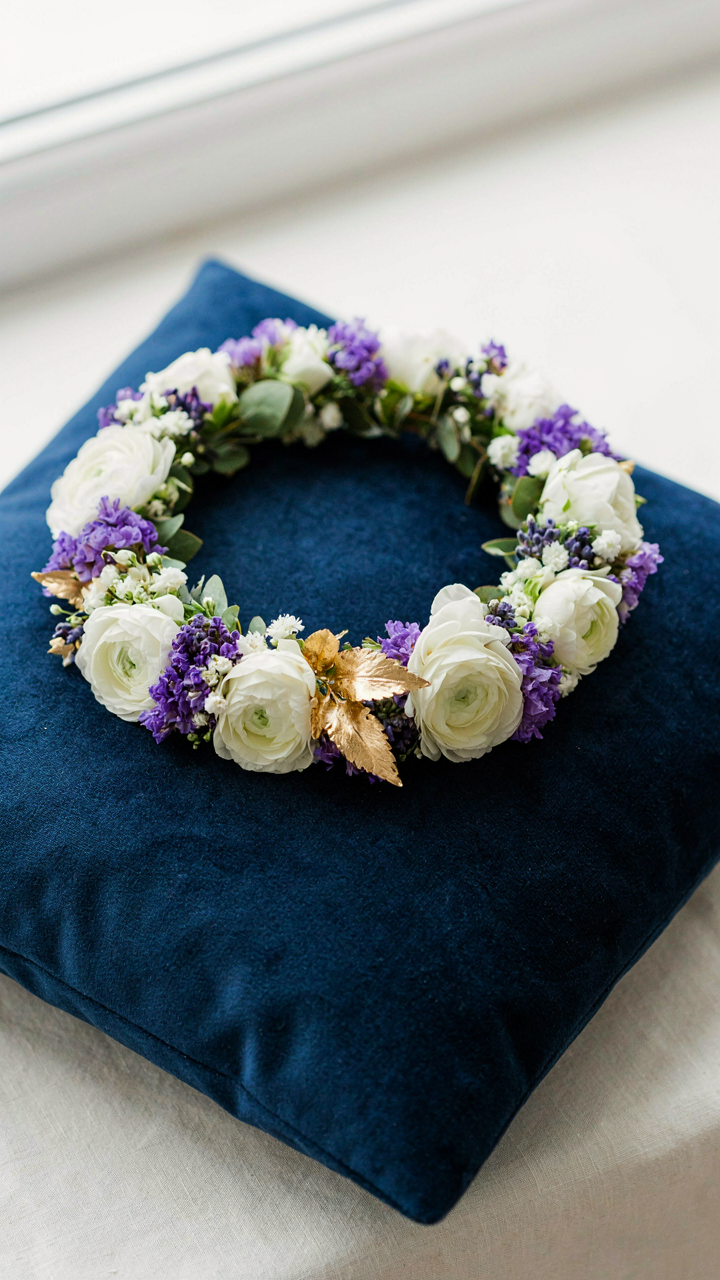
Metallic or industrial accents change how the eye processes the crown entirely. Copper wire wrapping around stems, small gold leaf insertions, or even a single piece of preserved metal foliage shifts the entire piece toward modern luxury. This works because florals alone read as traditional. One non-organic element signals that the creator made an intentional boundary-push. The crown stops being “pretty flowers” and becomes a statement about the wearer’s taste. Build the crown, then add the single contrasting element last so you control exactly where the visual surprise lands.
The “Effortless” Flower Crown Hairstyle: A Myth Debunked
What Looks Simple Actually Isn’t
You want people to think you threw this together in five minutes. That’s the real reason this section matters to you. Here’s the mechanism: flower crowns demand invisible labor. Every petal placement, every wire angle, every stem choice either reads as intentional design or amateur accident. There’s no middle ground. The gap between “looks effortless” and “is effortless” is where all the work lives.
Think of flower crown construction like structural engineering. Load distribution determines whether a crown stays balanced or tilts. Your floral elements carry physical weight. Uneven distribution collapses the design after two hours of wear. You need a foundation that accounts for head shape, hair texture, and the combined mass of hydrangeas versus baby’s breath. Pros build internal architecture first, then hide it.
Compress The Timeline Without Cutting Corners
The common advice says “practice makes perfect” and “prep your flowers the night before.” That’s incomplete. You cut your actual build time by standardizing your base structure, not by rehearsing. Pre-made floral foam bases, consistent wire gauges, and a fixed stem-length protocol eliminate decision fatigue on execution day.
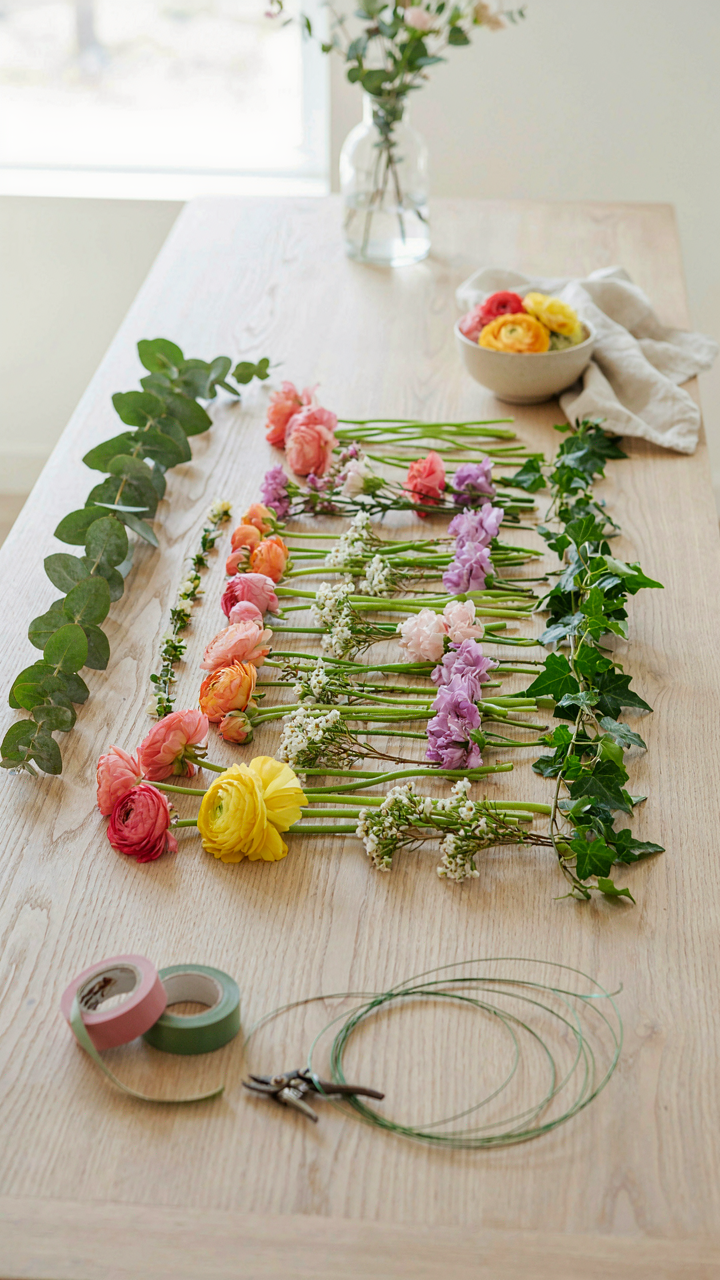
Start with a base that fits the wearer’s head circumference exactly. Measure once. Use that measurement every time. Pre-cut your stems to two specific lengths: support stems at four inches, accent stems at two inches. This protocol removes forty percent of real-time decision making. When you sit down to assemble, you’re executing a formula, not solving geometry problems mid-build.
The Overlooked Foundation: Building A Resilient Flower Crown Base

Wire Gauges And Their Functional Impact
You want your crown to survive the ceremony without collapsing, which is why you’re reading this instead of just grabbing whatever wire is lying around. The mechanism here comes from materials science: tensile strength determines load capacity. A flower crown’s wire functions exactly like a bridge cable—it must support distributed weight across its span without deforming. Thicker gauge numbers actually mean thinner wire, so 20-gauge holds more weight than 26-gauge. Most florists default to 24 or 26-gauge because it bends easily, but that’s a compromise that kills durability.
The real decision isn’t aesthetic. It’s structural. Use 20-gauge wire if you’re stacking multiple flower layers or working with dense blooms like roses and peonies. Drop to 22-gauge for medium-weight arrangements with spray roses and carnations. Reserve 24-26 gauge only for ultra-light work with air-dry flowers and grasses. The wire thickness determines how many times you can re-bend it before it snaps, how well it holds shape under humidity, and whether your crown survives being worn for six hours versus two. Test your wire’s holding power before building the full crown by wrapping it around a weight and seeing how long it stays rigid.
Base Material Variations And Their Trade Offs
Different base materials change the entire work process, and most tutorials skip this because they assume foam is the only option. That assumption costs you flexibility and often results in heavier crowns. Here’s what actually works:
- Floral foam: Holds stems firmly but absorbs water unevenly, becoming heavy when wet. Best for short-term wear under two hours or dry arrangements.
- Wire frame alone: No base material—stems wrap directly around chicken wire or twisted wire. Lightest option, ideal for delicate flowers and movement in air.
- Moss and wire combination: Sphagnum moss packed into a wire frame creates grip without the weight of foam. Better moisture retention than foam for outdoor events.
- Tape and floral adhesive: Stems tape directly to a wire band using waterproof floral tape. Eliminates bulk entirely but requires more structural planning upfront.
- Biodegradable alternatives: Coco coir pressed into shape or molded papier-mâché bases work for eco-conscious builds. Lighter than foam but less forgiving with stem placement.
The base you choose determines how much your crown weighs, how forgiving it is to adjust, and how long it lasts. Foam is fast but heavy. Wire alone is light but demands precision. Moss splits the difference. Pick based on duration and environment first, then build backward into base selection. If the crown sits on someone’s head for eight hours in heat, foam becomes a liability. If it’s a two-hour photoshoot, foam’s speed wins. Map your actual conditions before picking material.
The Wedding Hair Flower Crown: Beyond Pinterest Perfect

Crown Fit Depends On Hair Structure, Not Aesthetics
You want the crown to look effortless in photos. The real problem is that most brides ignore hair density and texture entirely, then wonder why their crown slides or sits wrong during the ceremony. Think of hair architecture like structural engineering: the crown’s weight distribution must match your scalp’s load-bearing capacity, not Pinterest.
Fine hair can’t support the same flower mass as thick hair. A stylist who understands this builds the crown’s internal structure to anchor into your actual hair volume, not around it. They secure the base to sections that won’t shift, using density maps of your scalp. Straight hair requires different grip points than curly hair. The crown sits stable only when the mechanic matches the material.
Tradition Is The Enemy Of Clarity
Everyone defaults to roses, baby’s breath, and greenery because that’s what weddings “should” have. That advice is incomplete. The real constraint isn’t beauty standards, it’s flower longevity and water access. Most fresh crowns wilt within four hours without hydration, which nobody mentions until the bride walks down the aisle with a brown stem showing.
Seasonal flowers that peak in your wedding month last longer than imported varieties shipped cross-country. Gardenias, garden roses, and ranunculus maintain structure better than delicate blooms. Skip florals that bruise easily. Build your crown three hours before the ceremony and use a hydration cap underneath to extend viability. Hydration solves what tradition can’t.
The Durability Dilemma: Crafting Flower Crowns That Endure
Heat And Humidity Kill Your Crown Fast
You want the crown to last through the event without wilting because you’re paying for it and your photos matter. The mechanism is simple: flowers transpire. When ambient temperature rises and humidity drops, water evaporates from petals and stems faster than the plant can replace it. Heat accelerates this process exponentially. A crown worn outdoors in summer dies in hours. Indoors at 68 degrees with 50 percent humidity, it survives longer.
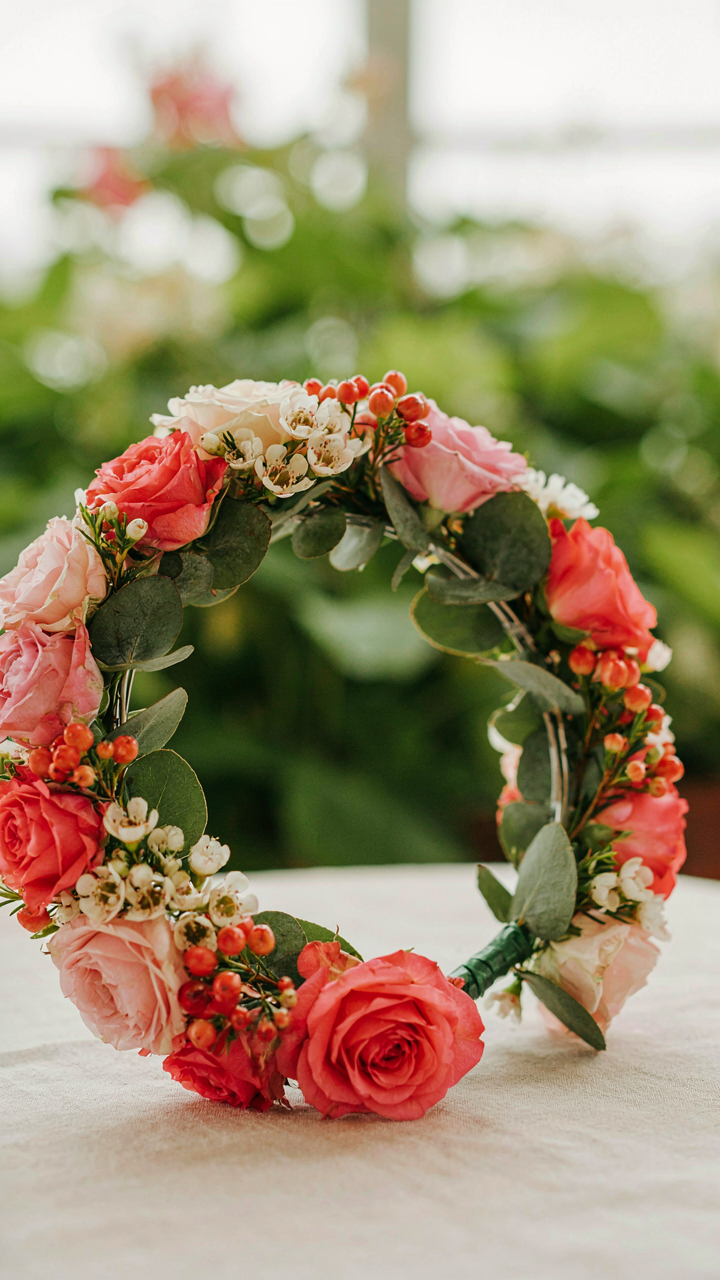
The fix isn’t complicated but it requires planning before assembly. Soak stems in water treated with flower food for at least two hours before building the crown. This pre-hydration buffers the flower against stress. During wear, mist the crown lightly every 60 to 90 minutes if the event permits. If you cannot mist, choose flowers with naturally waxy coatings like roses, carnations, or hypericum berries. These lose water slower than thin-petaled blooms like ranunculus or dahlias.
Floral Tape And Wire Create The Infrastructure
Structural integrity in flower crowns operates on the same principle as load-bearing architecture: distribute weight across multiple points rather than concentrating it. A single thick stem cannot hold multiple blooms without sagging. Multiple thin stems secured together distribute that load. Floral tape alone fails because tape stretches and loosens. Wire holds tension.
Wrap stems in floral tape first, then bind them to a base wire using additional wraps at two-inch intervals. Use 20-gauge or 22-gauge wire for the base loop, never thinner. This creates redundancy. If one tape joint loosens, the wire still holds position. Test the crown by gently pulling each bloom sideways before the wearer puts it on. Any stem that moves freely needs another wire attachment. The crown should feel rigid but lightweight, never wobbly.
The Real Obstacle Isn’t Your Floral Selection, But Your Unwillingness To Commit To Unconventional Design
Most people kill their fresh flower crown ideas the moment they start playing it safe. They grab what’s “pretty” instead of what’s true to their vision. The real work isn’t learning which flowers blend well. It’s abandoning the Instagram template that’s already been done ten thousand times. Pick one unexpected element today, something that makes you slightly uncomfortable, and build around it. Your flower crown won’t stand out because you followed the rules better than everyone else.



