

The Illusion Of Seclusion: Why Most Backyard Privacy Fails

Generic Fences Betray Your Desire For True Peace
You want privacy because neighbors own your sightline, and that kills the sense of control. A standard fence doesn’t solve this. It creates a perimeter that signals “I have something to hide” instead of “I own this space.” The fence itself becomes the problem. You’re boxing yourself in with a structure that draws attention by its mere existence, and the moment someone stands at height or peers through gaps, your entire investment crumbles. What you actually need isn’t a barrier. You need to break the direct line of sight through layering, material choice, and depth. A six-foot wooden fence does neither.
The psychology here is simple: a flat, uniform barrier reads as defensive. Your eye travels across it and registers obstruction. Plant a dense hedge behind that fence, angle some screening, and suddenly the barrier disappears. The viewer’s sightline breaks before they even process that something is blocking them. This is the real mechanism. Fences fail because they announce themselves. Effective privacy hides its own structure. You control what gets seen by controlling what gets interrupted, not by building a wall and hoping nobody looks.
The Sightline Is The Real Enemy, Not The Neighbor
Use military terminology to understand this: your neighbor’s line of sight operates like a direct fire solution. If they can draw a straight visual vector from their window or deck to your patio, you’re compromised. Most people address privacy by blocking that line at the fence. Wrong. The fence is five feet from the property line. Your patio is fifty feet back. The real work happens in the middle, in the depth of your yard. Layering interrupts the vector before it travels that full distance. Every layer breaks the line further, making it harder for the human eye to track a continuous view into your space.
Understand that eyesight requires clear depth perception across distance. Break that distance into zones with different heights, densities, and textures, and the sightline collapses. Plant a screen layer at the property line, a mid-height element fifteen feet in, and a dense border at your functional space. The viewer’s eye stops registering your activities by layer three. This isn’t theory. It’s how urban planners prevent sight lines into sensitive areas. Apply the same principle: interrupt the vector with depth, not just height.
The Inverse Privacy Protocol: Engineering Unseen Retreats

Plants That Block Without Looking Like Walls
You want privacy without announcing to the street that you’re hiding something. That’s the real motive here. Strategic planting works like military camouflage in warfare: you don’t create an obvious perimeter. Instead, you layer sight lines so the eye never lands on what matters.
Dense shrubs and trees placed at sight-line height (typically 5 to 6 feet) interrupt sightlines before they reach your usable space. The mechanism is simple: break the unobstructed path between the observer’s eye and your patio. Stagger plants at different depths rather than planting in a single line. This depth creates the illusion of a thicker barrier with less material. Evergreens like boxwood, privet, and arborvitae hold foliage year-round and demand fewer cuts than deciduous plants. Bamboo clumping varieties grow dense fast, but they require root barriers to prevent spread into neighbors’ yards.
The common advice is to plant a hedge and wait. That wastes five years. Start with structural elements—fencing or trellises—then layer plants on top. This collapses the timeline and gives you control over the final density. Placement matters more than species. A single row of tall trees creates a vulnerable line; place shrubs 3 to 4 feet in front of trees to create overlapping coverage that stops sight lines at multiple depths.
Slopes And Grade Changes Create Natural Barriers
Topography is your free labor source. Most backyards have unusable grade changes that nobody thinks to weaponize for privacy. Raising your patio or garden bed just 2 to 3 feet above grade lowers sightlines from standing observers dramatically. A berm, or mounded earth, positioned at the property line creates a physical ridge that forces sight lines over the top rather than through the space.
Grade changes compound with planting. A 2-foot berm with plants on top gives you 7 to 8 feet of effective visual obstruction instead of 4 to 5. Dig out a sunken patio or seating area by 18 to 24 inches if your drainage allows it. This positions your head below grade, using the earth itself as a sound and sight barrier. Excavated soil becomes your berm. Cost is materials only—no fill to buy. The mechanics are direct: lower your position or raise the obstacle between you and the observer.
Secret Garden Fence Ideas: Beyond The Basic Barrier
Living Walls That Actually Work
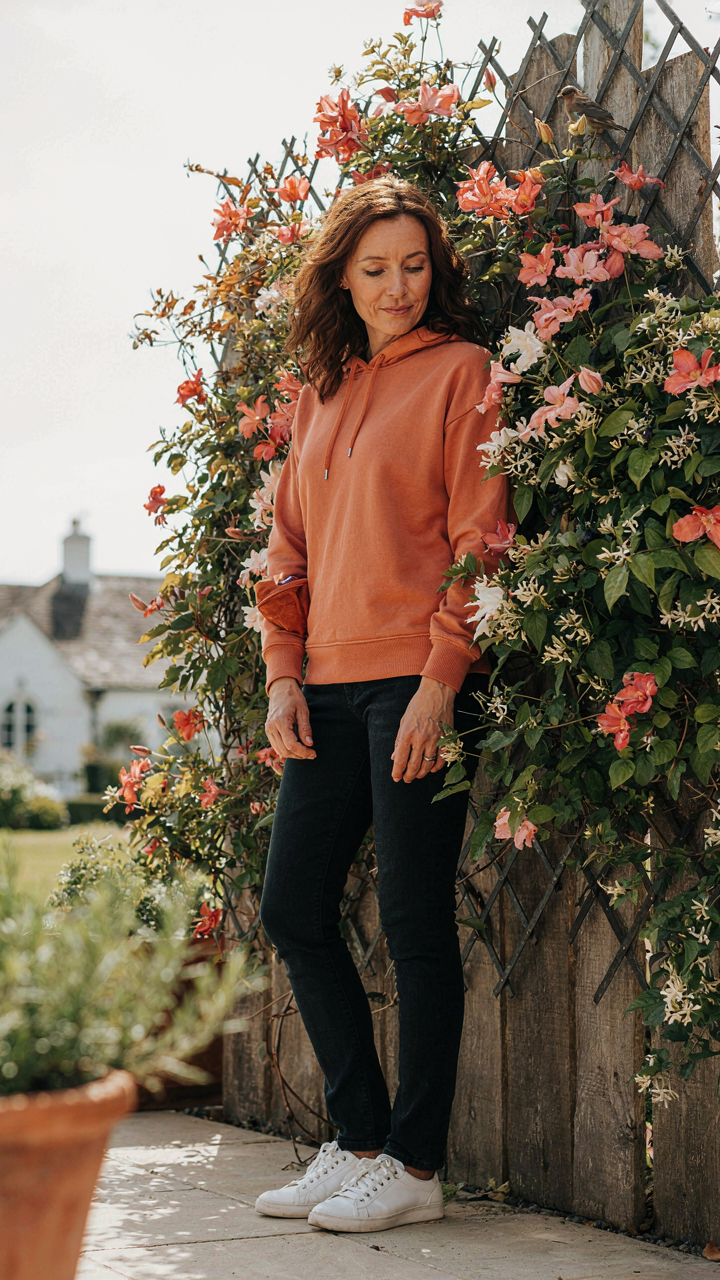
You want people to think you’re the type of person with a secret garden. That’s the real reason you’re reading this. The mechanism is simple: layered vegetation creates depth and obscures sight lines faster than any solid material. Biology borrowed from vertical farming shows us that stacked plants block light penetration at exponential rates, not linear ones. A single hedge blocks maybe forty percent of a neighbor’s view. Three staggered layers of different heights block eighty-five percent.
Living walls demand structure, not magic. You need a frame that supports weight after rain and wind. Clematis, jasmine, and climbing hydrangea take two to three years to fully establish and create the dense coverage you’re after. They’re not instant. During establishment, use temporary screening or accept temporary exposure. The payoff is motion, texture, and seasonal change your fence never delivers. Plant climbing varieties on both sides of a trellis structure to double the coverage speed without doubling the footprint.
Material Combinations That Earn Their Keep
Mixing materials works because each compensates for what the other lacks. Wood weathers and rots. Stone doesn’t breathe. Metal rusts without proper finish. Combining them creates a system: wood provides warmth and texture, metal offers durability and clean lines, stone anchors the structure and masks deterioration. This isn’t aesthetic hand-wringing. It’s structural redundancy applied to privacy.
- Metal and Wood: Horizontal steel beams frame vertical wood slats. Steel handles wind load while wood provides visual softness. Typical configuration is one inch steel posts every six feet with wood screening between.
- Stone and Climbing Plants: Stacked stone or brick creates a base that won’t rot while plants grow upward. Plants hide mortar joints and weathering. Start planting at ground level to maximize coverage speed.
- Composite Decking and Metal Mesh: Composite boards resist rot and require no staining. Metal mesh underneath supports climbing vines without additional trellis. Reduces installation steps and maintenance cycles.
- Concrete and Horizontal Slats: Concrete footings hold slats at angles. The variation disrupts sightlines better than uniform vertical barriers. Angled slats cost no more to install but provide superior privacy performance.
- Recycled Materials and Lattice: Salvaged barn wood or reclaimed brick combined with industrial lattice creates texture without high cost. Mixed aging patterns obscure the actual fence line from a distance.
Install material combinations with graded heights. Start low near viewing angles from neighboring properties and grade upward in the middle section. This concentrates blocking power where neighbors’ sight lines actually land. Most people install uniform heights because it’s easy to calculate. That’s why it fails.
Creating Privacy With Plants: The Organic Shield

Fast Growing Evergreens For Immediate Impact
You want privacy now, not in five years. Most advice tells you to plant and wait. That’s incomplete. The mechanism is simple: fast-growing evergreens compress the timeline between planting and function. They gain height and density in two to three years instead of a decade. Arborvitae, Leyland cypress, and Italian cypress deliver this speed because they maintain vertical growth year-round without dormancy cycles.
The trade-off is root aggression and maintenance. Fast growers demand consistent water during establishment and need pruning to stay shaped. They also have shorter lifespans than slow-growing alternatives, meaning you’ll replace them eventually. Plant them in spring or early fall when soil moisture stays stable. Space them according to mature width, not current size, or you’ll prune constantly. The goal is a functioning screen within 24 months, not a landscape investment that pays dividends in decade two.
Layering Diverse Foliage For Year Round Density
Ecology principles apply here: monoculture fails, diversity persists. A single plant species creates gaps when disease or pest pressure hits. Layering means staggering plants by mature height, growth rate, and seasonal behavior. Front layer uses compact shrubs. Middle layer adds medium conifers. Back layer anchors with tall evergreens. Each layer fills the visual gaps the others create.
Dense year-round privacy requires mixing deciduous and evergreen plants strategically. Deciduous plants shed in winter, exposing sight lines unless evergreens back them. Plant evergreens where winter exposure matters most. Use deciduous species where summer density is the priority. Water needs differ across species, so group by moisture requirements to avoid waste and root competition. Check mature sizes before purchasing to avoid overcrowding that kills plants or forces aggressive pruning that thins your screen.
Garden Privacy Screens Ideas: The Architectural Interruption
Custom Screens That Complement Modern Aesthetics
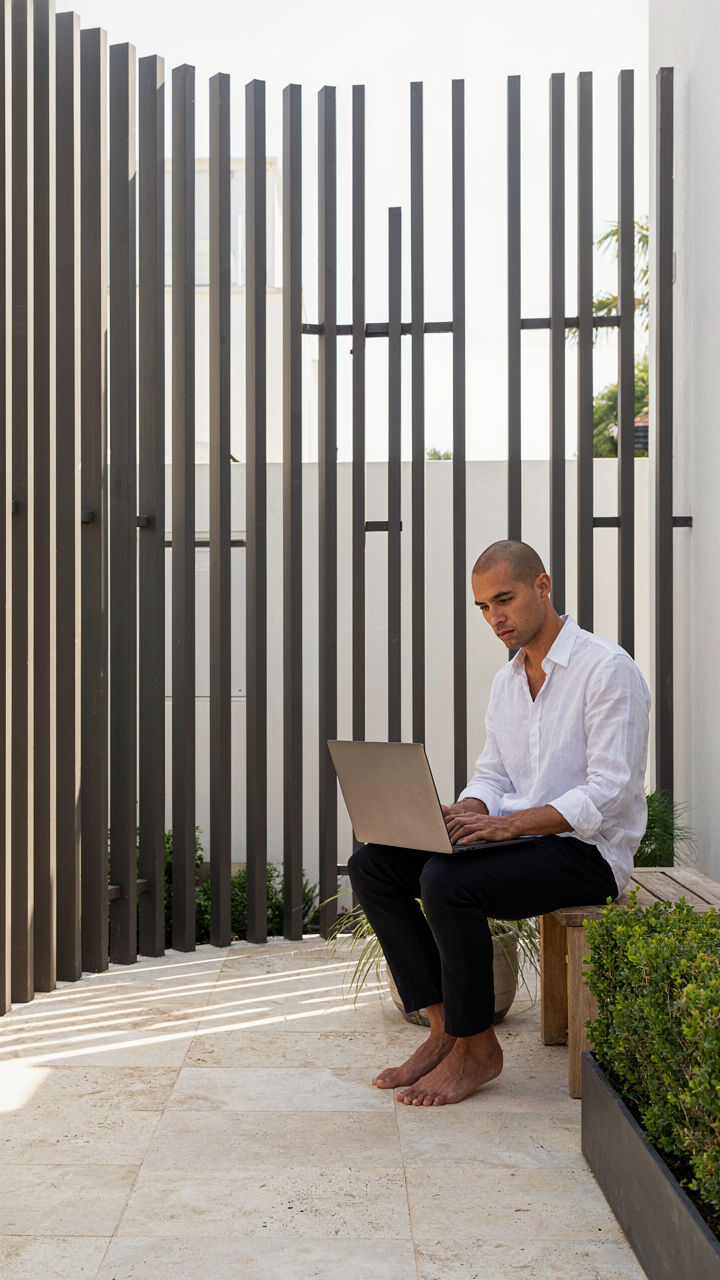
You want privacy that signals you have taste. That’s the real driver here. Most people think privacy screens are defensive objects—obstacles you hide behind. Wrong. A screen is an architectural statement that either reinforces or destroys your home’s visual language. Think of it like signal amplification in communications: the screen either broadcasts your design intention or broadcasts confusion.
Modern aesthetics demand clean lines, material honesty, and purposeful geometry. Steel and wood screens work because they reference industrial and craft traditions simultaneously. Aluminum slat systems, concrete panels, and composite materials suit contemporary homes because they don’t pretend to be ornamental. The screen solves a functional problem while becoming part of the facade. Your screen should look like you chose it, not like you needed to hide something.
Modular Panels For Adaptable Privacy Solutions
The advice that modular systems are “flexible” misses the actual mechanism. Modularity works because it lets you iterate without waste. You install, assess, adjust, then optimize. This is how you actually solve for privacy gaps most people miss.
Modular panels come in prefabricated sections that stack, slide, or pivot. You can reconfigure them seasonally or when your neighbor’s addition suddenly blocks your sightline. Composite panels, metal grilles, and slatted wood systems all ship in standard dimensions. This means lower installation costs and faster deployment. Start with one or two sections to test sight lines and sun exposure patterns before committing to a full run. Measure twice, install once.
Backyard Privacy Ideas: Reclaiming Your Outdoor Domain

Outdoor Rooms With Clear Purpose
You want privacy because you’re tired of performing for neighbors. The real mechanism is intentional zoning: dividing your yard into functional spaces, each with boundaries that serve a specific activity rather than just blocking sight lines. This is urban planning applied to your property.
Start by mapping actual use patterns. Where do you sit? Where do guests gather? Which areas face direct neighbor exposure? Each zone needs a perimeter treatment matched to its function, not a uniform fence around everything. A dining area needs privacy from the sides and behind; a reading nook needs it from above and one angle; a play zone needs containment without claustrophobia.
The mistake most people make is treating privacy as a monolithic problem. It’s not. A pergola overhead with climbing vines works for a seating area but fails for sightline blocking at ground level. Hedges create natural zones but take years to mature. Slatted screens provide partial privacy while maintaining airflow, which matters psychologically more than total concealment. Position each element based on the specific vantage point you’re blocking, not on aesthetic symmetry.
Install your zones in order of neighbor proximity and sight angle, not all at once. Start with the sightline that bothers you most, solve it, then move to the next. This prevents overbuilding and wastes less material on privacy you don’t actually need.
Water Features And Active Soundscaping
Noise bleeds through visual barriers because your brain processes acoustic information separately from sight. This is psychoacoustics applied to landscaping: the principle that perceived volume drops when you introduce competing sound at a similar frequency.
Water features work not by masking sound but by replacing the noise your brain focuses on. A fountain fifteen feet away won’t silence a neighbor’s lawnmower, but it shifts your auditory attention. The mechanism is called auditory masking. Moving water produces broadband noise across frequencies that human ears find either neutral or pleasant, unlike the sharp consonants of traffic or voices. Volume matters: a quiet trickle does almost nothing; a substantial cascade or recirculating stream at least forty gallons per minute creates enough acoustic presence to occupy attention.
Position water features between your seating area and the noise source, not randomly. The physical placement determines whether masking actually works. Combine this with dense planting at ear level around your sitting zones. Wind through dense vegetation adds rustling that further masks intrusive noise. Bamboo, ornamental grasses, and dense shrubs all produce this effect naturally. The combination of water movement plus vegetation noise creates a compound effect stronger than either alone.
Test the masking effect before committing. Run a fountain or hose for an hour while sitting in your intended zone during peak noise times. If you still notice the intrusion, add more water volume or reposition the feature closer to your ear level. Measurement comes first; installation comes second.
Privacy Fence Designs: The Unconventional Boundary
Gabion Walls As Permeable Barriers
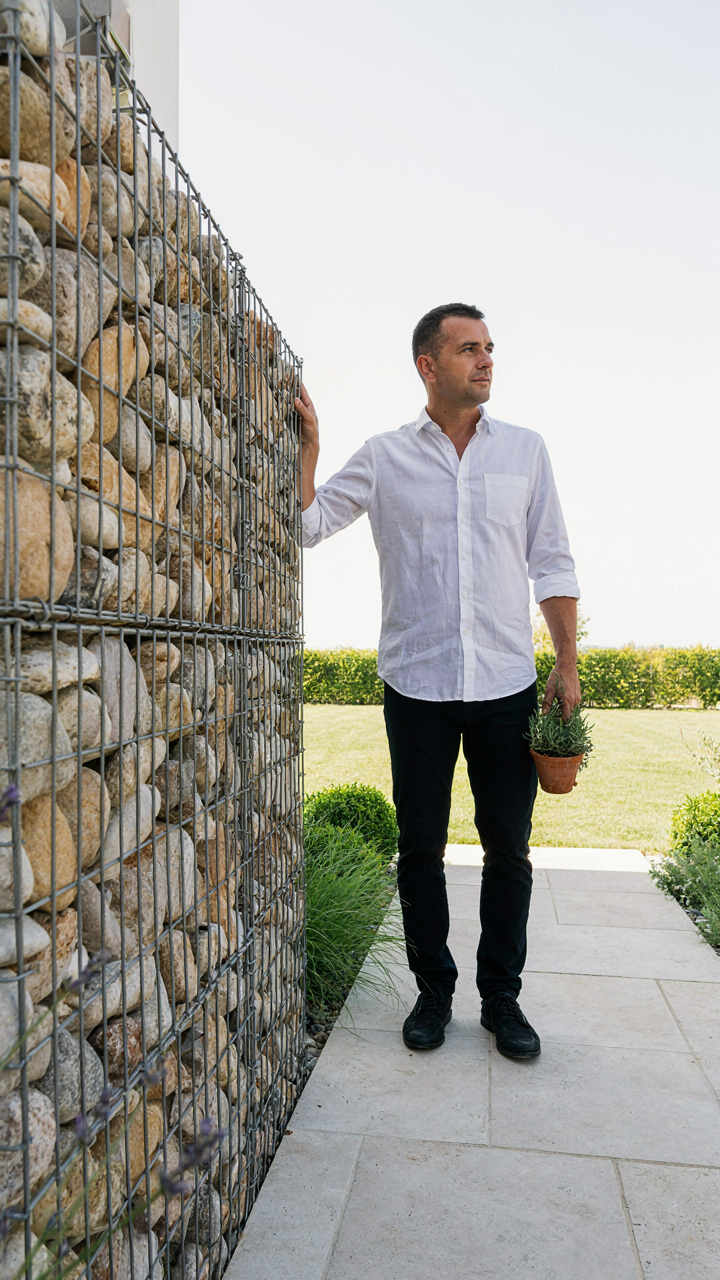
You want a fence that looks intentional, not defensive. That’s the real ask. Gabion walls work because they borrow from civil engineering’s concept of permeability—the ability of a material to allow controlled flow while maintaining structural integrity. Stacked wire baskets filled with stone, gravel, or reclaimed brick create visual blockage without trapping wind or creating a bunker effect. They age naturally instead of requiring maintenance cycles.
The mechanism is simple: gabion walls stop sight lines at ground level while allowing air circulation and water drainage. You stack rectangular wire cages, fill them with material that complements your landscape’s existing palette, and the weight does the work. No post-setting, no rot vulnerabilities like wood. The wire rusts to a weathered finish that reads as intentional design rather than neglect. Install them on a compacted base to prevent settling, and they outlast conventional fencing by decades.
Perforated Metal And Laser Cut Patterns
Most people think metal fencing looks industrial and cold. That’s incomplete analysis. Perforated and laser-cut metal panels control light penetration the way window screens do—they filter rather than block. This creates shadow patterns that shift throughout the day, giving the privacy fence a dynamic quality that solid barriers can’t match. The effect is visual depth, not visual suppression.
Aluminum or powder-coated steel panels with geometric cuts offer the practical advantage of zero maintenance compared to wood or stone. Install them as infill between sturdy posts spaced to handle wind load without deflection. The cut patterns break up sightlines while maintaining an open aesthetic that doesn’t shrink perceived yard space. Mounting hardware should remain visible and uniform—hiding fasteners looks like you’re embarrassed about the construction method. Embrace it.
Screening Ideas Outdoor: Thinking Vertically

Trellises And Pergolas For Overhead Privacy
You want privacy without looking like you’re hiding. That’s the real tension. Here’s the mechanism: overhead structures block sightlines from above while letting light through, so you get concealment without the bunker feeling. Trellises work through negative space. Climbers fill gaps over time, but the frame itself breaks up direct sight angles. Pergolas do the same thing with solid beams. Neither blocks 100 percent of view, and that’s intentional. Total opacity reads as defensive.
The common advice skips the load-bearing reality. A trellis attached to a fence works fine for vines. A pergola attached to your house needs structural anchoring into rim joists or ledger boards, not surface mounting. Spacing matters too. Beams spaced 12 to 18 inches apart create dappled shadow and sight obstruction without trapping heat underneath. Install trellises with 6 inches clearance from fence surfaces to let air move behind climbing plants and prevent moisture rot in the wood.
Sun Shade Net Integration For Adaptable Coverage
Landscape architects borrowed a concept from agriculture: the shade cloth approach treats overhead coverage like a variable system, not a permanent fixture. You adjust density and deployment based on season and use. Sun shade nets come in densities ranging from 30 percent to 90 percent light blocking. Most garden applications land at 50 to 70 percent. This lets you scale privacy up or down without rebuilding structure.
Installation changes the outcome. Stapling nets directly to wood degrades both materials. Run them on cables or ropes strung between posts instead. Secure cables to eye bolts, tension them properly so nets don’t sag, and leave nets removable for cleaning and seasonal adjustment. A 30 by 15 foot net costs between 40 to 80 dollars depending on density. Shade nets last three to five years outdoors before UV degradation requires replacement. Attach overhead nets before climbing plants establish, or you’ll have to manage two systems fighting for space.
Deck Privacy Wall Ideas Diy: Engineered Solitude

The Perimeter Defense Model
You want privacy because you’re tired of performing for an audience that doesn’t pay rent. The mechanism comes from military strategy: defensive perimeters work by establishing a hard boundary that stops intrusion before it starts. Your deck privacy wall operates the same way. You’re not creating beauty first—you’re creating a line. Everything follows from that line’s placement and material density. A poorly positioned wall wastes money and still feels exposed. The right position kills sightlines completely.
Start by mapping what you actually need to block. Walk your deck at different times and identify where neighbors’ windows, rooflines, and foot traffic create exposure. Mark those angles. Your wall thickness and height must account for these specific vectors of intrusion. Eight feet of solid cedar stops more than eight feet of lattice with vines. Material choice determines effectiveness, not effort.
Focal Point Disruption
Physics teaches that the eye travels to contrast and discontinuity. Apply this principle directly: a privacy wall works best when it interrupts the neighbor’s natural sightline before their gaze lands on your space. This isn’t about blocking everything—it’s about redirecting visual flow. Most DIY approaches fail because they treat the wall as a barrier instead of a deflection tool.
Stagger wall heights and materials to break up the plane. A six-foot section followed by an eight-foot section with a material shift creates cognitive interruption. The eye stops processing the sequence as “one barrier” and instead reads fragmented sections. This makes the wall feel intentional rather than defensive. Install the base layer first, then add upper sections only where sightlines require them, eliminating wasted structure.
Lighting As A Privacy Tool: The Nighttime Cloak

Uplighting Foliage To Create Perceived Barriers
You want this section because you’re tired of neighbors seeing into your space after dark, and you suspect lighting could work but don’t know the mechanism. Here it is: uplighting uses directional intensity to manipulate depth perception. In landscape architecture, this borrows from figure-ground theory in visual perception. The ground is what recedes; the figure is what advances. Uplighting reverses this. When you place lights below foliage and angle them upward, the illuminated leaves become the figure, and the space behind them becomes perceptually blocked. The neighbor’s eye stops at the bright plane instead of penetrating through it.
The install is straightforward: place low-voltage lights at ground level, angled up into dense shrubs or trees. Aim for 20 to 30 degree angles, not straight up. The goal is to create a glowing wall, not a lit tree. Use warm color temperatures, between 2700K and 3000K, to avoid the harsh interrogation-room effect. Mount these lights on the property line or just inside your fence line. Spacing depends on foliage density, but every 4 to 6 feet along a hedge works for most residential setups.
Strategic Glare To Deter Unwanted Observation
The common advice here is useless: people say “add more light” without understanding that undirected light creates the opposite effect. Glare works because it breaks sightlines through contrast and discomfort. A bright focal point in the line of sight forces the observer’s pupil to contract, which narrows peripheral vision and destroys the ability to see detail in shadowed areas beyond the glare. This is physics, applied deliberately.
Position uplights or spotlights to aim slightly upward and toward the neighbor’s most likely vantage point, but not directly into their property. The glare should sit at the edge of their natural viewing angle. A 500 to 1000 lumen fixture is enough; you’re not trying to blind them, just make casual observation uncomfortable. Place these along fence lines or behind translucent screening. Turn them on at dusk. The neighbor stops looking not because they can’t, but because the effort isn’t worth it.
Your True Obstacle Isn’t Prying Eyes; It’s Your Failure To Define Your Own Sanctuary

Most people obsess over which fence to buy before asking what they actually want their yard to feel like. That’s backwards. The privacy solution you choose only works if it matches your vision first. Today, spend 15 minutes writing down three words describing your ideal outdoor space. Then pick one backyard privacy idea that aligns with those words, not with what your neighbor did. Your yard won’t transform because you added a trellis. It transforms because you stopped treating privacy as a problem and started treating it as permission.



