
The Illusion Of Idyllic Seating: Beyond The Instagram Filter

Where Benches Actually Fail
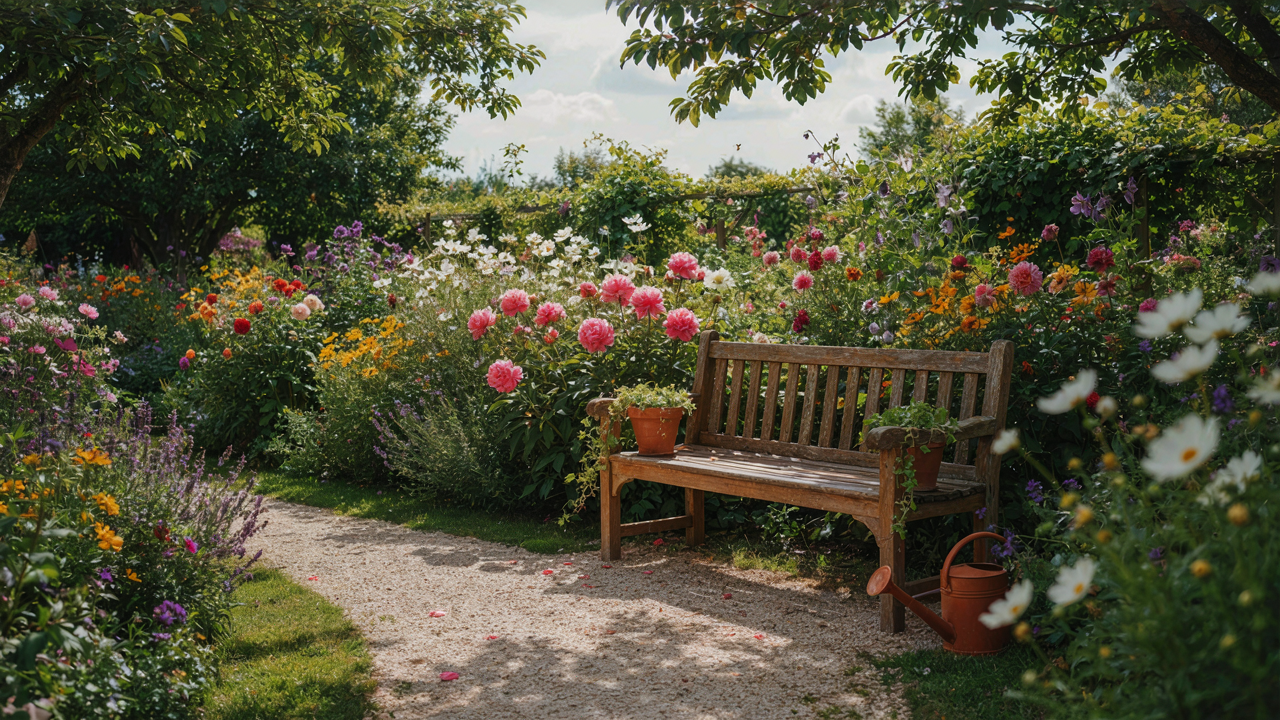
You want a bench because you’ve seen one in a garden photo and it looked peaceful. That’s not a reason to buy one. Most cottage garden benches sit unused because they’re either positioned where no one naturally walks or built from materials that require constant maintenance in wet climates. The real failure isn’t aesthetic. It’s placement and material choice working against actual human behavior.
Borrowing from surveillance theory, a bench is a fixed observation point. Its value depends entirely on sightlines and traffic patterns, not on how it photographs. Position matters more than style. A bench placed at a garden’s perimeter where you never walk becomes dead weight. One positioned where you naturally pause to assess the garden’s condition becomes functional infrastructure.
Benches As Garden Management Tools
Most advice tells you to put a bench where it “feels right” or “catches afternoon light.” This is incomplete. Strategic placement means positioning your bench where you can monitor plant health, pest pressure, and seasonal changes without moving. In horticulture, observation is preventive. You spot problems early by sitting regularly in the same spot with clear views of vulnerable plants and problem areas.
Your bench becomes a decision point, not a decoration. Sit there weekly. Track what needs attention. Notice which areas dry first, where pests congregate, which plants struggle in certain seasons. This turns seating into garden data collection. Place your bench where it overlooks the zones requiring the most management, and it shifts from yard furniture to a tactical asset.
The Function First Protocol: Strategic Placement For Garden Benches Ideas Landscaping
Where Light Intersects With Comfort
You want your bench to look good in photos, but the real reason you care about placement is that a bench in the wrong spot gets used zero times. This isn’t aesthetic—it’s physics applied to garden design. Sun path analysis is the mechanism: the sun moves predictably across your garden based on latitude, season, and time of day. Your bench’s microclimate depends entirely on where that path intersects with your garden’s geometry.
Most people place benches wherever there’s visual balance or a “nice view.” Wrong move. Map your garden’s actual sun exposure over a full day. Morning light in a cottage garden typically comes from the east. Afternoon heat peaks from the southwest. A bench facing north gets shade but also gets wind tunneling. Calculate where you’ll actually sit and what season matters most—spring lounging differs from summer heat avoidance. Position the bench so it intercepts sun when you want it and receives natural shade from surrounding plants, walls, or structures when you don’t. This determines whether the spot functions as a retreat or remains ornamental furniture.
Movement As Architecture
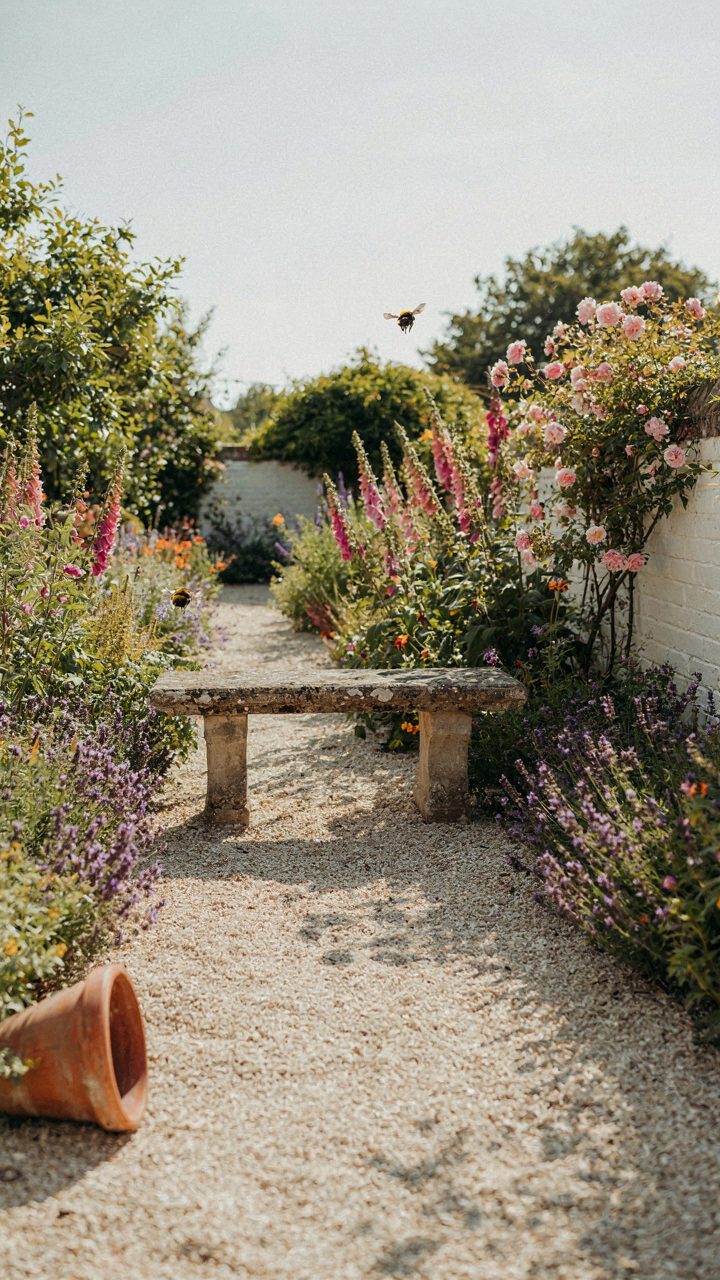
Flow dynamics is the military term: soldiers move along predictable routes based on terrain. Your garden bench occupies the same principle—it either sits on a natural pathway or it doesn’t. When people move through a garden, they follow the path of least resistance. They trace sight lines, follow hardscaping, and avoid backtracking. A well-placed bench sits at a convergence point where movement naturally pauses, not at a dead-end where it feels forced.
The common mistake is treating benches as decor endpoints. They’re not. A bench at the intersection of two paths invites sitting because the person is already stopping there. A bench hidden in a corner requires intentional detour—most won’t make it. Position your bench where the garden’s movement naturally resolves: at the end of a primary path, where secondary paths meet, or at a viewing point where the garden’s layout becomes visible. This transforms the bench from furniture into functional architecture that your garden actually uses.
Material Deception: Why Weathered Wood Isn’t Always Wise For Wooden Garden Benches

Durability Over Aesthetics Wins Every Time
You want the weathered look because it signals you’re not trying too hard. That’s the real pull. Here’s the mechanism: weathered wood appears soft and aged, but softness means faster decay. Hardwoods like teak or cedar resist rot longer than pine or oak left untreated. The visual charm fades within two seasons anyway. Your bench then looks neglected rather than intentional. Choose species and finish for lifespan first, then worry about appearance.
Aesthetic decay and structural decay are not the same thing. A bench can look intentionally aged while remaining structurally sound for years. This requires selecting wood species with natural rot resistance and applying a clear or semi-transparent finish that lets the grain show while protecting the fibers. Pressure-treated lumber extends life but changes color over time unpredictably. Start with the wood type, not the finish.
The Hidden Cost Of Rustic Maintenance
Maintenance burden operates like compound interest in reverse. Every season you skip treatment, you lose structural integrity exponentially. A bench sealed properly needs attention every two to three years. An unsealed weathered bench needs intervention within eighteen months or it fails catastrophically. Most beginners underestimate this because they confuse “rustic appearance” with “low maintenance.” They’re opposites. Rustic-looking benches require more frequent intervention to stay safe.
Weathered wood demands regular inspection and repair that most people avoid until the bench collapses. Rot travels through wood silently. By the time you see the damage, the damage runs deep. Treatment costs spike once decay starts. A sealed bench costs less to maintain over a decade than a weathered one left to fail and replaced. Build the maintenance schedule into your material decision upfront, not after you’ve already bought the wood.
The Opportunity Cost Method: Maximizing Small Garden Bench Ideas
Benches As Anchors, Not Decorations
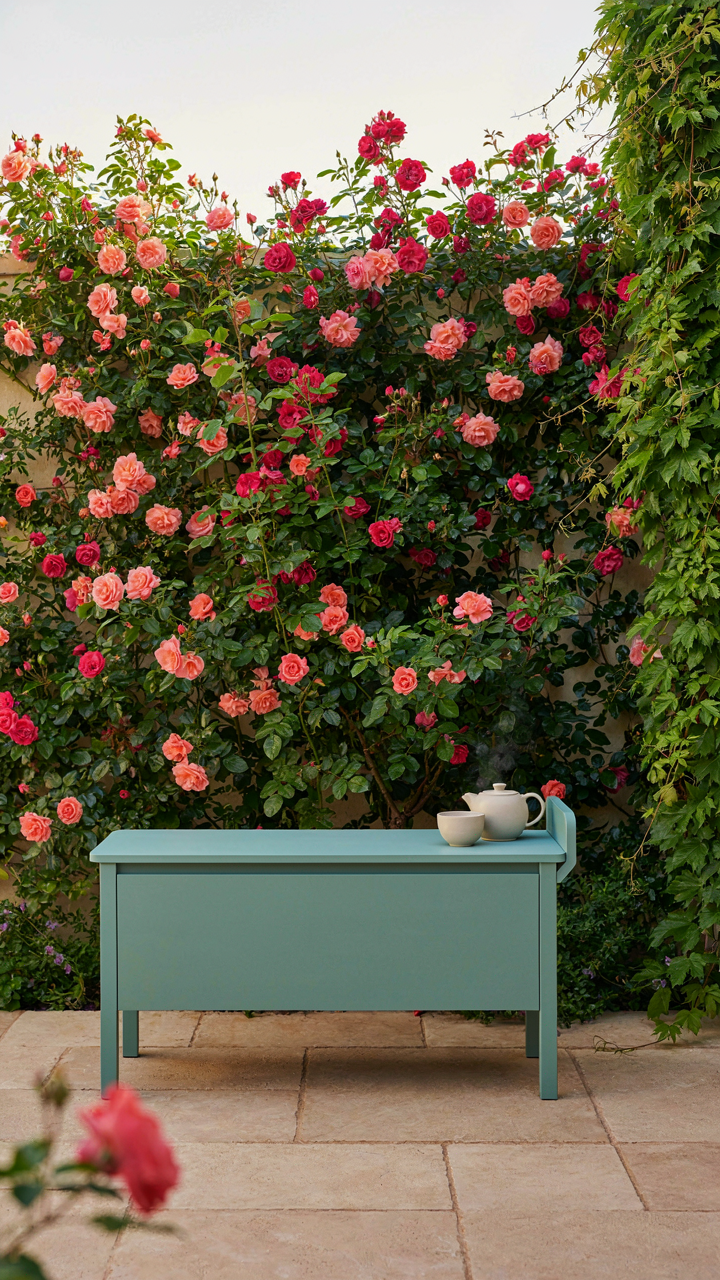
You want your garden to feel intentional, not like you assembled it from a catalog. That’s the real driver here. In economics, anchoring describes how the first number in a negotiation shapes all numbers after it. Your bench works the same way: it anchors the entire spatial hierarchy of your garden. Place it first, not last. Everything else—plantings, pathways, sightlines—organizes around it.
Most people buy a bench after the garden exists, which guarantees it looks tacked on. Instead, identify where you actually sit or want to sit, then build outward. A cottage garden bench positioned at a corner or under a tree becomes the reason the garden has structure, not decoration within it. The garden narrows or widens based on bench placement. Sight lines follow it. Planting depth responds to it. This is how you stop a small space from feeling scattered.
The Bench That Works
Benches that only sit are wasted real estate in a small garden. A storage bench with a hinged seat holds tools, seeds, or cushions underneath. A bench with a built-in planter box on the backrest grows herbs or trailing plants while you sit. A simple wooden bench doubles as a potting surface when you flip a weathered board across the seat. None of this requires custom carpentry or awkward engineering.
The mechanism is simple: every element must earn more than one function. A bench against a garden wall becomes a backdrop for shade-loving plants trained up trellises behind it. A bench in an open area becomes a windbreak for tender seedlings on the leeward side. A bench with a wide, flat armrest becomes a side table for tea or a staging surface for repotting. Start with what your garden actually needs to do, then design the bench to serve it. Do not let “it’s just a place to sit” be your starting point.
The English Cottage Garden Paradox: Authenticity Without Artifice
When History Became Instagram
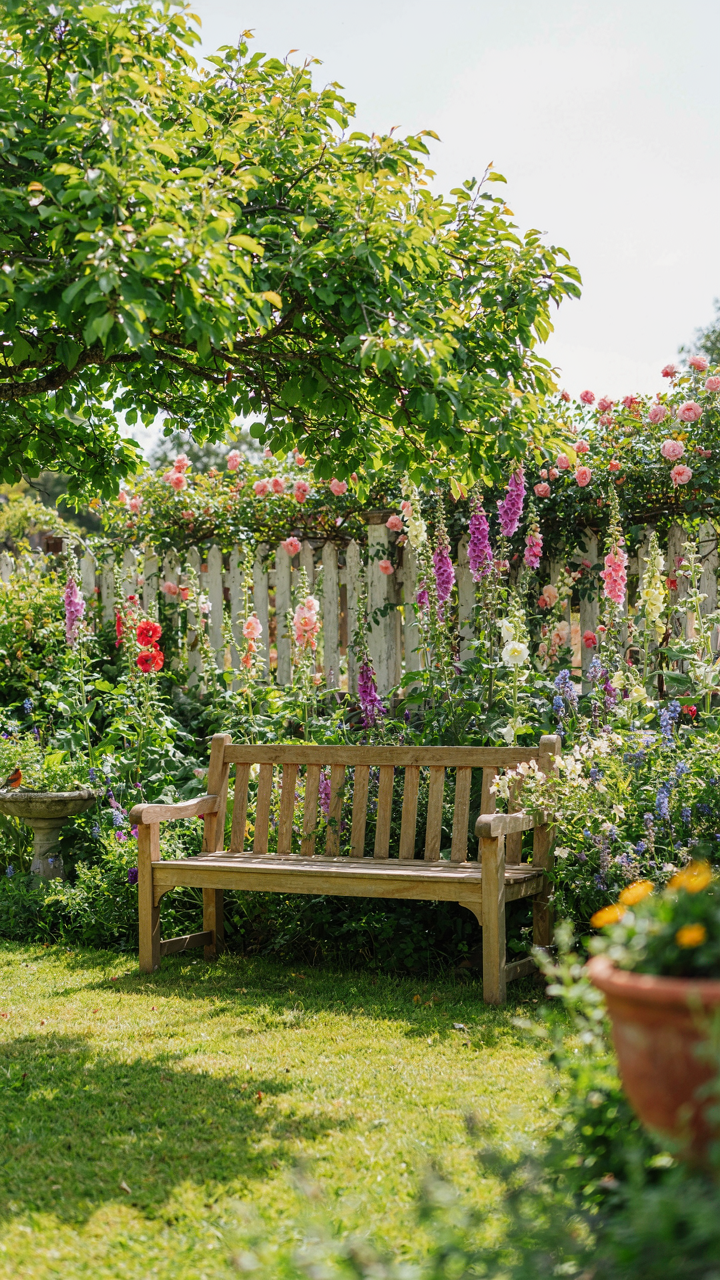
You want the bench to look like it wandered in from a 1920s English village because you’re afraid your garden looks unfinished without borrowed credibility. Here’s the mechanism: Victorian and Edwardian cottage gardens weren’t designed around seating at all. Benches appeared as functional afterthoughts in working spaces, not focal points. Modern cottage aesthetics inverted this—we now build gardens backward, placing seating first, then arranging plants around it. The gap between historical accuracy and what actually works for a beginner creates the real design problem.
The move isn’t to copy period pieces. It’s to steal the logic without the artifact. Historic cottage benches used whatever materials were cheap and durable locally—often simple wood, occasionally stone. They sat in pragmatic spots: near kitchen doors, under shade trees that served other purposes, along paths between functional zones. Your bench should solve a real friction point in your garden layout, not perform authenticity. A simple wooden bench positioned where you’d naturally pause or where shade already exists reads as intentional without requiring a period-correct documentation trail.
Niches, Not Furniture Placement
Evolutionary biology teaches us that organisms thrive when they fit into ecological niches—gaps where competition is low and resources are abundant. Cottage garden benches work the same way: they vanish into the landscape when positioned in the natural dead zones of dense planting. Your eye stops hunting for where to sit when the bench occupies a space plants naturally frame. Dense perennial borders create pockets of shelter. Strategic tree placement forms canopies. A bench isn’t an object you insert; it’s a niche you recognize and occupy. The plants do the real work of making it feel inevitable rather than imposed.
Beginners typically place benches in open lawn areas where they look abandoned. Instead, position seating where sight lines naturally compress—where a taller shrub blocks wind, where mature plants create a visual wall on two sides, where shade falls from an established tree. This approach requires reading your garden’s existing structure before buying anything. Walk the space at different times. Notice where wind stops. Mark shadows. When you place the bench in a location plants already protect, it becomes part of the garden’s ecosystem instead of a decoration interrupting it.
Beyond The Bench: Integrated Garden Bench Seating For Cottage Garden Design

Built In Seating That Anchors Your Garden
You want the garden to feel intentional and complete, not like you assembled furniture from a catalog. Here’s the mechanism: fixed seating uses spatial economics to do multiple jobs at once. When you build seating into walls or raised beds, you’re not just creating a place to sit—you’re defining the garden’s structure and eliminating dead space that serves no function.
Cottage gardens thrive on layered boundaries. Built-in seating works because it forces you to commit to the garden’s layout before you plant. The bench becomes load-bearing architecture, not an afterthought. This changes how you arrange plantings around it and gives the entire space coherence.
- Stone or brick walls with built-in caps: Create a bench by extending the top course of a garden wall to seat height (18 inches). Adds structural integrity while providing seating.
- Raised bed bench hybrids: Design a raised vegetable bed with one side built to bench height. Plants grow on three sides, seating faces the garden view.
- Timber-frame corner seating: Build an L-shaped bench at a garden corner using rot-resistant wood. Anchors two boundaries and creates a sheltered nook.
- Log or stone stumps: Position substantial timber rounds or flat stones at strategic points. Works for cottage gardens that lean rustic rather than manicured.
- Hedge-backed benches: Plant a dense shrub hedge behind a bench line. Creates wind protection and defines garden rooms without fence materials.
The payoff comes when visitors perceive the garden as unified rather than decorated. Built-in seating signals that the design was considered, not improvised. This shifts how people move through the space and where they naturally pause to look around.
Portable Seating For Garden Evolution
Most beginners treat the bench as permanent because they’re afraid to admit they don’t know the garden’s final form yet. Portable options solve a real problem: gardens change. What works year one doesn’t work year five when plants mature or your priorities shift.
The tactical advantage here is flexibility without the cost. A movable bench lets you test sightlines, experiment with traffic patterns, and adjust for seasonal sun. You can rotate seating to follow the best light as the year progresses, then shift it again next season based on what you learned. Portable doesn’t mean cheap or temporary—solid wooden benches on wheels or without permanent foundations simply accept that gardens are living systems, not finished projects.
This isn’t about indecision. It’s about gathering data. Move the bench monthly for three seasons and you’ll know exactly where it belongs permanently. Then you can justify the cost of built-in seating because you’ve removed the guesswork. Start with portability, graduate to permanence once the garden speaks.
The Prayer Garden And Small Courtyard Gardens: Intention Over Decoration
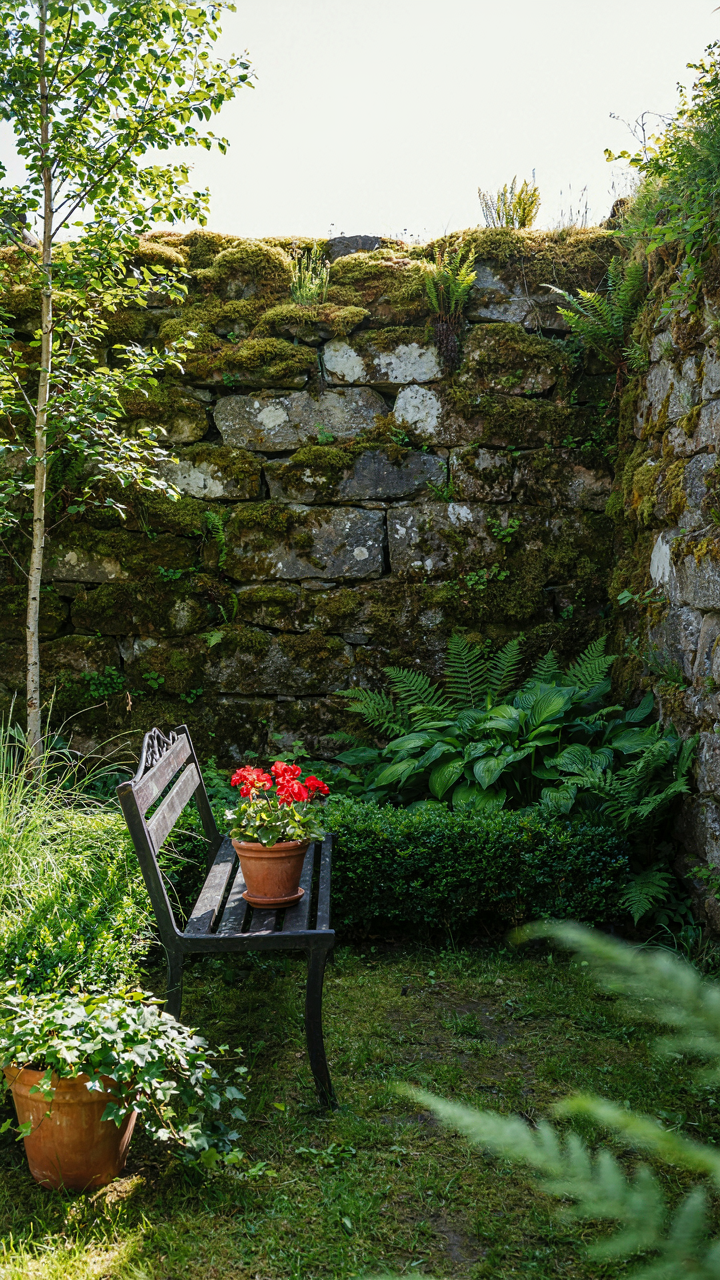
Design For Reflection, Not Just Viewing
You want a bench that signals you’re the kind of person who sits still and thinks. That’s the real pitch here. The mechanism is this: a contemplative space requires the bench to disappear from your awareness the moment you sit. Most beginners buy a decorative statement piece, then realize it demands attention instead of surrendering to it. The bench should function like negative space in a painting—present but not demanding.
A reflection-focused bench prioritizes stillness over sightlines. Position it facing a wall, corner, or enclosed area rather than an open view. The cottage garden tradition of small prayer gardens used benches as anchors for meditation, not panoramic viewing platforms. This is architectural psychology at work: constraint focuses the mind. Choose materials that don’t reflect light aggressively or creak under weight. A solid wooden bench worn smooth by use signals purpose better than anything new.
Right Bench For Intimate Settings
Scale determines whether a bench serves an intimate space or fights against it. Bedroom-scale courtyards demand benches 36 to 48 inches wide, not the 60-inch statement benches marketed to beginners. A wrought iron bench with delicate proportions suits a prayer garden better than a heavy wooden structure because it occupies visual space without dominating it. Think of proportion through the principle of load capacity: the bench should hold its own weight plus one or two people comfortably, nothing more. Oversized benches create psychological discomfort in small spaces.
A bench sized to its setting becomes invisible. In a 10-by-12-foot courtyard, a 4-foot bench leaves breathing room; anything longer creates claustrophobia. Materials matter here too. Cast iron, wrought iron, or narrow-slatted wood benches work in tight gardens because they allow sightlines through them. Placement trumps decoration: position the bench at the garden’s deepest point, furthest from noise and sight lines, and let the enclosure do the work. This is where the intention locks in and the bench stops being furniture.
The Longevity Blueprint: Crafting Benches That Endure And Evolve
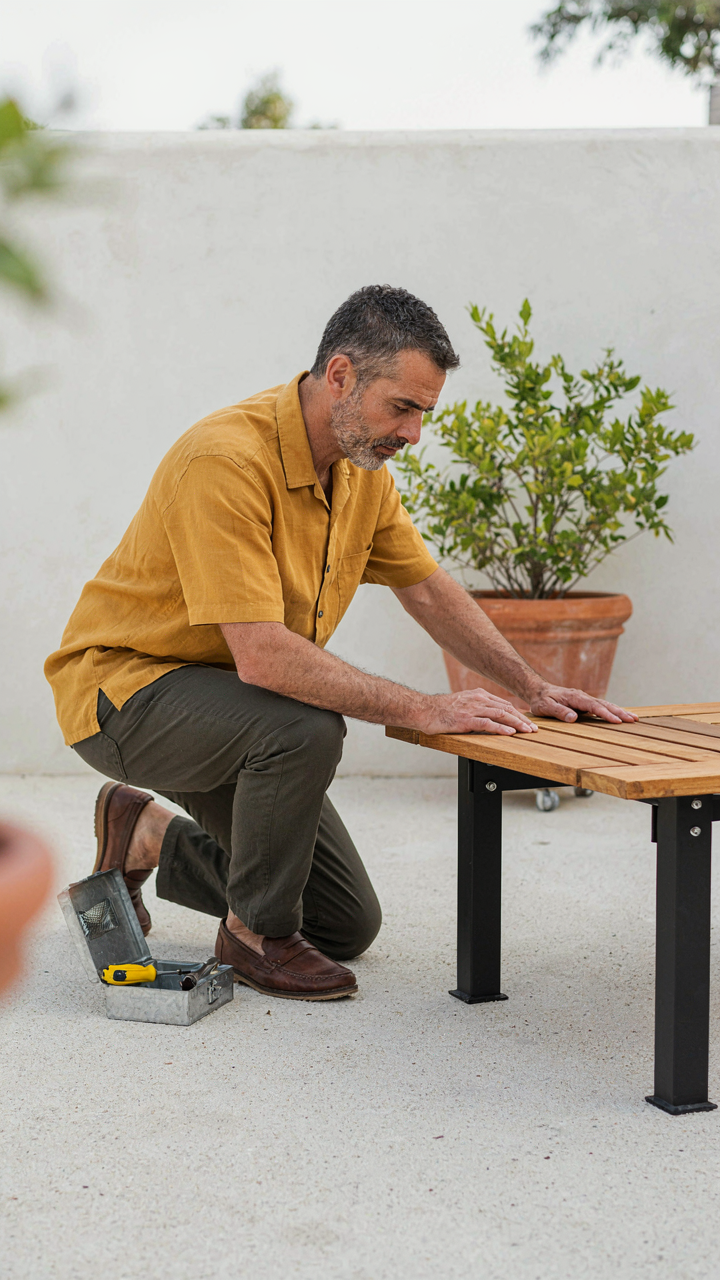
Build For Reconfiguration, Not Permanence
You want your bench to feel like a fixture so you don’t have to think about replacing it. That’s the fear talking. The mechanism is simpler: modular benches outlast rigid ones because gardens change and so do you. Cottage gardens historically evolved through decades of planting shifts, and the hardscape had to adapt or become an eyesore. A bench designed in sections or with removable components lets you adjust orientation, height, or footprint without demolition.
This isn’t trend chasing. It’s about resale value of both the bench and the garden itself. A modular frame with swappable seat boards beats a single-piece construction that locks you into one configuration forever. Concrete footings can hold bolt-down legs that you relocate in five minutes. Cushions detach. Backs hinge away. The bench becomes a tool you reshape, not an artifact you’re stuck with.
Resilient Materials Beat Fashion Cycles
Most advice tells you to pick a material and commit. That’s incomplete. The real variable is maintenance cost over time, which determines whether you’ll actually keep the bench or let it rot. Teak and cedar naturally resist decay through oil content, but require periodic sealing to extend life meaningfully. Galvanized metal rusts slowly and predictably, giving you a window to act. Composite materials hide deterioration until failure is sudden and total.
Pick based on your actual maintenance frequency, not aesthetic preference. Hardwoods like oak and walnut rot faster than softwoods in damp conditions unless sealed annually. Metal frames accept rust and can be wire-brushed and re-finished without structural compromise. A bench you’ll actually maintain beats a beautiful one you’ll ignore until it fails. Start with the material that matches your real behavior, then source finishes designed for that material’s failure pattern.
Your Real Obstacle Is Not Design, But The Courage To Defy Aesthetic Dogma For Practical Truth
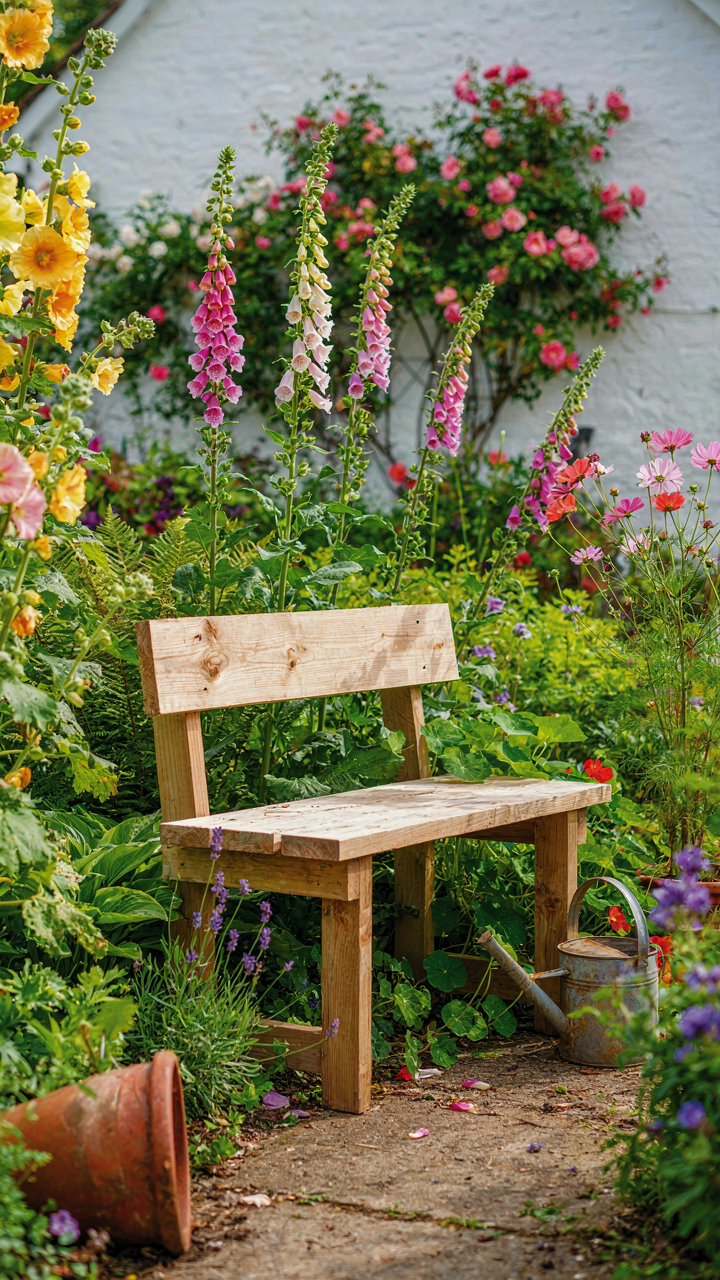
Most people never build a cottage garden bench because they wait for the “perfect” design to exist. Stop waiting. Pick one idea from this article and build it this weekend. Your bench doesn’t need to match Pinterest. It needs to exist in your garden and function. Everything else is theater. The gap between dreamers and people with benches isn’t talent. It’s the decision to move.



