

The Vertical Domination Protocol: Maximizing Limited Apartment Patio Garden Space
Choose Plants That Actually Climb
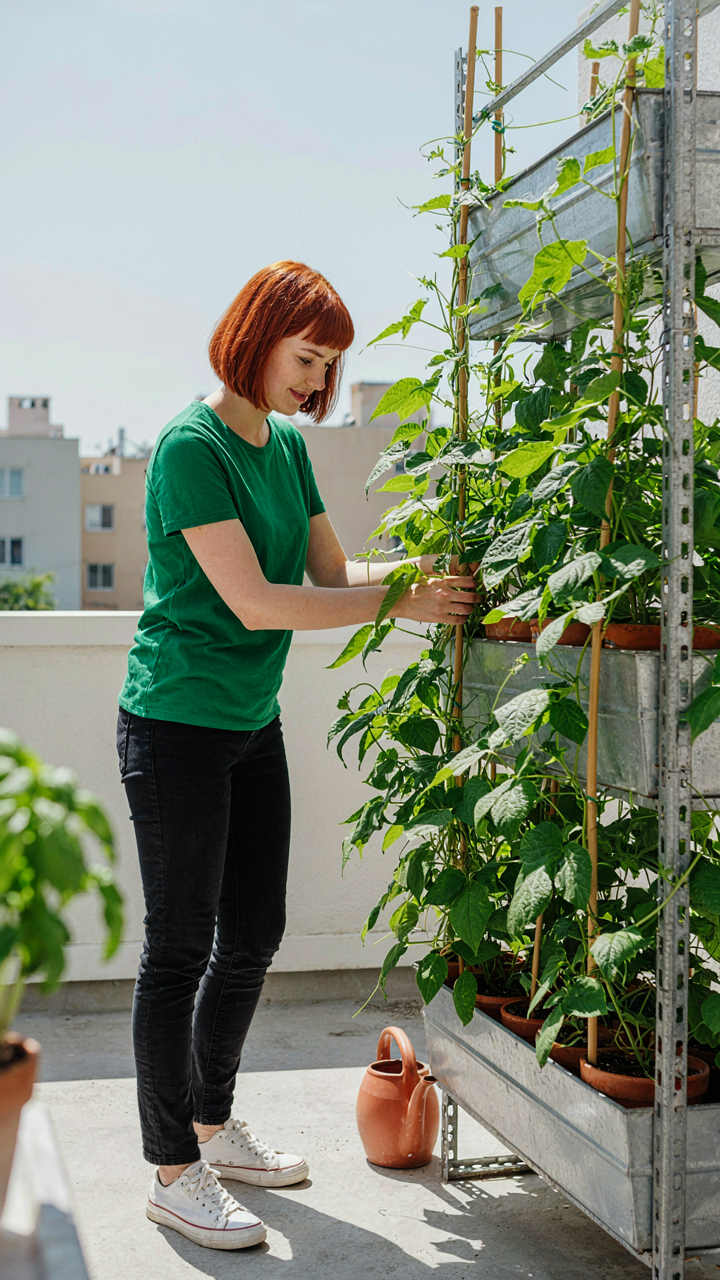
You want to feel like you’ve built something impressive without admitting you’re working with a closet-sized concrete slab. Here’s what actually works: vertical growing borrows from architecture’s load-bearing principle. Plants that climb or grow upward distribute their biomass along a structure instead of spreading outward, so you’re using the Z-axis instead of fighting for square footage on the ground.
Pole beans, clematis, and indeterminate tomatoes grow tall by default. They want to climb. Ivy and pothos don’t need trellises to ascend—they’ll attach themselves. The mistake most people make is planting spreaders like squash or trailing herbs in tiny spaces, then getting frustrated when they run out of room. Match the plant’s growth habit to your vertical infrastructure from day one, or you’re building a problem, not a garden.
Build Systems That Stack Without Breaking
Modular stacking isn’t trendy decoration. It’s engineering. Each layer of a stacked planter needs to support its own weight plus water saturation, which is heavy. Cheap plastic tiered systems fail because they’re designed for aesthetics, not load distribution. Terracotta and wood-composite materials hold up. PVC pipes and metal frames handle repeated seasonal use.
The protocol is simple: start with the strongest base, add manageable weight per tier, and secure each level so it won’t shift. A three-tier system with six-inch planting depth per tier works for shallow-rooted herbs and lettuce. Go deeper than eight inches per tier and you’ve overloaded the structure. Test stability before planting by filling one tier with water and watching for flex or settling. That movement now prevents collapse later.
Beyond Instagram: Cultivating Functional Balcony Herb Gardens
Which Herbs Actually Pay For Themselves
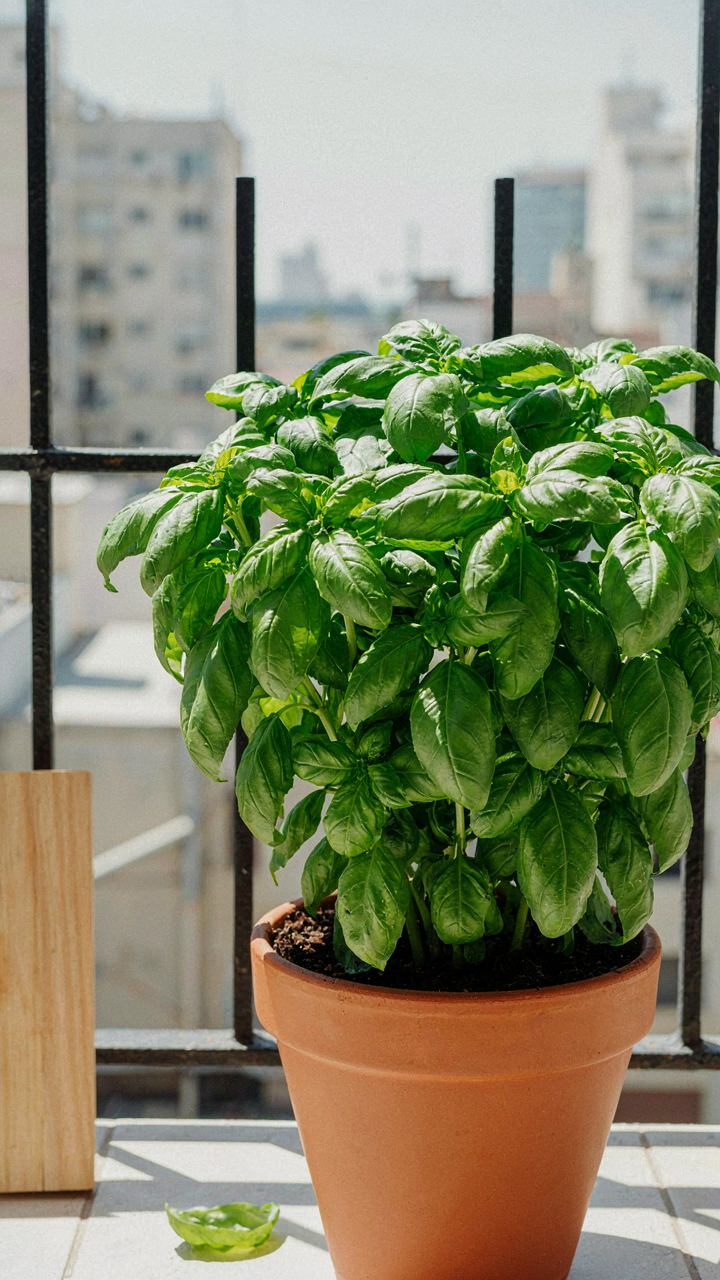
You want proof that your effort matters. That’s the real reason you’re reading this. The mechanism is simple: herb economics work on volume and replacement cost. A grocery store basil costs two dollars and lasts five days. A potted basil plant costs four dollars, produces for four months, and regenerates after every harvest. That’s the math that matters.
Basil, parsley, cilantro, and chives dominate apartment patios because they demand frequent cutting. You harvest them constantly, which triggers new growth. Mint and oregano multiply faster than you can use them. Thyme survives neglect. These aren’t romantic choices. They’re the crops that force you into a harvesting rhythm instead of a watering ritual that keeps the plant alive but never used.
Light And Water Lock In Potency
Potency is a physics problem. Volatile oils in herbs concentrate under stress, specifically water stress and light intensity. More sun means denser aromatic compounds. Less water between harvests means the plant allocates resources to flavor, not just growth. Most apartment gardeners over-water and under-light, which produces watery, bland herbs.
Basil needs six hours of direct sun minimum. Cilantro needs four. Parsley works in partial shade but suffers in flavor. Water only when the top inch of soil dries completely. Pinch off flowers the moment they appear to redirect energy into leaves. Check your patio’s light pattern weekly because seasonal shifts change everything. This isn’t advice. This is the mechanism. Execute it consistently or accept flavorless output.
The Apartment Vegetable Garden: Edible Abundance, Not Ornamental Fluff

Compact Varieties That Actually Produce
You want to feel like you’re growing real food, not decorating. The mechanism is simple: standard vegetable genetics were built for in-ground space and root depth. Compact varieties exist because seed companies bred them for commercial greenhouse operations where square footage costs money. They produce the same yield per plant as full-size varieties, just in a fraction of the footprint.
Determinate tomatoes, dwarf peppers, and bush beans all produce terminal harvests on smaller frames. Cherry tomato varieties like ‘Tiny Tim’ and ‘Window Box Roma’ yield fruit on plants under two feet tall. Asian greens like bok choy and mizuna mature in 30 to 40 days in containers. Radishes, lettuce, and peas occupy minimal vertical space while returning calories fast. The constraint of your patio forces you toward efficiency rather than abundance theater.
Staggered Planting For Year Round Harvest
Succession planting borrows from production agriculture’s core principle: output follows inputs across time intervals. Instead of planting everything once and eating feast-or-famine, you plant the same crop every two weeks. A single patio container rotates through three full lettuce cycles in one growing season. Beans planted on weeks one, three, and five produce continuous harvest from week six through frost.
Map this on a calendar before you plant anything. Write the exact date you plant each variety, then mark the typical days to maturity. Plant the next round when the first seedlings emerge, not when the previous crop finishes. This creates overlap. Containers empty in sequence rather than all at once, meaning you harvest something every three to five days instead of nothing for weeks then too much to use.
Small Balcony Garden, Big Returns: The Efficiency Mindset
One Tool Does Five Jobs
You want to feel productive without actually maintaining a garden. The real mechanism is constraint forcing specialization. Borrow from industrial engineering: one asset should serve multiple functions. In container gardening, this means choosing tools that stack operations instead of multiplying them.
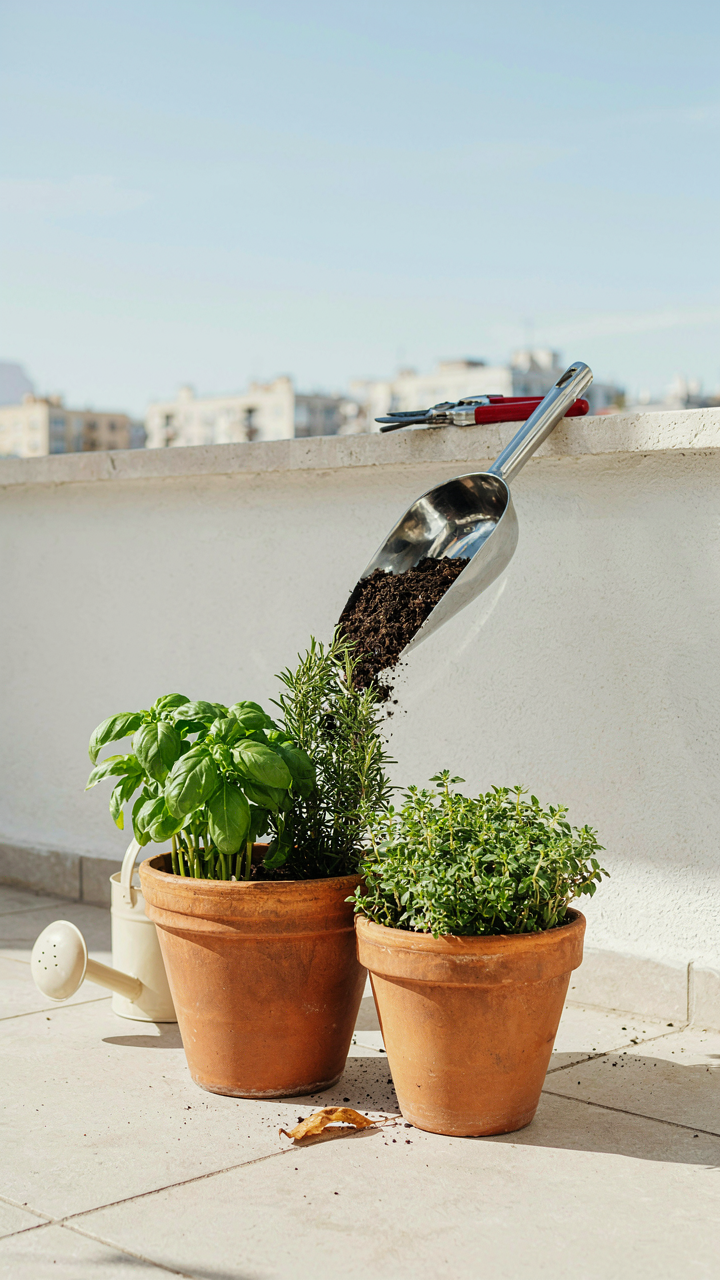
A quality stainless steel scoop works as trowel, soil spreader, and seed broadcaster. A retractable pruner with bypass blades cuts herbs, deadheads flowers, and manages leggy growth. You eliminate storage problems, decision fatigue, and the friction that kills consistency. The limited tool approach works because fewer options mean you actually use what you have.
Drip Lines Replace Guesswork
Automated watering systems aren’t luxury. They’re leverage in the economic sense: output divorced from your daily presence. Plant survival hinges on soil moisture consistency, not your memory or schedule. Drip irrigation delivers water directly to roots at a rate plants can absorb, eliminating runoff waste that overhead watering creates.
Set a simple timer on a standard battery-operated controller connected to soaker hoses or micro-drip tubing. Run the system early morning, three days weekly during growing season, adjusting for rainfall. The protocol is: measure soil moisture with your finger two inches deep before adjusting frequency. This removes the guilt variable and lets you scale from one container to twenty without adding work.
The Biometric Balcony: Applying Ecological Principles To Balcony Landscaping

Stack Plants By Guild, Not Aesthetics
You want your balcony to look effortless. That’s the real reason you’re reading this. The mechanism that makes that happen isn’t design—it’s ecology. Borrow the concept of plant guilds from forestry: clusters of plants that support each other’s survival. A nitrogen-fixing legume feeds shallow-rooted herbs. A tall plant creates afternoon shade for heat-stressed groundcover. You stop managing individual specimens and start managing relationships.
Most apartment gardeners arrange plants by visual height or color. Wrong move. This creates isolated survivors competing for resources instead of cooperating. Stack your balcony using vertical niches and resource dependencies. A deep-rooted shrub and a shallow-rooted perennial occupy the same pot without conflict. A sun plant and a shade plant in the same container means one thrives while the other gets what it needs. Build layers of function before you think about arrangement.
Succession As Your Maintenance Schedule
Ecological succession is how ecosystems rebuild themselves after disruption—and it’s the hidden operating system behind low-maintenance gardens. Early colonizers (fast-growing annuals and pioneers) stabilize conditions. Mid-stage species (perennials and woody plants) take root. Late-stage species (slow-growing shrubs and established systems) dominate. Your balcony garden should mirror this timeline. Start fast. Let the system mature. Stop fighting it.
Most advice tells you to “plan ahead” and “choose permanent plants.” Incomplete. You need initial fast-growth species to suppress weeds, stabilize soil conditions, and create microclimates for slower species. Marigolds and nasturtiums aren’t filler—they’re ecological infantry. Plant them first in spring. Their decline makes space and creates conditions for your perennials. Your maintenance drops sharply once you stop replanting and let the succession advance to its stable phase.
Patio Vegetable Garden: From Concept To Consumption

Match Container Depth To Root Architecture
You want to grow food in a box because it feels productive, but most people sabotage themselves by choosing containers based on aesthetics instead of what the plant actually needs underground. This is a basic hydraulics problem: water moves through soil, and soil depth determines how long water stays available to roots before draining out the bottom. Shallow roots need shallow containers. Deep roots need depth you probably don’t have.
Tomatoes, peppers, and eggplants demand 12 to 18 inches minimum. Lettuce, spinach, and radishes work in 6 to 8 inches. Root vegetables like carrots need the full depth of their taproot or they’ll deform. Use containers that match the plant’s root system, not your patio’s visual balance. Mismatched depth creates constant watering problems or stunted yields that feel like your fault when they’re not.
Feed Soil, Not Just Plants
The advice to “add compost” is incomplete because it ignores the actual mechanism: plants don’t eat compost. They eat nutrients that microbes in soil release through decomposition. You’re building a microbial ecosystem in a container, which is biology’s term for a closed system where organisms exchange resources and waste. In apartment patio gardens, that system starts dead and stays fragile without intervention.
Use a base mix of coconut coir or peat, compost, and perlite in roughly equal parts. The compost feeds microbes. The perlite creates air pockets so microbes don’t suffocate. Every four to six weeks, top-dress with finished compost or a balanced organic fertilizer to maintain microbial activity. Container soil depletes faster than ground soil because water drains nutrients out constantly. Refresh it or the plants will signal nitrogen depletion through yellowing leaves, and by then you’ve already lost weeks of growth.
The Apartment Patio: Reclaiming Urban Green Space
Hardscape Creates Zones Without Walls
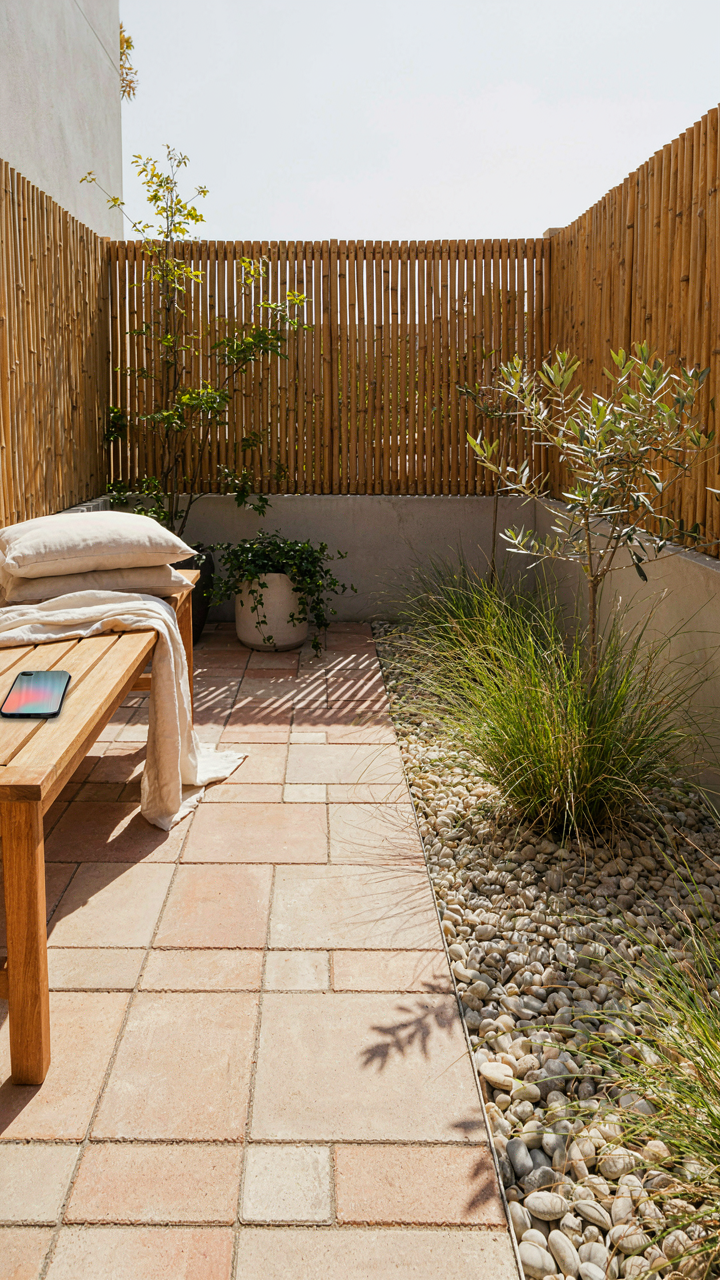
You want your patio to feel intentional instead of like leftover concrete, which is really just fear that you’re wasting square footage. Urban design borrowed the concept of “functional zoning” from city planning, and your patio operates the same way: hardscape elements divide space into districts without blocking sightlines or airflow. Pavers, gravel, decking, and stone define where activities happen. They’re not decoration. They’re territory markers that make a small space feel organized.
The mechanical advantage of hardscape is drainage and load capacity. Permeable pavers let water through while supporting furniture weight and foot traffic. Concrete or composite decking creates a stable platform for seating or dining zones separate from planting areas. You’re not choosing materials for looks. You’re choosing them because they solve the problem of turning a slab into a usable space. Install pavers in a grid pattern to anchor seating zones, keeping planting beds elevated and separate by material type alone.
Privacy Screens Do More Than Block Views
Most advice treats privacy screens as simple barriers, which misses the actual mechanism. A screen functions as both a visual block and a microclimate modifier. In meteorology, a screen changes wind speed and humidity patterns. On your patio, the right screen reduces wind velocity by 30 to 50 percent while creating shade and softening direct sun on plants. You get multiple outputs from one element, which is the only reason to install it.
Lattice screens with climbing vines outperform solid walls because they filter rather than bounce air and light. Bamboo screens, composite panels, or living walls with fast-growing species all work, but the best choice depends on your exposure. South-facing patios need dense coverage for heat reduction. North or east-facing patios need lighter screens that still allow some airflow. Mount screens on adjustable hardware so you can modify angle with seasons, maximizing summer shade and winter light penetration.
Balcony Garden Ideas: Beyond Decorative Delusions
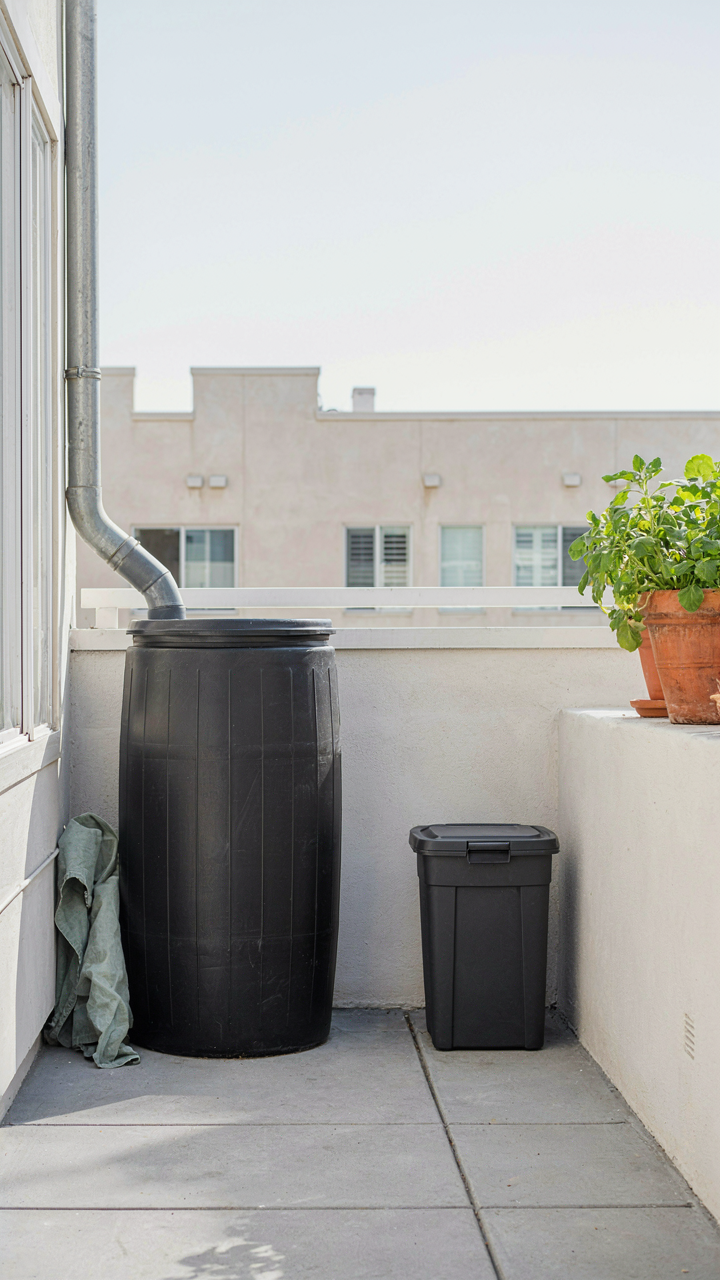
Capture Rain Before It Becomes Someone Else’s Problem
You want to feel self-sufficient without actually changing your behavior. That’s the real pull here. The mechanism is simple: gravity moves water downward, and your patio already slopes. Harness that. A rain barrel system intercepts runoff from your roof or adjacent surfaces, storing it for irrigation. This isn’t philosophy. It’s applied physics. The barrel sits at the lowest point of your patio, fed by gutters or downspouts from overhead structures. Most apartment dwellers ignore this because the setup feels like a project. It isn’t. A 50-gallon food-grade drum costs under 100 dollars and connects to existing drainage with basic fittings.
Water stored this way eliminates dependency on municipal supply for plant irrigation, which matters more in drought-prone regions and matters less in areas with consistent rainfall. The practical constraint is space. A standard barrel occupies roughly two feet by two feet by three feet tall. Position it near your plant collection to minimize distance between storage and soil. Your patio’s drainage already works. You’re just redirecting it. Run a soaker hose directly from the barrel spigot to your containers on a timer, and you’ve compressed daily watering into a single setup action per season.
Build Soil From What You Throw Away
The advice to compost in apartments is incomplete garbage. Most guides assume you have outdoor access or space for a full bin. You don’t. The real mechanism is anaerobic decomposition, which requires no oxygen flow and zero smell when done right. This is how sealed containers work. You layer your kitchen scraps (vegetable peels, coffee grounds, eggshells) in an airtight bin roughly the size of a storage container, adding shredded paper or cardboard as carbon material. Microbes break down the organic matter in weeks without odor because decomposition happens without oxygen exposure.
Keep the container under your patio sink or in a corner of your kitchen. Once it fills, seal it and let it sit for two to four weeks. The result is a dark, crumbly material that you mix into potting soil at a ratio of one part compost to three parts store-bought soil. This cuts your soil costs and improves water retention in containers, which matters more on patios where drainage happens fast. Most apartment composters cost 30 to 60 dollars. Buy one with a locking lid, fill it weekly, and redirect waste that normally goes to landfill into your patio beds instead.
Pest Control: The Proactive Defense Strategy
Integrated Pest Management For Small Spaces
You want pest control that doesn’t wreck your apartment or your reputation with neighbors. The real mechanism here is borrowed from military strategy: you don’t fight every battle, you control territory. In a patio garden, that territory is your soil, your airflow, and your plant density.
Most advice tells you to spray when problems appear. That’s reactive. By then, you’ve already lost. IPM flips this: you establish conditions pests avoid before they arrive. This means soil that drains fast, spacing that prevents humidity pockets, and removal of dead leaf litter where insects breed.
- Soil drainage: Use potting mix with perlite or pumice added. Dense, wet soil attracts fungus gnats and root rot organisms. Fast drainage eliminates their habitat entirely.
- Air circulation: Position containers to let wind move through plants. Stagnant air creates microclimates where spider mites and powdery mildew thrive. A small fan on high days works if your patio has walls.
- Plant spacing: Leave gaps between containers. Touching foliage spreads mites and disease fast. Crowded patio gardens fail because they become pest incubators.
- Sanitation protocol: Remove dead leaves, spent flowers, and dropped fruit daily. These decompose into breeding grounds for flies and beetles within 48 hours.
- Weekly inspection: Flip three random leaves per container to check undersides. Pests hide there first. Catch infestations at five insects, not fifty.
Monitoring beats treatment every time. You catch problems at scale one, not scale ten. The moment you see webbing on stems or sticky residue on leaves, isolate that container away from others and spray neem oil or insecticidal soap on day one and day three. This stops spread cold.
Beneficial Insects: Natural Predation
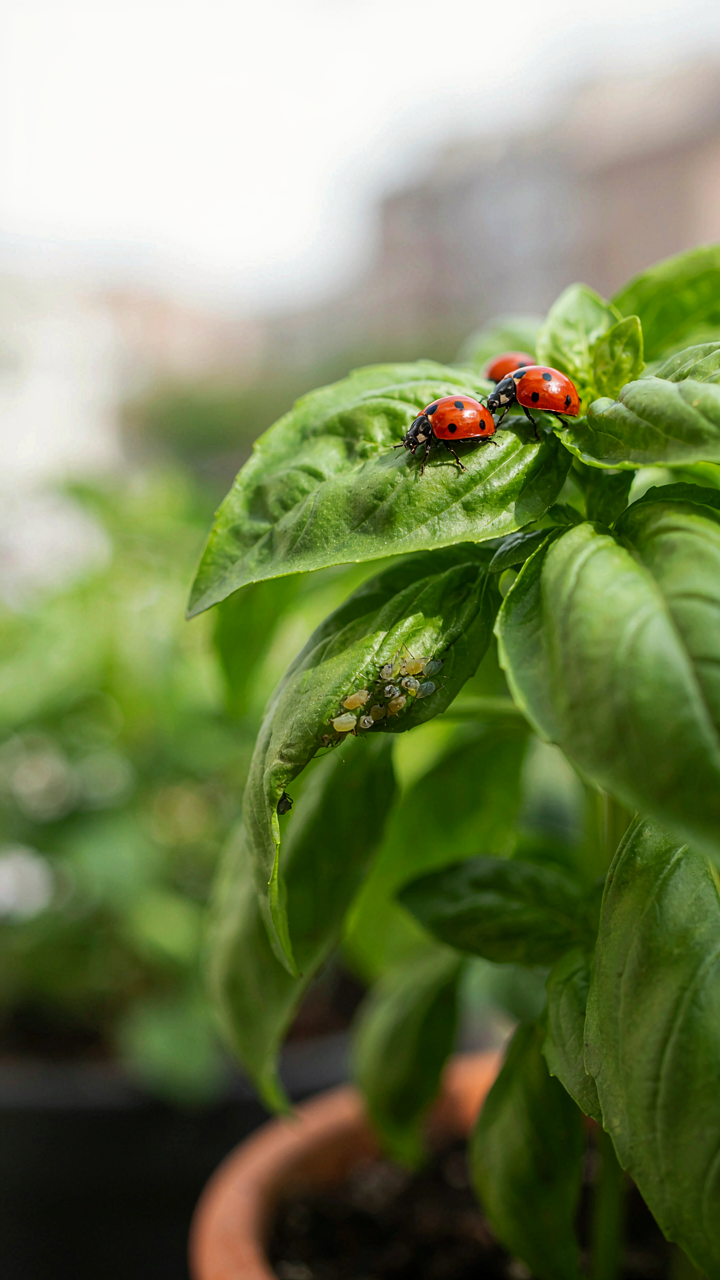
Don’t think of your patio as needing “good bugs versus bad bugs.” Think of it as an ecosystem where predation works. Ladybugs, parasitic wasps, and ground beetles eat the pests that eat your plants. You’re not adding cute helpers. You’re establishing a food chain that works against your enemies.
Pests explode in apartment patios because there’s no predator pressure. Most people spray chemicals, kill everything, and restart the cycle. Instead, create conditions where beneficial insects stay. This means leaving some wildflower plants or herbs unharvested, letting flowers go to seed, and never using broad-spectrum pesticides. Ladybugs need pollen between pest seasons. Parasitic wasps need nectar. Give them both and they establish colonies that hunt for you automatically.
The best approach is to buy beneficial insects when you first see pest pressure and establish them before population crashes your garden. A container of ladybugs released during early mite season will breed if food exists. They eat 50-80 aphids daily per adult. Stop fighting pests yourself and let predation do the work instead.
Winterizing Your Balcony Garden: The Seasonal Adaptation Mandate

When Frost Becomes Your Constraint
You want your plants to survive winter so you don’t lose the year’s work and look like you failed at something simple. Here’s what actually matters: frost damage happens when cell water freezes and expands, rupturing plant tissue. The mechanism is pure physics. You can’t stop cold, but you can slow heat loss from your containers and foliage.
Most balcony gardeners wait until the first hard freeze to act. Wrong. Start protecting plants two to three weeks before your area’s average first frost date. Move tender perennials and annuals into a sheltered corner of your patio where wind exposure drops sharply. Group containers together so they share retained heat. Wrap pots in burlap or move them against the building wall where residual warmth radiates outward at night.
Harvesting Genetics For Next Year
Seed saving isn’t romantic hobby work, it’s resource capture. You’re locking in the genetics of plants that proved viable in your specific microclimate. Most apartment gardeners throw finished plants away instead of extracting and storing seeds, which costs them money and forces them to rebuild plant performance from scratch each season.
Let seed pods dry fully on the plant before harvest. Brown, papery pods signal maturity. Cut stems, place them in a paper bag indoors, and let them finish drying for two weeks in a cool, dry spot. Extract seeds by hand, discard debris, and store them in airtight containers in your refrigerator. Label with plant variety and harvest date. Viable seeds from your balcony outperform random nursery stock because they’re already adapted to your exposure, wind patterns, and light conditions.
The Real Obstacle Isn’t Your Space, It’s Your Scarcity Mindset

You don’t need a bigger patio. You need to stop treating your apartment like a limitation and start treating it like a constraint that forces creativity. Most people fail at apartment patio gardens because they wait for perfect conditions instead of working with what they have. Buy one plant today. Put it somewhere. Stop planning and start failing forward. The world doesn’t reward the people with the best conditions, it rewards the people who build anyway.



