

Why Graduation Flowers Carry Deep Symbolic Meaning
The Long History Of Giving Flowers To Honor Achievements
Ancient Greeks and Romans used floral crowns to mark success. They awarded laurel wreaths to victors in athletic games and poetic contests. This ritual established a link between botanical gifts and social status. Over centuries, these wreaths evolved into the modern handheld bouquet. Using plants to signal honor is a human practice with roots in these early Western civilizations.
The Victorian era refined how people used flowers to communicate. Experts created floriography to send specific messages without speaking. People assigned distinct meanings to every bloom. This dictionary of symbols turned a simple gift into a complex tool for recognition. Graduates today receive flowers because these historical codes remain deeply embedded in social etiquette. The tradition honors past victories through timeless biological symbols.
How Flower Symbolism Became A Part Of Graduation Traditions
Modern graduation ceremonies adopted floral traditions during the nineteenth century. Universities began using specific colors and plants to match academic regalia. This practice synchronized the visual appeal of the ceremony with the school identity. Florists started marketing specific stems to parents and peers as essential graduation gifts. The commercialization of the industry solidified the flower as a standard ceremonial requirement.
Graduation marks a major transition in life status. Flowers serve as a visual bridge between the end of study and the start of a career. They provide a physical anchor for the emotions of the day. The act of giving flowers creates a permanent memory of accomplishment. Today, the choice of flower dictates the specific tone of the message, such as success, wisdom, or a bright future.

The Most Popular Graduation Flowers And What They Represent
Roses, Sunflowers, And Lilies: Classic Blooms With Powerful Meanings
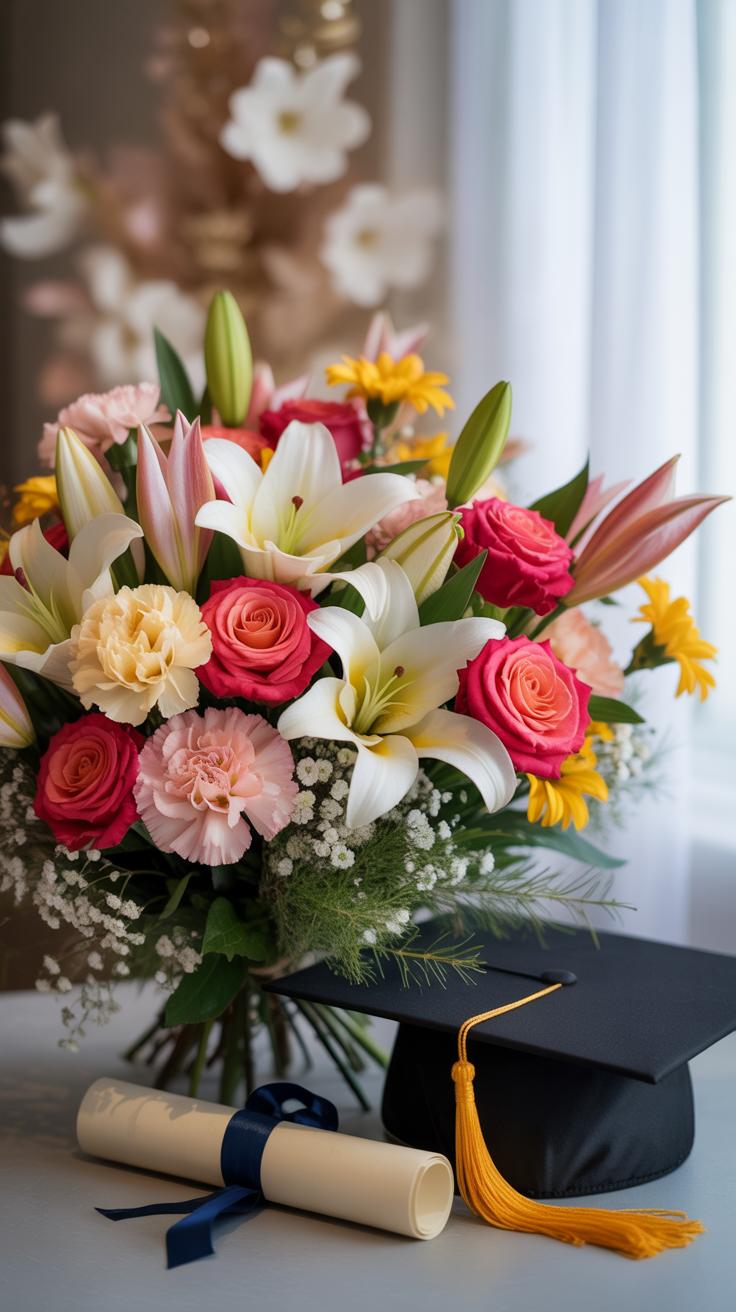
Roses serve as the primary standard for graduation bouquets. Colors dictate the specific message sent to the graduate. Red roses signify tactical success and respect for hard work. Yellow roses represent new beginnings and the joy of friendship. White roses symbolize purity and the clean slate of a fresh career. Choose the color based on the specific type of accomplishment the student achieved during their studies.
Sunflowers and lilies provide structural variety and clear symbolism. Sunflowers track the sun which represents focus and long-term ambition. They signal a bright future ahead for the graduate. Lilies represent the transition into adulthood and the devotion required to finish a degree. Use these flowers to add literal and symbolic height to an arrangement. They stand out in photos and keep their shape during long ceremonies.
Lesser Known Flowers That Make A Meaningful Statement At Graduation
Peonies and hydrangeas offer high-impact alternatives to traditional stems. Peonies historically represent prosperity and good fortune in many Eastern cultures. They signal a wish for financial success in the professional world. Hydrangeas represent deep gratitude and heartfelt emotion. They work well for graduates who faced significant obstacles. These flowers provide thick textures that fill out a bouquet quickly. Their large heads create an immediate visual impact.
Carnations and delphiniums offer durability and specific color matching. Carnations stay fresh for days and symbolize admiration. They are the most cost-effective way to show support for a graduate. Delphiniums represent the pursuit of new opportunities and infinite possibilities. They add a blue hue that is rare in the floral world. Select these blooms when you need the flowers to survive heat and travel. They provide reliable performance in any environment.
How To Build A Thoughtful Graduation Bouquet Around Flower Meanings
Pairing Flowers By Meaning To Tell A Story In Your Bouquet
Strategic floral arrangement uses floriography to communicate specific milestones. Combine Gladiolus with Iris to create a narrative of strength and wisdom. The Gladiolus represents moral integrity and strength of character. The Iris signifies the wisdom gained through years of study. This combination tells a story of a graduate who is both principled and intellectually prepared. It moves beyond aesthetics into a functional message of respect.
Layering different species expands the message. Add Sweet Pea to signify a grateful farewell to the institution. Pair it with Hydrangeas to acknowledge the graduate’s perseverance and heartfelt emotion. This structure creates a cohesive timeline from past effort to future potential. Use the focal flower to set the primary theme. Surround it with supporting stems that add nuance to the graduate’s specific journey and accomplishments.
Choosing Colors That Reinforce The Message You Want To Send
Color choice dictates the psychological impact of the bouquet. Yellow flowers like Sunflowers or yellow Roses represent success and new beginnings. Use these to signal a positive transition into the workforce. Blue flowers signify tranquility and stability. They balance the high energy of graduation day. Select colors that align with the specific goals of the recipient. This ensures the visual message remains consistent and clear.

Standard color associations drive the intent of the gift. Red traditionally indicates passion and courage for those entering competitive fields. Purple suggests accomplishment and high honor. Avoid mixing too many clashing colors. This dilutes the primary message. Focus on a monochromatic or analogous scheme to maintain professional impact. Use white stems to provide visual clarity. White represents a blank slate and the purity of a fresh start.
Best Flowers For Graduation Ceremony Gifts By Relationship
What Parents, Siblings, And Close Friends Typically Give Graduates
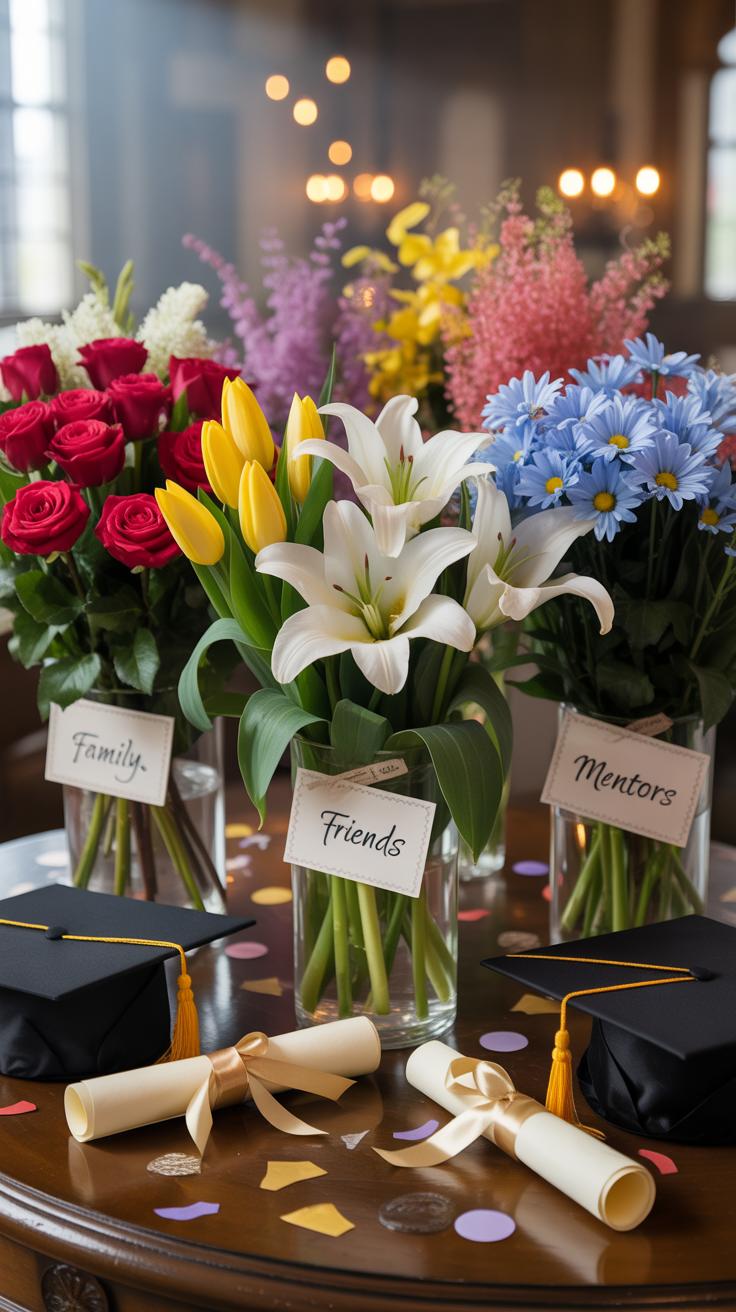
Parents and close family members select flowers that signify deep ties and pride. Roses are the primary choice because they represent mature affection and strong roots. Red roses signify love while white roses symbolise new beginnings. Families should buy long-stemmed varieties for ceremonies. These flowers look substantial in photos and hold up well during long events. Sturdy stems prevent wilting before the party ends.
Close friends often choose yellow roses or chrysanthemums. These flowers represent joy and the bond of friendship. Bright colors work best for peers because they look energetic and youthful. Friends should avoid romantic red tones to keep the message clear. Opt for a tied bouquet rather than a formal arrangement. This allows the graduate to carry the gift easily while wearing their cap and gown.
Selecting Meaningful Flowers When You Are A Teacher Or Mentor
Teachers and mentors should select flowers that focus on wisdom and future success. Irises are the standard choice for academic guidance. In Greek mythology, the iris connected heaven and earth. Today, it represents eloquence and deep knowledge. A mentor gives an iris to acknowledge the student’s hard work. Purple shades are traditional because they represent the high status of the scholar.

Sunflowers or gladiolus also work well for professional mentors. Sunflowers represent the bright future and looking toward the light. Gladiolus stems signify strength of character and moral integrity. These flowers tell the graduate that they possess the grit to succeed in the real world. Keep the presentation professional and understated. A simple glass vase or a clean wrap ensures the focus remains on the academic achievement.
Senior Flowers Bouquets Celebrating The End Of A Major Chapter
Why Senior Year Flowers Often Reflect Both Nostalgia And New Beginnings
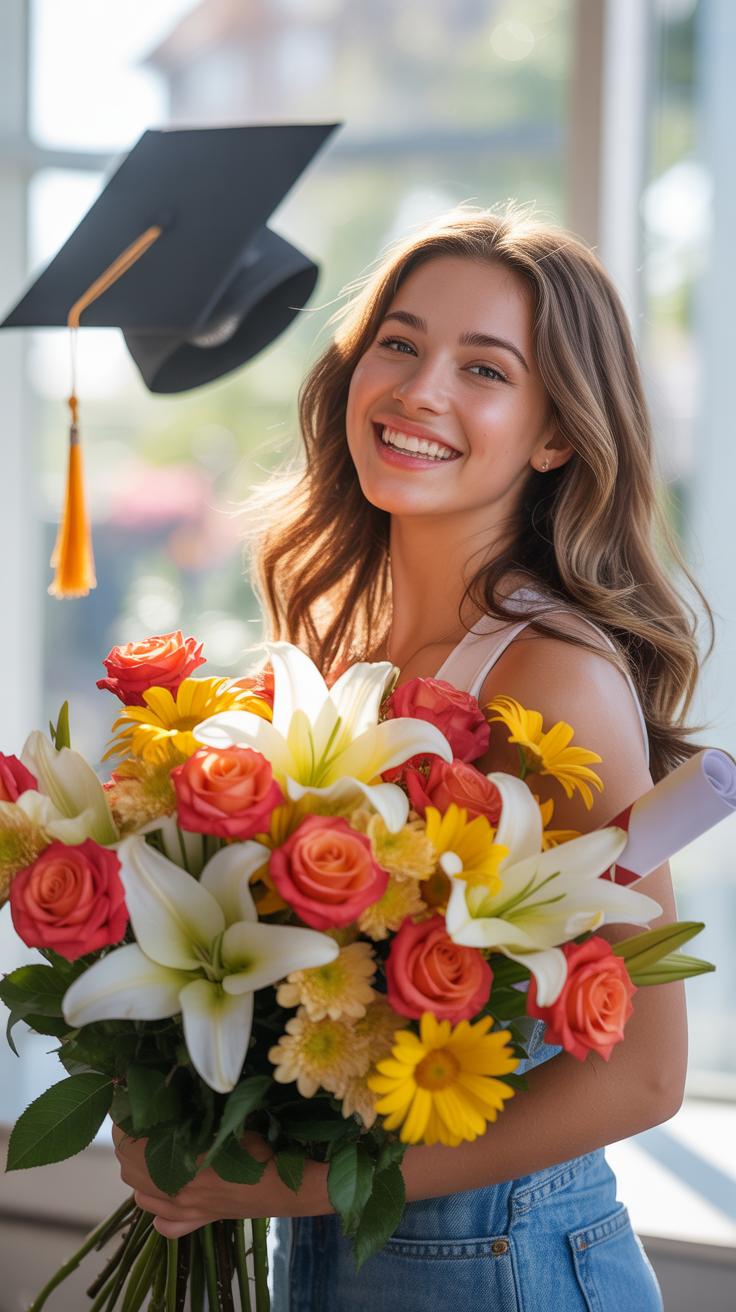
Senior year marks a hard pivot from childhood to adulthood. The flowers chosen for this milestone bridge the gap between past comfort and future risk. Gift givers often select blooms that represent long-term endurance. These flowers signal respect for the work finished over four years. They acknowledge the emotional weight of leaving a familiar environment while preparing for a new professional or academic stage.
Designers use specific colors to communicate this transition. Muted tones often represent the memories of the past years. Bright and bold colors signify the energy required for the next step. High-contrast arrangements create a visual narrative of change. This duality helps the graduate process the end of an era. It turns a simple gift into a tool for emotional closure and forward momentum.
Just like the yellow rose of friendship or the iris of wisdom, may your dreams blossom as beautifully as the flowers that mark this new beginning.
Top Flower Choices That Graduates Themselves Love To Receive
Graduates prefer flowers that offer high visual impact and modern aesthetics. They favor blooms that look good in photos and last throughout long ceremonies. Traditional roses remain popular but modern trends lean toward exotic and structured flowers. These choices reflect a desire for individuality and strength. Reliability and color saturation are the primary factors in selecting these specific floral varieties for senior celebrations.
- Sunflowers: These flowers represent focus and longevity. Their sturdy stalks and bright yellow petals make them ideal for outdoor ceremonies. Graduates value them for their cheerful appearance and their ability to stand out in large crowds during photo sessions.
- Peonies: These blooms signal prosperity and a happy life ahead. Their dense petal structure creates a luxury feel that honors the magnitude of the achievement. They are seasonal favorites that signify refined taste and the arrival of a new spring.
- Orchids: These flowers represent structural strength and exotic beauty. They appeal to graduates who want a sophisticated and non-traditional look. Orchids are durable and remain fresh for hours without a constant water source, making them highly practical for long events.
- Proteas: These bold flowers symbolize change and transformation. Their prehistoric appearance and tough texture represent the resilience required to graduate. They serve as a focal point in any bouquet and appeal to those seeking a unique and masculine or edgy aesthetic.
- Ranunculus: These flowers offer a complex look with many layers of thin petals. They represent charm and radiate a sense of organized beauty. Grads like them because they provide a high-end alternative to standard carnations while maintaining a compact and manageable size.

Select flowers based on the personality of the graduate rather than tradition alone. Vibrant hues work best for those entering creative fields. Structured and monochromatic arrangements suit those moving into corporate or technical roles. Focus on the durability of the stem to ensure the bouquet survives the graduation day heat. Choosing the right flower shows a deep understanding of the graduate’s personal journey.
Graduation Flowers Bouquet Ideas Inspired By Different Degree Types
Flower Bouquet Themes That Suit Arts Science And Business Graduates
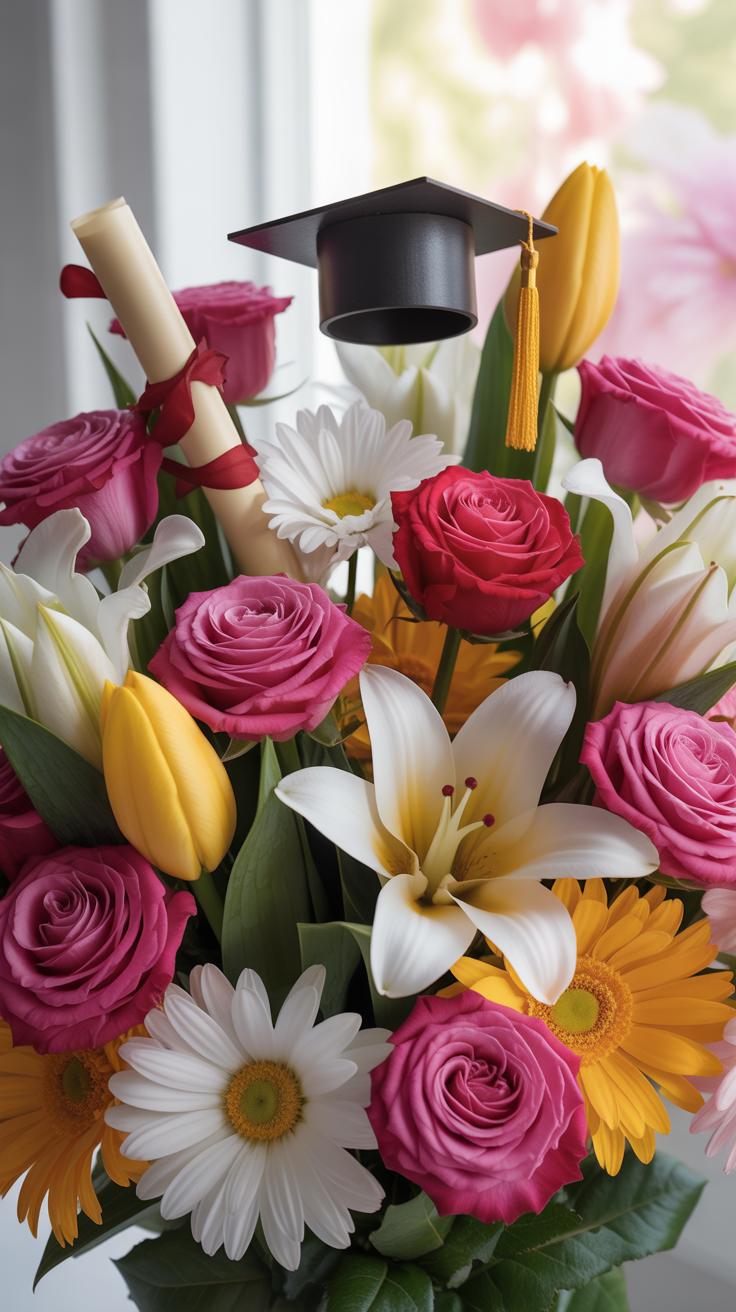
Arts graduates benefit from bold colors and varied textures. These choices reflect the creativity and risk-taking required in their fields. Use unconventional focal points like Proteas or Calla Lilies. These flowers signal originality and a break from standard academic structures. Contrast deep hues with light accents to mirror the visual balance taught in design schools. Clear visual intent matters most here.
Science and Business degrees require a more structured approach. Use geometric arrangements and clean lines to represent logic and efficiency. For science, select structural plants like Alliums or Orchids. These symbolize precision and growth through data. For business, choose high-performance blooms like Hydrangeas in deep blues or purples. These colors communicate trust and authority. Keep the design compact and professional to match the graduate’s future environment.
How To Personalize A Bouquet Based On The Graduates Field Of Study
Personalization relies on academic regalia colors and symbolic associations. Most universities use specific colors for different disciplines. For example, use Golden Yellow for Science or Drab for Business and Accounting. Integrate these specific shades through the primary flower choice or the ribbon wrapping. This creates an immediate visual link to the graduate’s hard-earned credential. It shows tactical attention to detail that generic bouquets lack.

Beyond color, match the flower’s historical meaning to the career path. Medicine graduates should receive Peonies, which historically represent healing and protection. Law graduates benefit from Gladiolus, signifying strength of character and moral integrity. Engineering students suit Sunflowers, which represent the sun and constant mechanical movement or innovation. Select hardy stems that can withstand a long ceremony. Practicality is just as important as the symbolic message you send.
Graduation Flower Ideas For Every Budget Without Sacrificing Meaning
Affordable Flowers That Still Carry Strong Graduation Symbolism
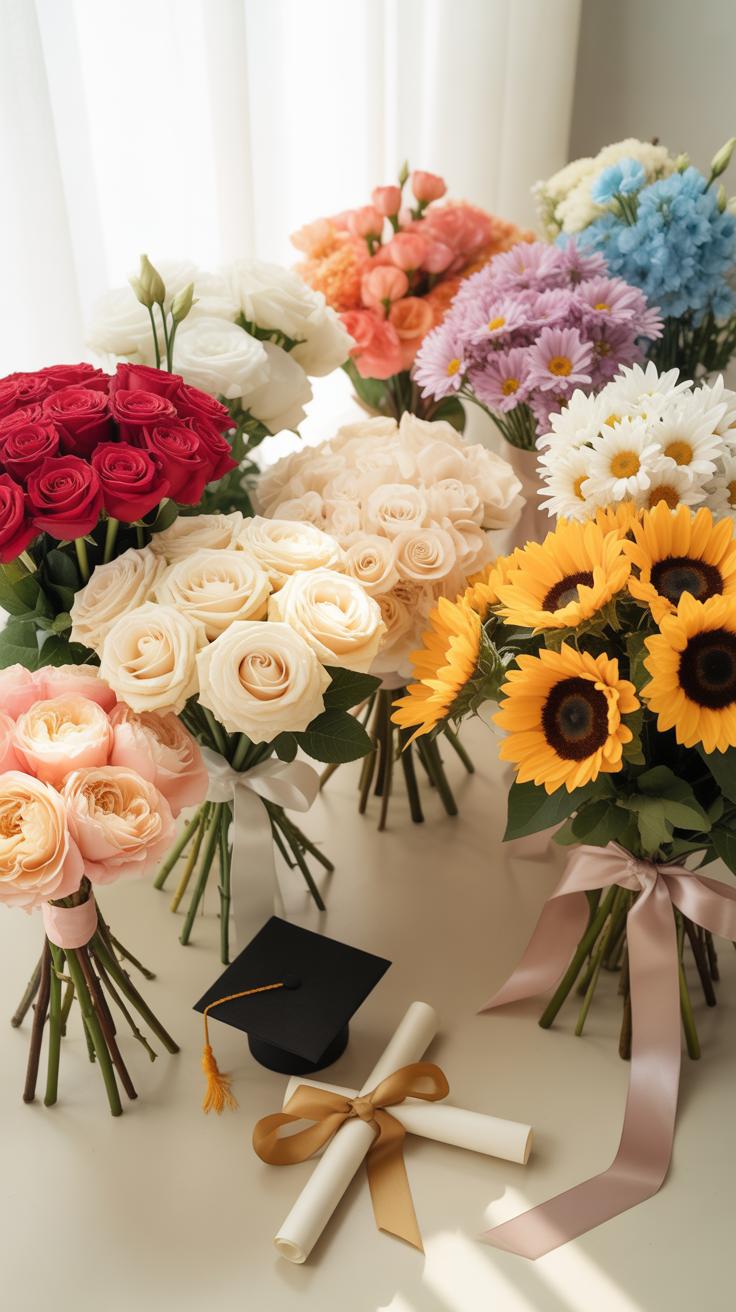
Carnations offer the best value for budget conscious buyers. They represent admiration and distinction. These flowers lasted through the Victorian era as symbols of deep respect. They possess a long vase life and survive long graduation ceremonies without wilting. You get a high petal count for a low price. This makes them a practical choice for large commencement crowds and outdoor events.
Gladiolus stems provide height and strength to any arrangement. Their name comes from the Latin word for sword. They symbolize moral integrity and strength of character. These meanings align with the transition into the professional world. One stem fills a lot of space in a bouquet. This reduces the total number of flowers you need to buy. They offer a bold look for very little cost.
Simple Tips For Making A Budget Bouquet Look Elegant And Intentional
Strategic design elevates inexpensive stems to a professional level. You must focus on structure and color theory rather than price. Use monochromatic groups to create a high end look. Massing the same flower type together hides the lack of variety. Professional florists use this technique to make grocery store bundles look like custom commissions. Good presentation signals careful thought and respect for the graduate.
- Monochromatic Styling: Group various shades of a single color to create depth. This technique makes inexpensive flowers like carnations or daisies look intentional and sophisticated. It mimics high end floral design trends without requiring rare or expensive species.
- Negative Space: Do not crowd the stems in the vase or wrap. Leaving room between flower heads allows each bloom to stand out. This mimics the Japanese Ikebana style. It highlights the individual beauty of each stem and stretches your floral budget further.
- Quality Greenery: Replace cheap plastic fillers with real foliage like eucalyptus or fern. Greenery provides a structural backbone for the arrangement. It adds a professional scent and texture. High quality leaves make a five dollar bundle of flowers look like a fifty dollar bouquet.
- Proper Stem Prep: Cut all stems at a sharp angle before arranging them. Remove any leaves that sit below the water line to prevent bacterial growth. Fresh water and clean cuts keep budget flowers looking crisp for days. This maximizes the lifespan and appearance of the gift.
- Textile Wrapping: Swap clear plastic sleeves for brown kraft paper or linen fabric. Secure the wrap with a heavy velvet or silk ribbon. These materials add a tactile and expensive feel to the presentation. The packaging often matters as much as the flowers themselves.

Finish the bouquet by focusing on the final details of the physical gift. Use a sharp knife for clean cuts to ensure the flowers hydrate properly. Cold water keeps the blooms tight and prevents premature opening. Always remove the stamens from lilies to prevent staining the graduates gown. These small tactical steps ensure the budget bouquet remains a functional and beautiful tribute during the entire event.
Graduation Bouquet Ideas Seasonal Flowers And When To Use Them
Spring And Summer Blooms That Are Perfect For Most Graduation Seasons
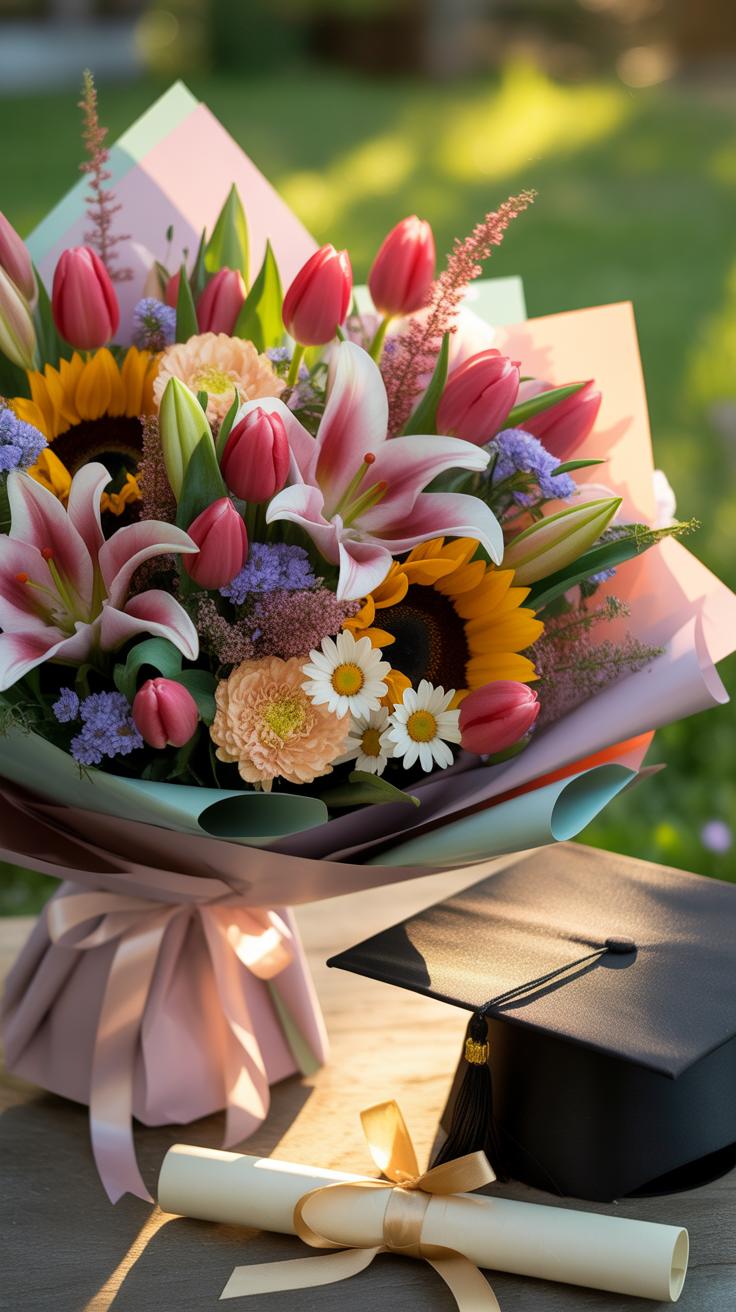
Spring graduations align with the natural blooming cycle of peonies and tulips. Peonies represent prosperity and honor which fits a commencement ceremony perfectly. These flowers have thick stems and large heads that provide structural volume to a bouquet. They thrive in cooler May temperatures. Tulips offer a clean look and symbolize new beginnings. They are easy to find and come in many colors.
Summer ceremonies require heat tolerant flowers like sunflowers and zinnias. Sunflowers represent adoration and longevity because they track the sun. They handle direct sunlight better than soft petal varieties. Orchids also work well for summer events because they are tropical and hardy. They symbolize strength and rare beauty. Choose these blooms to ensure the bouquet remains upright during long outdoor ceremonies in the heat.
How Seasonal Availability Affects The Meaning And Freshness Of Your Bouquet
Seasonality dictates the chemical health of the flower. Out of season flowers require long distance shipping in refrigerated trucks. This process stresses the stems and depletes the sugar levels in the petals. A stressed flower wilts faster and loses its symbolic impact. Fresh local flowers have stronger cell walls. They look vibrant in graduation photos. Freshness ensures the message of success stays clear.

Buying in season also links the graduation date to historical cycles. Victorians used seasonal floriography to send specific messages based on what grew at that time. Using local June roses for a June graduation connects the event to the earth natural timeline. It creates a stronger sensory memory for the graduate. Always check local crop reports before ordering. Choosing what grows naturally ensures the highest quality and best value.
How To Present A Graduation Flower Bouquet With Meaning And Grace
The Etiquette Of Giving Flowers At A Graduation Ceremony
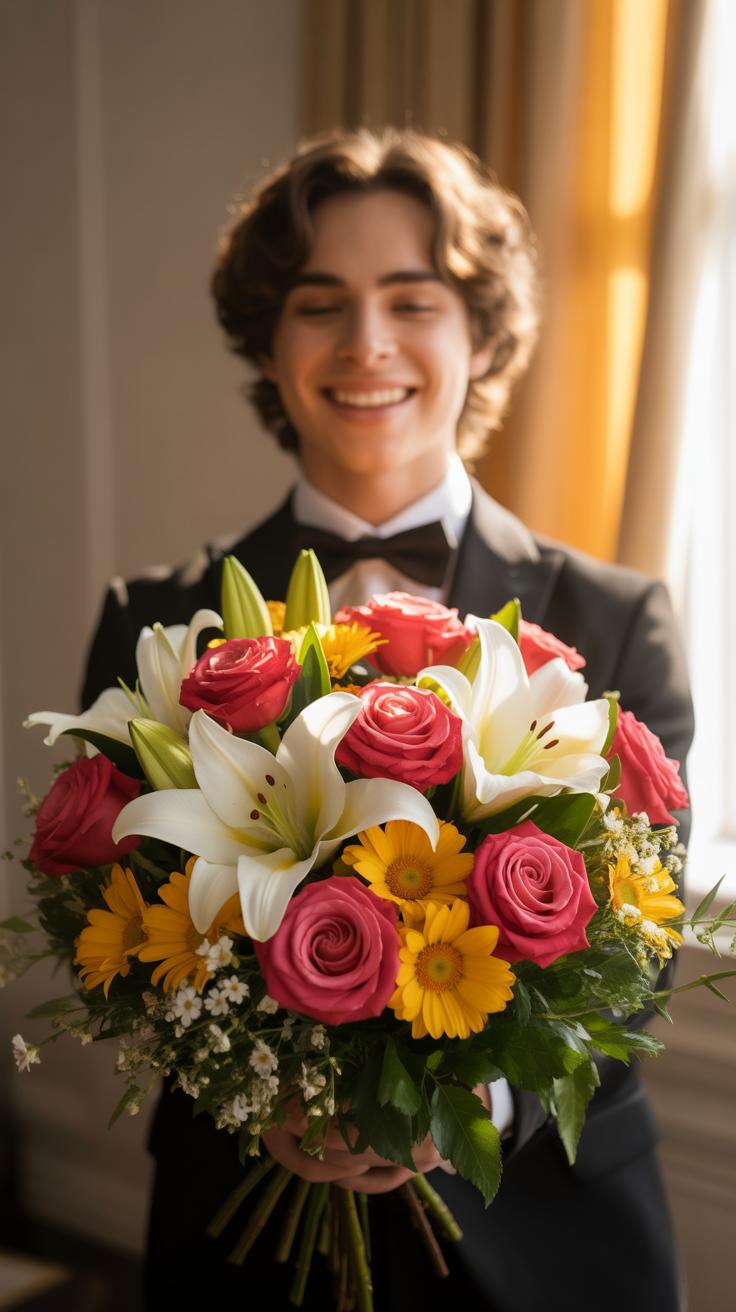
Timing defines the impact of your gift. Do not hand flowers to a graduate before the ceremony begins. Graduates must keep their hands free for diplomas and handshakes. Carrying a bulky bouquet during the procession is cumbersome and violates formal protocol. Wait until the ceremony concludes. Find a designated meeting spot outside the venue to present the arrangement during the celebration phase.
Professional presentation requires practical consideration for the environment. Use steady handheld bouquets or leis rather than heavy glass vases. Graduates move frequently between photo sessions and receptions. Choose flowers with sturdy stems like roses or lilies that survive hours without a water source. Ensure the stems are wrapped in ribbon or decorative paper to prevent pollen or moisture from staining the graduation gown.
Adding A Handwritten Note To Explain Your Flower Choices And Their Meanings
A note converts a standard gift into a strategic message. Use a small, high-quality card to decode the symbolism of your flower choices. Mention specific traits like the strength of a protea or the wisdom of an iris. This creates a lasting connection between the graduate and the floral selection. Keep the text brief and legible to ensure the message remains the focus.
Draft your note using white or cream cardstock to maintain a professional appearance. Use ink that does not smudge if it contacts water from the stems. Place the note in a secure envelope and tuck it deep into the bouquet. This prevents the card from falling out during the post-graduation rush. Clear communication of flower meanings ensures the recipient understands your intentional investment in their future success.
Frequently Asked Questions

What are the most common flower meanings for graduation for a beginner to know?
Understanding flower meanings for graduation starts with a few classics. Yellow roses traditionally symbolize friendship and new beginnings, making them a joyful choice for a commencement ceremony. Orchids represent strength and integrity, perfectly honoring a graduate’s hard work. If you want to convey admiration, pink carnations are a wonderful pick. Starting with these recognizable blooms ensures your floral gift carries a thoughtful, heartfelt message that celebrates their academic achievement beautifully.
How do I choose the right bouquet based on flower meanings for graduation?
When selecting a bouquet, first consider the graduate’s personality or their field of study. For a bold achiever, try bright sunflowers to represent adoration and longevity. For someone entering a creative field, purple iris symbolizes wisdom and inspiration. Once you have picked your primary flowers, pair them with baby’s breath to represent pure intentions. Using these symbolic choices ensures your gift is deeply personalized and resonates with their unique journey and future.
Can I create a meaningful graduation bouquet on a tight budget?
Absolutely! You don’t need an expensive arrangement to convey deep sentiment. Budget-friendly options like daisies symbolize innocence and new starts, making them ideal for young graduates. Alstroemerias are another affordable choice representing devotion and prosperity. To save money, buy these stems individually at a local market and wrap them in simple kraft paper with a handwritten note explaining the symbolism. This DIY approach adds a priceless personal touch to your floral gift.