
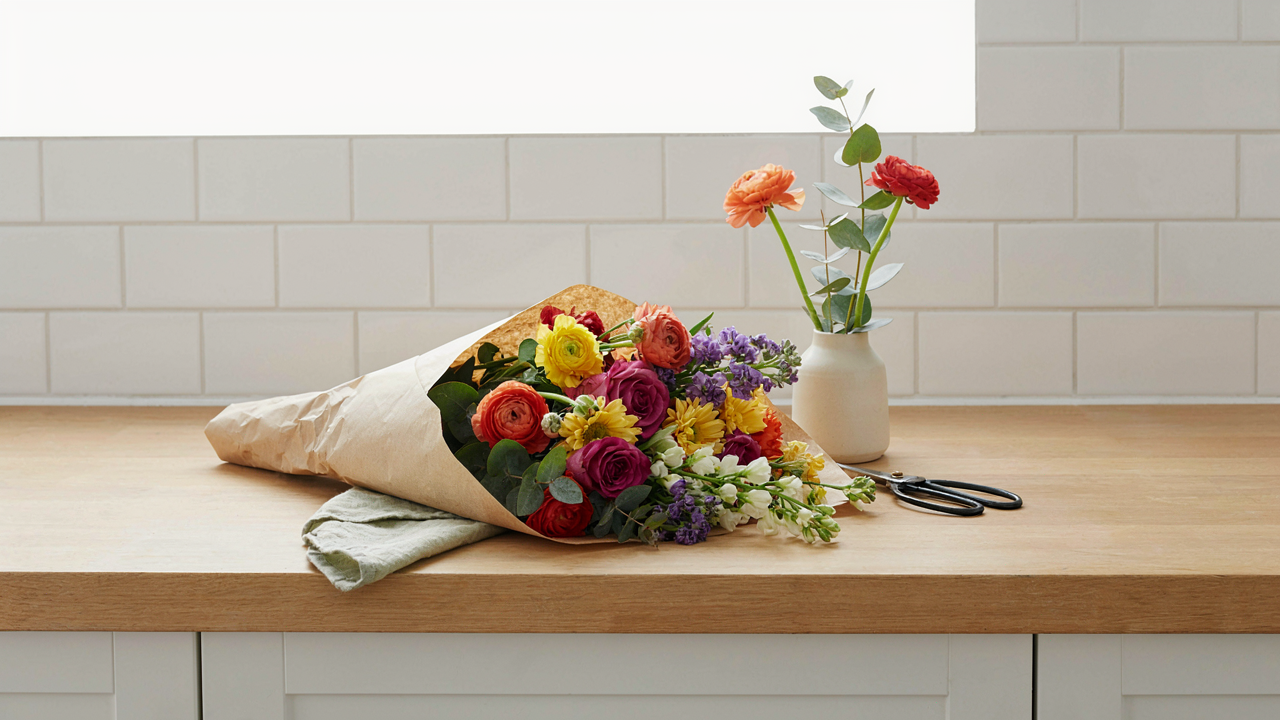
The Unboxing Fallacy: Why Your Flowers Die Fast
What Actually Kills Flowers On Arrival
You want to feel like you made the right choice by ordering them online instead of grabbing grocery store stems. Here’s what kills that feeling: most flowers die because you treat unboxing like opening a gift instead of performing triage. The real culprit is simple neglect during the first two hours after the box lands on your doorstep. Flowers shipped in subscription boxes arrive dehydrated. The florist cut them, packed them wet, then they spent 24 to 48 hours in a sealed box losing water vapor constantly. You open the box, admire them, take photos, arrange them in a vase with old water. By then they’re already in shock.
The common advice tells you to trim the stems and add flower food. That’s incomplete. Flower food alone does nothing for a stem that’s already air-locked and can’t absorb water. The real mechanism comes from biology: a flower’s vascular system works like any plant’s capillary action. Air bubbles block that action. Every hour you delay removing those bubbles, the stem dies further up the flower. You can’t reverse that death once it happens.
The Two Hour Hydration Window Nobody Mentions
Florists call this the conditioning phase. Most beginners skip it entirely. When flowers arrive, they’ve been sitting in low humidity and fluctuating temperatures. Their cells are depleted of water but their stems are closed off by air and protective sealant from the packaging process. You have approximately two hours to reverse this before permanent wilting begins. Opening the box and letting them sit in room temperature air accelerates dehydration, not fixes it.
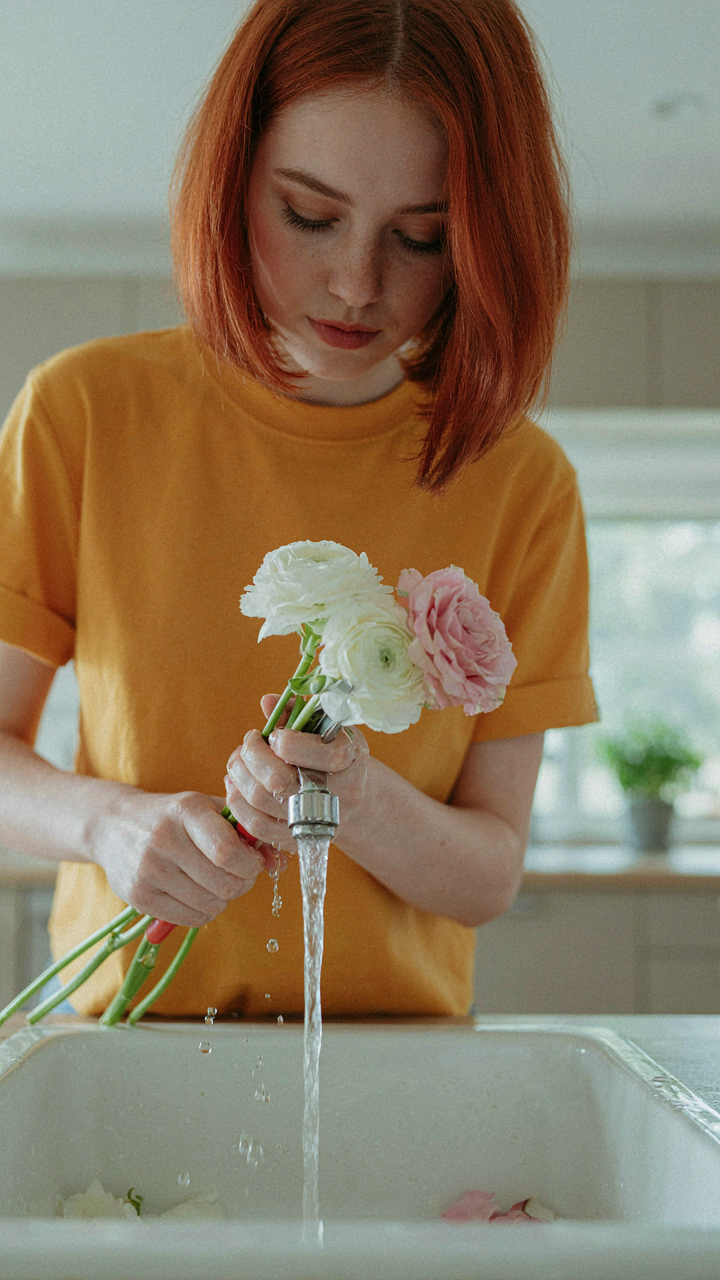
Here’s the protocol that actually works: remove flowers immediately, cut one inch off each stem at a 45 degree angle under running water, and submerge them in room temperature water for 30 to 45 minutes before arranging. That submersion forces water into the stem cells and removes air blockages. The cold water slows down their metabolism while rehydration happens. After conditioning, arrange them in a vase with fresh water and flower food. Skip the conditioning window and you’re watching a two week subscription become a three day decoration.
The Cold Chain Protocol: Preserving Your Flower Subscription
What Happens After Harvest
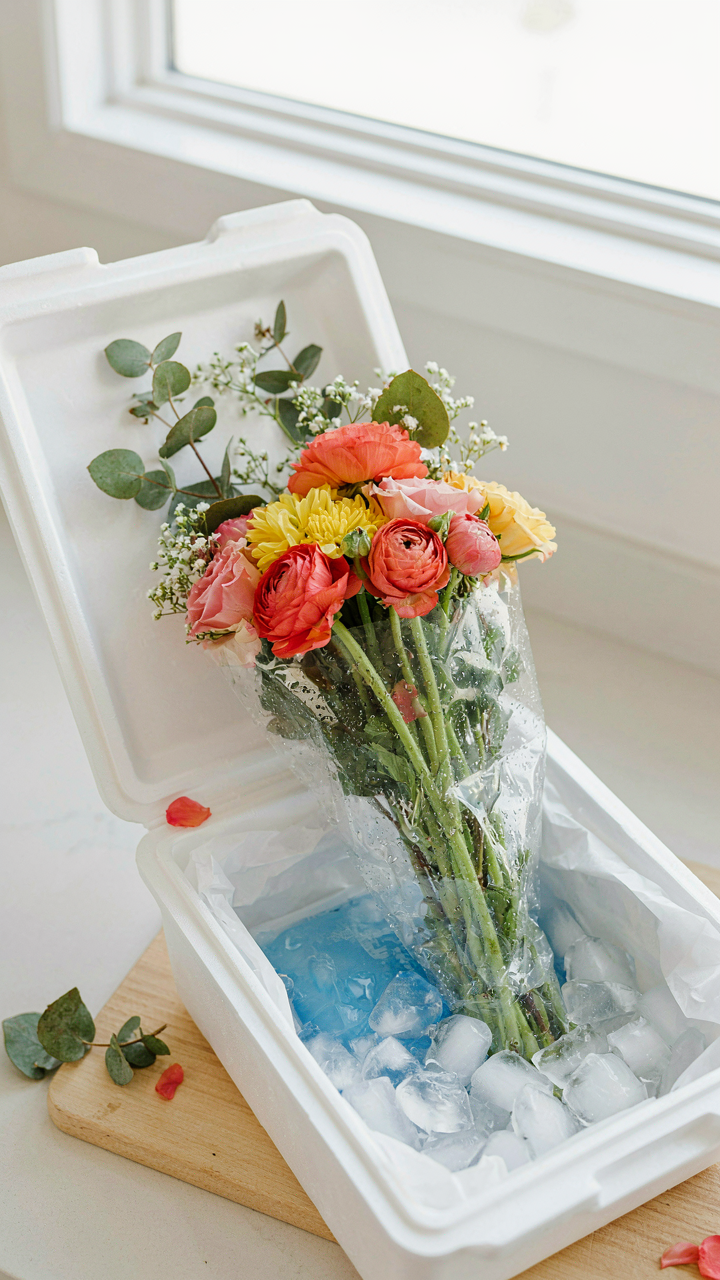
You care about this section because you’re afraid of wasting money on dead flowers. Here’s the mechanism: flowers are living tissue in arrested decay. The moment a florist cuts a stem, respiration accelerates and microbial growth begins. Temperature controls this biological clock. Every degree above optimal storage temp speeds deterioration exponentially. Growers and shippers know this. They keep flowers between 34 and 38 degrees Fahrenheit during transit to slow metabolism and bacterial colonization of the stem vascular system.
Most subscription services lose flowers to poor post-harvest handling before they leave the warehouse, not in your home. The real variable isn’t your care at unboxing. It’s whether the company refrigerated flowers immediately after cutting, maintained consistent cold chain through processing, and shipped them in insulated packaging with ice packs. If they didn’t, no amount of your own care fixes the damage already done.
Unbox Without Breaking The Chain
Open your box immediately upon arrival. Don’t leave it sitting on your porch or in a warm room. The flowers inside continue respiring and competing for oxygen in sealed packaging. Condensation buildup and heat acceleration happen faster than most people realize.
Remove each stem from its packaging and recut the base at a 45-degree angle under running water. Remove foliage that sits below the waterline to prevent bacterial bloom in the vase. Place stems in a clean vase filled with room-temperature water mixed with flower food if included. Never use hot water. Never use the same vase without cleaning it first with bleach solution and rinsing thoroughly.
Deconstructing The Flower Packaging: Beyond The Bouquet Wrap
How To Remove Protective Layers Without Damage
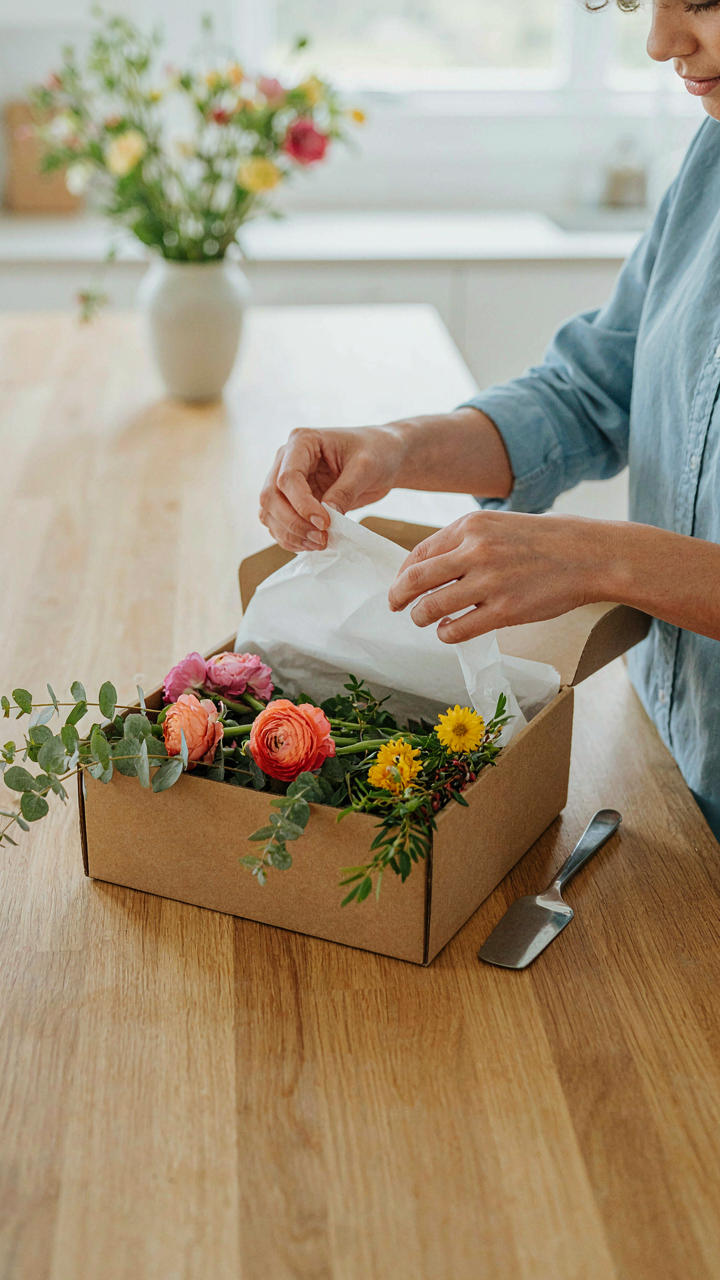
You want to feel competent opening this box without destroying what you paid for. That’s the real move here. Think of flower packaging like a system of load-bearing layers in architecture: each one serves structural purpose, not decoration. The outer kraft box protects transit damage. The tissue wrap prevents stem friction. The water-soaked floral foam cushions impact. Remove them in reverse order of their load capacity or you collapse the structure you’re trying to preserve.
Start at the exterior and work inward with deliberate slowness. Peel the kraft tape along the box seams rather than across them. Lift tissue layers vertically, not horizontally, so stem bands don’t snag on paper fibers. The floral foam sits at the bottom wrapped in plastic to retain moisture. Squeeze the sides gently to loosen it from the box walls before lifting. Never pull stems through wrapping. Stems rupture under tension, cutting water uptake by up to fifty percent instantly.
Unwrapping Instruments That Actually Work
Most people use their fingers and waste ten minutes tearing paper. Buy two tools that cost eight dollars combined and finish in ninety seconds. Floral shears cut through stems and wrapping cleanly. Kitchen scissors work for paper only. A flat spatula or old credit card slides under tape without puncturing kraft board. These three items eliminate the friction that turns a box opening into a production.
Keep shears sharp. Dull blades crush stem tissue instead of cutting clean, introducing air pockets that block water absorption. Cut tape parallel to box edges, never diagonally. A diagonal cut requires more pressure and risks blade slip into the flowers themselves. Use the spatula to lift floral foam from box corners before attempting to remove it by hand. This single protocol step prevents the foam from tearing and losing water, which means your flowers stay conditioned for three to five days longer.
The Hydro Shock Method: Reviving Thirsty Flower Boxes
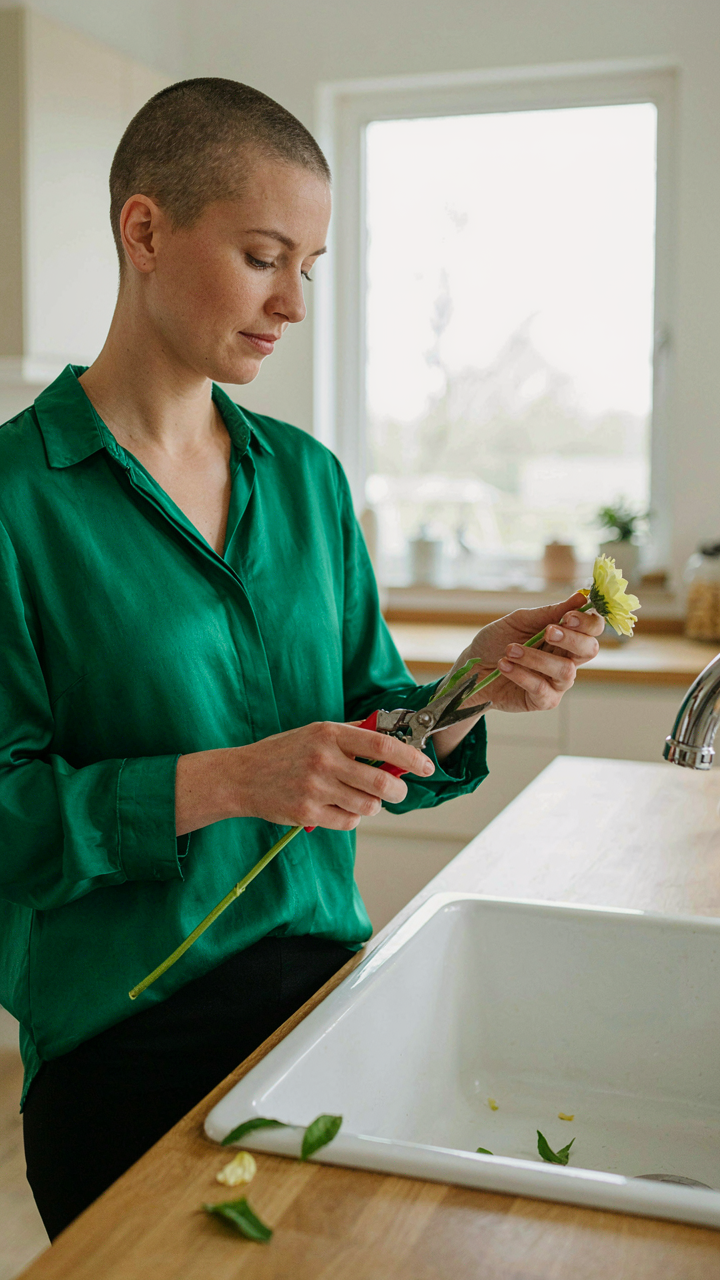
Cut Stems At The Right Angle
You want your flowers to look Instagram-worthy without admitting you’re nervous about killing them. Here’s what actually matters: stem cutting uses the same principle as hydraulics in engineering—surface area determines flow rate. A fresh cut exposes new vascular tissue. Flowers arrive dehydrated after transit, and a sealed or crushed stem can’t absorb water fast enough to recover.
Cut stems at a 45-degree angle using sharp shears or a knife. Never use dull scissors—they crush the stem and collapse the water-conducting cells. Cut one to two inches off the bottom. Work over a sink or bowl since you’ll lose some water immediately. Make the cut while holding the stem under running water to prevent air from entering the vascular tissue. Do this before placing flowers in a vase, not after.
Temperature And Flower Food Matter More Than You Think
The common advice is to use lukewarm water. That’s incomplete. Flowers absorb cold water more efficiently because it holds more dissolved oxygen, but only after they’ve recovered from shock. Start with room-temperature water for the first hydration window, then switch to cool water for maintenance.
Flower food serves a specific function: it feeds bacteria in the water and adjusts pH to keep stems open. Don’t skip it because you assume it’s marketing. Mix it precisely according to package instructions. The ratio matters because too much can actually clog stems, and too little wastes the product. Change the water every two to three days and add fresh food each time. This protocol prevents bacterial buildup that blocks water uptake and shortens vase life.
The “Flower First Aid” Kit: Essential Tools For Flowers Delivered
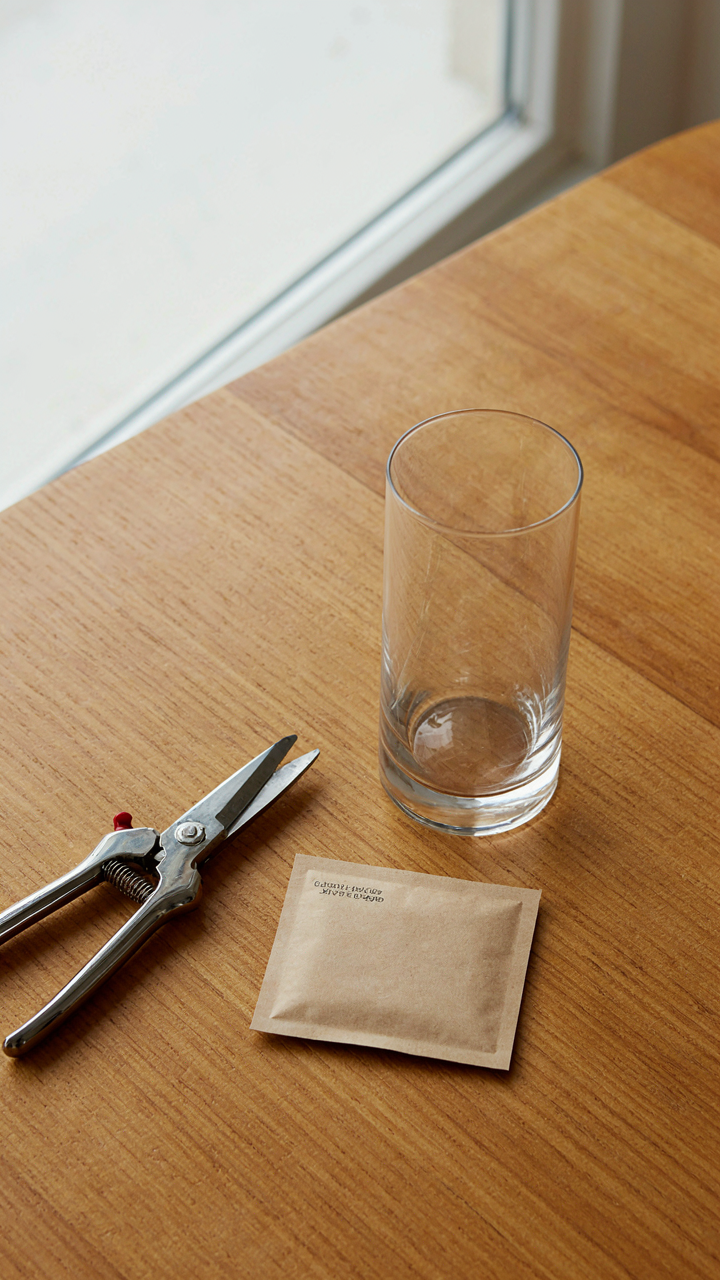
What You Actually Need On Day One
You’re worried you’ll mess this up and waste money. That’s the real reason you’re reading this section. Here’s the mechanism: flowers arrive dehydrated after transit, and every hour without intervention tanks their lifespan. Think of it like triage in emergency medicine. Your job is rapid stabilization, not aesthetic arrangement. You need three things to stop deterioration before it starts: sharp cutting tools, a clean vessel, and hydration formula. Nothing else matters on arrival day.
- Sharp floral shears or knife: Clean cuts seal the stem properly. Scissors crush fibers and block water uptake. Dull edges create jagged breaks that accelerate bacterial colonization. One good pair outlasts dozens of bad ones.
- A clean vase or container: Any glass vessel works if it’s been washed. Bacteria in old residue will colonize fresh stems within hours. Ceramic and opaque containers work too, but glass lets you monitor water clarity and stem condition daily.
- Flower food packet: The powder isn’t decoration. It contains three components: sugar for energy, citric acid to lower pH and prevent bacterial growth, and biocide to kill microbes. Use it every single time the packet is included.
- Lukewarm water from the tap: Not cold, not hot. Warm water opens the stem’s vascular tissue and accelerates hydration. Cold water slows absorption when flowers are already stressed from shipping.
- Paper towels or clean cloth: You’ll remove lower foliage and wipe stems. Wet leaves touching the vase bottom breed bacteria. Keep one cloth designated only for flowers to avoid transferring contaminants from kitchen use.
The moment flowers arrive, you cut stems at a 45-degree angle while holding them under running water. This prevents air pockets from forming in the cut. Drop them directly into a vase with flower food already mixed in. The entire process takes four minutes. Skip this step and you’ve lost a full day of vase life before you even arrange anything.
Remove Damage Before Damage Spreads
Florists ship flowers with some foliage still wet and bruised. You won’t see this discussed because it sounds like a complaint instead of a step. It’s neither. Wet, crushed leaves are bacteria farms. They leach into the water and kill the cut flowers from inside. This is why leaf removal matters more than most people think, not less.
Pull or cut off every leaf that sits below the waterline. Go lower than feels necessary. Any foliage submerged in water will rot within 24 hours and inoculate the entire vase. Check for bruised or dark spots on petals, especially on roses and peonies. These won’t recover. Pinch them off at the base where the petal connects. Check thorns too. If a thorn is broken or cracked, remove the entire segment of stem below it. A compromised thorn site becomes an infection point. The goal isn’t perfection. The goal is eliminating vectors for bacterial takeover.
Vase Selection As Strategic Placement: The “Architectural Fit”
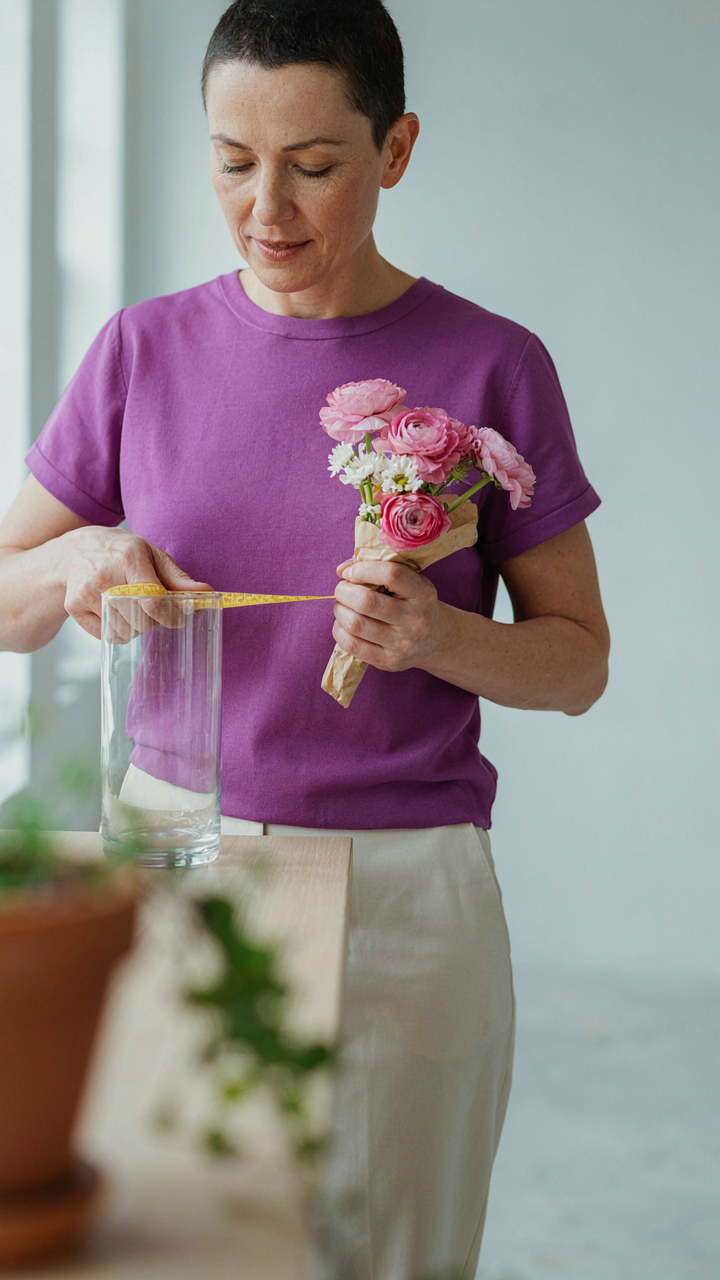
Volume Matching Drives Stem Stability
You care about this because picking the wrong vase feels like failure, even though it’s just physics. In biology, form follows function means structure adapts to purpose. Your vase does the same. The ratio of water volume to stem count determines whether flowers stay upright or collapse sideways into the arrangement you didn’t intend.
Most people fill vases too full or too shallow without measuring. The mechanism is simple: stems need enough water to drink without so much that the weight shifts the center of gravity. A standard subscription box with twelve stems needs a vase holding at least two liters. Narrower vases work with fewer stems. Match the vase opening diameter to stem count, not aesthetic preference.
Material Density And Water Retention
Ceramic and glass behave differently because their porosity affects evaporation rates. Ceramic wicks moisture through its walls, meaning flowers dry faster than in glass. Glass holds water stable but shows algae growth if you don’t refresh the water every two days. Acrylic vases leach microplastics into the water over time, which shortens stem lifespan.
The real choice comes down to maintenance effort. Glass demands more attention but delivers maximum flower longevity. Ceramic works if you’re replacing water daily. Measure your actual commitment before buying. If you’ll skip water changes, glass wins. If daily maintenance fits your routine, ceramic’s aesthetic works. Pick material based on your protocol, not the room’s decor.
The “Staged Release” Technique For Flower Subscription Boxes
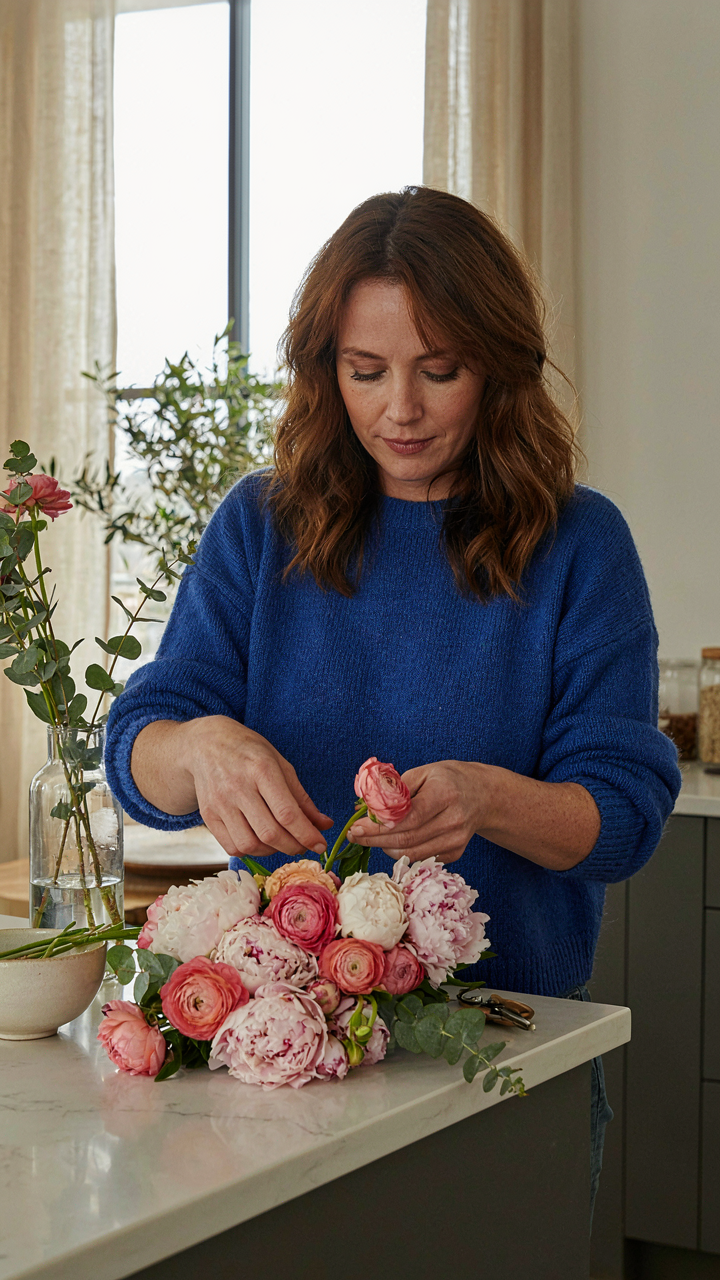
Sort By Bloom State And Fragility
You want people to think you know what you’re doing with flowers. Here’s the mechanism: flowers in a box are in different stages of maturity, and you need to arrange them so the ones that die first don’t kill the visual impact of the whole arrangement. This is basic triage, borrowed from biology’s concept of succession—the predictable order in which organisms colonize and change an environment. Flowers follow the same pattern. Some open in hours. Others take days. Some bruise if you touch them wrong.
Group your flowers by two variables: how open they already are and how delicate their petals feel. Closed buds go in the back or center. Half-open flowers go in the middle layer. Fully open blooms go on the perimeter where they’re visible but least likely to get crushed. Fragile varieties like garden roses or peonies need different handling than hardy flowers like carnations or hypericum berries. This isn’t aesthetic preference. This is structural engineering.
The Visual Sequence That Holds
Most people stuff a box without thinking about how the arrangement will evolve over the next week. That’s why their unboxing looks good for two days then collapses. You’re not just arranging flowers today. You’re architecting how they’ll look on day three, day five, and day seven.
The mechanism is simple: place your most visually dominant flowers (size, color saturation, or quantity) where they’ll remain intact longest. Delicate, fast-fading flowers go where they’ll fade into the back or be naturally hidden by foliage as time passes. This creates perceived freshness even as individual blooms age. You control the visual narrative by controlling which flowers are prominent at which moment. Arrange denser clusters in the front that can absorb petal drop without looking sparse.
Beyond The Bloom: Extending The Life Of Your Flower Box Gift
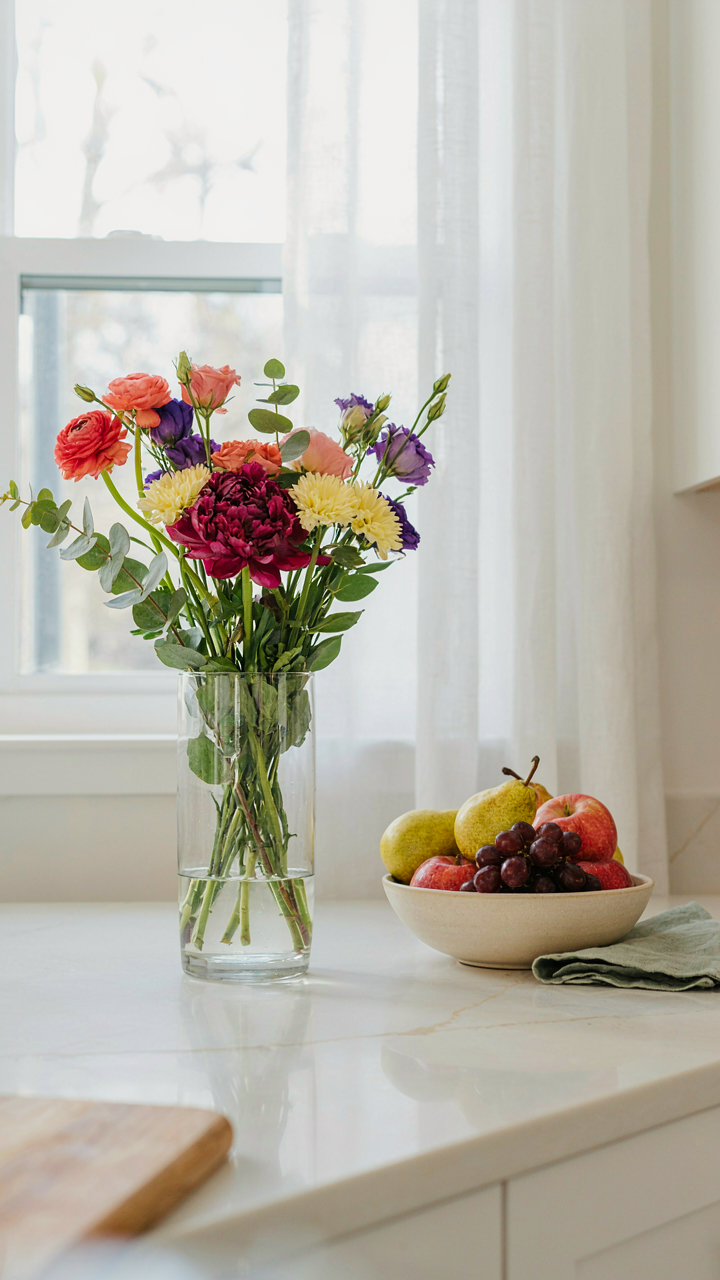
Where Your Flowers Actually Need To Live
You want the flowers to last because throwing away a gift feels like wasting money, and money is status. Here’s the mechanism: flowers die faster in heat and direct light because those conditions accelerate transpiration, the process where water evaporates from plant tissue. Think of it like thermodynamics in biology. Your subscription box flowers are at war with entropy the moment they leave the cold chain. Temperature and light placement isn’t about creating ambiance—it’s about controlling the rate of cellular breakdown.
Position your box in a cool spot between 65 and 72 degrees Fahrenheit, away from direct sunlight, heating vents, and ripening fruit. Indirect light keeps the flowers photosynthesizing without triggering stress responses that speed up wilting. A windowsill with filtered morning light works. A dark corner away from heat sources works better. Avoid kitchen counters near appliances. The goal is stability, not beauty. When you remove flowers from the box to arrange them, apply this same logic to your vase placement.
Cut Stems, Fresh Water, No Sentimentality
The common advice about flower care skips the actual reason you’re changing water: bacteria colonize the cut stem ends within hours, creating a biofilm that blocks water uptake. This happens whether the water looks clean or not. You can’t see the problem, which is why people ignore it.
Change the water every two days, not once a week. Remove the flowers from the vase completely. Rinse the vase with clean water and refill it. Re-cut the stems at a 45-degree angle using a sharp knife or floral shears, removing about half an inch. The fresh cut bypasses the bacterial seal and restores direct access to the vascular tissue. Do this on day one, day three, day five, and beyond. Each stem re-cut buys you another 3 to 5 days of life. The protocol matters more than the intention.
Send Flowers: Gifting The Experience, Not Just The Goods
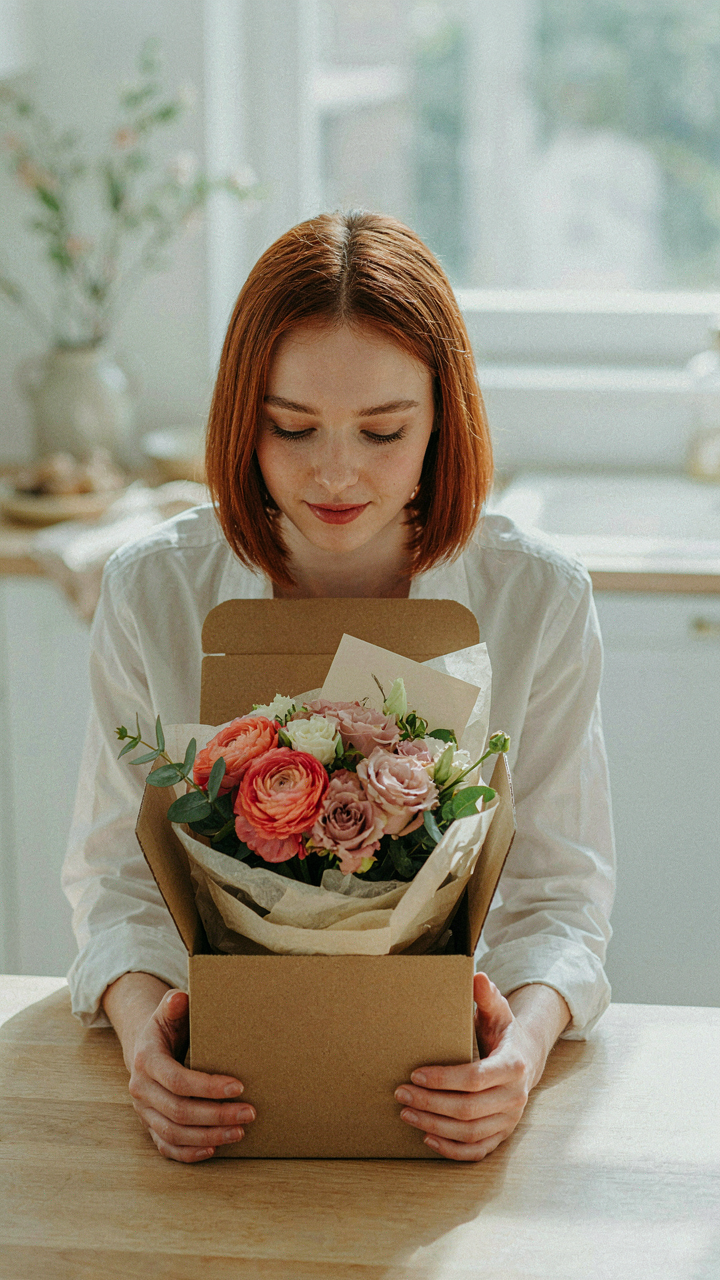
The Unboxing Becomes The Gift Itself
You want the recipient to feel like you spent more than you did. That’s the real mechanism at work here. In retail psychology, this is called the “unboxing premium” – the idea that presentation quality signals value independent of what’s actually inside. A subscription box creates a ritualistic moment. The recipient doesn’t just get flowers. They get a staged reveal, a moment of anticipation, and a story to tell. This compounds the perceived value beyond the stem quality or arrangement skill.
The tactical move is simple: control the first five seconds of unboxing. Remove filler packaging that looks cheap. Use tissue paper that feels substantial. Include a physical card, not a printed label. These details cost almost nothing but operate on the same principle as luxury hotel check-ins. The recipient’s brain registers care through texture and deliberate sequencing. That signal travels further than a generic bouquet ever could.
The Message That Actually Lands
Most gifting advice says “write something heartfelt.” Wrong. Generic sentiment dilutes impact. The real tactic is specificity tied to timing. Don’t write about the flowers themselves or make broad statements about their beauty. Instead, anchor your message to a recent moment, an inside reference, or a concrete reason why these flowers matter right now. The specificity creates the sense that you thought about this person, not just about the gesture.
Keep the message short. Three sentences maximum. One observation about them, one reason you sent these now, one forward-looking statement. Hand-write it if legible. The physical act of writing signals effort in a way typed text never does. Include it loose inside the box, not attached to the arrangement. The discovery matters. They find it while unboxing, which creates a pause and re-engagement with your intention.
The Flower Subscription Mastery Checklist
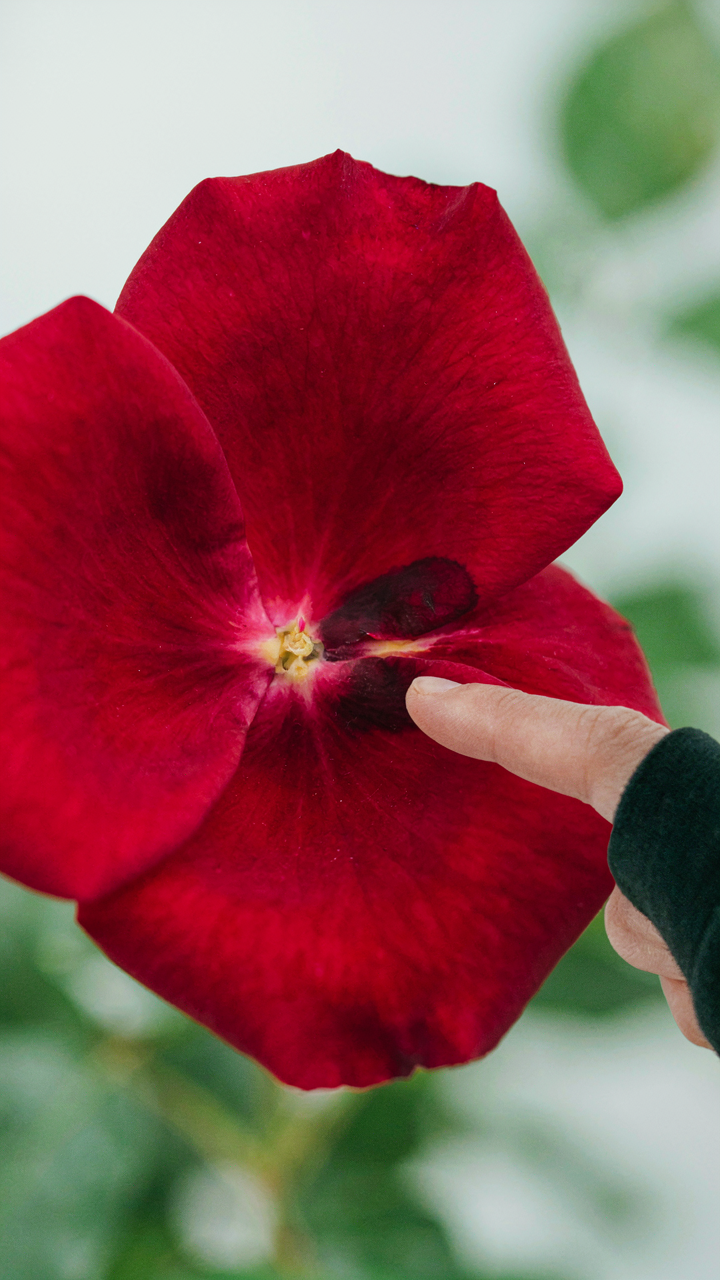
Unboxing Before Peak Wilting
You want this section because you’re afraid you’ll waste money on dead flowers. The mechanism is simple: flowers have a narrow window where they’re viable, and unboxing speed determines whether you catch them in that window or miss it entirely. Most guides skip this because it’s not glamorous, but it’s the only variable that matters.
Unbox within two hours of delivery arrival. Cut stems at a forty-five-degree angle immediately after opening. Remove lower leaves that would sit below the waterline. Fill a clean vase with room-temperature water mixed with the included floral preservative. Place in indirect light away from ripening fruit and heating vents. This sequence prevents bacterial colonization and maximizes vase life from the moment the box opens.
Diagnosing What Went Wrong
Everyone tells you to “check the petals for damage” and calls it troubleshooting. That’s lazy. Real diagnosis means isolating which variable failed: was the flower already dead before shipping, did temperature kill it in transit, or did the florist mishandle it? These require different responses.
If flowers arrive limp but not brown, they’re dehydrated, not dead. Recut stems and submerge the entire bunch in cool water for two hours before arranging. If petals show brown spots or slime on stems, bacterial rot started before arrival, meaning the florist’s cooling chain failed. Discard those stems and keep the rest separated. If flowers arrive dry and shriveled with no recovery after rehydration, temperature fluctuation during shipping caused cellular collapse, which means you need a different subscription service with better logistics. Document photos of damaged flowers for future claims, because most services credit your account only when you show evidence.
The Real Obstacle Isn’t The Flowers; It’s Your Untrained Eye For Efficient Beauty
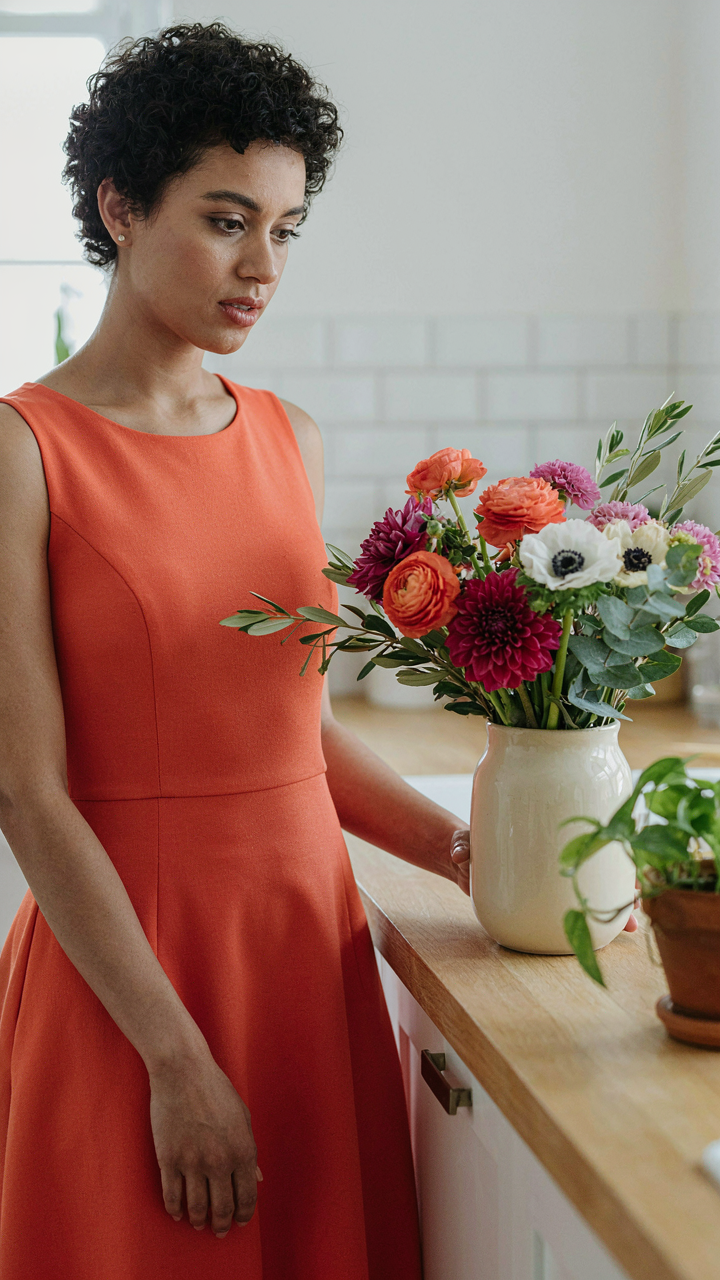
Most people waste their first three subscriptions learning what they should know before ordering. You won’t. The skill isn’t unboxing flowers. The skill is seeing value in dead stems before they become dead stems. Open your next delivery and ask one question: which blooms will still stand in two weeks? That question changes everything. Your eye either trains itself or it doesn’t.



