
The Folly Of Generic Petals: Why Most Long Distance Flower Gifting Fails

Convenience Over The Actual Recipient
You’re hoping a nice arrangement lands and the gesture counts for something. Here’s what actually happens: most long distance flower gifting fails because the sender optimizes for ease of purchase, not impact on the receiver. You click through a website, pick the “premium” tier, and assume the arrangement’s quality translates to emotional weight. It doesn’t. The recipient gets flowers that look decent for three days, then watches them brown in a vase they didn’t choose. The gifting mechanism breaks the moment you treat flowers like a commodity rather than a designed object for a specific space.
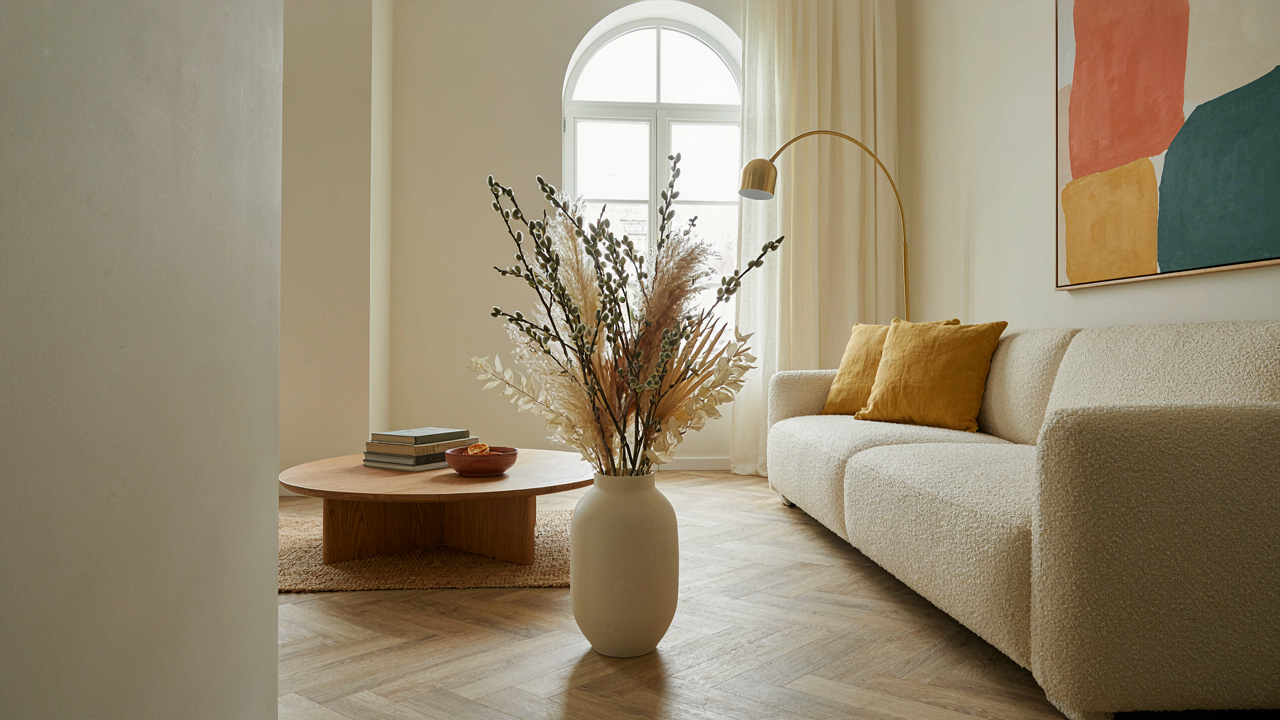
The real cost isn’t the price you paid. It’s that you wasted the opportunity to signal that you know how this person lives. A stylish home requires flowers that fit its visual language. Most long distance services ship the same five arrangements to every zip code. You’re not sending a gift to your recipient. You’re sending what their neighborhood gets. The correction is simple: identify the home’s dominant color palette and material tone before you order anything. Then find a local florist in their area and brief them on those specifics. It takes fifteen minutes and eliminates the entire category of generic failures.
The Three Day Expiration Problem
Biology teaches us about half-life in decay. Flowers operate on a half-life of their own. Cut blooms begin losing structural integrity the moment they’re separated from root systems, and most long distance shipments mean your gift arrives already one or two days into its decline cycle. You send something on Monday. It travels Tuesday. It arrives Wednesday looking like Wednesday, not the fresh abundance the florist photographed. The recipient doesn’t see your intention. They see wilting evidence that you ordered from a catalog.
The mechanism that kills most arrangements isn’t the flowers themselves. It’s the time between order and placement in water plus the shipping environment’s low humidity and temperature swings. Standard floral services account for this by shipping in floral foam that keeps stems hydrated, but that only extends the window, it doesn’t solve the core problem. Your alternative: send flowers that have architectural integrity beyond petal freshness. Branches with structural wood like pussy willow or contorted hazel. Dried elements that improve with time instead of declining. Succulents in a vessel that becomes part of the home’s design. These don’t expire on a three day timer. You’re buying longevity instead of the illusion of freshness.
Beyond Bouquets: The “Romantic Gift” As An Investment In Attention
The Symbol Does The Work You Cannot
You want to send flowers because you want credit for caring without being there. That’s not an insult—it’s the mechanism. Economics calls this “signaling,” and long distance flower gifting is pure signal transmission. The flowers aren’t the gift. They’re proof of intent. The recipient sees them and processes a message: “I thought about you on a specific day, and I acted.” Distance collapses for exactly that moment. What matters isn’t the bloom variety or vase quality. What matters is that something arrived that required you to plan and pay across miles.
The design of this signal determines whether it lands or dies on arrival. A commodity bouquet from a chain florist signals efficiency, not care. A curated arrangement from a local grower in the recipient’s city signals research and intentionality. You picked a specific shop. You asked questions about what thrives in their climate. You chose blooms that won’t wilt in three days. The flowers become a vessel for that decision-making, not decoration. This is why the unboxing moment matters. They photograph it, they tell someone, they feel the texture. The signal propagates.
Delivery As Choreography
Most advice says “add a note” or “pick the best time.” That’s incomplete. Delivery is a scene you’re directing remotely, and the execution determines whether the gift reads as thoughtful or transactional. The recipient’s experience isn’t just receiving flowers—it’s the interruption, the surprise, the physical act of opening something beautiful. That choreography is where attention becomes visible.
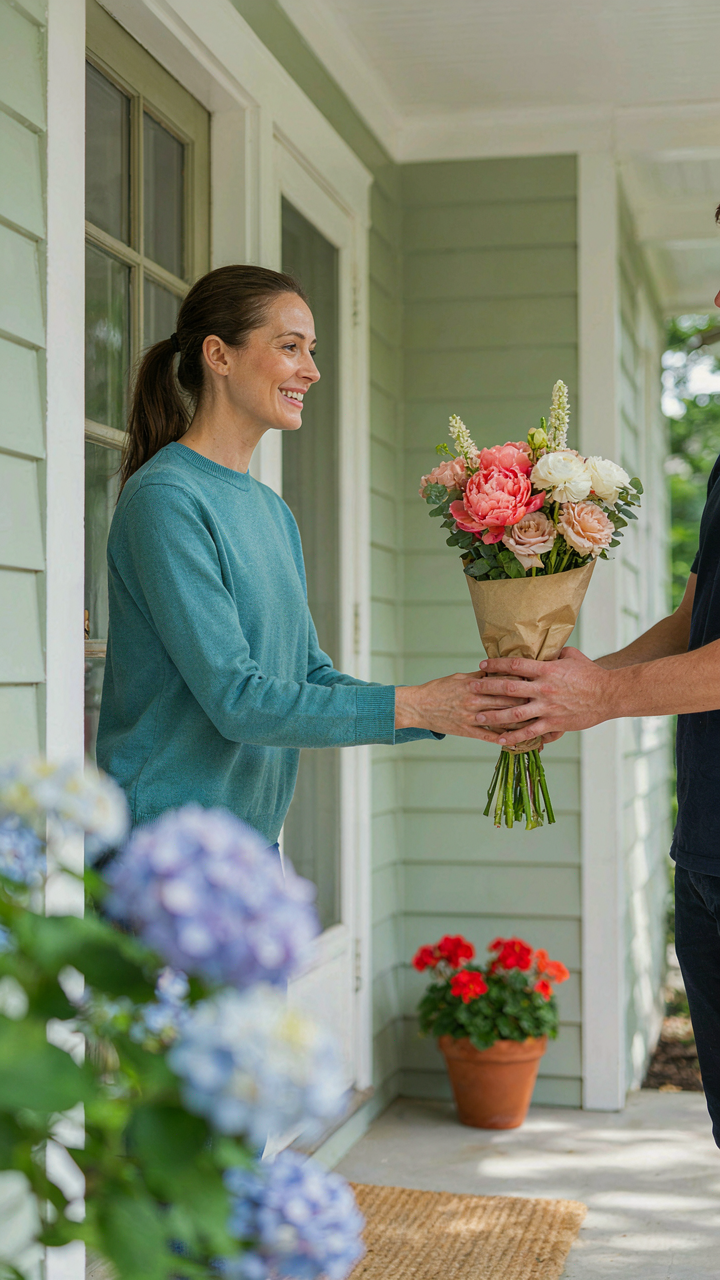
Time the delivery for a moment when they’re likely home but not expecting it. Weekday morning before noon works better than evening. They’re fresher. They process it with energy, not fatigue. Coordinate with the florist for a specific window, not a vague day. Call the recipient’s workplace or home directly if you can. You want a person to hand them the flowers, not a box left on a porch. When flowers arrive via human interaction instead of logistics, the recipient feels seen. They have a moment of surprise with another person present. That moment anchors the memory. The arrangement then sits in their home as a three-week reminder of that specific day when something interrupted their routine in a positive way.
The “Long Distance Love” Protocol: Orchestrating Presence, Not Just Delivery
Building Momentum Before Arrival
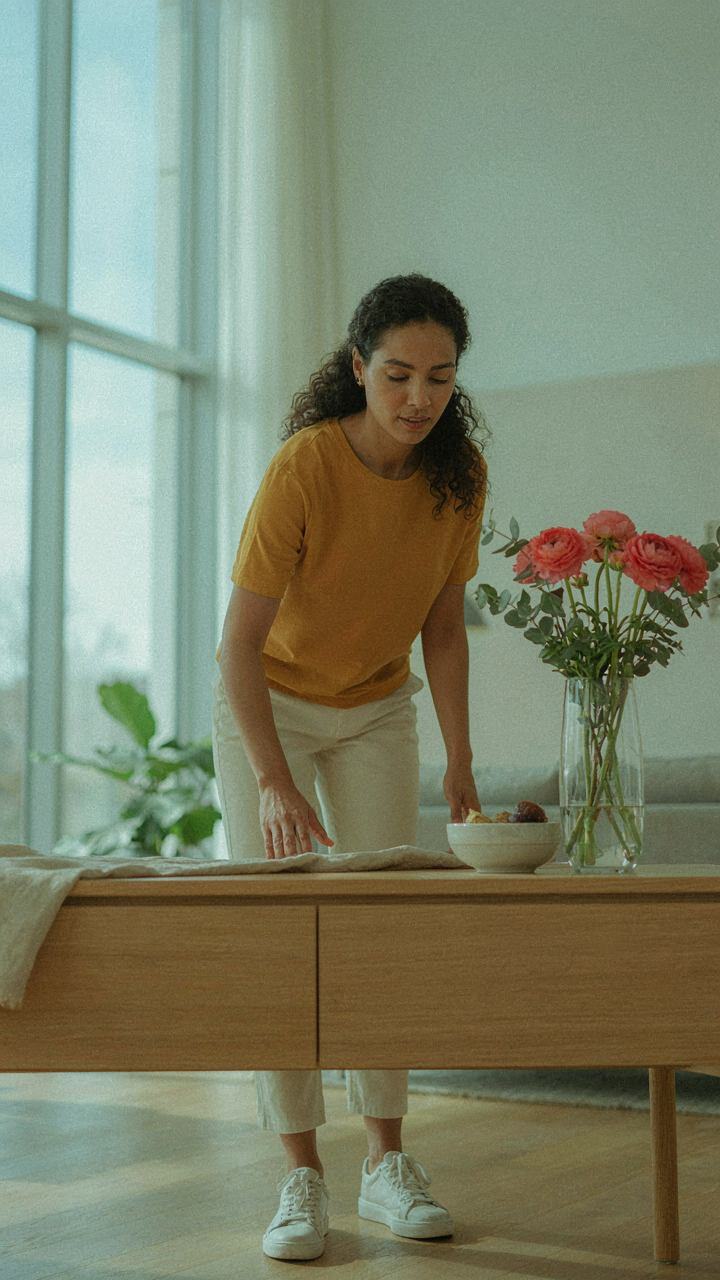
You want the recipient to feel like you orchestrated something rare, not just ordered from a catalog. That’s the real motive here. Anticipation works like compound interest in psychology: each small signal multiplies the impact of the final gesture. Send a message 24 to 48 hours before delivery stating exactly when the flowers will arrive, not vague timing. This shifts the recipient’s brain from passive receiver to active participant. They prepare space, clear a surface, maybe even adjust lighting. You’ve moved them from surprise into collaboration.
The pre-delivery cue also filters out the risk of missed deliveries or bad timing. Most long distance flower services don’t guarantee exact arrival windows, so you communicate the florist’s estimated timeframe directly. This transparency actually increases perceived value because the recipient sees you managed logistics, not just clicked a button. Include one detail about why you chose this specific arrangement or flower type. The specificity signals intent. Generic timing plus generic flowers equals generic gift. Specific timing plus stated reasoning equals deliberate choice.
Engagement After The Flowers Land
Most people think post-delivery means sending a follow-up message asking if flowers arrived. That’s lazy and backwards. Real post-delivery engagement uses the flowers as a conversation object, not a delivery checkpoint. Within 24 hours of confirmed arrival, send a message that references something specific about the arrangement you sent, then asks a direct question about how it looks in their space. Ask about the vase placement, the room light, whether the scent matches what they expected. You’re treating the flowers as a design element in their environment, not a transaction that ended.
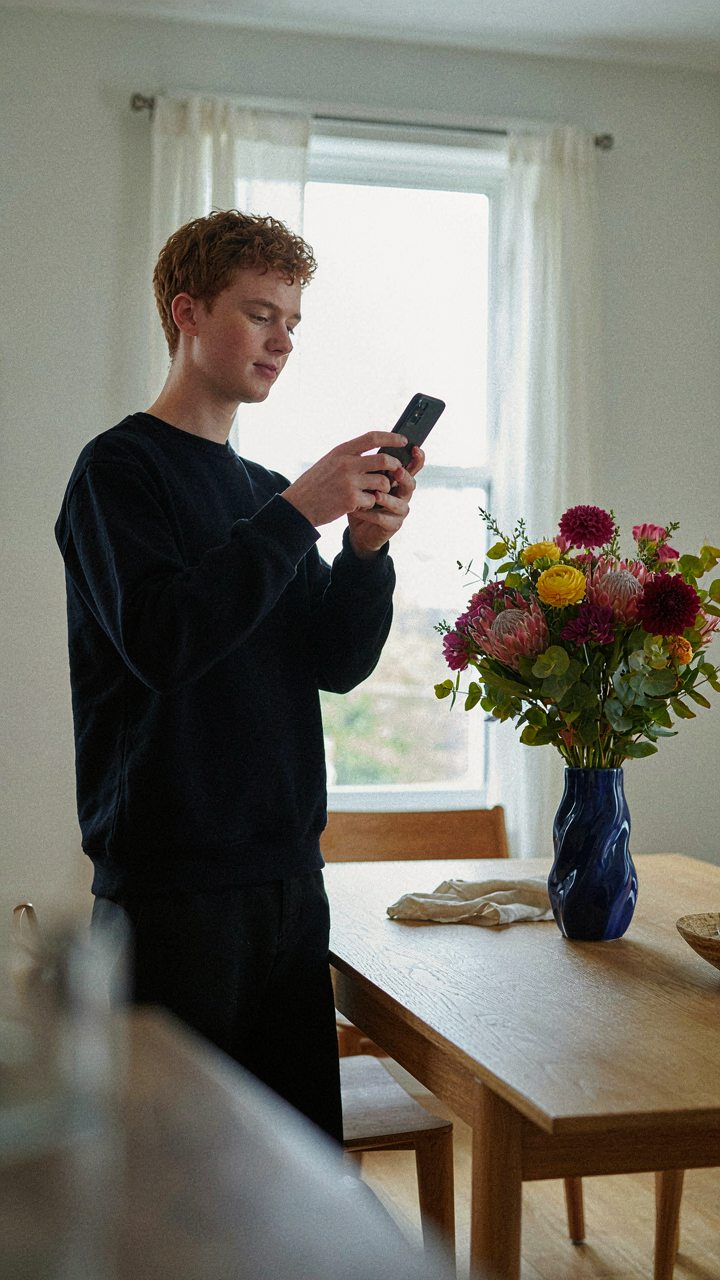
This approach creates a second touchpoint that most gift-givers miss entirely. The recipient must actively notice and assess the flowers to answer your questions. They photograph it. They rearrange it. They spend mental energy on your gift twice. The follow-up engagement phase extends the perceived duration of your gesture from the moment of delivery into a week-long interaction. Request a photo of the arrangement in their space if your relationship allows it. This transforms the flowers from object into shared experience.
Digital Flowers And The Gamification Of Affection: A Cybernetic Approach
Measuring What Actually Moves
You want proof that your gesture landed because you need to know you weren’t ignored. The mechanism here borrows from cybernetics: feedback loops. In control systems, feedback tells the machine whether its action achieved the desired state. Long distance flower gifting works the same way. You send flowers, then you measure response. Response means the recipient acknowledges receipt, posts the arrangement, mentions it in conversation, or sends a photo. Without this signal, you’re operating blind.
Most people skip this step entirely. They send flowers and assume the job is done. That’s passive. The real leverage comes from tracking what type of arrangement, price point, and delivery timing generates the strongest acknowledgment. Did they mention it immediately? Did they photograph it? Did they tell others? These signals become your data set for the next gesture. You’re not guessing anymore. You’re calibrating.
Adjusting The Next Move
Common advice says “send what feels right.” That’s avoidance disguised as intuition. Real adjustment requires iteration. You sent a mixed bouquet last time and got a generic thank you text. Next time, you send a single-stem luxury arrangement from a local florist in their city and get a phone call. That’s your signal to keep moving in that direction. Each gesture should be a deliberate test.
Track what changes between sends: flower type, color palette, delivery day, accompanying message length, presentation style. One variable at a time. When response improves, you’ve identified the lever. When it stays flat, you pivot. This isn’t sentiment. It’s design iteration applied to affection. The protocol is simple: send, measure response, adjust one element, send again, measure again. Repeat until you see sustained engagement.
The “Flower Box Gift” Principle: Curating The Experience
What Actually Goes In The Box
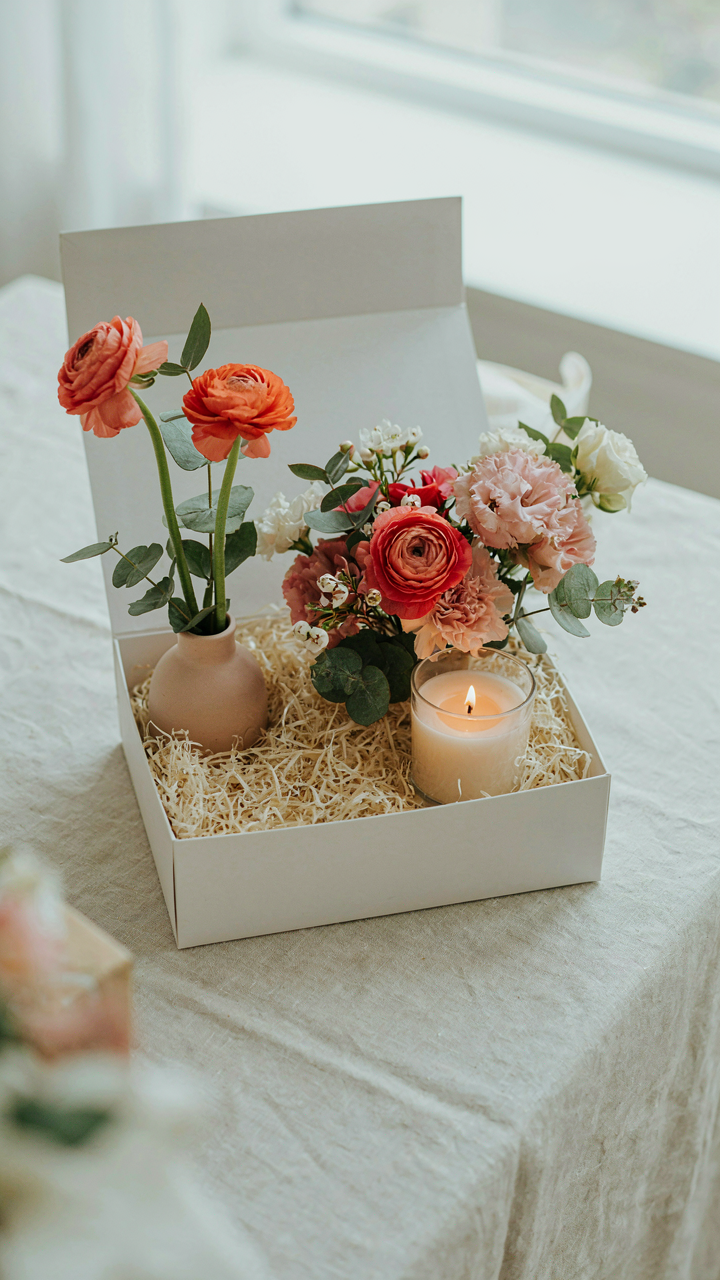
You want the recipient to feel like you spent money and thought. That’s the real motivation here. The mechanism is simple: flowers alone signal obligation. Flowers plus curated items signal intention. Most long distance gifting services stop at the arrangement itself. They miss the fact that unboxing a single product feels incomplete. A box with layered items creates narrative. The recipient unpacks something, then something else, then something else. Each layer extends the moment of receiving.
Complementary items work best when they serve the room where flowers will live. A candle with scent notes matching the floral arrangement creates cohesion. A ceramic vase designed to hold stems after the arrangement fades extends utility past the initial gift window. A hardcover book or quality notebook positioned as “something for quiet moments while looking at flowers” creates context. Small luxury items like specialty tea or single-origin chocolate pair well because they’re consumable and don’t compete for visual space. The rule: include nothing that fights the flowers for attention.
Texture, Sound, And The Unboxing Protocol
The moment someone opens the box is auditory and tactile before it’s visual. Kraft paper crinkles differently than tissue. Wooden crate slats create a specific sound when pried open. Recyclable packing peanuts feel different than air pillows. Most gifters ignore this entirely because they think sound doesn’t matter in a shipped product. It does. Luxury unboxing is a designed experience that starts the second fingertips touch the exterior.
- Kraft Paper Wrapping: Creates distinct crinkle sound. Signals natural, premium materials. Adds tactile resistance that slows unpacking and extends the moment.
- Tissue Layering: Position flowers under tissue so recipient removes a layer before seeing blooms. This adds anticipation and visual reveal rather than immediate impact.
- Wooden Elements: Box inserts or dividers made from light wood add weight perception and structural integrity. They feel substantial compared to cardboard alone.
- Branded Unboxing Insert: A small card explaining what’s in the box and why creates narrative. It positions the items as intentional, not random filler.
- Scent Layering: Place a subtle scent element like cedar shavings or a small sachet beneath the arrangement. Scent arrives before visual inspection completes.
The physical protocol matters because distance removes spontaneity. You can’t watch their face. The box has to work as a standalone experience. Pack flowers in the center. Surround with complementary items in a planned sequence. Include a single line explaining why you chose each piece. Ship in a box that doesn’t rattle. The recipient’s hands are your only proxy for presence.
Long Distance Birthday Gifts That Transcend The Calendar
Surprise Mechanics: Unexpected Timing
You want the recipient to feel like you’re thinking of them when they’re not thinking about you. That’s the real game here. The mechanism is simple: timing asymmetry. In logistics, this is called “lead time buffering”—the gap between when you initiate action and when the recipient experiences it. With long distance flower gifting, you collapse that gap deliberately. You send flowers three days before the birthday, or two days after, not on the day itself. The receiver’s brain registers this as evidence of intentionality, not obligation.
Most birthday gifting advice tells you to hit the exact date. Wrong. The exact date proves you set a calendar reminder. Arriving off-calendar proves you thought about them unprompted. Florists who specialize in long distance delivery understand this and build scheduling flexibility into their systems. They let you queue deliveries for non-obvious windows. The recipient opens a door to unexpected flowers and experiences a moment of genuine surprise, not ceremonial acknowledgment. This is why strategic timing beats perfect timing.
Event Amplification: Making The Moment Bigger
The common advice says flowers are nice because they’re thoughtful. Incomplete. Flowers work because they’re a physical intervention into someone’s environment. In event psychology, this is called “environmental salience”—the principle that changes to physical space command attention and memory formation. A bouquet arriving at a recipient’s door doesn’t just sit there. It reorganizes their day. They must acknowledge it, place it, photograph it, tell someone about it. Each action embeds the moment deeper into their experience.
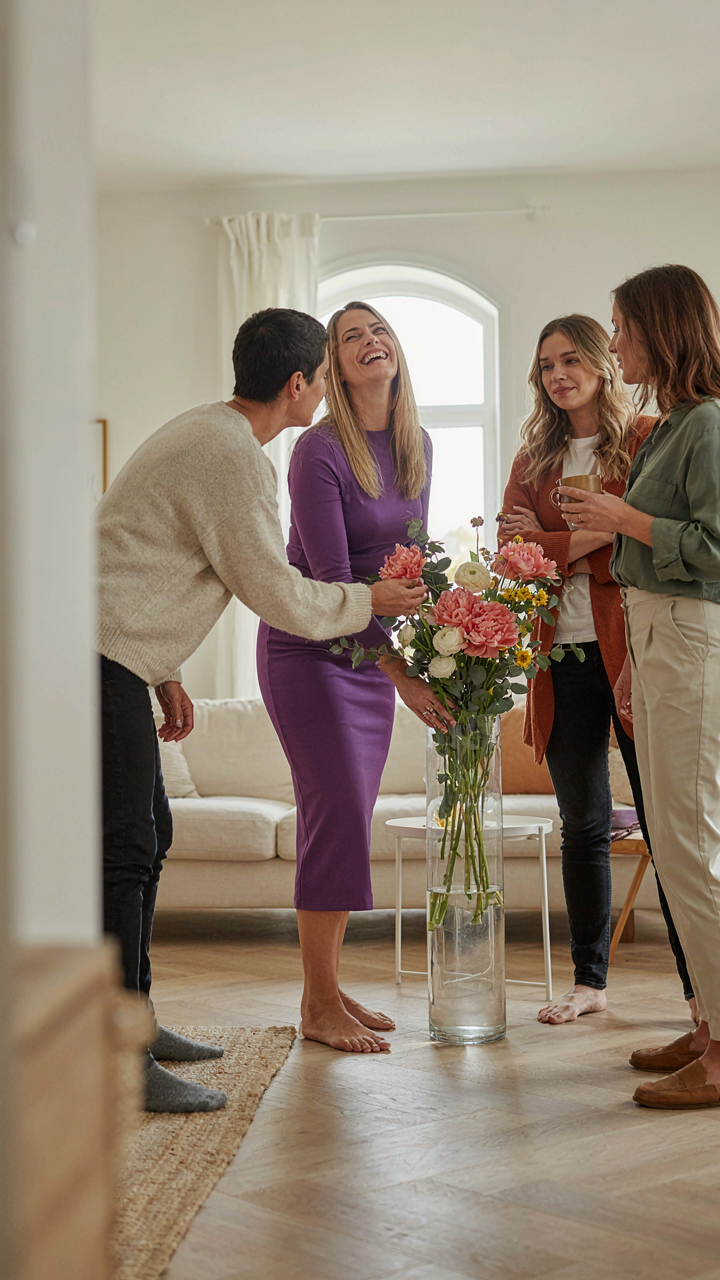
To amplify this effect, time the delivery to coincide with a gathering rather than isolation. A bouquet arriving when the recipient has friends or family nearby creates an audience. Other people see it, ask about it, react to it. The recipient’s social circle now validates and echoes the gesture. This multiplies its psychological weight. Coordinate with the recipient’s schedule if possible—delivery during an evening when they’re home and present creates more impact than midday when they’re distracted. The flowers become not just a gift but a social event.
The DIY Cards For Boyfriend Advantage: Personalization As A Force Multiplier
Effort As A Signal That Registers
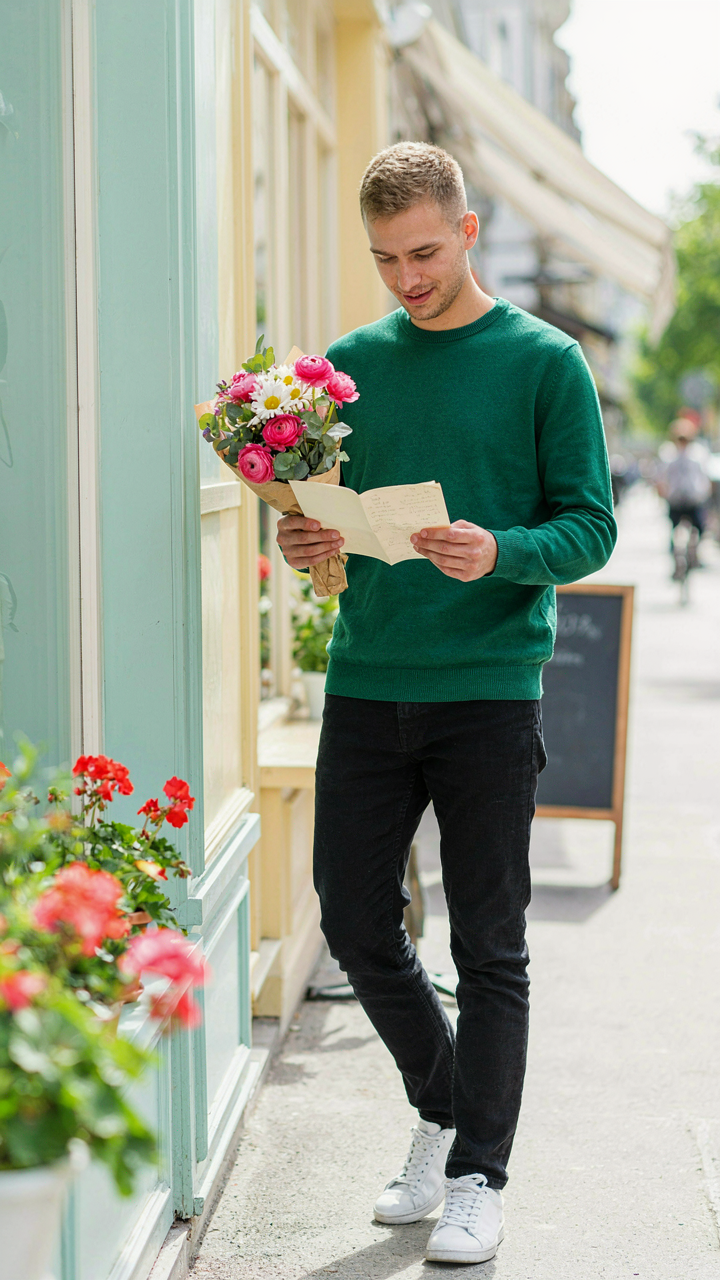
You want the recipient to know you didn’t buy generic sentiment off a shelf. That’s the real motive here, and it works because effort is economic signaling. In behavioral economics, signaling theory explains how costly actions communicate genuine intent. A handwritten card paired with long distance flower gifting signals you invested time when you could have outsourced it completely. The florist handles logistics. You handle the message. That division of labor is what makes the gesture land differently than flowers alone.
Most people add a card like an afterthought. The mechanism is inverted. The card is the proof. Flowers are the vehicle for proof. When you write instead of typing, your hand creates friction that a keyboard erases. That friction is visible to the recipient. They can feel the pressure of your pen in the paper. Handwriting doesn’t scale. That’s why it registers as real.
Authentic Expression Without Editing
Forget the advice about making your handwriting perfect or crafting the ideal phrase. Imperfect writing with genuine content outperforms polished generic text every time. Authenticity isn’t about emotional gushing. It’s about specificity that only you could have written. Reference something only you know. Mention a detail from a conversation. Name the exact reason these flowers matter right now.
The card creates context for the flowers. Without it, they’re a nice gesture. With a specific message, they become evidence of attention. Your boyfriend receives flowers that reference something he said last week, and the message proves you were listening when he didn’t expect it. That gap between expectation and evidence is where personalization compounds. Write the card before the flowers arrive so florists can deliver both the same day. Timing plus specificity plus handwriting equals a force multiplier that generic long distance flower gifting never reaches on its own.
Virtual Flowers And The “Gift With Flowers”: Redefining Tangibility
When AR Becomes The Gesture
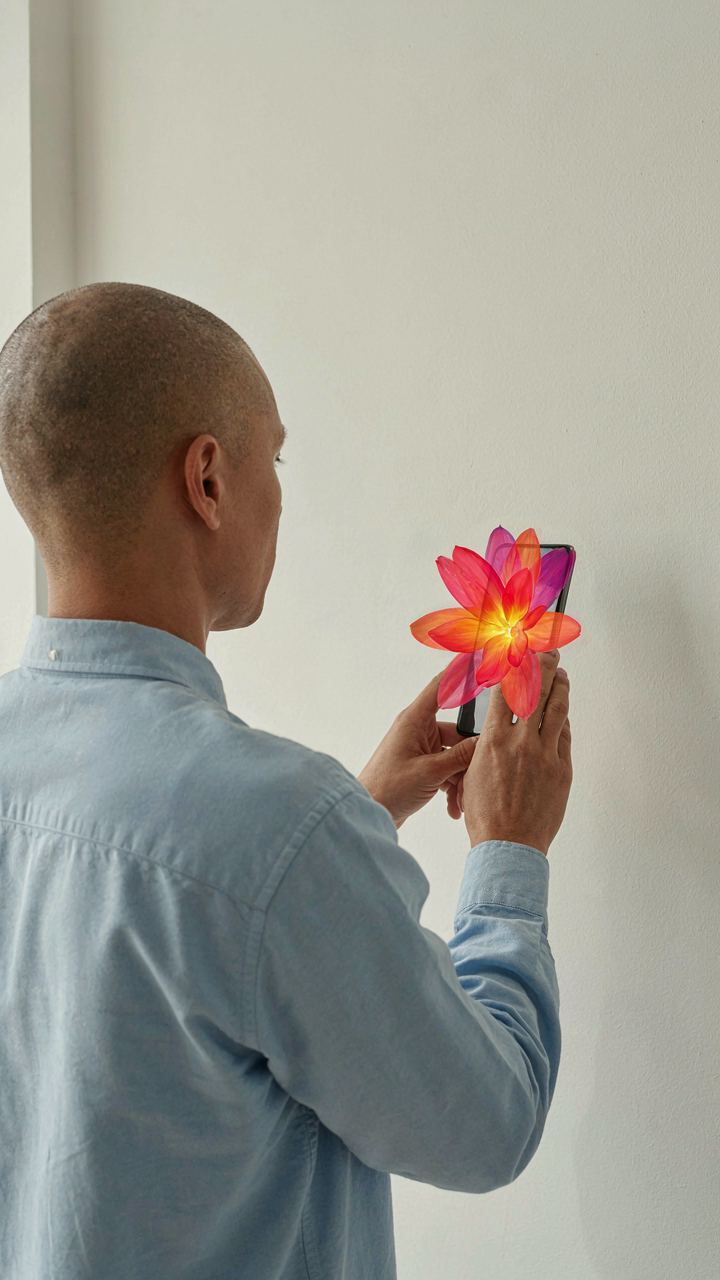
You want proof the gift landed. That’s the real tension here. A digital flower feels weightless, trackless, too easy to ignore. But augmented reality solves the proof problem by borrowing from theater: the gift exists in the recipient’s actual physical space, not in abstraction. They point their phone at a surface in their home and see a rendered bloom that occupies their room’s geometry, their lighting, their angle. The AR flower doesn’t replace the physical arrangement. It extends it. The sender documents the moment the recipient opens the app. Proof of reception, proof of reaction, proof it mattered enough to use.
The mechanic works because it collapses distance without denying it. A video call flattens the experience into a screen. An AR flower sits in the recipient’s environment, which means they can show it to others, move around it, leave it open while they do other things. Platforms like Snapchat and Instagram already have this infrastructure. A florist partnership that bundles a physical delivery with an AR unlock code gives the recipient two separate moments of engagement: the physical unboxing, then the digital layer they discover on their own timeline. The protocol is simple: sender buys arrangement, florist generates QR code linking to AR experience, recipient scans on arrival.
Digital Records That Don’t Fade
Most advice about long distance gifting ignores the archive problem. A physical flower dies. A photo fades from your camera roll. But a digital record of the gesture stays indexed, searchable, timestamped. This is where virtual flowers and digital accompaniment create actual staying power in a home’s visual narrative. Not as replacement, but as permanent footnote. A recipient can return to the AR experience months later. They can watch the video of themselves opening the physical delivery. They build a layer of proof that someone thought of them on a specific date, in a specific way, with intentionality that required spending money and time across distance.
Stylish homes have memory. The florist’s role shifts here from vendor to archivist. When a long distance flower arrives with a digital component, the recipient owns both the ephemeral beauty and the permanent record. They curate which gifts become part of their home’s story and which ones fade. This changes the economics of the gesture. A sender who knows the gift will be documented, rewatched, and preserved invests differently in the selection and presentation. The florist’s invoice becomes a trigger for a memory system the recipient controls completely.
The Anti Sentimentality Playbook: Gifting Flowers Like A Strategic Investor
Dollar Per Impact Ratio
You want flowers to matter without bleeding your budget. That’s the real calculation here, not whether roses symbolize eternal love. Long distance flower gifting works like capital allocation: you have fixed dollars and unlimited ways to waste them.
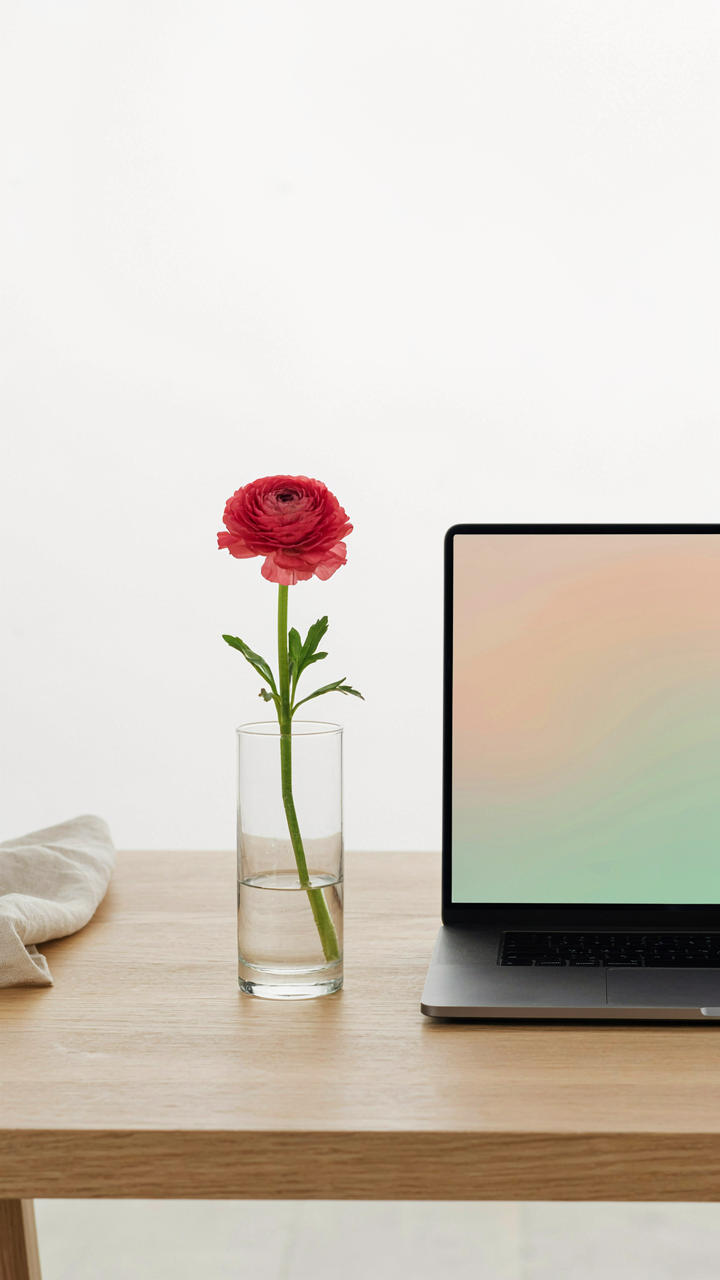
The mechanism is simple. Premium florists charge 40-60% markup for “arrangement artistry” and delivery coordination. Budget services underdeliver on visual impact, arriving wilted or generic. The sweet spot sits in between, where you identify what actually moves the needle for the recipient’s space and skip everything else. A single stem of seasonal ranunculus delivered fresh outperforms a dozen grocery store roses every time because it fits actual interior aesthetics rather than generic occasion thinking.
Frequency beats volume. Sending one quality arrangement quarterly costs less annually than one expensive bouquet and delivers more cumulative impression. The recipient integrates flowers into their environment over time, not a one-off gesture buried in a closet. Track your spend per delivery and measure against recipient response, not against what you think you “should” spend on grand romantic moments.
Relationship Equity Building
Compounding works in finance through reinvestment of returns. In relationships, it works through pattern recognition. When you send flowers consistently tied to actual moments in someone’s life rather than commercial holidays, you become the person who remembers without asking, who shows up without obligation.
The real play is data collection. Note what flowers they kept longest from previous gifts, what colors appear in their home, whether they actually arrange flowers or stick them in water. Each delivery is research that compounds into precise targeting. A florist who knows your recipient’s preferences can execute better than you can, which justifies ongoing subscriptions or standing orders rather than one-off panicked purchases. The relationship equity isn’t the flowers themselves. It’s the signal that you track patterns about someone and act on them without announcement. Make the next delivery contingent on feedback from the last one, not on calendar dates or guesses.
The Illusion Of Distance Isn’t A Spatial Problem; It’s A Failure Of Consistent, Strategic Emotional Investment
Most people treat long distance flower gifting like a transaction. You pick flowers, you send them, you feel better. Wrong. The real work happens after delivery. You either build a habit of showing up—recurring blooms, thoughtful timing, real notes—or you prove distance won. Your stylish home doesn’t matter if the person you’re reaching forgets you’re trying. Start today: schedule your next delivery for two weeks out, not when guilt hits you. Consistency beats grand gestures every single time.



