
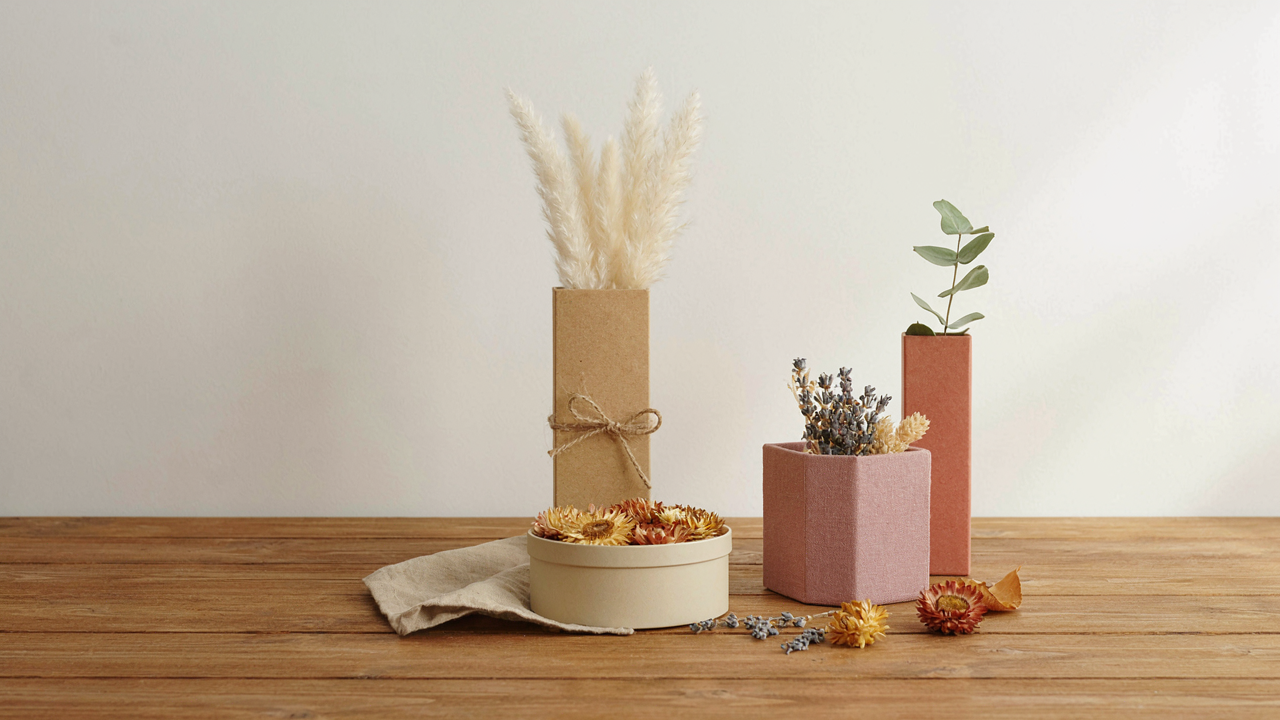
The “Everlasting Bloom” Deception: Why Dried Flowers Win

They Don’t Die On You
You want proof you made the right choice. Fresh flowers force a confrontation with decay every single day, and that failure feels personal. Dried flowers eliminate that friction entirely. They don’t wilt. They don’t brown. They don’t demand water schedules you’ll forget. From an economics standpoint, dried flowers operate under the principle of sunk cost stability: once purchased, the value doesn’t depreciate through neglect or time. The recipient gets a gift that holds its form for months or years, which means it holds the giver’s thoughtfulness too.
The real mechanism is substitution of anxiety for ease. Fresh flowers create an implicit contract: care for this or watch it die. Most people break that contract within a week. Dried flowers break the contract entirely by removing the condition. They sit on a shelf, a desk, or a nightstand without demanding anything. That absence of demand is what people actually want from a gift. They want to keep it without the guilt of watching it deteriorate.
Constancy As Emotional Shorthand
Forget the surface-level “nice to look at” angle. Psychology calls this concept of constant reinforcement through sustained presence the “mere exposure effect,” and dried flower gift boxes exploit it ruthlessly. Every time someone sees that box on their shelf, they register the gesture again. Fresh flowers fade and disappear from mental circulation within days. Dried arrangements stay visible, stay present, and keep triggering the original positive association with the giver.
The mechanism is cognitive residue. A gift that transforms or disappears stops working as a reminder after the transformation completes. A gift that stays static keeps doing its job indefinitely. Dried flowers in a curated box become environmental fixtures that reinforce the relationship every time they’re in the room. That’s not decoration. That’s strategic presence in someone else’s mental real estate. Build your gift box around visibility and placement, not just arrangement quality.
The Scarcity Protocol: Manufacturing Desire With Dried Flower Box Design
When Supply Becomes The Story
You want to believe your gift box choice reflects your taste. The real mechanic is simpler: scarcity works because it removes the burden of decision. Economics calls this the scarcity principle, and it applies directly to dried flower boxes. When a design exists in limited quantities, the buyer stops evaluating quality and starts evaluating access. The perceived value inverts. Suddenly the box itself becomes the prize, not the flowers inside it.
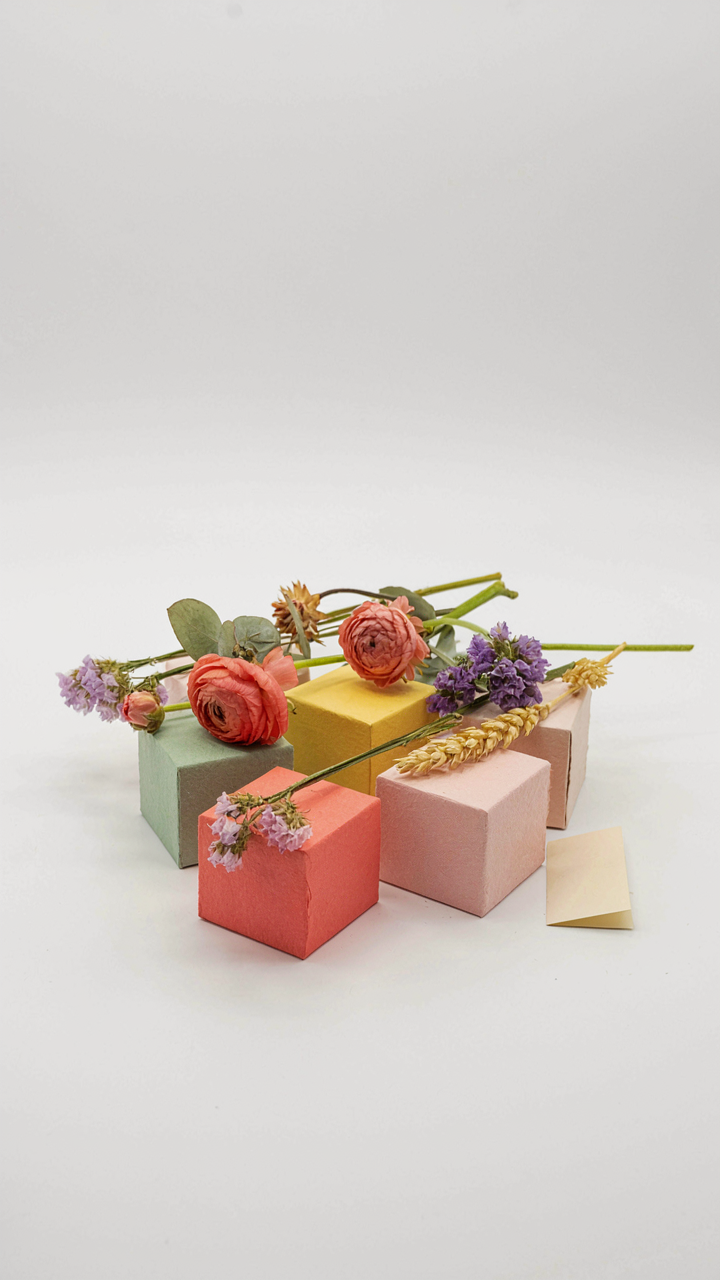
Most brands don’t understand this. They stock inventory to meet demand. Winners do the opposite: they manufacture demand by controlling supply. A seasonal collection of dried flower arrangements in hand-pressed paper boxes, released in batches of 50 units quarterly, creates urgency that standard product lines cannot touch. The buyer knows these will sell out. That knowledge changes behavior faster than any marketing copy.
The Paradox Of Abundance In Nature
Dried flowers arrive at a contradiction. Nature produces them infinitely and free. Yet the moment a florist dries, arranges, and boxes them, scarcity becomes artificial and intentional. The designer’s job is not to create rarity from nothing, but to convert abundance into perceived limitation through presentation and process transparency.
Show the customer how many hours went into sourcing the specific stems. Highlight that certain blooms are only harvestable in one region during two weeks annually. Communicate the filtration process, the drying time, the rejection rate for imperfect specimens. These details don’t add cost. They add narrative weight. The gift box then reads not as a commodity but as evidence of constraint. The recipient holds not just flowers but justification for why this mattered enough to buy.
Deconstructing “DIY Gift Boxes”: The Illusion Of Effortless Charm
What Actually Takes Your Time
You want credit for thoughtfulness without admitting you outsourced the work. That’s the real tension here. The DIY dried flower gift box trend sells you on the fantasy of personal assembly, but it hides where the actual labor lives. You’re not making anything from scratch. You’re curating pre-made components and arranging them inside a box. The mechanism is simple: perceived effort masks outsourced production. Every element you “assemble” was already designed, grown, dried, and packaged by someone else. What you’re buying is the right to take the assembly credit while the supply chain carries the real load.
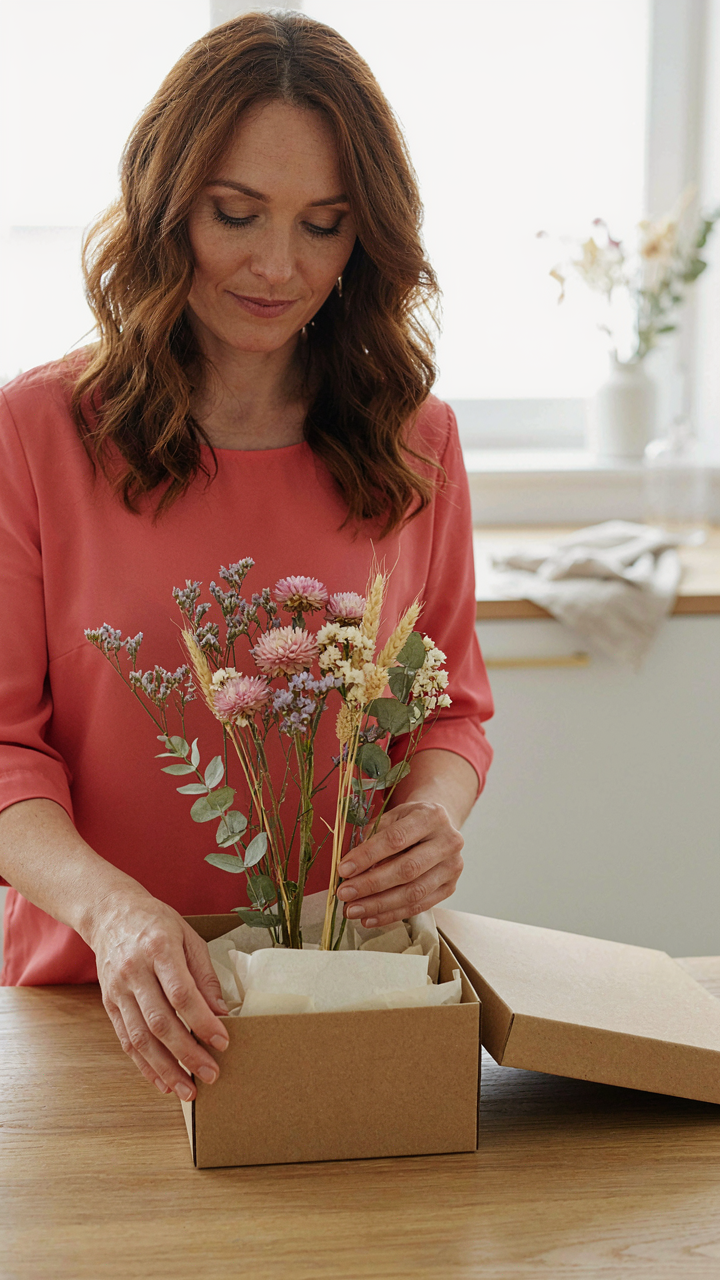
People confuse arrangement with creation all the time. You open a box of pre-dried flowers, a pre-made card, pre-cut tissue paper, and think you’ve built something. You haven’t. You’ve selected inventory. The actual value transfer happens in the curation step, not the assembly step. Most DIY kits succeed because they remove decision friction from selection, not because assembly requires skill. Once you see this, the real opportunity becomes clear: people don’t want to make gift boxes. They want to feel like they did.
The Supply Chain You Assemble, Not Create
The economics here borrow from manufacturing’s concept of outsourced components: you’re the final assembly point in a vertical process you didn’t design. Look at what arrives in your door separately: the box itself (sourced from packaging suppliers), the flowers (grown and dried by agricultural operations or specialized farms), the filler materials (tissue, moss, paper shreds produced elsewhere), and the presentation elements (ribbons, cards, labels). None of these require your involvement until the moment of combination.
- Dried flower sourcing: Flowers are typically grown in bulk operations then dehydrated through air drying or specialized chambers, standardizing quality before retail distribution reaches you.
- Box construction: Pre-manufactured from cardboard stock, printed with branding or designs, and shipped flat to reduce logistics costs before customer assembly.
- Filler materials: Mass-produced tissue, kraft paper, and moss are cut to standard sizes and sold in bulk, ensuring consistency across hundreds of DIY kits.
- Presentation components: Ribbons, twine, labels, and cards come pre-designed and pre-printed from print vendors, requiring zero customization on your end.
- Packaging efficiency: Every component is sized and priced to fit standard box dimensions, meaning the kit designer already solved the spatial problem you think you’re solving.
The DIY positioning masks a truth: you’re following a template someone else engineered. The real work happened before your hands touched anything. Your job is execution within predetermined constraints. When you assemble a dried flower gift box, you’re walking a path someone mapped months earlier. The personalization you add comes only after all the structural decisions are locked in.
Flower Boxes As Signal: Communicating Status And Taste
What Your Box Says Before You Speak
You want people to think you have taste without saying it out loud. That’s the real reason you care about this section. Dried flower gift boxes function as semiotics—visual language that communicates before any words land. The recipient reads the box before they read a card. That reading takes three seconds and forms a permanent impression about who you are and what you think of them.
The packaging itself is the message. A thoughtfully constructed dried flower box tells a specific story: you paid attention, you understand restraint, you know that temporary things have value. This isn’t sentiment. It’s signal. The box arrives as proof of intentionality. People don’t forget gifts that arrive in containers that look expensive without screaming desperation. The mechanism is simple: perceived effort plus perceived quality equals perceived respect.
The Material Hierarchy That Actually Matters
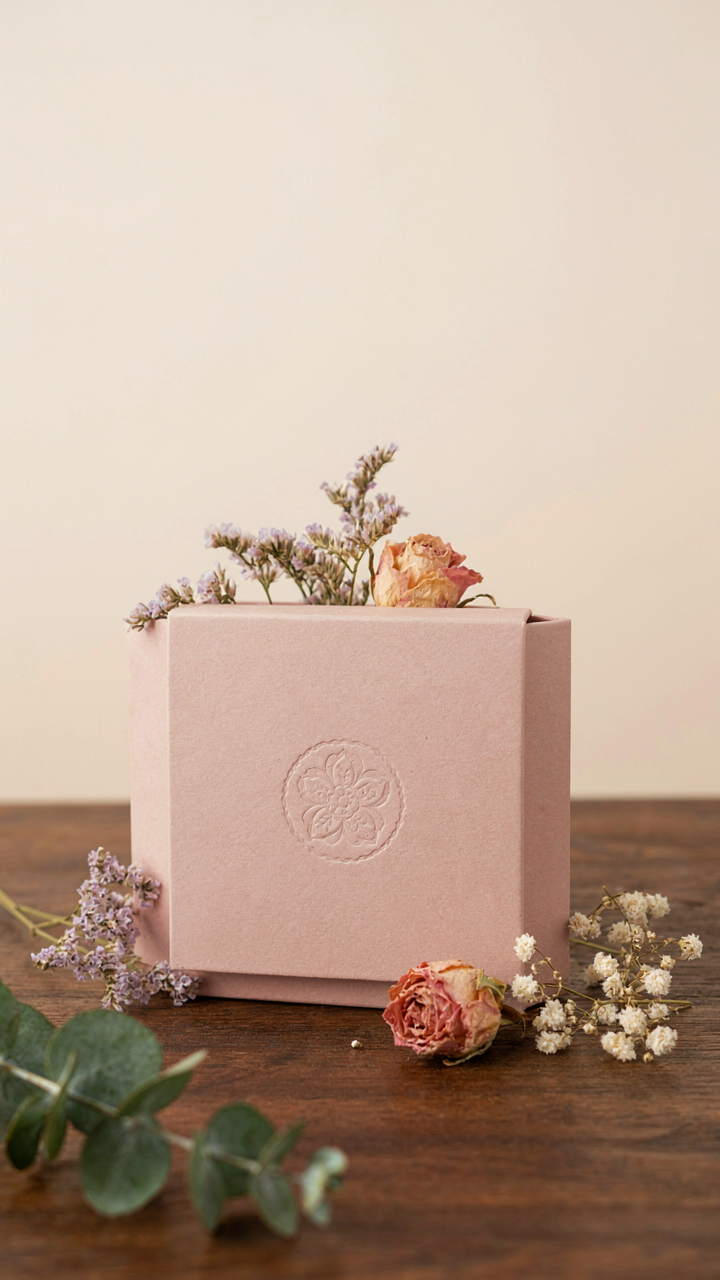
Semiotics borrowed from fashion: materials function as status markers the way fabric weight does in clothing. Kraft paper signals one thing. Rigid white cardstock signals another. Linen or textured finishes signal a third tier entirely. The material choice isn’t decoration. It’s a claim about whether the sender understands restraint. Most gift boxes fail here because they use materials that look cheap the moment you touch them, which undermines everything inside.
The weight and texture of the box matter more than people admit. Thin cardboard feels rushed. Thick stock feels intentional. Matte finishes read as sophisticated. High gloss reads as mass-produced. Dried flowers inside cheap packaging create cognitive dissonance that breaks the signal entirely. The recipient’s brain registers the contradiction immediately: nice product, cheap container, sender didn’t care enough to match the quality. Fix this by selecting box stock that weighs at least 14pt and has a finish that doesn’t scream retail. The box material must reinforce rather than contradict the product inside.
The “Bouquet Wrap” Fallacy: More Than Just Presentation
Touch Signals Quality Before Eyes Do
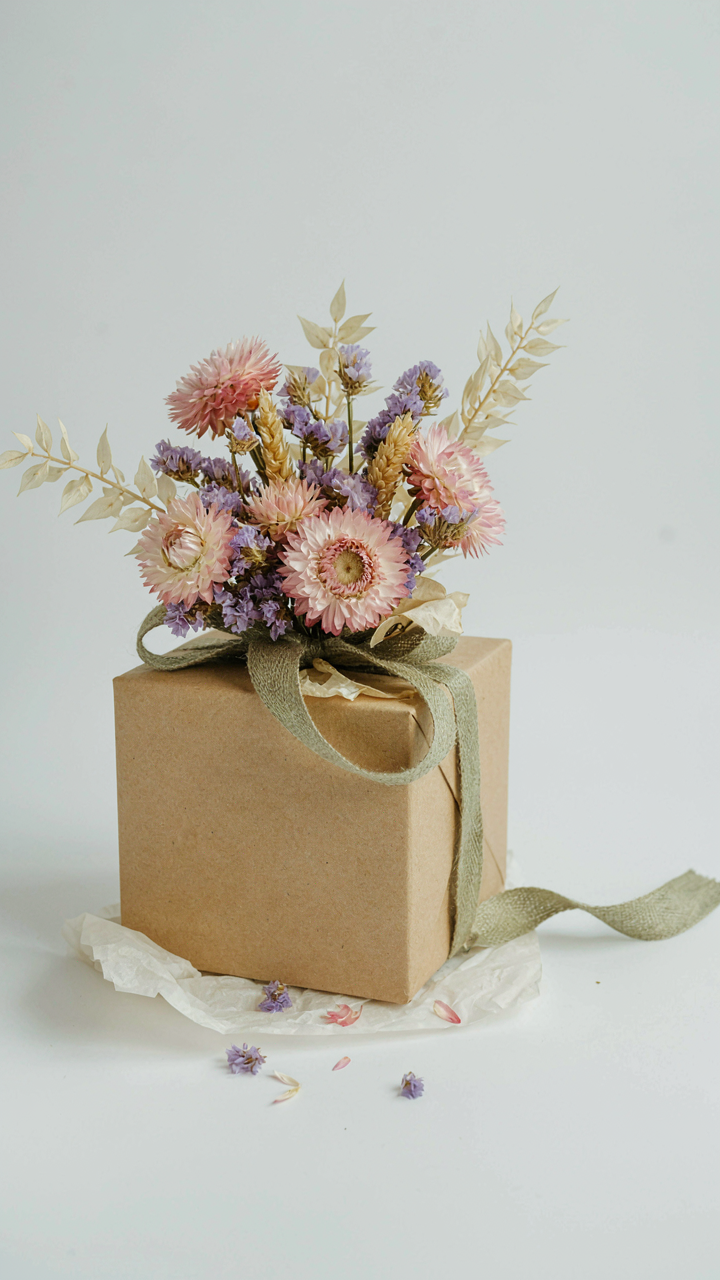
You care about this because wrapping is where most people think the work happens, and you’re afraid cheap materials will betray the gift before the recipient even opens it. That’s not the real mechanism. Tactile feedback triggers a neurological prediction about what’s inside before conscious thought catches up. This is basic sensory marketing borrowed from retail psychology: texture communicates value through nerve endings, not aesthetics.
Dried flowers in a box wrapped with kraft paper or tissue create friction and weight perception. Smooth, thin materials feel hollow. Structured wrapping with intentional layering signals effort and care. The recipient’s hand registers density and material quality the moment they touch the box. This happens faster than visual assessment. The wrapping material does the heavy lifting before design or presentation ever matters.
Unwrapping Demands Friction, Not Ease
People say unwrapping should be smooth and effortless. That’s wrong. A box that opens too easily signals low investment. The actual mechanism is psychological: resistance creates anticipation, which deepens the experience of discovery. Tight tissue layers, strategic tape placement, and deliberate folds make the act take longer. Extended exposure to the object during unwrapping builds emotional intensity.
Dried flower boxes benefit from deliberate friction points. Multiple layers require intentional effort to penetrate. Tape positioned where it demands attention rather than sliding off creates micro-moments of engagement. This isn’t about frustration. It’s about forcing the recipient to stay present with the object longer. The longer unwrapping takes, the higher the perceived value of what’s inside.
The “Dried Flowers Creativity Box” Antidote: Rejecting Passive Consumption
Participation Over Decoration
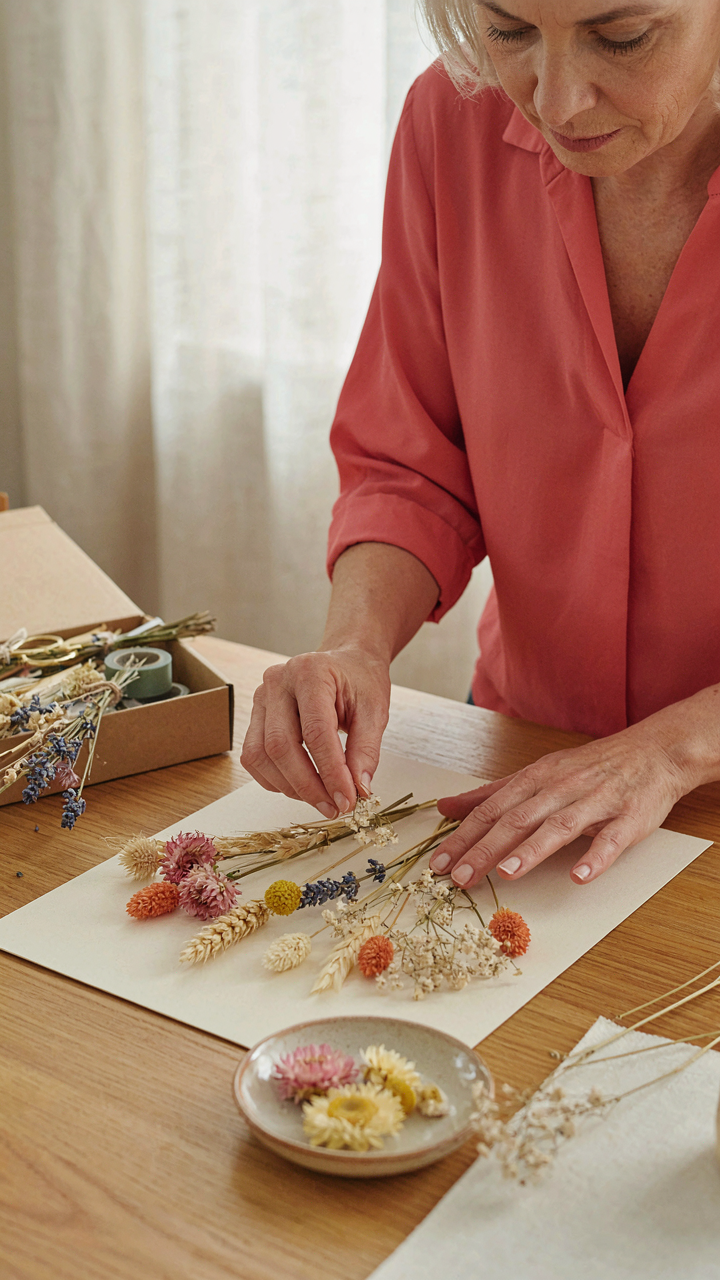
You want this trend to matter because passive gifts feel cheap, and you sense that matters to how people perceive your taste. The mechanism is simple: dried flower gift boxes have moved from static displays to participation tools. The recipient doesn’t just unwrap and place. They arrange, combine, preserve further, or integrate petals into projects. This shifts the gift from object to experience engine.
Creativity boxes ship with components that demand assembly or choice. Some include blank cards, allowing the recipient to design arrangements before gifting them forward. Others contain pressed flowers meant for crafting, scrapbooking, or resin work. The box becomes a platform, not a destination. This model works because it transfers agency from giver to receiver, making the recipient active rather than passive in the value extraction.
The Reward Loop In Gifting
Behavioral economics maps directly onto dried flower boxes: the gifting itself becomes a variable reward schedule, not a fixed transaction. When you give a creativity box, the recipient experiences multiple reward moments: opening, creating, sharing what they made, receiving feedback on their creation. Each moment reinforces the original gift’s value.
Challenge-based boxes amplify this. Some brands now include “arrangement prompts” or seasonal design challenges that recipients complete and share on social platforms. The giver gets extended social proof because they triggered a cascade of creation. The mechanism is pure operant conditioning applied to gifting: the box isn’t the reward. The recipient’s participation cycle is the actual product being sold and given.
Evolutionary Psychology Of Decorative Gift Boxes With Dried Flowers
When Status Anxiety Meets Botanical Decay
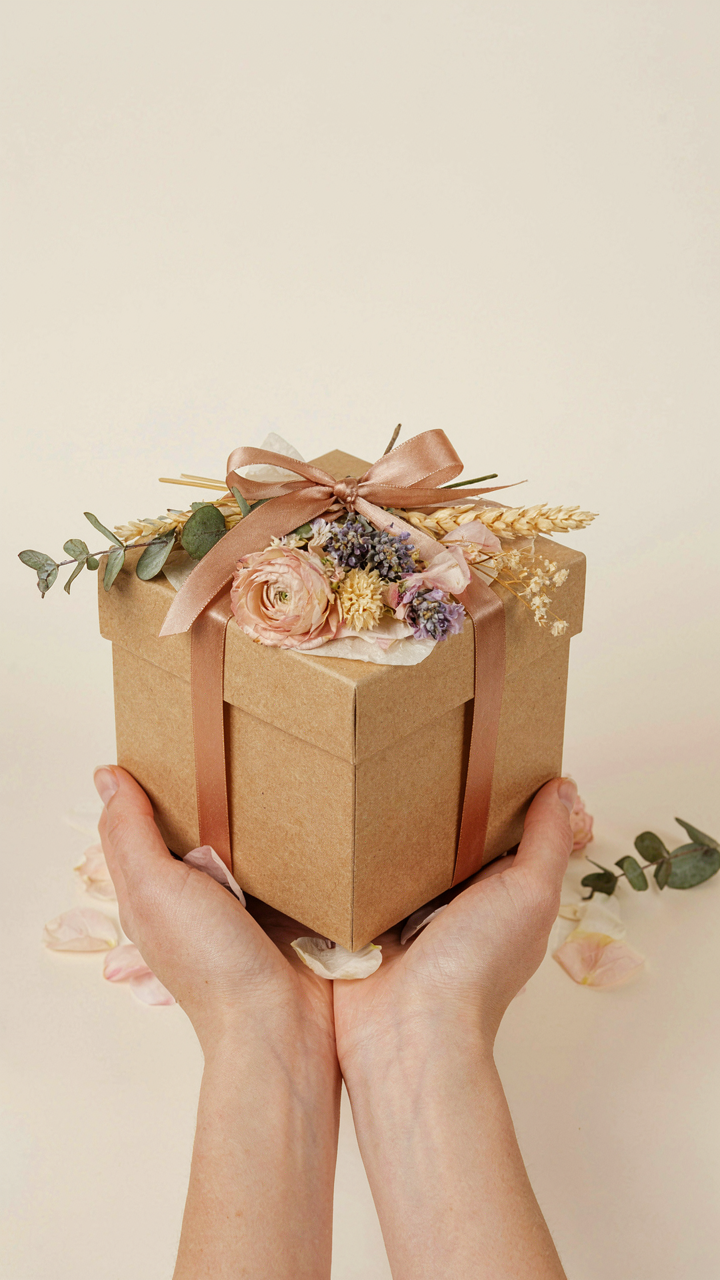
You care about this section because you sense that picking the right gift box signals something about your taste and judgment to the recipient, and you’re afraid of getting it wrong. The mechanism is mimicry. Evolutionary psychology explains status signaling through costly displays, and dried flower boxes function as a filtered signal: they cost enough to show intent, but they’re not so expensive they broadcast desperation. The person giving the box is saying, “I noticed what’s timeless, not trendy.”
Dried flowers trigger a specific social read because they reject the expectation of freshness. Fresh flowers scream effort and urgency. Dried flowers whisper knowledge. When someone receives a decorated box with preserved botanicals, they decode it as a decision made with deliberation, not panic. The sender selected something that lasts. This distinction matters in high-trust social contexts where lasting appeal outranks momentary impact. The box becomes a proxy for the giver’s actual attention span.
The Softness Signal
Neoteny refers to the retention of juvenile traits into adulthood, and dried flower box design leans hard into this principle. Soft color palettes, rounded edges, and delicate preserved petals all trigger the care-response that evolved to make us protective of vulnerable things. A box wrapped with pale lavender or cream-toned roses doesn’t scream luxury. It whispers fragility and asks the recipient to handle it with intention.
This is why minimalist, hard-edged boxes fail in this category. They compete with authority and power signaling. Dried flower boxes succeed because they invite the opposite response: a desire to preserve, display, and protect the object. The recipient’s instinct shifts from “this is impressive” to “this is precious.” The design does the work by embedding softness into every visual element, which makes the recipient feel responsible for maintaining what they’ve been given.
The Meta Trend: Mastering Dried Flower Packaging And Storytelling
When The Box Becomes The Gift
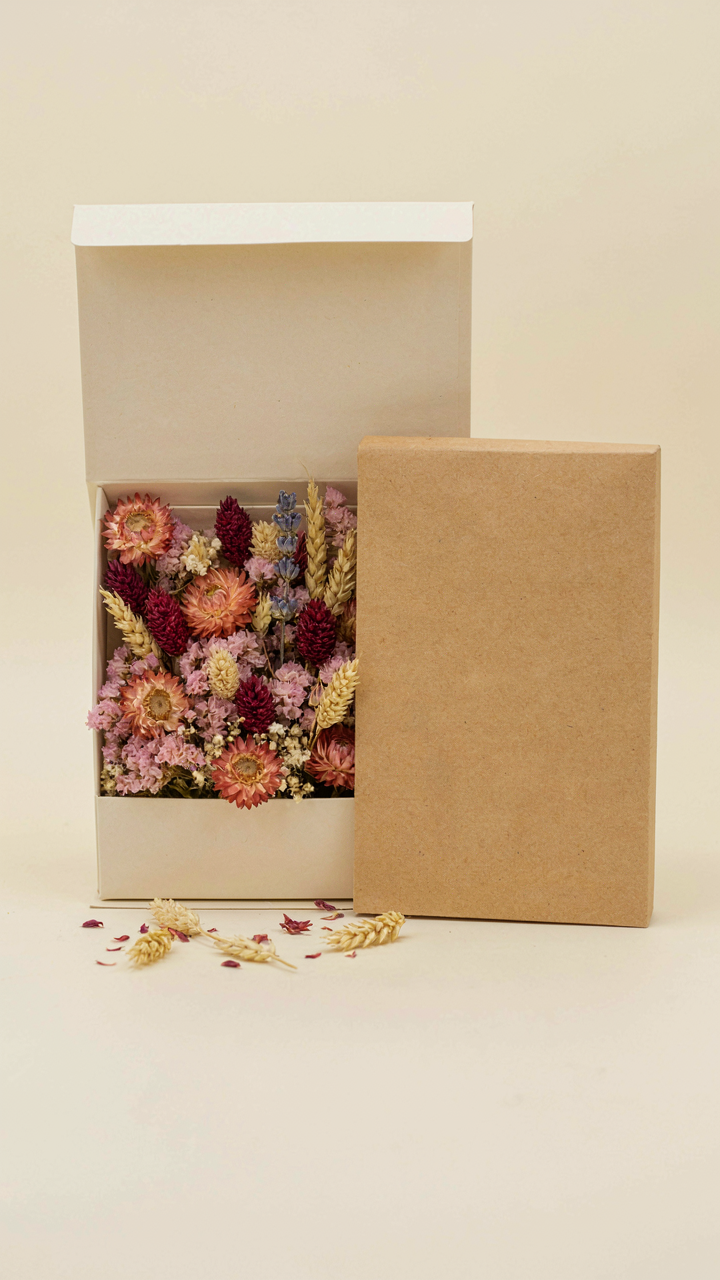
You want the unboxing moment to feel like a reveal because you’re terrified of being forgotten the moment the recipient sets it down. The mechanism is simple: controlled pacing kills distraction. A dried flower gift box isn’t just a container. It’s a narrative arc that unfolds in real time, from the first touch of the outer sleeve to the final layer of tissue or kraft paper. Each decision about material, opening method, and visual hierarchy forces the recipient’s attention forward instead of letting it scatter.
The best boxes use a two-stage reveal. The outer packaging whispers restraint—matte finishes, minimal branding, weighted materials that signal care. The inner reveal shows the flowers themselves, positioned so they hit the eye at a specific angle under natural light. This isn’t theater. It’s about controlling the sensory sequence so nothing feels accidental or cheap. The recipient slows down. That slowdown is where memory forms.
What Actually Moves People
Forget the talk about “aesthetic beauty” and “Instagram moments.” That’s lazy positioning. Emotional resonance in dried flower boxes works through a specific mechanism: the gift acknowledges the recipient’s impermanence while offering something that doesn’t decay like a fresh bouquet would. Dried flowers are honest about time. They don’t pretend flowers last forever. That honesty creates a different emotional contract than fresh flowers do.
The packaging amplifies this by treating the contents with reverence rather than decoration. Minimal ink, natural materials, handwritten labels if the volume allows it. These choices signal that you invested thought, not just money. The recipient feels the difference immediately. They understand they’re holding something someone considered, not something ordered in bulk and wrapped in generic tissue. The concrete move: source packaging materials that age gracefully. Kraft boxes naturally brown. Tissue softens. These imperfections prove the box itself wasn’t meant to last forever either, which mirrors the dried flowers inside and reinforces the entire emotional premise.
The Real Obstacle Isn’t Knowing The Trends; It’s Your Addiction To External Validation
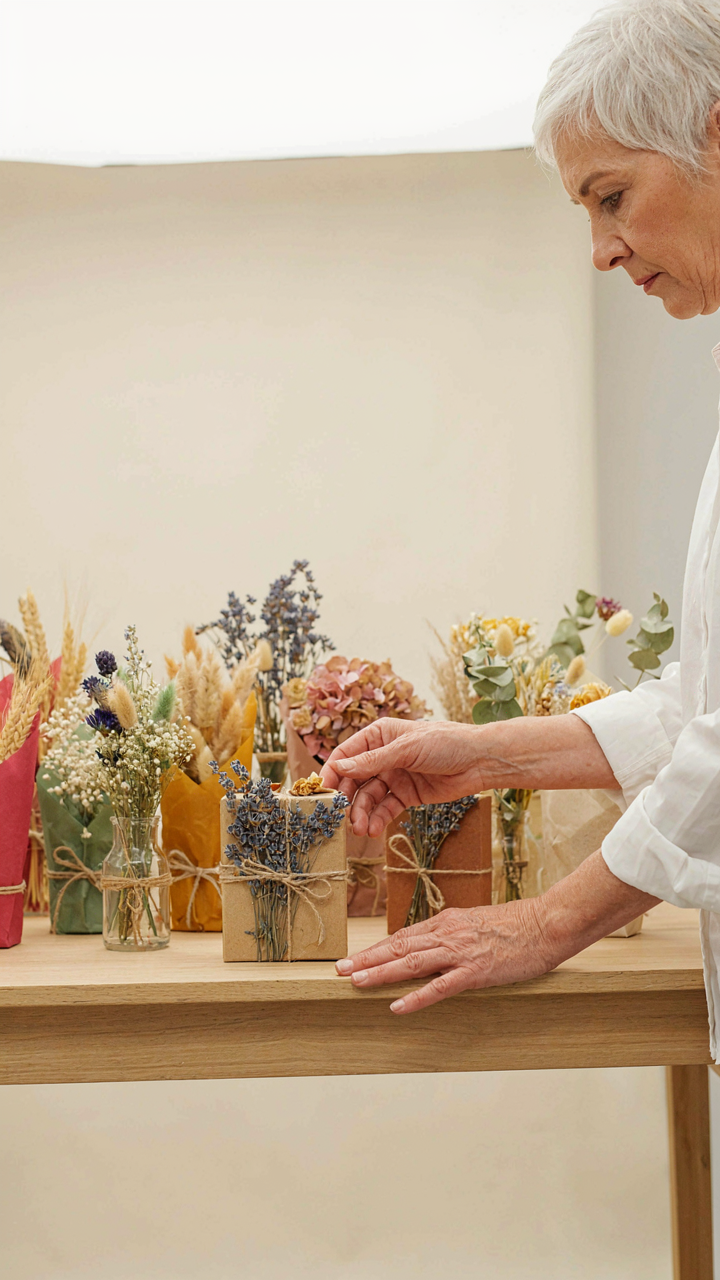
You’ll scroll through dried flower gift boxes all day waiting for permission to pick one. Stop. Your customers don’t care about trends. They care about what moves them. Pick the box that makes you pause. Buy one today and gift it to someone who matters. Ship it. Get feedback. That loop beats research forever. Conviction beats consensus.



