
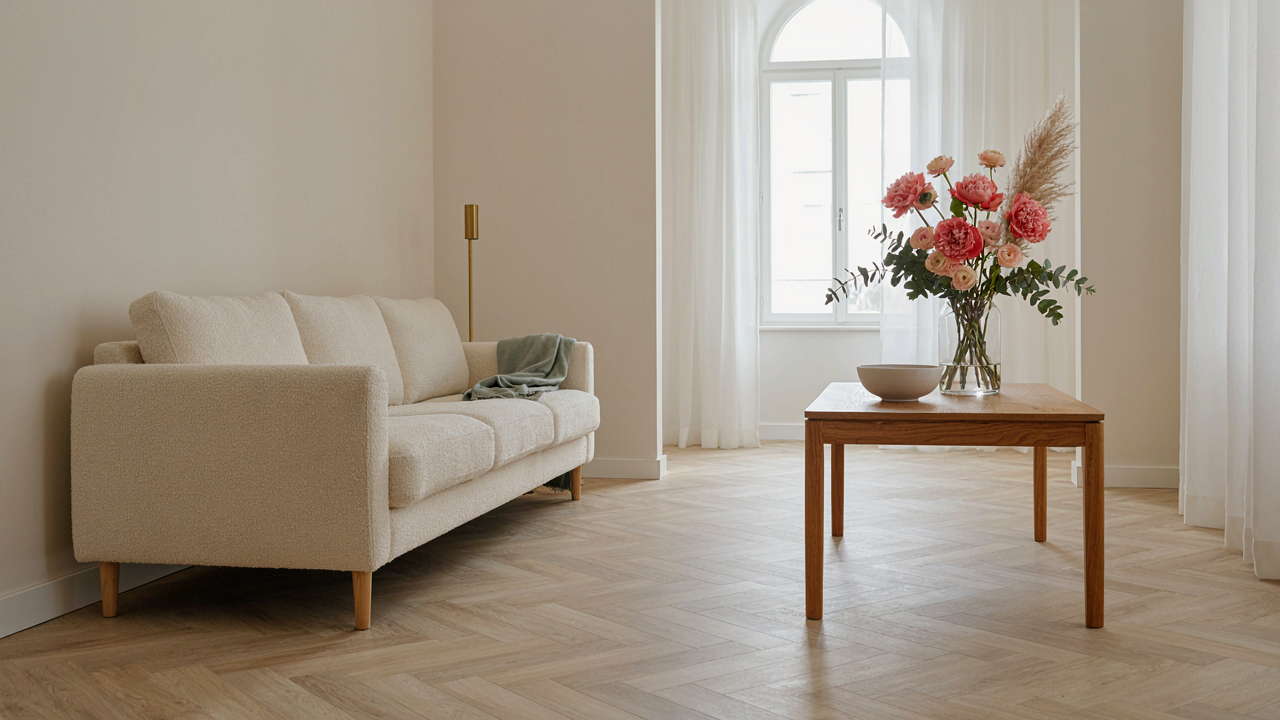
The Illusion Of “Fresh Flowers”: Why Your Subscription Fails Before It Arrives
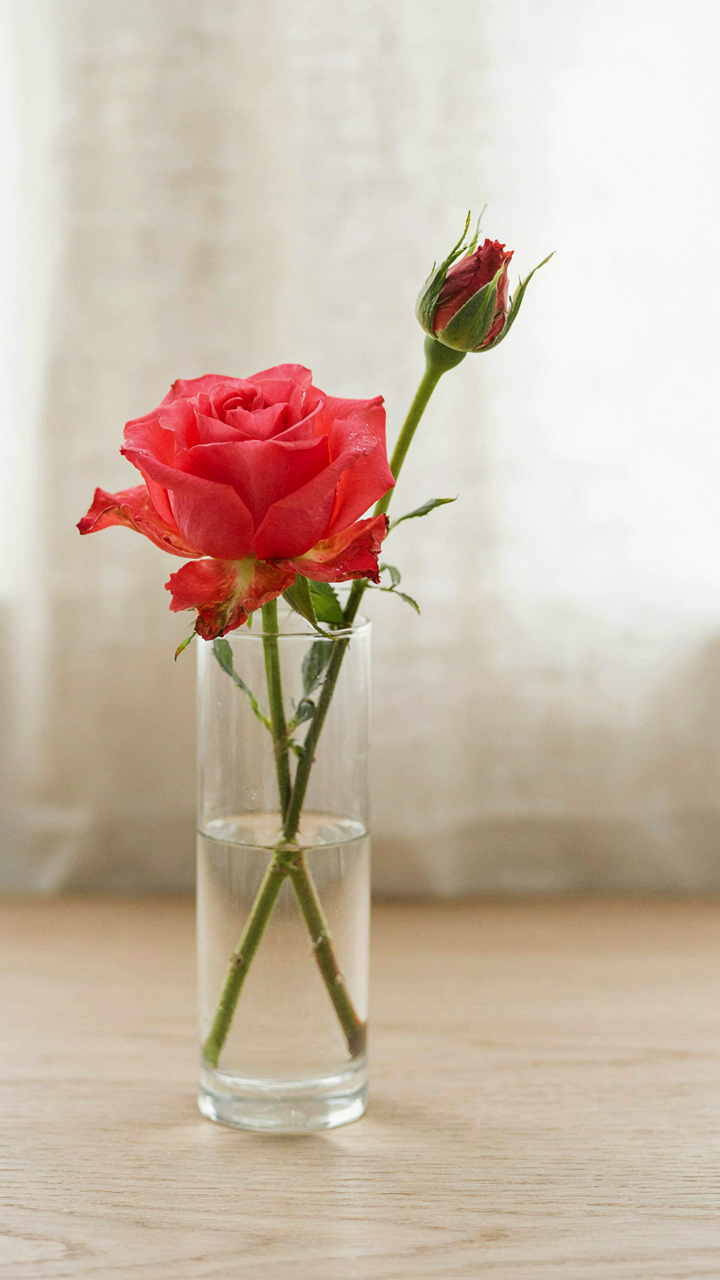
What “Fresh” Actually Means At Delivery
You want proof that your subscription is worth the money. Here’s what actually matters: most flowers shipped commercially are cut 3 to 7 days before they land at your door. Retailers call this “fresh” because the blooms haven’t opened yet. The mechanism is simple biology. Flowers cut early remain in a dormant state during transit, then continue their life cycle once placed in water. This isn’t freshness. It’s arrested development. Your flowers are already partway through their lifespan before you unwrap them.
The real tell isn’t color or firmness. It’s the flower’s maturity stage at arrival. A rose that looks tight and closed has runway left. One with separated petals has already begun senescence, the biological process of aging. Subscription services exploit this gap. They ship younger blooms and frame it as quality. You’re not getting fresher flowers than a grocery store. You’re getting flowers earlier in their programmed decline, which creates an illusion of longevity that rarely survives the second week.
The Shelf Life Nobody Discusses Openly
Florists measure vase life differently than consumers do. They count days until petals drop completely. You count days until the arrangement looks tired enough to replace. These aren’t the same number. Most monthly delivery subscriptions promise 7 to 14 days of vase life. That’s the optimistic figure, assuming perfect conditions. Most home environments don’t provide those conditions. Temperature fluctuations, inconsistent water changes, and proximity to ripening fruit collapse that timeline fast.
The mechanism here is ethylene gas, a plant hormone that accelerates ripening and aging. Commercial florists add preservatives to suppress it. Home vases don’t. A bouquet lasting 10 days in a florist’s climate-controlled shop may look spent in 6 days on your kitchen counter. This is why subscription services rarely guarantee satisfaction past day 10. They know the math. Adjust your expectations downward by 30% from what marketing promises, then condition the water properly on arrival to capture what’s actually possible.
Beyond Bouquets: The Architectural Approach To Flower Placement
The Empty Space Does The Work
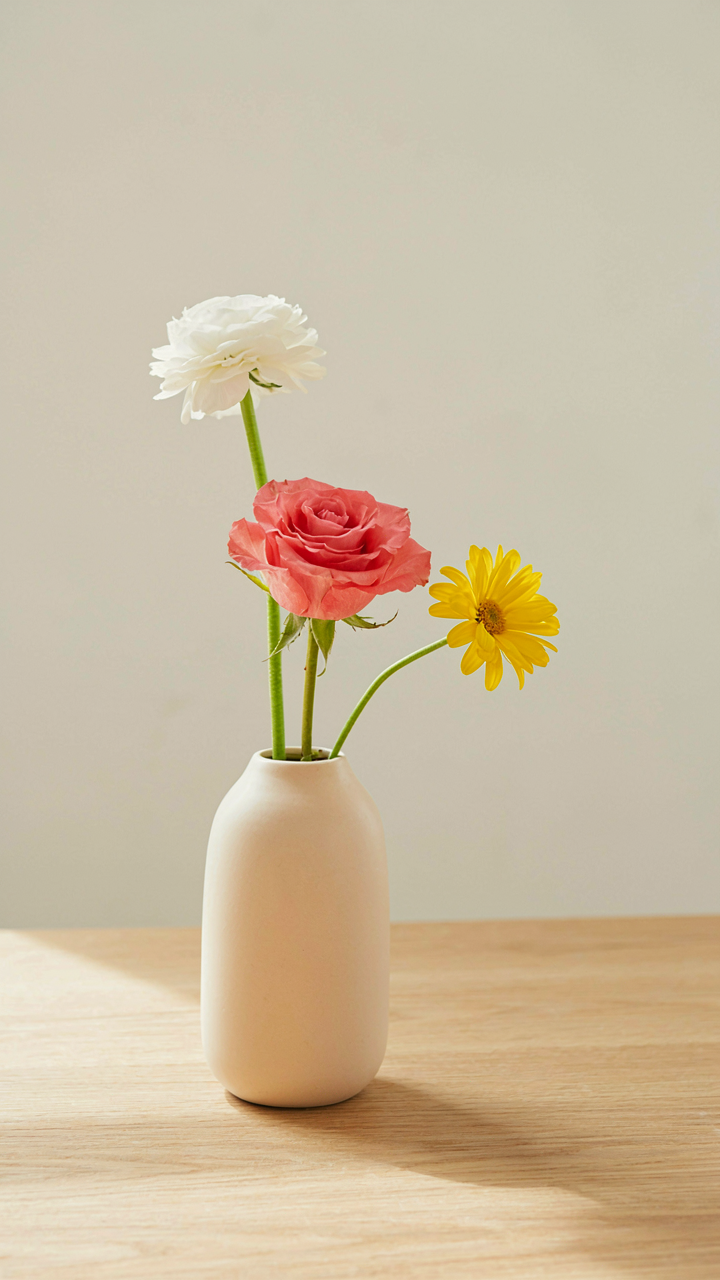
You want flowers to look intentional, not like you grabbed whatever fit in the vase. That requires borrowing from architecture: the principle of negative space. In design, negative space is the emptiness that shapes what you see. Apply this to monthly flower delivery arrangements. The gaps between stems matter more than the flowers themselves. They control sight lines, prevent visual clutter, and force the eye to move deliberately through the composition.
Most people overstuff arrangements because they equate fullness with value. Wrong. A sparse arrangement with intentional air gaps reads as controlled and expensive. It also lasts longer because stems aren’t competing for water and airflow. Place flowers at varying heights and angles. Let the vase show through. The negative space around flowers is what makes a room feel designed instead of decorated.
Container Before Content
Your vessel is structural, not secondary. The vase determines proportion, color temperature, and whether the arrangement succeeds or fails before you add a single stem. Common advice says “pick flowers first, find a vase later.” That’s backwards. Choose your vessel based on where it lives in your home and what it needs to anchor visually. A ceramic cylinder works differently than a narrow bud vase or a wide-mouth urn. Each shapes the arrangement’s scale, density, and visual weight entirely.
Material selection affects monthly delivery patterns too. Glass shows water line and stem rot. Ceramic hides problems but limits color variation. Metal vessels (brass, copper) age intentionally and pair with cooler or warmer flower palettes depending on finish. Size the vessel so flowers sit at eye level when you’re standing or sitting in that room. The container’s height-to-mouth ratio determines if stems can support blooms or if the whole thing tips. Proportion controls success before design even begins.
The “Curated Chaos” Method: How To Make Your Flowers Look Effortless
Intentional Asymmetry Breaks The Symmetry Trap
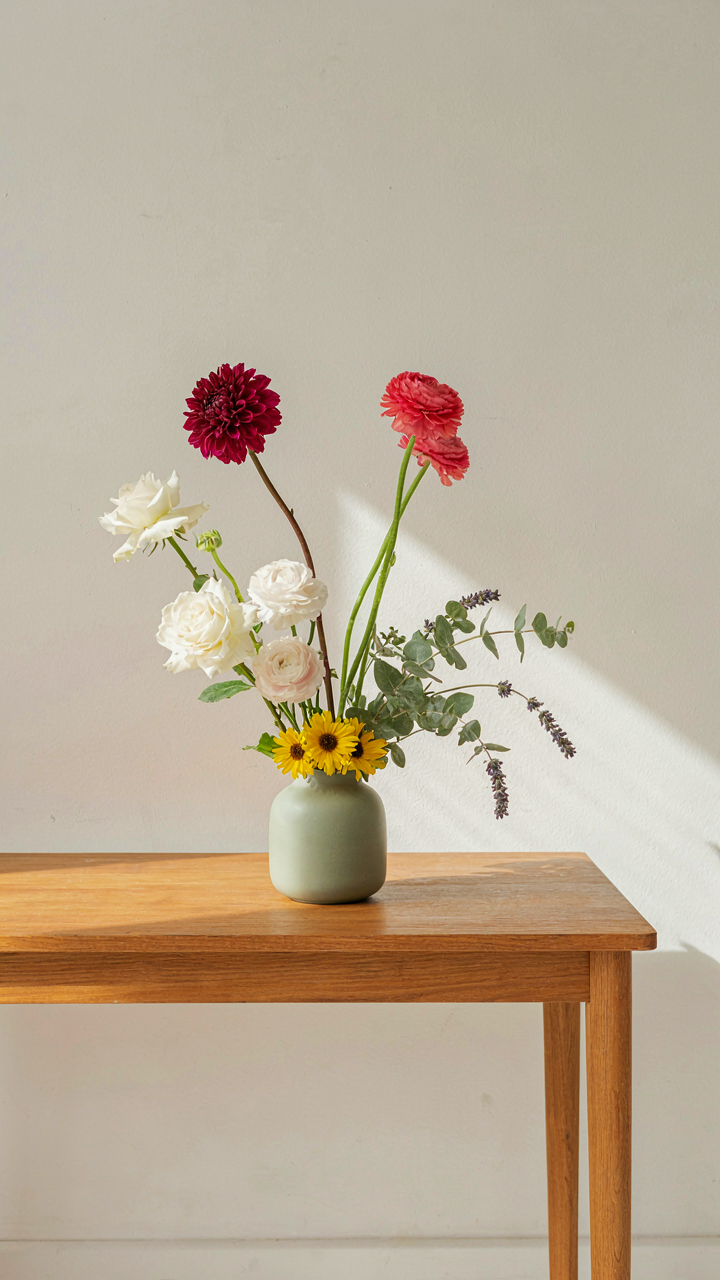
You want your arrangement to look like it happened by accident because symmetry signals effort, and effort signals insecurity. Here’s the mechanism: your brain reads balanced, centered arrangements as “designed” and therefore “trying.” Asymmetry triggers the opposite response. Place your tallest stem slightly off-center. Float one flower lower than the others. Let one side hold more volume. This breaks the visual grid your eye expects, which makes the whole display read as collected, not constructed.
The shift from symmetry to asymmetry is borrowed from graphic design’s negative space principle. In monthly flower delivery, negative space is the emptiness you deliberately leave, not the flowers you pack in. Most people fill every gap because they believe density equals value. It doesn’t. Strategic emptiness makes each stem visible and gives the eye permission to move through the arrangement instead of stopping dead at the center. Asymmetry isn’t random. It’s controlled imbalance that prevents your delivery from looking like a funeral centerpiece.
Varying Heights And Textures Creates Visual Movement
Mixing heights alone isn’t enough. The common advice stops there, and that’s lazy. Texture variation is what actually stops the eye and holds attention. A delivery containing only roses at different heights still reads as flat. Add filler with fine, feathery texture next to bold, waxy petals. Pair smooth stems with papery leaves. Let some flowers face forward while others angle sideways. This forces your brain to work harder, which registers as more interesting.
The principle here is visual rhythm. You’re not just looking at flowers sitting in water; you’re creating a sequence. Each texture change acts as a beat. Each height shift acts as a tempo change. When all your flowers arrive the same height, even premium varieties, the arrangement feels static and becomes background noise. When you deliberately position shorter blooms in front and taller ones receding back, with varying leaf structures throughout, the viewer’s eye travels through the arrangement instead of scanning past it. Group your delivery pieces by texture type first, then distribute them throughout the vase by height in an uneven pattern, never graduating smoothly from short to tall.
Deconstructing The Flower Business: What They Don’t Tell You About “Seasonal”
Where Your Flowers Actually Come From
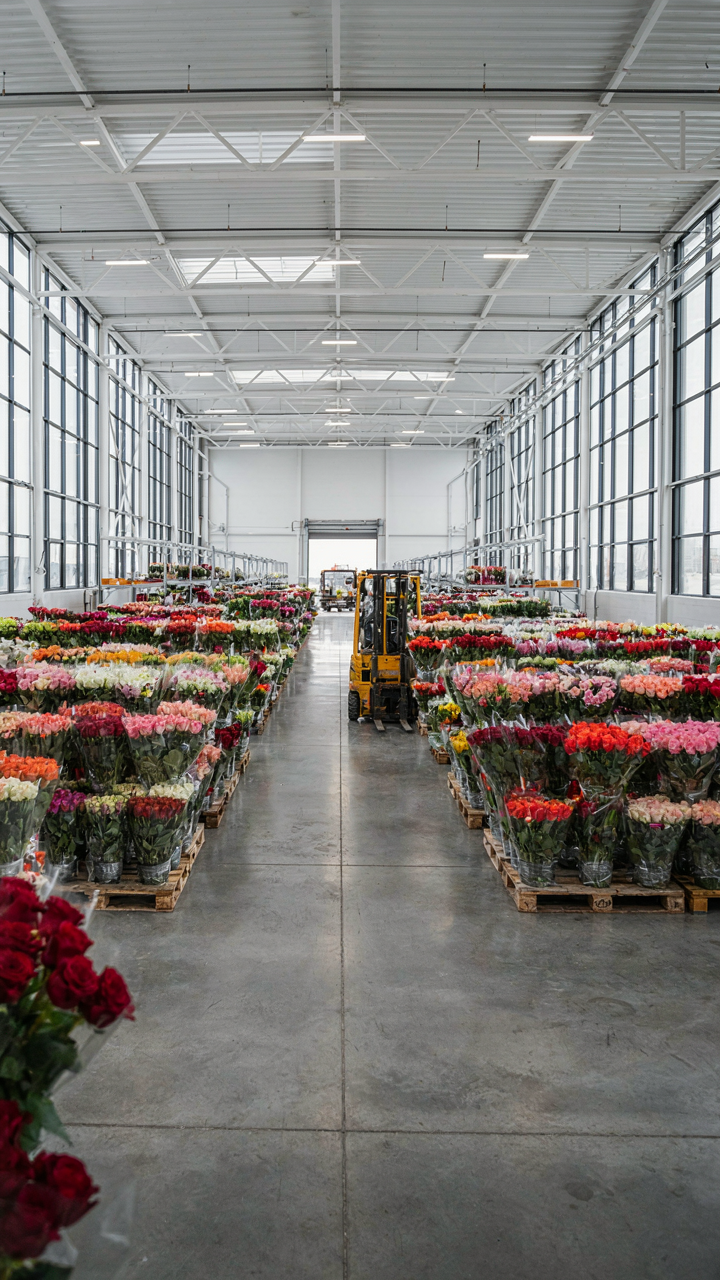
You want to believe your monthly delivery comes from a local farm. It doesn’t, and that gap between belief and reality is exactly why you’re paying premium prices for commodity product. The flower industry operates on supply chain economics: florists source from wholesale distributors, who source from regional farms, who source from global producers. Most “seasonal” flowers in North America move through auction houses in Miami, Los Angeles, or Denver before reaching your door. The local farm angle is marketing, not logistics.
The mechanism works like this. A distributor guarantees volume and consistency year-round. They can’t do that with one local grower. Instead, they build a network: South American farms handle winter supply when domestic production drops, then rotate to domestic producers in summer. Ecuador alone grows 30% of the world’s cut flowers. Your florist follows consumer demand, not seasons, because supply chains made it economically irrational to do otherwise. The label “seasonal” survives in marketing because people trust the story more than the sourcing.
The Math Behind Exotic Specimens
Exotic blooms carry hidden costs that have nothing to do with beauty. Transportation, refrigeration, pesticide compliance, and import tariffs stack up before the flower reaches a vase. Most consumers assume the price difference reflects rarity or quality. It doesn’t. It reflects handling. A standard rose travels via air cargo in temperature-controlled boxes through multiple distribution points. An imported protea or bird of paradise follows the same path but with more fragile specs and tighter timelines. Logistics, not aesthetics, drives the cost structure.
The decision to order exotic flowers should hinge on one question: will they last long enough to justify the markup? Exotic blooms often have shorter vase lives than standard options because they’ve traveled longer distances and endured more stress by the time they arrive. If you’re subscribing to monthly delivery, ordering the same exotic type repeatedly means your distributor has established a reliable source and can pass efficiency savings to you. If you rotate between exotic varieties month-to-month, you’re paying peak price every time. Stick with one or two exotic options and let your distributor optimize the supply chain for you.
Your Flower Subscription As A Strategic Asset: The “Status Signal” Protocol
Control Temperature And Humidity First
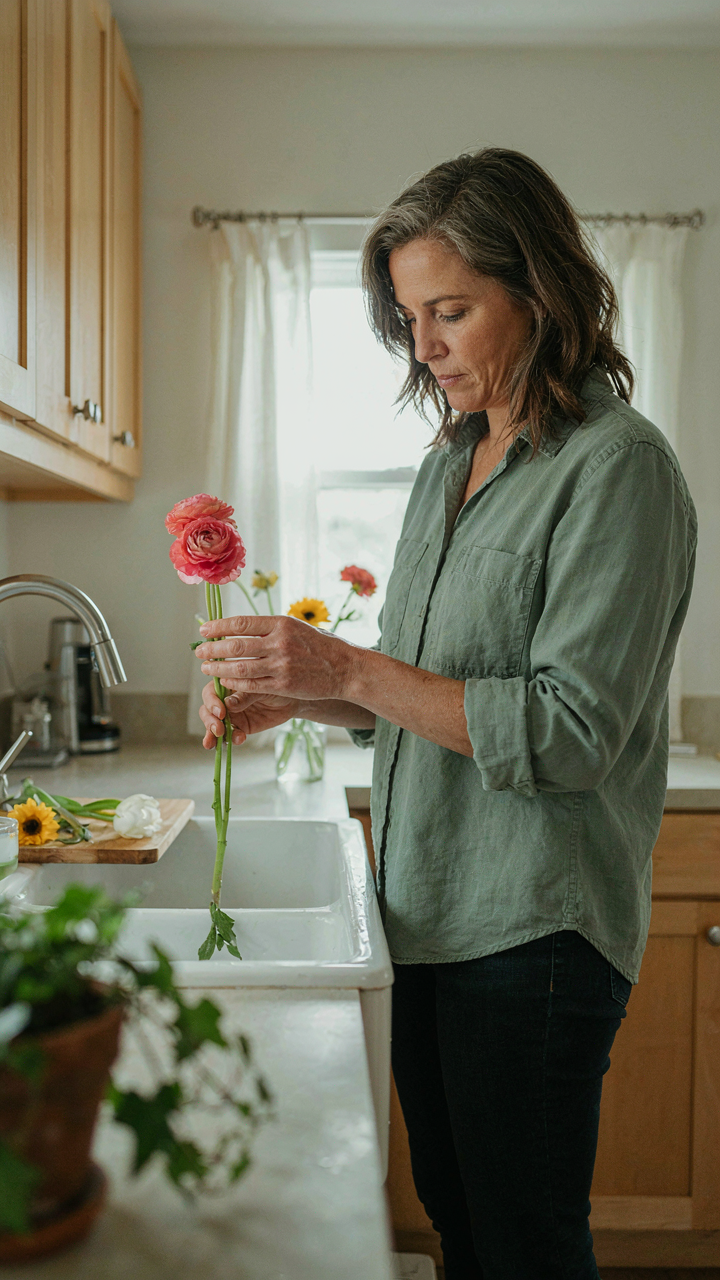
You want flowers to last because a dead arrangement signals neglect, and neglect reads as low status. But the real mechanism comes from biology: flowers are living tissue responding to their environment the same way crops respond to growing conditions. Temperature swings kill longevity faster than anything else. Keep your subscription blooms between 65 and 72 degrees Fahrenheit, away from heating vents, direct sunlight, and ripening fruit. That’s not opinion. That’s physiology.
Humidity matters equally. Dry air accelerates petal transpiration, which is the water loss that wilts flowers. A humidity range of 50 to 70 percent extends bloom life by days. Position your arrangement away from air conditioning units and radiators. If your home runs dry, mist the leaves lightly every other day. Skip the flower food packets most deliveries include. Room temperature water changed every two days does the work without the fluff.
Arrange For Maximum Density, Minimum Filler
Designers hide behind “natural placement” advice. That’s lazy. The real tactic is military strategy applied to visual real estate: concentrate your force where it matters. Dense arrangements hold their shape longer and read as intentional rather than thrown together. Use odd numbers of stems, never even. Three roses in a tight cluster beats six roses spread across a vase. This forces the eye to register impact immediately instead of scanning emptiness.
Strip lower foliage below the waterline without hesitation. Those leaves rot in water and shorten arrangement life by a week. Trim stems at a 45-degree angle, then cut an additional half inch every three days. Keep blooms slightly crowded so they prop each other up as water loss naturally occurs. This protocol means your monthly delivery stays camera-ready for the first ten days instead of looking depleted by day five.
The Anti Generic Flower Subscription Crafting A Truly Unique Aesthetic
Where Most Subscriptions Miss The Mark
You want your home to look intentional, not like you ordered the default option. Most monthly flower subscriptions fail because they treat flower selection like a buffet where the customer picks the same safe combinations every month. This is a problem of constraint, borrowed from systems design: without intentional friction in your selection process, you default to repetition. The mechanism is simple. You need boundaries that force novelty, not elimination of choice.
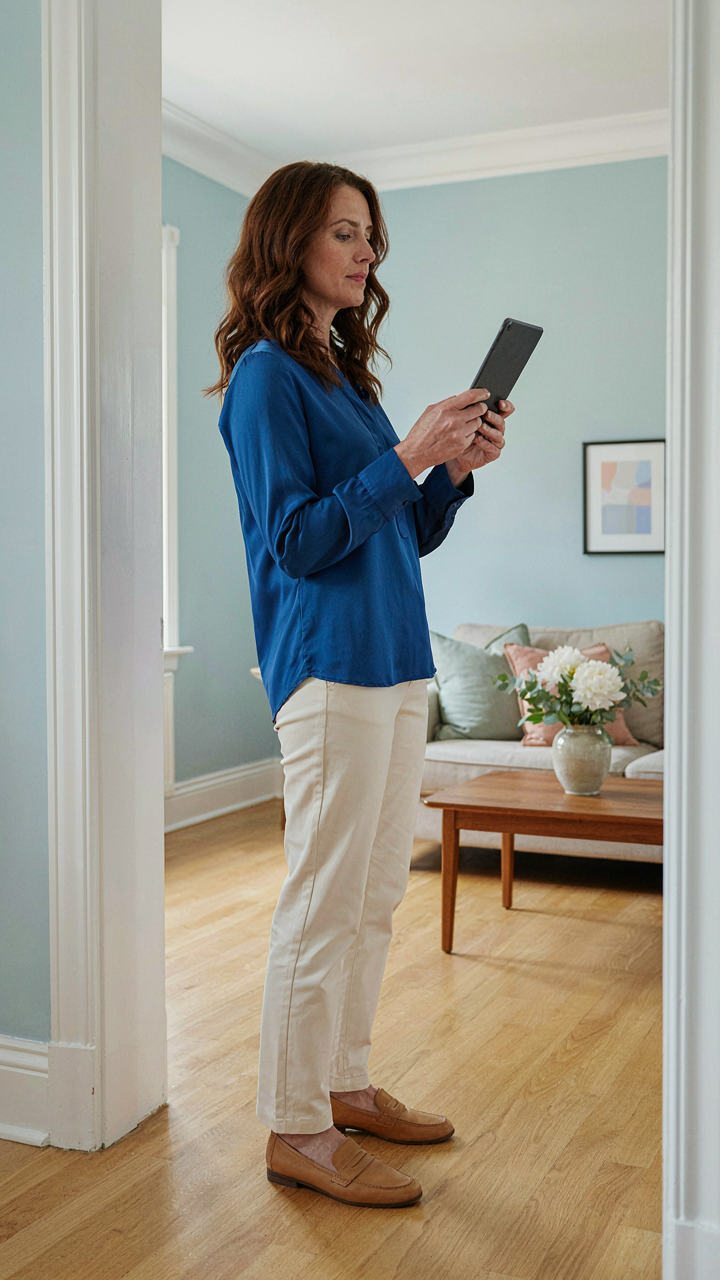
Start by mapping what’s actually in your space right now. Document your wall colors, furniture materials, lighting quality, and existing decor style. Most subscribers skip this and pick flowers based on what looks good in the vendor’s photo, which uses professional staging and artificial light. Your flowers land in a completely different context. Once you know your actual environment, you can specify constraints to your florist that eliminate generic arrangements before they happen: no pastels if your walls are warm, no oversized blooms if your ceilings are low, no filler that reads as filler.
Moving Beyond The Preset Palette
The common advice says pick your favorite colors and stick with them. That’s how you end up with pink peonies every month for a year. The real play is seasonal disruption within a coherent framework. Your florist should know your home’s constraints but receive different color families each month based on what’s actually available and what creates visual contrast against your previous delivery.
Request a consultation call with your florist before signing up. Walk them through your space on video or send clear photos of your rooms in natural light. Tell them what months you want warm tones versus cool tones, or ask them to surprise you within those parameters. Then commit to using what arrives instead of requesting substitutions. This removes decision fatigue and forces you to work with combinations you wouldn’t naturally choose, which is exactly how aesthetic growth happens. Your florist becomes a filter for novelty, not a vending machine.
Beyond Water Changes: Advanced Flower Care For Lasting Impressions
What Flower Food Actually Does
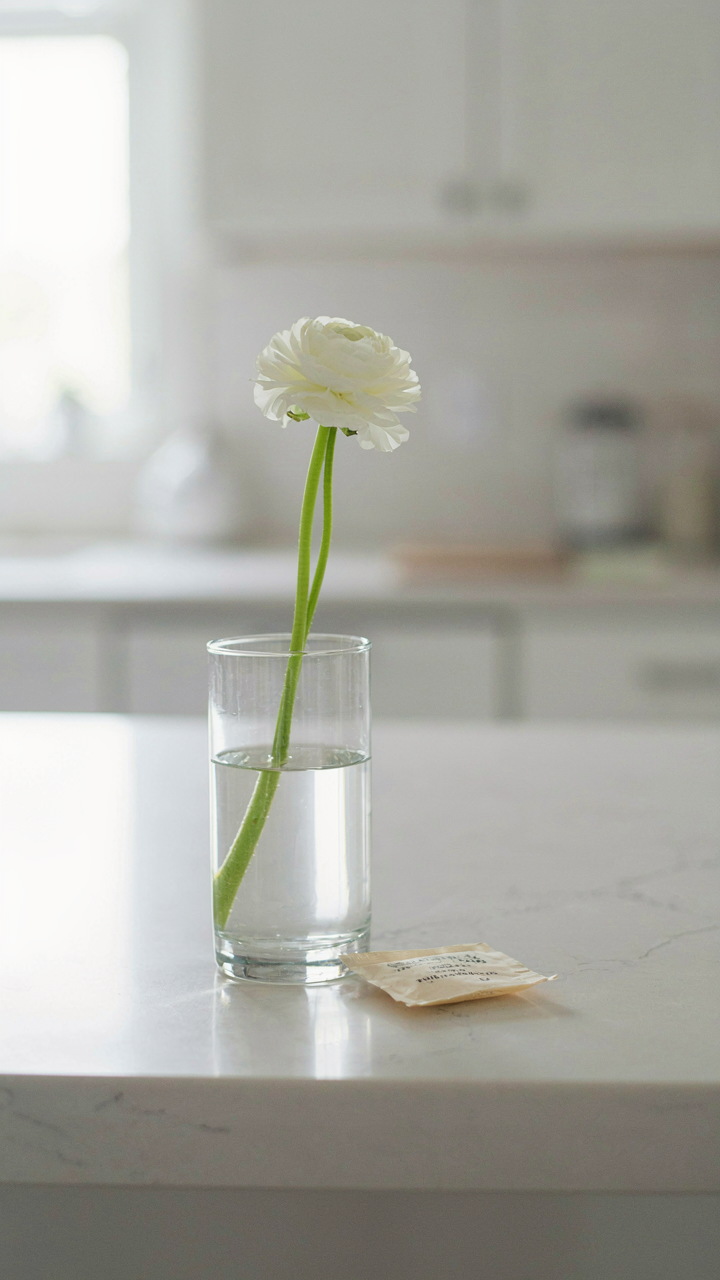
You want your flowers to last longer because throwing money away weekly feels like failure. Here’s what matters: flower food is a delivery mechanism for three compounds—sugar for energy, biocide to kill bacteria in the stem, and citric acid to lower water pH. Plants absorb water through osmosis, and acidic water moves faster into the vascular system than neutral water. Commercial packets work because they’re calibrated ratios, not marketing.
Stem trimming matters because it resets the vascular blockage. Cut stems at a 45-degree angle with sharp scissors one inch from the base every two days. The angle increases surface area for water absorption. A blocked stem absorbs almost nothing regardless of food quality. Change water when it clouds, because bacteria consume the biocide and the entire system fails. This is basic plumbing applied to biology.
How Flowers Actually Wilt
The conventional advice about wilting is incomplete. Wilting isn’t just dehydration—it’s also ethylene gas exposure and temperature shock working together. Ethylene accelerates senescence, the flower’s natural aging process. Remove dying outer petals and foliage below the waterline because they release ethylene and harbor bacteria that block water uptake. Keep arrangements away from ripening fruit, direct heat sources, and drafts. These conditions spike ethylene production or cause rapid water loss through transpiration.
Place your arrangement in a cool room (60-70 degrees) away from sunlight during the night. This slows metabolism and extends vase life by days. Use clean containers with no residue from previous arrangements—bacteria colonies form on existing biofilm and contaminate fresh water immediately. A one-minute soak in diluted bleach before use kills dormant bacteria. This protocol prevents the cascade of wilting before it starts.
How To Subscribe To Flower Delivery Like A Savvy Investor

Read The Contract Before Signing Anything
You’re worried you’ll miss out if you don’t lock in a deal fast, so you skip the fine print. That’s the mechanism working against you. Flower subscription contracts operate like membership agreements in economics: you’re trading upfront commitment for a per-unit discount. The catch is the cancellation clause. Most services charge early termination fees between 15-30% of remaining contract value, or they auto-renew until you explicitly opt out within a narrow window.
Pull the contract and find three things: the renewal date, the cancellation deadline, and what happens if a delivery fails. Services vary wildly here. Some bill you monthly but lock you into annual terms. Others let you pause for one month per year, others don’t. Check whether you can swap flower types mid-contract without penalty, and confirm the delivery schedule in writing. A service that says “weekly” but defines it as “every 7-10 days” isn’t the same commitment.
Anchor Your Negotiation On Total Spend, Not Per Delivery Price
Most people compare the per-arrangement price across services and pick the lowest. That’s backward. Think like a venture capitalist evaluating runway: what matters is total committed spend and flexibility. A service charging 40 dollars per delivery but locking you into twelve months costs 480 dollars with no exit. One charging 45 dollars but allowing month-to-month costs you control.
Call the service directly before subscribing. Tell them you’re interested but have questions about the contract terms. Services with sales teams will negotiate on small friction points: they’ll add a free first arrangement, extend your cancellation window by five days, or throw in a skip month. They do this because acquisition cost matters more to them than margin on your first order. Anchor your ask to their cost structure. Say this: “I want to commit long-term, but I need to pause in June without penalty.” That’s a real ask they can actually grant.
The Minimalist Bloom: Less Is More In Sophisticated Flower Displays
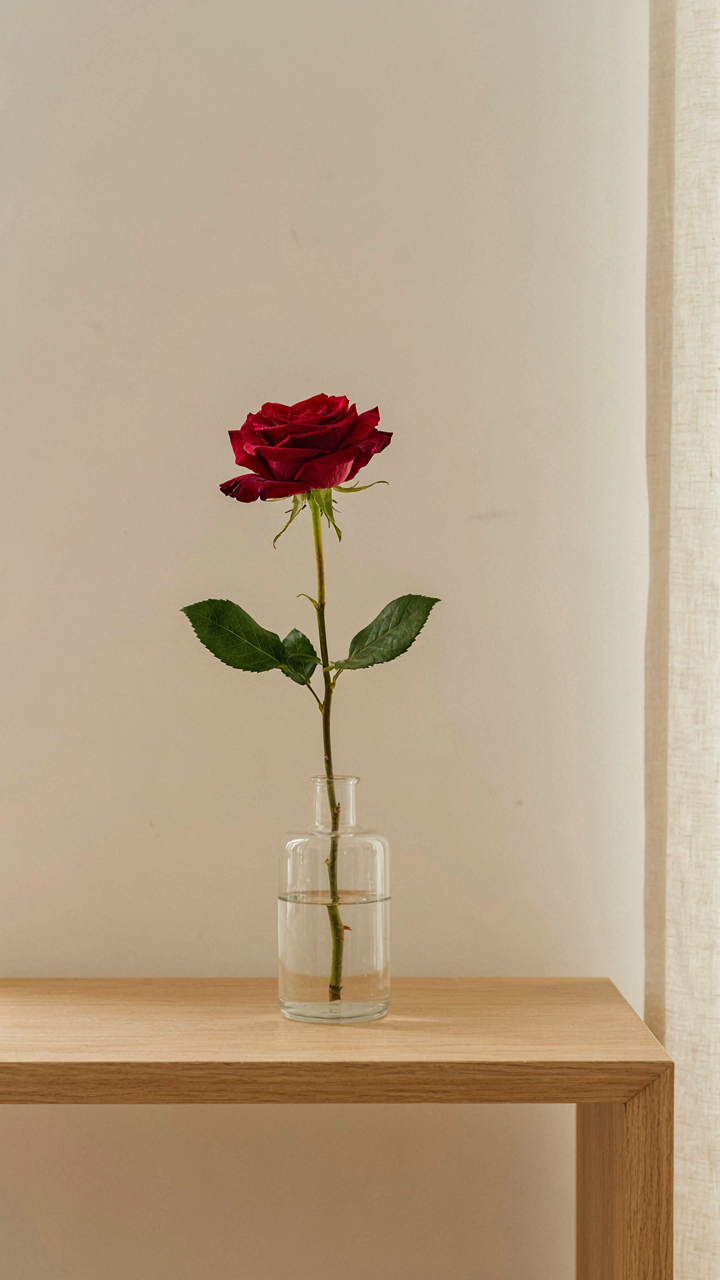
Single Stem Power
You want people to notice what you have without trying too hard. That’s the real game here. The mechanism is scarcity. In design, scarcity—borrowed from economics—means one item commands attention precisely because nothing competes for it. A single premium stem in the right vessel stops the eye. Multiple stems scatter focus and dilute impact. The minimalist approach forces every element to earn its place, which is why it reads as intentional rather than under-stocked.
Delivery services flood homes with volume because it’s cheaper to source and looks “full.” You’re paying for waste. One flawless stem—a garden rose, a premium orchid, or a single branch of flowering quince—costs less monthly than a traditional bouquet and changes the room’s energy. Place it in a clear glass or ceramic vessel where the stem itself becomes part of the display, not hidden behind filler. The architecture of the flower matters when nothing else competes with it.
Specimen Grade Selections
Quality over quantity isn’t motivational speak here; it’s the only math that works for minimalist delivery. When you remove volume, every flaw becomes visible. A bruised petal on a single stem destroys the arrangement. A fresh, graded specimen arriving on schedule becomes the conversation—not the vase, not the concept, the actual flower.
- Garden Roses: Bred specifically for vase life and petal count. Premium grades last three to four weeks with proper water change protocols. Delivery schedules align with bloom maturity windows.
- Cymbidium Orchids: Individual stems contain multiple blooms. High-grade specimens hold color without browning for six weeks minimum. These handle monthly rotation without aesthetic collapse.
- Ranunculus: Layer-heavy petals on a single stem create visual density without requiring multiples. Grade A imports arrive with tight centers that open progressively over two weeks.
- Tulips: Seasonal availability limits monthly options, but premium Dutch cultivars develop stronger stems and hold form longer than commodity imports. Order during peak season, not forced blooms.
- Branches: Flowering cherry, quince, or pussy willow last longest and require minimal maintenance. A single branch in a tall vessel functions as a sculptural element, not decoration.
Request delivery specifications directly from your vendor. Ask for “premium grade” or “extra-large” stem classification, not standard mix. Most services default to middle tier because profit margins sit there. One statement in your recurring order—”send grade A specimens only”—filters out substandard stock before it ships. This single protocol change raises your monthly display quality without cost increase.
The End Of Generic: Designing Your Home With Intent, Not Impulse
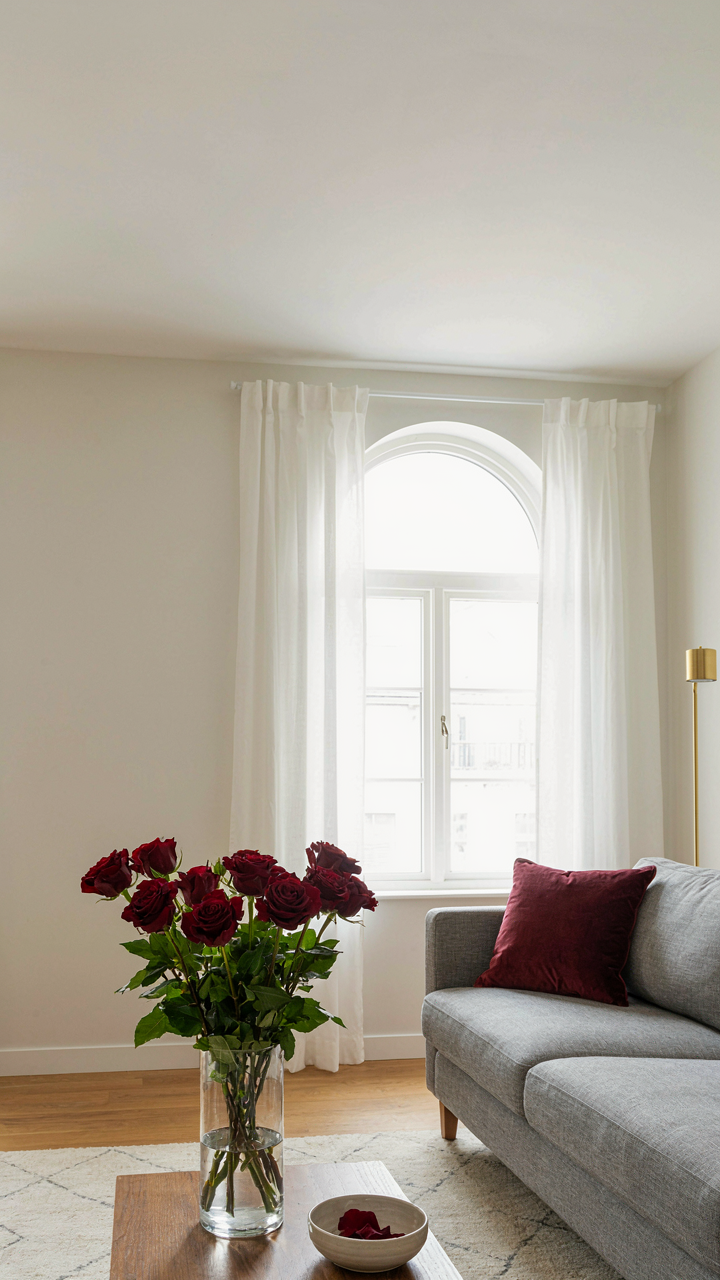
Flowers As Visual Anchors, Not Decoration
You want flowers to signal taste without admitting you’re thinking about what others notice. The real mechanism here borrows from graphic design’s principle of contrast and hierarchy. Monthly flower delivery works the same way: you’re not decorating a room, you’re establishing a visual anchor that forces everything else to justify its existence around it. Most people treat flowers as an afterthought, a final garnish. That’s backwards. Your flowers should dictate the color temperature and material choices of the surrounding space, not conform to them.
Start by identifying one dominant color from your monthly selection and trace it backwards into your existing pieces. If you receive deep burgundy roses, that shade should appear in a throw pillow, a framed object, or wall art you already own. If nothing matches, that’s the signal to replace something. This isn’t about matching everything perfectly. It’s about creating a visual throughline that proves intentionality. Your room stops looking like you assembled it from different time periods and starts looking like you actually decided what belonged there.
Building A Personal Aesthetic Through Repetition
The common advice says “find your style and stick with it.” That’s incomplete. Real style emerges through constraint, not discovery. When you commit to monthly flower delivery, you’re creating a recurring decision point that forces you to develop taste through pattern recognition. Each month, you choose what arrives. Over time, those choices reveal what you actually prefer versus what you think you should like.
Track your selections for three months minimum. You’ll notice patterns in color, texture, and botanical type that you weren’t conscious of before. Maybe you gravitate toward warm neutrals and avoid pastels. Maybe you always choose textured greenery over smooth foliage. Use those patterns as your design north star. When you’re shopping for furniture, bedding, or accessories, reference your flower choices as the standard. This creates aesthetic coherence without the paralysis of building a mood board from scratch.
The Real Obstacle Isn’t Finding Flowers; It’s Your Inability To Define Your Aesthetic Beyond Trends
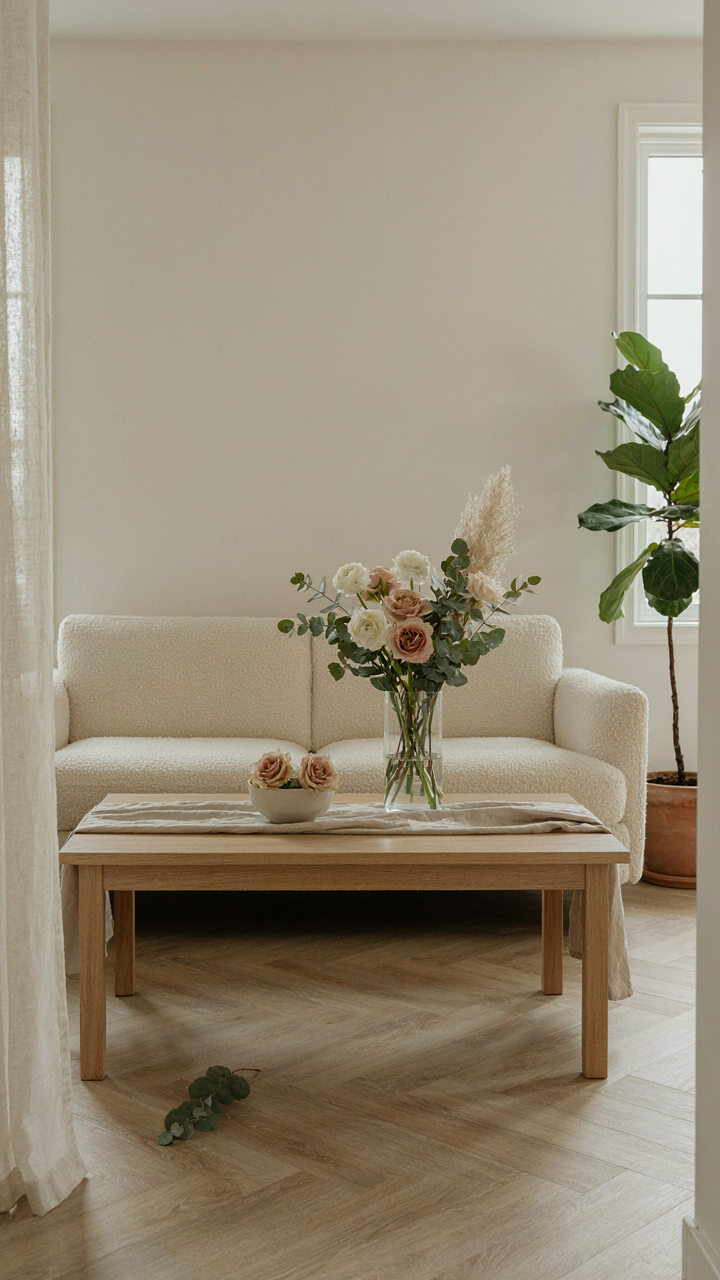
Most people fail at monthly flower delivery because they chase what Instagram told them to like last week. You need a real visual system. Pull three rooms you actually love from Pinterest. Write down the colors, textures, and mood. That’s your aesthetic. Now order flowers that fit it, not flowers that fit the season. Your home doesn’t follow trends. It follows you.



