
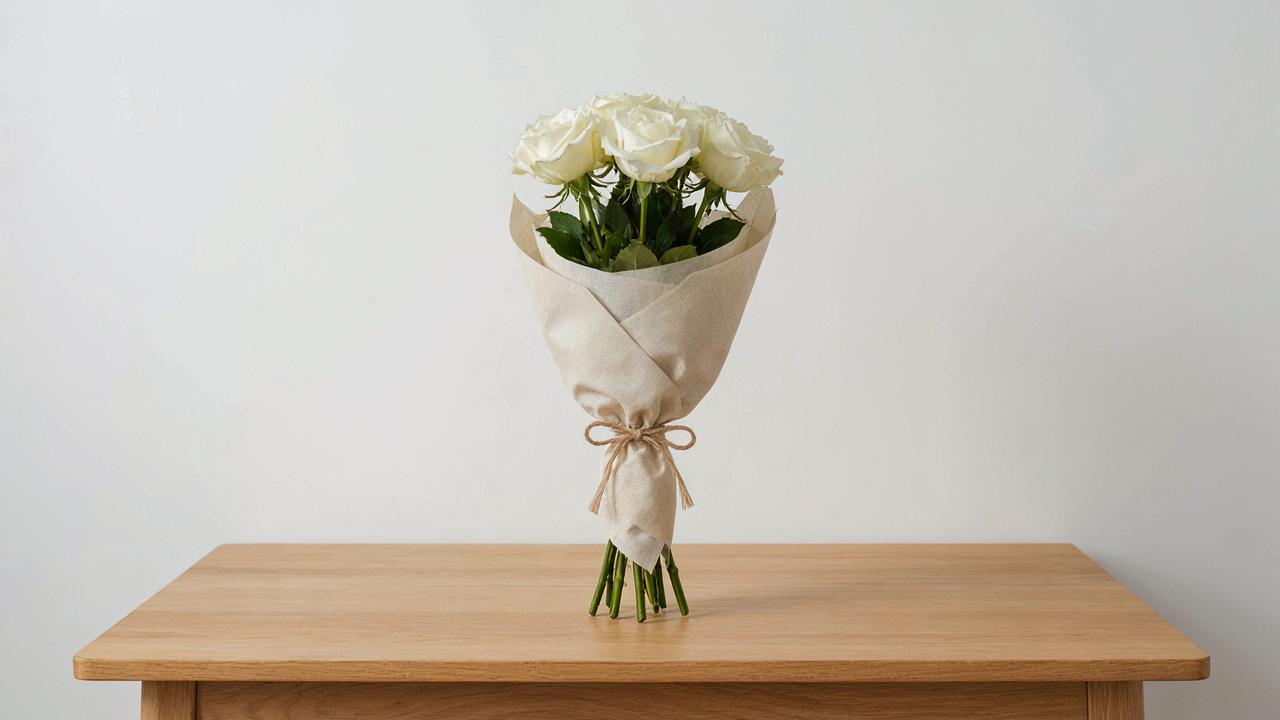
The “Luxury Flower Bouquets” Lie: Why More Isn’t Better
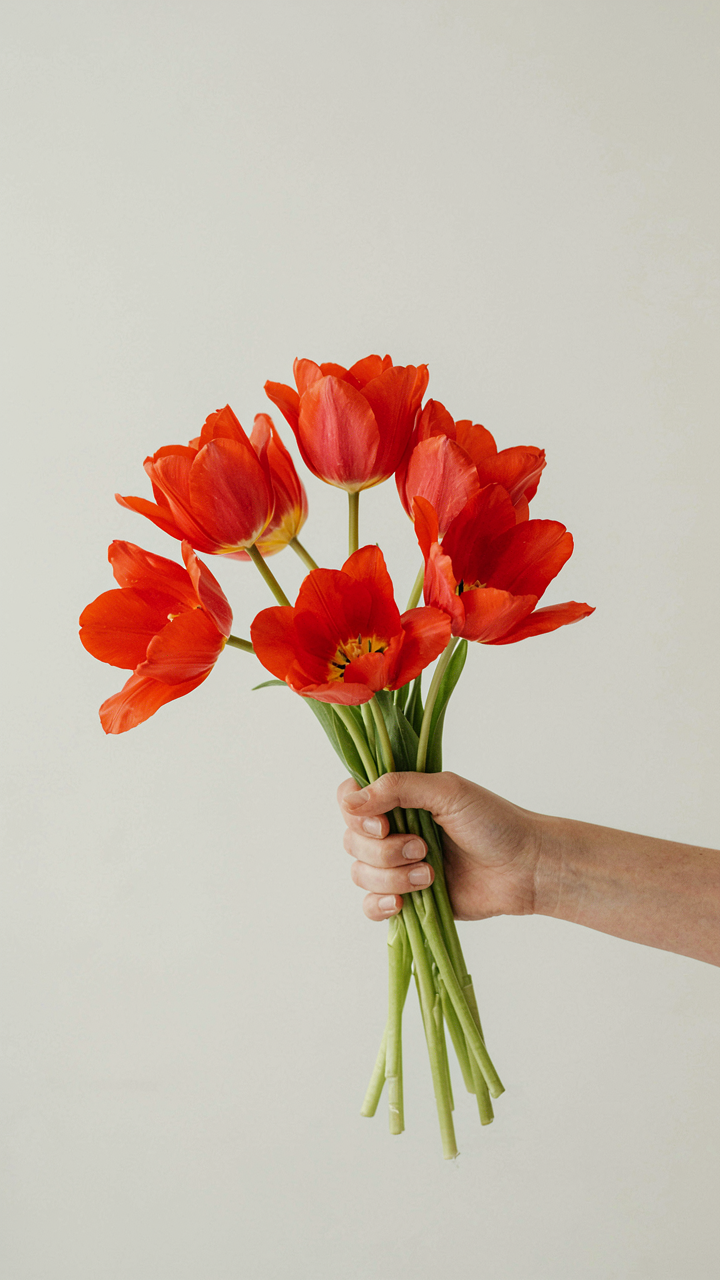
Minimalism Maximizes Impact With Less
You want people to think you spent more money than you actually did. That’s the real driver here. But the mechanism works backward: constraint forces design decisions that read as intentional, while abundance signals panic.
Think of signal-to-noise ratio from information design. A wrapped flower bouquet operates on the same principle. Five stems with visible structure communicate deliberation. Twenty stems crammed into paper communicate “I bought whatever looked full at the store.” The negative space around each flower makes the flowers visible. Remove the negative space and you remove the reason to look.
Clutter And Embellishment Kill The Read
Most advice says “add ribbons, greenery, and filler to make it look fuller.” That’s backwards. Filler obscures flowers. Ribbons distract from shape. Extra embellishments compound the visual weight without adding focal points.
The problem isn’t that these elements exist. The problem is layering them when you haven’t established what the viewer should actually see. When you wrap a bouquet, every material competes for attention. Paper, ribbon, filler, flowers, bow, accent leaves. That’s six competing visual elements. The wrapped bouquet fails because none of them stand out. Remove filler first. Remove ribbon loops. Keep the paper and one accent material. Now the flowers do the work.
The Floral Gift Wrapping Ideas: Structural Integrity Method
Securing Stems Without Damage
You want the bouquet to look untouched, like you didn’t just manhandle it. That’s the real concern here. Stems are hollow or semi-hollow tubes filled with water and air. Crush them, and you block water uptake. The mechanism is simple: pressure applied incorrectly kills the vascular system before the recipient even sees the gift.
Grip stems in the lower third, never the middle or upper portion where flowers attach. Use a soft hand tie, floral tape, or rubber band placed loosely enough to slide a finger underneath. Test this before wrapping. If water can’t flow through the bundle, the flowers wilt in hours regardless of how good the wrapping looks. Secure only tight enough to hold position, not tight enough to compress tissue.
Leaf Removal Preventing Decay And Mess
The common advice says remove leaves below the waterline to prevent rot. That’s half the story. What actually happens is submerged leaves become anaerobic breeding grounds for bacteria and fungi. They multiply fast, clog the stem, and turn water cloudy and foul-smelling. The removal isn’t about aesthetics, it’s bacterial management.
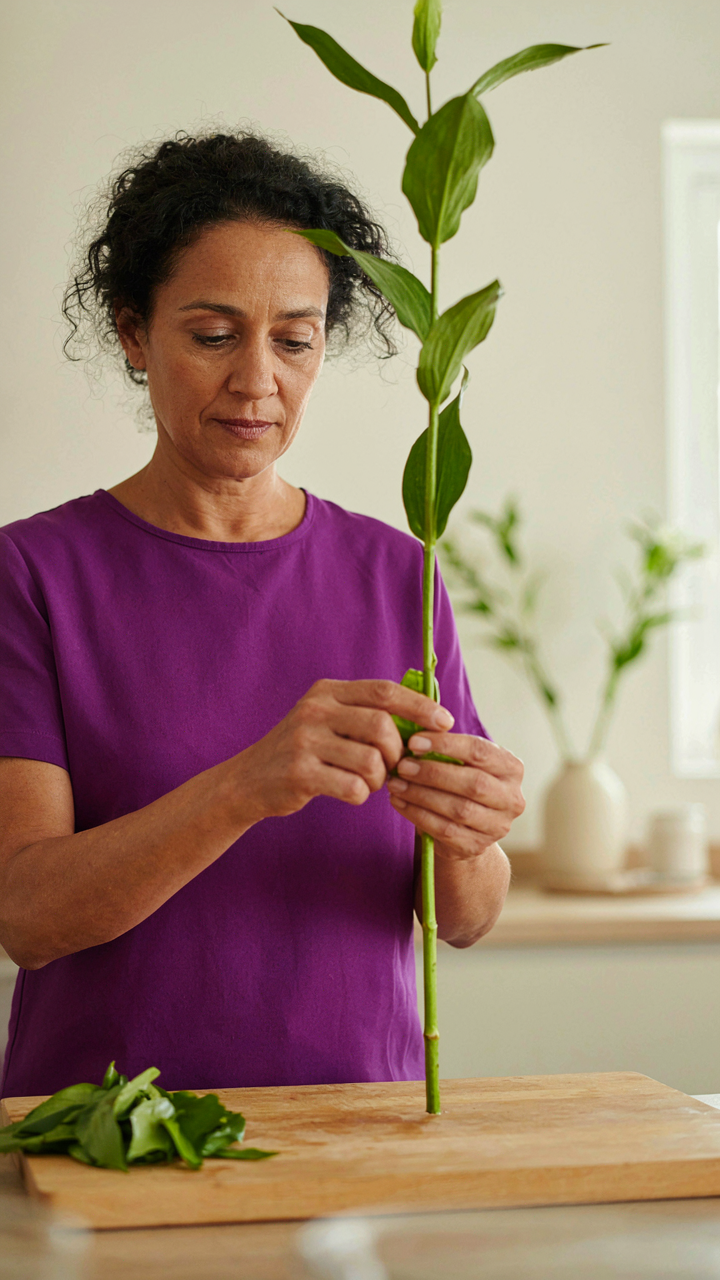
Strip all leaves from the lower two to three inches of stem before wrapping. Do this immediately after cutting, not hours later when leaves start breaking down. Use your thumb and forefinger to pinch and slide downward. Don’t leave stubs. Clean removal prevents bacteria from establishing a foothold in decaying plant matter while the bouquet sits in transit or storage. This single step extends vase life by three to five days for most varieties.
Beyond Cellophane: Superior Gift Wrapping Flowers Materials

Fabric Choices That Actually Hold Shape
You want to look like you know what you’re doing without spending an hour on YouTube tutorials. The mechanism is drape: fabric that holds structure without collapsing keeps your arrangement visible and professional. Natural fibers beat synthetics because they respond to moisture from the flower stems without degrading. Linen, cotton, and silk all absorb water gradually, which means the wrap stays stable throughout transport and display.
Cellophane fails because it’s inert. It doesn’t bond with humidity. Linen wraps tighten slightly as ambient moisture increases, creating tension that locks your arrangement in place. Cotton offers the same principle with less stiffness. Silk works for premium presentations but tears under stem pressure. The texture matters too: tight weaves support weight, while loose weaves (like muslin) shift around stems. Choose based on arrangement density, not aesthetics alone.
Ribbon Alternatives And Fastening Methods
Stop assuming ribbon is your only option. Fastening operates on a tension principle borrowed from engineering: distributed force outlasts point load every time. Single ribbons create pressure spots that damage stems over days. Multiple lighter fasteners, or wider material that spreads pressure across stem clusters, prevent crushing damage and actually hold longer.
- Linen twine: Creates grip without cutting, distributes force across multiple contact points, won’t slip on waxy stem coatings like raffia does.
- Washi tape: Sticks to itself and stems without adhesive residue, tears by hand cleanly, repositionable before final press-down.
- Fabric strips: Cut from cotton scraps, wider than ribbon so pressure distributes, reusable, ties as tight as needed without damage.
- Leather cord: Holds knots permanently, won’t loosen during transport, works for rustic arrangements, can be removed and reused.
- Raffia: Traditional choice that flexes with stem movement, biodegradable, loses grip on moisture so backup with twine in humid conditions.
The fastening point matters more than the material. Wrap one inch below the flower heads, never at the stem base. Lower placement lets stems move independently as water uptake changes their weight distribution. Secure with a double knot at the side, not the front, to avoid blocking the visual line of the arrangement.
The “DIY Bouquet Wrap” Illusion: Mastering The Spiral

Hand Placement Achieving Natural Stem Alignment
You want to look competent without thinking. That’s the real draw here, and it’s why most people fail at the spiral before they start. The mechanism is grip geometry: your hands establish the axis around which the spiral actually forms. Without intentional placement, your hands fight each other instead of cooperating.
Hold the stems at chest height with your non-dominant hand acting as the pivot point. Your dominant hand does the wrapping work. The pivot hand stays still and holds stems at a natural angle, roughly 45 degrees from vertical. Your wrapping hand rotates around this fixed point, not across it. This rotation is what creates the spiral. Many people move both hands at once, which kills the geometry and produces a tangled mess instead of a clean pattern.
Tension Control Avoiding Damage Ensuring Stability
Mechanics calls this load distribution, and wrapping material applies the same principle to delicate stems. The wrap itself is your load. Too much pressure crushes the stems. Too little means the bouquet falls apart the moment someone picks it up.
Press the wrap against the stems with consistent, light pressure using your wrapping hand’s thumb and forefinger. The pressure should feel like you’re holding a pencil, not strangling it. As you rotate around the pivot hand, maintain that same pressure throughout each full rotation. One loose turn followed by two tight ones means uneven stress and stem damage at the pressure points. Complete each full 360-degree spiral with identical tension before moving down the bundle.
Hydration Optimization: The Unseen Critical Imperative
Water Sources Hidden Reservoirs And Transportation
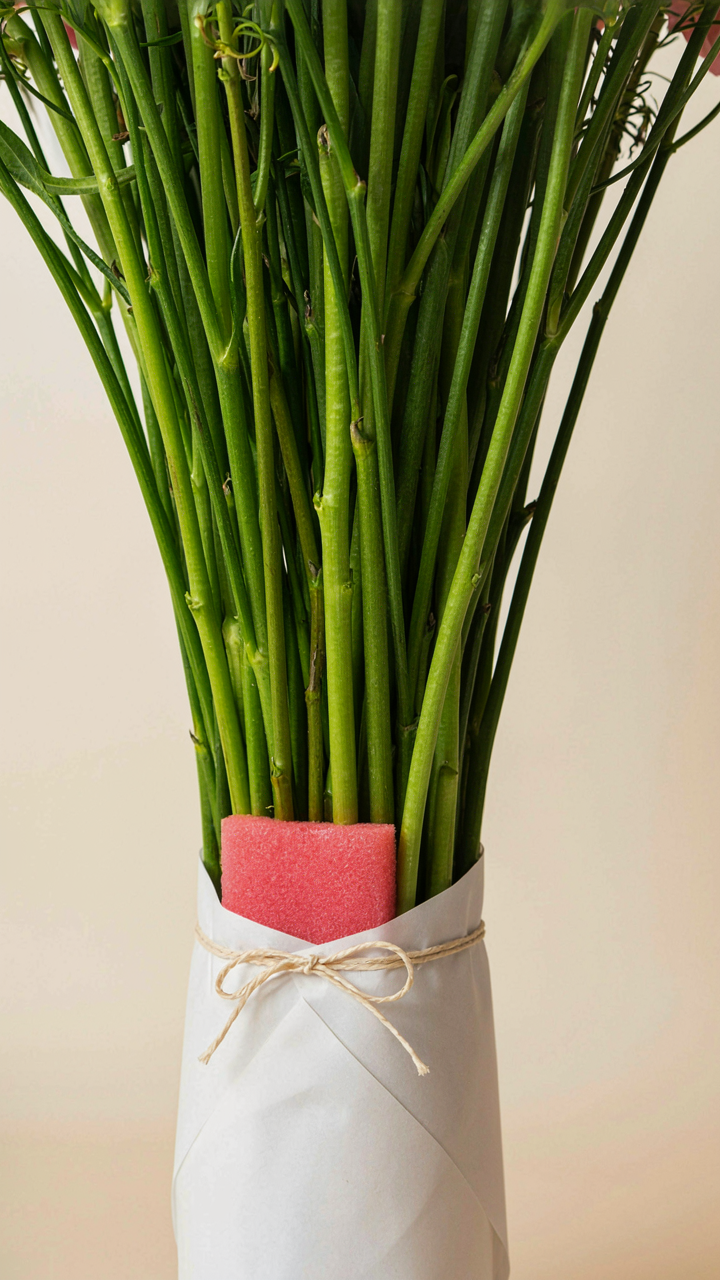
You want flowers to last because throwing away dead stems feels like wasting money. The real mechanism is simpler: flowers are living vascular systems that move water from stem to bloom through the same physics that moves sap through trees. Cut flowers don’t access ground water, so you become the water source. The wrapping material itself becomes a reservoir. Tissue paper, cellophane, and floral foam all trap moisture that the stem absorbs during transit and display. Most people ignore this because they think wrapping is cosmetic. It’s infrastructure.
The stem’s cut surface determines water uptake speed. A fresh diagonal cut exposes more vascular tissue than a blunt cut, but that exposure also means faster water loss if the stem isn’t wrapped correctly. Sealed wrapping keeps humidity around the lower stem high enough that water doesn’t evaporate faster than it moves upward. Floral foam stays saturated and acts as a continuous water supply throughout the arrangement’s lifespan. Without understanding that wrapping traps the moisture gradient flowers depend on, you’re just making something look nice while the blooms dehydrate from the inside out.
Capillary Action Keeping Blooms Fresh
Physics governs how water moves through flower stems. Capillary action is the mechanism: water molecules cling to stem tissue and pull themselves upward against gravity through microscopic channels in the vascular bundle. Wrap your flowers tightly and you preserve the water column. Wrap them loosely and you break the capillary chain by exposing too much stem surface to air. The wrapping isn’t decoration. It’s a moisture containment system that lets the flower drink continuously.
Air pockets in loose wrapping create dead zones where the capillary pull collapses and water stops moving upward. A tight wrap with no gaps keeps the stem in a humid microclimate where osmotic pressure stays constant. Change the water in a vase and you reset this system, but the wrapped section of stem never sees that water. This is why keeping wrapped portions sealed and submerged matters more than most florists admit. The moment you wrap fresh flowers, you lock in their hydration status for the next 24 to 48 hours.
The “Flower Bouquet DIY” Aesthetic: Contrarian Color Theory
Monochromatic Impact Beats Visual Noise
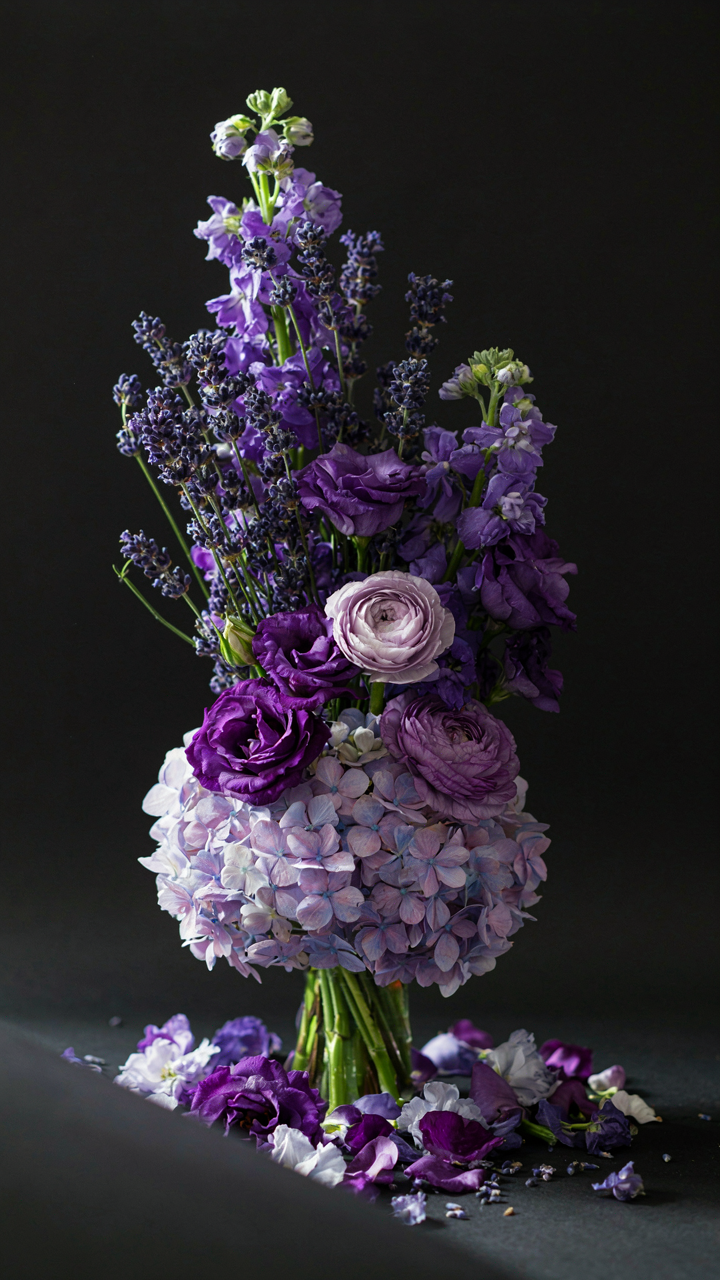
You want people to think you have taste. That’s why you’re reading this section instead of just grabbing whatever colors are on sale. The mechanism here comes straight from graphic design: constraint forces hierarchy. When you limit your palette to one color family, your brain stops scanning for meaning and starts absorbing it. A monochromatic bouquet demands focus because there’s nowhere else to look.
The common advice tells you to use “lots of different colors for interest.” That’s how you end up with a bouquet that looks like someone sneezed at a discount bin. One color, multiple tones and textures within that family, actually communicates intention. Depth comes from varying the saturation and shade, not from cramming unrelated hues together. A white bouquet with cream, ivory, and pale green creates dimension. A red bouquet with burgundy, crimson, and deep magenta reads as sophisticated, not confused.
Single Accent Replaces Rainbow Thinking
Contrast works, but only if you deploy it as a weapon, not a decoration. Too many florists and beginners treat color like a buffet. You pick one dominant color family, then you add one accent that sits outside that family entirely. That’s the protocol. Two color families maximum. A blush and white bouquet with a single stem of dark green eucalyptus. A yellow bouquet with one burgundy accent piece. The accent doesn’t blend in. It commands attention precisely because it breaks the rule once.
The anchor color should take up 70 to 80 percent of the visual space. The accent gets the remaining real estate. This ratio prevents the accent from becoming noise and keeps the bouquet from looking like indecision. When you wrap it, the dominant color becomes the base layer. The accent reveals itself as you turn the arrangement. Position matters because the reveal creates narrative. You control what people see first, then what they discover.
Gift Box Decoration: Integrating Flowers Into The Whole
Anchoring Techniques: Preventing Shift In Transit
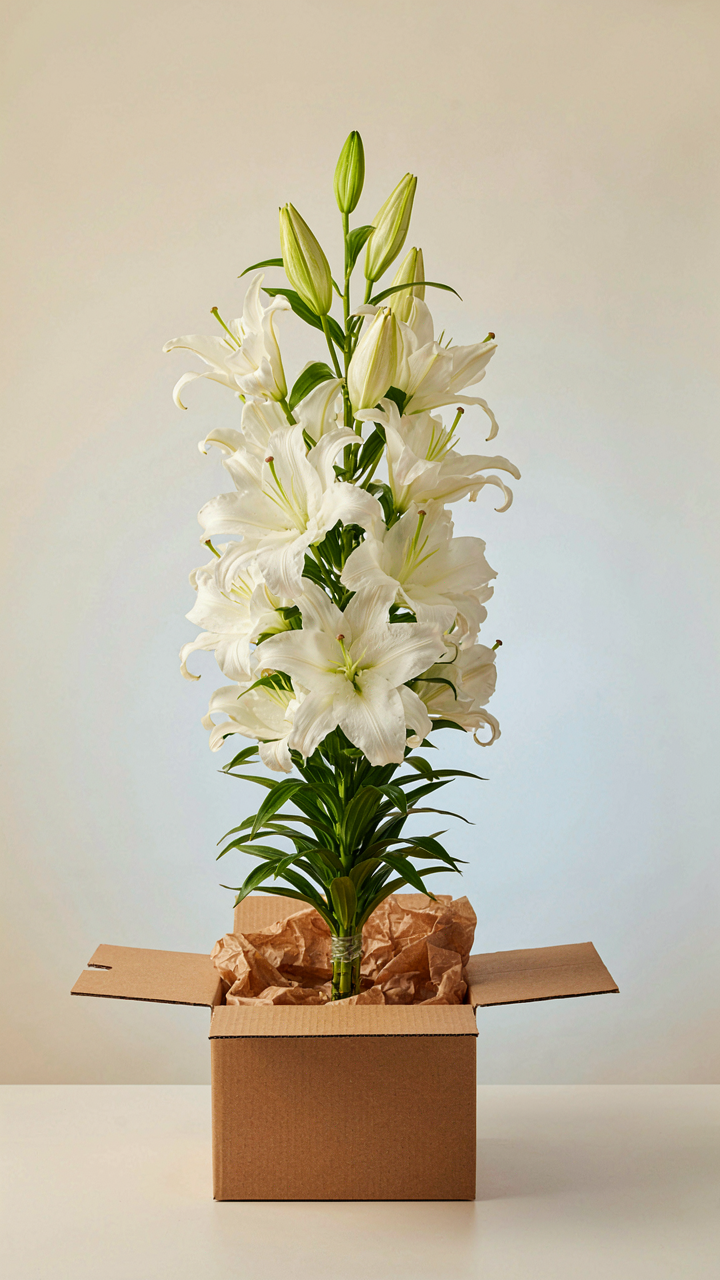
You want the recipient to open a perfect arrangement, not a collapsed mess. That fear is warranted. This is a physics problem: you’re fighting gravity and momentum during transport. The mechanism is simple—friction and distributed weight prevent motion. A flower arrangement shifts because the stems sit loose inside the box, creating a void. Flowers move in that void. You eliminate the void by filling it completely, which sounds wasteful but isn’t. Use crumpled kraft paper, tissue, or floral foam secured to the box base. The stems should contact multiple surfaces at once, not just the bottom.
Tape the stems to the box walls if the arrangement is tall and thin. Run clear tape from the stem cluster to the inside edge of the box at two or three points. This isn’t hidden—nobody sees inside during transit. The tape locks position and kills lateral movement. For standard bouquets in standard boxes, pack the space around the stems first, then add a tissue layer on top of the arrangement itself to prevent compression from above. The goal is zero movement in any direction. Test it by lifting the closed box and gently tilting it side to side. If you hear or feel anything shift, repack.
Box Inserts: Creating A Custom Flower Bed
Florists use foam because it solves a real problem: it holds stem position and stabilizes water uptake. You don’t need florist foam for a beginner project, but you need something that serves its function. The mechanism here is contact surface area. Stems need to rest against something that won’t compress or shift. Crumpled paper, shredded kraft, or even clean straw creates friction and distributes weight across multiple contact points. Fill the box bottom with your chosen insert material to a depth of two to three inches. Press it firmly so it doesn’t settle when the box moves. This becomes your flower bed.
Arrange stems into the bed at slight angles, pressing each one down until it contacts the box bottom through the insert material. The insert material molds around the stems and locks them in place. For heavier arrangements or longer stems, use a small block of florist foam at the box center, then surround it with crumpled paper to fill remaining gaps. Water sits in the insert material and wicks up through the stems. This keeps flowers hydrated during transport and for hours after delivery. The recipient opens the box and sees a structured, intentional arrangement instead of stems floating loose.
Gifts Wrapping Diy: The Unspoken Rule Of Presentation
The Physics Of Unwrapping
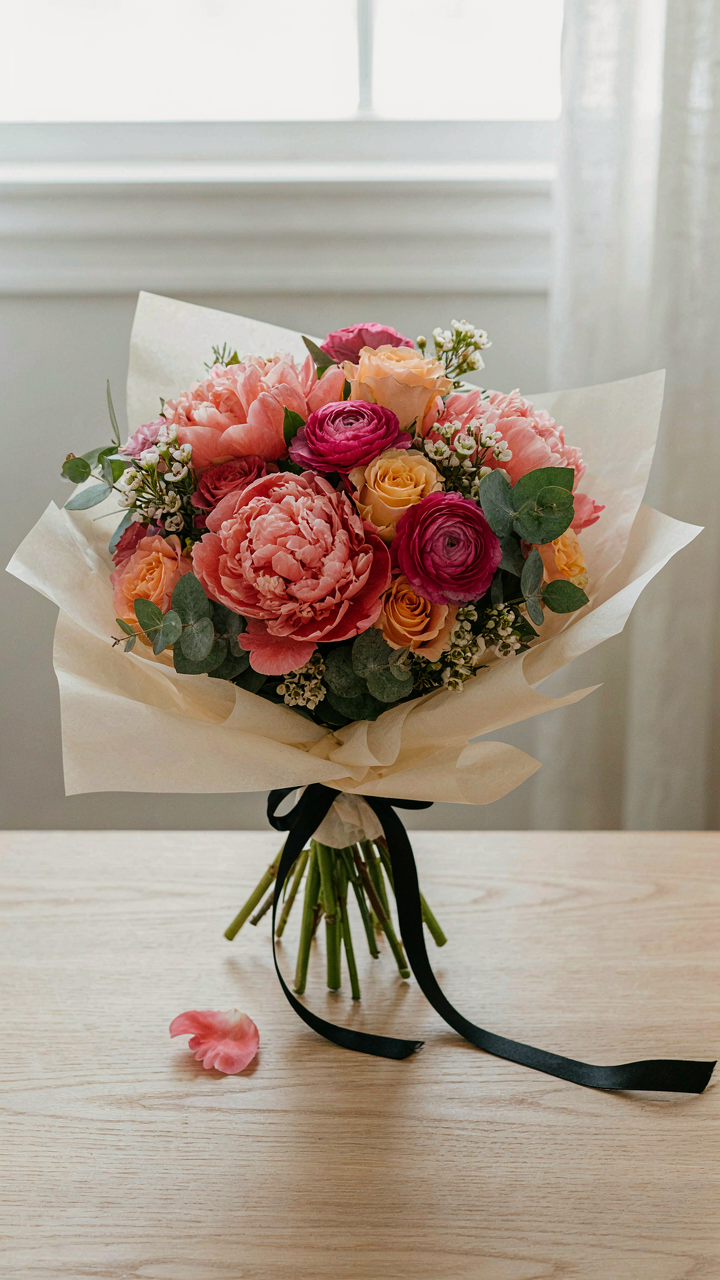
You want people to think you spent more time and money than you did. That’s the real reason this matters. The mechanism is identical to physics: potential energy. When someone receives a wrapped flower gift, the wrapping stores tension. Their brain doesn’t process the flowers until they release that tension by unwrapping. The delay creates a neural gap where anticipation builds value.
Most advice tells you to wrap tight and neat. That’s incomplete. Strategic wrapping actually uses resistance. Tissue paper that crinkles slightly when touched, ribbon that requires a deliberate pull, layers that unfold one at a time—these create micro-moments of engagement. Each layer signals to the recipient’s brain that something considered this gift important enough to protect it. That’s not decoration. That’s a psychological protocol.
The Signature That Sticks
Your wrapping style is a brand mark, whether you know it or not. Every florist, gift service, and high-end retailer uses this. A consistent choice—one specific paper color, a particular bow knot, a single accent element—trains the recipient’s eye to recognize your gifts before they see the card. That recognition is the entire game.
The common move is to match the wrapping to the flowers. Wrong. The best signature element contrasts them slightly and repeats across every gift you give. A black kraft paper base with a single gold wire wrapped around the stem. A cream tissue with a specific leaf accent tucked in the same spot every time. This consistency builds brand recall faster than any message you could write. When someone sees that signature, they think of you before they think of the flowers.
The Real Obstacle Isn’t Your Skill, It’s Your Fear Of Appearing Unremarkable
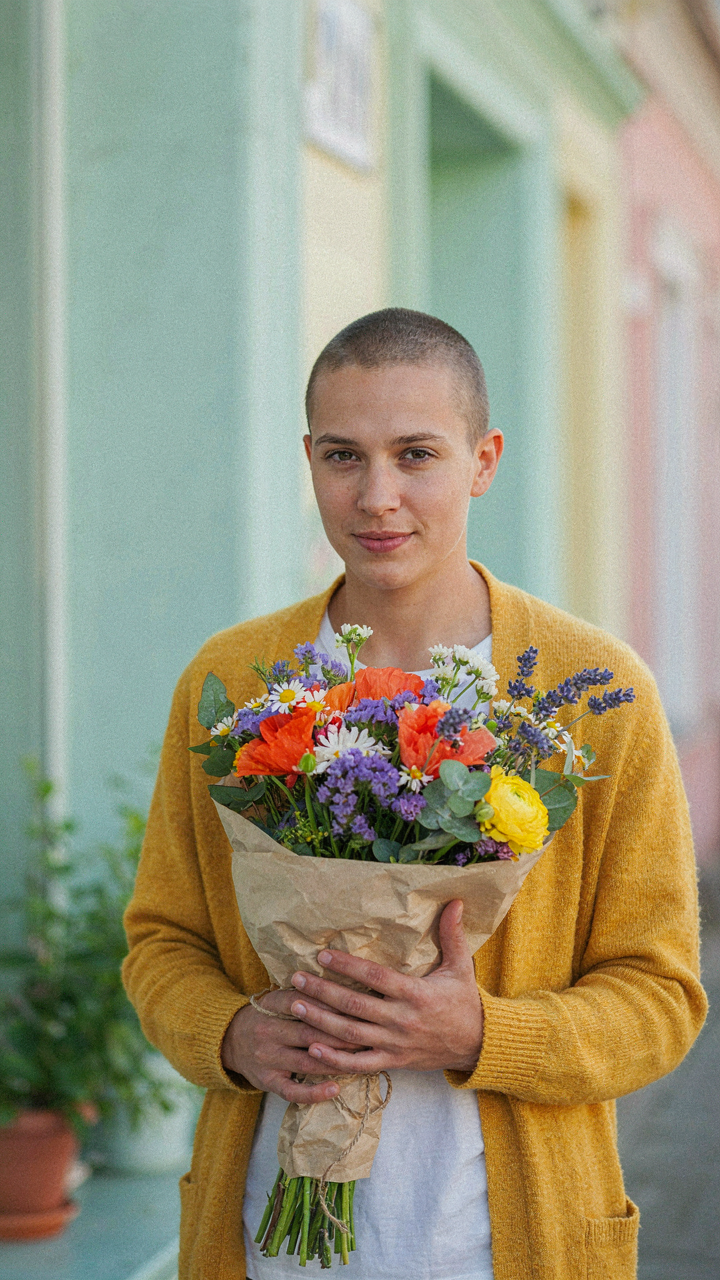
You don’t need perfect technique to wrap flowers that stop people in their tracks. You need permission to look amateur while you’re learning. Most people never wrap flowers because they’ve already decided the result won’t matter. That’s the real killer. Stop waiting for confidence and wrap something today. Imperfect flowers wrapped with intention beat perfect flowers wrapped with hesitation every single time.



