
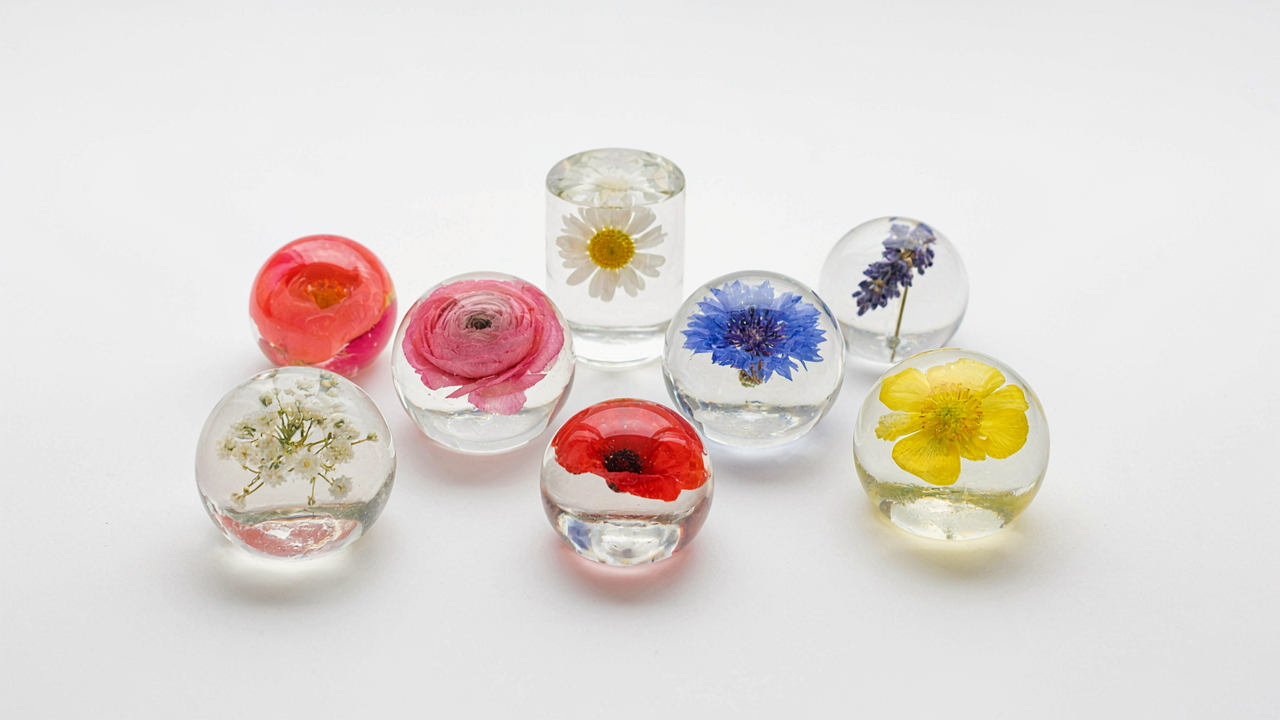
The Illusion Of Effort: Why Your “Handmade” Gifts Fall Flat

Sentiment Alone Doesn’t Survive First Contact
You care about this section because you want to believe effort equals impact. It doesn’t work that way. The mechanism is simple: a resin flower paperweight crafted with poor technique signals laziness, not love. Cloudy resin, uneven flower placement, visible air bubbles—these flaws don’t read as “handmade charm.” They read as unfinished. The recipient notices the execution gap before they register your intent.
Most advice tells you sentiment matters most. That’s incomplete. What matters is execution meeting expectation. A gift that looks rushed or poorly made triggers doubt about the giver’s care. Resin work demands specific competencies: proper mixing ratios, bubble removal, UV curing time, flower preservation. Skip these and the emotional value collapses. The paperweight becomes proof you didn’t invest enough attention to master the basics.
Mechanism Over Meaning
Design economics teaches that perceived value depends on eliminating visual friction. A resin paperweight competes against mass-produced alternatives the recipient could buy themselves. Your handmade version only wins if the execution is demonstrably superior or intentional in ways factory products aren’t. A flawless pour with a rare flower species embedded inside tells a story. Murky resin with a generic daisy tells the story of someone who tried but didn’t prepare.
This distinction matters because it shifts your focus from intention to protocol. Before you pour resin, you need specific equipment: a digital scale for accurate ratios, a vacuum chamber or pressure pot for bubble removal, UV lamps with proper wavelengths, and quality specimens. You need to know curing times for your specific resin brand. When execution is airtight, the gift becomes credible. The recipient sees control, not chance. That’s what makes it stick.
The Curated Chaos Protocol: Elevating Pressed Flower Resin Paperweights DIY
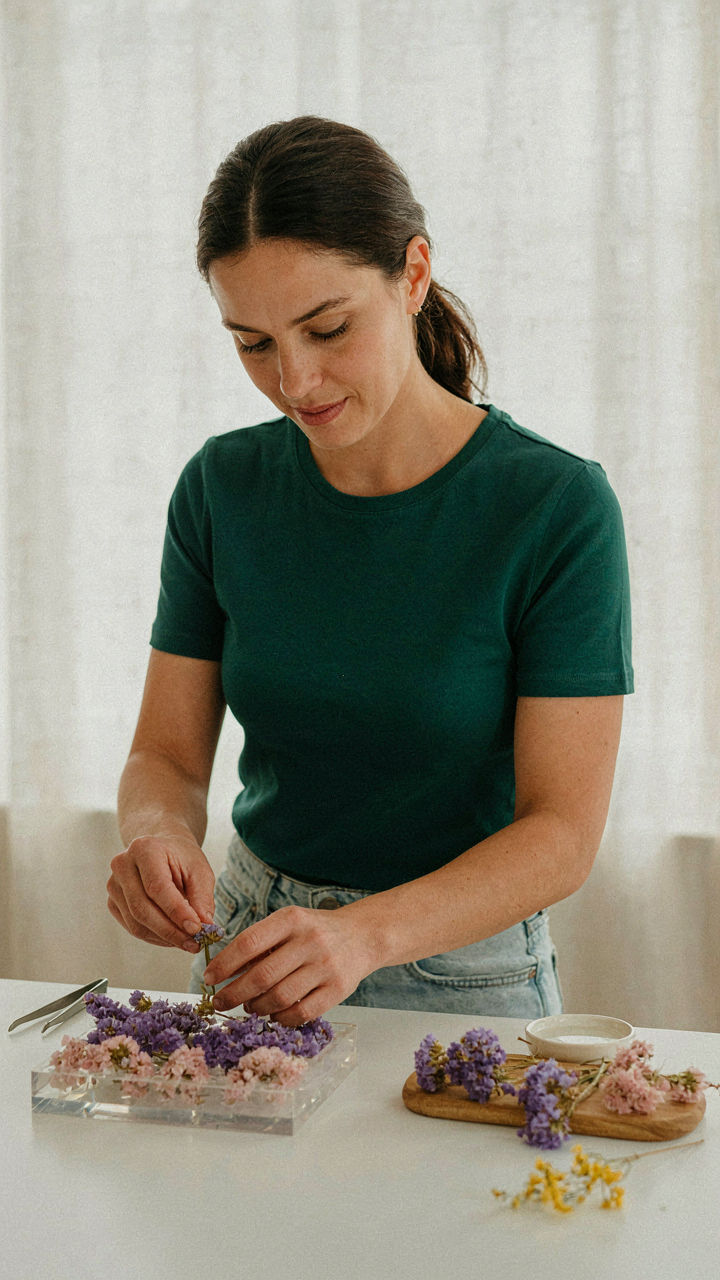
Flower Selection Beyond The Visual
You want to make something that looks intentional, not like you grabbed whatever blooms were available. Here’s the mechanism: every flower carries structural memory. Once pressed and embedded in resin, delicate petals either hold their form or collapse depending on moisture content, thickness, and cell density at the time of casting. Selecting flowers means engineering durability, not just picking colors that photograph well.
The real work happens before resin touches anything. Thin petals from garden roses deteriorate faster than sturdy wildflowers like larkspur or statice. Hydrangeas flatten but stabilize. Peonies shatter. Your flower choice determines whether the paperweight looks intentional five years from now or fades into visual noise. Choose based on structural integrity first, then aesthetics. This reverses the typical approach and produces results that actually endure.
Depth Through Intentional Layering
Visual hierarchy in resin mirrors principles from graphic design—the foreground, middle ground, and background create perceived complexity. One flower centered on a flat base reads as amateur. Stacking flowers at different depths within the resin creates the illusion of a three-dimensional garden, even though you’re working within a two-inch-tall block. The eye processes this as craftsmanship.
Position your focal flower 60 to 70 percent into the pour rather than at the surface. Layer smaller complementary flowers above and below it. Use negative space deliberately—don’t fill the entire volume. This contradicts the impulse to maximize the object’s density. Restraint signals control. The final step: verify your composition under light before pouring irreversible resin. Once it sets, you’ve locked in either sophistication or chaos. The mechanism is constraint, not abundance.
Epoxy Resin Flower Paperweight: The Art Of Material Deception

Resin Clarity And Finish: Avoiding The Amateur Look
You want people to think you paid more than you did. That’s the real driver here. Clarity separates a fifty-dollar paperweight from a five-dollar one, and it comes down to how you manage light refraction, the same optical principle that governs camera lenses. Cloudy resin happens because trapped air bubbles scatter light instead of transmitting it cleanly. The amateur solution is pouring fast and hoping. The real mechanism is controlling pour temperature and vacuum degassing before the resin hardens.
High-clarity epoxy sits at a specific viscosity window where bubbles rise naturally without aggressive intervention. Most makers skip heating their resin to 120-130 degrees Fahrenheit before pour, then wonder why their work looks milky. A vacuum chamber pulls dissolved gases out of the liquid resin, not just surface bubbles. The finish matters equally: gloss versus matte changes perceived depth and value instantly. Gloss makes embedded flowers read as preserved. Matte flattens them.
Embedding Techniques For Museum Quality Appearance
The difference between a craft project and a display piece isn’t the flower quality, it’s suspension. Museum conservation uses this principle deliberately: objects float in controlled space rather than resting on a surface. Your paperweight needs the flower centered in three dimensions, not pressed against the bottom. This requires a two-pour method that nobody teaches clearly because it sounds complicated when it isn’t.
Pour your first layer thin, let it set to a gel state, position your flower, then pour the second layer. The flower stays locked mid-suspension instead of sinking. Cure time between pours matters: too fast and you trap pockets; too slow and the first layer hardens fully, creating a visible seam. Most paperweights have that seam visible because makers rush this step. The second layer needs to flow around the flower with zero air gaps, which means matching viscosity between pours and pouring slowly from one edge. That suspended quality is what people recognize as expensive without knowing why.
The Scarcity Principle In Handmade Floral Paperweight Design
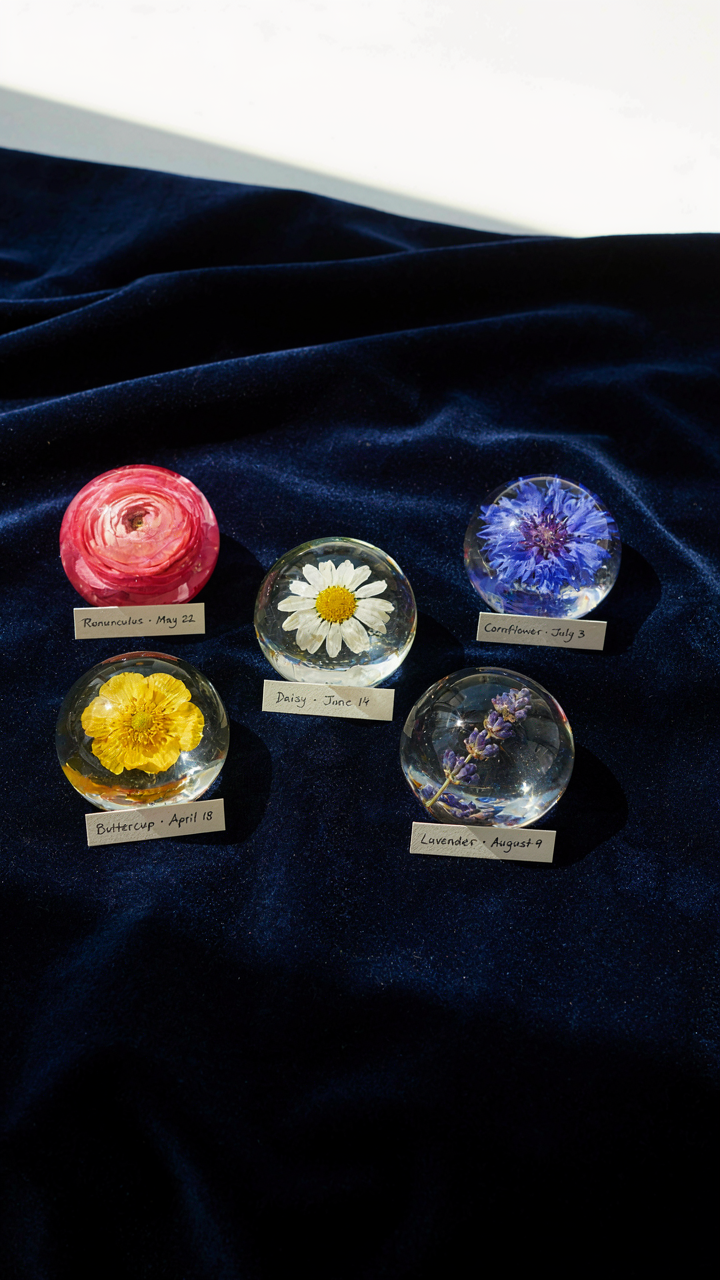
When Production Becomes Your Moat
You want proof that your paperweight matters. That it’s not just decorative filler. Limited editions deliver that proof instantly because scarcity forces a choice: buy now or lose access. This isn’t psychology—it’s basic economics applied to resin. When a maker produces fifty units instead of five hundred, each piece carries inherent value through controlled supply. The mechanism works because buyers perceive finality. Once sold out, acquisition becomes impossible, not just unlikely. This transforms a paperweight from a gift option into a decision with stakes.
Production limits in handmade resin work differently than mass manufacturing because each piece involves manual labor at critical steps. Embedding flowers, pouring resin, curing, finishing—these don’t scale without sacrificing quality or introducing defects. A maker who commits to fifty units per design signals genuine constraint, not artificial gatekeeping. Buyers recognize the difference. They understand that fifty is the actual ceiling, not a marketing number. This authenticity makes the scarcity credible, which is what makes it work.
The Story As The Actual Product
Most people assume the paperweight itself is what sells. Wrong. The story around it sells the paperweight. Economics calls this information asymmetry—the narrative you provide fills gaps the buyer can’t see. You’re not just selling resin and flowers; you’re selling the reason those specific flowers matter, where they came from, what occasion or memory they anchor to. A wedding-day preserved bouquet tells a story a generic floral arrangement never will. That narrative becomes inseparable from the object. It’s why two nearly identical paperweights—one with a story, one without—command different prices.
The mechanics here involve buyer identity. People buy things that tell the story they want others to believe about them. A handmade paperweight with a documented history lets them signal intentionality, thoughtfulness, and investment in meaning. The paperweight becomes proof of who they are. The resin and flowers are just the medium. When you document the source of each bloom, the creation date, the reason for that specific design, you’re not adding marketing fluff—you’re adding the actual value proposition. Without it, the buyer knows they’re buying an object. With it, they’re buying an artifact.
Florasphere Paperweight Value: Rebranding “Keepsake” To “Artifact”
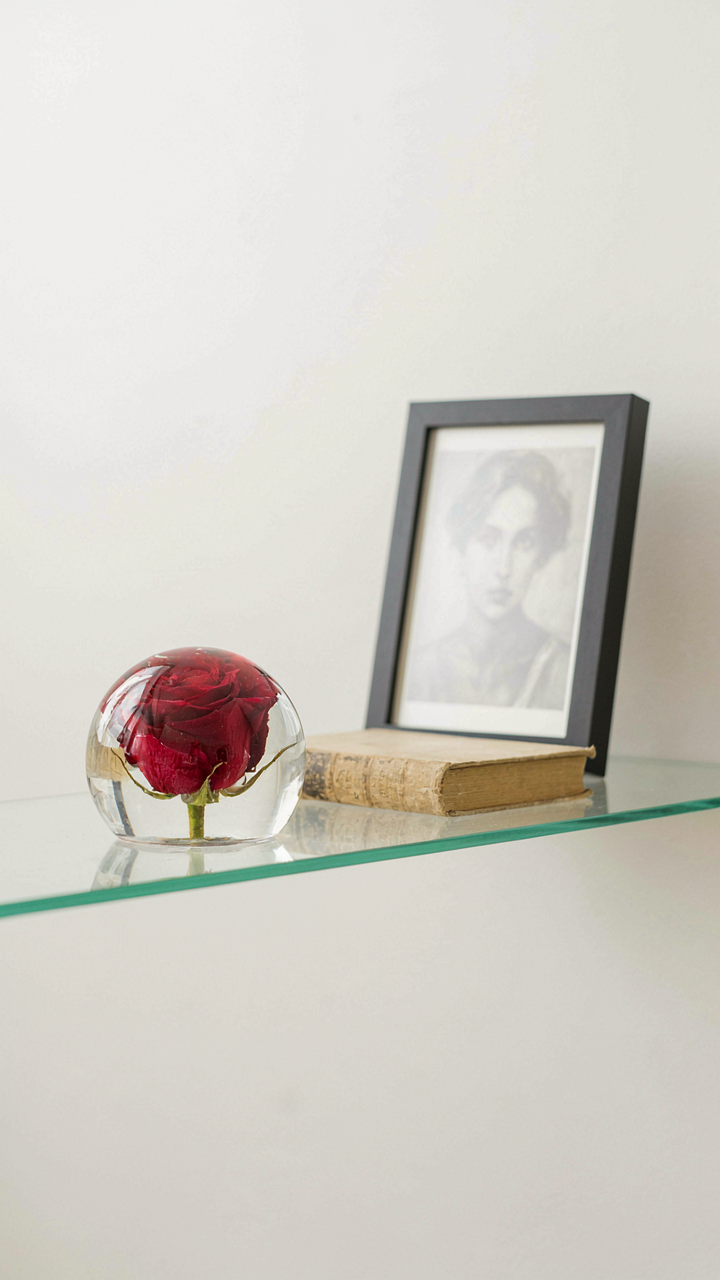
Where You Display It Matters More Than What’s Inside It
You want permission to justify spending money on something small and decorative. Here’s the mechanism: the object gains authority from its environment, not from itself. A resin flower paperweight on a desk shelf signals differently than one in a cardboard box on a closet floor. Context creates perceived value. Museums understand this. They don’t display artifacts in storage rooms. The surface you place a paperweight on, the light hitting it, the proximity to other objects—these variables determine whether someone sees it as disposable or permanent.
The display environment works like curation in economics. When collectors elevate an object through intentional placement, they signal its worth to themselves and others. A resin paperweight positioned on a glass shelf with controlled lighting transforms into something viewers linger on. Position it near books, vintage items, or framed photographs and it inherits their gravitas. This isn’t psychology. It’s mechanism. The paperweight remains chemically identical. Only the frame around it changed. That frame is the actual product you’re selling or keeping.
Resin Survives Longer Than The Occasion
Durability isn’t a feature here—it’s an investment thesis. Unlike cut flowers that decay in days, polyester or epoxy resin holds its structure for decades without fading, cracking, or deteriorating under normal indoor conditions. The flowers trapped inside don’t rot. They don’t turn brown. The resin matrix locks them in temporal stasis. This matters because it redefines what you’re actually purchasing. You’re not buying a momentary gift. You’re acquiring an object that will outlast the marriage, the job promotion, or the graduation it commemorates.
Historical paperweights from the nineteenth century still maintain their original form and color. Glass examples survive intact from the 1800s. Modern UV-resistant epoxy resins perform identically well, sometimes better. This longevity operates as a hedge against the guilt of purchasing something “frivolous.” An item that remains visually unchanged after ten years isn’t frivolous—it’s an artifact. Track the condition of your paperweight annually by photographing it under the same lighting. If it looks unchanged after five years, you’ve validated the purchase as permanent, not temporary.
Dandelion Paperweight And Clear Resin: Mastering Simplicity For Impact

When Constraint Becomes Advantage
You want this section because you’re afraid a single dandelion won’t look intentional enough, that people will mistake restraint for laziness. Here’s the mechanism: constraint in design works like signal-to-noise ratio in communication. Remove everything except the core element, and that element stops competing for attention and starts commanding it. A dandelion suspended in clear resin doesn’t need a backdrop, base color, or secondary flowers. The flower itself becomes the entire statement.
Clear resin creates optical clarity that forces the dandelion into focus. There’s no visual escape route. The seed head’s geometric precision, the stem’s natural line, the delicate structure of each floret—all become unavoidable. This is why minimalist design isn’t about having nothing. It’s about removing everything that doesn’t amplify what remains.
Execution matters more than concept in minimalist resin work. Clarity requires cleanliness. Minimize simplicity by cutting the execution itself.
- Bubble Management: Trapped air ruins the transparency that makes minimalism work. Vacuum chambers or slow pour techniques eliminate bubbles that would scatter light and destroy the clean aesthetic you’re building.
- Specimen Selection: Choose dandelions with intact seed heads and minimal damage. Imperfect specimens undermine the intentional look. The flower becomes the design, so it must be flawless or deliberately chosen for specific texture.
- Resin Type Precision: UV resin cures faster but yellows over time. Epoxy resin stays clear longer but requires precise mixing ratios. Pick based on the lifespan you’re designing for and how visibility matters over years.
- Positioning Stability: Dandelions float or sink unpredictably. Use fishing line or strategic air pockets to lock the specimen in place mid-pour. The final position determines whether the piece reads as intentional or accidental.
- Base Integration: A flat base maximizes the visual impact of what sits above it. Avoid decorative bases that compete. Let the dandelion’s geometry stand against empty space.
The paperweight works because nothing distracts from the structure you chose to preserve. Most makers add color, multiple flowers, or background elements out of fear that simplicity looks incomplete. They’re wrong. One perfect dandelion in clear resin reads as confident. Execute the clarity flawlessly, and the piece will command attention by removing all other options.
The Mechanism Of Single Element Dominance
A dandelion paperweight demonstrates what design borrowed from visual hierarchy calls “focal point isolation.” One striking element positioned in optical center resin stops the viewer’s eye from wandering. There’s nowhere else to look. That constraint is the entire power structure.
The dandelion’s seed head contains natural radial symmetry. This geometric property works without additional design intervention. The florets curve outward in predictable patterns that the human eye recognizes instantly as intentional structure. You’re not adding visual interest through decoration. You’re exposing the interest that already exists in the specimen itself.
Clear resin amplifies this effect through transparency and depth. The viewer sees the dandelion at multiple focal planes simultaneously—the surface florets, the middle structure, the stem below. This layering creates visual complexity from a single object without needing multiple objects. The weight of the piece, the gravity of it sitting on a desk, reinforces the sense that this one flower deserves undivided attention. That’s the real work the paperweight does: it says this one thing is worth preserving.
The “Market Signaling” Of Floral Paperweight With Flowers Inside

Why People Actually Care What’s Inside The Resin
You want this section because you suspect a paperweight with flowers trapped in clear resin says something about you that a cheap trophy doesn’t. That’s the real motive. Economics calls this signaling: when you can’t directly prove quality, you send a costly or difficult-to-fake signal instead. A resin flower paperweight signals you paid for preservation, craftsmanship, and thought. The mechanism works because the object is hard to produce at scale without visible flaws, difficult to counterfeit convincingly, and requires deliberate selection of the specimen inside.
The flower itself becomes evidence of intent. A wilted or poorly preserved bloom reads as careless. A perfectly suspended bloom in crystal-clear resin reads as someone who cared enough to execute correctly. This isn’t marketing. It’s the same reason a handwritten note outweighs a text. Difficulty and permanence are not accidents in how we judge value. Resin paperweights trade on both.
The Details That Shift Perceived Worth
A paperweight’s weight itself matters more than most realize. Cheap versions feel hollow. Quality pieces use enough resin density that they register in your hand as substantial, almost weighty. This physical heft becomes a proxy for quality before you examine anything else. The base matters too: a felt bottom or polished wood base signals intentionality versus bare plastic. These aren’t cosmetic choices. Each detail tells a viewer whether someone thought about the object or just poured resin into a mold and called it done.
The clarity of the resin changes everything about perceived value. Cloudy or yellowed resin screams budget production and corner-cutting. Crystal-clear resin that stays transparent for years requires better material sourcing and curing protocols. Floral choice also signals worth: a delicate, recognizable species like a preserved rose or hydrangea costs more to source and position than generic filler flowers. When someone receives a paperweight with a clearly premium bloom suspended perfectly in optically pure resin, they’re receiving a signal that said someone paid real money and real attention.
Beyond Paper Weights: Expanding The Utility And Prestige
When Resin Becomes Investment
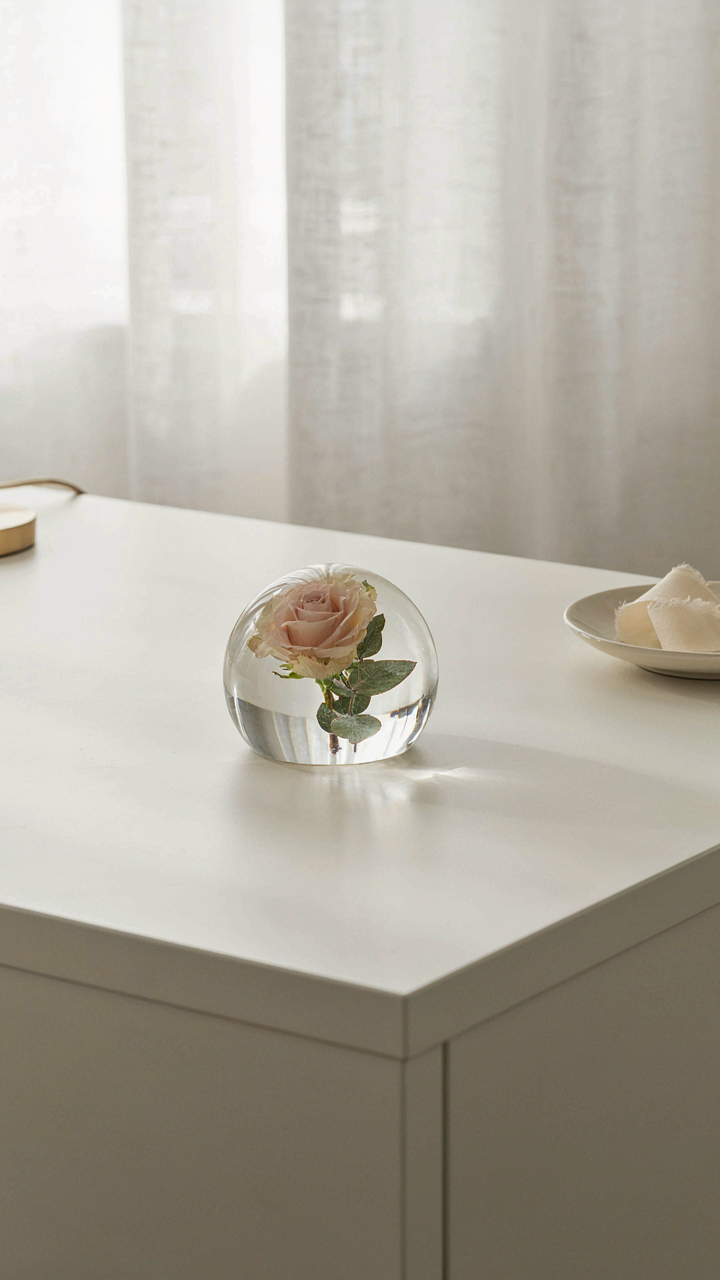
You want permission to spend more money on something beautiful and call it practical. Here’s the mechanism: resin flower paperweights occupy an economic middle ground between throwaway decor and serious art collecting. Using design terminology, they function as “transitional objects” in interior economics. They cost enough to feel intentional but not enough to require justification. This positioning makes them valuable gifts for people who already own everything functional. The preserved flower inside creates narrative weight without requiring explanation. The object sits on a shelf and answers the question “who are you” before you open your mouth.
Galleries and high-end interior designers now stock resin pieces alongside traditional sculpture. This happened because the material allows customization at scale without losing craft perception. A resin paperweight with a specific flower, custom color pour, or dated occasion transforms from commodity to memoir. Museums in design-forward cities have acquired artist-made resin pieces for permanent collections. The shift reflects broader market recognition that functional objects with intentional aesthetics command respect in spaces where pure decoration doesn’t.
The Death Of Form Following Function
Everyone says function should follow form in modern design. This is incomplete thinking that misses how resin paperweights actually work. In industrial design terms, resin paperweights represent “aesthetic efficiency” rather than functional necessity. The desk paperweight solved a problem in 1950. In 2024, it solves nothing related to holding papers. Instead, the object functions as a status signal and emotional anchor. The mechanism: something that looks expensive and handmade sits visible on your workspace. Visitors process it before they process your credentials.
The evolution traces through three distinct market phases. First came mass-produced resin items with zero craft perception. Then came artisanal makers pricing pieces at $40-80 with visible attention to flower selection and pour technique. Now the premium tier occupies $150-400 for custom commissions with rare botanicals and limited edition color treatments. Each tier serves a different buyer psychology. The current phase prizes specificity over generality. You don’t buy a resin paperweight with generic flowers anymore. You commission one with the exact bloom from your wedding, your garden, or the last place you were happy with someone. The functional aesthetic has inverted completely: the object no longer serves your desk. Your desk now serves the object.
The Real Obstacle Isn’t Your Craft; It’s Your Failure To Engineer Perceived Value Beyond Surface-level Sentiment

Most makers treat resin flower paperweights as objects. Wrong. They’re vessels for emotion. Your customer doesn’t buy a paperweight. They buy the story you embed into it, the occasion you immortalize, the person you help them honor. Stop competing on aesthetics. Compete on meaning. Today, write down one specific person your next piece serves and what memory or moment it preserves for them. That’s your actual product. Your resin just holds the real value you engineered into the narrative.



