
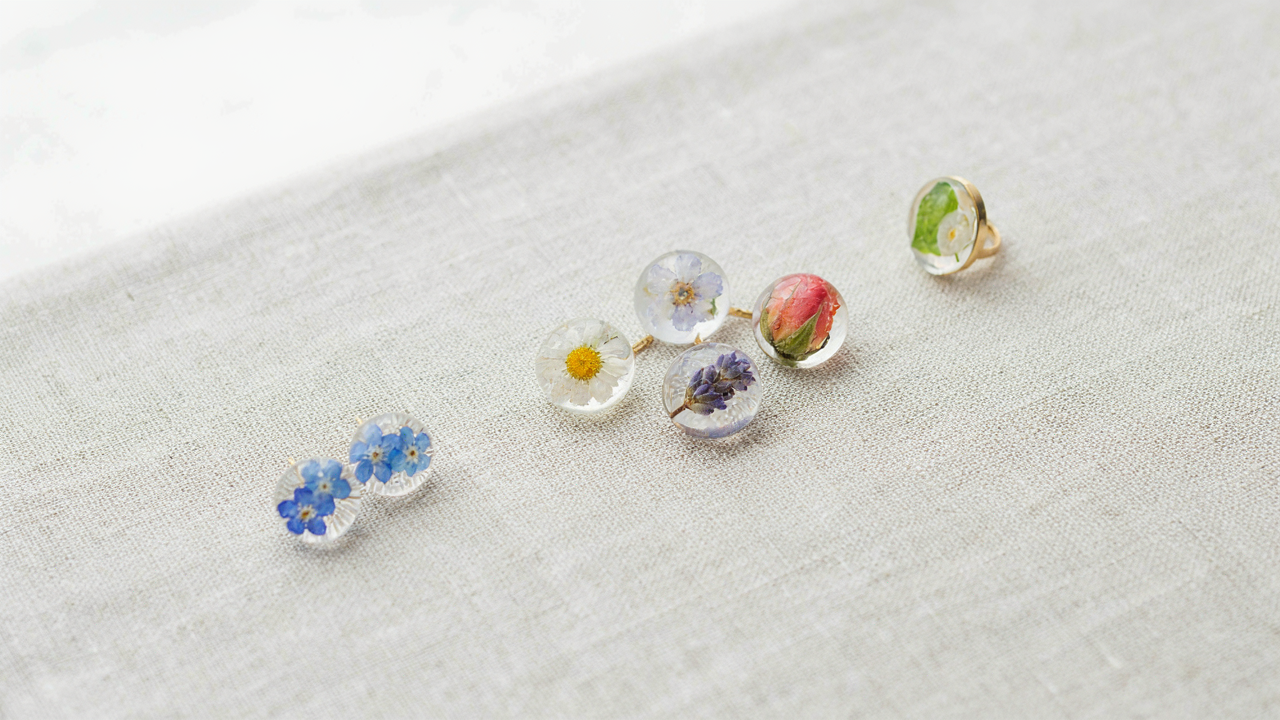
The Trend Fallacy: Why Chasing Fads Kills Your Resin Jewelry Making

The Market Rewards Timing, Not Followers
You want to know what’s trending because you’re afraid you’re already behind. Here’s the mechanism: when a resin flower jewelry trend goes public, the market has already peaked. Early adopters captured margin. By the time you see it everywhere, you’re competing on price and speed against people who started six months ago. Saturation isn’t a future problem. It’s already happening while you’re reading about it.
Resin flower jewelry DIY exploded because it’s accessible. Low barrier to entry means high barrier to profit. The moment a technique becomes “trendy,” supply floods the market. Etsy sellers copy the same rose-in-resin designs. Instagram amplifies identical work. Prices drop. You chase the trend into a race you can’t win because you entered last.
Building Your Own System Instead
The advice to “find your style” is incomplete. You need something stronger: a system nobody else has copied yet. That means documenting your process as proprietary knowledge. Your epoxy ratio, your flower sourcing, your curing timeline, your finishing technique, your niche customer. Not the aesthetic. The mechanism underneath.
Stop imitating what works for someone else. Identify a constraint in your market and solve it differently. Maybe you specialize in local wildflowers instead of mass-produced botanicals. Maybe you develop a faster cure time. Maybe you target a specific demographic that existing sellers ignore. Build something defensible. The moment your work becomes easy to replicate, you’ve already lost.
The Unseen Value: Crafting Durability In Resin Art
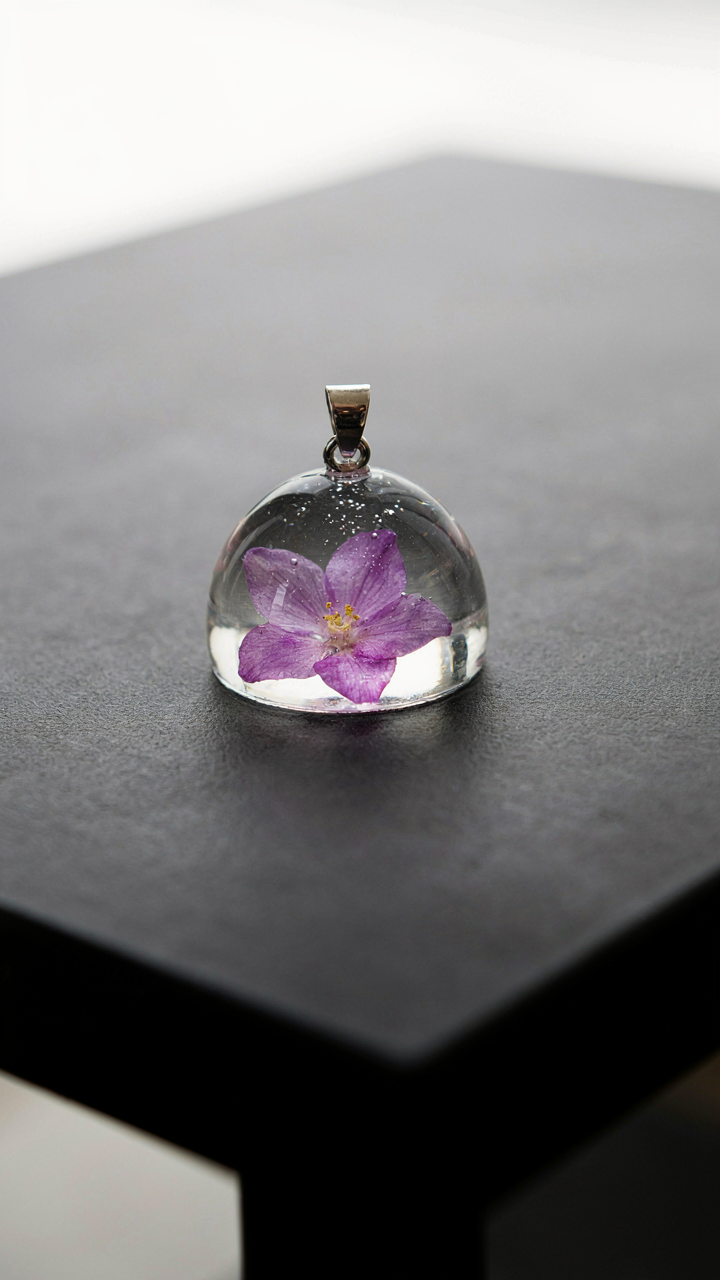
Why Epoxy Cure Determines Everything
You care about this section because you don’t want to spend hours making something that degrades in six months. Here’s what actually matters: resin durability comes down to chemistry, not magic. Epoxy and polyester resins cure through a chemical cross-linking reaction. The degree of that cross-link determines how well your piece resists impact, heat, and UV exposure. Most makers skip the boring part and rush past full cure times.
Full cure takes longer than surface hardness suggests. A resin flower pendant feels dry to touch after 24 hours, but the molecular structure continues bonding for 5 to 7 days depending on resin type and ambient temperature. Humidity and temperature below 60 degrees Fahrenheit slow the reaction significantly. Skip this window and you create weak internal bonds that fail under stress or flex. The piece won’t break immediately, so you won’t notice the mistake until a customer’s necklace snaps mid-wear.
Stopping Yellowing And Trapping Air
The standard advice to “use UV resin” or “add UV blockers” misses the root problem. Yellowing happens through photooxidation when UV light breaks down the epoxy polymer chains. The mechanism is external damage, not internal failure. UV-stable epoxy resins contain hindered amine light stabilizers that absorb UV energy before it hits the resin itself. They cost more but actually work. Cheap epoxy has none of these additives.
Bubbles form because makers pour too fast or don’t account for the exothermic reaction that generates heat and releases trapped air. The compound heats itself, accelerating curing and trapping gas pockets inside the flower or around embedding objects. Slow pour speed, thin layers, and pressure application before full surface set eliminate most bubbles. Vacuum degassing removes them entirely, but requires equipment. The protocol: pour slowly, wait 30 minutes, remove visible bubbles with a heat gun, then leave undisturbed for full cure.
The “Resin Flowers” Deception: Beyond The Bloom

What Actually Happens Before The Pour
You want to believe fresh flowers survive in resin. They don’t, and you know it. The real tension is that most makers skip proper prep and blame resin when their pieces turn brown and collapse six months later. Here’s the mechanism: flowers contain water and cellular material that resin can’t preserve—it can only trap the decay process mid-motion. Treating flowers like biology, not decoration, changes everything.
The only flowers that hold color are those already dead and drained. Drying isn’t optional filler work. It’s the entire foundation. You need flowers to shed water before resin ever touches them, or moisture becomes a time bomb inside your piece.
- Air drying flat: Lay flowers on parchment paper in a warm, dark space for 7-14 days. Darkness prevents UV fading before resin adds its own UV layer. Air circulation matters more than speed.
- Silica gel burial: Pack blooms in food-grade silica gel for 3-7 days. This method pulls moisture fastest and preserves shape better than air drying. Replace gel between batches.
- Press and cure: Use a flower press for 2-3 weeks, then add 3-5 days of air exposure before pouring. This flattens botanicals and removes final moisture without brittleness.
- Glycerin soak method: Submerge stems in a 1:1 water-to-glycerin mix for 4-6 days, then air dry. This adds subtle flexibility and prevents the papery cracking that happens with pure air drying.
- Heat-assisted drying: Use an oven at lowest setting (140-160F) for 2-4 hours with the door cracked. Monitor constantly. This accelerates moisture removal but risks color loss if overheated.
Timing kills most home batches. Flowers that feel dry on the surface still hold interior water. Resin heats as it cures, expanding that trapped moisture into bubbles and discoloration. Wait until flowers snap or crumble slightly when bent—that’s the signal they’re ready for resin.
Negative Space Is Your Real Tool
Arrangement isn’t about cramming blooms into a pendant. It’s about creating voids that your eye interprets as intentional design rather than sparse filler. Think in terms of negative space from graphic design: the “empty” areas define the shape as much as the flowers do.
Most makers make the mistake of trying to fill every gap. Dense arrangements trap air and create bubbles during cure. Loose arrangements let you see individual flower structure and trap less moisture. The mechanism is simple: bubbles migrate toward clustered material during resin’s exothermic reaction. One large bubble near a flower cluster will lodge there permanently.
Position your dried flowers so they sit at varying depths within the mold. Surface-level placement shows detail. Mid-depth placement creates dimension without overwhelming. Deep placement adds mystery and prevents the flat, pressed-flower-bookmark look. Arrange before pouring, not after—once resin sets up, movement is finished.
The real skill is knowing which flowers anchor a composition and which ones get support roles. A single open bloom deserves center positioning and breathing room. Filler botanicals like baby’s breath work better scattered at edges. Orient petals to catch light differently across the piece. Pour your resin in thin layers, letting each set slightly before adding the next. This technique gives you control over where flowers settle and prevents them from rotating mid-cure into the worst possible angle.
The UV Resin Advantage: Speed As A Strategic Asset
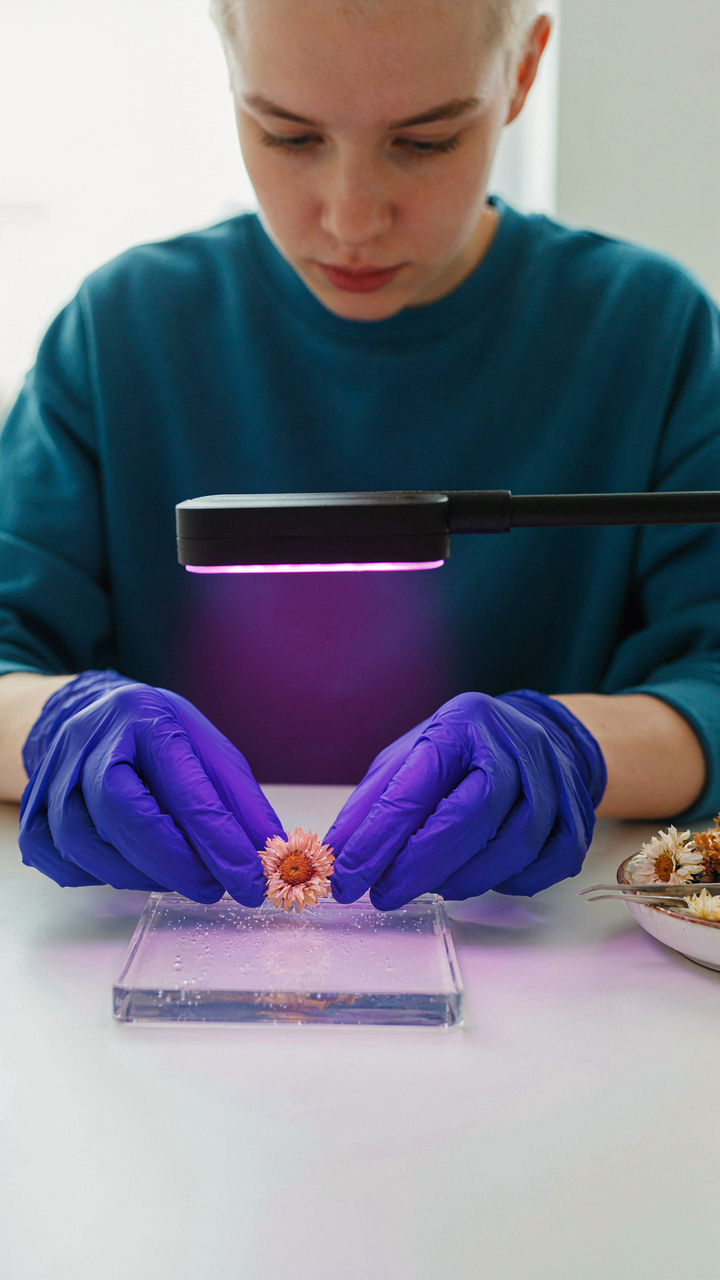
Cure Speed Changes Everything
You want UV resin because waiting is killing your output. The real mechanism here borrows from manufacturing’s concept of throughput: faster cycle times mean more units produced per hour, and in jewelry, that translates directly to inventory depth and pricing power. UV resin cures in seconds to minutes under a UV lamp, while epoxy resin requires 24 to 72 hours. This isn’t a minor convenience. It’s structural leverage.
Traditional epoxy requires you to babysit pieces through a full cure window, then hope nothing shifted or trapped air bubbles mid-cure. UV resin lets you layer, embed, and finalize in one session. You move from design to finished piece in hours instead of days. This speed compounds: more iterations per week, faster market testing, quicker response to trend shifts. The person making one batch every three days can’t compete with someone shipping five batches weekly.
Iteration Velocity Beats Perfection
Rapid prototyping in resin jewelry means testing variations without sunk time investments. Most makers treat UV as a time-saver, but miss the strategic angle: speed unlocks experimentation that perfectionists can’t afford. You can test five flower placements, three color combos, and two embedding depths in one day. Epoxy makers test one combination per day, if they’re disciplined.
The protocol is simple: cure a test piece under UV lamp for 60 to 90 seconds depending on resin thickness and lamp wattage. Check clarity and set. If the result fails, you waste 90 seconds and minimal material. Strip it, remix, embed again. Iterate until the piece works. Scale the winning prototype into production batches. This cycle time difference determines whether you lead trends or follow them after competitors already owned the space.
The Antifragile Artist: Embracing Mistakes In Resin Crafts
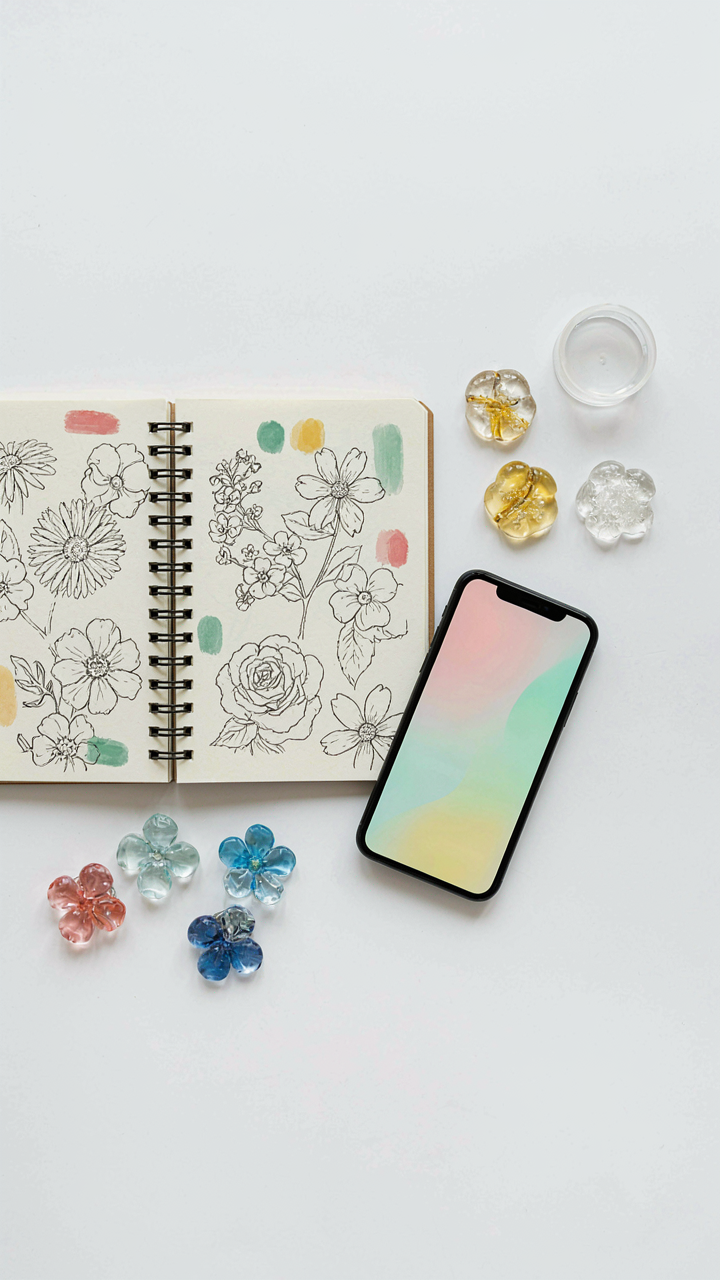
What Actually Breaks Your Work
You want permission to fail without feeling like a failure. Here’s the mechanism: mistakes in resin flower jewelry aren’t random chaos. They’re data points. Epoxy resin cures through a chemical reaction that doesn’t care about your intentions. A bubble forms because air was trapped during pour. A flower fractures because the resin contracted unevenly as it hardened. UV resin yellows because you used the wrong wavelength light source. Each failure points to a specific variable you controlled or didn’t control. Most makers blame bad luck instead of tracking what changed between batches.
The real skill isn’t avoiding mistakes. It’s building a system that makes mistakes visible and repeatable. Document your ratio measurements, cure times, ambient temperature, and pour thickness. When a batch fails, you have three data points to cross-reference instead of a gut feeling. This turns destructive trial and error into constructive iteration. You stop losing money on wasted materials and start paying tuition in controlled experiments instead.
Designing Through Broken Pieces
Everyone says iterate. Nobody explains how to iterate when your medium literally hardens and locks you out of changes. Here’s what actually works: treat each failed piece as a prototype constraint, not a dead end. If your flowers shift position mid-cure, that tells you the resin viscosity is too thin for the flower weight. Add filler or reduce flower size in the next batch. If the resin clouds over time, you’re either using incompatible dyes or storing finished pieces in direct sunlight. Test each variable independently before combining them.
The iterative cycle in resin jewelry making requires accepting that speed matters more than perfection on attempt one. Your first 20 pieces teach you more than reading tutorials ever will. Create a physical log: photograph failed pieces, note what you changed, document the result. After ten batches, patterns emerge. Your hands develop muscle memory for pour speed and mold positioning. This isn’t resilience as a feeling. This is resilience as a system built from observable cause and effect.
The “Resin Jewelry Tutorial” Lie: Why Most Tutorials Fail You
Principles Over Steps
You’re watching tutorials because you want permission to skip the hard part—figuring out why things work. The mechanism is simple: most tutorials teach procedures, not principles. They show you what to do but never explain the material science underneath. Resin cures through an exothermic chemical reaction. Temperature, humidity, and resin-to-hardener ratios govern that reaction’s speed and quality. Skip understanding these variables and you’ll chase phantom problems forever.
Tutorials that only demonstrate hand movements create cargo cult makers. You follow steps exactly but change one variable—ambient temperature drops five degrees, your hardener brand shifts—and everything fails. You have no framework to diagnose what went wrong. Real mastery means understanding that viscosity, cure time, and bubble formation all depend on the same thermal and chemical foundation. Learn the principles first, and tutorials become reference material instead of gospel.
Evaluate Sources By Their Skin In The Game
Most resin flower jewelry tutorials come from creators with no financial stake in whether your pieces sell or survive. This creates a signal problem borrowed from economics: alignment of incentives determines reliability. A creator monetizing views has incentive to show fast, flashy results. A creator selling finished pieces has incentive to teach durability and customer satisfaction.
Watch for creators who disclose material costs, failure rates, and customer complaints. They reveal what works and what doesn’t because their reputation depends on it. Tutorial creators focused on aesthetics alone skip the boring parts: UV resin yellowing over months, epoxy resin’s brittleness in thin applications, proper sealing techniques that prevent flower degradation. Cross-reference claims against material data sheets from resin manufacturers. The tutorial won’t mention that certain flowers oxidize inside resin, destroying color within a year. Data sheets will.
The Scarcity Protocol: Cultivating Exclusivity In Resin Jewelry Diy Ideas
Where To Source Materials Nobody Else Uses
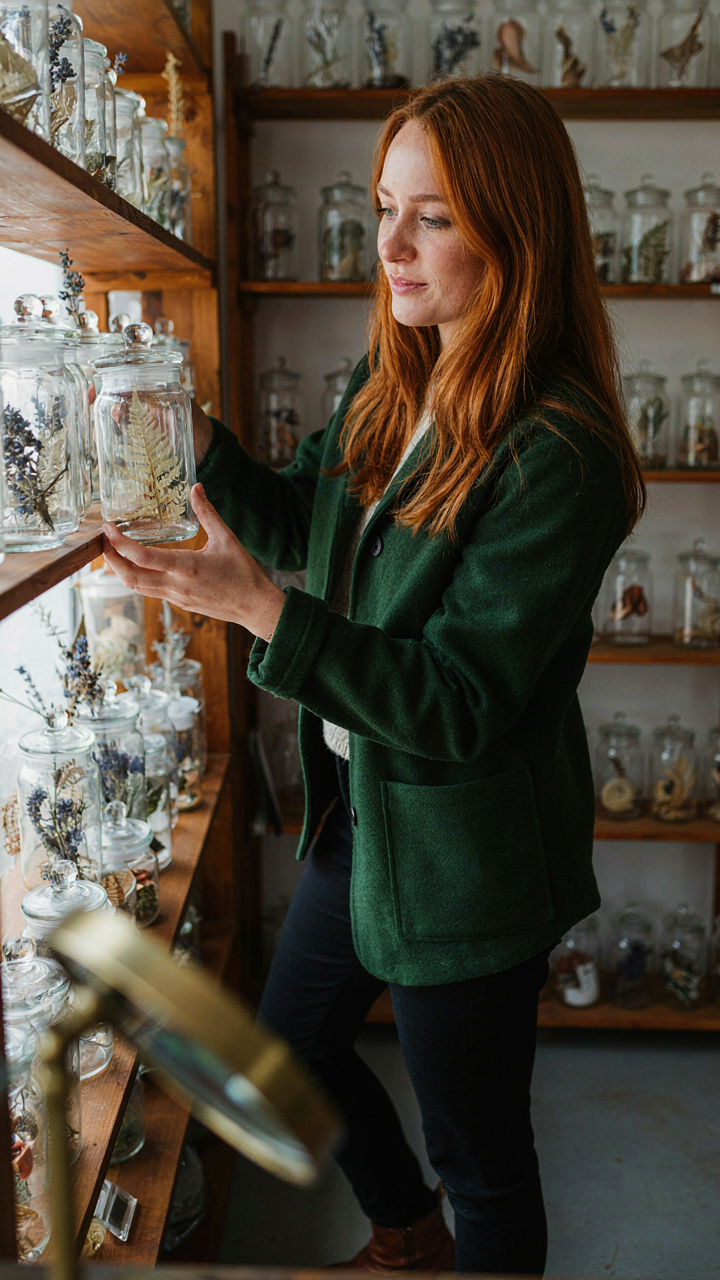
You want to charge more and justify it. That’s the real reason this matters. The mechanism is simple: economics teaches us that supply constraints drive perceived value. In resin jewelry, this translates directly. Most makers buy from the same three suppliers. Your materials come from everywhere else.
- Vintage pressed flowers from estate sales: Authentic specimens aged decades, impossible to source fresh. Dried properly, they retain color and structure resin won’t degrade. Collectors notice the difference immediately.
- Lab-preserved botanicals from educational suppliers: Schools liquidate specimen collections. These flowers are already stabilized and documented. They cost less than craft store alternatives and carry inherent authenticity.
- Direct relationships with specialty florists: Florists have waste streams from weddings and events. Acquire their dried trimmings before disposal. You get premium material at wholesale cost.
- Foraged native plants from your region: Legally sourced wildflowers, grasses, and herbs create pieces tied to geography. Customers recognize local species. This becomes part of your story, not just decoration.
- Artist-to-artist material trades: Connect with botanical illustrators, dried flower arrangers, and herbalists. Exchange finished pieces for their material surplus. You build community while eliminating middlemen.
The constraint you create isn’t artificial. You’re working with materials that have actual limits. When someone asks where that specific flower came from, you don’t mumble. You have a story tied to a real source. That story justifies the price.
Custom Commissions Replace Production Runs
Forget making batches. The consensus is that volume scales faster. That’s incomplete thinking. Every time you make twenty identical pieces, you compete on price. Every time you accept one commission, you compete on scarcity alone.
Custom work eliminates your competition because they can’t replicate your process or speed. You ask clients what flowers matter to them: anniversary date, grandmother’s garden, wedding bouquet. You source that specific material. You embed their story into the resin. They don’t buy jewelry. They buy preservation. The markup isn’t greedy. It’s proportional to the labor and sourcing required. Your intake process becomes your moat. You stop taking inquiries. You take applications. Qualified clients self-select before you even quote.
The “Resin Crafts Tutorial” Paradox: More Information, Less Action

What You’re Actually Searching For
You want proof that you’re not behind. That’s the real driver here. The mechanism nobody states: tutorial abundance creates a false sense of progress. You watch fifteen YouTube videos on UV resin casting, embedded flowers, and dome techniques. You bookmark articles. You feel informed. But information consumed is not skill acquired. The gap between knowing the steps and executing them consistently is where most people stall.
Resin flower jewelry tutorials exploded around 2018 when UV resins became affordable and accessible. Before that, epoxy resin dominated, requiring precise mixing ratios and curing times measured in days. The shift to UV meant faster results and lower barrier to entry. This democratization also flooded the market with surface-level content. Most tutorials show the happy path. They skip the failures, the mistakes with flower preservation, the resin batches that yellowed or cracked.
The Execution Gap Requires Repetition
Skip the completionist urge to watch every tutorial available. You don’t learn resin flower jewelry by consuming. You learn it by making the same piece five times until your hands know what clear resin feels like, how fast flowers oxidize when exposed to UV light directly, and why some botanicals discolor while others stay vibrant. The common advice says practice makes perfect. That’s weak. Practice creates pattern recognition. Your brain stops thinking and starts seeing.
Buy one quality UV resin. Buy one mold type. Buy one flower source. Make twenty pieces. Document what changes. Note the curing times in your climate, the exact positioning of the UV lamp, whether heat affects clarity. This removes decision paralysis and creates data. After twenty pieces, branch into one new variable. A different flower species or a new mold shape. Systematic variation beats random exploration every time. The mechanism is simple: repetition builds automaticity, which frees cognitive load for aesthetic refinement.
The Long Game: Building A Sustainable Resin Jewelry Brand

Your Story Is Your Moat
You want to believe your resin flowers are enough. They’re not. The real motive here is fear that your work won’t stand out in a market flooded with similar pieces. The mechanism is simple: narrative compounds what aesthetics alone cannot. Your brand story isn’t marketing fluff. It’s the economic moat that makes customers choose you over someone making technically identical pendants.
The difference between a commodity and a brand is the story you tell about why you make what you make. Most resin artists skip this. They post photos of finished pieces and wonder why they’re interchangeable with fifty other makers on Instagram. Your authentic origin—whether that’s sourcing real flowers from your grandmother’s garden, solving a technical problem nobody else tackled, or building a specific visual language—becomes the reason someone pays your price instead of a competitor’s. This isn’t brand fluff. It’s why repeat customers exist at all.
Consistency Kills Mediocrity
Quality control in resin work mirrors the concept of preventive maintenance in systems design. One failed cure, one cloudy layer, one misaligned flower ruins the entire piece and damages customer trust irreparably. You can’t recover from inconsistency through marketing. You recover through protocol. Document every step: cure time by temperature, resin-to-hardener ratio, drying environment, each flower’s positioning depth. The makers who scale are the ones who stop relying on feel and intuition and build repeatable systems instead.
Innovation without consistency reads as chaos to customers. Add new designs, techniques, or color combinations deliberately. Test them on small batches first. Announce changes with intention. When customers know they can trust quality on order one and order one hundred, they become repeat buyers and advocates. This is where margins expand. You stop competing on price and start competing on reliability. Execute the same quality standard on every single piece or don’t scale at all.
The Hidden Mechanics Of Value: A Biological Imperative
Designs That Survive Market Pressure
You want to know which trends matter because you’re afraid of making inventory that doesn’t sell. That fear is accurate. Borrowed from biology, market survival works like natural selection: only the designs with traits customers actually reward get replicated. In resin flower jewelry, this means the pieces that sell aren’t the ones that look best to the maker, but the ones that solve a specific buyer problem or trigger a specific buyer emotion.
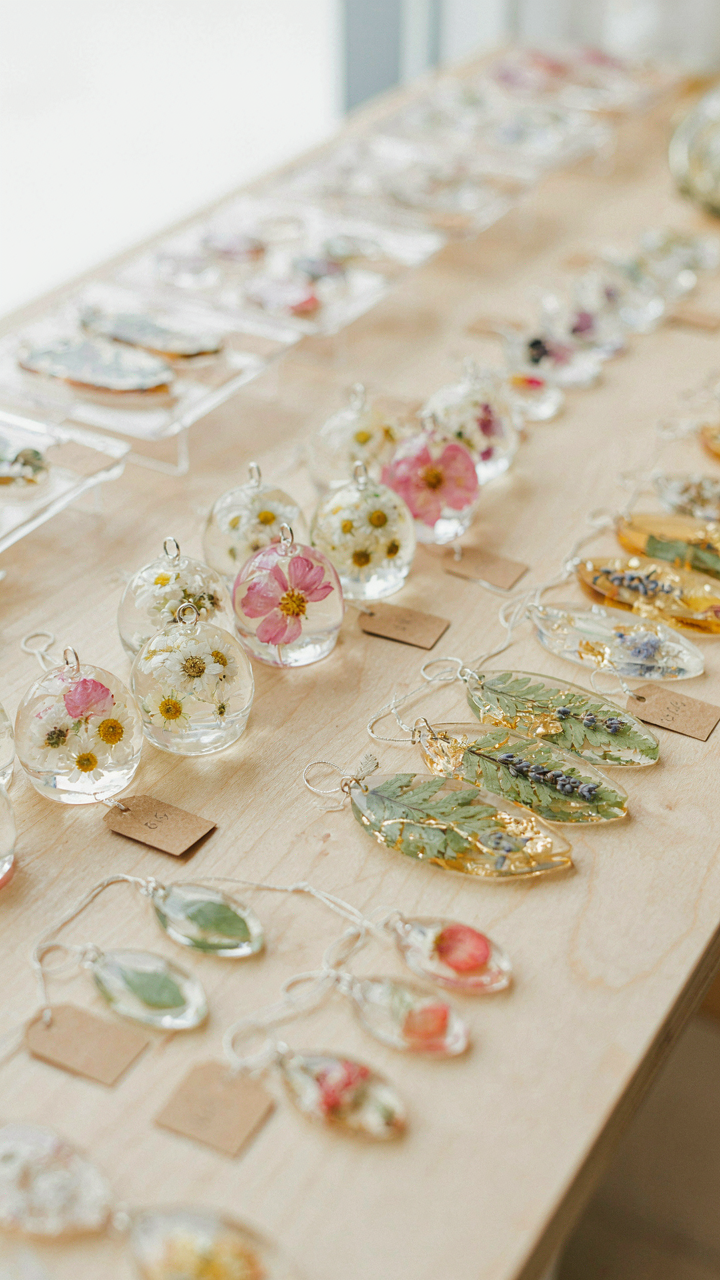
Makers who treat trend-chasing as guesswork fail. The ones who win observe which specific design elements move inventory, then systematize those elements into new pieces. A pressed flower encased in clear epoxy performs differently than a layered floral composition with metallic accents. Track which sells faster, to whom, and at what price point. That data becomes your design blueprint, not Instagram likes or what feels trendy.
Traits That Replicate Across Winners
Everyone says “make what you love,” which is lazy advice that tanks businesses. Successful resin flower jewelry makers identify the mechanical traits present in their bestsellers, then intentionally rebuild those traits into new designs. This isn’t copying. It’s pattern recognition.
The traits that matter: dimensional depth that photographs well, color saturation that stands out on a wrist, botanical authenticity that reads instantly, and scale proportions that feel premium at the price point. If a three-inch pendant outsells a two-inch one at the same margin, scale is the winning trait. Replicate it forward. If translucent resin layers outperform opaque backgrounds, build that into your next collection. This is how you escape the trend treadmill and build a recognizable signature that sells across seasons.
The Real Obstacle Isn’t The Trend, But Your Reliance On External Validation For Your Resin Flowers
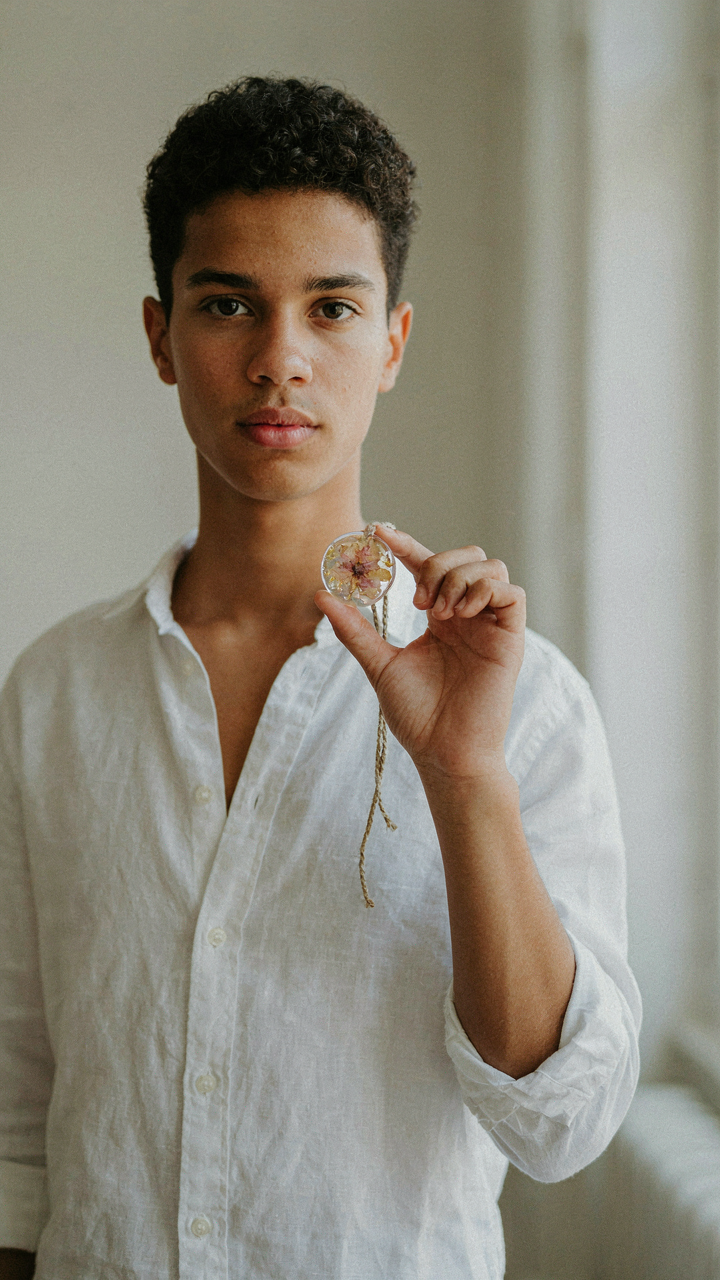
You’re scrolling Instagram looking for permission to make what you already want to make. Stop. Make one piece today that nobody asked for. Not the safe trending design. The one that actually excites you. Post it without checking the algorithm first. You’ll discover that the market doesn’t create demand, your conviction does. The trends you see exist because someone ignored what everyone else was doing.



