
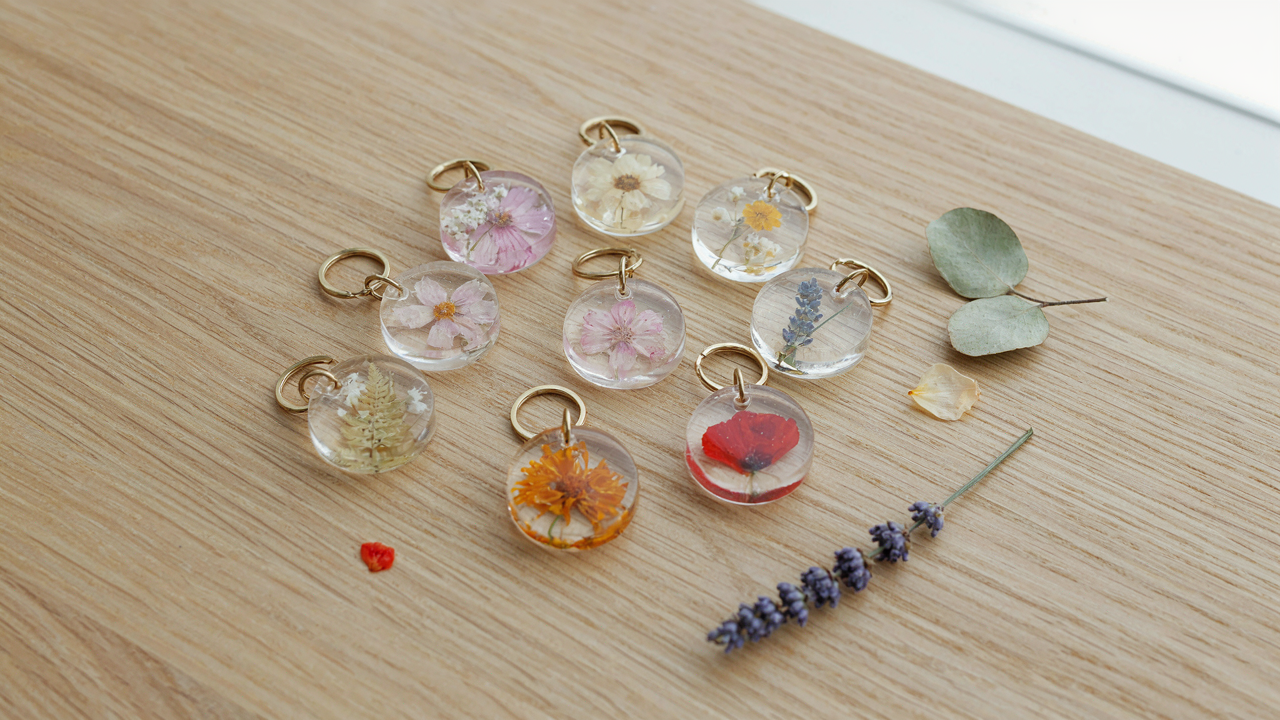
The Illusion Of Intricate Design: Simple Is Masterful
Why Overdesign Fails
You want people to see you spent effort. That’s the real reason you’re considering cramming five flowers into one keychain. But complexity doesn’t signal sophistication—it signals fear of commitment to a single idea. In design systems, this is called signal-to-noise ratio: the balance between what matters and what distracts. Resin flower keychains suffer the same penalty as any cluttered interface. Too many elements fighting for attention means none of them land.
Most makers pile on botanicals thinking density equals value. It doesn’t. Each additional flower dilutes the visual statement and fragments the viewer’s focus. The mechanism is simple: human attention has a fixed bandwidth. Spend it all interpreting the composition, and none remains for actually appreciating the piece. Restraint requires more confidence than excess because you have nowhere to hide.
One Element, Maximum Impact
A single preserved flower embedded in clear resin creates what designers call negative space—the calculated emptiness that forces the eye to stop and settle. The statement becomes unavoidable. One flower means the selection matters. One flower means the execution has to be flawless. This is not minimalism as trend; it’s minimalism as strategy.
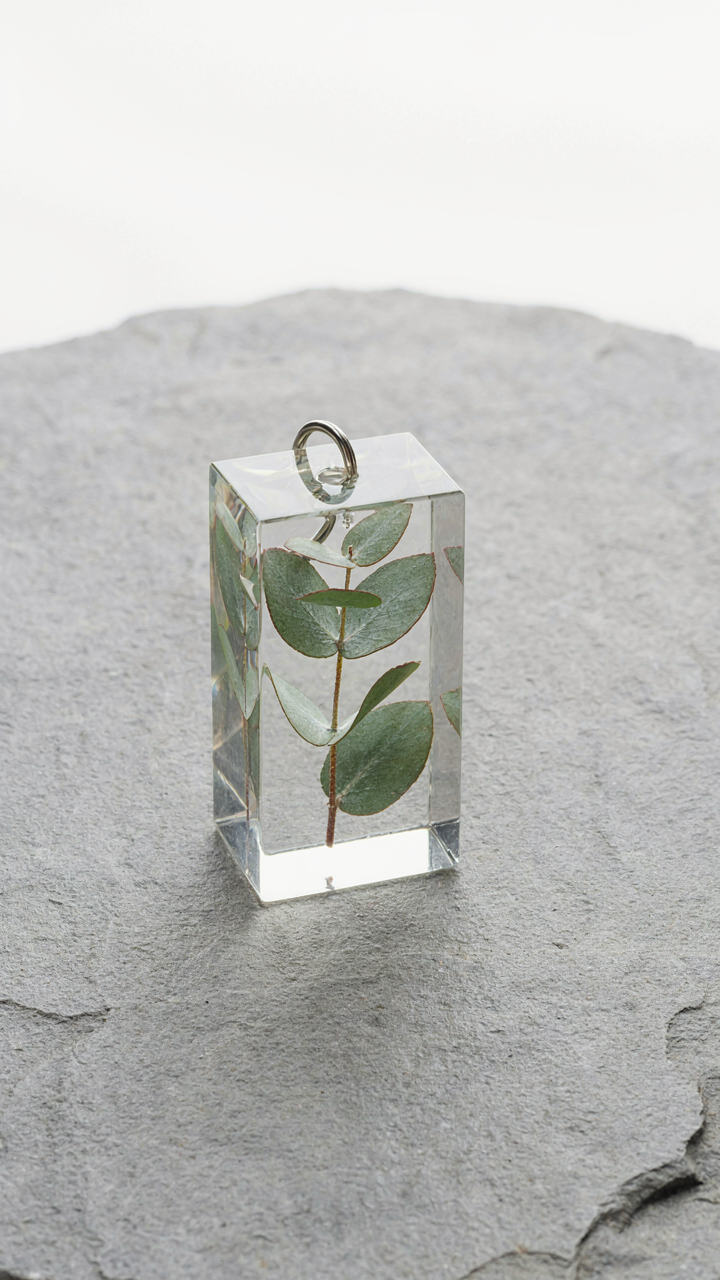
When you remove the noise, people notice what remains. A single eucalyptus stem, a solitary wildflower, or one delicate fern frond becomes the keychain’s entire identity. The resin’s transparency becomes an asset, not a filler. You’re no longer asking people to decode a visual puzzle. You’re giving them permission to actually look.
Beyond Hobby: The Small Resin Art “Resonance Cascade” Method
Identify The Emotional Frequency First
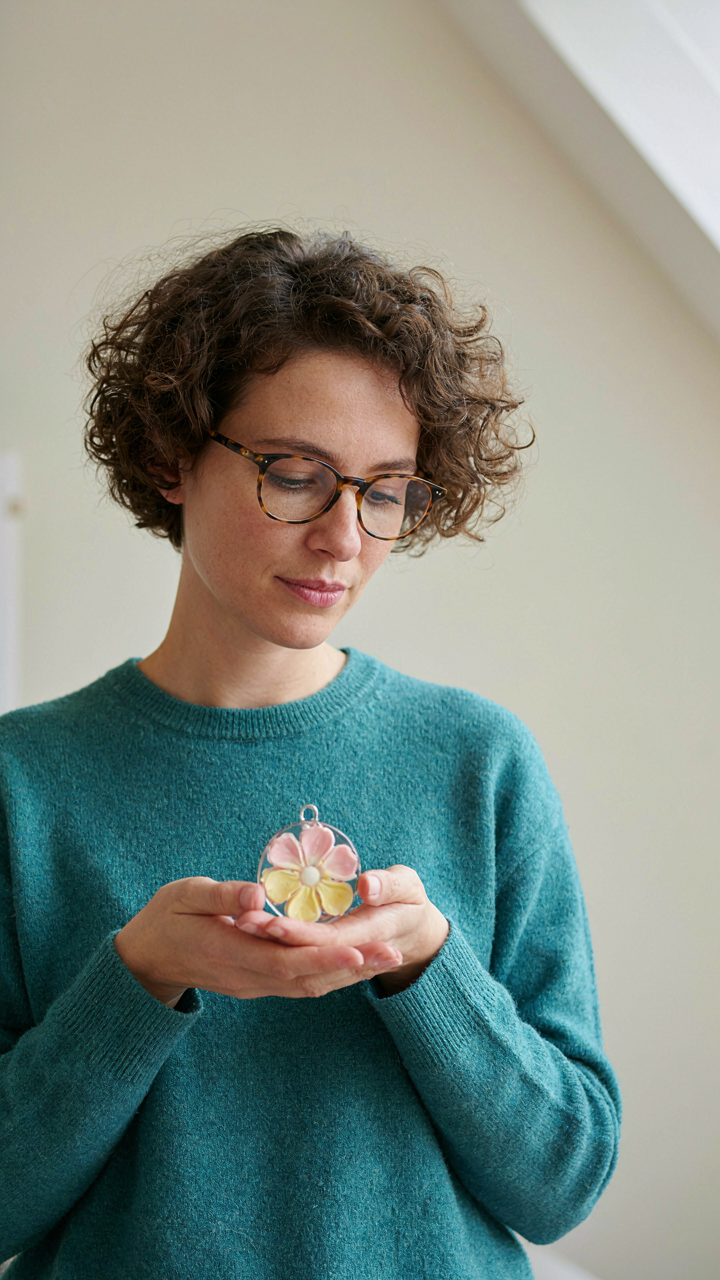
You’re reading this because you want to give something that lands harder than generic gifts. The mechanism is simple: emotion travels through objects. A resin keychain works because it’s small enough to touch daily, durable enough to keep, and personal enough to signal you understood who someone is. Before you pick a flower or color, you must identify the emotional state you want the object to trigger in its owner. This isn’t sentiment. It’s engineering the frequency of the interaction.
From neurobiology, we know humans respond to stimuli that match their internal state or aspirational identity. A keychain that sits in someone’s pocket becomes a micro-dose of that frequency every time they reach for keys. Your job is to decide: Does this person need calm? Confidence? Nostalgia? Motivation? That answer drives everything else. Skip this step and you’ve built a pretty object, not a tool.
Match The Form To The Frequency
Cybernetics teaches us that systems respond to inputs that mirror their desired output state. Your resin flower keychain operates the same way: the visual and tactile input must align with the emotional frequency you identified. Most people think “just pick a pretty flower.” Wrong. The flower choice, resin clarity, color saturation, and weight all send signals. A pressed lavender in clear resin speaks differently than a bold rose in translucent blue. Lavender suggests control and rest. Rose suggests passion or memory.
The form matters as much as the flower. A smooth, polished resin edge feels like precision and care. A slightly organic edge with visible flower texture reads as authenticity. The person who needs confidence responds to clean geometry and deep color. The person nostalgic responds to soft pastels and looser composition. Your protocol: map emotional frequency to visual language, then select the flower species, resin type, and finishing technique that matches. Execute this alignment and the keychain stops being decoration and becomes a daily touchpoint of intention.
DIY Resin Art: Escaping The Pinterest Echo Chamber
What Instagram Really Sold You
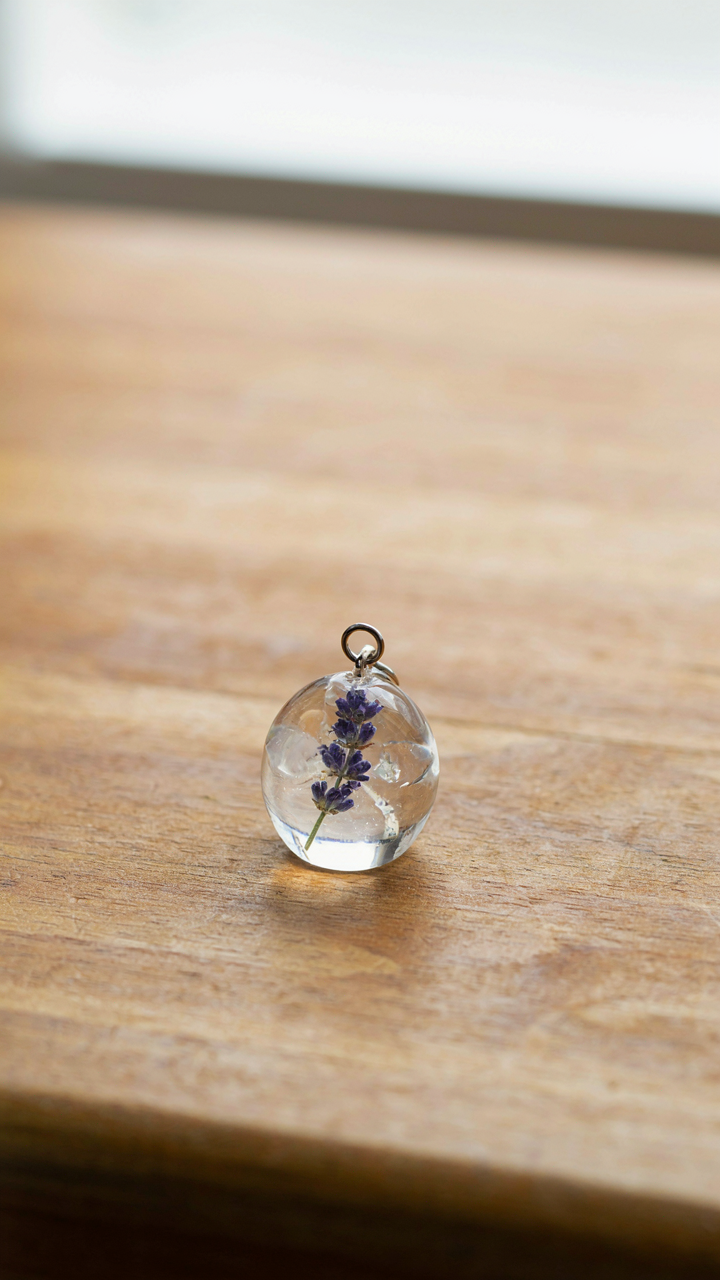
You want permission to make something original without looking like you don’t know what you’re doing. That’s the real transaction here. Pinterest doesn’t teach you aesthetics—it teaches you fear. The mechanism is pattern recognition without analysis. You see five resin flower keychains with lavender suspended in clear epoxy and your brain treats repetition as proof of correctness. It’s not. It’s just visibility bias dressed up as taste.
The thing most DIY creators miss is this: inspiration becomes imitation the moment you stop asking why something works and start copying what it looks like. Take a pressed flower keychain. The aesthetic choice isn’t “flower in resin.” The aesthetic choice is whether that flower reads as delicate or precious or nostalgic, and that depends on scale, positioning, negative space, and the resin’s clarity level. Pinterest shows you the result. It never shows you the decision tree that created it.
The Narrative Inside Your Hands
Your personal story is the only design constraint that matters. Not because it sounds nice—because it’s the only thing that prevents your work from being decorative wallpaper. When you embed a specific flower because you picked it on a specific day or it reminds you of a place you need to remember, the keychain stops being generic and starts being evidence. That’s not sentimental. That’s structural.
Most DIY advice says “add your personal touch.” That’s lazy. The real work is mapping backward from the story to the material choice. If you’re using a pressed flower from your grandmother’s garden, the resin clarity and the keychain hardware become decisions that either serve that narrative or undermine it. A heavy, ornate keychain might feel disrespectful to something delicate. A cheap hardware option might cheapen the weight of the memory. The story dictates the specifications. Start there.
The Resin Keychain Protocol: Durability Over Delicate Aesthetics
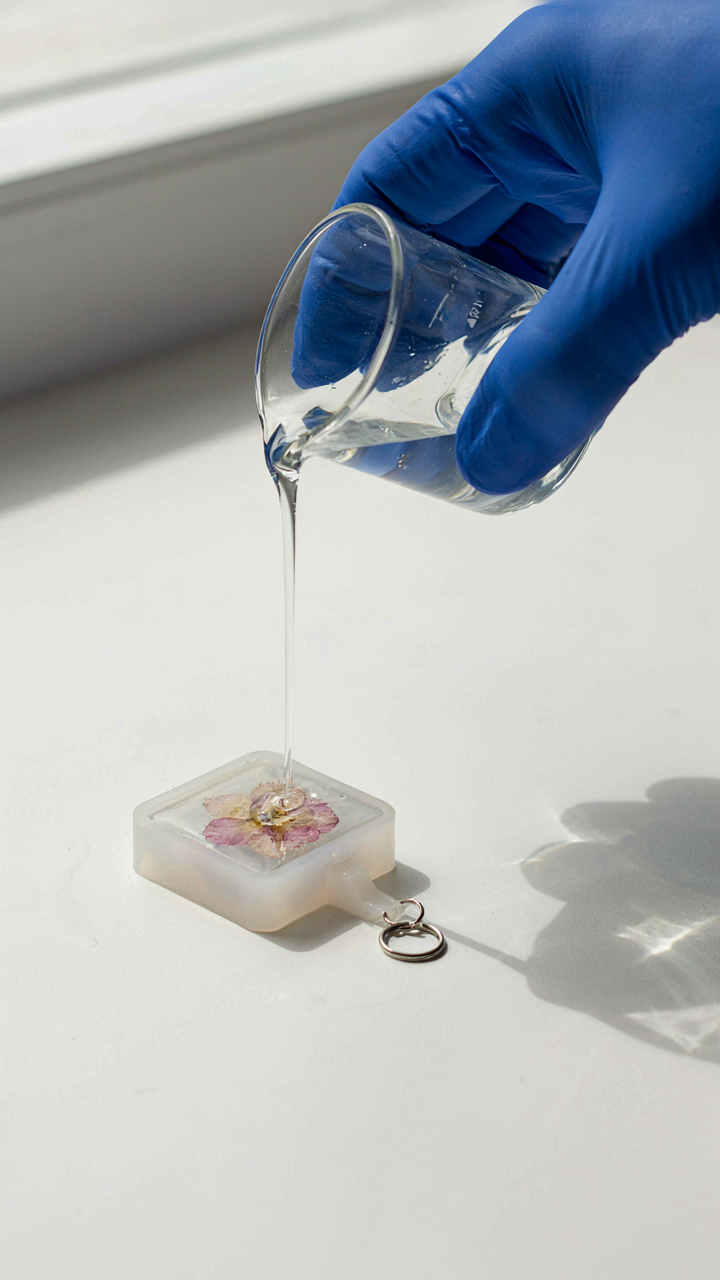
Which Resin Actually Survives Daily Wear
You want your keychain to look untouched in six months, which means you’re really asking: what won’t yellow, crack, or cloud under pocket friction and sunlight? The answer lives in material science. Think of resin durability like structural load bearing: UV stability is your foundation, and most casual makers ignore it entirely.
Epoxy resin and polyester resin dominate the keychain space, but they behave differently under stress. Epoxy holds clarity longer and resists yellowing better than polyester, but costs more. Polyester sets faster and handles temperature swings without becoming brittle, which matters if your keychain moves between winter pockets and summer bags. Neither is inherently superior, but epoxy wins for aesthetic preservation over time.
- Two-Part Epoxy Resin: Superior UV resistance and water clarity. Yellows slower than alternatives. Takes 24 hours to cure fully, which extends production timelines but rewards you with longevity that justifies the wait.
- UV-Stabilized Epoxy: Pre-formulated with UV absorbers built into the base. Costs 15-30% more but actively resists photodegradation. The real move if durability is your primary signal.
- Polyester Resin: Fast set time (4-6 hours) and temperature tolerant. Yellows noticeably within months under direct sunlight. Best for keychains you expect to replace seasonally, not heirloom pieces.
- Bio-Based Epoxy Alternatives: Emerging option with similar durability to standard epoxy. Better environmental profile but less track record in long-term keychain testing. Use cautiously if durability claims matter to your audience.
- Crystal Clear Epoxy: Marketing term, not a technical category. Verify UV additives in the spec sheet, not the label. Transparency means nothing without stabilizers preventing breakdown.
The mechanism is simple: UV light breaks polymer chains. Stabilizers absorb that energy before it damages the resin. Cheap resin skips this step and charges you nothing until your keychain looks cloudy after eight weeks. Pick your resin based on storage conditions of your end user, not on how it looks wet.
Bubble Elimination Is A Casting Problem, Not A Design Problem
Everyone talks about vacuum chambers and heat guns. That’s surface-level advice masking the real issue: you’re trapping air because your technique doesn’t account for how resin actually flows around objects. This isn’t aesthetic perfectionism. Bubbles weaken structure and create stress points where the keychain fails under pocket pressure.
The casting technique that eliminates bubbles has nothing to do with equipment and everything to do with sequence. Pour resin in stages, not all at once. Add your flower at the halfway point, not the beginning. This lets air rise and escape before the resin sets around the object. Let resin sit for 20-30 minutes before pouring the second half. Surface bubbles from the initial pour have already escaped. You’re not fighting gravity. You’re working with it.
Heat plays a role, but not how most people think. A heat gun doesn’t remove deep bubbles. It reduces surface tension temporarily, allowing trapped air to rise faster in the first 10 minutes after pour. Apply it for 30-40 seconds immediately after pouring, then stop. Sustained heat accelerates cure and locks bubbles in place. The real work happens in those first minutes while resin is still fluid enough to let air migrate upward toward the surface.
Vacuum chambers help, but they’re a band-aid for poor pouring discipline. They remove dissolved air from the resin itself before casting, not air pockets trapped by bad sequence. If your technique doesn’t prevent bubbles from forming, the vacuum chamber just makes you feel productive while your keychains still fail under use.
Unique Resin Keychain Ideas: The Art Of Deliberate Imperfection
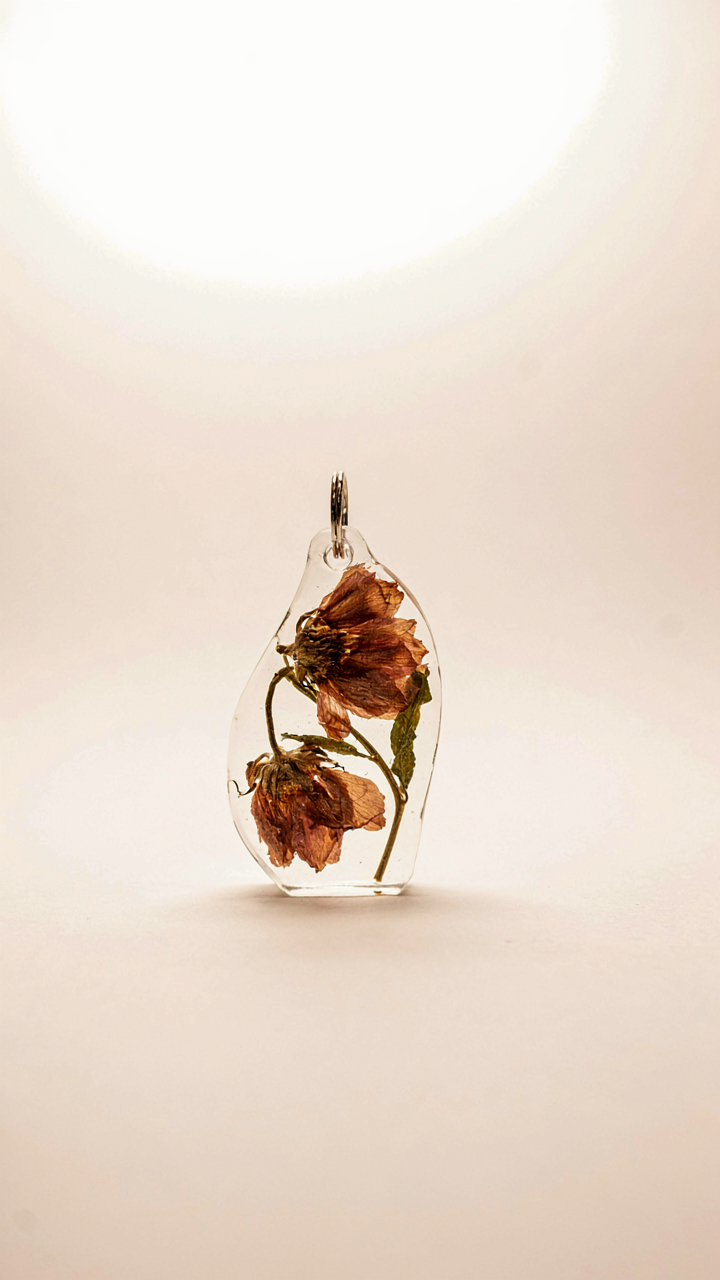
Asymmetry Over Algorithm
You want your keychain to look intentional, not mass-produced. That’s the real fear underneath this section—that handmade means sloppy, and sloppy means worthless. But here’s the mechanism: symmetry signals factory output. Asymmetry signals choice. When you embed a dried flower slightly off-center, or let resin pools settle unevenly across the mold, you’re using the design principle of visual weight distribution. The eye registers imperfection as authenticity because asymmetry requires deliberate placement, not accident.
Most makers fight this instinct and sand edges smooth, level everything flat, chase uniformity. Stop. Leave the rough edges. Vary flower placement across multiple keychains in a batch. One tilted left, one tilted right, one recessed deeper into the resin. This variation is what stops a keychain from reading as plastic junk. The asymmetry becomes the proof of human involvement. That’s not weakness—that’s your structural advantage against commodity competitors.
Decay And Inclusion As Design Feature
Embedding isn’t decoration—it’s curation. In archaeology, inclusions tell you what existed in a specific moment. Your resin captures that same principle: the flower, the leaf fragment, the seed pod frozen mid-decomposition become evidence of real materials, real time. Pressed flowers brown at the edges. Some petals separate. Air bubbles form around stems. These aren’t flaws to hide. They’re the content.
The common advice says “seal everything perfectly, trap pristine specimens.” That’s incomplete. Pristine flowers fade faster because resin blocks UV and moisture equally. Slightly aged botanicals—already begun their breakdown—hold color stability longer because their cell walls have already hardened. Showcase this. Let viewers see the texture of wilted edges, the color shift from fresh green to muted bronze. Position the inclusion so light hits the layered breakdown. This transforms a keychain from decorative object into artifact. That shift moves you from craft to storytelling, and storytelling commands price.
Resin Art Keychain: From Craft To Curated Statement

The Box Matters More Than The Keychain
You want people to think you have taste. That’s the real reason packaging concerns you. Here’s the mechanism: unboxing creates a moment where someone forms a judgment about quality before they ever touch the resin flower keychain. Kraft paper, tissue, a small card—these aren’t decorative. They’re the frame that tells the viewer whether this object cost five dollars or fifty.
The packaging decision forces you to compete on perceived value, not actual cost. A resin flower keychain in a plastic bag reads as impulse merchandise. The same keychain in a branded box with tissue wrap triggers a different mental calculation. You’re not selling a keychain anymore. You’re selling the ritual of receiving something intentional. That shift happens in the unboxing, not the product itself.
Where This Piece Actually Came From
Most keychain sellers skip the origin story entirely. That’s the mistake. People don’t attach themselves to objects without context. Resin flower keychains gain weight when you know whether they contain pressed wildflowers from a specific region, which resin formula creates that particular clarity, or why you chose that specific flower structure over a generic botanical shape.
Tell the viewer what they’re holding. Name the flower species if it’s accurate to the design. Explain the resin type—epoxy resin holds detail differently than polyester resin does. If you sourced real dried flowers, say so. If you hand-pressed them, that matters. The story doesn’t need to be elaborate. It needs to be true. A customer who understands the composition and intention behind a resin flower keychain becomes someone who recommends it, not someone who forgets it.
Diy Keychain Beyond The Bloom: Unconventional Inclusions
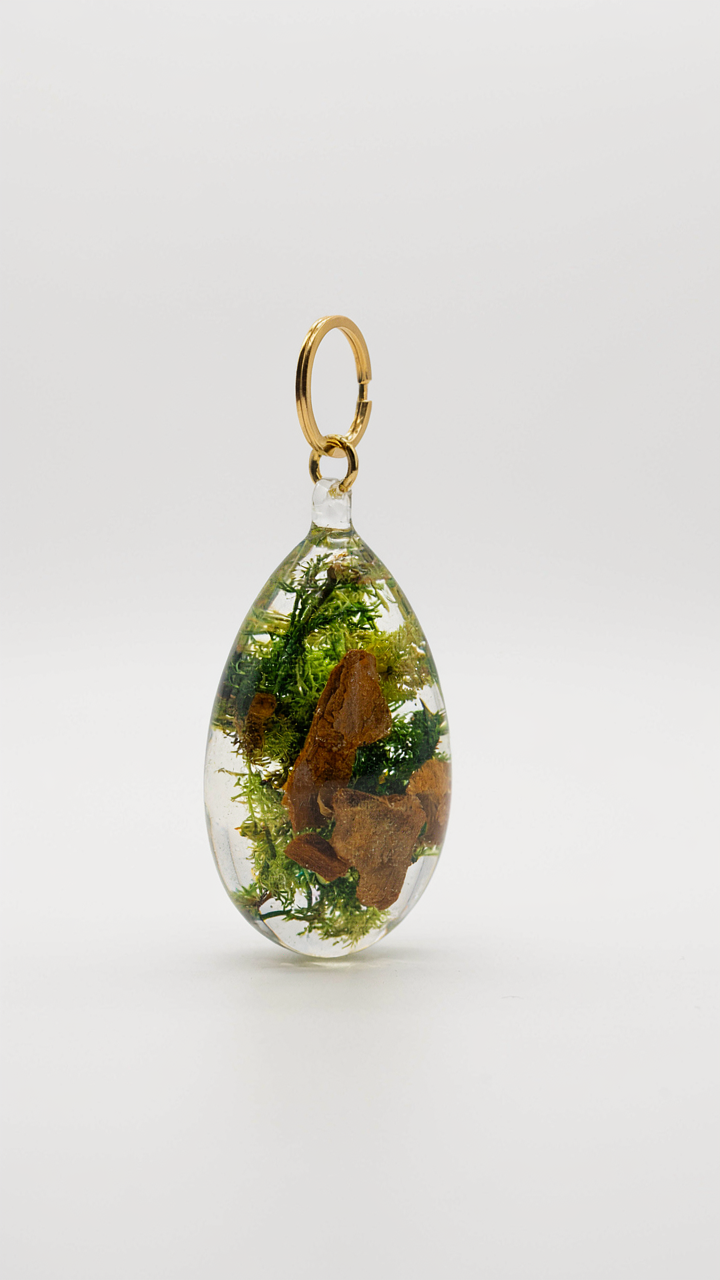
When Organic Materials Become Structure
You want your keychain to look rare because rarity signals you didn’t settle for mass production. Here’s the mechanism: organic materials that aren’t flowers work because they create visual contrast and depth without competing with the resin’s clarity. Moss, bark fragments, and seeds operate as texture anchors. They don’t dissolve or degrade inside cured epoxy resin when properly dried beforehand. The key is moisture removal before embedding anything botanical.
Dried moss requires seven to ten days in a warm, dry space to eliminate internal water content. Bark pieces work best when sourced from fallen branches, dried the same way, and cut into fragments under half an inch. Seeds like poppies or eucalyptus add scale variation without weight. Bury these materials halfway through the pour rather than at the base so they remain visible from multiple angles. The structural principle here is layering: each material sits at a different depth, creating perceived dimension inside a single pour.
Metal, Sand, And The Archaeology Approach
Industrial design teaches us about contrast through material opposition, and resin keychains use this principle by pairing organic softness with hard metallics. Micro-artifacts like reclaimed watch gears, tiny brass screws, and salvaged chain links create functional visual interest. Sand grains from specific locations become a storytelling device. The mechanism isn’t nostalgia, it’s specificity. A handful of sand from a trip reads as intentional; random sand reads as filler.
Source sand from beaches, deserts, or riverbeds you’ve actually visited, then dry it completely for forty-eight hours. Mix it with the resin before pouring or layer it like the organic materials above. Gears should come from broken vintage watches rather than craft store approximations because the genuine article has surface variation that photographs differently. Position micro-artifacts using tweezers before the resin sets fully, typically five to eight minutes into the cure window. The final step is rotating the keychain during initial cure to prevent heavy pieces from settling unevenly.
Flower Keychains As Resin Gift: The Antidote To Generic Giving
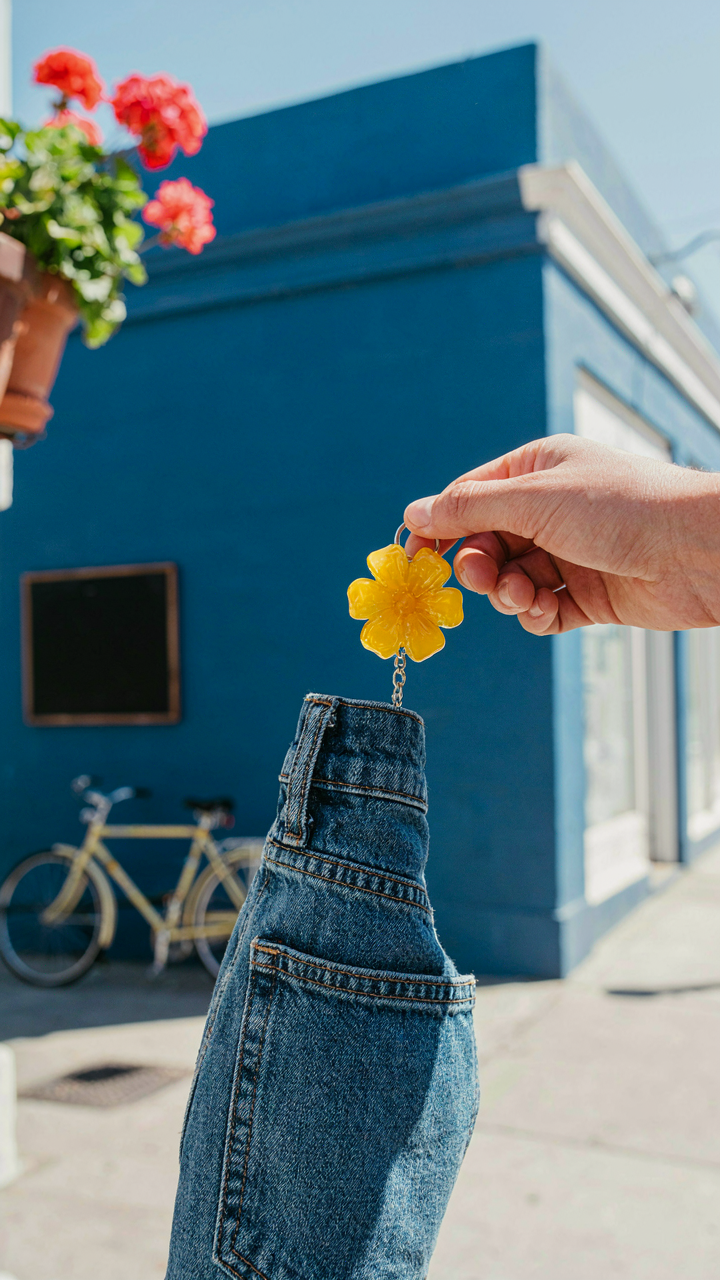
Why Handmade Beats Mass Produced
You want to seem thoughtful without actually doing the work. That’s the real problem everyone skips over. The mechanism is simple: mass-produced gifts signal nothing except that you visited a store. A resin flower keychain made by an actual person—whether you make it or commission it—carries embedded information about effort. The receiver reads that immediately, whether they admit it or not.
The difference lives in specificity. A factory keychain could go to anyone. A resin piece with the recipient’s favorite flower species, custom color palette, or hand-mixed pigments can only go to them. You’ve made a choice that required knowing something about who they are. That asymmetry is what people actually respond to, not the object itself.
The Exchange That Sticks
Giving feels hollow when both parties know it’s mandatory. Think about economics here, specifically the concept of signaling. A gift “signals” information about the giver’s relationship to the receiver. Resin flower keychains work because they signal specificity in a world of generic obligation.
A handmade keychain stays in someone’s pocket or bag for months. Every time they reach for their keys, they’re reminded that someone spent time on this. That’s different from a gift that gets shoved in a drawer. The touchpoint repeats. The signal compounds. To execute this: identify one detail about the recipient that nobody else would know, then build that into the resin design.
The Myth Of Perfect Resin Flower Keychains
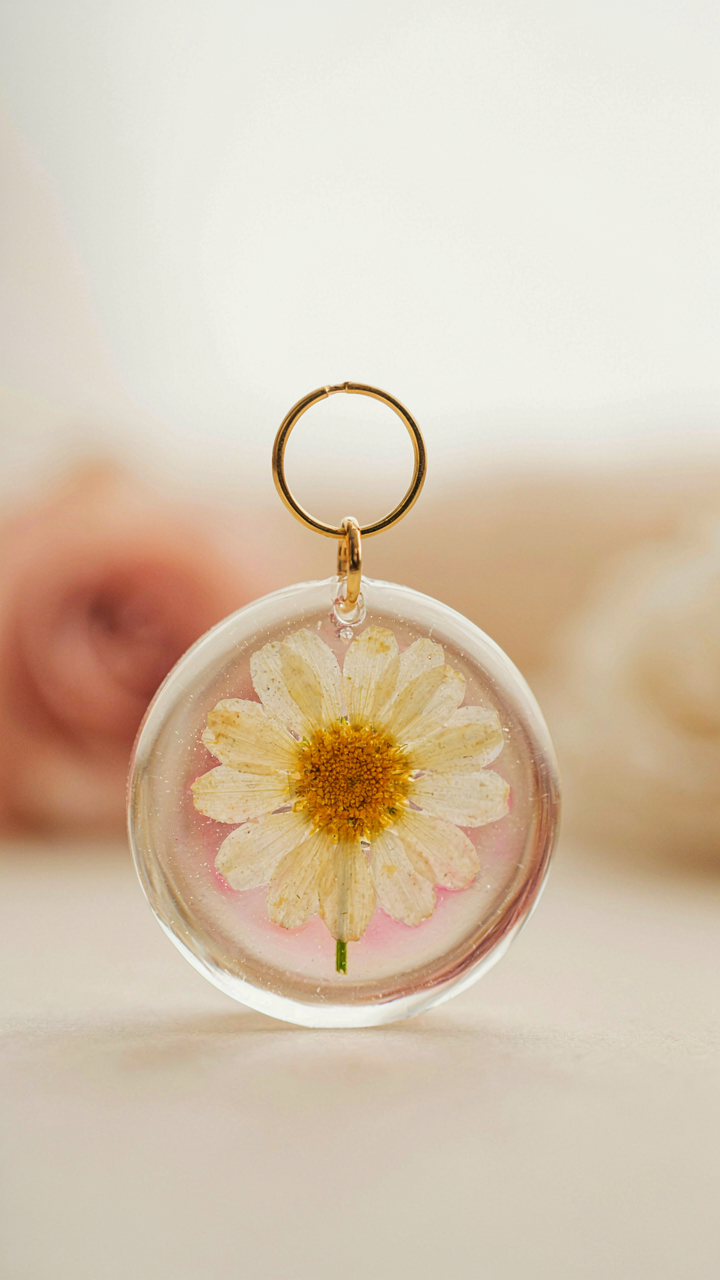
Flaws Are The Design Working
You’re afraid your keychain won’t look store-bought. Here’s the mechanism: resin is a material that exploits imperfection the way Japanese pottery exploits the wabi-sabi principle. A tiny bubble, a slight color shift, uneven flower positioning—these aren’t mistakes. They’re proof the piece came from a hand, not a machine. Mass production erases variation. Handmade resin work celebrates it. The flaw is the signal that separates a commodity from a craft object.
Most makers chase flawlessness and land in uncanny valley instead. They sand too much, seal too carefully, polish until the piece loses its humanity. The keychain that sells isn’t the one with zero air bubbles. It’s the one where the dried flower sits at a subtle angle and the resin has one barely-visible wave pattern. That asymmetry triggers recognition. The buyer knows someone made this, not a machine.
Emotion Beats Precision
Stop measuring success by technical standards nobody asked for. The resin flower keychain doesn’t exist to demonstrate your epoxy-pouring accuracy. It exists to create a moment when someone pulls their keys from a pocket and remembers something—a person, a feeling, a season. That emotional hit is the entire product. Everything else is supporting machinery.
A keychain with perfect clarity and a dead arrangement triggers nothing. A keychain with slight cloudiness and a wildflower composition positioned off-center creates a micro-pause in someone’s day. That pause is where the value lives. Build toward that pause first. The technical execution follows naturally when your intention is clear. Aim for impact, not inspection-line results.
Your Fear Isn’t Running Out Of Ideas; It’s Creating Something Truly Your Own
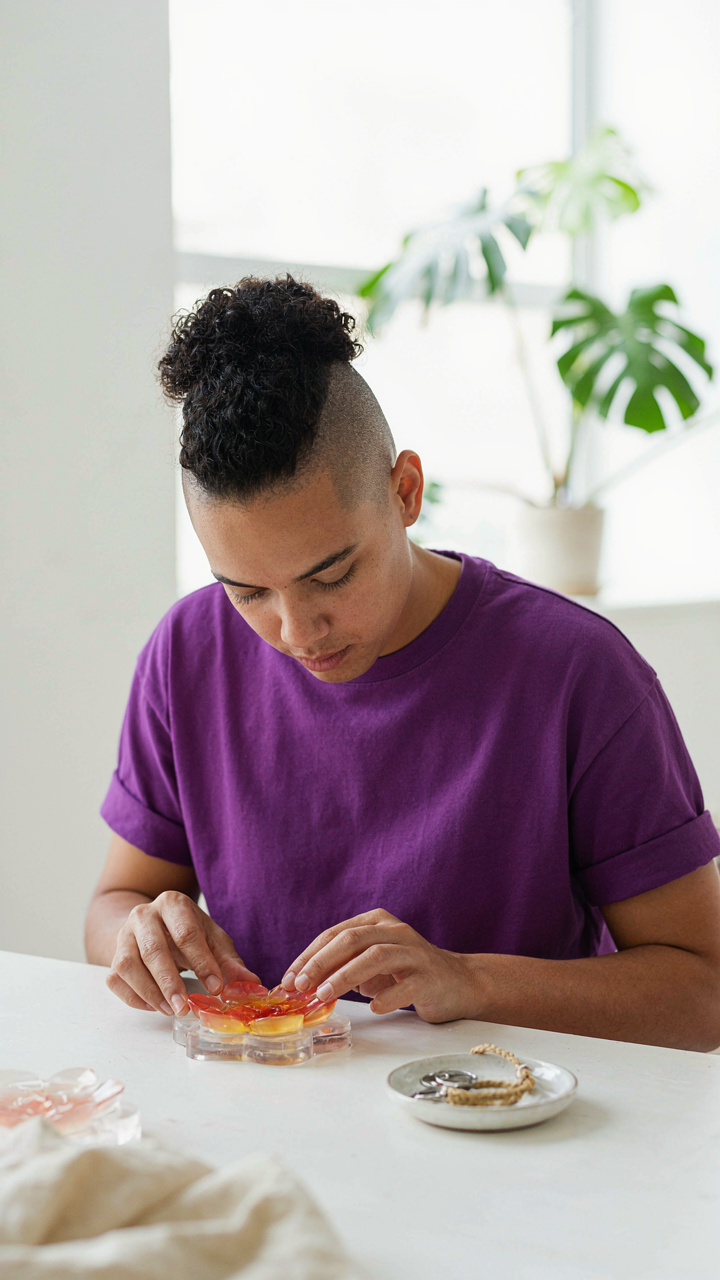
Most people drown resin flower keychains in trends they find online. You’re different. Stop copying what works for others and start asking what your specific person actually wants. Pick one technique you’ve seen, modify it based on your taste, and make it today. Not tomorrow. The market doesn’t reward perfection. It rewards the person who ships first while everyone else waits for permission.



