
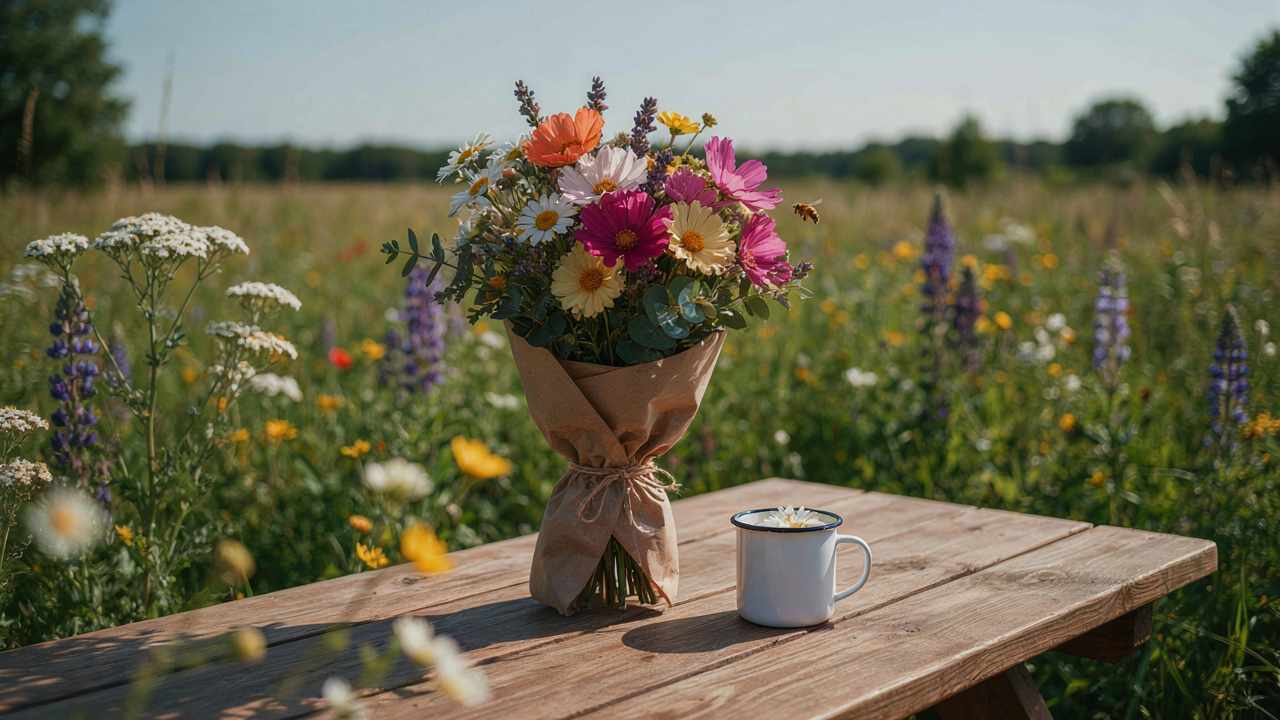
The Illusion Of Effort: Why Complexity Kills Your Wildflower Bouquet
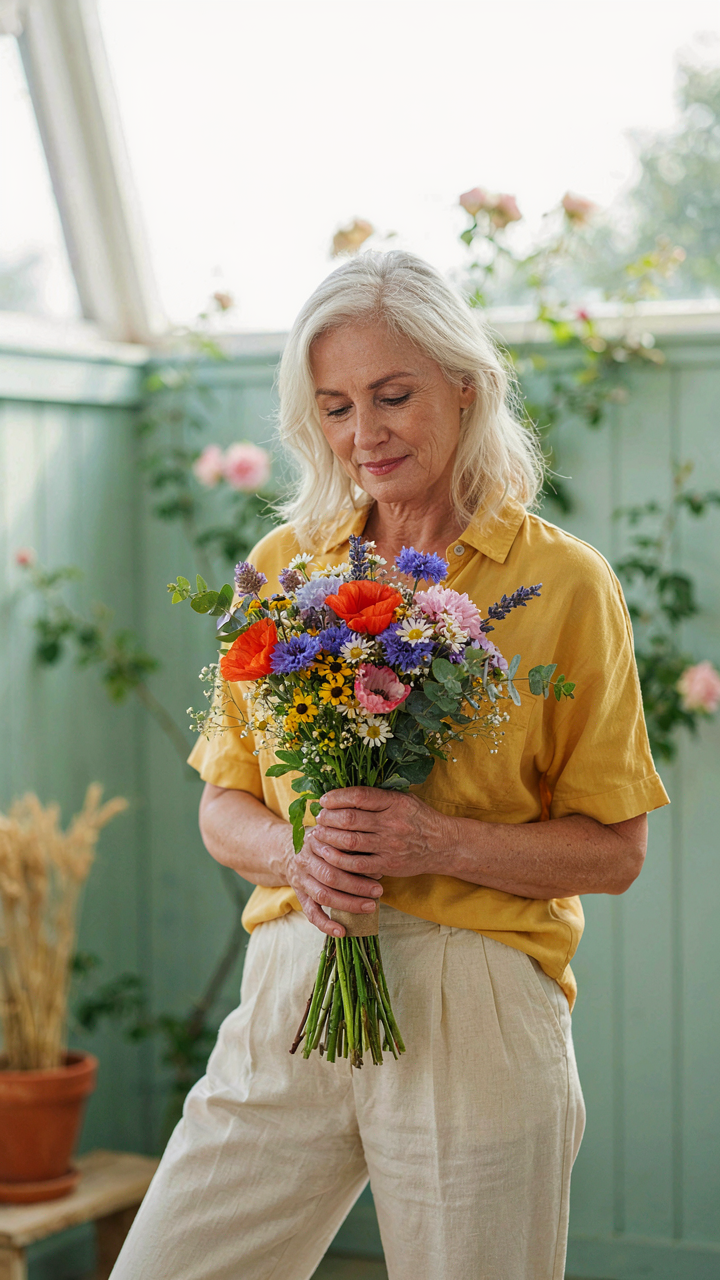
Simple Versus Simplistic
You want permission to do less work and still look competent. Here’s the real mechanism: simplicity is a choice about what to keep, while simplistic is what happens when you strip away too much and lose function. In wildflower bouquet wrapping, this distinction matters because the wrap itself serves three jobs at once—it holds stems secure, frames the flowers, and communicates intent. Remove any of these and you’ve crossed into simplistic territory, even if fewer materials are involved.
The common advice says “just wrap it and go,” which is lazy instruction masquerading as accessibility. Real simplicity in wildflower wrapping requires you to understand which elements actually matter: stem binding technique, paper weight, and how many stems your hands can reasonably manage. You strip away the unnecessary filler and decoration, not the structural integrity. A single piece of kraft paper wound tight around a properly gathered stem bundle is simple. Paper so thin it tears during wrapping, or a bundle so loose it collapses, is simplistic.
More Detracts When It Doesn’t Add
Adding materials feels productive, but most additions to wildflower wraps work against you. Each extra layer of paper reduces visibility of the actual flowers you gathered. Each ribbon or bow competes visually with the blooms instead of supporting them. The mechanism here mirrors diminishing returns in economics: the first element you add solves a real problem, but each addition after that creates problems it’s supposed to fix. A second wrap layer doesn’t improve the first one; it buries it.
Professional florists learned this through volume, not philosophy. They stopped adding elements not because restraint is beautiful, but because every added material increases production time and cost while decreasing the visual impact of the flowers themselves. Your wrap succeeds when someone sees the wildflowers first and the wrapping second. When viewers notice the paper more than the bloom colors or shapes, you’ve added too much. Evaluate each proposed addition by asking: does this make the flowers more visible or less visible?
The Forager’s First Principle: Understanding Your Natural Flower Bouquet

Stem Structure Determines Your Wrapping Strategy
You want to look competent without studying floristry for months. Here’s what matters: wildflowers have two stem types, and each demands a different wrapping approach. Hollow stems like Queen Anne’s lace collapse under pressure. Woody stems like goldenrod resist it. Borrow the engineering concept of load-bearing capacity from construction, and map it to flowers. Your wrapping tension must match what each stem can actually handle without crushing or splitting.
Most wildflowers break because people wrap everything with identical pressure. The mechanism is simple: a hollow stem compressed inside tight wrapping cuts off water transport and creates a failure point. Woody stems tolerate more tension because their structure distributes force across multiple layers. Before you wrap anything, run your thumb along the stem. If it yields to light pressure, you’re wrapping a hollow stem and need loose, supporting wraps. If it resists, you can pull your materials taut without damage.
Spring Conditions Shape How Bouquets Age
Seasonal timing isn’t romantic advice about what’s available. It’s physics. Spring wildflowers—bleeding hearts, trillium, wild phlox—absorb water rapidly because air is cool and humidity stays high. Your wrapping in March works differently than wrapping in August. Cool, moist conditions mean the flowers hydrate fast, so you can wrap tighter without suffocation. Warm, dry conditions demand looser wrapping to allow air circulation and prevent moisture trap inside the bouquet.
Flowers cut in spring have longer vase life than summer picks because the season’s water balance favors them. Your wrapping job is to preserve that advantage. If you wrap spring bouquets too loosely, you waste the moisture retention the season gives you. If you wrap tight in hot months, you create internal humidity that causes rot at the stem base. Check the outdoor temperature and humidity before you wrap. If it’s below 60 degrees and humid, tighten your wraps slightly. If it’s above 75 degrees or dry, leave gaps between wrap layers for airflow.
The “Nothing But Flowers” Protocol: Minimalist Materials, Maximum Impact
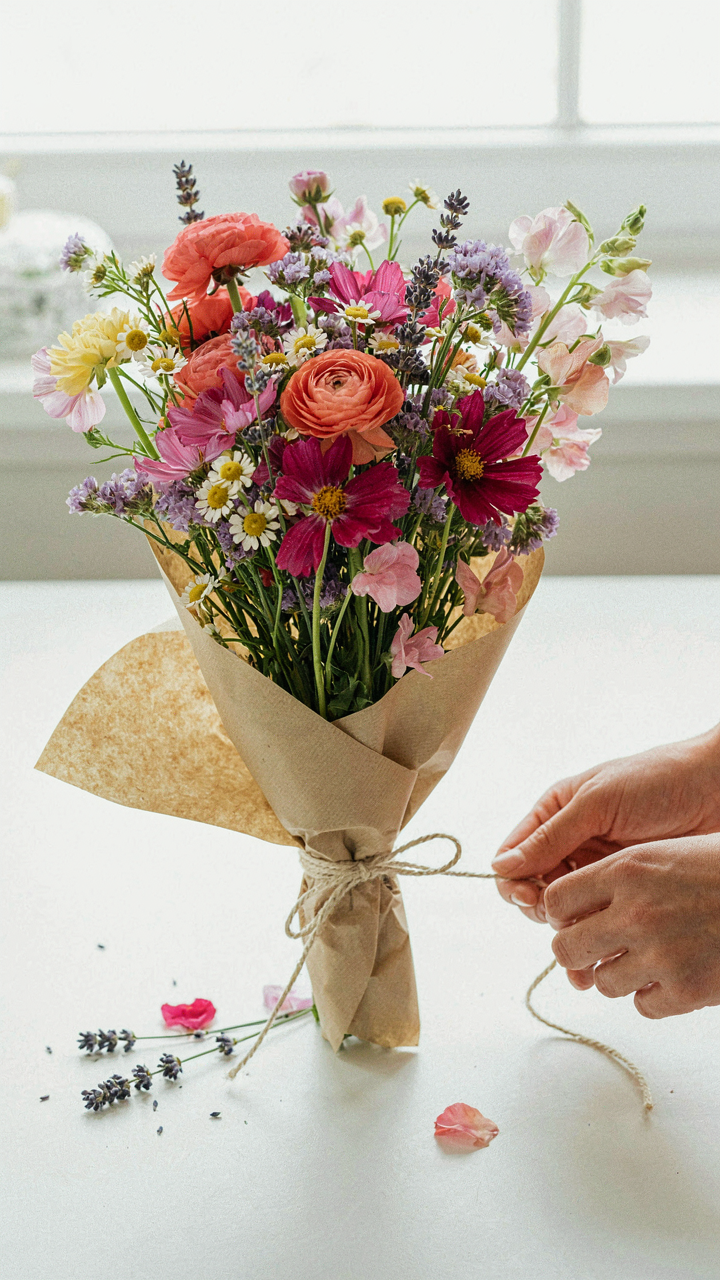
What Your Hands Actually Need
You’re reading this because you want permission to skip the fluff. Good instinct. Wildflower bouquet wrapping borrows from industrial design the principle of constraint: removing everything except what functions forces the remaining elements to work harder. This is the mechanism that separates a wrapped bouquet from a decorated one.
Most guides load you with tissue, ribbons, twine, and tape. Wrong move. You need exactly what holds the stems together, protects the flowers during transport, and looks intentional. Everything else dilutes the visual weight and adds handling time.
- Kraft Paper or Newspaper: Provides structure and water resistance without competing with flower colors. Two to three sheets layered give you working material and protection against stem breakage during grip adjustment.
- Natural Twine or Jute: Secures the wrap at two points (lower stems and mid-bundle). Synthetic alternatives weaken the visual hierarchy by introducing plastic sheen into an organic composition.
- Floral Tape or Stem Tape: Binds individual stems where they diverge. Use only where stems separate, not across the entire bundle. This prevents the wrap from looking armored.
- Water Source Access: A small container or spray bottle during assembly prevents wilting before wrapping completion. Hydrated stems hold their position better and give you fifteen extra minutes of working time.
- Sharp Knife or Pruners: Clean cuts on stems reduce air pockets in the bundle and eliminate the jagged edges that puncture wrapping material from inside out.
The material stack should weigh less than the flowers themselves. If you’re adding more wrapper than bloom, you’ve inverted the hierarchy. Gather your materials, test their grip on fresh stems, then move forward.
Stripping Away The Decoration Trap
The real mistake isn’t adding too much. It’s adding the wrong layer at the wrong moment, confusing decoration with structure. You’ve seen florists wrap, pause, then reach for ribbon like they forgot something. They didn’t forget. They’re compensating for poor stem arrangement by introducing visual distraction.
Wildflowers have irregular heights and angles. Their shapes already create visual interest. Bows, beads, and filler flowers don’t improve the bouquet. They hide its actual problem: loose arrangement underneath. If your stems need a ribbon to look finished, your stems weren’t arranged correctly. Wrap tight, wrap clean, wrap once. Let the flower structure carry the composition.
The Biomimicry Method: Learning From Nature’s Bouquets
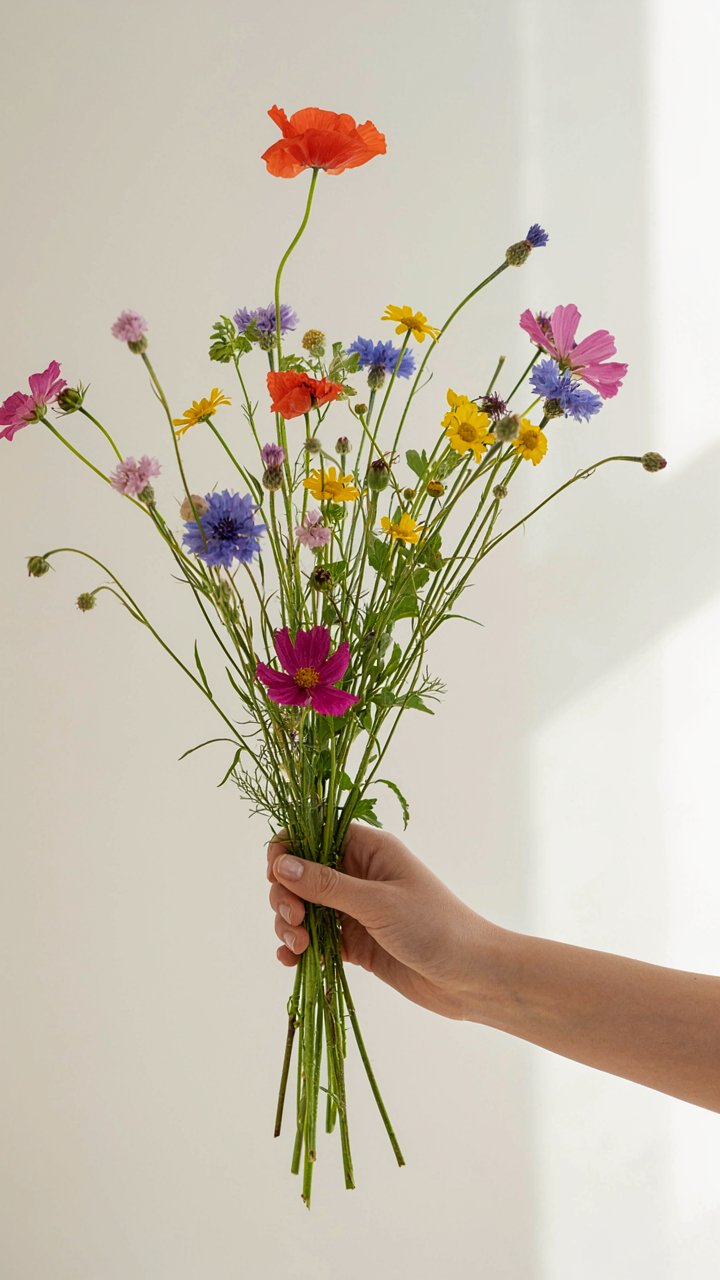
How Plants Structure Themselves
You want this section to validate that you’re doing something sophisticated. But the real mechanism is simpler: plants solve arrangement problems you’re trying to solve, and copying their solutions beats guessing. In biology, we call this branching architecture, and wildflower bouquets use the exact same principle. Plants don’t arrange leaves randomly. They space them to maximize light exposure and water distribution. Each stem curves and diverges at angles that prevent crowding. The angle of divergence matters because it determines sight lines through the bouquet. A 90-degree stem placement creates visual walls. A 45-degree angle creates depth. A 30-degree angle creates flow.
Copy how plants grow in meadows, not how florists stage store displays. Wildflowers in nature don’t cluster in tight geometric shapes. They scatter at varying heights with intentional gaps. These gaps let you see through the arrangement. They reduce visual weight while increasing perceived volume. When you wrap, maintain those gaps. Don’t compress the stems together to make wrapping easier. The structure comes first. The wrap secures what’s already arranged correctly.
Organic Growth Pattern Recognition
Forget the advice about “creating triangles” or “building a dome.” Those shapes work against how plants actually branch. Organic growth moves outward and upward along invisible lines of force. Stems don’t fight each other for space. They find angles where they can coexist. When you wrap a wildflower bouquet, you’re not engineering a sculpture. You’re capturing a moment of natural growth.
Start by identifying the primary stem, then add secondary stems that curve away from it at 20 to 40 degrees. This creates the illusion of natural spreading without tangles. Tertiary stems fill remaining voids while respecting the direction established by larger stems. The wrap point should sit where the stems naturally converge, usually 3 to 4 inches from the lowest bloom. Tighten gradually, checking that each stem maintains its angle. If a stem straightens during wrapping, loosen and reposition before continuing.
The Counter Intuitive Grip: Holding Your Flower Bouquet Wildflowers
Let Your Hand Become The Vase
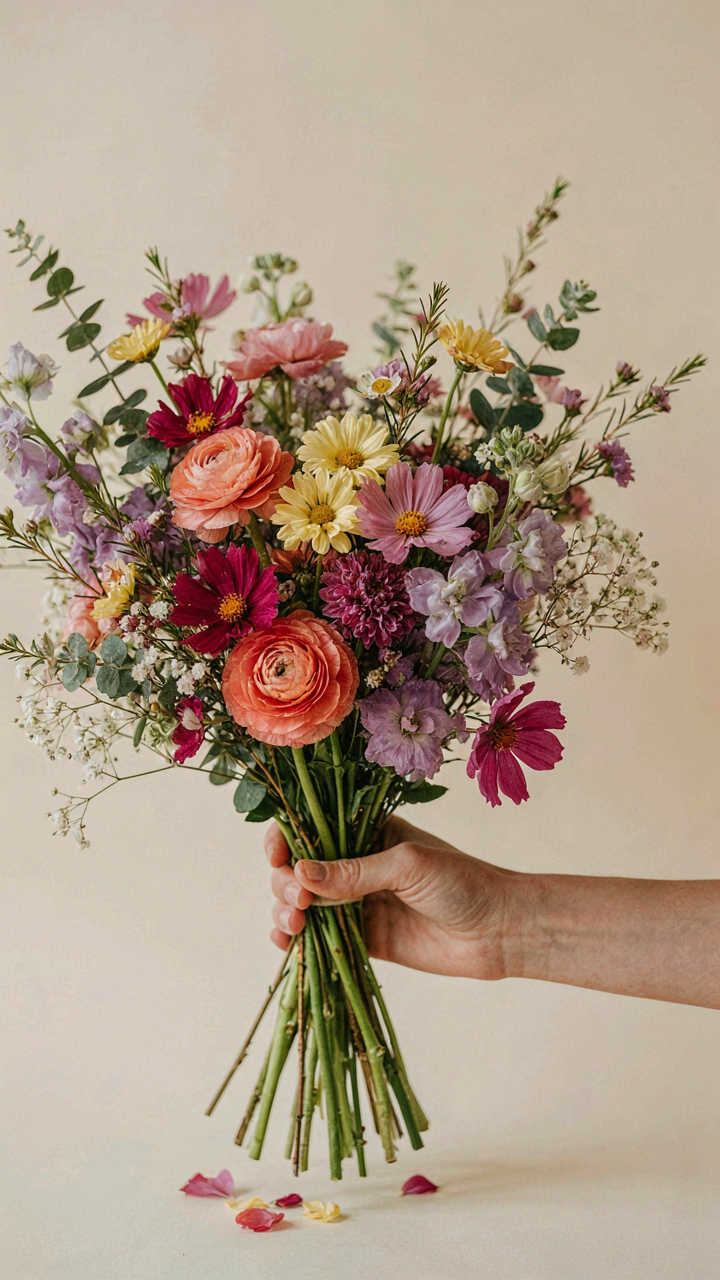
You want to look like you know what you’re doing. That’s why most people grip tight and force wildflowers into an unnatural cone. The mechanism is borrowed from engineering: load distribution. Your hand isn’t a clamp. It’s a support structure. When you hold wildflowers loosely, gravity works with you instead of against you. Stems find their own angle. Flowers arrange themselves around the gap your fingers create. The result looks intentional because it actually is natural.
Tension kills wildflower arrangements. A tight grip compresses stems, damages them, and forces blooms into stiff positions that scream “arranged.” Your fingers should contact stems at two or three points only, creating a triangle or diamond of contact. This lets the bundle breathe. Flowers at the perimeter drape and angle outward. Interior blooms layer visibly. The arrangement becomes three-dimensional instead of flat. This is what separates wrapped wildflower bouquets from grocery store stiffness.
Anchor Points Control Everything
Stems aren’t uniform. Some are thin and flexible. Others are woody and rigid. You place rigid stems first as anchors, then weave flexible ones around them. This isn’t random. Thick stems near the edges of your hand create a frame. Thinner stems nest inside. Your palm faces slightly upward, not forward. This angle lets you see the arrangement from the customer’s perspective as you build it. You catch gaps before wrapping. You adjust positions in real time instead of hoping the wrap fixes it.
The stems you hold must cross each other below the hand. When two stems intersect, they lock. Weight distributes across both. Remove one stem and the whole structure shifts. Add the second anchor stem at a forty-five-degree angle to the first. This creates tension without tension. The bouquet stands without crushing. Your fingers do minimal work because the geometry does the work. Wrap once this structure is stable, not before.
The Un Wrap: When Less Wrapping Is More Elegant
Where Traditional Wrapping Fails
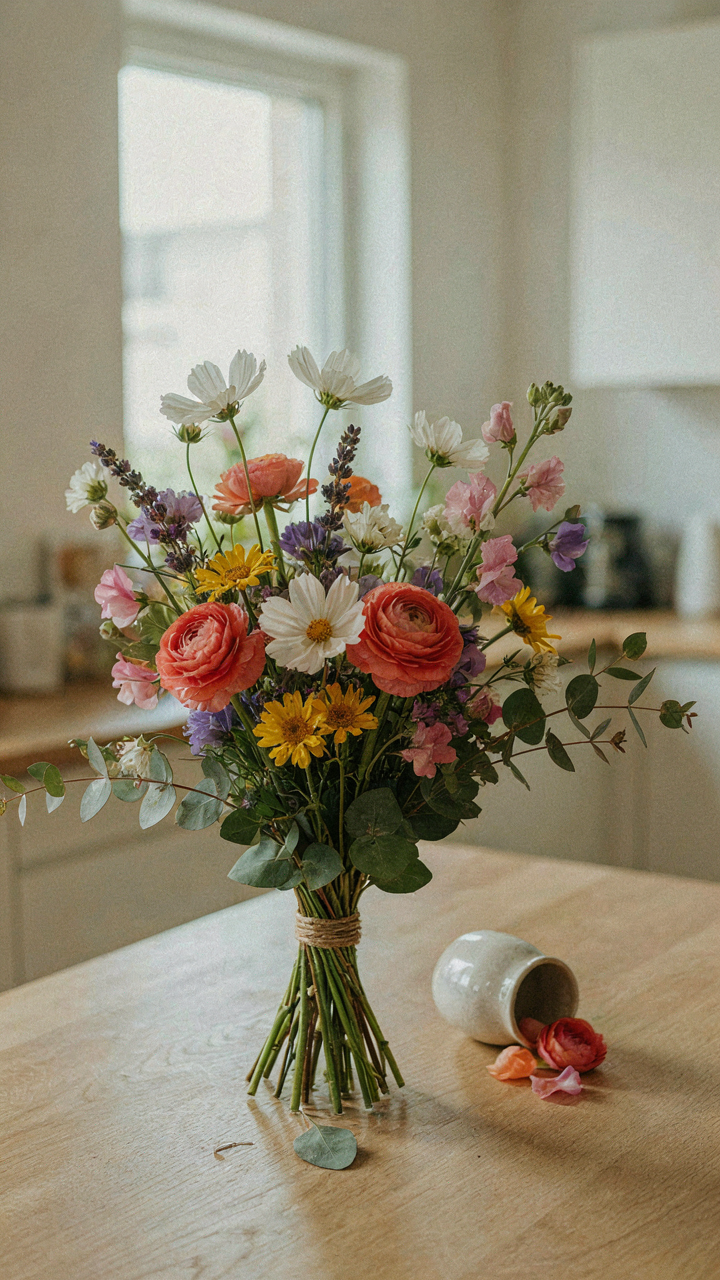
You want the bouquet to look intentional, not like you’re hiding something. The real problem with standard wrapping techniques is they treat wildflowers like they need armor. You layer paper, add ribbon, conceal stems, and end up with a rigid package that contradicts what wildflowers actually are: organic, irregular, alive. Structural engineering calls this “over-constraint”—when you remove all freedom of movement, the system becomes brittle. Wildflower bouquets fail the same way. Too much wrapping kills the form.
Most advice tells you to wrap everything tightly for “support.” This is incomplete. Wildflowers need selective constraint, not total coverage. The stems do require stabilization at one specific point—the grip zone, roughly three to four inches from where your hand holds them. Everything above that point should breathe. You wrap at the binding point only, leaving the flower heads and upper stems visible. This is where elegance lives: restraint applied surgically, not blanketed everywhere.
Visible Stems As Design Element
Stop treating exposed stems as a failure to finish. Florists in the Dutch Golden Age left stems visible intentionally—it proved freshness and authenticity. Modern wrapping hides stems out of habit, not strategy. The mechanism is simple: partial concealment creates visual tension that full wrapping destroys. You see the base wrapped cleanly, the stems fade into paper or natural material for six inches, then the flowers emerge unburdened. This graduated reveal stops the eye and makes people perceive the arrangement as deliberate.
The wrapping should end where the stems naturally taper or branch. Not arbitrary. Not at a predetermined height. At the actual structural break point where the flower heads take over visually from the stem structure. Leave two to three inches of stem visible above your wrapping layer. This specific measurement creates proportion—it’s enough stem to show form without looking skeletal. The bouquet reads as complete because you’ve wrapped what needs wrapping and left what communicates strength.
The Asymmetry Advantage: Embracing The Wild In Bouquets
Breaking From Perfect Symmetry
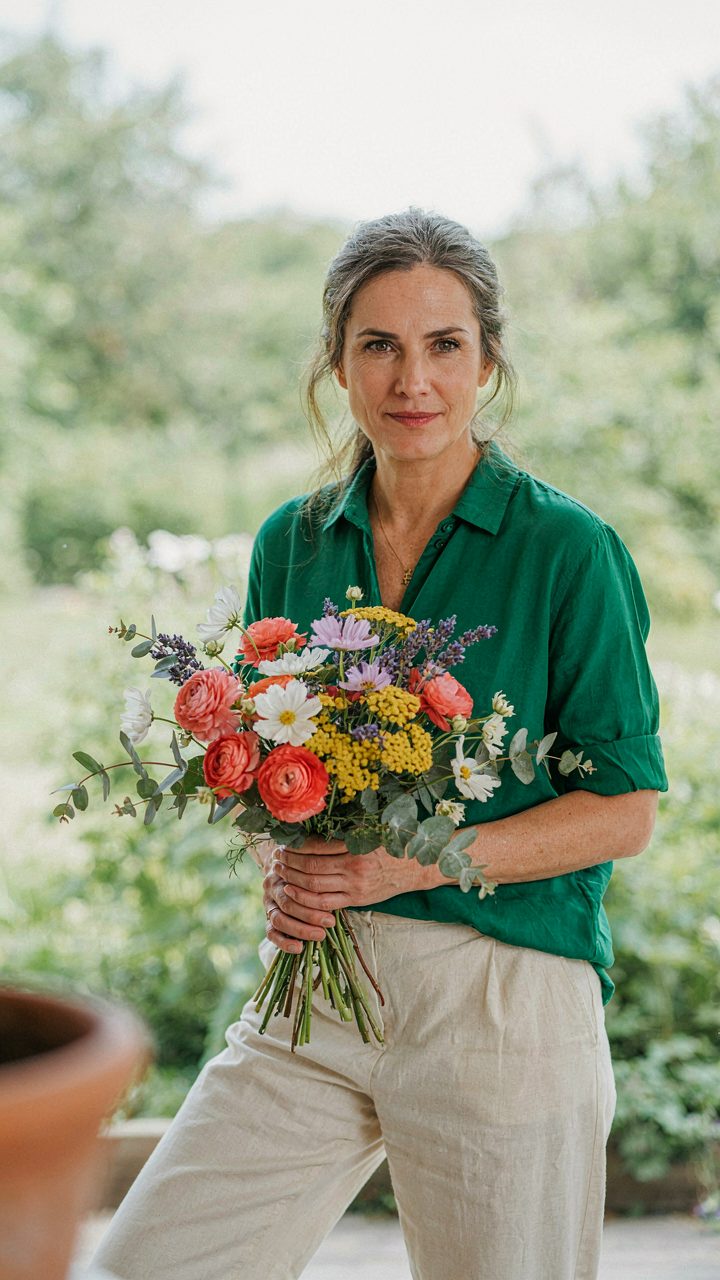
You want permission to stop obsessing over balance because imperfection feels safer than committing to a real vision. Here’s the mechanism: symmetry reads as controlled and artificial. Wildflower bouquets exist in nature where stems grow at odd angles, blooms face different directions, and heights vary. The wrapping doesn’t create structure by forcing everything level. It anchors the stems so they stay put while maintaining their natural scatter. This is tensile strength applied to arrangement, not geometric precision.
Most florists teach radial or spiral wrapping as gospel. That’s incomplete. Radial symmetry works for formal roses. Wildflowers resist it because their stems have different diameters and flexibility. Wrap tighter where stems bend outward. Wrap looser where they naturally cluster inward. The stems determine the wrap pattern, not vice versa. You’re reading the plant’s architecture and securing it, not overriding it with technique.
The Individual Bloom As The Unit
Stop thinking about the bouquet as one object. Think about it as a collection of individual plants that happen to share wrapping materials. Each bloom has a stem angle, a weight distribution, and a visual direction. Your wrap accommodates all of them simultaneously without erasing any. When you group wildflowers tightly, the weaker stems lean on stronger ones. The wrap prevents collapse by creating tension across the bundle, not by arranging stems into artificial positions.
The wrap itself becomes invisible when done correctly because it follows the stems, not the stems following the wrap. Start at the base where stems are thickest. Work upward with overlapping passes. Let gaps form where stems naturally separate. These gaps aren’t mistakes, they’re evidence the wrap responds to real plant geometry instead of forcing a predetermined shape. Finish by binding off at the point where stem thickness stabilizes, usually four to five inches from the base.
The Context Conundrum: Matching Your Wrapped Bouquets To The Setting
Environment Shapes Your Material Choices
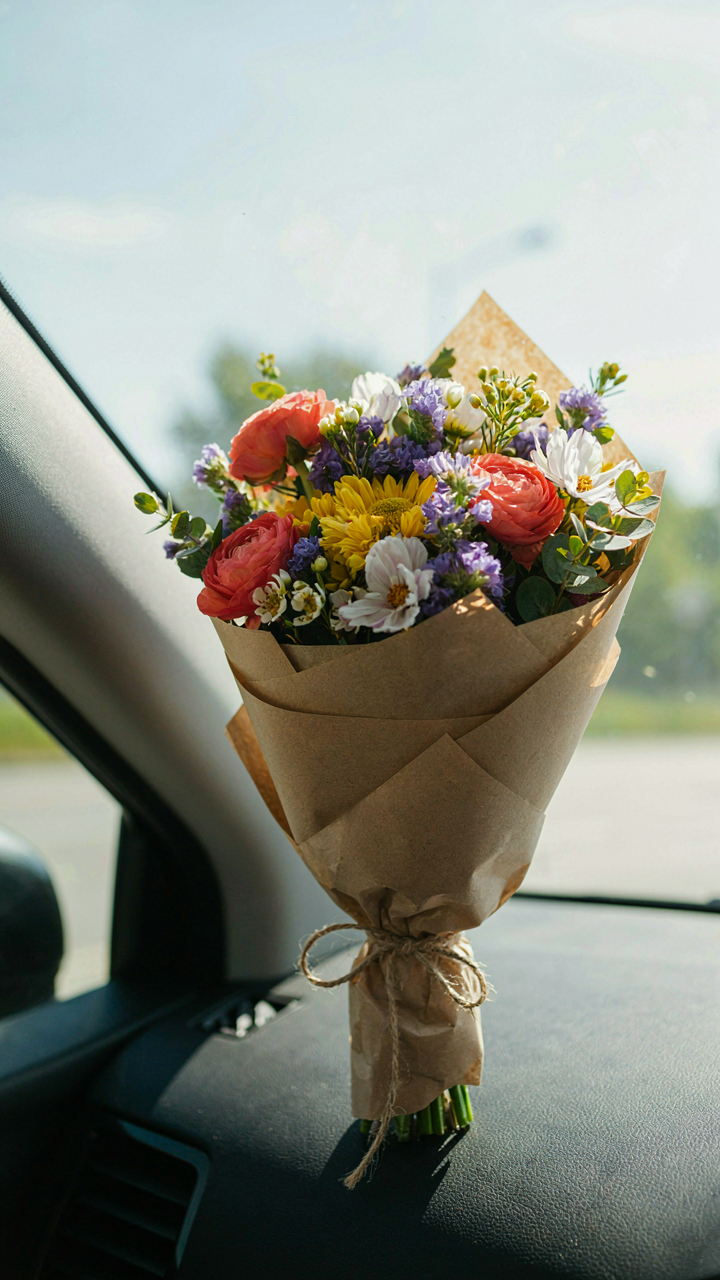
You’re worried the bouquet won’t survive the trip or look wrong in the photo. The real constraint is physics: temperature, humidity, and handling duration dictate which materials stay stable and which break down. A wrapped bouquet in a hot car behaves differently than one in a cool indoor venue. Paper absorbs moisture in high humidity and becomes fragile. Cellophane sweats and clouds. Twine loosens as stems expand. Your wrap choice isn’t aesthetic preference, it’s material engineering applied to specific conditions.
Outdoor summer weddings demand tighter wraps and water resistant materials because exposure time extends and humidity climbs. Indoor events with climate control allow looser wraps and delicate papers since conditions remain stable. Rural barn settings expose bouquets to dust and temperature swings, requiring protective outer layers. Urban restaurant events keep flowers protected from elements immediately, so wrapping prioritizes visual impact over barrier function. Match your wrap construction to the exact environment where the bouquet will spend most of its time before presentation.
When Durability Outweighs Visual Refinement
Most florists get this backwards: they prioritize how the wrap looks in the photo, then watch it fall apart during transport. Durability wins when the bouquet travels, sits in unfamiliar conditions, or changes hands multiple times. A wrapped bouquet in a bride’s car for two hours under sun exposure needs a reinforced structure. That means thicker paper, sealed seams, and protective outer wrap that sacrifices some visual delicacy for structural integrity.
Delicate presentation takes priority only when the bouquet reaches its final destination and stays there. Table centerpieces, ceremony placement, or hand-held moments for photos are short-duration scenarios. Those allow lighter wraps, exposed paper edges, and minimal protective layering. The decision framework is simple: if the wrap shields the bouquet during a vulnerable period, build for durability first. Once the flowers reach their resting location, visual refinement matters because structural stress ends. Choose your wrap density based on transport and handling time, not Instagram aesthetics.
The One Hour Wildflower Bouquet Challenge

Strip Away Everything But The Mechanics
You want this to feel effortless because you’re afraid one hour isn’t enough. It is. The real constraint isn’t time—it’s decision fatigue. Most people waste thirty minutes choosing between options that don’t matter. The mechanism is simple: wildflower bouquet wrapping works because you’re controlling three variables—stem length, wrap tension, and paper angle. Remove the variables you can’t control and execute the three that move the needle.
Start by pre-cutting all materials before touching a single stem. Measure your paper to finished width, tear your tape into usable lengths, and lay everything in arm’s reach. Separate wildflowers by height into three piles: tall, medium, short. This takes five minutes and eliminates the constant mental math of “which flower goes where.” Your hands now work on autopilot while your brain stays offline. Grab stems, build the spiral, wrap, tape, done. One hour becomes realistic because you removed the thinking.
Make One Decision, Then Commit
Decision matrices from operations management teach us that constraints breed speed. In wrapping, your constraint is paper choice. Pick one type—kraft paper, newsprint, or tissue—and commit to it for the entire batch. This single choice cascades through everything else: wrap tension, tape placement, even how you angle the stems. Changing papers mid-process kills momentum and forces your hands to recalibrate their muscle memory.
The second decision is wrap direction. Spiral clockwise or counterclockwise. Do not switch. The rhythm matters more than the direction. Your body develops a repeatable motion that you can execute without thinking. Once you’ve wrapped three bouquets the same way, your hands know where the paper goes before your eyes register it. Tightness stays consistent, paper doesn’t wrinkle, and tape sticks the first time. Build speed through repetition in a single system, not by switching between options.
The Real Obstacle Isn’t Your Wrapping Skill; It’s Your Compulsion To Overcomplicate Simplicity
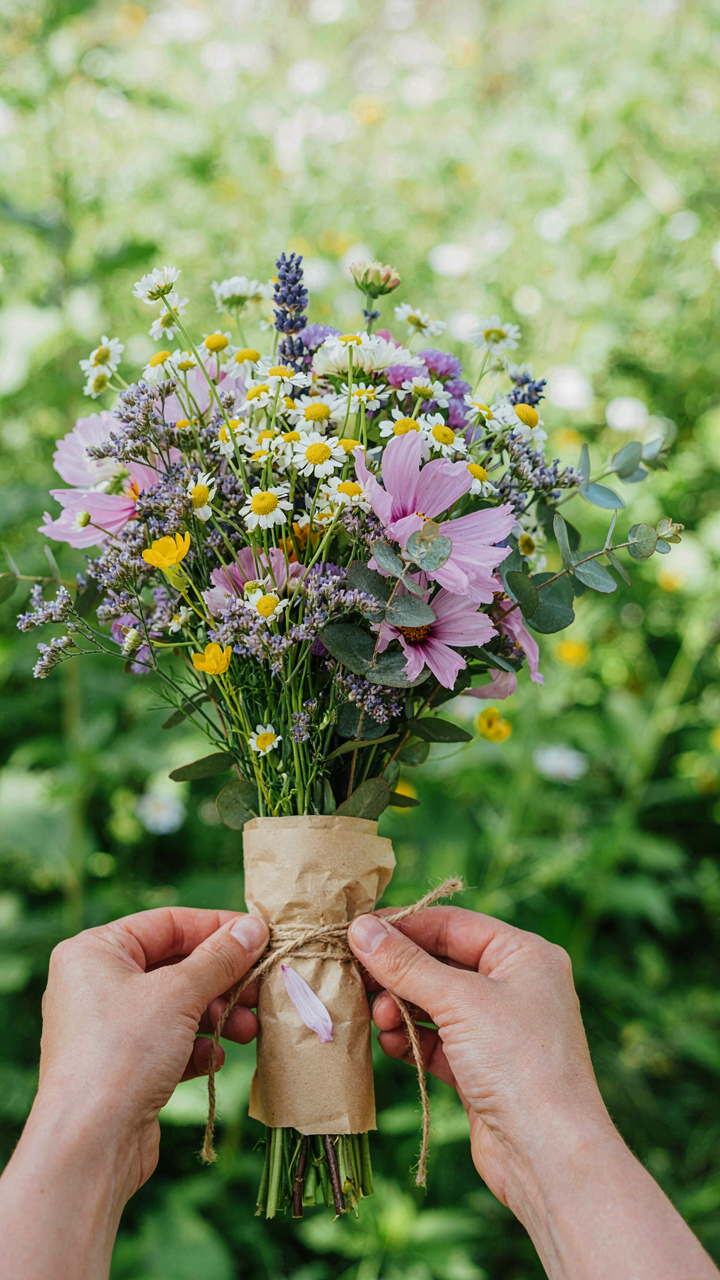
You don’t need a floral design degree to wrap wildflowers. You need permission to stop thinking. The barrier between you and a beautiful bouquet is the voice telling you it should look Instagram-perfect. Grab some flowers today, wrap them in kraft paper, tie twine around the stems, and ship it. Your hands know what to do. Your brain just needs to shut up long enough to let them work. Simplicity isn’t lazy. It’s decisive.



