
Beyond Perishability: The Immutable Advantage Of Dried Wildflowers

The Real Economics Of Fresh Versus Dried
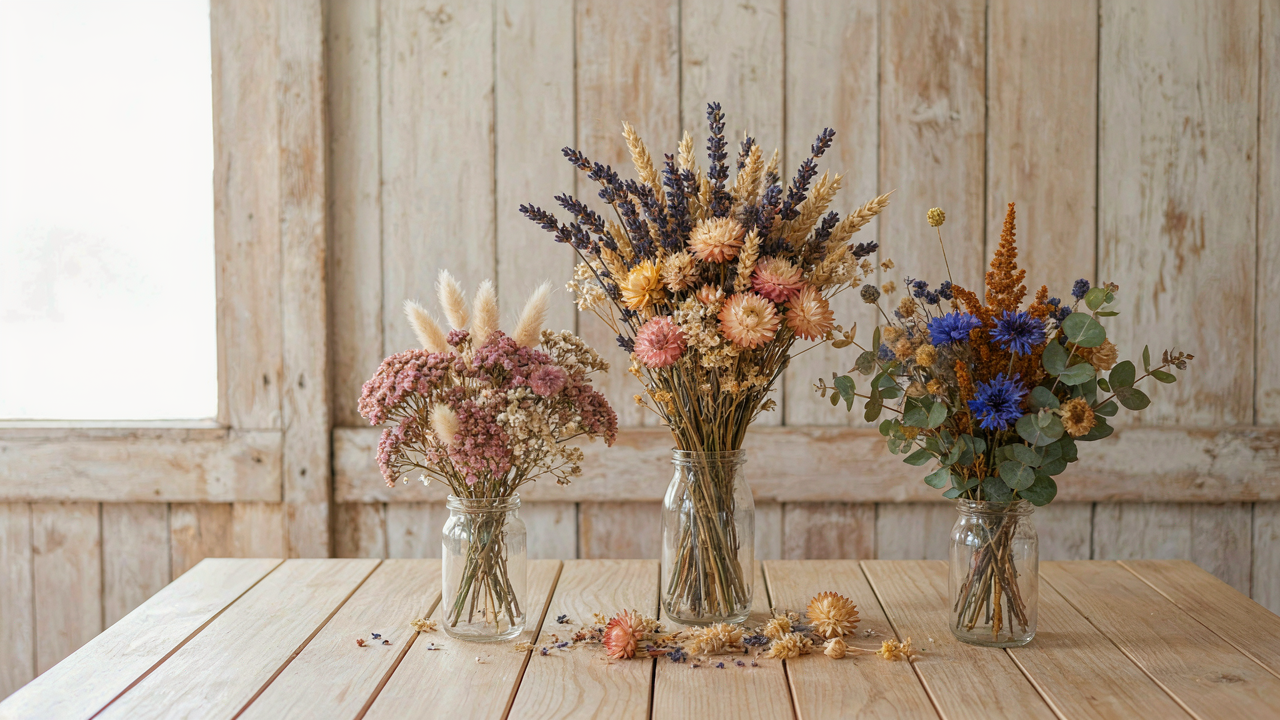
You want dried wildflowers because you’re tired of replacing dead flowers every week and pretending it’s normal. Here’s the mechanism: fresh flowers operate on entropy. They lose water, wilt, drop petals, and demand replacement within days to weeks. Dried wildflowers stop this clock. They retain structure for months or years without active decay. The lifespan difference isn’t marginal. It’s structural. A fresh bouquet lasts seven to fourteen days. Dried wildflowers last twelve months or longer under basic conditions. That’s not an upgrade. That’s a category shift.
The economics follow directly. Fresh flowers require recurring purchase, disposal, and mental labor to refresh. Dried wildflowers sit static. You buy once. They persist. No water changes, no daily monitoring, no guilt about waste. This matters if you actually want something to stay intact on your shelf instead of becoming a management task. Dried wildflowers eliminate the throughput problem entirely, which is why they belong in spaces where consistency matters more than novelty.
Dead Is The Wrong Word Entirely
Everyone says dried flowers are “dead.” They’re not. Dead things decompose. Dried flowers are desiccated, which means they’ve halted the biological processes that cause decay. Borrowing from plant biology: a fresh flower is in active metabolism, burning stored energy and water to maintain structure. Once that supply runs out, collapse follows. A dried flower is in stasis. Its cells have lost water but retain their rigid structure. The flower doesn’t rot. It persists exactly as it is, unchanged, indefinitely as long as moisture stays out.
The myth persists because people associate drying with damage. They conflate the process with the state. True: drying removes water. True: some color fades. But the botanical skeleton remains intact. A dried wildflower pressed at peak bloom holds that form. No slime, no mold, no decomposition cascade. You’re looking at stable matter, not decay in progress. Store it in a low-humidity environment and it outlasts the person who bought it. That’s not death. That’s preservation.
The Forager’s Blueprint: Sourcing And Selecting Your Wild Harvest For A Dry Wildflower Bouquet

Leave Nothing But Footprints
You want permission to strip wildflowers guilt-free. Here’s the mechanism: ethical foraging isn’t about feeling virtuous. It’s about preserving the resource so you can source from the same patch next season. The principle is simple: take no more than one-third of any flowering stand. Leave roots intact. Avoid rare species entirely. Check local regulations before harvesting, as many regions protect native wildflowers or restrict collection on public land. Stewardship is the only business model that compounds.
Foraging pressure destroys the source. Wildflowers need pollinator access and seed dispersal to reproduce. When you harvest indiscriminately, you interrupt both. The species disappears, your supply chain collapses, and you’re left buying commodity dried flowers from wholesalers. The direct trade works only if the ecology survives your extraction. Make that your baseline, not your afterthought.
Pick For Preservation, Not Just Beauty
Botany teaches us about tissue structure. In dried flowers, lignin and cellulose determine longevity. Choose wildflowers with naturally woody or papery stems and minimal water content at harvest. Species like yarrow, statice, and thistle dry reliably because their cell walls resist moisture loss and mold invasion. Delicate specimens with high water content like poppies or clematis fail during drying. You’re not selecting for what looks good fresh. You’re selecting for what survives the dehydration process intact.
Timing matters more than species choice. Harvest flowers at peak bloom but before they begin seeding. Morning, after dew evaporates, gives you the lowest moisture content without stress. Cut stems at least six inches long, leaving the root system behind. Strip lower leaves immediately to accelerate drying and prevent rot at the base. This single protocol stops ninety percent of bouquet failure before it starts.
The “Preservation Protocol”: Mastering Drying Techniques For Dried Wildflowers Wedding
Air Drying Versus Silica Gel: Which Actually Works
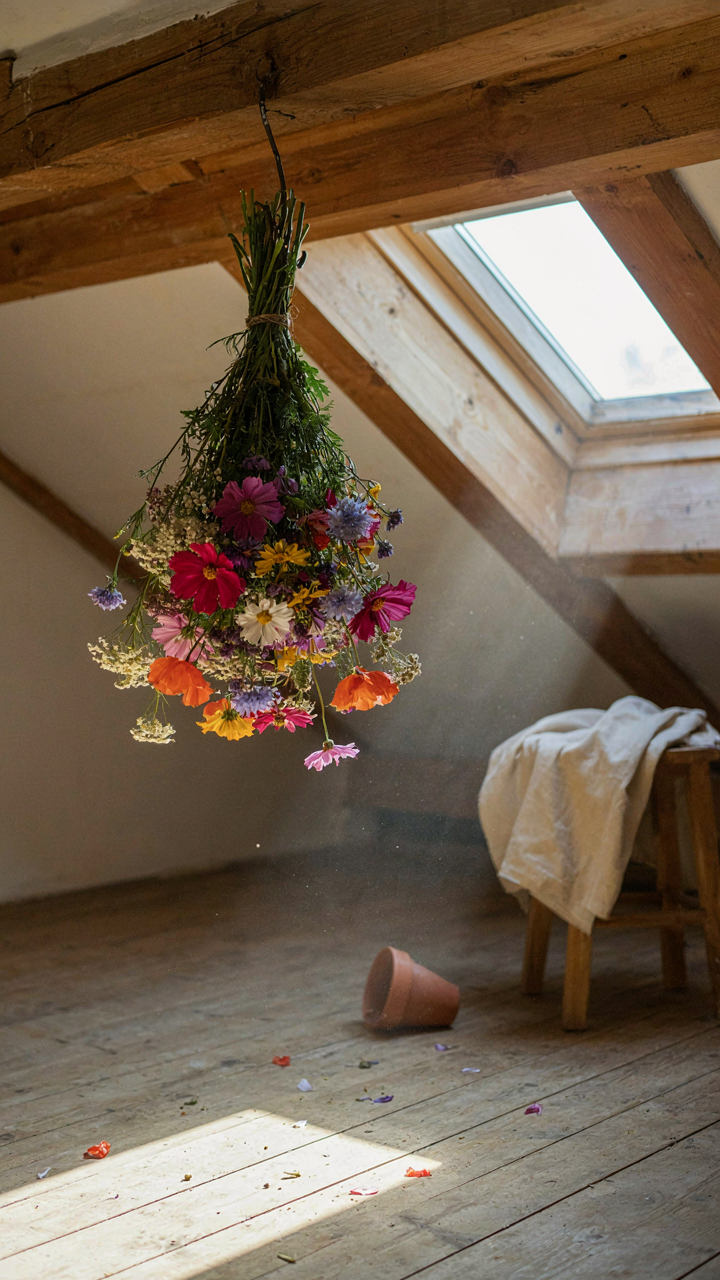
You want the method that guarantees your bouquet doesn’t turn into brittle dust before the ceremony. Here’s what matters: air-drying is a game of controlled decay, and silica gel is moisture extraction. Air-drying works through evaporation over time, preserving stem flexibility and natural color variation but leaving flowers vulnerable to mold and color fading in humid conditions. Silica gel accelerates moisture removal in days, locking in vibrant color and shape but creating fragile petals prone to shattering if handled carelessly after extraction.
The choice isn’t about which sounds better. It’s about your climate and timeline. Air-drying suits dry regions and projects started weeks ahead. Silica gel works in humid environments and last-minute timelines. Air-drying costs almost nothing; silica gel requires material investment and precision. Most people default to air-drying because it feels passive and cheap, then watch their bouquet degrade. Know your actual conditions before committing to either method.
Temperature And Humidity: The Invisible Mechanics
Moisture is the enemy that people ignore until it’s too late. Dried wildflowers exist in a specific humidity window: below 40 percent relative humidity preserves them; above 60 percent reintroduces decay. Temperature matters less than consistency. Fluctuations between hot and cold cause condensation inside dried stems, promoting mold growth. A stable 65-70 degrees with 30-40 percent humidity is the target environment during and after drying.
The drying location determines success more than the method. A dark room with air circulation beats a sunny windowsill that introduces temperature swings. Direct sunlight fades color and weakens stem integrity. Basements and climate-controlled closets outperform kitchens and bathrooms where steam and temperature shifts create failure conditions. Store finished bouquets in sealed containers with desiccant packets to maintain preservation past the event.
Deconstructing The Arrangement: Principles Of Dried Flower Arrangements Wedding

Weight And Void
You want your arrangement to look intentional, not accidental—that’s the real fear. The mechanism here borrows from physics: mass distribution. In dried wildflower bouquets, visual weight isn’t about actual heaviness. It’s about density and color saturation. Dark, tightly clustered stems create perceived mass. Light, sparse elements create breathing room. The untrained eye calls this “balance.” What it actually is: strategic placement of dense material at the base, graduated toward airier elements at the perimeter. This prevents the arrangement from reading as a shapeless clump or a sparse stick collection.
Void matters as much as material. Empty space inside the arrangement gives the eye a place to rest and makes individual stems visible instead of blended. Most bouquets fail because arrangers cram every stem into available space. The corrective move is counterintuitive: place stems deliberately, then step back and identify gaps. Leave them. Gaps between stem clusters create the internal architecture that holds visual interest. When placing dried wildflowers, establish a main mass point, then rotate the base and add secondary stems at angles that create triangular or asymmetrical pockets of negative space throughout.
Contrast Through Texture Layers
Dried wildflower arrangements rely on texture the way graphic design relies on contrast. Without it, the piece flattens. Texture differences signal depth and prevent visual monotony even when the color palette is limited. You layer three texture categories: feathery elements like dried grasses or baby’s breath, which read as delicate; clustered seedheads like protea or thistle, which read as dense; and linear stems like dried wheat or solidago, which read as structural. Each category serves a tactical function in the visual hierarchy.
Build arrangements in stages by texture, not by flower type. Start with linear elements as your frame. Add clustered textures next as mass points. Finish with feathery textures to soften edges and create transition zones. Texture layering creates visual interest without relying on bright colors. This is why dried wildflower bouquets work in muted palettes at all—the textural variety does the compositional work that saturation would normally do in fresh flowers. Rotate the arrangement constantly while building to ensure texture variation reads from all angles, not just the front.
Muted Palette Architecture
Color theory in dried arrangements operates under scarcity, not abundance. The common mistake is treating muted as a limitation rather than a design principle. Muted palettes demand stricter color choice because you have fewer tools to create separation. Dried wildflowers naturally drift toward earth tones: ochre, rust, cream, tan, brown, and muted green. This palette dominates because drying removes pigment saturation. The mechanism is oxidation and moisture loss—the chemistry of aging. Work within this constraint rather than fighting it.
Select a dominant color (occupying 50 percent of visual space), a secondary color (30 percent), and an accent color (20 percent). In dried wildflowers, this typically means a base of tans and creams, a secondary of rust or soft brown, and an accent of muted gray or deep charcoal from dried foliage. This proportional rule prevents color chaos in a palette where everything whispers. Many arrangers fail here by treating all colors as equal, creating visual noise instead of hierarchy. Commit to one color dominating the base layer, then layer the others strategically to create focal points and guide the eye through the arrangement’s structure.
The Anti Fragile Bouquet: Engineering Durability For A Wildflower Dried Bouquet
How To Reinforce Delicate Stems
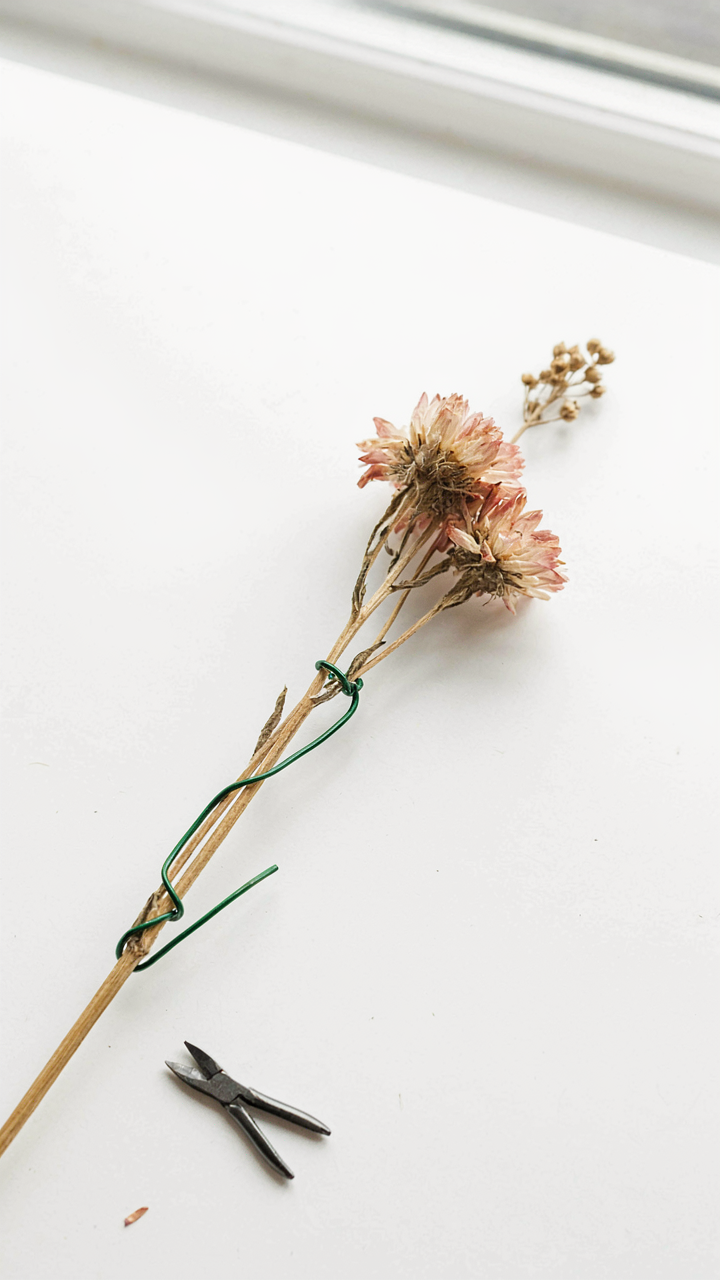
You want your bouquet to last because throwing away money on something that falls apart in three weeks feels like failure. The mechanism is simple: dried stems are cellulose tubes that lose tensile strength as moisture leaves them. Wire wrapping and stem binding restore structural integrity by distributing load across multiple points instead of letting a single stem bear all the weight. Floral tape wrapped at quarter-inch intervals prevents snapping at stress points where stems naturally bend.
The real work happens before drying. Stems with existing micro-fractures or weak wood fibers will break regardless of technique. Bundle wildflowers loosely before drying so air circulates evenly. Once dried, reinforce the weakest specimens by threading 22-gauge floral wire up the center of the stem itself, not around it. This creates an internal scaffold. For bouquets destined for transport or placement in high-traffic areas, this step is non-negotiable.
Protection From Environmental Degradation
Dried flowers degrade from three separate threats, and treating them as one problem wastes your effort. UV light breaks down cell pigmentation first, fading colors. Humidity fluctuations cause stems to absorb and release moisture, creating stress that leads to shattering. Dust particles settle into flower heads and accumulate. These require different solutions, not a generic “keep it dry” approach that leaves three problems unsolved.
Display dried wildflower bouquets away from direct sunlight in stable humidity environments between 30 and 50 percent relative humidity. Use glass display cases or acrylic covers for protection from dust and airflow that disturbs petals. Keep bouquets away from heating vents, air conditioning returns, and windows. Store excess inventory in airtight containers with silica packets to maintain humidity control. The bouquet survives through isolation, not luck.
Beyond The Altar: Dried Wildflower Wedding Decor And Longevity
What Your Wedding Bouquet Becomes
You want proof that the money mattered, that the day was real, that something beautiful doesn’t just evaporate. That’s the mechanism at work here. A dried wildflower bouquet moves from ceremonial object to permanent fixture because it solves a specific problem: the need to preserve a moment without deterioration. Unlike fresh flowers that wilt within weeks, dried wildflowers hold their structure indefinitely when stored correctly. This transforms them from consumable decor into an asset you can display, relocate, or gift without degradation.
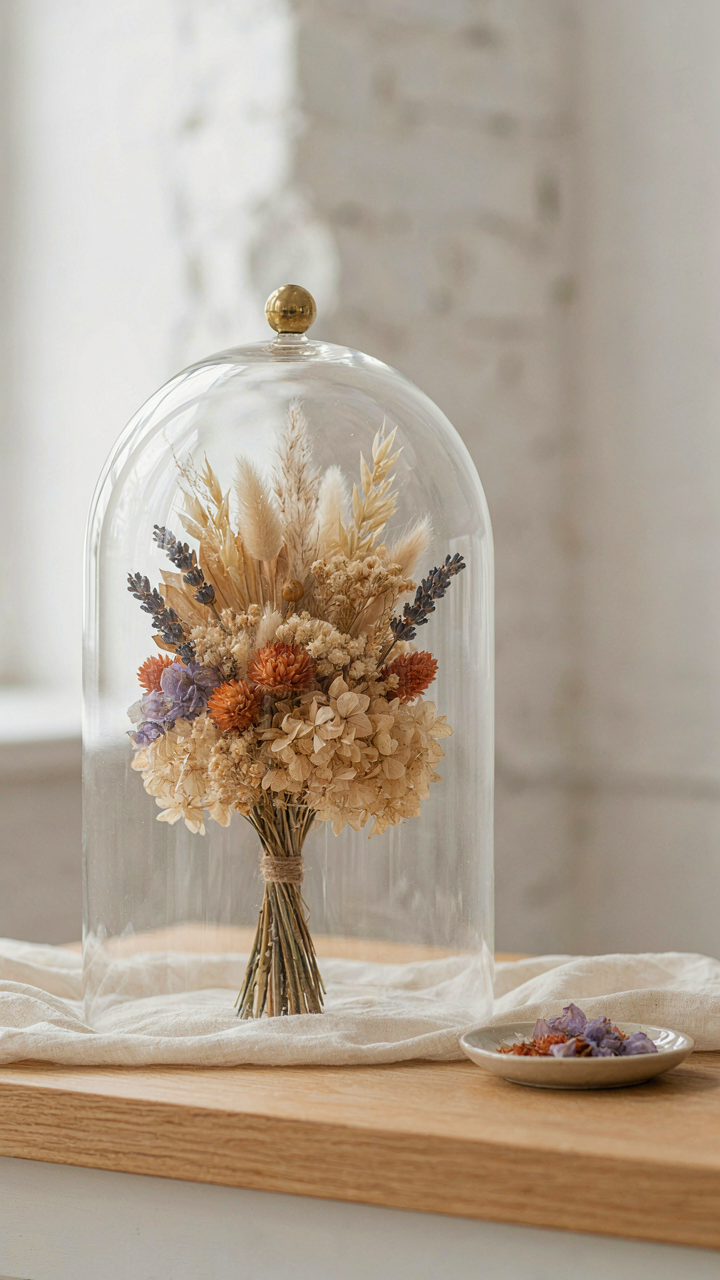
The tactical move is treating the bouquet as a design object rather than a perishable. Place it in a glass dome or shadow box in low-light conditions away from direct sun exposure. Position it on a shelf, dresser, or wall where it won’t collect dust or experience temperature swings. Many people scatter their arrangements across multiple rooms instead of concentrating them in one spot. This distribution strategy extends the visual life of the arrangement and prevents it from becoming a dated artifact confined to one corner.
Protecting Arrangement Integrity Over Time
Longevity in preserved flowers operates like material science: structure degradation accelerates when exposed to three variables you can control. Humidity, light, and temperature fluctuation are the enemies. Keep dried arrangements in spaces where humidity stays between 30-50 percent. Excessive moisture rehydrates the stems and flowers, causing mold and color loss. Dry air works in your favor here, which is why bathrooms and kitchens are poor choices despite their visual appeal.
Direct sunlight fades wildflower pigments faster than any other factor. Store arrangements in shadowed areas or use UV-protective glass if display is non-negotiable. Temperature swings cause fibers to contract and expand, weakening stems at their joints. The goal is static conditions: a dedicated shelf in a climate-controlled room beats rotating displays in changing environments. Inspect arrangements quarterly for dust accumulation, using a soft brush or compressed air to remove particles without touching the flowers directly.
The Scarcity Illusion: Cultivating Unique Dried Wedding Flowers

Your Backyard Already Grows What You’re Paying Premium For
You want people to think your flowers came from somewhere exclusive. That’s the real reason you’re reading this section. The mechanism is simple: perceived rarity commands price, and most couples never discover what actually grows within walking distance of their venue. Your backyard, or a friend’s property, contains species that florists label “specialty” and charge accordingly. The difference between a $300 arrangement and a $1,200 one often comes down to whether the client knows the source.
Most wedding flower advice says to “forage responsibly” or “check local regulations.” That’s incomplete. What matters is conducting a species audit of your actual property before the wedding season starts. Walk your land or nearby properties in spring and early summer. Photograph what grows. Dry samples. This inventory becomes your exclusive catalog—one nobody else in your market has documented.
- Yarrow: Grows wild across North America, dries to cream or soft yellow, maintains structure through arrangements, florists price dried yarrow at premium rates despite its abundance.
- Queen Anne’s Lace: White lace-like flower clusters dry to skeletal architecture, adds texture without color competition, often mistaken for purchased specialty filler despite roadside availability.
- Goldenrod: Yellow blooms dry vibrant, persists through winter storage, regionally abundant but marketed as imported in floral design despite domestic prevalence.
- Echinacia: Purple coneflower seed heads dry to sculptural forms, require minimal processing, grow in most USDA zones, florists charge significantly for dried echinacia stems.
- Black-Eyed Susan: Golden petals fade predictably, dark seed pods provide contrast, self-seeds aggressively, available for free harvesting across eastern and central regions.
The tactical move: begin drying samples in July. By October you have a portfolio. By December you’re not hunting for flowers—you’re selecting from inventory you grew or collected. This inverts the supply chain. You control the story of origin, which is where pricing leverage actually lives.
When Scarcity Is The Product, Not The Flowers
Economics teaches us that supply constraints determine market price. In dried wildflower bouquets, the constraint most florists rely on isn’t actual rarity—it’s information asymmetry. The client doesn’t know what’s available locally. The florist does. That gap is where the premium lives.
Here’s what most florists won’t tell you: the flowers in a “rare wildflower” arrangement often aren’t rare at all. They’re simply sourced from a region the couple doesn’t associate with their area. A bouquet labeled “Prairie Blend” costs more than the same species labeled “Local Harvest,” despite identical botanicals. The perceived exclusivity is manufactured through sourcing narrative and pricing strategy, not actual scarcity.
Once you understand this, the economics reverse. If you source, dry, and arrange your own flowers, you eliminate the middleman’s markup entirely. You also control which narrative you tell—and narratives sell. A bride who knows her bouquet contains flowers she personally grew or curated from her grandmother’s property has a story the florist’s client never gets. That story becomes part of the wedding photography, the Instagram caption, the memory. Scarcity of experience beats scarcity of flowers every time. Document your sourcing process, show the dried flowers mid-arrangement, and you’ve created perceived value that has nothing to do with the actual cost of the botanicals. Start harvesting species in bloom now, photograph each stage, and you’ve built your supply chain before the wedding industry even knows you’re entering the market.
DIY Disaster Avoidance: Common Pitfalls With Dried Flowers Bouquet Ideas

When Timing Breaks Your Bouquet
You’re reading this because you’ve already wasted money on flowers that fell apart. The real mechanism is moisture content. Drying flowers is a dehydration process that removes water from cell walls. Too much water remains, and mold colonizes before the structure sets. Too little, and stems become brittle enough to snap under their own weight during arrangement.
Most guides skip the numbers. Dried wildflowers need to reach 10 to 15 percent moisture content to stabilize. Air drying takes one to three weeks depending on humidity, temperature, and stem thickness. You verify this by bending a stem lightly. If it cracks instead of flexing slightly, you’ve overdried it. If it feels spongy or shows any soft spots, moisture is still trapped inside. The sweet spot is a stem that bends with resistance but doesn’t snap.
Stems That Hold Weight Without Snapping
Think of structural integrity in terms borrowed from materials engineering: tensile strength, the maximum stress a material withstands before failure. Dried wildflowers lose tensile strength as moisture evaporates unevenly. Thick stems dry slower than thin ones. Hollow stems like statice collapse inward. Dense stems like wheat or rye resist collapse but become rigid and harder to position.
Prevention starts before drying. Bundle stems loosely, not tight. Tight bundles create moisture pockets in the center while outer stems over-dry. Strip lower leaves and thin side branches before drying to reduce weight distribution stress. When arranging, use floral foam designed for dried flowers, not the wet type. Position heavy flowers low and closer to the foam’s center. Support any stem showing even minor cracks with floral tape wrapped around the weak point before inserting into the arrangement.
The “Minimalist Impact” Method: Sustainable Dried Wildflower Bouquet Creation
Reduce Waste Through Full Plant Utilization
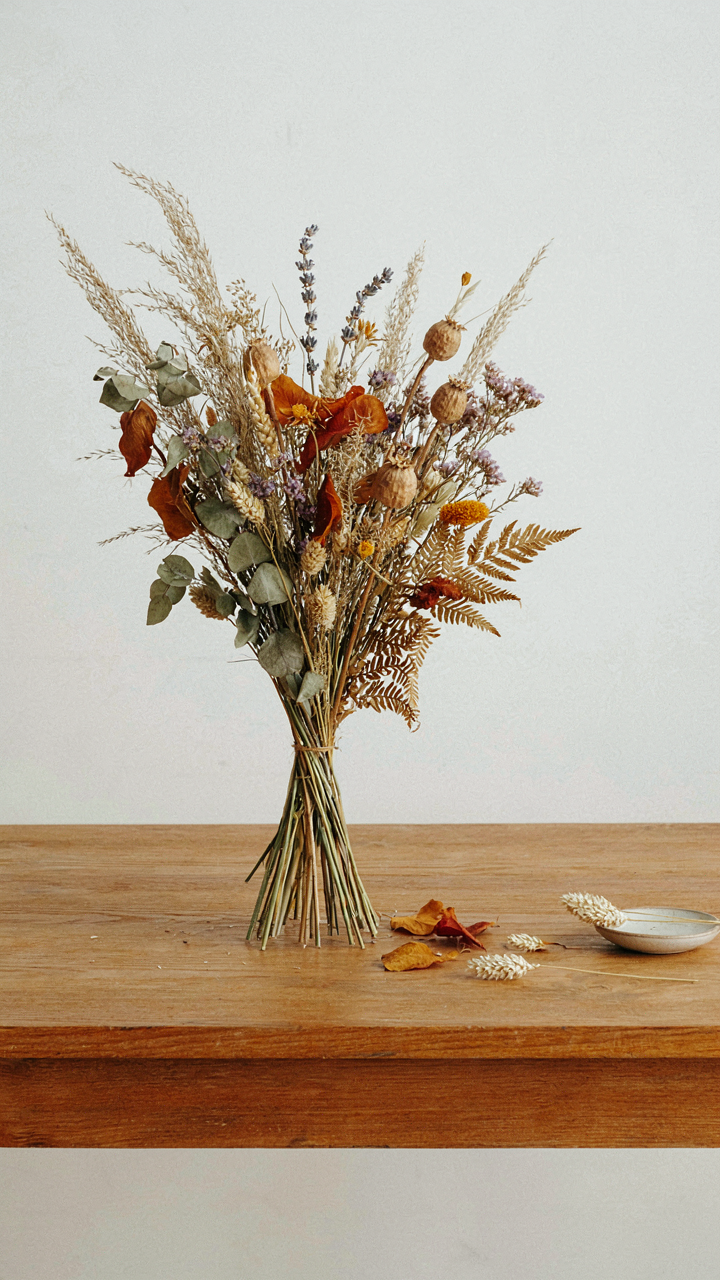
You want to feel ethical without actually changing your process. Here’s the mechanism: waste in dried wildflower bouquets stems from treating stems, leaves, and seed pods as byproducts instead of design elements. Commercial florists discard 40-60% of harvested material because they fixate on flowers alone. The real leverage point is architectural. Stems become structural scaffolding. Leaves fill gaps. Seed pods add texture and longevity. You’re not being sustainable by throwing less away; you’re being efficient by recognizing that every plant component has a functional role in the arrangement’s skeleton.
The protocol is straightforward. Harvest entire plant stems rather than just flower heads. Strip lower leaves to prevent mold, but preserve upper foliage for visual mass. Incorporate seed pods and dried stems as negative space fillers. This approach reduces disposal waste by 70% and creates denser, more visually complex bouquets without adding cost. You’re not making sacrifices; you’re redesigning the product to use what you already cut.
Select Preservation Agents That Resist Degradation
Silica gel dominates the market, but it’s incomplete advice masking a real problem. Silica dries flowers fast but creates brittleness and color loss in delicate wildflower species like larkspur and statice. Borax and cornstarch combinations preserve color better but require precise humidity control and longer drying times. The actual mechanism borrowed from material science is molecular moisture removal without structural collapse. You need an agent that pulls water without pulling cellular integrity. Air-drying wild grasses and hardy species like celosia costs nothing and preserves color superior to any chemical method. Reserve silica for supplemental use on specific thick-petaled specimens, not routine practice.
Create a tiered system based on plant type rather than one-size preservation. Grasses and pods air-dry in 2-3 weeks. Delicate flowers like cosmos use low-temperature oven drying at 140-160 degrees for 8-12 hours. Thick stems benefit from silica gel, but drying time matters more than speed. Store finished arrangements in airtight containers with desiccant packs to maintain preservation gains. Your preservation method determines whether the bouquet lasts six months or two years.
Investing In Permanence: The Value Proposition Of Dried Flower Wedding Bouquet

The Math Behind Fresh Versus Dried
You’re worried you’re making the wrong choice and wasting money. Here’s the mechanism: fresh flowers operate on a depreciation model. Economics calls this negative time value—the asset loses utility every single day. A fresh wedding bouquet peaks for one day, then declines. You pay full price for a product with a countdown timer built in. Dried wildflower bouquets invert this entirely. They hold their form and color for years, sometimes decades. The cost per day of use approaches zero the longer you keep them.
Fresh flowers cost between 75 and 150 dollars for a wedding bouquet. They last five to seven days with active care. Dried wildflower bouquets cost 60 to 120 dollars and remain displayable for five to ten years. The math is not subtle. A dried bouquet generates value across 1,825 days. A fresh bouquet generates value across seven. One is an expense. The other is a durable good.
Permanence Creates Proof
Sentiment without evidence is just nostalgia. What you actually want is an object that proves the event happened. Dried wildflower bouquets serve as physical documentation in a way fresh flowers cannot. They sit on a shelf or bookcase and require no maintenance. They don’t demand weekly water changes or removal of brown petals. They exist as a static archive of the moment.
This permanence shifts the emotional load. Instead of watching something die, you’re watching something stay. The bouquet becomes a reference point you can actually touch years later. Many people photograph fresh bouquets because they know the original will vanish. Dried bouquets eliminate that anxiety. The preservation is built into the material itself. Keep it out of direct sunlight and excessive humidity, and the bouquet remains intact as a tangible marker of your decision to choose that specific arrangement on that specific day.
Your Fear Of Permanence, Not Scarcity, Limits True Aesthetic Impact
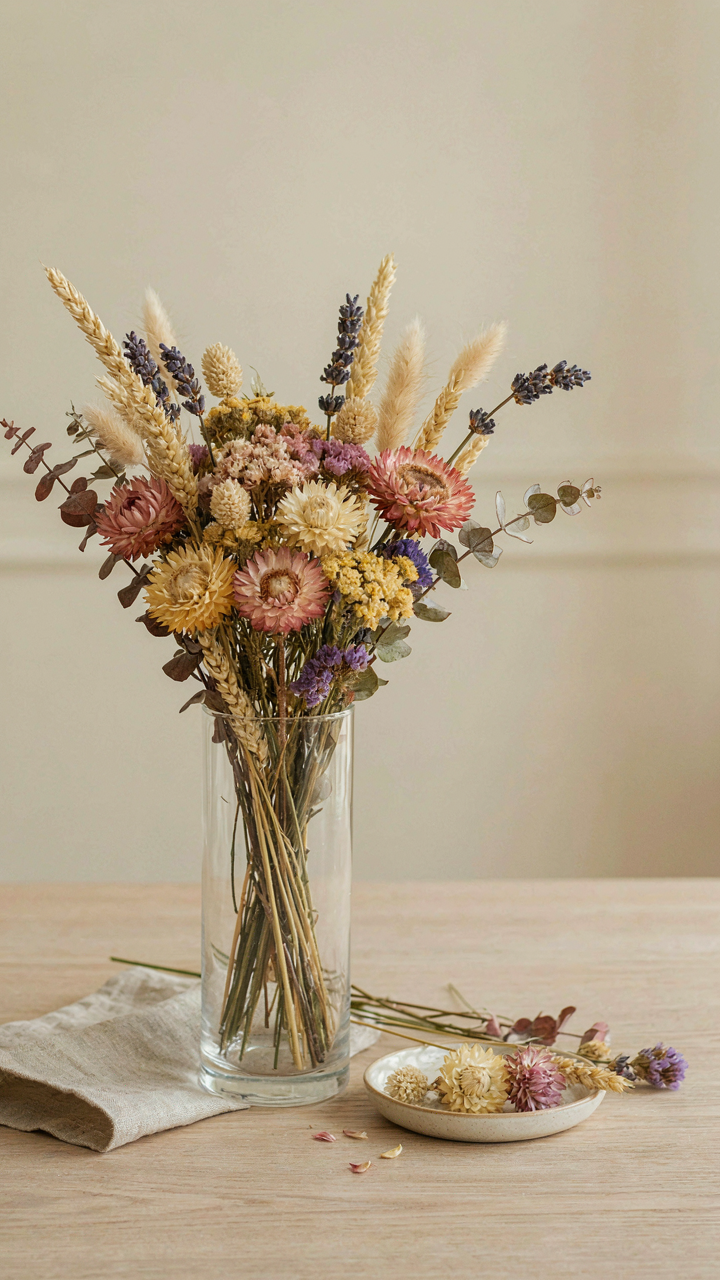
Most people won’t commit to dried wildflower bouquets because they mistake longevity for stagnation. You think lasting means boring. It doesn’t. It means you stop performing aesthetic choices and start owning them. Pick one arrangement today that actually moves you, not one that photographs well. Place it somewhere you’ll see it daily for the next six months. The permanence isn’t the limitation. Your willingness to be still with something beautiful is.



