

The Illusion Of More Storage: Why Your “Solution” Creates More Problems
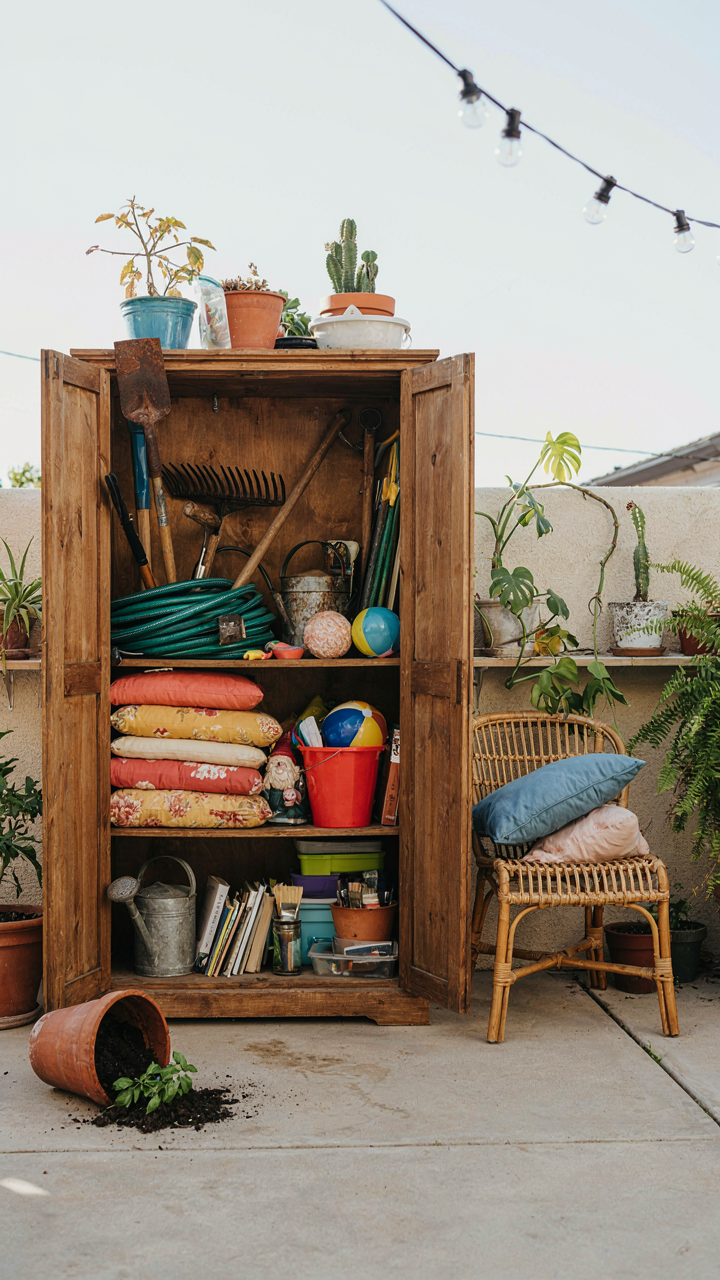
You’re Building For Yesterday’s Problem
You want storage because you think it solves clutter. It doesn’t. Borrowing from systems theory, storage is a buffer—and buffers don’t eliminate waste, they hide it. You buy a bench box and suddenly you’re storing things you forgot you owned. The storage didn’t solve the problem. It postponed the moment you’d face what you actually need versus what you’re keeping out of obligation or fear of waste.
Most people solve this backwards. They accumulate stuff first, then panic-buy containers to hide it. The container becomes proof they’re being organized. But organization isn’t storage capacity. It’s decision-making. A full shed with labeled bins isn’t organized. It’s denial with better optics. You’re not getting ahead by adding more boxes to your patio.
The Real Price Of Overcapacity
The advice says buy storage and your life improves. That’s incomplete. Storage creates maintenance debt. A large wooden storage cabinet holds more, yes, but it also requires weather treatment every eighteen months, inspections for rot, and space allocation you can’t reclaim. A metal locker oxidizes if not sealed. Plastic degrades in UV. Every material has a cost hidden inside the purchase price.
Your actual expense compounds: the initial investment, ongoing maintenance, the mental load of managing contents you rarely touch, and the real estate you surrender. A four-by-three foot storage unit takes four-by-three feet from your patio permanently. That’s not neutral. That’s opportunity cost in square footage. Before adding storage, audit what you actually use on the patio in any given month. Then build only for that.
The “Declutter Before You Design” Protocol: A Prerequisite For True Patio Bliss

The Three Pile System That Actually Works
You want to feel in control of your outdoor space without admitting you’ve let it turn into a dumping ground. Here’s the mechanism: you can’t design storage for stuff you haven’t defined. Borrow from inventory management. You sort everything into Keep, Donate, and Trash. Keep holds items you use within a calendar year. Donate goes unused but functional. Trash is broken or weather-damaged beyond repair. Most people skip this and buy storage containers for junk they’ll never touch. The containers then become invisible because they’re full of decisions you never made.
Work through one patio zone at a time. Pull everything out, sort ruthlessly, then measure what actually stays. The real estate you need for storage shrinks by 40 to 60 percent once you eliminate what you’re keeping out of guilt or vague future plans. Only after sorting do you know whether you need a 4×8 shed or a weatherproof deck box. Without this step, you’re guessing at container sizes and wasting money on oversized solutions.
Rotation Prevents The Perpetual Accumulation Trap
Seasonal rotation is borrowed from warehouse logistics, where inventory turnover prevents dead stock from building up. Apply this to patio storage: summer items hibernate in winter, winter gear sleeps in summer. This physical swap forces you to confront what you haven’t used. If a snow shovel never moves off the shelf during winter, you know it stays or goes before spring arrives.
Set rotation dates. Spring equinox means summer furniture comes out and winter tools get sealed away. Fall equinox reverses it. Mark these on a calendar and stick to them. This isn’t about being rigid. It’s about breaking the pattern where storage becomes a black hole that only gets deeper each season. Every rotation is a checkpoint to audit what’s actually earning its shelf space.
Beyond The Box: Integrating Outdoor Storage Ideas Into Functional Aesthetics

Design Principles For Seamless Garden Storage
You want your patio to look intentional, not like you’re storing overflow from a garage sale. Here’s what actually matters: storage design follows the same principle as negative space in architecture. You’re not adding objects. You’re creating visual rhythm by placing storage where it breaks up empty wall or floor areas without screaming “I have stuff to hide.”
The real mechanism is proportion. Storage that matches your patio’s existing lines—fence height, deck railing, planter dimensions—disappears into the landscape. A six-foot garden box against a six-foot fence looks planned. That same box against an eight-foot wall looks cramped and temporary. Scale your storage to existing vertical and horizontal planes first. Everything else follows from this single decision.
Blending Storage With Existing Patio Elements
Most advice tells you to “match materials,” which is lazy thinking. The actual move is structural integration. Your storage should anchor to or extend from existing patio bones, not sit as a separate object. A bench with built-in storage under a pergola post isn’t decoration placed near a structure. It becomes part of the structure’s load-bearing visual logic.
Wood storage positioned along the same line as deck decking creates continuity. Metal storage echoes fence framing. Seat height storage aligns with patio seating height, making it feel like a designed system rather than scattered solutions. The protocol is simple: identify three existing patio elements, then design storage that repeats at least one of their defining measurements or materials. Install nothing until you’ve verified this alignment on site.
The “Efficiency Engineering” Method: Maximizing Space With Purpose Built Units

Storage Flow Follows Task Sequence
You want to feel organized without actually reorganizing your habits. That’s the real problem here. Military logistics proved this decades ago: movement cost more than storage, so they engineered access patterns first, then built containers around them. Apply this to patio storage. Your tools and seasonal items move along a path, not randomly. Map that path. Identify bottlenecks. Build storage at decision points, not at the perimeter.
Most people store things near where they’ll use them but ignore what happens between storage and use. A shed ten steps away from your garden bed means you grab tools fewer times than one fifty steps away. Fewer trips means tools stay accessible and you actually use them. Design your unit’s location based on traffic flow, not aesthetics or remaining space. The container serves the movement, never the reverse.
Access Hierarchy By Actual Frequency
Everything you own has a use frequency: daily, weekly, seasonal, or never. Conventional wisdom says “store like items together.” Wrong. That’s organized chaos. Store by use frequency instead. Daily items go at eye level and arm’s reach. Weekly items live one step up or down. Seasonal gear occupies deep storage. Rarely used items go to the back corners where retrieval time matters less.
This sounds logical until you apply it. Most people store their most-used items in the hardest places to reach because they’re “saving space” for the rest. You end up reaching over clutter to grab what you actually use. Invert this. Premium access real estate goes to the 20 percent of items you touch 80 percent of the time. Measure reach depth in seconds, not square feet. If an item takes longer than five seconds to retrieve, you’ve already lost the efficiency game.
The Unconventional Arsenal: Side Yard And Roof Storage As Untapped Real Estate

The Side Yard Nobody Uses
You want the storage solution nobody sees because invisibility feels like wealth. Here’s the real mechanism: most people treat side yards as dead space between property lines. In real estate economics, dead space has zero leverage until you apply vertical density to it. Your side yard is a storage corridor most homeowners ignore entirely.
Side yards work because they’re already enclosed. A horizontal run between your house and fence becomes secure storage the moment you add fencing depth or a lean-to structure. Weatherproof cabinets, horizontal tool racks, or stacked storage boxes fit perpendicular to your home’s footprint without consuming backyard square footage. The mechanism is simple: you’re converting wasted perimeter into functional depth.
Overhead Systems That Actually Work
Roof storage sounds appealing until you realize you’re fighting gravity and weather exposure. The real play is soffit-mounted storage and covered eave systems that sit under the roof line, not above it. Think of this like load-bearing architecture—distributing weight across existing structure instead of fighting it.
Bracket-mounted systems anchored to your house fascia or a pergola frame store seasonal items without requiring roof access or load calculations. Weatherproof storage bags hung from overhead beams, hooks bolted into soffit framing, or rigid shelving units mounted under eaves keep gear dry and accessible. Install these systems by securing bolts directly into rim board framing, not drywall—this is the single load-bearing detail that prevents failure.
Beyond The Generic Shed: Crafting A Backyard Shed As A Designed Element
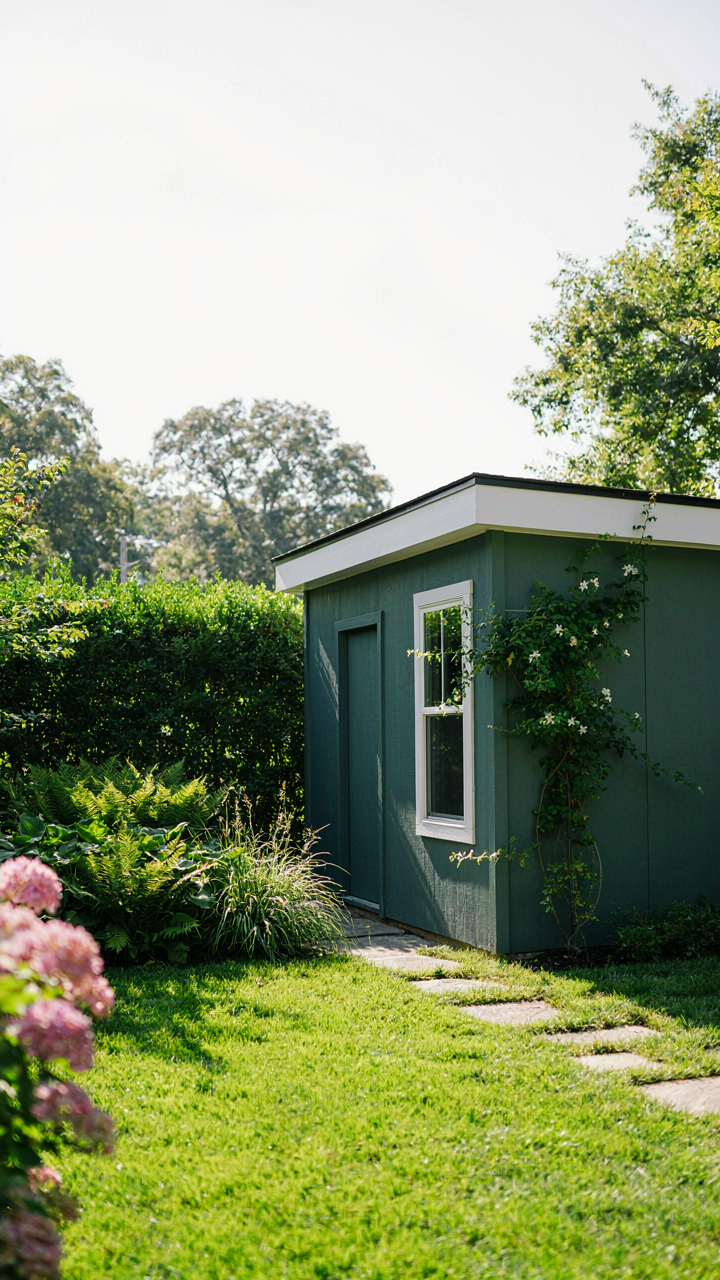
Making Your Shed Disappear Into The Landscape
You want your shed to signal you have taste. That’s the real reason this matters. The mechanism is simple: your shed either competes with your garden’s visual hierarchy or reinforces it. Most people buy a prefab box, drop it in a corner, and call it done. Wrong move. Your shed should operate like a supporting actor, not demand the stage.
Shed placement and material selection determine whether it anchors or disrupts your outdoor space. Position it at a garden’s edge or behind a tree line, never center stage. Material choice matters tactically: wood weathers into your landscape over time, while metal reads as industrial and stays visually loud. Match your shed’s color to either your home’s trim or the garden’s dominant plantings. The goal is integration, not concealment.
Systems That Make Daily Retrieval Friction Free
Logistics beats aesthetics every time. A beautiful shed that wastes thirty seconds of your day finding pruning shears is a failed shed. Interior organization follows the same principle as kitchen design: frequency and function determine placement. Items you use weekly go at chest height on accessible wall systems. Seasonal tools go overhead or in locked cabinets. Group by task, not by tool type.
Wall-mounted pegboards, French cleats, and labeled bins create the retrieval protocol. Install lighting on a battery sensor so you don’t fumble in darkness. Heavy items like bags of soil go on ground-level shelves you can slide rather than lift. The friction point most people miss is the transition from outside tool use back to storage. Before designing interiors, walk your actual workflow: grab tool, use it, return it. Now build the system backward from that sequence.
The “Built In Advantage”: Outdoor Bench With Storage & Seating As Dual Purpose Powerhouses

How Seating Becomes Storage Infrastructure
You want the patio to look intentional without looking crammed. The real mechanism here borrows from architecture’s load-bearing principle: instead of stacking functions on top of each other, you embed storage into the structural element itself. A bench isn’t seating that happens to have a box underneath. It’s a structural frame designed to hold weight above and contain volume below as one integrated system.
The common advice is to just buy a storage bench and call it done. Wrong. That misses the integration step. Real built-in advantage means the bench frame, the seat height, and the storage cavity work together as a single load path. Seat height dictates interior dimensions. Frame depth determines how much you actually store. The lid mechanism either fails under real use or becomes the friction point nobody plans for.
- Hinged Lid Placement: Position the hinge at the back edge so the lid opens toward the house. This prevents guests from bumping their heads and keeps the interior protected from wind-driven rain.
- Seat Height Alignment: Match your bench seat height to your existing patio table chairs, typically 16-18 inches. Inconsistent heights break the spatial flow and signal poor planning.
- Internal Partition Design: Divide the storage cavity with crossbeams to prevent items from shifting during use. Unsupported bottoms sag under seasonal weight changes.
- Drainage Ports: Install small weep holes in the cavity floor corners. Trapped moisture rots wood and creates mold in enclosed spaces that see seasonal temperature swings.
- Threshold Gasket: Use rubber or silicone weatherstripping along the lid edge where it meets the frame. This stops water infiltration and keeps pests out during months of non-use.
The bench-plus-storage model only wins if the frame can handle human weight plus environmental stress. A person sitting on the edge creates point load pressure. Add seasonal wood expansion and you get frame racking that loosens joints within two seasons. The storage component must support the seating component without compromise.
Material Selection For Real Durability
Wood weathers, composite resists it, and metal corrodes if you spec it wrong. Everyone knows this. What they miss is that material choice doesn’t just affect how it looks in year three. It determines your maintenance protocol and the actual usable lifespan before replacement becomes cheaper than repair.
Pressure-treated lumber costs less upfront but requires annual sealing to avoid checking and splitting. Cedar and redwood resist rot naturally but fade to gray without UV protection. Composite materials don’t rot but can stain permanently and develop mold in shaded areas. Steel frames need powder coating to avoid rust, and aluminum conducts temperature changes that warp attached wood panels. The aesthetic integration people chase requires honest material pairing: if the frame is one material, the seat deck and interior surfaces must account for differential movement and moisture absorption rates.
The real action step is this. Before purchasing anything, measure your patio’s sun exposure in hours per day and check your local humidity levels. Then pick one material for the structural frame and one for the seating surface that can handle those specific conditions without active maintenance more than twice yearly. Incompatible materials create movement, joints fail, and your “beautiful storage solution” becomes a splintered eyesore in thirty-six months.
The Micro Habit Loop: Maintaining Order Through Daily Rituals, Not Herculean Efforts

The Reset Routine That Actually Sticks
You want a patio that looks intentional without spending weekends reorganizing. Here’s what actually matters: the reset routine is borrowed from operations management, where “zero-state recovery” describes returning a system to baseline after each cycle. Your patio storage works the same way. Most people treat tidying as a one-time event. That fails because entropy compounds. A 90-second reset each evening, done consistently, costs far less effort than monthly purges.
The mechanism is friction reduction through time-binding. Pick a specific moment when daylight fails or dinner ends. That becomes your trigger. Walk the patio. Return cushions to their bin. Stack plates in the basket. Coil hoses. Close storage lids. You’re not perfecting anything. You’re resetting to baseline so tomorrow starts clean. Three weeks in, this becomes automatic. Your brain stops treating it as a chore and starts treating it as closure, like brushing teeth.
The Two Minute Rule For Immediate Return
Common advice says “put things away later.” That’s the wrong heuristic. The real cost isn’t the action itself but the decision tax of remembering where it goes. When you use a tool on the patio, the window to return it closes fast. After 20 minutes, your attention has shifted. The item sits for days, breeding resentment. Instead, implement the two-minute rule from productivity: if it takes under two minutes, do it now. Returning pruners to their hook, moving a pot back to the shelf, hanging the watering can. Two minutes, executed immediately, kills the accumulation problem at the source.
The payoff compounds invisibly. You never develop a “to-organize” pile. You never face decision fatigue about where six orphaned items belong. Your storage capacity stabilizes because nothing languishes. The patio remains navigationally clean without effort spikes. Set a phone timer if needed. The moment you finish using something, you have 120 seconds to return it to its designated storage location before you move on.
The Obstacle Isn’t Finding Space; It’s Confronting Your Attachment To Things You Rarely Use

You don’t have a storage problem. You have a decision problem. Before you buy another bin or reorganize your shed, walk outside and touch three items you haven’t used in six months. Ask yourself why they’re still there. Most patio storage fails because people optimize systems for stuff they should’ve thrown away. Today, pick one category—old planters, broken tools, duplicate equipment—and remove it entirely. You’ll gain more space than any organizational hack could ever give you. Real storage freedom starts when you stop keeping things out of guilt.



