

Beyond The Instagram Aesthetic: What Zen Really Means For Your Zen Garden Design
Stone, Water, And The Reason You’re Reading This
You want your garden to look like the ones in design magazines. That’s not a flaw—it’s the trap. Zen garden water features borrowed their logic from systems thinking in Japanese Buddhism: every element serves a function beyond decoration, just like every component in a machine serves the whole. Most people copy the visual surface and miss the operational structure underneath. The water isn’t there to be pretty. It’s there to move something—air, sound, attention, energy through space. Without understanding that mechanism, you get a pond that sits dead in your yard.
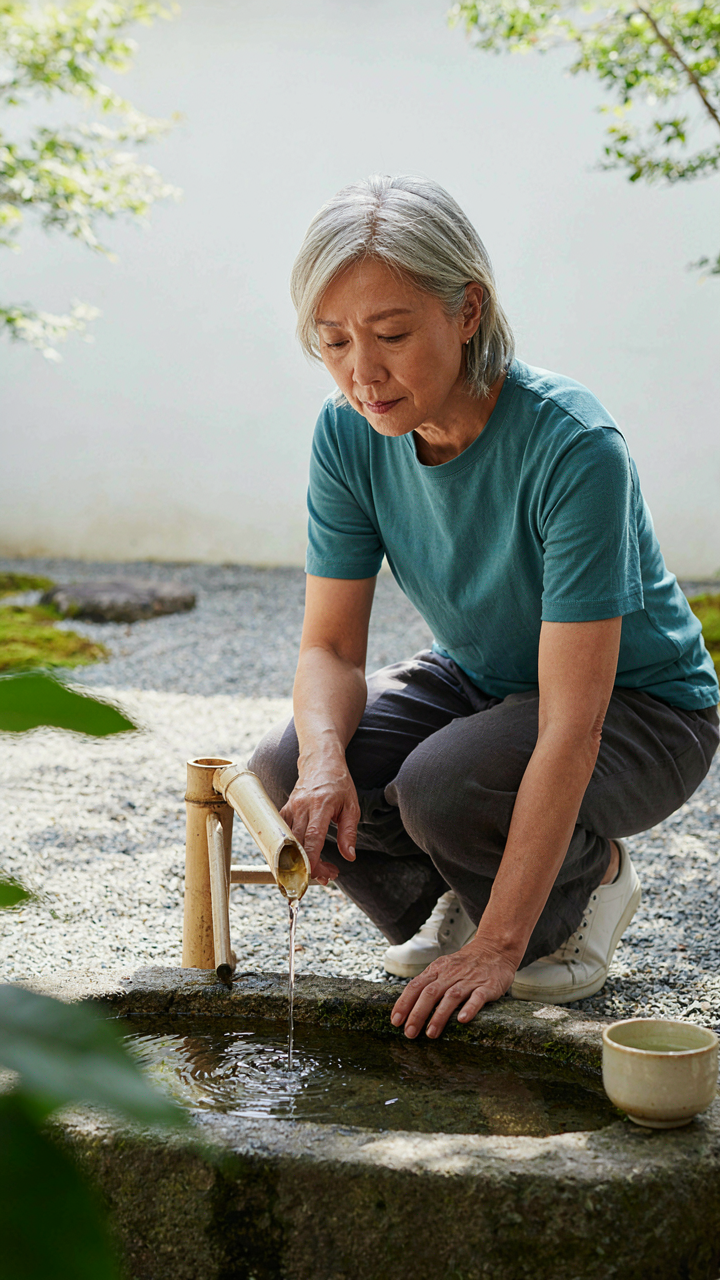
The Japanese courtyard garden tradition evolved across centuries with deliberate constraints. Water features weren’t added for atmosphere. They controlled sight lines, created acoustic boundaries, and staged the viewer’s movement through space like a film director stages a shot. When you place a tsukubai (a low stone basin fed by bamboo spout) in a garden, you’re not installing decoration—you’re forcing a gesture. The visitor bends. Their perspective shifts. Their pace slows. That’s the design working. Every element in authentic Zen garden water design operates as a behavioral instruction, not a mood piece.
Function Dressed As Simplicity
The common advice says: “Keep it minimal and balanced.” That’s incomplete. Zen garden water features work through specific mechanical principles, not vague aesthetics. A water basin doesn’t sit in a garden because minimalism is fashionable. It sits where it interrupts a path, where the sound of water falling forces you to pause, where the stone’s placement creates a moment of necessary attention. The mechanism is interruption. You’re designing a system that breaks the viewer’s default autopilot and resets their awareness.
Start by mapping what you actually want the water to do: Should it create a focal point? Direct foot traffic? Generate sound that masks external noise? Reflect light at a certain hour? Each answer changes where the water goes and what form it takes. A shallowly recirculating stream functions differently than a still basin, which functions differently than a waterfall. Don’t choose based on what looks right. Choose based on the specific behavioral or sensory outcome you need the water to produce in that space.
The Unseen Forces: Applying Fluid Dynamics To Your Zen Garden Waterfall

How Water Actually Moves Through Your Feature
You want your waterfall to look effortless, which is exactly why you’ll mess it up if you don’t understand velocity. Physics calls it flow rate: the volume of water passing through a point per unit time. In zen garden water features, velocity determines everything—whether your cascade whispers or roars, whether it sheets smooth or breaks into chaotic spray. Most designers ignore this and just point a pump at a rock. That’s how you get a feature that sounds like a toilet running.
Water velocity depends on three inputs: pump flow rate in gallons per minute, the height of your drop, and the width of your spillway edge. A 1-inch-wide opening with 500 GPM creates violent, aerated flow. The same 500 GPM spread across 18 inches produces a thin, silent sheet. The sound signature you hear isn’t accidental—it’s the direct result of how fast water hits the lower pool. Adjust spillway width first. Pump flow rate second. Everything else follows from those two decisions.
Gravity And Surface Tension Shape What You See
Surface tension is the real architect of cascade form, not gravity alone. Gravity pulls water down, yes, but surface tension determines whether that water clings to stone or releases into droplets. This is the mechanism Japanese garden designers understood through centuries of iteration, not through physics textbooks. A smooth stone face with high water velocity breaks surface tension early, creating spray. A textured or slightly porous surface allows water to grip longer, creating laminar flow—that clean, unbroken sheet you actually want.
Your stone selection matters more than your pump selection. Basalt and slate shed water cleanly because their surfaces are dense and naturally smooth when wet. Granite, especially lighter varieties, absorbs water slightly and creates drag that disrupts flow. The angle of your spillway edge—whether it’s sharp, rounded, or beveled—directly controls where water releases from the stone. A beveled edge at 30 degrees creates the cleanest sheet. Test this with your hand first: run water over your stone choice before installation and observe where it naturally separates.
The 3 Step Anti Fragile Zen Fountain Installation Protocol

Where Your Fountain Actually Lives
You want this to look effortless, which is exactly why most people fail. The real motive here is avoiding the visible evidence of poor planning when your fountain breaks mid-season. Borrowing from systems engineering, a Zen fountain installation follows the principle of “single point of failure” elimination. Most gardeners treat site selection as aesthetic choice. It’s not. It’s infrastructure.
Water always finds the lowest point and stays there. Drainage determines lifespan more than any other variable. Choose elevated terrain with natural slope, never a depression where water pools around the base. Proximity to trees matters less than soil composition. Compacted clay around a fountain accelerates frost heave in winter climates, cracking basins and breaking pump housings. Sandy loam drains predictably. Clay requires intervention. Test your ground before you commit money or time.
Materials That Don’t Surrender
The conventional advice says natural stone lasts forever. False. Freeze-thaw cycles destroy porous stone within five years in cold climates. Granite and slate resist breakdown better than limestone or sandstone because their mineral structure resists water penetration. For pumps and recirculation systems, ignore bronze or copper. They corrode in mineral-heavy water. Cast iron rusts. Stainless steel holds. Ceramic basins crack under thermal stress from temperature swings.
The mechanism is simple: nonporous materials survive because water cannot enter them. The pump selection determines everything else. Direct-drive submersible pumps fail when sediment clogs intake screens. Regenerative turbine pumps handle debris and run longer. Specify a flow rate lower than maximum output to reduce wear. Install a removable strainer basket before the pump intake. Maintenance becomes predictable rather than reactive when you choose materials that resist the environment, not materials that look good in a photograph.
Japanese Water Feature Deception: Why Most DIY Fails

What Everyone Gets Wrong About Water Movement
You want the aesthetic without the engineering knowledge because admitting you need help feels like failure. The mechanism is this: most DIY builders treat water features as static art objects, not hydraulic systems. They copy the visual form of a tsukubai or shishi odoshi without understanding the water pressure, flow rate, and gravity vectors that make them function. A feature that looks correct but moves water wrong degrades in weeks, not years.
Japanese water features operate on specific hydraulic principles borrowed from civil engineering: pressure differential determines flow behavior. In a tsukubai, the bamboo spout angle and the basin depth create a siphon effect that’s not decorative, it’s mechanical. Most amateur installations miss this entirely. They position pipes for visual appeal, ignore slope, and wonder why water pools in the wrong place or drains too fast. The feature fails not because the rocks are wrong, but because the plumbing violates basic gravity.
Cutting Corners That Cost More Later
The conventional advice says use flexible tubing hidden under rocks. That’s incomplete. Flexible tubing degrades under UV exposure, develops algae buildup that restricts flow, and fails silently over one to two seasons. Rigid PVC or copper stays functional longer and maintains consistent water pressure. Most builders hide everything and never service it, so they don’t notice degradation until the feature stops working entirely. By then, fixing it means tearing apart what they built.
The real shortcut isn’t using cheaper materials. It’s designing the system so you can actually maintain it without dismantling the feature. Professional installers build access points, use removable basin covers, and slope the ground slightly so sediment collects in one spot you can clean. They know that a zen garden water feature requires maintenance every season, not just at installation. Your protocol: sketch your plumbing layout before placing a single stone, include an accessible cleanout, and plan for annual inspection at minimum.
Zen Garden Layout: Beyond Symmetry, Into Intentionality
The Void That Does The Work
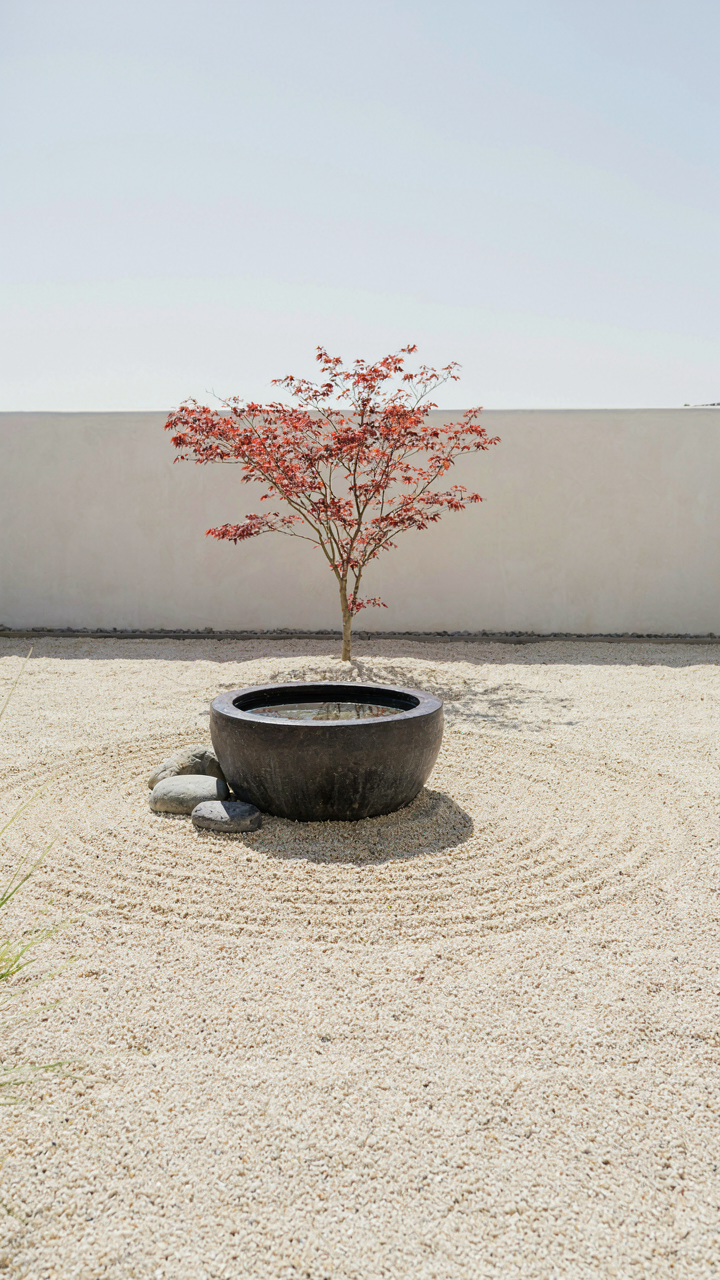
You want permission to leave space empty because filling everything feels like failure. Here’s the mechanism: negative space in Zen garden design isn’t absence. It’s active restraint. The empty ground around a water feature forces your eye to move with intention. It creates pause. Without it, water becomes decoration instead of focal point. The void makes the feature matter.
Japanese garden design borrowed the principle of ma—the Japanese concept of meaningful emptiness—from architecture and spatial philosophy. In a Zen garden with water features, ma functions exactly like silence in music. You need it between the notes for the composition to register. A basin sits in expansive gravel not because budget ran out, but because the surrounding void amplifies the basin’s presence. Remove the emptiness and the water feature drowns in visual noise.
Tension Without Fighting Itself
Everyone says balance means symmetry. It doesn’t. Asymmetrical layouts create stronger visual tension because they require active resolution from the viewer. Place a water feature off-center. Position stone platforms at unequal distances. The eye works to find harmony instead of passively receiving it. This is dynamic balance, not static equilibrium. It holds attention because the composition never settles into predictable rest.
Water features generate tension through contrast and placement strategy. A low basin near a tall stone creates vertical drama. A narrow channel of moving water cutting across flat ground creates horizontal pull. Position rocks to interrupt sightlines. Use elevation change to force the eye downward toward water, then outward across gravel planes. The garden layout compels movement through visual progression, not decoration. Build the layout so every element requires the water feature to complete the spatial conversation.
The Silent Power: Integrating Your Zen Garden With Fountain
Water Sound As Deliberate Design Element
You want the fountain because you think it looks peaceful, but you’re actually buying permission to stop thinking. That’s the real mechanism. Sound operates on attention like gravity operates on mass in physics—it pulls your mental resources toward a single point whether you decide to focus or not. A zen fountain doesn’t add ambiance. It hijacks your parasympathetic nervous system by occupying the auditory channel with repetitive, predictable stimulation. Your brain stops scanning for threats when it hears flowing water on a loop.
The water sound works because it masks environmental noise. A quiet garden feels exposed. Your brain fills silence with worry and problem-solving. Running water creates acoustic cover that lets your prefrontal cortex relax. The fountain doesn’t need to be loud. Subtle, consistent trickling from a stone basin into gravel does more than a dramatic waterfall. Japanese garden designers understood this: they positioned water sources so the sound reaches sitting areas without the spray. Placement determines whether the sound grounds you or distracts you.
Visual Pathways Leading To Tranquility
The most common mistake is treating the fountain as a focal point. It isn’t. It’s a redirect. Your eye should move through the garden in a sequence the designer controls, and the water feature marks a transition point, not a destination. Think of visual hierarchy like narrative structure in storytelling. The opening draws attention, the middle develops space, and the resolution anchors the viewer. A fountain placed mid-garden along a path creates a natural pause without ending the experience.
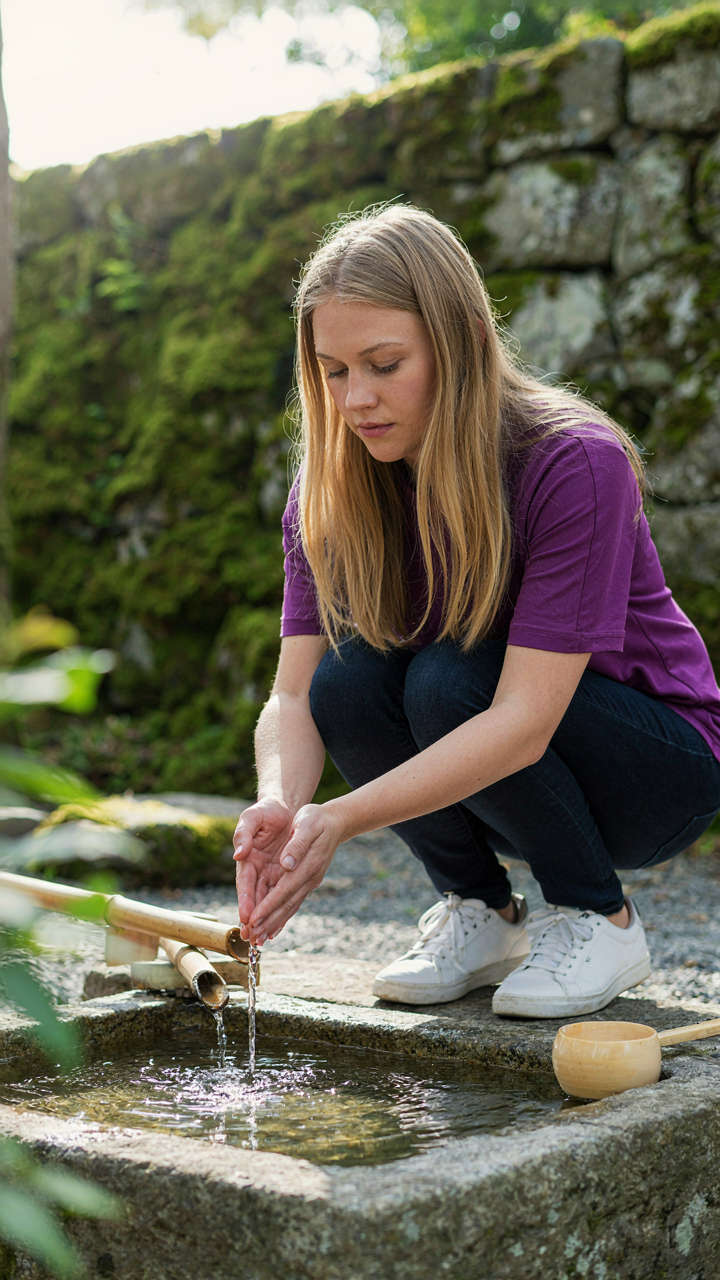
The water feature interrupts sightlines deliberately. Japanese gardens use this principle: you see water, then your view gets blocked by stone or vegetation, then water reappears at an angle. This creates depth perception in small spaces and prevents the eye from landing on hard edges like walls or property lines. A simple tsukubai, the water basin for purification, sits low enough that you must crouch or bend to use it. That physical interruption and lowered perspective reshape how you experience the entire garden. The fountain’s location determines whether it organizes the space or clutters it.
The Cost Of Contemplation: Budgeting Your Zen Backyard Ideas

What You’re Actually Paying For
You want to know the cost breakdown because you’re afraid you’ll spend money and get nothing back—that the whole thing will look cheap and prove you wasted time on a trend. Here’s what actually matters: water features in Zen gardens function like capital equipment, not decoration. You’re buying durability, not aesthetics. A recirculating pump that fails in two years costs more than a better pump bought upfront because you’ll replace it, drain the basin, lose the feature’s function entirely. The mechanism is simple: cheap components fail faster, forcing replacement cycles that compound costs. Spend thirty percent more initially on pumps, liners, and stone—the structural load-bearers—and you eliminate most future expenses.
The real allocation works backward from maintenance. A proper basin with quality stone and a reliable pump system requires cleaning twice yearly and filter checks monthly. That’s the cost you’re actually budgeting for: your time and occasional replacement parts, not reconstruction. Most people underbid the pump quality because it’s hidden. This error creates the exact outcome they feared: a feature that stops working, looks neglected, and forces them to either abandon it or spend twice as much fixing it later. Budget fifty to seventy percent of your total cost on the pump system and basin structure, not on decorative stone or plants.
Where Cheap Fixes Betray You
The consensus says start small and upgrade later. That’s incomplete advice that guarantees waste. Economic theory calls this “loss aversion”—we fear losing small amounts more than we value gaining larger efficiency. A small, underfunded water feature teaches you nothing except that you should have built it right. You’ll either abandon it or tear it out to build again, spending double. Instead, right-size your feature to your actual budget. If you have five hundred dollars, build one excellent two-foot basin with a solid pump rather than three weak trickle features that malfunction within a season.
Material selection determines whether your feature survives ten years or three. Pre-formed plastic basins cost less but crack under freeze-thaw cycles and UV exposure. Stone basins and fiber-reinforced concrete hold water integrity and develop patina. Pumps rated for continuous operation in outdoor environments cost more than utility pumps designed for temporary use, but they don’t burn out mid-summer. The mechanism: durable systems compound their value through years of function, while cheap systems compound their cost through repeated failure and replacement. Build to a lifespan target of ten years minimum, calculate total cost of ownership, then allocate your budget accordingly.
Maintenance: The Unsexy Reality Of Your Zen Water Fountain

The Routine No One Tells You About
You want the aesthetic without the work. That’s not how water systems function. A zen garden water feature isn’t a static sculpture you admire once and forget. It’s a recirculating system that demands consistent attention or it becomes a stagnant liability.
The real mechanism is simple: water sits, algae grows, pumps clog, and mineral deposits accumulate. Most people ignore maintenance until the pump dies or the water turns green. You check water level weekly, clean the pump intake monthly, and flush the system quarterly. That’s the baseline nobody advertises when selling you the dream of flowing water and meditation.
- Water Level Checks: Evaporation removes 1-2 inches weekly depending on climate and sun exposure. Top off with distilled water to prevent mineral buildup that comes with tap water minerals.
- Pump Filter Cleaning: Debris clogs the intake screen within weeks. Remove the filter cartridge, rinse it under running water, and reinstall. A blocked pump runs hot and fails early.
- Algae Prevention: Algae thrives in sunlight and stagnant water. Add a UV sterilizer or increase water circulation. Neither prevents algae entirely, but both slow its growth significantly.
- Mineral Deposit Removal: Hard water leaves white chalky buildup on spillways and inside tubing. Use a 1:1 vinegar and water solution monthly on visible deposits and annually flush the entire line.
- Seasonal Shutdown: In freezing climates, drain the system completely before winter. Ice expansion inside pipes and the pump housing causes permanent damage. Store all components indoors and dry.
Most zen garden owners skip these steps, then blame poor design when their system fails. The maintenance schedule determines whether your feature runs for years or becomes a decorative graveyard by year two. Pick a day each month and stick to it.
Common System Failures And How They Start
Pump failure is the most common endpoint, but the actual culprit arrives months earlier. Systems fail not because they were built wrong, but because the failure chain began with ignored water chemistry and small performance drops that looked harmless at first.
The progression is predictable: water level drops, evaporation concentrates minerals, mineral buildup restricts flow, reduced flow creates stagnation, stagnation breeds algae, algae clogs the filter, clogged filter starves the pump of cooling water, pump overheats, motor bearings seize. Most people notice the problem when the pump stops. By then, replacement is your only option. The real intervention point is week three, when you notice flow has dropped by 30 percent and the water line has fallen below the proper mark. Clean the intake, top off the water, and reverse the trajectory before the system cascades into failure.
Leaks represent the second failure category, and they reveal themselves slowly. Tubing connections weaken from vibration and thermal cycling. Water loss looks minor at first, maybe a quarter inch per week. You keep topping it off without investigating the source. The connection continues deteriorating until the leak becomes visible, and by then, mineral deposits inside the tubing have created secondary problems. Check all visible connection points monthly by running your hand along tubing while the system operates. You’ll feel moisture before it becomes a major leak. Tighten any loose fitting immediately and replace any tubing showing cracks or permanent deformation.
The Ultimate Zen Garden Lie: Your Landscape Won’t Fix Your Mindset

You’ll build the perfect water feature and still feel empty. The stone. The sound. The symmetry. None of it matters if you don’t show up differently. A zen garden water feature forces you to slow down for maybe ten minutes. The real work happens after you walk away. Pick one daily ritual where you sit with your feature and observe without judgment. That’s the mechanism. That’s what actually rewires you. The water doesn’t heal you. Your attention does.



