

The Illusion Of Effortless Zen: Why “Easy” Is A Lie

What “Maintenance Free” Actually Means
You want to believe a fountain requires nothing from you. That’s the real draw here, not the aesthetics. The mechanism is simple: water recirculates through a closed loop, so theoretically you refill it once and forget it exists. That’s the lie. Pump cavitation, algae bloom, mineral buildup, and evaporation are constants. You don’t maintain a fountain because you chose wrong—you maintain it because physics doesn’t negotiate.
The pump sits at the foundation of every small garden fountain, and it’s not a set-it-and-forget-it component. Debris clogs intake screens within weeks. Minerals from tap water coat internal passages and reduce flow rate. A pump running on low water level burns out fast. The recirculation loop masks the real work, not eliminates it.
The Costs Nobody Mentions Until The Fountain Dies
Initial purchase price is the decoy number. The actual expense lives in electricity, replacement parts, and time. A small electric pump running 24/7 costs between 10 and 30 dollars monthly depending on wattage and local rates. Add water loss from evaporation, algae treatments, replacement pump seals, and you’re looking at operational costs that exceed the original fountain investment within two years.
Solar fountains sidestep electricity cost but introduce their own trap: they underperform on cloudy days and fail entirely in winter. Battery-powered units require constant charging cycles and battery replacement. Retailers market these as solutions but they’re compromises dressed as innovation. Calculate your actual spend before purchase—pump replacement alone runs 40 to 150 dollars depending on the fountain model and quality.
The 3 Tiered Fountain Protocol: From Concept To Cascade

Where You Place It Matters More Than What It Looks Like
You want people to notice the fountain and think you have taste. The real mechanism is acoustic. Fountains work through sound and sight together, but sound travels first and carries weight. Placement determines whether the water noise becomes ambient therapy or becomes intrusive noise that irritates neighbors. Position your fountain where the sound reflects off hard surfaces like walls or decks, which amplifies it into the seating area. Avoid corners where sound gets trapped and creates echoes.
Line of sight from your primary seating area is secondary to sound projection. Most people place fountains as visual centerpieces and wonder why they feel empty. The water needs to reach your ears before your eyes register it. Test placement by standing where you’ll actually sit, close your eyes, and listen for where the sound feels natural rather than forced. This takes fifteen minutes and saves you from repositioning later.
Material Selection Determines Lifespan, Not Aesthetics
Resin fountains dominate beginner recommendations because they’re cheap, but that misses the actual variable. Durability in fountain materials follows one rule: freeze-thaw cycles destroy everything except stone and glazed ceramic. If you live in a climate with winter freezing, resin and concrete crack within two seasons. You pay less upfront and replace it three years later.
- Stone (granite, slate, limestone): Naturally porous but dense enough to resist freeze damage. Higher cost offsets replacement cycles. Requires sealing every two years in harsh climates.
- Glazed ceramic: Fired at high temperatures with waterproof coating. Won’t crack from freezing. Limited size options keep prices moderate. Most durable for beginners in cold regions.
- Fiberglass: Reinforced plastic that flexes slightly during freeze-thaw. Lasts longer than resin. Still degrades under direct sunlight and cracks near stress points over time.
- Concrete: Porous and absorbs water that freezes internally, causing spalling. Works only in dry climates or requires annual protective sealant application without fail.
- Resin (polyresin): Cheapest option but brittle. Cracks appear within two years in freeze zones. Best for mild climates only or as temporary installations.
Material authenticity means matching the stone type to your region’s local geology. A limestone fountain in New England fits the landscape vocabulary. The same piece in Arizona looks borrowed. Authentic placement compounds the sensory impact because your brain recognizes regional coherence without thinking about it. Buy materials that belong in your climate zone first, then worry about appearance.
Beyond Aesthetics: The Undeniable ROI Of Water Movement

How Water Shifts Your Immediate Environment
You want a small garden fountain because you think it looks nice. That’s the cover story. The real reason is you’re betting it will make your space feel different, feel better, feel like somewhere worth spending time. That instinct is right, but not for the reason you think. Water in motion engineers a microclimate. It’s a thermodynamic mechanism: evaporation from the fountain surface cools the air immediately around it, while the water’s thermal mass absorbs and slowly releases heat, stabilizing temperature swings. In humid climates, this effect softens the worst of afternoon heat. In dry climates, the evaporation itself raises local humidity, which your skin registers as comfort.
Most people think fountains are decorative props. They’re actually atmospheric tools. A small fountain running six to eight hours daily can lower ambient temperature within a three to six foot radius by 2 to 5 degrees Fahrenheit, depending on water volume, air movement, and local climate. This isn’t magic. It’s physics. The mechanism works best when the fountain sits where it catches morning or afternoon sun directly. Position matters more than size. A strategically placed fountain does real work on how your body experiences the garden.
Sound As A Deliberate Noise Weapon
Urban noise pollution operates on frequency. Cities produce constant low-frequency drone (traffic, HVAC systems, distant machinery) that your nervous system registers as ambient threat. Your brain never fully relaxes around it. A small garden fountain produces competing sound at different frequencies, specifically mid to high-range water sounds (splashing, trickling) that mask the threat frequencies. This is acoustic camouflage, borrowed from military theory where you mask enemy signals with controlled noise. Water sound doesn’t eliminate the pollution. It buries it.
The work happens at the neurological level, not the ear level. Your amygdala processes ambient noise threat. Water sound shifts your auditory focus to something rhythmic and bounded. The fountain creates a defined sound source with a clear origin point, versus nameless urban noise with no location. This distinction alone changes how your parasympathetic nervous system responds. A fountain running continuously can suppress the cortisol spike that comes with unpredictable urban sound. Position your fountain where its sound reaches your primary sitting area, and keep the water depth between eight and fourteen inches for optimal mid-range frequency output.
Solar Powered Water Fountain: The False Promise Of “Free” Energy

What Solar Panels Actually Produce
You want “free” energy because you’re tired of buying batteries and don’t want to think about maintenance costs. Here’s what kills that fantasy: solar panels don’t produce rated wattage under real conditions. Manufacturers list peak output under lab conditions—full direct sun, optimal angle, zero clouds, perfect temperature. Your garden gets partial shade, diffused light, seasonal angle shifts. A panel rated 5 watts outputs 2 to 3 watts in actual use. This gap between spec sheet and reality is where small fountain pumps fail.
Most beginners calculate their power needs from the pump’s labeled wattage, then buy a solar panel with matching or slightly higher output. The math looks good on paper. In practice, the fountain runs weak, inconsistent, or stops during cloudy days because the panel never reaches that theoretical output. The real mechanism isn’t the solar panel’s failure—it’s your failure to account for the 40 to 60 percent efficiency loss between rated capacity and field performance.
Battery Life Cycles And The Hidden Replacement Trap
Battery degradation follows a predictable decay curve. Each charge-discharge cycle reduces the battery’s capacity slightly. A lithium battery rated for 500 cycles doesn’t mean it works perfectly for 500 uses then dies—it means capacity drops 20 percent by cycle 500, then continues declining. Manufacturers know this. They design solar fountain batteries to fail within 2 to 3 years of regular use, forcing replacement purchases. This isn’t an accident. It’s planned obsolescence in the supply chain.
When you buy a solar fountain with an integrated battery, you’re not buying a permanent device—you’re buying a consumable with a hidden expiration date. The solar panel keeps working for a decade. The battery dies in years. Replacement batteries cost 30 to 60 percent of the original fountain’s price, making it cheaper to buy a new unit than repair the old one. Avoid integrated batteries entirely. Buy solar fountains with removable batteries, swap them on a fixed schedule, and track your actual replacement costs before claiming the energy is free.
Mini Pond Ideas: The Ecosystem, Not Just A Bowl Of Water
Biological Succession Builds The System You Don’t Have To Maintain
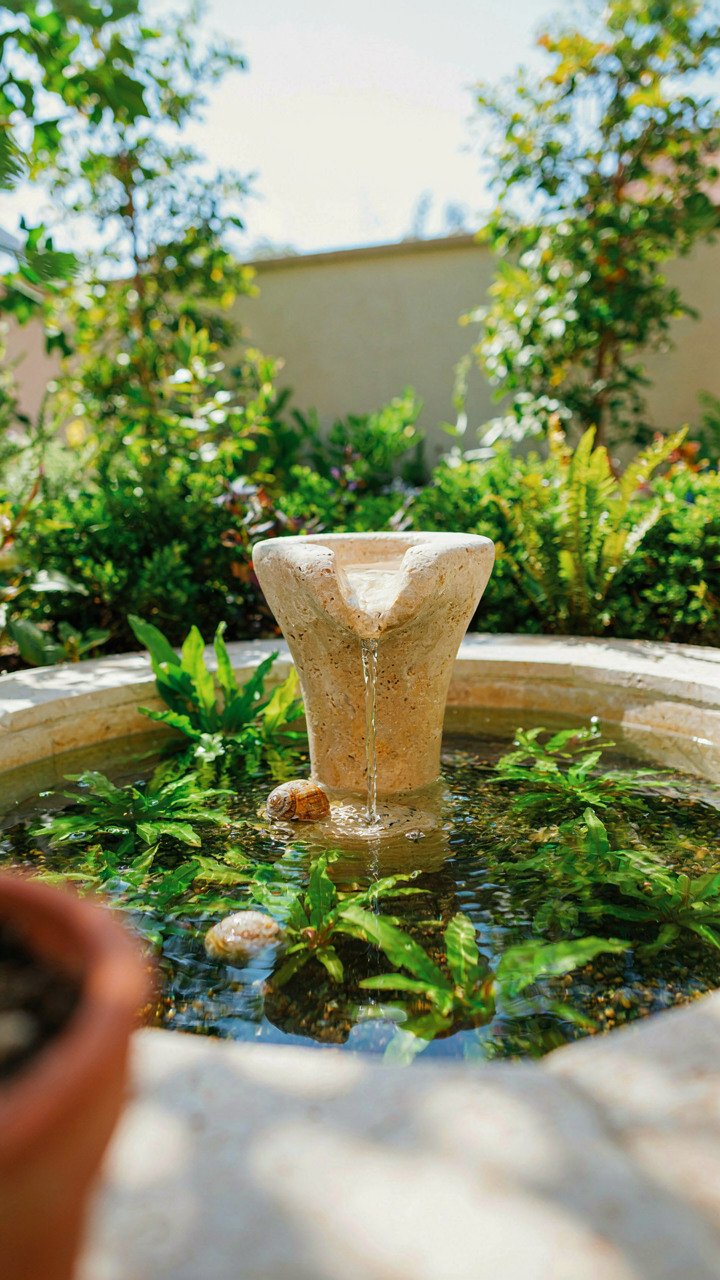
You want a fountain that looks alive without constant intervention. That’s the real ask. Biological succession is the ecology term for how environments organize themselves into stable communities over time. In a mini pond fountain, this means bacteria colonize surfaces, plants establish root systems, and organisms find equilibrium without your daily labor.
Most people treat their fountain like a decorative object that needs constant cleaning. That’s backwards. The actual mechanism: you introduce pioneer species first, usually fast-growing plants like water sprite or duckweed, which stabilize the water column and create surface area for bacteria. Within weeks, the system shifts toward stability as decomposers populate the substrate and nitrifying bacteria establish the nitrogen cycle. Your job is setting the initial conditions, then stepping back. The fountain maintains itself because the ecosystem now does the work.
Nutrient Cycling Through Permaculture Design Principles
Permaculture treats systems as closed loops where waste becomes input. Your mini pond fountain operates on the same principle. Decaying plant material and fish waste become nitrogen compounds that fuel new growth, which filters the water, which supports more microbial life. This isn’t metaphorical. Water clarity improves because the biological load processes itself.
The concrete protocol: stock your fountain with submerged plants that absorb excess nutrients, add a thin substrate layer at the base where bacteria colonize, and introduce a single source of biological activity like a small aquatic snail or a few mosquito fish if the fountain is large enough. These organisms accelerate nutrient cycling by consuming algae and debris. Within one month, the water quality stabilizes and you stop fighting green water or stagnant conditions. The system cycles nutrients instead of accumulating them.
The “Yard Fountain Ideas” Delusion: Why More Isn’t Better
One Fountain, Not A Collection
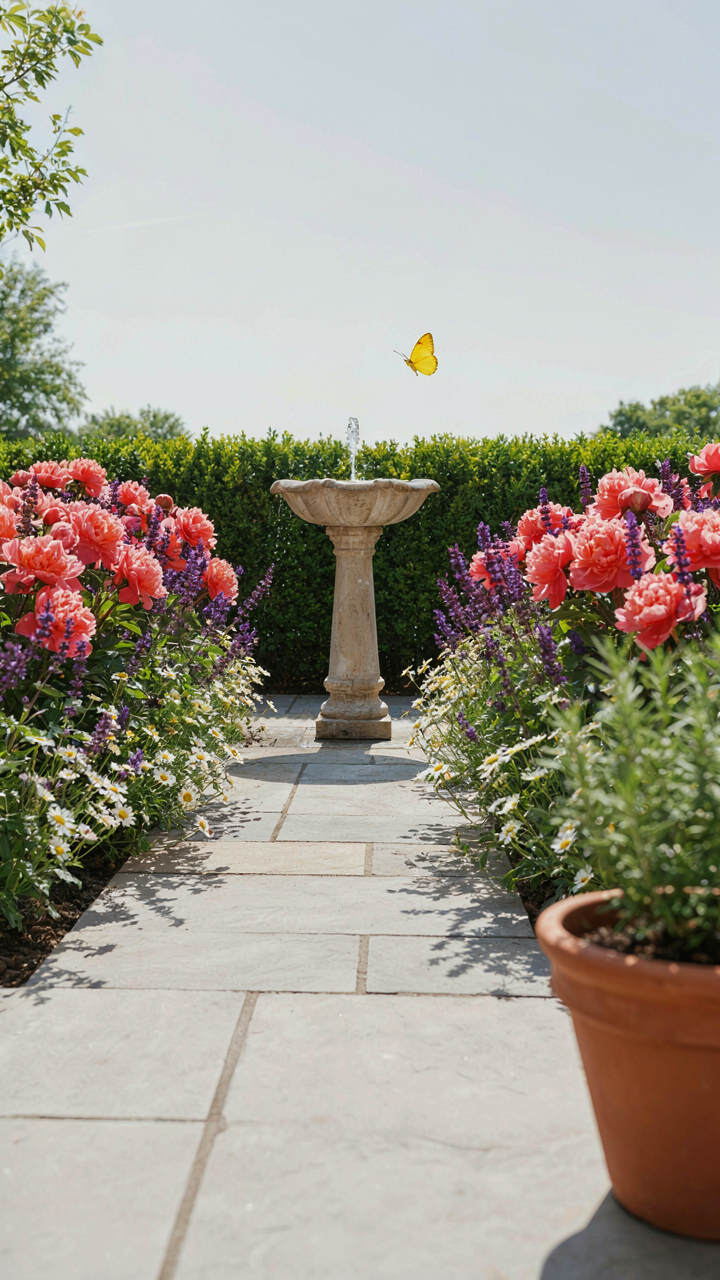
You want to feel like you’ve solved the problem by buying everything at once. That’s the real fear driving the impulse to scatter fountains everywhere. Strategic scarcity works like load balancing in network design: concentrate traffic at one point instead of fragmenting it across multiple nodes. A single well-placed fountain commands attention. Multiple fountains compete for it, and your eye lands on none of them.
The beginner mistake is treating fountains like decorations you accumulate. You don’t. A small garden fountain functions as a focal point, an anchor. When you place three fountains, you’ve created visual noise instead of a destination. One fountain, properly positioned, makes the entire yard feel intentional. That’s the mechanism: constraint forces composition. Abundance destroys it.
Where Your Eye Actually Stops
Attention follows contrast and isolation, not density. Your job is to design sight lines so the fountain interrupts the viewer’s movement through the space. When fountains cluster, the brain treats them as background clutter instead of features worth engaging with. Place one fountain where a natural path through the yard creates a pause point, usually where hardscape meets planting or where sightlines from seating converge.
Test the placement by standing in the spots where people will naturally rest: seating areas, entry points, windows. The fountain should occupy the visual weight that an empty corner would normally waste. Position it so the sound travels toward seating, not away from it. The water noise becomes ambient when distant, intrusive when centralized. This single positioning choice separates intentional design from yard clutter.
Little Fountain, Big Statement: The Psychology Of Scale

Why Small Wins Over Imposing
You want people to notice your taste without spending a fortune or looking desperate. That’s the real reason this matters. The mechanism is straightforward: perceived value inverts at smaller scales. A two-foot fountain with clean lines costs less than a sprawling one but demands more intentional design. Observers assume competence, not budget constraints. Small forces specificity. Large forces compromise.
A beginner fountain succeeds because constraints breed better decisions. You can’t hide poor material choices or sloppy construction at intimate scale. The fountain lives close to the viewer’s eye line, where flaws register instantly. This enforced precision is why small garden fountains often outperform their expensive counterparts. When something is small and built well, it reads as deliberate mastery, not accident or overflow of resources.
Mental Clarity Through Subtraction
Cognitive load theory from environmental psychology maps directly onto fountain placement: every element in your visual field competes for processing bandwidth. A small fountain reduces noise instead of amplifying it. Large fountains monopolize attention and exhaust the nervous system. A modest piece serves as a focal point without tyrannizing the space. You choose what captures your mind instead of the landscape deciding for you.
Simplicity compounds over time. A small, single-feature fountain creates a sensory anchor. Your brain can return to it repeatedly without fatigue. Water movement at modest scale produces rhythm without overstimulation, lowering cortisol levels during garden time. Position your small fountain where you pause naturally, not where it demands a detour. This protocol transforms a simple piece into a mental reset mechanism you’ll actually use, not avoid.
The “Bird Bath Ideas” Trap: Function Over Form Fallacy

Wildlife Integration Beyond Shallow Basins
You want the fountain to look nice with birds around it. That’s the real reason you’re reading this. But shallow basins don’t create habitat—they create dependency and vulnerability. Genuine wildlife integration borrows from ecology’s concept of niche partitioning: different species need different water depths, flow patterns, and shelter proximity. A bird bath fountain that only offers one water depth serves aesthetics, not survival.
- Depth Zones: Create 1-inch shallows for sparrows and finches, 2-3 inch mid-zones for thrushes, and 4-6 inch deeper sections for larger birds and small mammals to drink safely without drowning risk.
- Flow Velocity Control: Moving water attracts birds through sound and sight, but turbulent flow forces them to drink on perches rather than wade. Adjust pump output to create gentle circulation, not rapids.
- Shelter Adjacency: Place fountains 3-6 feet from dense shrubs or low branches. Birds won’t approach open water without escape routes. This isn’t decoration—it’s predator avoidance strategy.
- Substrate Variation: Add river stones, pebbles, and textured surfaces to basin floors. Smooth plastic or concrete offers no grip for claws and makes birds uncomfortable during vulnerable drinking moments.
- Year-Round Consideration: Winter fountains require heated elements to prevent ice formation. Birds depend on liquid water most when natural sources freeze, so seasonal abandonment negates habitat value.
Real habitat creation means the fountain becomes a refueling station, not a status symbol. Your design either supports survival or it supports your Instagram feed. Build the depth and flow dynamics first, then worry about the aesthetic finish.
Disease Vector Reduction Through Flow Dynamics
Most people think standing water spreads disease—which is true. What they miss is that stagnant water in fountains breeds bacteria at rates that moving water slows dramatically. Fluid dynamics shows us that laminar flow reduces pathogen concentration differently than static conditions. A fountain sitting untouched for three days becomes a mosquito incubator and bacterial bloom factory.
Flow rate and water quality work as a system. Your pump must cycle the entire basin volume at least once every four hours to prevent bacterial colonization. This isn’t optional if birds actually use the water. Clean basins weekly, replace water every two days during warm months, and add a mechanical filter if your pump has suction intake capacity. Moving water alone doesn’t sterilize—it just buys you time before biofilm forms on surfaces and algae takes hold.
The Unseen Mechanics Of Water Fountains: A Cybernetics Approach
How Water Systems Self Regulate
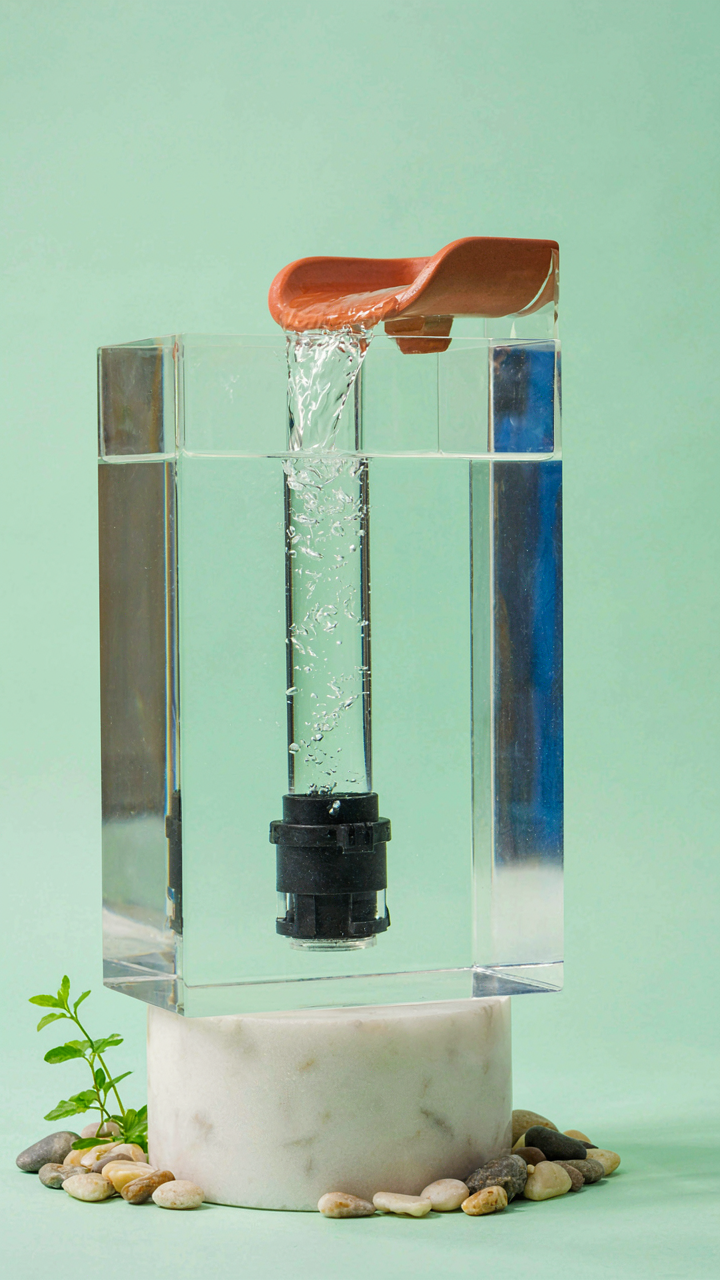
You want to understand this because it means your fountain won’t need constant babysitting. Cybernetics—the study of self-regulating systems—maps directly onto water fountains through feedback loops. Your pump pushes water up. Water falls. The basin fills. A full basin reduces pressure on the pump. Less pressure means less water rises. Water falls faster than it rises. The basin empties. Lower water level means the pump works harder again. The cycle repeats. This isn’t magic. It’s mechanical equilibrium operating automatically.
Most fountain owners treat water level like a problem to solve manually. Wrong. The system already solves it if you design for it. The pump’s intake sits below minimum water level. The spillway height determines maximum level naturally. Between those two points, your fountain finds its operating range without intervention. You don’t override this. You design within it. Change the spillway height by two inches and you’ve shifted the entire equilibrium point.
Complexity Emerges From Simple Rules
Emergent properties in systems theory describe how simple interactions create behavior nobody predicted from the components alone. Your small garden fountain demonstrates this perfectly. A pump pushes water. Gravity pulls it down. A basin catches it. Sound emerges. Humidity around the fountain shifts. Algae growth patterns change based on water movement and light exposure. Plants nearby respond to moisture. None of these outcomes are written into the pump’s instruction manual. They emerge from the interaction of simple parts operating together.
The average person believes fountain complexity requires complex design. False. A basic pump, a basin, and gravity generate elaborate behavior by themselves. Your job isn’t to engineer every outcome. Your job is to set the initial conditions and let interaction do the work. If you want less algae, you’re not fighting complexity. You’re adjusting one variable: water circulation rate. Change that single input and five downstream effects shift simultaneously. This is why fountain maintenance becomes easier once you grasp the system rather than treat it as random failure points requiring individual fixes.
The Real Obstacle Isn’t The Fountain; It’s Your Inability To Distinguish Real Value From Superficial Clutter

Most people buy small garden fountains to fill dead space. They want the aesthetic without the commitment. But the ones who actually enjoy them made one choice: they picked a fountain that solved a specific problem first, looked good second. Stop scrolling through options and answer this instead: does it mask noise, provide water for wildlife, or create a focal point you genuinely use? Buy that one today. Everything else is just decoration you’ll resent in six months.



