

The Edible Window Boxes Illusion: Beyond Pretty Planters

Aesthetics Trap You Into Mediocre Harvests
You want people to see your window and think you’ve got your life together. That’s the real reason you care about this. But here’s the mechanism: the moment you prioritize how a window box looks, you’ve already compromised its primary function. Design and yield operate under different constraints. A beautiful box often means shallow soil depth, ornamental varieties over productive ones, and placement chosen for visibility rather than light exposure. The aesthetic win becomes a yield penalty you don’t see coming.
Most advice treats window box gardening as interior design with vegetables attached. Wrong. A window box produces food or it doesn’t. Everything else is decoration masquerading as gardening. The container dimensions, soil volume, plant selection, and sunlight hours determine output. Choosing a narrow ceramic planter because it matches your curtains over a deeper plastic one that gets six hours of direct sun costs you weeks of growth and fifty percent of your tomato production. Style magazines won’t tell you this because the planter looks better in photographs.
Yield Economics Beat Visual Balance
Economics teaches us about resource allocation under constraint. Your window box operates the same way: limited soil volume means every cubic inch has a job. Most growers waste this space on spacing that “looks nice” or companion plantings that sound good but produce nothing. A tomato plant needs dense root zone access. Lettuce needs consistent moisture. Basil needs airflow. You pick one primary crop, optimize the box dimensions for that crop’s root depth and spread, then add complementary plants that actually increase output, not just fill space.
Start with soil depth requirements. Cherry tomatoes need minimum eight inches; lettuce needs six; herbs need four to five. Measure your window box interior depth. Match it to a vegetable that fits those dimensions exactly. This single move cuts failure rates by half because you stop fighting physics. Your next step is calculating actual sunlight hours at that window during peak growing season, then selecting only varieties rated for that light level. Anything else is betting against the sun.
Vertical Crop Stacking: A Small Vegetable Gardens Imperative

Plants That Grow Upward, Not Out
You want to look at your window box and see abundance, not admit that six inches of soil limits what you can grow. The real mechanism is simple: vertical leverage replaces square footage. When you stack plants by height and growth pattern, you’re applying the physics principle of density—packing more productive mass into the same footprint. A window box works like a three-dimensional asset allocation problem. Most people plant in a flat line and wonder why their yield stays thin.
Upward-growing varieties change this entirely. Pole beans climb strings. Determinate tomatoes reach six to eight inches vertically. Trailing herbs like basil cascade outward but stay within box boundaries. Cherry tomatoes bred for containers stay compact while yielding multiple seasons. The key is matching growth habit to your box’s actual dimensions, not planting what looks good at the nursery. You’re not decorating—you’re engineering production into constraint.
Root Depth Layering And Nutrient Access
Soil composition isn’t just about fertility. Layering root depths mimics agricultural stratification, where shallow-rooted crops coexist with deep-rooted ones because they occupy different resource zones. Shallow feeders like lettuce and arugula draw nitrogen from the top two inches. Mid-depth roots like basil and chard access the three to four-inch zone. Deeper types—dwarf carrots, certain beans—hit the five to six-inch floor. Stack these by depth, and each plant feeds without choking the other.
- Lettuce and Arugula: Target surface nitrogen; plant in front rows where they won’t shade deeper plants; mature in four to six weeks consistently.
- Basil and Chard: Root at three to four inches; place mid-box; tolerate partial shade from taller plants; require consistent moisture but not waterlogging.
- Dwarf Carrots: Push to five-inch depth minimum; need loose soil structure; place at rear where they won’t compete for light with shallow crops.
- Trailing Herbs: Oregano and thyme root shallow but spread laterally; position at box edges where they naturally cascade; reduce water demand as season progresses.
- Compact Tomatoes: Require full sun and deep rooting; dedicate one corner; anchor with stakes; demand consistent feeding every two weeks during fruit set.
Root layering eliminates the scarcity mentality that kills window box gardens. You stop thinking about which plant to sacrifice and start thinking about which zone each plant occupies. The window box becomes a functional stack, not a decoration. To execute this, map root depth requirements before buying, then physically arrange seedlings from shallowest to deepest, front to back. This is not aesthetic—it’s structural.
The Bio Rhythmic Cultivation Protocol For Window Box Garden

Match Plants To Your Light Window
You want to feel like you’re doing something sophisticated with your vegetables. What actually matters is this: plants don’t care about your intentions. They respond to photosynthetically active radiation across specific hours. Borrow from chronobiology, the study of biological time cycles, and you’re mapping your plants’ circadian demands onto your window’s actual light delivery. Full sun crops like tomatoes and peppers need six to eight hours minimum. Leafy greens tolerate four to six. Herbs split the difference. Most people guess their light exposure. Stop guessing. Track it for three days with a light meter or smartphone app.
The window box’s position determines everything downstream. A south facing box in the northern hemisphere gets afternoon intensity but misses morning diffusion. North facing boxes never work for fruiting vegetables. East and west windows create uneven growing conditions where one side outpaces the other. Once you know your actual light profile, you match plants to it rather than forcing incompatible crops into a space. This isn’t philosophy. It’s resource allocation.
Stagger Your Plantings, Not Your Expectations
The common advice is plant seeds every two weeks and harvest continuously. That’s incomplete. Succession planting only works if your harvest window aligns with your consumption rate and your box’s production capacity. A window box isn’t a field. It has finite volume. If you plant lettuce every fourteen days but eat one head per week, you’ll either waste crop or face gaps. The real mechanism is this: calculate your actual weekly consumption, then work backward to planting intervals that match demand, not arbitrary timelines.
Seedlings also require space to mature. Overcrowding them by following generic succession schedules guarantees stunted plants that produce nothing. Plant the next crop only when the previous one is halfway through harvest, not before. For quick crops like radishes or spring onions, that’s three weeks. For slower crops like bush beans, six weeks minimum. Write down exactly what you harvest each week for two months. Use that data to determine your actual planting interval. Your window box works on your consumption schedule, not the calendar’s.
Container Vegetables: Engineering Your Micro Ecosystem
The Growing Medium That Actually Works
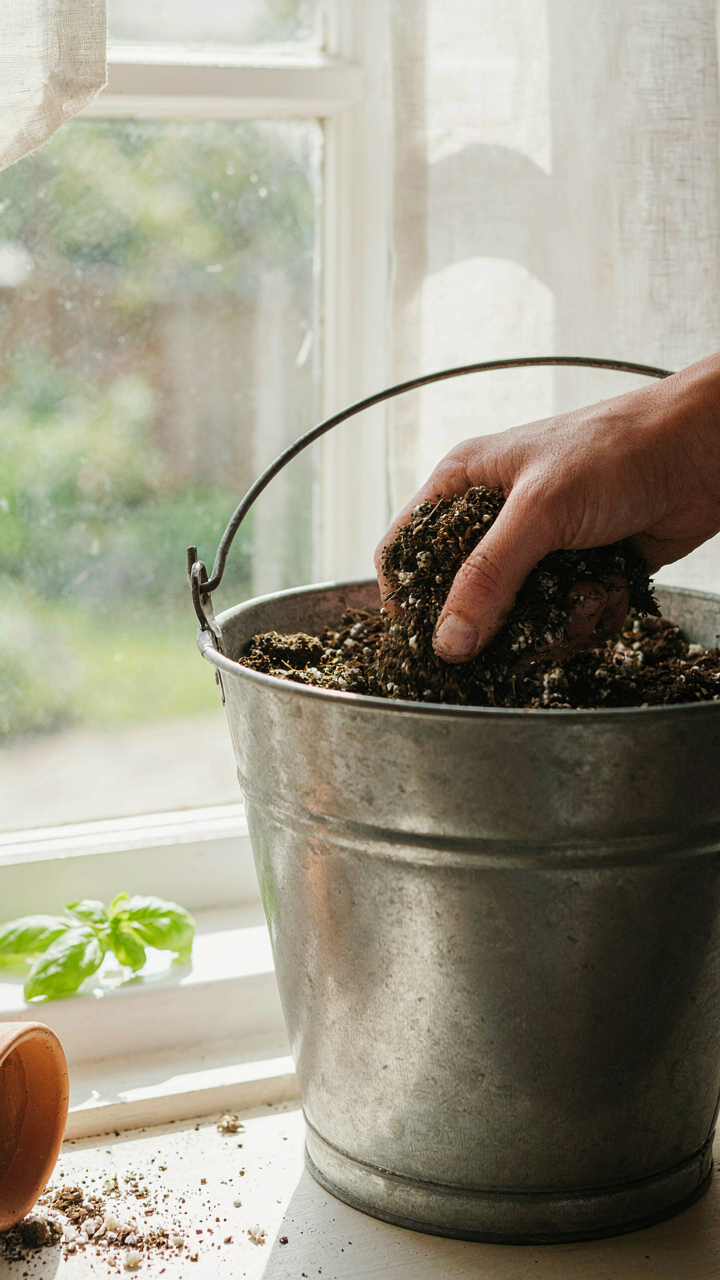
You want your window box to look effortless, which means you need the substrate engineered before you plant anything. Soil science treats the growing medium as a load-bearing system, and your window box is no different: the substrate must hold water, drain excess, anchor roots, and supply nutrients simultaneously. Most people dump generic potting soil and wonder why plants stall.
The mechanism is this: container vegetables live in a closed system where soil volume determines nutrient capacity and water retention. A standard window box holds 5 to 15 gallons depending on dimensions. You need a blend that resists compaction because containers compress under their own weight and repeated watering. Mix one part peat moss or coco coir, one part compost, and one part perlite or coarse sand. This ratio prevents clay packing while maintaining moisture without waterlogging. Change this formula and your drainage profile breaks.
Feeding Plants Without Killing Them
Container plants exhaust nutrients faster than in-ground gardens because water drains through and carries dissolved minerals with it. This isn’t a problem to solve with frequency—it’s a problem to solve with method. Most gardeners either underwater nutrients or overdose and burn roots. The real lever is release rate, not volume.
Use a controlled-release fertilizer mixed into your substrate at planting, or switch to weekly dilute liquid feeding at quarter strength once growth accelerates. Granular slow-release fertilizers break down over 8 to 12 weeks and match the lifespan of a productive window box season. Liquid fertilizers give you precision but demand consistency. Pick one system and execute it on schedule, not by mood. Your plants respond to protocol, not intention.
The Law Of Minimum: Resource Allocation In A Window Box Herb Garden

What Actually Stops Your Plants
You want a window box that looks intentional, not like you gave up. The real reason you’re reading this is you’ve killed plants before and don’t want evidence of failure visible from the street. Here’s the mechanism: Liebig’s Law of the Minimum, borrowed from agricultural chemistry, states that growth is limited by the scarcest resource, not the total resources available. In a window box, one bottleneck controls everything. Identify it first, then build around it.
Light is the dominant constraint for most indoor window boxes. Plants don’t negotiate with physics. If your window receives fewer than four hours of direct sunlight, leafy greens and herbs slow their metabolism. Nutrients and water become irrelevant when photosynthesis can’t process them. Water comes second. Container soil dries faster than ground soil because wind and sun exposure increase evaporation. Nutrients matter least because you can amend soil, but you cannot manufacture sunlight or humidity in a sealed box.
Spending Resources Where They Multiply
Economics teaches input-output ratios. Farmers maximize yield per dollar spent. Apply the same logic here: identify your weakest resource, then concentrate your inputs there. Don’t spread effort equally across three problems.
If light is your bottleneck, invest in reflective surfaces or supplemental grow lights before worrying about premium potting mix. A white-painted wall behind your window box multiplies available light without additional cost. If water is the problem, upgrade to a self-watering container or add drainage matting that retains moisture longer. The soil quality matters only after you’ve solved the supply chain. You cannot improve a nutrient that plants never reach because they’re drought-stressed. This is why generic advice fails: it treats every factor as equally important when one factor controls the outcome.
Beyond “Easy”: Types Of Vegetables For The Ruthless Grower

High Yield Crops For Shallow Boxes
You want proof your window box works before you lose interest. The mechanism here comes from agronomy: yield per square foot measures output against real estate consumed. In a window box, you’re working with roughly two to four square feet of surface area. Radishes, lettuce, and bush beans compress their entire lifecycle into 30 to 50 days and produce edible matter consistently. Skip tomatoes if you’re starting out. They demand vertical space, stakes, and patience you won’t have in month two.
Arugula germinates in five days and reaches harvest in 20. Peas (dwarf varieties) flower within three weeks and fill the box with pods before summer heat kills them. These aren’t trendy or photogenic. They’re the crops that prove the system works, which is the only psychology that keeps you planting next season. Pick varieties rated for container growing specifically, not just general vegetable types.
Resilience Over Romance In Variety Selection
The common advice is to grow what you love eating. Wrong. Grow what survives neglect. Window boxes live in microclimates: intense sun reflection off glass, wind exposure, inconsistent watering because you forget or travel. The genetic code matters here. Heat-tolerant lettuce varieties (like Jericho or Fristina) won’t bolt the moment temperatures spike. Swiss chard survives both cold snaps and heat waves that kill tender greens. Resilience beats preference when space is finite.
Cherry tomato varieties developed for container growing (Tiny Tim, Tumbling Tom) handle restricted root zones better than heirloom types. Thyme and oregano tolerate drought and poor soil because they evolved in harsh Mediterranean conditions. When selecting seed packets or transplants, read the label for “container suitable,” “heat tolerant,” and “compact.” Ignore varieties marketed as simply pretty or rare. Test one crop cycle with these resilient types, measure success by harvest weight, then decide if experimentation fits your system.
Strategic Garden Layout Vegetable: Maximizing Every Inch

Plants That Protect Each Other
You want this section to justify why your window box isn’t just random plants shoved into soil. The real mechanism here is biology: companion planting operates like a defensive alliance. Certain plant combinations suppress pests through chemical signaling and physical interference, not magic. Marigolds near tomatoes release compounds that repel spider mites. Basil near peppers interferes with thrip reproduction cycles. The plants aren’t helping each other out of goodwill. They’re competing for the same resources, and their chemical profiles happen to create hostile conditions for common garden pests.
Stack your window box with intentional pairs. Nasturtiums trap aphids away from leafy greens. Chives deter carrot flies and onion thrips through sulfur compounds. Thyme reduces cabbage worm pressure. The arrangement matters less than density and proximity. In a tight window box, plants occupy the same air space, which amplifies pest deterrent volatilization. Your goal isn’t aesthetics. It’s creating a microclimate where pests find better options elsewhere.
Water Delivery Without Waste
Irrigation design borrowed from hydroponics, not from guessing when soil feels dry. In hydroponics, the term “nutrient film technique” means delivering precisely what roots need without saturation. Your window box equivalent is a drip line or soaker cord system that runs along the box base. This eliminates the false choice between overwatering and underwatering that destroys most urban micro-farms.
Most people water window boxes from above, creating runoff and soil compaction. Drip systems deliver water directly to the root zone, reducing evaporation loss by 40 to 60 percent compared to overhead methods. A simple irrigation line connected to a timer solves the consistency problem. Run it early morning or evening to minimize evaporation. The mechanism is simple: water reaches roots, not air, and you control frequency instead of relying on feel or guesswork.
Automating The Micro Harvest: From Effort To System

The Math Of Watering Consistency
You want automation because you don’t want to think about it, and that’s the real problem nobody admits. Window box vegetables don’t fail from neglect, they fail from inconsistency. Soil in a box dries faster than ground soil because it has less thermal mass and fewer roots to retain moisture. One missed watering in heat stress cascades into blossom end rot in tomatoes or bitter greens. The mechanism is osmotic pressure: when soil moisture swings from wet to dry, plant cells can’t maintain turgor, and yield tanks.
A drip irrigation timer solves this by removing decision fatigue. Set soil moisture to trigger between 60 and 75 percent capacity, not by feel but by actual measurement. Moisture sensors cost under thirty dollars and connect to cheap battery timers. Water for five to ten minutes every other day during growing season, then adjust based on rainfall and temperature swings. This isn’t luxury, it’s the only way to scale a window box from ornament to production system without becoming a slave to your own garden.
Simple Tools That Actually Work
Most advice on window box tech is garbage because it assumes you need WiFi and apps. You don’t. You need three things: consistent moisture, consistent nutrition, and minimal intervention. Gravity-fed drip lines from a reservoir above the box eliminate guessing. The pressure differential does the work, not electricity or complexity. A five gallon bucket with a slow release valve costs less than a latte and works for two weeks without touching it.
For feeding, use a diluted liquid fertilizer on a fixed weekly schedule instead of guessing nutrient levels. Vegetables in containers deplete nitrogen fast because water flushes it out with every drain. Mix fertilizer at half strength and apply once a week on the same day you’d water anyway, turning one task into one. This compounds: a system you execute the same way every week requires zero willpower and zero failure points. Set a phone reminder for the same day and time, treat it like paying rent, and your window box stops being a hobby project and becomes a mechanism that produces food.
The Real Obstacle Isn’t Your Window; It’s Your Resistance To Seeing A Garden As A Ruthless Production System
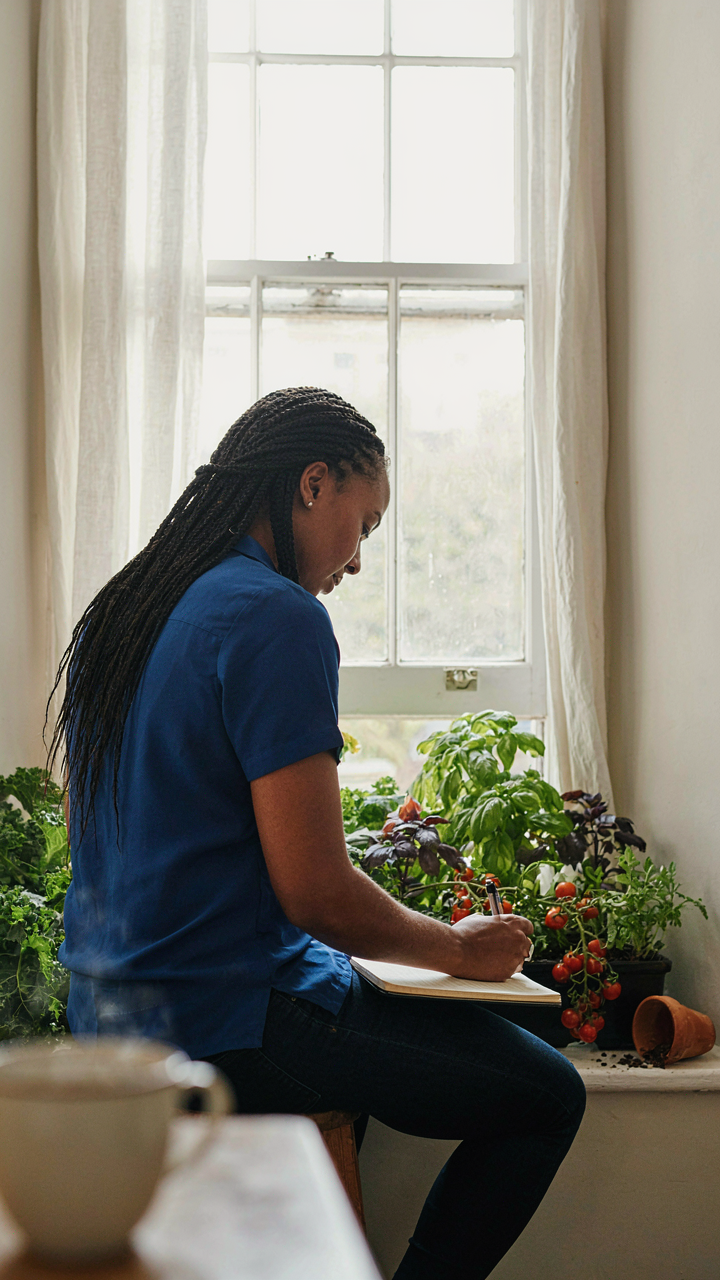
Most people romanticize window box gardening. They imagine Instagram-worthy aesthetics and forget that plants are input-output machines. You give them light, water, and soil. They give you food or they die. That’s it. Stop treating your window box like a decoration project. Treat it like a business. Pick one vegetable today. Commit to measuring its output weekly. Track what works. Ruthless systems beat beautiful intentions every single time.



