
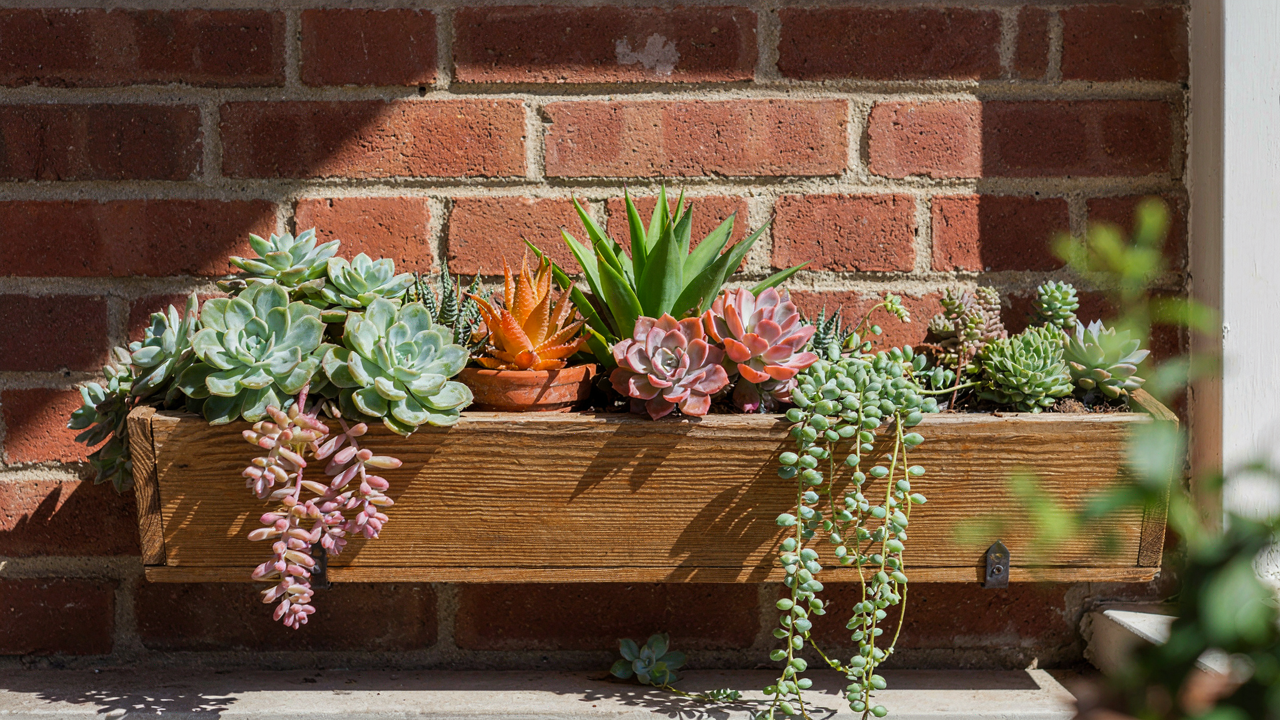
Why Your Window Box Succulents Keep Dying: The Unspoken Truth
What You’ve Been Told About Succulent Care Is Incomplete
You want your window box to look effortless because effortlessness signals competence. The problem is that succulent care advice gets flattened into a few rules that miss the actual mechanism of why plants die. Most guidance treats succulents as a monolith, but the real issue is specificity. Different succulent species have different water retention rates, root depths, and cold tolerance thresholds. When you apply generic rules to specific plants, failure is mathematical, not accidental.
The myth that “succulents need almost no water” survives because some do. But Sedum varieties in a window box experience different conditions than Echeveria. Soil temperature, light intensity, and air circulation in a contained space behave nothing like ground conditions. Your window box is a microclimate with its own rules. You cannot ignore those rules and expect consistency. Start by identifying your specific succulent genus and its baseline water needs, then test against your actual window conditions, not against what you read online.
Commercial Succulent Soil Fails By Design
Here’s what stores don’t tell you: most bagged “succulent soil” is formulated for profit, not performance. It contains peat moss or coconut coir to retain moisture longer on the shelf and in the store display, which contradicts what succulents actually need in an enclosed window box. When you plant into this mix, water stays trapped against roots longer than the plant can tolerate. The drainage that looks good on paper becomes irrelevant because the soil amendments themselves hold moisture too long.
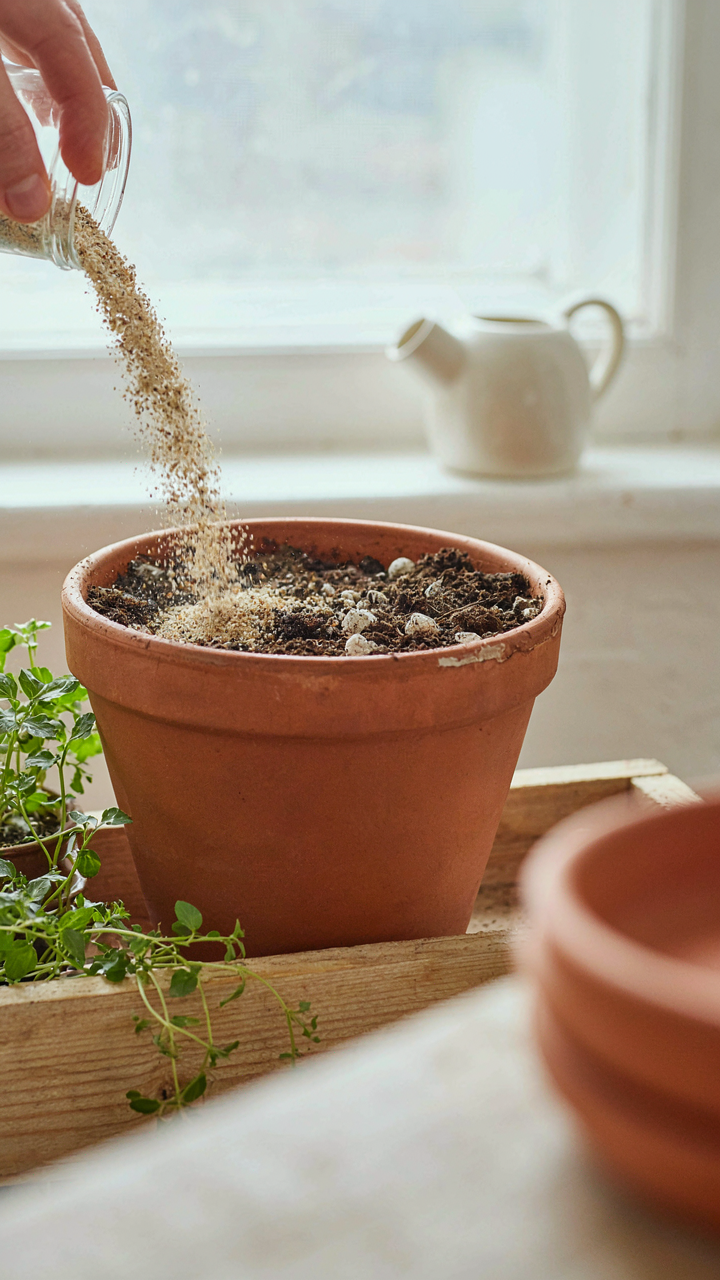
The fatal flaw is particle size consistency. Real succulent soil needs a hierarchy of particles: large perlite or pumice for air channels, medium grit for structure, and sand to fill voids without retaining water. Most commercial mixes skip the large particles entirely. Without those air pockets, water moves through the soil too slowly, and roots sit in humid conditions. Your protocol: test any soil by wetting it, then timing how long water takes to drain completely through a handful. If it takes more than ten seconds, that soil isn’t suitable for a window box. Amend it yourself with additional perlite or coarse sand until you hit that benchmark.
The Desert Ecology Principle: Mimicking Arid Success

Substrate As The Foundation
You want your succulents to survive without constant fussing. That requires understanding soil physics, not just hoping for the best. In deserts, soil structure determines water retention and root oxygen access. Window box succulents need substrate that mimics this: fast drainage paired with minimal organic matter. The common advice to use “cactus soil” is incomplete. Most commercial mixes retain too much moisture because they’re built for nursery convenience, not your specific conditions.
The mechanism is simple. Succulents store water in leaves to survive drought periods. Dense, moisture-holding substrate forces roots to sit in dampness, triggering rot before the plant ever needs its reserves. You need a 50/50 or 60/40 mix of quality potting soil to inorganic material like perlite, coarse sand, or pumice. This ratio creates air pockets that drain water within hours while holding just enough moisture for roots to absorb nutrients. Adjust the inorganic percentage upward if your window box retains water or sits in shade.
Watering Schedule Informed By Rainfall Patterns
Desert rainfall arrives in concentrated bursts followed by weeks of nothing. Your window box succulents respond to this pattern, not to calendar dates or trending watering routines. The “soak and dry” method everyone mentions works because it mirrors how desert storms function: one heavy rain, then extended drought. Most people fail here because they water lightly and often, which trains roots to stay shallow and makes them vulnerable.
Water deeply until drainage pours from the bottom, then wait until the soil is completely dry before watering again. In summer, this might mean every two to three weeks. In winter, stretch it to four to six weeks or longer depending on light and temperature. Touch the substrate one inch below the surface. If it holds any moisture, stop. If it crumbles dry, water thoroughly. This protocol respects the biology that makes succulents store water in the first place.
The Window Box Succulent Design Matrix: Beyond Pretty Arrangements

Sun Exposure Drives Species Selection, Not Instagram
You want your window box to look effortless and curated. That’s the real motive here. But here’s what nobody admits: most people choose succulents first, then force them into whatever light their window provides. This is backwards. Horticulture operates on a simple principle called photosynthetic demand. Each succulent species has a minimum light requirement, and violating it doesn’t make the plant “adapt”—it makes it die slowly while looking sad.
Echeveria, Jade plants, and Aeonium have different light thresholds. Echeveria needs six to eight hours of direct sun or it stretches and loses its compact form. Jade plants tolerate partial shade better but still perform poorly below four hours of direct light. Aeonium actively hates intense afternoon sun in hot climates and will scorch. The order of operations is: measure your window’s actual light hours using a sun calculator or phone app, then choose species that match those numbers. Not the reverse.
Airflow And Drainage Determine Long Term Survival
Everyone talks about soil drainage. Almost nobody mentions airflow, which is where succulents actually fail. These are desert plants, and desert air moves. Stagnant humidity around the leaves creates the conditions for fungal rot, even in well draining soil. Think of airflow as the biological equivalent of ventilation in a server room—it’s the factor that keeps the system from overheating and failing.
Window boxes have a structural advantage here if you don’t waste it. The box sits exposed on three or four sides, meaning air reaches the plants naturally. But poor placement kills this. Never tuck a window box directly against a wall or under an eave where air pools. Orient the box where prevailing wind reaches it. Combine this with fast draining succulent mix—fifty percent potting soil, fifty percent perlite or coarse sand minimum—and airflow becomes your primary rot prevention mechanism, not an afterthought.
The Stoic Gardener’s Guide To Light And Location
Decoding Your Window’s True Light Exposure
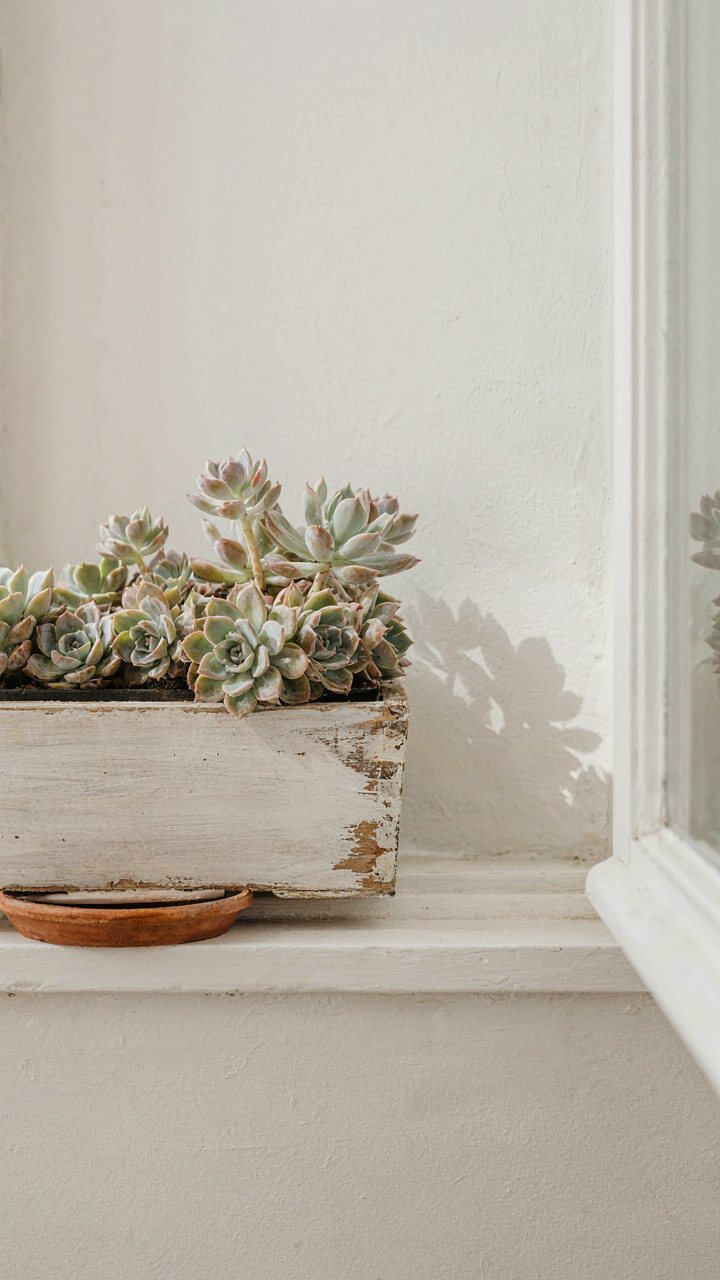
You want to believe your window is good enough so you don’t have to move your plants around. Here’s the mechanism: light intensity drops exponentially with distance and angle, not linearly. A south-facing window in winter gives half the light of the same window in summer. East and west windows shift their utility by season. North windows stay consistently dim year-round.
Succulents need 4 to 6 hours of direct sunlight daily to maintain compact growth and color saturation. “Direct” means unobstructed rays hitting the plant, not ambient room light. Measure this yourself by observing shadow sharpness. A crisp shadow at noon means real direct light. A soft shadow or no shadow means filtered or indirect light. Most people overestimate their light by a full category.
When To Move, When To Leave Them Alone
The common advice says rotate your plants weekly. Wrong. Rotation matters only if light levels are already borderline. In genuinely good light, constant moving stresses the plant through repeated reorientation. Moving a window box succulent is itself a disturbance event that triggers growth disruption.
Move your window box when: leaves pale despite established care, growth stops for two consecutive months during the growing season, or stems stretch noticeably. Leave it alone otherwise. Establish a baseline for six weeks before deciding movement is necessary. Document what pale or stretched growth actually looks like on your specific varieties so you recognize the signal early. The protocol is observation first, intervention second.
The Resilient Root System Protocol: Engineering Longevity
Why Container Material Actually Matters
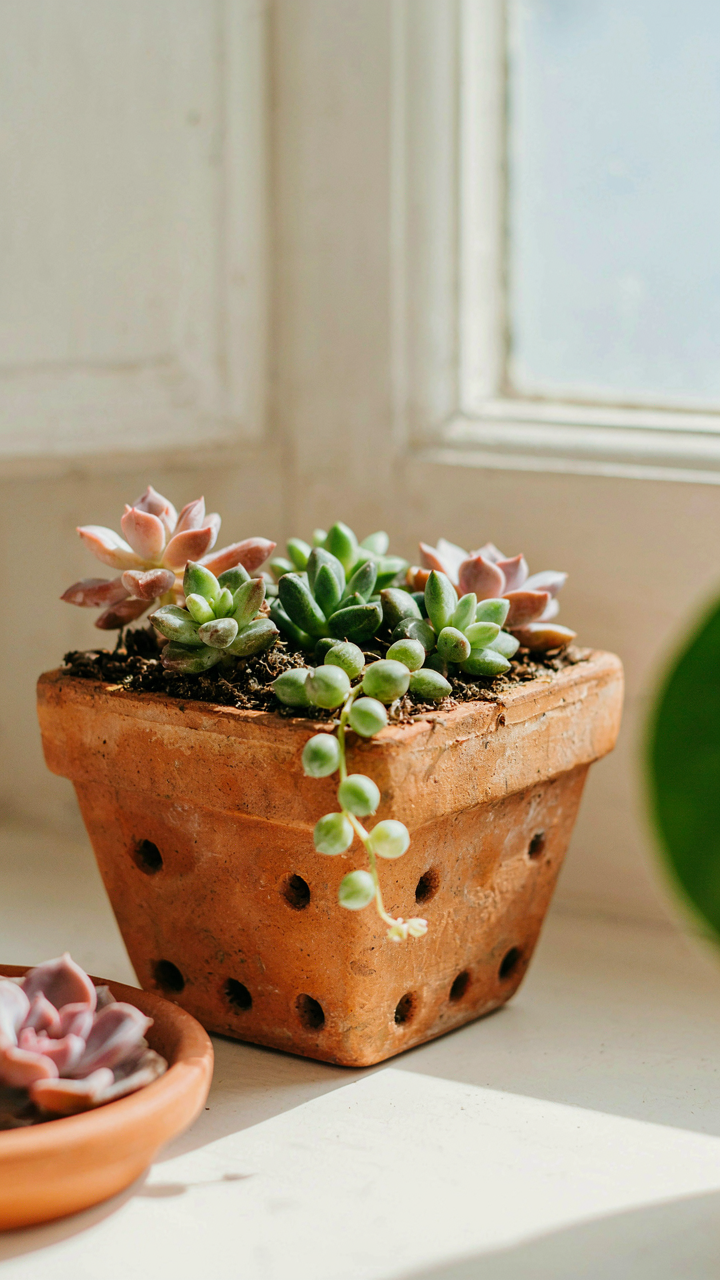
You want your succulents to survive so you look competent without effort. Here’s the mechanism: drainage speed determines how long roots sit in moisture, and moisture in the wrong container creates root rot regardless of watering frequency. Terracotta breathes. It loses water through its walls. Ceramic and plastic don’t. Pick the wrong material and you’re fighting physics instead of working with it.
Depth matters as much as drainage holes. Succulents need shallow containers because their roots spread horizontally, not down. Six inches deep handles most window box varieties. Deeper containers trap water in the bottom third where roots suffocate. Drainage holes belong on the bottom and sides if the box sits against a wall. A single hole won’t cut it. You need redundancy. Water finds every corner of a sealed box before it finds the exit.
Infinite Supply From Single Plants
Propagation isn’t magic. It’s basic plant biology applied to your advantage. One mature succulent produces dozens of viable leaves and offset clumps per growing season. You don’t buy replacements. You harvest them. Take a leaf, let the wound callus for three days, place it on dry soil, mist once weekly for four weeks, and a new plant emerges from the base.
Timing accelerates the process. Spring propagation beats fall propagation because active growth months give roots time to establish before dormancy hits. Use succulent-specific soil, not potting mix. Regular soil holds too much moisture and kills developing roots before they strengthen. The protocol: wound callus, dry placement, weekly mist, patience. Start your propagations in March. By July you’ve stocked your entire window box system.
Winter Dormancy: The Season Of Calculated Neglect

Cold Tolerance And Frost Protection
You want your succulents to survive winter so you don’t have to replace them come spring—that’s the real fear underneath this section. Here’s the mechanism: succulents enter dormancy when soil temperature drops below 50°F, triggering a metabolic shutdown that conserves energy. This is a biological strategy borrowed from survival ecology. Most species simply stop growing rather than die, but the shift happens fast once triggered, and you need to recognize it to avoid killing them with kindness.
Hardy succulent varieties like Sempervivum and Sedum can tolerate freezing temperatures down to minus 20°F or lower when dormant, but tender species like Echeveria and Jade plants die at 40°F. The difference isn’t toughness—it’s cellular composition. Hardy species accumulate sugars in their cells, which lowers the freezing point of cell water and prevents ice crystal formation that ruptures tissue. Window boxes amplify cold exposure because soil freezes faster in shallow containers than in ground beds. Move tender varieties indoors before the first frost, or wrap the box itself with insulation material to slow soil temperature drop.
Minimal Winter Watering
Everyone tells you to “barely water” in winter, which is lazy advice that kills more succulents than overwatering does. The real protocol is different: dormant succulents require zero active growth, so they consume almost no water. But the soil still needs to stay dry enough to prevent root rot in stagnant conditions. Check soil moisture weekly by inserting a finger one inch deep. If it feels damp, wait another week. If it feels bone-dry, add water only until the soil is barely moist, then stop. Most window box succulents need water no more than once every three to four weeks during true dormancy.
The trap most people fall into is watering on a schedule instead of reading the plant. Winter light is weaker, so evaporation slows to almost nothing. A succulent that drinks water every ten days in summer might need it once a month in January. Your only action is this: feel the soil, not the calendar. Water only when the soil is completely dry and the plant shows no visible shriveling, then water sparingly until moisture reaches the bottom of the box. Stop immediately—don’t saturate.
The Bio Mimicry Approach To Pest & Disease

Build A Predator Economy In Your Box
You want pests gone without chemicals because you’re afraid of toxins near your living space. Here’s what actually works: borrow from ecology. In a confined window box ecosystem, you’re not fighting pests in isolation—you’re building competing populations. Mealybugs, spider mites, and scale insects thrive in sterile, undisturbed conditions. Introduce natural predators like ladybugs or lacewings, and you shift the equation. They hunt the pests faster than pests reproduce. The box becomes self-regulating.
Most people spray first and wonder why pests return. They missed the mechanism. A healthy window box ecosystem maintains balance through predator presence, not through kill-everything protocols. Plant diversity matters too. Succulents alone won’t support predator populations. Add trailing sedums or aloe varieties with varied leaf textures. This creates microhabitats where beneficial insects can shelter and breed. The predators stay. The pests decline. You stop spraying entirely.
Spot It Early, Act Without Hesitation
Early detection beats every treatment invented. Check your window box every three days by inspecting the undersides of leaves and soil surface. Mealybugs appear as white cotton clusters. Spider mites create fine webbing. Scale insects look like brown bumps. Most growers see these signs and wait, hoping the problem resolves itself. It doesn’t. One mealybug becomes fifty in two weeks.
The moment you spot an infestation, isolate that plant from others immediately. Move it away from your window box. Spray affected areas with a 70 percent isopropyl alcohol solution or insecticidal soap. Hit the plant twice, four days apart. Don’t dilute the spray more than recommended—it weakens effectiveness. If the infestation covers more than a third of the plant, discard it. Replacement is faster than salvage. This ruthlessness prevents the entire window box from becoming infected.
Succulent Flower Boxes Window: Aesthetics Vs. Survival

When Succulents Meet Flowering Plants
You want the Instagram version of a window box, not the working one. That’s the real tension here. Ecology calls this “niche competition,” and your box is the battlefield. Succulents store water in leaves by design, meaning they thrive on neglect and drought cycles. Flowering plants demand consistent moisture and nutrients to bloom. Put them together and you’re not creating harmony, you’re creating compromise where both lose.
The mechanism is water retention timing. Succulents need soil that dries between waterings, usually five to fourteen days depending on season and light. Most flowering companions need soil that stays evenly moist. You can’t give both what they need without killing one or starving the other of performance. The common advice is to “just pair drought-tolerant flowers with succulents,” but that’s lazy thinking. Drought-tolerant flowers still want more water than sedums or echeveria.
Plants That Actually Work Together
Forget conventional pairing logic. Think in terms of water demand stacking, not aesthetics stacking. Sedums and sempervivums are the non-negotiable base layer, but you don’t pair them with most ornamental flowers. Instead, layer in plants that genuinely operate on the same survival schedule. Dusty miller, with its silvery foliage and minimal flower presence, tolerates the dry cycles. Trailing succulents like string of pearls create visual volume without demanding supplemental feeding. Calibrachoa varieties, specifically the trailing types bred for container culture, actually tolerate occasional drying without collapsing.
The protocol is ruthless simplification: one trailing succulent as structure, one dusty miller for contrast, one single-flower accent that tolerates drought, then fill dead space with trailing succulents only. Don’t add more. Every additional plant type increases watering complexity and failure points. Your window box succeeds because you removed options, not because you added them.
The Anti Instagram Succulent: True Beauty Beyond Filters

Succulents Change, And That Bothers You
You want proof that your choice was right. That’s why the perfect, unchanging succulent appeals to you. But here’s the mechanism: succulents are living tissue, not decorative objects. They grow, they stretch toward light, they fade, they scar. The myth of the static succulent comes from Instagram feeds where people post once and never show the plant again. One angle. One moment. Never the full year.
The real problem is expectation mismatch, not the plant. Most people buy a compact rosette from a nursery, place it in a window box, and expect it to stay that shape indefinitely. It won’t. Echeveria will elongate without enough light. Jade will get leggy. Sedums will spread and sprawl. This isn’t failure. This is biology. You’re fighting against how the plant actually works, not against bad care.
Natural Growth Patterns Beat Manufactured Perfection
In horticulture, there’s a principle called apical dominance, where a plant’s main stem grows faster than side branches until something breaks that pattern. Window box succulents don’t follow magazine layouts. They follow physics. When a succulent stretches, it’s not dying or being neglected. It’s responding to available light by allocating resources to reach it. The plant is solving a problem. You should let it.
Imperfection signals actual growth, not decay. A window box with varied heights, some faded leaves from sun exposure, stems that have thickened over months—that’s a collection that survived real conditions. Stop treating your succulents like they need to match their first day forever. Document what actually happens over two seasons. Notice which varieties hold color in your specific light. Watch which ones grow compact and which ones need pruning. That data is worth more than any filtered photo.
The Investment Mindset: Cultivating Long Term Succulent Wealth

Choosing Varieties That Don’t Fail You
You want proof that you made the right call. That’s the real driver here—you need varieties that won’t force you to restart in six months and admit defeat. The mechanism is simple: some succulents are genetically built to tolerate neglect and poor light. Others aren’t. Pick wrong and you’re replacing plants constantly, which means ongoing cost and ego damage.
- Echeveria: Tolerates low light better than most succulents. Survives temperature swings common in window boxes. Won’t rot if you miss a watering cycle.
- Sedum (stonecrop varieties): Actively prefers sparse water. Handles cold winters without die-off. Spreads laterally to fill space with minimal intervention.
- Sempervivum: Designed for harsh alpine conditions. Survives freezing temps that kill tender succulents. Requires almost zero maintenance after establishment.
- Aloe vera: Stores water in leaves so it forgives gaps between watering. Tolerates indoor window positions with partial shade. Rarely contracts fungal issues if soil drains properly.
- Jade plant (Crassula): Slow-growing, which means fewer mistakes compound. Develops woody stems that anchor it against wind damage. Lasts decades in the same window box.
The species you pick determines your labor cost for the next two to three years. Durable varieties pay dividends. Fragile ones bleed money and time. Don’t optimize for aesthetic variety over durability—that’s backwards thinking that kills your project before it starts.
Setup That Runs Itself
Stop thinking about maintenance as a daily task. Think like a systems engineer: build conditions so good that the plant thrives without intervention. This isn’t about willpower or habit-building—it’s about designing the environment to do the work instead of you.
The real leverage is in drainage and soil composition. Use a pot with drainage holes, not a decorative box without them. Fill it with a gritty cactus or succulent soil mix—not garden soil, which retains water and causes root rot. Add an extra layer of perlite or coarse sand to the bottom. Water only when soil is bone dry, which in a window box typically means every two to three weeks depending on season. Check soil moisture by touching it, not by calendar. This single protocol eliminates ninety percent of failure modes.
The Real Problem Isn’t Your Window Box, It’s Your Expectation Of Effortless Beauty Without Genuine Understanding

Most people want window box succulents to feel like a set-it-and-forget-it hobby. That’s backwards. The plants don’t care about your convenience. They care about drainage, light, and soil composition. Your job today is simple: pick one succulent species you actually want to grow, research its specific water schedule, and commit to checking your box weekly instead of monthly. Stop treating these plants like decorative props. The ones that survive aren’t the lucky ones. They’re the ones with owners who stopped wishing and started paying attention.



