

The Illusion Of Effortless Window Box Ideas

Why Simple Doesn’t Mean Generic
You want window box ideas that work without research, because admitting you need a system feels like failure. Here’s the mechanism: convenience platforms (Pinterest, Instagram, garden sites) show you the same five styles repeatedly because they drive engagement, not because those five styles match your actual constraints. Generic advice survives because it requires no specificity. Real window box design demands you name three things first: your climate zone, the direction your window faces, and how much direct sun hits it. Most people skip this step and copy what looks pretty.
The cost of skipping constraints is visible failure. A trailing petunia style works in zone 7 with south-facing light but dies in zone 5 or on a north wall. A fiberglass box that looks authentic costs less than wood but degrades faster in intense UV. A shallow container that photographs well starves roots in heat. You see the problem only after you’ve bought the materials and planted.
The Real Price Of Design Convenience
Economics calls this the principal-agent problem: the person giving you the idea doesn’t bear the cost of it failing. Aesthetic window box advice follows this pattern exactly. Design magazines and influencers show polished results because those drive clicks. They don’t track which boxes died in week six or which homeowners ripped them down, embarrassed. The convenience lies in the consumption, not in the longevity.
Material choice exposes this trade-off plainly. Pressure-treated wood looks traditional but requires annual sealing in climates with freeze-thaw cycles. Composite materials skip maintenance but cost three times as much upfront. Ceramic containers drain beautifully but shatter in cold winters. Choosing based on appearance alone means choosing based on someone else’s climate and timeline. Before you pick a style, audit the maintenance cost and the replacement frequency you’re actually willing to accept.
Window Planter Boxes: Function Over Fluff
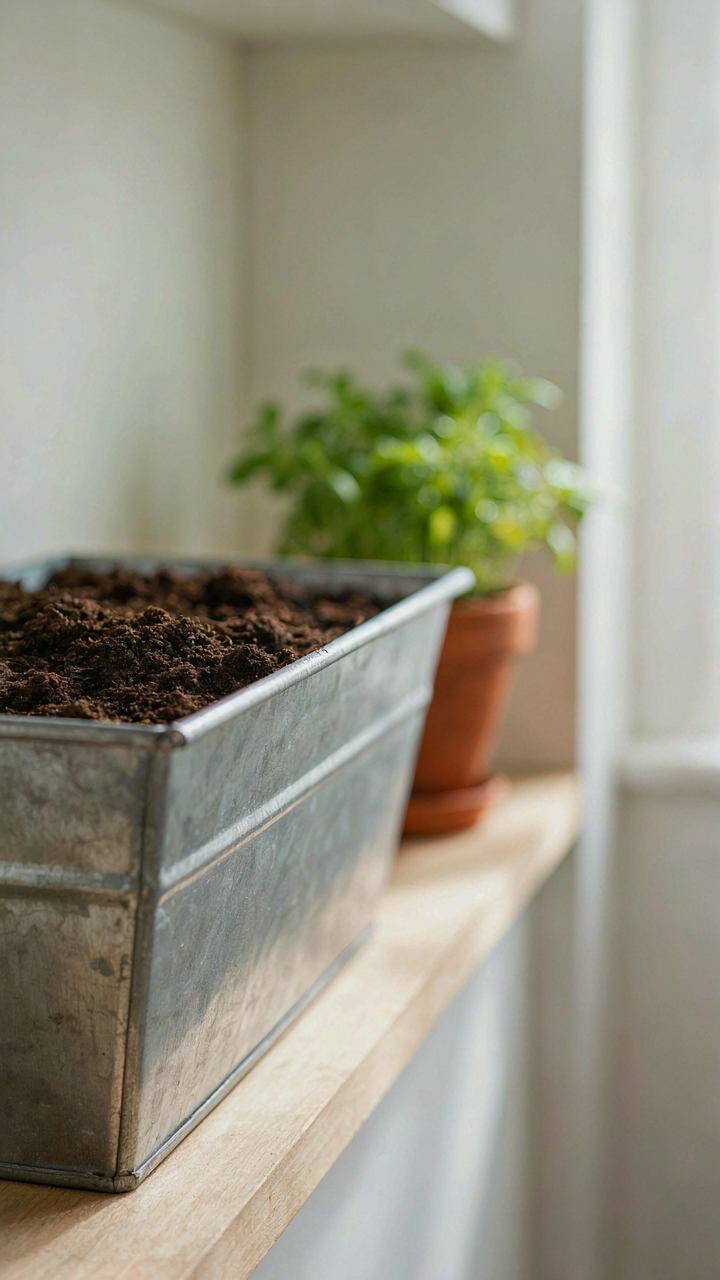
Structural Integrity Determines Lifespan
You want your window box to look intentional, not neglected. Here’s what actually matters: load capacity and drainage architecture determine whether your planter fails in one season or five. Most people obsess over color and ignore the frame that holds everything together.
The box itself must support wet soil weight without sagging or cracking. Soil density ranges from 100 to 130 pounds per cubic foot when saturated. A standard 36-inch window box holds roughly 40 to 50 pounds of moist soil alone, before accounting for plants. The sides need sufficient thickness and support bracing to prevent bowing outward. Poor structural design causes soil displacement, root exposure, and plant death—not because the aesthetic failed, but because the container couldn’t handle the physics.
Material Selection Dictates Real Durability
Wood rots, plastic degrades under UV, metal corrodes, and ceramic cracks in freeze-thaw cycles. Manufacturers won’t tell you directly which materials fail fastest because they profit from replacement cycles. The engineering principle here is degradation resistance: materials that withstand repeated environmental stress cycles outlast those that don’t.
Pressure-treated wood holds up for 8 to 15 years depending on annual moisture exposure. Untreated wood fails in 3 to 5 years. Polyethylene plastic maintains integrity for 10 to 20 years but becomes brittle in extreme cold. Fiberglass composites resist both UV and freeze-thaw damage and often last 15 to 25 years. Galvanized steel withstands rust longer than bare steel, but eventually oxidizes from the inside out. Choose material based on your climate’s specific stress pattern, not based on what your neighbors chose.
The Visual Flow Protocol For Window Box Plants
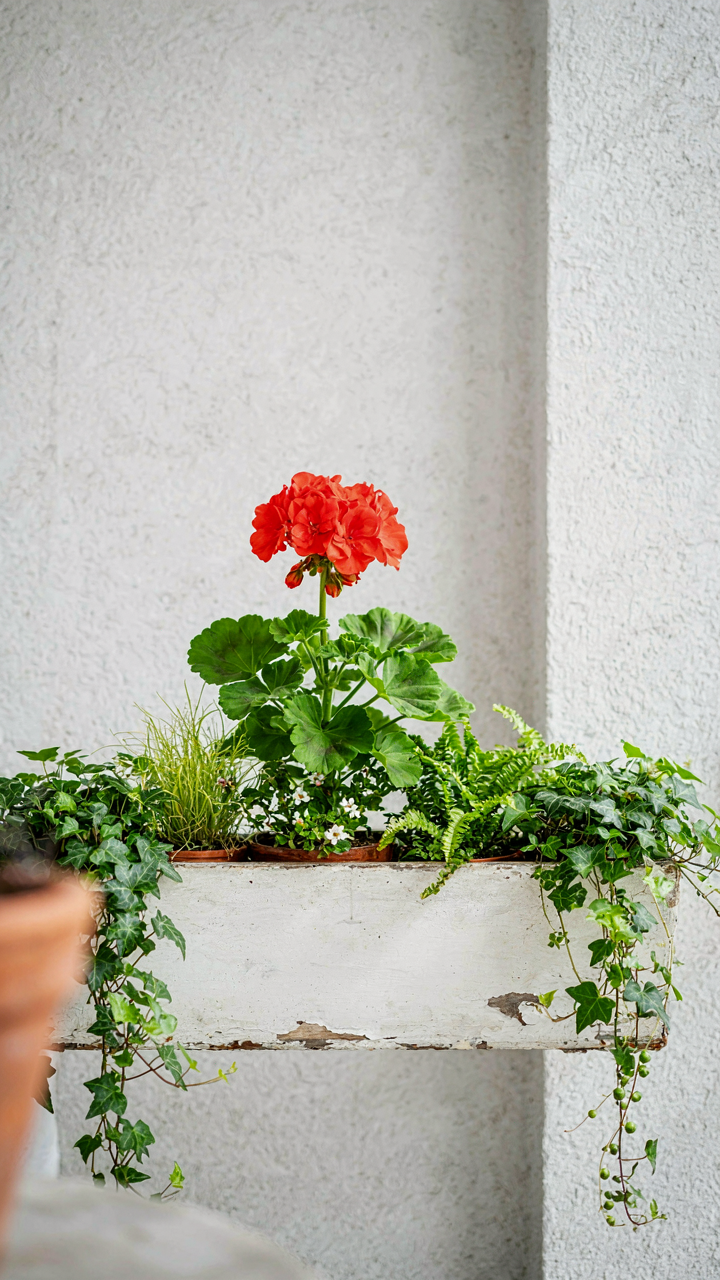
How Plants Actually Grow In Boxes
You want your window box to look intentional instead of like you grabbed whatever was on sale. That’s the real motive here. But most people skip the actual mechanism: understanding how plants behave in confined spaces changes everything about placement.
Plant growth follows a biomechanical principle called apical dominance, where the main stem grows upward while side shoots develop lower. In a window box, this means trailing plants naturally cascade down the sides while upright varieties climb toward light. The box becomes a vertical canvas where growth direction is predetermined by species. You’re not fighting nature; you’re reading it.
Stacking Heights And Sight Lines
The common advice says “put tall plants in back, short in front.” That’s incomplete. What actually matters is interrupting uniform sight lines to create perceived depth in a shallow container.
Use one focal plant at medium height, position it slightly off-center, then flank it with trailing varieties that break the box edge. This breaks visual monotony without requiring rigid height gradation. Plants that reach different heights at different times create movement. Specimen choice determines whether your box reads as planned or accidental.
Winter Window Boxes: The “Hardy Plant” Doctrine

Plants That Actually Survive Cold
You want winter boxes that don’t die so you can pretend your home stays beautiful year-round without effort. Here’s the real mechanism: cold tolerance in plants works like thermal mass in architecture. Some species store enough energy in their root systems to survive freeze-thaw cycles. Others rely on cell structure that prevents water crystallization. The difference isn’t luck. It’s biology, and it’s predictable.
- Boxwood: Dense evergreen shrub with fine foliage, tolerates temperatures below zero Fahrenheit, maintains structure through winter months without supplemental care.
- Winter Heather: Low-growing woody plant that flowers in cold months, offers color when deciduous plants go dormant, thrives in exposed window conditions.
- Ivy (Hedera): Climbing or trailing evergreen with waxy leaves that shed water, survives extended freezes, adds vertical or cascading dimension to boxes.
- Ornamental Grasses: Specific cold-hardy varieties like feather reed grass maintain structure and movement, don’t require dead-heading until spring, provide texture contrast.
- Sedums and Sempervivums: Succulent species with natural frost resistance, require minimal water in winter, add geometric architectural interest to planters.
The list above works because these species evolved in climates with actual winters. They don’t require babying. Plant them densely enough that they create their own microclimate, and space them so water drains freely. Frozen soil that stays wet kills plants faster than frozen soil that stays dry.
Visual Impact Without Flowers
Most winter planting advice assumes you need blooms to justify the box’s existence. That’s incomplete thinking. Winter interest comes from form, structure, and the contrast between dormancy states. Gardeners in temperate regions have used this principle for centuries through topiary, knot gardens, and Victorian winter gardens that relied entirely on foliage and stem color.
Combine varied heights: use tall grasses or upright boxwood as anchors, mid-height evergreens in the middle layer, and trailing ivy or sedums to break the box’s hard edge. Add branches with textural bark or persistent seed heads. The goal is depth and shadow play, not color. Evergreens with red or bronze undertones (like certain heuchera varieties) provide subtle tone shifts as temperatures drop. When the sun hits them at winter angles, these boxes become architectural elements rather than gaps in your facade.
Fall Window Boxes: The “Decay & Renewal” System
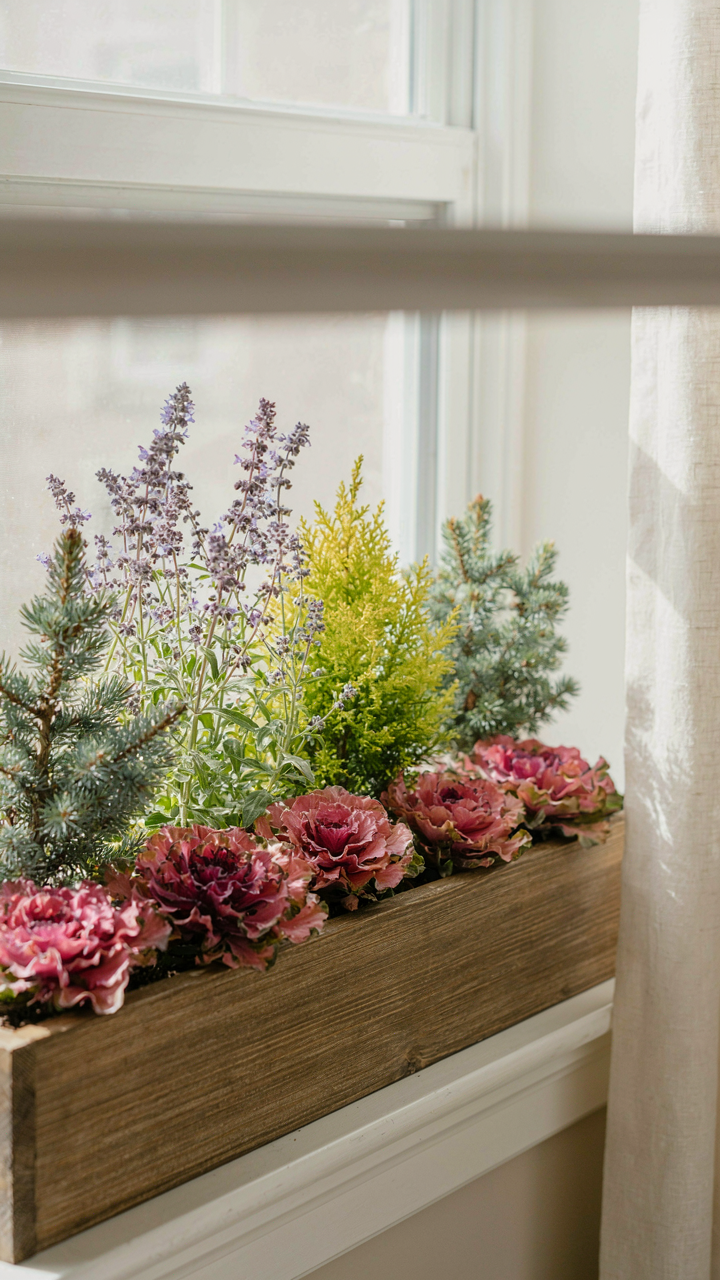
Why Fall Changes Everything
You want your window box to look intentional in October, not like you forgot to maintain it through summer. The mechanism is this: fall forces a choice. Summer boxes hide mediocrity through constant bloom. Fall exposes design because plants die visibly, soil shows, and color shifts from green to bronze. You either plan for that transition or you watch your box collapse into brown mulch. Fall design works backward from the end state instead of forward from what’s blooming now.
Ecology calls this plant succession, and it applies directly to miniature box design. You’re not planting a static arrangement. You’re orchestrating which plants fade first and which carry the visual weight through November. Ornamental grasses peak in fall when perennials collapse. Structural elements like hypericum berries and preserved foliage hold color as living flowers retreat. This is succession in twelve inches of soil: faster layers die, slower layers emerge. The box transforms deliberately instead of declining by accident.
Planting For The Visible Decline
Don’t tier by height alone like the generic advice suggests. Tier by decay schedule. Front layer gets annuals that will brown by late October. Middle layer holds semi-hardy perennials that fade gracefully and reveal structure. Back layer anchors with evergreen texture and persistent seed heads. This sequence lets the box edit itself as temperatures drop. Each plant’s exit becomes part of the design rather than a failure point.
Concrete sequence: plant sedum and ornamental cabbage in front positions around mid-August. Plant Russian sage and coreopsis in middle rows in late July. Anchor with dwarf conifers and Japanese forest grass in back by early August. By October, the annuals recede and the grasses dominate. By November, seed heads and persistent structure take over. You’ve built a three-act composition that performs its own cleanup. Photograph it in week one and week twelve to confirm the progression actually happened.
Summer Window: Maximizing Seasonal Impact

When Blooms Peak Hard
You want your window box to look like it costs money. That’s the real driver here. The mechanism is this: summer heat accelerates bloom cycles, but it also burns plants out faster unless you time your plant selection to the actual temperature curve of your region, not the calendar.
Most people plant everything at once and wonder why July looks dead. Plant cool-season bloomers in late spring for June peak, then swap to heat-tolerant varieties like celosia, zinnias, and calibrachoa for July and August. The soil temperature matters more than air temperature. You need soil that stays above 60 degrees Fahrenheit consistently to trigger germination in replacement plantings.
Feeding The Machine Consistently
Watering and feeding are logistics problems, not mysteries. Container plants have no soil reserve, so they depend entirely on your protocol. Miss three days in July heat and you’ve got dead roots. Feed every two weeks once blooms appear because flowering depletes nitrogen fast, and nitrogen fuels foliage that protects flowers from sun scald.
Use a balanced fertilizer like 10-10-10 or a bloom-specific formula with higher phosphorus once buds set. Water until it drains from the bottom, never to the surface. Check soil moisture daily in peak summer, not twice a week. The difference between thriving and collapsed is often 24 hours.
Window Box Flowers: Strategic Color Theory
Palettes That Produce Measurable Results
You want your window box to signal taste without trying too hard. Here’s the real mechanism: color contrast is a physics problem, not an aesthetic one. The human eye registers distinction through wavelength difference. Monochromatic schemes (one hue, varied saturation) require zero visual effort from observers. They read as intentional because they require restraint. Analogous palettes (colors next to each other on the wheel) create harmony through proximity. Complementary schemes (opposite colors) generate tension and stop the eye dead.
Deploy monochromatic when the box sits against busy backgrounds. Deploy complementary when the box needs to function as a focal point. Analogous works when you want the planting to blend into the architectural narrative without disappearing. The choice isn’t about preference. It’s about function. Test your palette against the wall color, the window frame material, and the viewing distance from the street. Most people skip this step and wonder why their box looks muddled from ten feet away.
Saturation And Restraint Beyond The Basics
Everyone says “use bright colors” and stops thinking. Wrong. Saturation controls visual dominance, not appeal. High saturation demands attention and ages faster because the eye adapts to it. Muted or desaturated tones (colors mixed with gray or their complement) read as sophisticated because they require the viewer to lean in slightly. That effort creates perceived depth.
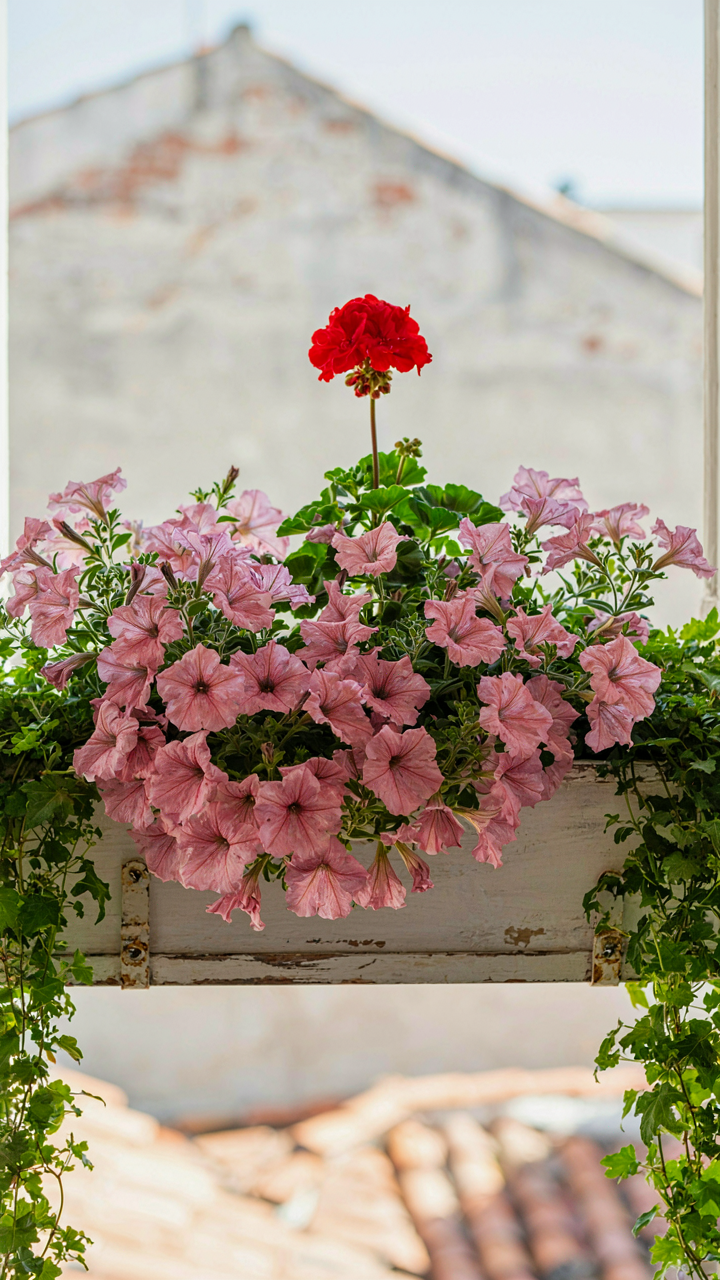
The real play is mixing saturation levels within the same palette. Plant a desaturated background mass with one or two high-saturation accent flowers. The accent lands harder because of the contrast in vibrancy, not just color. This is why a single red geranium in a box of dusty pink petunias stops people. Build your box with a base layer of muted tones, then anchor it with precisely placed saturated elements. This creates visual hierarchy without clutter.
Window Planters: The “Scarcity Principle” Approach

Choose Plants Like You’re Editing, Not Collecting
You want your window box to look intentional so people assume you have taste instead of just time. Here’s the mechanism: scarcity principle from economics applies directly to visual design. When fewer items occupy a space, each one carries more weight. Most people fail here by treating window boxes like plant storage units. They cram in five species, three trailing varieties, and a “filler” that does neither. The result reads as indecision, not abundance.
Strategic plant choice means picking two to three specimens that actually work together structurally and tonally. One focal plant that has height or architectural form. One trailing or cascading plant to soften edges. One accent for color or texture contrast. This framework forces you to eliminate weak choices before installation. Your window box stops being a botanical zoo and starts being a statement. The plants you remove matter as much as the ones you keep.
Design For Negative Space, Not Coverage
The common advice says “fill your window box completely so it looks full and lush.” That’s incomplete thinking. Negative space isn’t emptiness. Negative space is control. When you leave deliberate gaps between plants, you create visual rhythm. Each plant gets air, light, and room to develop its actual form rather than competing for territory. A window box with 30 percent empty soil and 70 percent strategically placed plants reads as sophisticated. A window box crammed to the edges reads as overcorrection.
This works because your eye moves through composition, not around it. Cramped planters force your attention to bounce without landing anywhere. Curated planters with intentional gaps create a viewing path. You see the trailing ivy first, then the focal plant, then the accent color. The viewer’s brain interprets this sequence as deliberate design. Start with your largest specimen dead center or slightly off center. Plant your secondary elements at least three inches away. Fill remaining gaps only if the box still looks unbalanced after two weeks of growth.
The Zero Tolerance Method For Window Boxes Ideas
Stop Designing For The Audience In Your Head
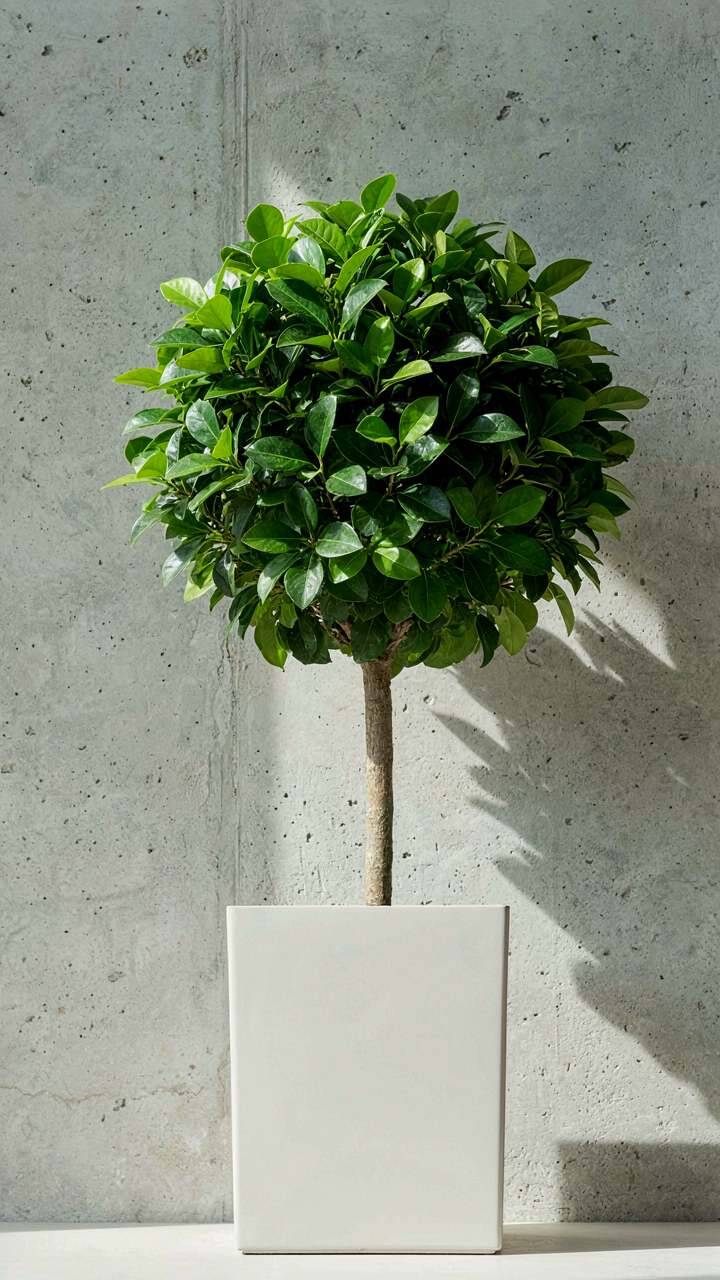
You want your window box to look intentional, not like you grabbed whatever was on sale. The real mechanism at work is constraint. In architecture and product design, constraint forces clarity. Remove options, and what remains has no choice but to work. Most window box failures stem from mixing competing styles, materials, or plant types in the same container. The box becomes visual noise instead of a statement.
Start by committing to one design direction before you touch soil or plants. Decide: cottage style with mixed perennials, modern minimalist with single specimen, Mediterranean with herbs, or classical symmetrical with repeating colors. Not all at once. Not hedging your bets. One direction eliminates the decisions that kill window boxes.
Strip Away Everything That Doesn’t Reinforce One Thing
The common advice says add variety and interest. That’s backwards. Every element in your window box should reinforce the same visual message. If you’re doing modern minimalist, trailing ivy and specimen shrubs reinforce clean lines and form. If you’re doing cottage, mixed textures and volunteer seedlings reinforce controlled wildness. The moment you add incongruent plant heights, colors, or growth habits, you’re fighting against your own design.
Edit ruthlessly. Remove plants that don’t belong. Remove trailing stems that soften hard lines if you want those lines. Remove solid colors if you’re aiming for textural contrast. The boxes that photograph well, that people actually notice, operate on subtraction not addition. You finish editing when removing one more element would break what you’re trying to say.
Window Boxes Ideas: The “Architectural Integration” Blueprint
Match Your Planter To Structural Language
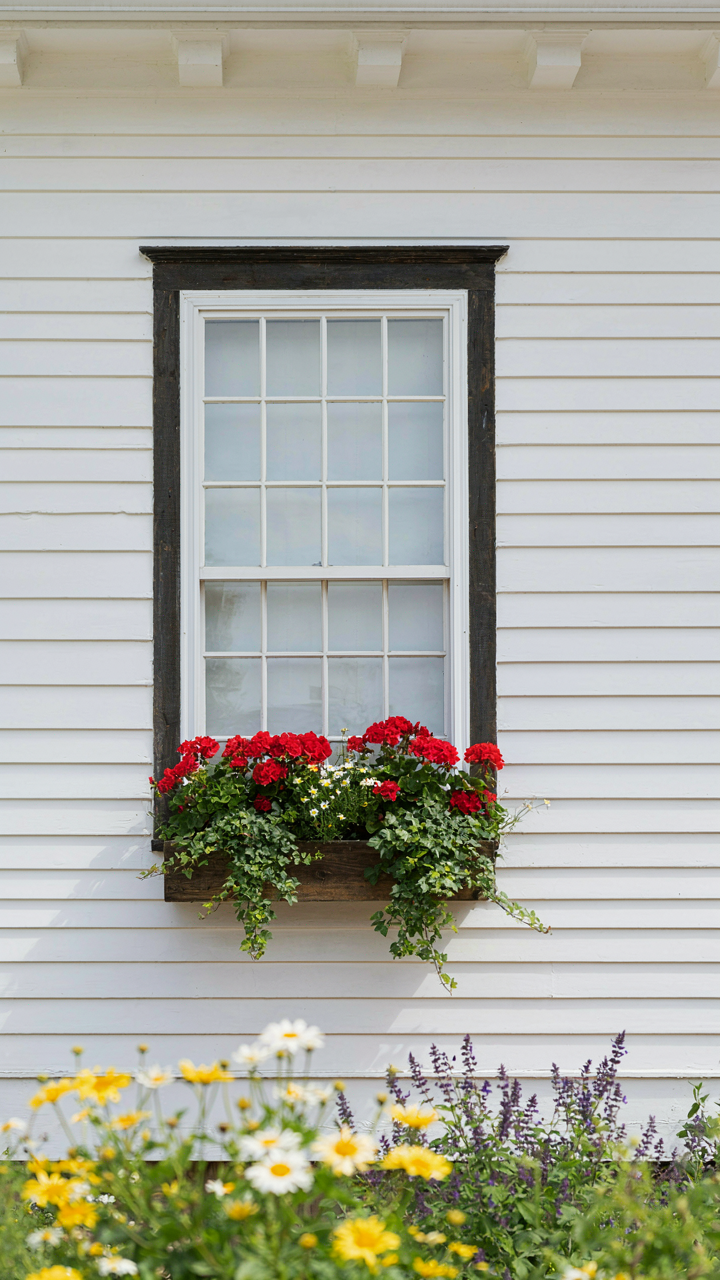
You care about this because a mismatched planter screams amateur, and your home’s exterior is the first thing people judge. The mechanism is borrowed from architecture itself: coherence. Every building speaks a visual dialect—Victorian, mid-century modern, farmhouse, minimalist. Your planter either amplifies that dialect or contradicts it. A sleek metal box on a Victorian cottage creates visual noise. A ornate wooden planter on a glass-and-steel contemporary home feels dated before it’s installed. The planter must echo the existing materials, proportions, and details already present on your facade.
Start by identifying your home’s architectural vocabulary: what’s your trim made of, what’s the roofline style, what materials dominate the exterior. Then choose planter materials and profiles that repeat those elements. Stone boxes for stone trim. Metal for metal details. Wood stain colors should match or complement existing siding or shutters. This isn’t decoration—it’s structural honesty.
Boxes As Volumetric Extensions
Window boxes aren’t accessories bolted onto your wall. They’re volumetric elements that either extend or interrupt the vertical and horizontal lines already established by your window frame, siding, and foundation. Think of them as part of the building’s mass, not a afterthought. A box that runs the full width of the window creates horizontal emphasis. One that sits contained creates vertical punctuation. Both are valid, but only if you’re intentional about which lines you’re reinforcing.
Install your box so its proportions create visual continuity rather than contrast. If your windows are tall and narrow, a shallow box reads correctly. If they’re wide and squat, a deeper box feels natural. The depth and overhang matter more than most people realize—a box that sticks out too far breaks the plane of the facade and looks tacked on. A properly integrated box appears to be part of the structure, not floating in front of it.
The Real Obstacle Isn’t Style, It’s The Fear Of Deviating From Suburban Conformity

You don’t need permission to plant differently. The mechanics of window box planter styles work the same whether you choose Victorian copper or raw industrial steel. What stops people isn’t knowledge. It’s the quiet voice saying your neighbors will judge you for it. Pick one planter style that makes you uncomfortable today. Order it. Install it. You’ll realize the judgment you feared never arrives. What does arrive is the relief that comes from making your own choice.



