

The Substrate Fallacy: Why Soil Mixes Trump Flower Choices For Window Box Flowers
Drainage Dictates Plant Vitality
You’re betting on the flowers when you should be betting on what holds them. Most people buy window box flowers first and soil second, which is backwards. Drainage is a physics problem, not a gardening opinion. Water moves through substrates via capillary action and gravity. Get the substrate wrong and you’ve engineered root rot before you’ve planted anything.
Standard potting soil holds too much water for window boxes exposed to rain and overhead watering. Window boxes drain from one dimension only—downward—which means water pools in the bottom faster than it does in ground beds. A 40% perlite or coarse sand amendment to standard potting soil accelerates drainage enough to matter. The flowers you choose are irrelevant if the medium won’t release water within 24 hours of saturation.
Nutrient Retention For Sustained Growth
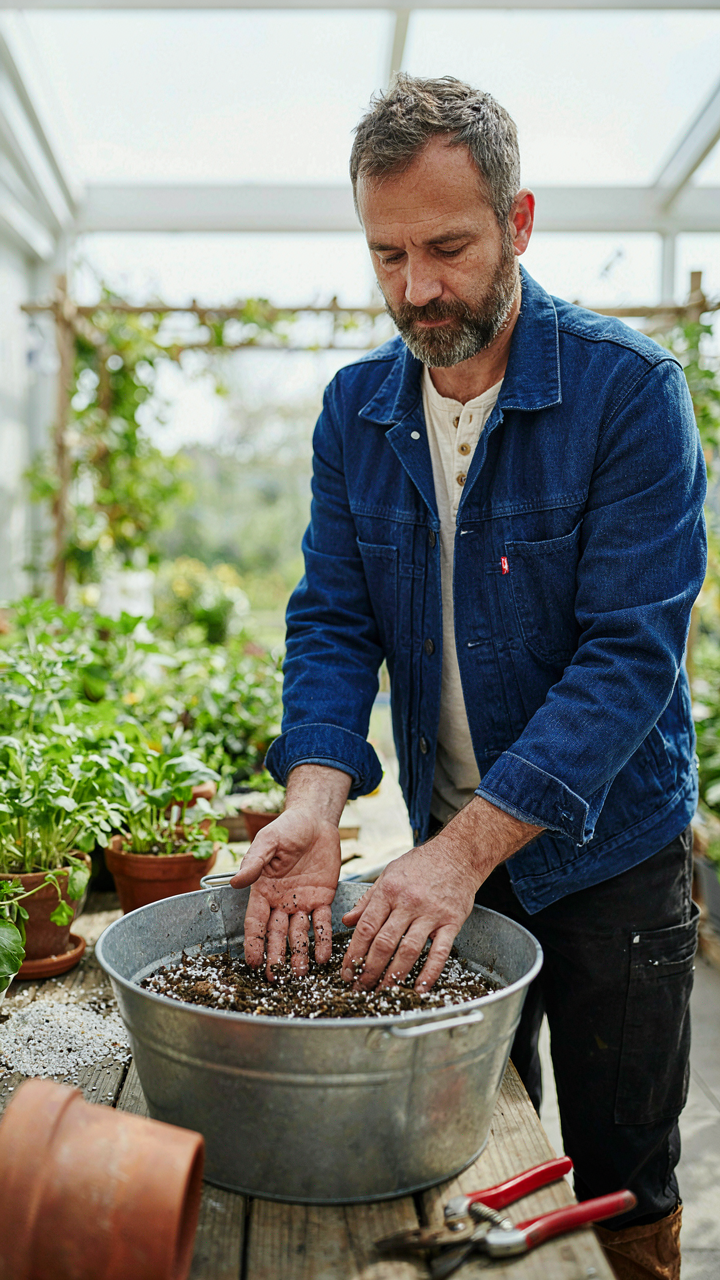
The soil mix must hold nutrients while releasing water fast. These aren’t opposing forces if you use the right structure. Coir or coconut husk retains both moisture and nutrients without the waterlogging that peat creates. Peat-based mixes collapse over time and compact, suffocating roots. Coir holds its structure through multiple seasons.
Mix your own substrate: 50% coir or high-quality potting soil, 30% perlite, 20% aged compost. This ratio drains within hours but feeds plants through mid-season without additional fertilizer input for the first six to eight weeks. Refresh the top inch of soil every spring or add slow-release fertilizer pellets in month two. Nutrient depletion is why window boxes fail, not flower selection.
The Microclimate Method: Matching Window Box Plants To Their True Environment

Sun Exposure: Hourly Mapping
You want the window box that looks effortless. That’s the real problem. Most people guess at light conditions instead of measuring them, then blame the plant when it dies in the wrong spot.
Sunlight follows a predictable pattern called the solar arc, borrowed from physics and astronomy. On your window box, this means the same wall receives different light intensity every hour. A north-facing box at 9 AM gets nothing like the same photon density it receives at noon. You need to map your specific window’s hourly light, not assume based on compass direction alone.
Walk outside with a simple notebook. Record direct sun hitting your window box at 8 AM, 10 AM, 12 PM, 2 PM, and 4 PM. Note whether the light is blocked by trees, buildings, or other structures. Count how many hours receive unobstructed direct sunlight. This creates your actual light profile. Most window boxes receive 3-6 hours of true direct sun, not the 8 hours people guess.
Once you have this number, plant selection becomes mechanical, not guesswork. Full-sun plants like petunias and marigolds demand 6+ hours. Partial-shade plants like impatiens and begonias thrive in 3-5 hours. Shade-tolerant plants like hostas work in under 3 hours. Map hourly, then match the number to the plant’s requirement. Everything else is just execution.
Wind And Rain Exposure Impact
Wind isn’t just discomfort for flowers, it’s a mechanical force that accelerates water loss and snaps stems. Rain direction matters more than total rainfall, yet people treat window boxes like they all face the same weather.
Meteorologists call this aspect exposure, and it determines how much lateral wind and rain your box actually absorbs. A south-facing box in a city corridor channels wind differently than the same box on an open balcony. East-facing boxes get morning sun paired with afternoon wind protection. West-facing boxes bake in afternoon heat while catching evening wind gusts. You’re not decorating with flowers. You’re engineering for local wind patterns and water delivery.
Spend one week observing your window. Where does rain come from during storms? Does wind sweep horizontally or push from below? Does afternoon sun evaporate water faster on certain days? Write down when your box dries out. This reveals whether wind or sun is your primary enemy. Windy exposures need plants with flexible stems like calibrachoa. Rain-heavy exposures need plants with fuzzy leaves that shed water, like dusty miller. Harsh afternoon sun combined with wind demands succulents like sedum that store water internally.
The action step is simple: relocate your box one week before planting and observe the actual conditions it faces.
The Gravity Protocol: Designing For Visual Weight And Flow In Window Boxes

The Thriller, Filler, Spiller Framework
You want your window box to look intentional, not like you threw plants at a container and hoped. The thriller-filler-spiller principle comes straight from landscape architecture, where designers use the concept of focal weight distribution. A thriller is your anchor plant—tall, structured, commands attention. It works exactly like a focal point in composition: it stops the eye first, then guides it elsewhere.
The mechanism is simple. Thriller provides vertical drama and draws focus. Fillers surround it with medium-height plants that create density and block gaps. Spillers cascade over edges, breaking the box’s hard line and creating movement downward. Without this structure, window boxes read as chaotic. Most people skip this step and stack plants randomly, then wonder why the result looks amateurish. You need the hierarchy.
Dynamic Contrast Through Color Opposition
Color theory isn’t decoration advice—it’s visual physics. Complementary colors sit opposite each other on the color wheel and create maximum contrast because your eye perceives them as fighting for attention simultaneously. Plant one hot pink petunia next to pale silver dusty miller, and that pink pops harder than if you’d surrounded it with softer tones.
The real mistake people make is choosing colors they personally love instead of colors that create visual separation. A window box with five shades of purple reads as one muddy mass from ten feet away. Contrast requires opposition: warm against cool, saturated against muted, light against dark. Pick your thriller plant’s color first, then select fillers and spillers from the opposite side of the wheel. This single decision transforms a box from invisible to undeniable.
The Neglected Season: Elevating Fall Window Planter Box Ideas

Plants That Actually Survive Cold
You’re skipping fall because you think summer boxes are the only move that matters. That’s leaving money on the table. Borrowing from horticulture’s principle of hardiness zones, fall planting works like a biological filter: you select species bred to tolerate specific temperature ranges, and those plants thrive precisely when others die. This isn’t decoration by accident. It’s intentional survival engineering.
- Ornamental Cabbage and Kale: Dense foliage tightens in cold, intensifying color from green to deep purple or burgundy. Tolerates hard freezes and improves visually as temperatures drop below 50°F.
- Mums (Chrysanthemums): Bred specifically for fall bloom cycles. Deliver consistent flower production through October and November in most zones without supplemental care.
- Pansies and Violas: Germinate in cool soil, bloom through frost, and restart flowering in early spring. Outperform all other annuals in sustained cold performance.
- Heuchera (Coral Bells): Evergreen foliage shifts color intensity in temperature swings. Maintains structure and visual weight through winter dormancy.
- Sedums: Succulent tissue stores water efficiently in cold months. Develops deeper reds and purples as frost exposure increases pigmentation.
Most gardeners treat fall boxes as a clearance sale problem instead of a design opportunity. These plants don’t just survive cold. They perform better in it. They’re cheaper to source in September. Install them in August when soil still holds warmth, giving roots six weeks to establish before the hard freeze arrives.
Structure Wins When Color Fades
Texture beats bloom count once temperatures drop and flowering species thin out. Borrowing from sculptural design, you’re building form that reads from a distance the same way a bronze relief does: through shadow, depth, and material contrast rather than pure pigment. Fall boxes demand architectural thinking.
Dried grasses work harder than fresh flowers in November. They catch frost, cast shadows, and add winter presence that blooms can’t sustain. Combine upright grasses like feather reed grass with trailing sedums and trailing ivy for layered depth. This stacking creates sightlines that pull the eye downward, then outward, then back in. Incorporate branches, twigs, or contorted filbert stems for vertical punctuation. These elements persist through December and January when everything else browns out. The mechanism is simple: when you remove color as a design tool, you’re forced to rely on form, which actually has greater longevity and requires zero maintenance once established.
The Maintenance Paradox: Less Watering, More Planning For Summer Window Displays
Self Watering Systems Integration
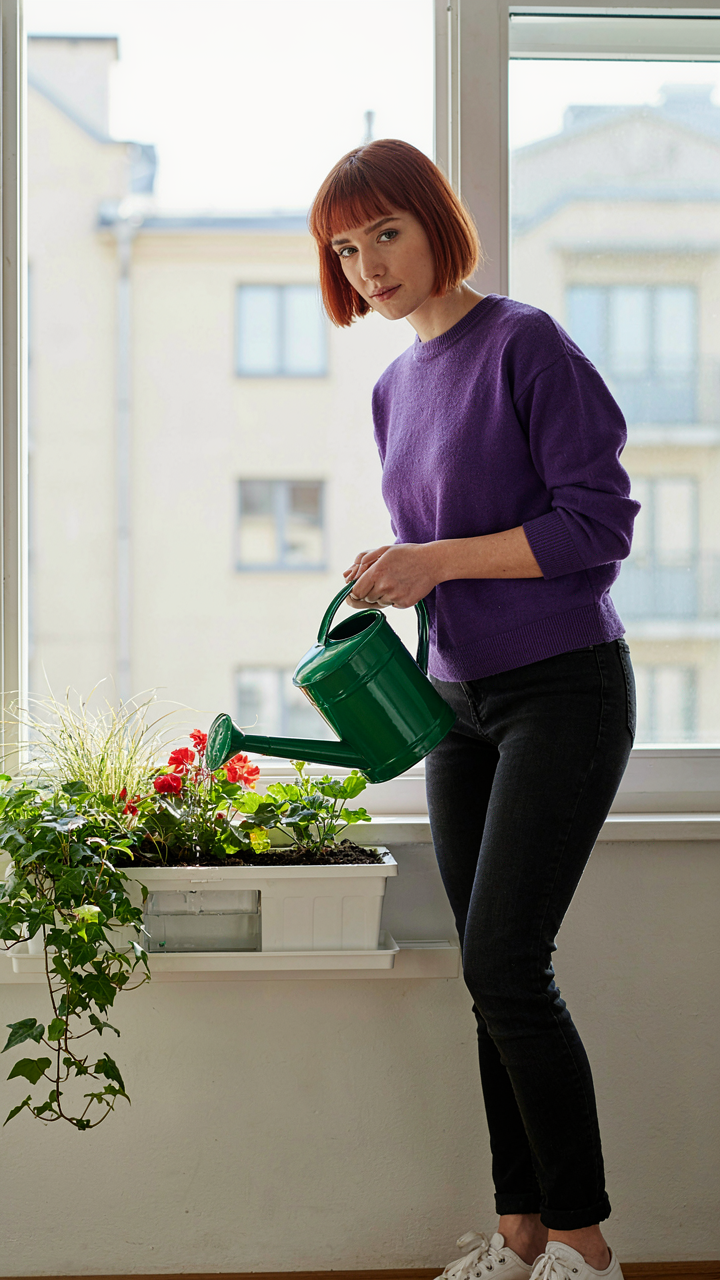
You want a window box that doesn’t demand daily attention because you’re afraid neglect will wreck your setup. Here’s the mechanism: self-watering systems work by capillary action, the same principle that pulls water up through plant roots. A reservoir sits below the soil, and a wicking material draws moisture upward on demand. The plant consumes water only when it needs it, not when you remember to pour.
Most people treat self-watering boxes as a fix-all. They’re not. They solve one problem: frequency of watering. They don’t solve plant selection or drainage failure. The real work is filling the reservoir on a schedule tied to season and heat, not to when the soil looks dry. In summer, check the reservoir every five to seven days. In spring or fall, stretch that to ten. Overwatering through the reservoir is still possible. The system removes the guesswork only if you follow the protocol.
Strategic Plant Grouping By Water Needs
Forget the advice about mixing everything together. Grouping by water demand is how military logistics organize supply lines: you position units by consumption rate to minimize distribution failure. In window boxes, this means drought tolerant plants on one side, moderate feeders in the middle, thirsty plants on the other. Soil depth and drainage flow support this arrangement naturally.
The mechanism is simple: plants in the same box share one soil mass and one drainage event. A petunia and a begonia have different water appetites. If you plant them together, one either floods or dries out. Separate your box into zones. Position trailing dusty miller (drought tolerant) away from the soil’s wettest point. Place impatiens (moisture loving) in the depression where water pools. Position calibrachoa (moderate) in between. This way you water once and every plant gets what it actually needs. The grouping becomes your watering protocol.
The Investment Fallacy: When Cheap Plants Cost You More In A Window Box Garden
Quality Nursery Stock Vs. Big Box
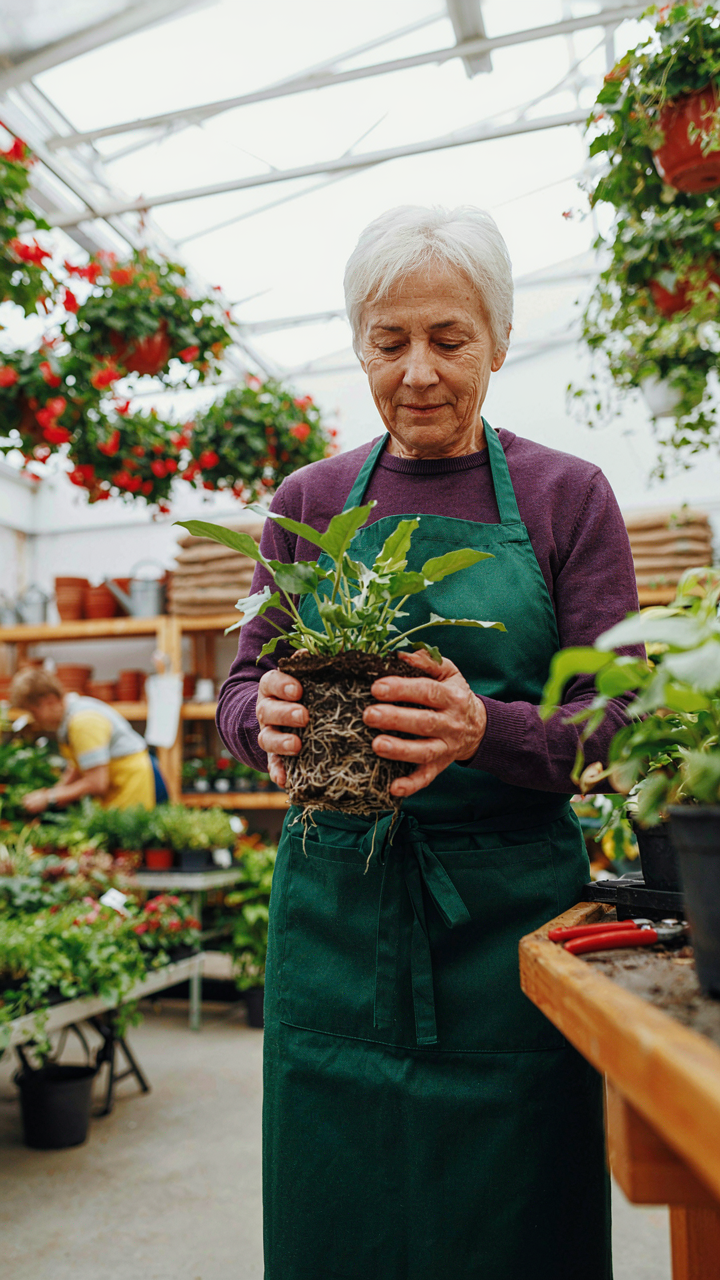
You want to save money upfront because spending less feels like winning. Here’s what actually happens: big box stores prioritize volume and speed, not root structure or genetic vigor. A plant that costs half as much often comes from operations built around moving inventory fast, not building plants that thrive in confined spaces.
Quality nursery stock carries a markup because growers spend time hardening plants, selecting disease-resistant cultivars, and maintaining root-to-shoot ratios that matter in containers. That plant costs more at purchase but establishes faster, requires fewer replacements, and produces fuller blooms through the season. The window box constrains your margin for error—a weak plant dies before it performs, forcing you to replant mid-season at full replacement cost plus labor.
Genetics Beat Price Tags Later
Disease resistance is an economics problem, not a gardening problem. A susceptible petunia variety might cost two dollars less but invites powdery mildew by mid-July, requiring fungicide applications, repeat spraying, and eventual replacement. A resistant cultivar from a quality source costs more initially but eliminates the downstream cost spiral.
Most gardeners don’t track replacement frequency or fungicide spending—they just notice the window box looked good in June and died by August. Pick plant varieties bred for disease resistance, not just availability. Ask the nursery which cultivars they selected for that trait. This single decision—checking the plant tag for resistance markers or asking directly—collapses the entire cheap-plant trap.
The ‘Perception Hacking’ System: Crafting Optical Illusions With Window Box Flower Ideas
Height Layering Creates Dimensional Depth
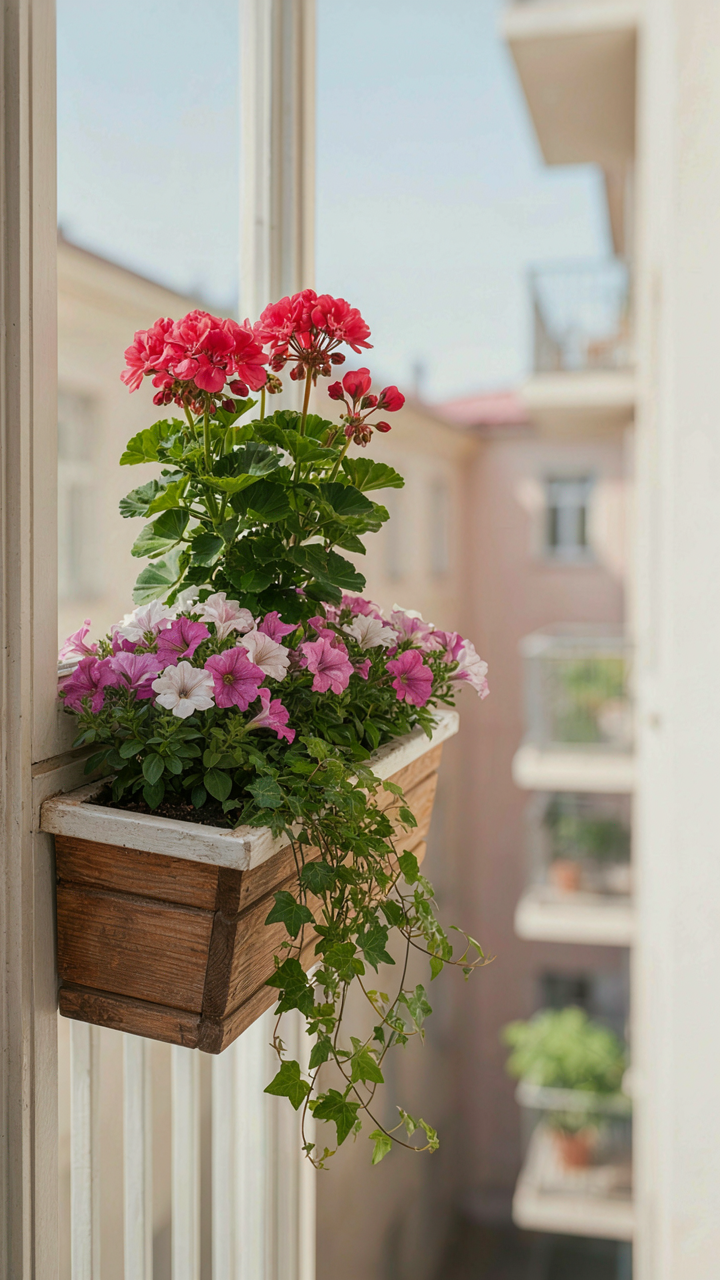
You want people to stop and look twice because a flat window box feels like a wasted opportunity. This is borrowed from spatial depth in photography: foreground, middle ground, background. Apply it here. Tall plants recede visually, short plants advance, mid-height plants fill the gap. The mechanism is simple: the human eye reads layered heights as complexity and investment.
Place trailing or creeping varieties at the box’s edge to spill forward. Position upright or mounding plants in the center. Push the tallest specimens to the rear, anchoring the entire composition. This three-tier structure forces the viewer’s eye to travel through the box instead of across it flatly. Do this consistently and your window box stops looking like a decorative afterthought.
Where The Eye Actually Stops
Common advice says “add a focal point plant.” That’s incomplete. You need to understand line of sight. The eye lands first on whatever breaks the horizontal plane most dramatically, then moves to color contrast, then to texture. One strong vertical form beats scattered color every time.
Choose one specimen to dominate the box’s depth. This could be a single tall geranium, a small upright conifer, or a flowering spike like salvia. Everything else becomes supporting players. The focal plant should occupy roughly 40 percent of visual weight, leaving breathing room around it. Position it slightly off-center, not dead middle. This creates tension the eye wants to resolve, which means people actually look.
The Iteration Principle: From Engineering, Why Every Spring Window Box Is A Prototype

Feedback Loops For Plant Performance
You want to plant once and have it work perfectly. That’s the real fear underneath this section. It won’t happen. Engineering calls this a feedback loop, and your window box runs on the same principle as any system that improves: you observe output, you adjust input, you observe again. Plants tell you everything through visible performance. Wilting means overwater or underwater. Leggy growth means insufficient light. Leaf drop means temperature swing or stress. You’re not guessing. You’re reading the signal.
The common advice says “check your plants daily.” That’s incomplete. You need a diagnostic framework. Document three variables each week: soil moisture at the root level (not surface), light hours the box actually receives (count them, don’t assume), and leaf color shift. After four weeks, you have data. After eight weeks, you have a pattern. Plants perform the same way given the same conditions. If petunias droop every Thursday afternoon in your box, that’s not a mystery. That’s your specific microclimate telling you something about air circulation or heat reflection off your wall. Fix the condition, not the symptom.
Testing Plant Combinations Empirically
You already know mixing colors and heights matters. What you don’t do is systematically test which combinations survive your actual conditions. A/B testing comes from marketing, but it works identically here: you run two versions of the same box and measure which performs better. Better means longer bloom, fuller coverage, or less maintenance. Split your window box or use two boxes side by side. One box gets trailing petunias with upright snapdragons and ornamental kale. The other gets verbena with dusty miller and calibrachoa. Same light exposure, same watering schedule, same soil. Measure results after six weeks.
The box that outperforms becomes your template for next spring. The underperformer teaches you what doesn’t work in your microclimate, and that knowledge is worth more than any generic blog post. You’re not trying to create Instagram perfection. You’re building a replicable system that actually produces results in your specific location. Document the winning combination with photos, the plant names, and the spacing. Run the same test again next season with one variable changed. That’s how iteration builds certainty instead of hope.
The Fallacy Of ‘Full’: Why Negative Space Elevates Fall Window Boxes

The Box Itself Frames The Composition
You want people to notice your window box. That’s the real reason you’re reading this. The mechanism is simple: your box container dictates what can work visually. Most people stuff plants into boxes and hope for impact. Wrong. The box architecture—its material, depth, and visual weight—acts as the frame. In design, the frame constrains the composition. A shallow terracotta box demands restraint. A deep wooden planter built into the sill can absorb density. The box doesn’t disappear. It either supports or drowns the plants you choose.
The material of your box changes how full it should appear. Wood boxes weather and darken, so they fade into shadow by late fall. Metal boxes stay visually loud. Plastic boxes read cheap unless they’re elevated by what’s inside. If your box is a visual anchor itself, plants should occupy maybe sixty percent of the space. If it’s neutral, you have more freedom. The architecture of the box determines the visual budget for plants. Respect that constraint and your arrangements hold together. Ignore it and you get visual noise.
Bare Branches As Structural Drama
Skeletal branches aren’t filler. They’re the structural skeleton that makes a composition breathe. In architecture, negative space prevents visual collapse. A room with only furniture feels suffocating. A room with air and sight lines feels purposeful. Fall branches do the same thing in a window box. They create vertical lines. They catch light. They age gracefully as frost hits them. Common advice says to layer foliage densely. That’s why most fall boxes look like compressed hedges.
Use branches from serviceberry, dwarf birch, or contorted hazelnut. Height should extend eight to twelve inches above the box rim. Space them so you can see through them. The branches create visual pathways the eye follows, not obstacles it stops at. Position trailing sedums or ivy to weave between branches rather than hide them. This creates rhythm. The mechanism is simple: negative space plus structural elements equals visual sophistication. Fullness without structure reads as amateur.
The Real Obstacle Isn’t A Lack Of Ideas; It’s A Failure To Master The Environment Before The Aesthetic

Most people fail at window boxes because they chase pretty flowers before understanding their specific conditions. Sun exposure, drainage, wind patterns, soil quality. These aren’t boring details you skip. They’re the foundation everything else builds on. Stop scrolling inspiration boards and spend three days observing your window. Write down what you actually have, not what you want. Then pick flowers that thrive there instead of flowers you wish would survive. Your environment doesn’t care about your vision. Master it first, and every flower choice becomes obvious.



