
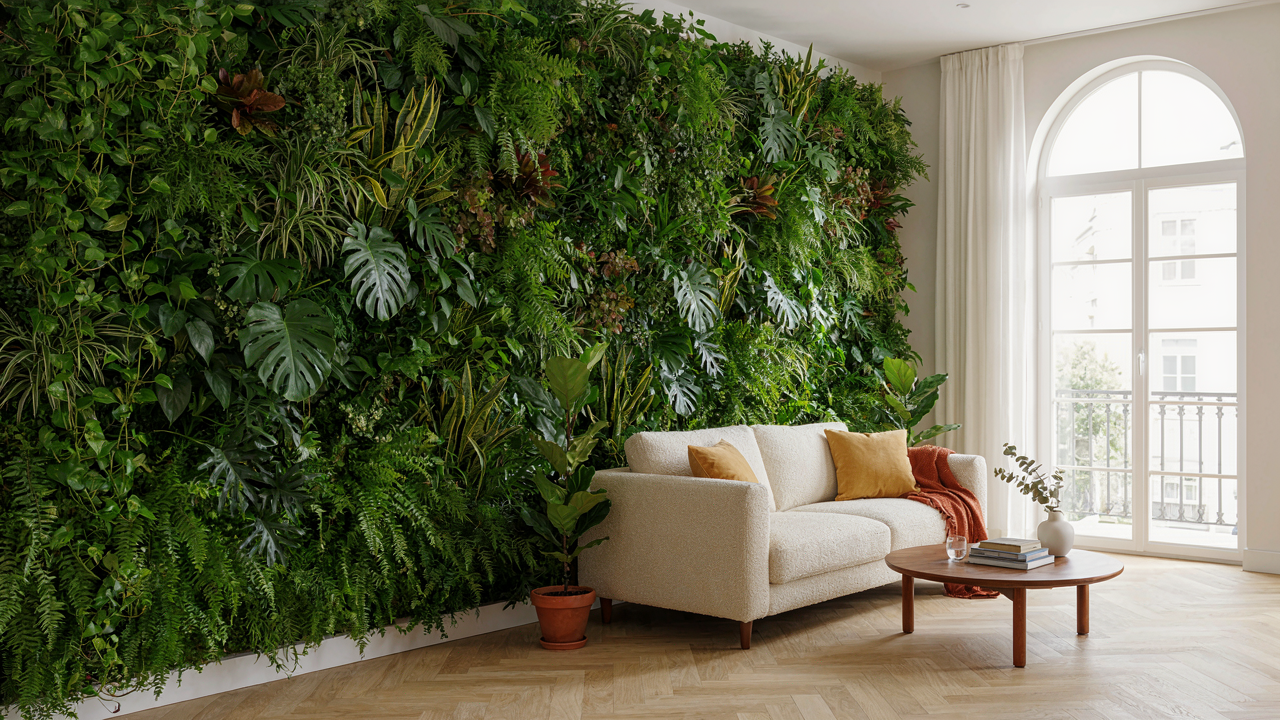
Beyond Instagram: The Pragmatic Power Of Vertical Greenery
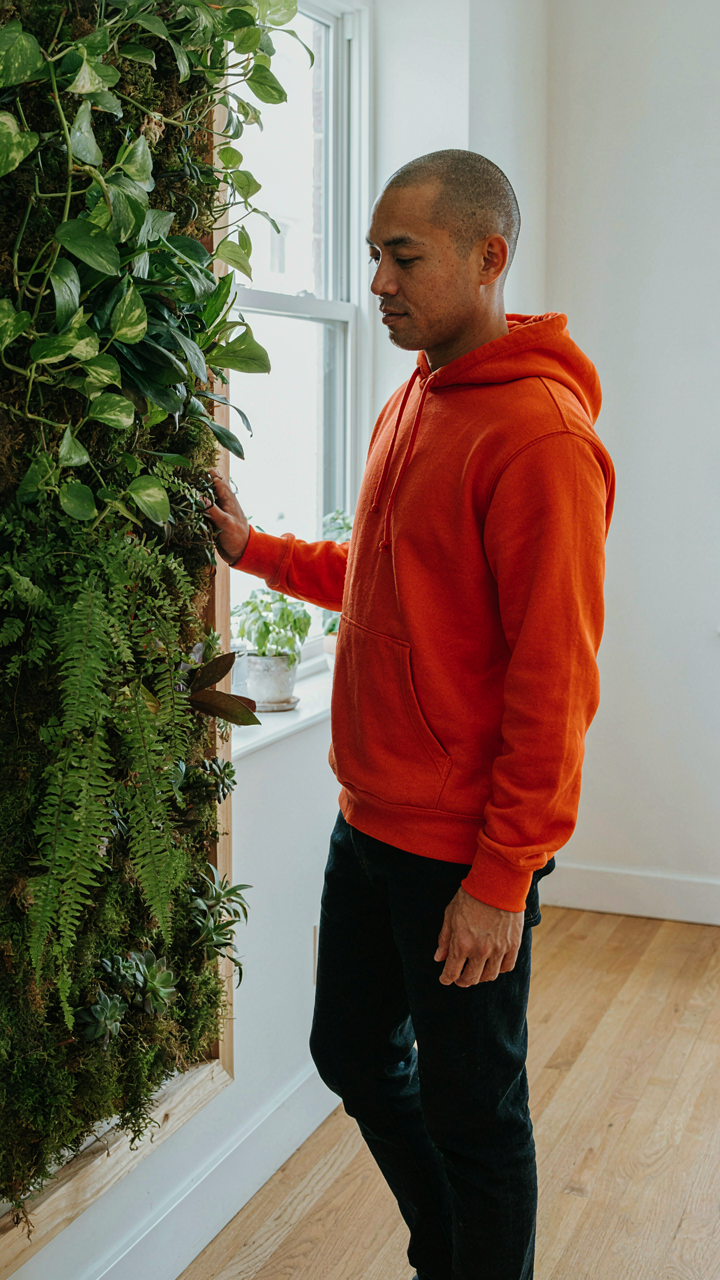
Space Multiplication Through Vertical Stacking
You want to feel like you own more square footage than you actually do. Here’s the mechanism: a living wall planter uses economics borrowed from real estate—vertical density. Instead of spreading plants across a floor footprint, you build upward and reclaim usable horizontal space. A wall planter occupies zero square feet of your room while delivering the visual and air-quality benefits plants require. Most people waste floor space with planters because they think horizontally. Vertical greenery flips this entirely.
The math is straightforward. A six-foot-tall living wall planter on a four-by-eight-foot wall holds 15 to 25 plants depending on pocket depth. That same plant collection spread on shelves or stands consumes 40 to 60 square feet of floor real estate. In urban apartments where rent scales with square footage, this difference compounds into actual money saved. You’re not decorating—you’re optimizing your layout while plants handle CO2 conversion and humidity regulation.
The Actual Return On Installation And Maintenance
Every framework claims living walls “increase property value” or “improve air quality dramatically.” These claims are vague and often overstated. The real ROI splits into two categories: psychological and operational. Psychologically, plants reduce cortisol measurably—studies confirm this consistently. Operationally, a living wall reduces wall temperature by 2 to 5 degrees in direct sunlight, lowering cooling costs in warm climates. You gain concrete leverage only if you quantify which benefit applies to your space first.
The maintenance cost is where most people fail to calculate correctly. A basic living wall planter requires weekly watering, occasional fertilizing, and dead leaf removal. Premium systems with drip irrigation reduce labor by 60 percent but cost 2 to 4 times more upfront. Calculate your true hourly rate—if you bill yourself at 50 dollars per hour, ten hours monthly of watering and trimming costs you 500 dollars yearly in opportunity cost alone. Match the system complexity to how much time you actually have, not to how impressive it looks in photos.
The Bio Architectural Imperative: Wall Garden As Functional Infrastructure
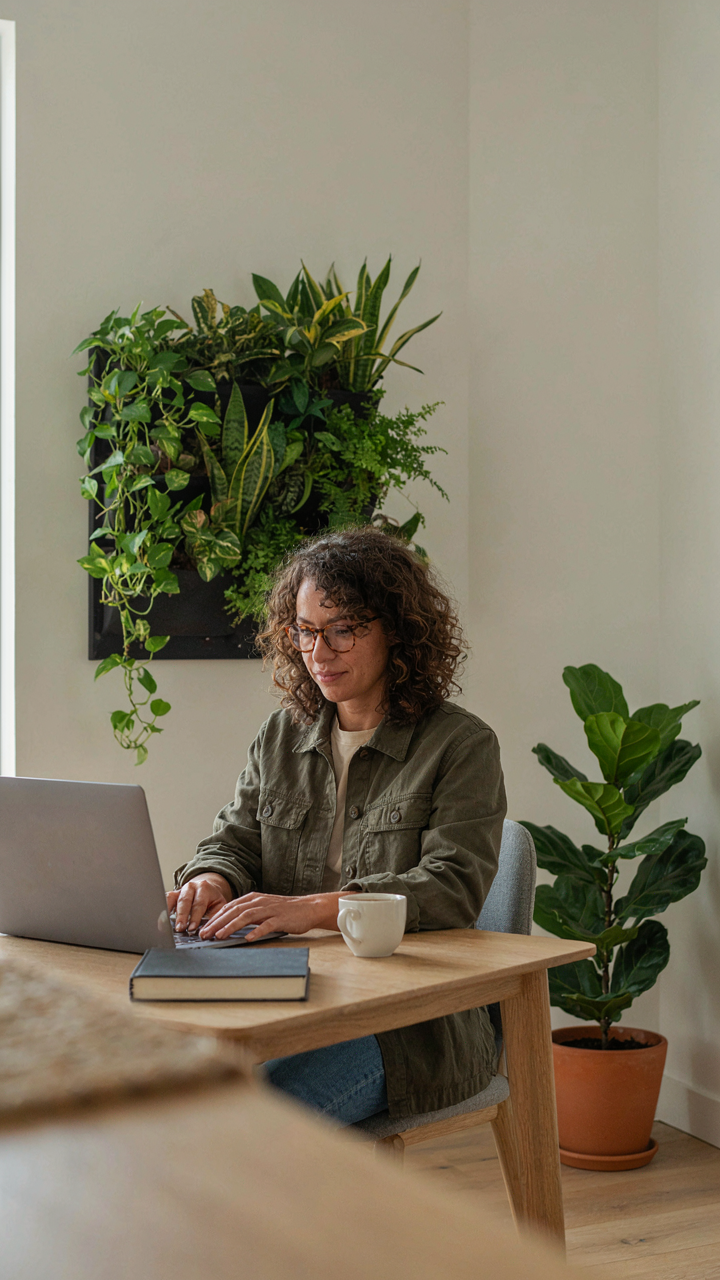
How Plants Clean Air And Regulate Temperature
You want this section to justify spending money on a living wall without admitting you’re buying status. But here’s the actual mechanism: plants remove volatile organic compounds through a process called phytoremediation, where they absorb toxins through leaf surfaces and root systems, then metabolize or sequester them. This isn’t mystical. It’s biology doing infrastructure work your HVAC system alone cannot do efficiently.
Temperature regulation happens through evapotranspiration, where plants release water vapor that cools surrounding air. A living wall creates a thermal buffer layer between exterior walls and interior space, reducing heat transfer by as much as 25 percent depending on plant density and substrate depth. The denser your planting and the thicker your growing medium, the more thermal mass you build. This is measurable. Monitor wall surface temperature before and after installation to see the shift.
Sound Absorption And Urban Noise Control
Noise reduction works through acoustic principles most people misunderstand completely. They assume plants absorb sound the way foam does. Wrong. Living walls reduce noise through mass, air gap strategy, and irregular surface interruption. The substrate itself, combined with the plant foliage, creates layers that break up sound waves rather than absorb them cleanly. Your wall becomes a diffuser, not a sponge, scattering frequencies instead of eliminating them.
Urban acoustic benefit peaks when living walls face consistent noise sources like traffic or HVAC systems. Place your planter where sound hits it directly, not behind other barriers. The reduction typically ranges from 3 to 8 decibels depending on wall thickness and planting density. That’s meaningful in a home office or bedroom. Verify performance by measuring decibel levels at the same time before and after installation under identical conditions.
The Succulent Wall & Beyond: Cultivating Resilient Vertical Ecosystems

Why Drought Tolerant Plants Win On Vertical Surfaces
You want a living wall that doesn’t demand daily attention or make you feel guilty. Here’s the mechanism: vertical surfaces drain faster than horizontal soil, which means water moves down immediately instead of pooling. Plants in living wall planters experience accelerated drying cycles. Drought-tolerant species survive this because they store water in leaves and stems rather than depending on consistent soil moisture. Sedums, echeveria, and aloe thrive in these conditions because their physiology matches the environment, not despite it.
Conventional advice says to pick plants based on aesthetics first. Wrong. Water retention and root density determine whether your wall lives or becomes a skeleton of dead stems within six months. Shallow-rooted succulents handle living wall geometry because they don’t need deep soil penetration. The planter depth becomes your actual constraint, not plant preference. A three-inch planter depth demands species with root systems under four inches. Match the plant’s biology to the planter’s dimensions, and maintenance collapses to monthly watering in most climates.
Design For Systems, Not Seasons
Living wall design borrowed from ecological succession theory teaches us that stability comes from redundancy, not novelty. Plant selection determines whether your wall self-corrects or cascades into failure. Trending plants die when trends change and care instructions disappear from the internet. Evergreen performers like jade plants, string of pearls, and sempervivum maintain visual weight year-round without seasonal replanting. They’ve survived decades of climate variance, which means they’ll survive your seasonal neglect or travel schedule.
The real longevity strategy isn’t about picking indestructible plants. It’s about building a system where individual plant death doesn’t collapse the entire structure. Use at least three species per planter section so losing one doesn’t create visual gaps. Rotate hardy anchors with experimental additions. Document your watering schedule and light exposure in writing so you can replicate what works and eliminate what fails. When you move homes or your lifestyle changes, your wall adapts because the system is documented and modular, not dependent on your memory.
The Vertical Garden Wall Planter: Engineered For Growth, Not Just Looks

Build Once, Expand Forever
You want to start small and look like you’ve had this figured out the whole time. That’s the real reason modular systems matter. Think in supply chain terms: modular living wall planters function like distributed inventory. Each unit connects to the next without requiring a full redesign. You buy the frame once, then add or swap individual pocket modules, brackets, or tiers as space and budget allow. No rip-and-replace. No wasted infrastructure.
Most people buy rigid wall systems and hit a wall when they want to grow. Modular designs use interlocking hardware, vertical rails, or pocket-based construction that lets you scale horizontally or vertically without touching what’s already installed. The connector becomes the asset. Whether you’re using metal rails, magnetic locks, or sliding channels, the mechanism keeps costs flat while expansion compounds. Test the connector strength before committing to a brand. A weak coupling point becomes your ceiling.
Water Without Guessing
Irrigation systems aren’t luxury features for living walls. They’re the only reason most living wall planters don’t kill plants within two months. Drip or capillary systems take the guesswork out of watering frequency, which is where amateur growers fail hardest. Your wall won’t survive on hand-watering twice a week. The soil in elevated planters dries faster than ground-level pots due to exposure and airflow.
Built-in irrigation moves water through tubing to each pocket or module on a timer. Gravity feeds from a reservoir, or a pump circulates water to maintain consistent moisture. The mechanism works because it matches the plant’s actual water cycle, not your schedule. Integrated systems reduce plant death rates significantly compared to manual watering. Check whether your system allows individual valve control per section. Some plants need more water than others, and you need the ability to dial that in without flooding the whole wall.
Plant Wall Ideas Indoor: Strategic Placement For Maximum Impact
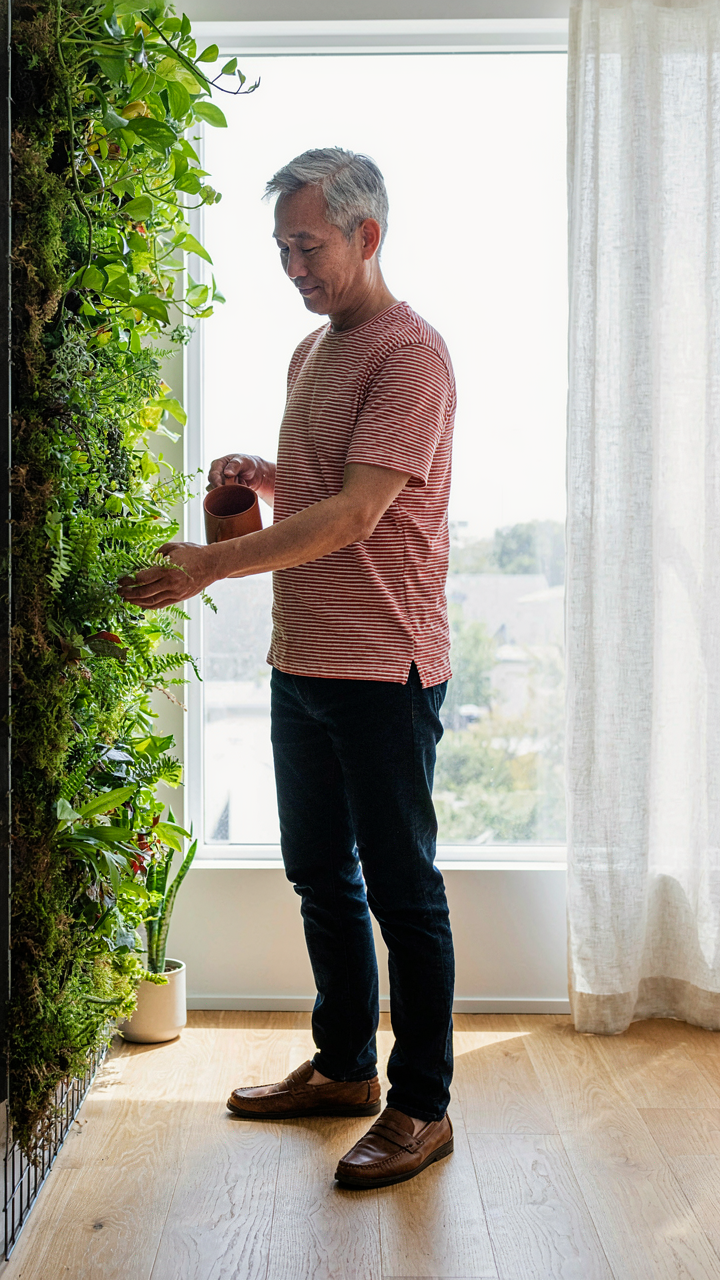
Where Light Actually Matters
You want your wall to look good in photos. That’s the real reason you’re reading this. But plants don’t care about your Instagram grid, and neither should your placement strategy. Think in terms of light intensity as physics would, treating each planter pocket like a node that receives measurable lumens, not vague “bright spots.”
Most indoor walls get placed near windows where they’re visible but receive indirect, diffused light. Direct sun through glass burns certain foliage. North-facing walls stay cooler and dimmer, favoring low-light species like pothos or philodendron. South and west walls deliver stronger light, working with sun-tolerant plants. The mechanic is simple: match the light your wall actually receives to the photosynthetic demand of the plant, not the other way around.
Air Movement Determines Survival Rate
Stagnant air kills living wall planters faster than most people realize. Plants in vertical systems need airflow to prevent fungal buildup in soil pockets and to regulate humidity around dense foliage. Position your wall away from dead corners where air pools, and avoid placing it directly above heating vents that create artificial dry zones.
If your wall sits in a sealed corner with no natural circulation, you’ll need active intervention. A small oscillating fan on a timer addresses this directly. Run it 3-4 hours daily to move air across the planter face without creating harsh drying conditions. This single variable separates walls that thrive for years from ones that decline within months despite identical watering schedules.
Matching Plants To Room Conditions
The common advice says “just pick plants you like.” That’s lazy. Your room has specific humidity, temperature consistency, and air quality that only certain species tolerate long-term. A kitchen wall with cooking steam and temperature swings demands different plants than a bedroom with stable, dry air.
High-humidity rooms like kitchens and bathrooms work with ferns, begonias, and string of pearls. Living rooms and bedrooms with central heating need sedums, succulents, and other drought-tolerant varieties that handle dry air. Before selecting any planter, document your room’s humidity range with a basic meter over one week, check the average temperature variance, and note where air stagnates versus where it moves. This data determines whether your wall thrives or becomes a graveyard of failed experiments.
Wall Planters Outdoor: Durability Meets Design In The Elements

Materials That Actually Survive Weather
You want outdoor wall planters because you’re afraid they’ll look cheap after one season. Here’s the mechanism: UV radiation degrades polymer chains, moisture cycles freeze and thaw materials apart, and salt spray oxidizes unprotected metal. The material you choose determines how fast those processes win.
Polyethylene and polypropylene resins rated UV-stabilized resist breakdown from sun exposure for years. Fiberglass composites hold shape under temperature swings because their resin matrices don’t absorb water like wood does. Powder-coated steel and aluminum resist rust when the coating stays intact, but scratches expose bare metal to oxidation. Untreated wood fails fastest outdoors because cellulose absorbs moisture, swells, warps, and rots from fungal invasion.
Wind Load And Anchor Depth Matter More Than Weight
Engineering calls this load path analysis: force travels from the planter through its mounting to the structure behind it. Oversized light planters fail more often than small heavy ones because people underestimate lateral pressure and skip fasteners.
Outdoor wall planters catch wind like a sail. A 24-inch wide planter mounted at shoulder height experiences significant lateral force during gusts. Fasteners must penetrate solid structure minimum 2.5 inches into masonry, studs, or concrete, not drywall. Mounting brackets need steel anchors spaced no more than 16 inches apart. Use corrosion-resistant fasteners rated for exterior exposure. This isn’t decoration logic—it’s structural anchoring protocol.
The Green Plant Wall Protocol: A Systems Approach To Vertical Abundance

Constraint Breeds Smarter Design
You want a living wall that looks intentional, not like you bought plants and hung them randomly. The real motive is control: you need a system that performs without constant adjustment. Military strategy calls this resource allocation, and living wall planters operate on the same principle. You’re distributing water, light, nutrients, and plant density across finite vertical space. The constraint isn’t a problem to solve around—it’s the forcing function that makes the design work. Most people treat walls as decoration first and ecosystem second. That’s backward. A living wall planter succeeds when you design for the wall’s actual capacity, not your fantasy of what it should hold.
Start by mapping three fixed constraints: water delivery capacity, light hours at each height, and structural load limits. Don’t estimate these. Measure them. A living wall planter system can only maintain plants that fit within what the wall actually provides. Select plant species that thrive under those exact conditions, not plants you like that need different ones. This removes 80 percent of maintenance failure before you install anything. Build redundancy into your water source: dual drip lines or a gravity-fed backup tank. If one line clogs, the wall doesn’t collapse. The system sustains itself because you planned for failure, not ignored it.
Layered Redundancy Prevents Cascade Failure
Resilience in vertical garden design means one dead plant doesn’t trigger a chain reaction. In biological systems, this is called functional redundancy: multiple organisms fill the same ecological role, so losing one doesn’t crash the system. Living wall planters need the same structure. You can’t have single points of failure in irrigation, drainage, or nutrient delivery. Most living walls fail because one planter backs up, water pools, and root rot spreads vertically. The design was fragile from day one.
Build your living wall planter system with staggered watering zones, separate drainage lines for each section, and modular plants that can be replaced independently. Use fast-draining substrate that prevents water accumulation even if one emitter runs hot. Space planters so air circulates between them, stopping fungal issues from migrating. If a single planter fails, you remove and replace it without touching the rest. This is systems thinking applied to greenery: design so the whole survives the parts that don’t.
Garden Wall Planter: Cultivating Food And Medicine, Not Just Foliage

Growing Herbs And Vegetables Vertically
You want to feel self-sufficient without actually changing your life. That’s the real draw here. The mechanism is simple: vertical gardens compress growing surface into wall space, which means you produce more food per square foot than ground-level gardening. Physics calls this density. Apply it to living wall planters and you get edible output from a footprint that doesn’t expand your apartment.
Herbs like basil, oregano, and thyme thrive in wall planters because they need shallow root depth and consistent water flow. Leafy greens including lettuce and spinach work equally well. The constraint isn’t whether plants will grow vertically—they will. The constraint is light access and drainage stability. Most urban walls lack 6+ hours of direct sun, which kills productivity fast. Install supplemental LED grow lights at 12 inches above leaf level if your wall faces north or east.
Medicinal Herbs For Home Use
Forget the wellness narrative about “natural remedies.” What actually matters is herb freshness and extraction efficiency. Medicinal compounds degrade immediately after harvest, so proximity to where you prepare them compounds effectiveness. A wall planter 10 feet from your kitchen beats a grocery store 2 miles away because you harvest within hours of use, not days.
Calendula, echinacea, and chamomile grow reliably in wall systems with moderate light and consistent moisture. Mint spreads aggressively, which makes it ideal for contained vertical growing—you get high yield without it colonizing your other plants. The protocol is straightforward: plant medicinal species in dedicated planters, harvest in morning after dew dries, dry or infuse immediately. Your extraction process determines whether the plant investment pays off or becomes decoration.
The Cost Fallacy: Investing In Wall Garden Longevity, Not Cheap Fixes

Why Budget Systems Fail First
You want to believe a $40 planter will perform like a $400 one. It won’t. The mechanism is simple: cheap systems cut corners on water retention, drainage integrity, and mounting stability. These aren’t cosmetic differences. A budget vertical planter typically uses thin plastic backing that warps under moisture and weight. The irrigation fails because channels clog or don’t slope correctly. Within months, you’re replacing dead plants or the whole unit.
The real cost isn’t the sticker price. It’s the wasted time diagnosing why your setup dies, the plant replacement cycles, and the space you’ve mentally written off as a failed experiment. A system engineered for longevity costs more upfront but requires fewer interventions. The engineering—proper water distribution, secure anchoring, UV-resistant materials—determines survival, not aesthetics.
Maintenance Protocols That Actually Work
A living wall isn’t a set-and-forget installation. It requires a maintenance rhythm, borrowed from horticultural scheduling: regular checks for saturation, drainage function, and plant vigor. The protocol starts with weekly visual inspections and monthly system audits where you test water flow, check for algae buildup in channels, and assess soil moisture depth at three different planter levels.
- Weekly watering assessment: Check soil moisture at planter top, middle, and bottom sections. Uneven moisture signals drainage blockage or pump failure requiring immediate correction.
- Monthly irrigation line inspection: Run water through the system and observe output at each emitter. Clogs reduce plant health before visible wilting occurs.
- Quarterly nutrient refresh: Add balanced fertilizer appropriate to your plant species. Vertical systems drain faster, leaching nutrients quicker than ground planting.
- Seasonal backing inspection: Examine mounting hardware and backing material for water damage, mold, or structural stress from plant weight accumulation.
- Pest screening: Check undersides of leaves monthly. Vertical systems create microclimates that trap humidity, attracting spider mites and scale insects faster than horizontal gardens.
Systems that survive two years do so because owners treat maintenance as non-negotiable infrastructure, not optional upkeep. Track your schedule in a digital calendar with reminders. When you spot a failed emitter, replace it immediately rather than waiting for the problem to cascade through adjacent plants.
Beyond Aesthetics: The Psychological Dividends Of A Plant Wall

Why Your Brain Craves Living Systems
You want the wall because you want proof you’re not broke. But here’s the mechanism: biologists call it biophilia, the innate pull humans have toward living systems. A living wall planter works as an environmental signal to your nervous system that you occupy a space worth maintaining. Your brain reads the presence of thriving plants as low threat, high resource availability. This isn’t sentiment. It’s pattern recognition built into your nervous system over millennia.
The wall forces a feedback loop you can’t ignore. Dead plants sit visible. Thriving ones do the opposite. You can’t fake a living wall the way you fake a gallery wall. The planter becomes a proxy for your attention capacity and resource management. This constant, ambient data point rewires how you think about your space and, by extension, your competence in it. The wall doesn’t inspire you. It conditions you.
Stress Reduction Through Cognitive Load Reduction
The common advice says plants lower cortisol and boost serotonin. Partially true but reductive. The real mechanism is attention recovery. Roger Ulrich’s environmental psychology research proved humans recover cognitive fatigue faster in spaces with vegetation. A living wall planter isn’t a decoration. It’s an attentional reset mechanism. Your prefrontal cortex—the thinking muscle—hits overload during sustained focus. Green complexity gives it something to process that demands nothing. It rests while appearing engaged.
The secondary effect hits performance. Reduced cognitive fatigue means your working memory doesn’t collapse at 3 PM. Decision quality stays stable across the day. You make fewer errors in your actual work because your mental bandwidth hasn’t shattered. The wall works best where you work. Place it in your office, not your bedroom. The mechanism only fires where you need recovery most—during productive hours when your attention economy matters most.
Your Fear Isn’t Bad Taste; It’s Wasted Potential. Master The Vertical Plane Or Remain Horizontally Limited

Most people treat living wall planters like decorative afterthoughts. They’re not. They’re the difference between a flat, forgettable room and a space that commands attention. Pick one wall today. Measure it. Order a system that fits your light and lifestyle, not your Instagram fantasy. Stop waiting for the perfect moment. The moment you stop treating walls as empty space is the moment your home stops looking like everyone else’s.



