
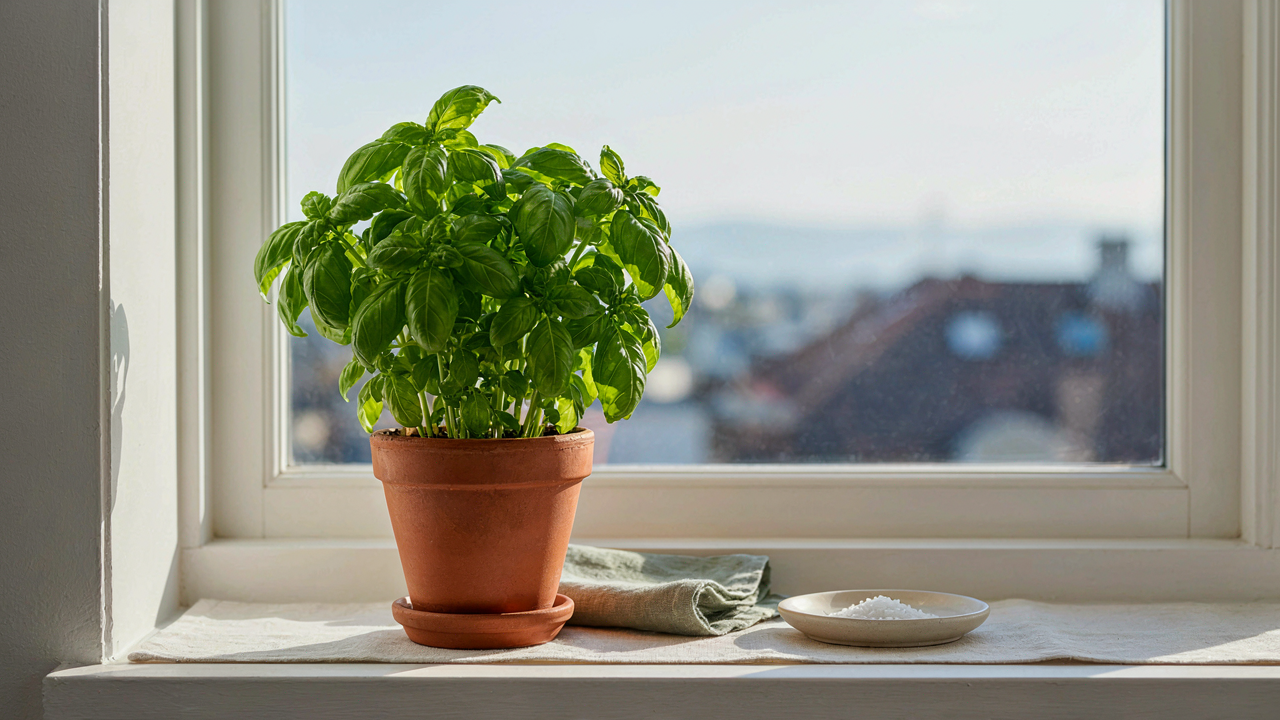
The Germination Myth: Why Babying Seeds Fails

Optimal Seed Starting Conditions, Not Coddling
You want to feel like you’re doing something right from the start. Here’s what nobody says plainly: most basil growers fail because they treat seeds like fragile objects instead of biological systems with specific inputs. Basil seeds need three things—temperature, moisture, and oxygen—and you either deliver them or you don’t. Overthinking this kills more seedlings than neglect ever will.
Basil germinates best between 70 and 75 degrees Fahrenheit. Below 65, germination stalls. Above 80, seeds dry out faster and can abort. Use a heat mat if your indoor space runs cold. Keep soil moist but not waterlogged—moisture without air kills the embryo. Sow seeds a quarter inch deep in sterile seed-starting mix. That depth matters. Too shallow and the seedling dries before it breaks soil. Too deep and it exhausts its energy reserves before reaching light. Once germination happens, remove the heat source and drop the temperature to 65 to 70 degrees. This prevents leggy growth.
Aggressive Thinning: Prevent Weak Competition
The real mistake is crowding. Every basil seed you sow that germinates becomes competition for the ones next to it. This is a resource allocation problem borrowed from ecology: when organisms occupy the same niche without enough resources, all of them weaken instead of one thriving. You need to thin ruthlessly when seedlings show their first true leaves.
Thin seedlings to one plant per cell or two inches apart in a flat. Snip extras at soil level instead of pulling them out—pulling disturbs roots on keeper plants. Most growers hesitate here because it feels wasteful. It isn’t. A single strong seedling outpaces five weak ones by week three. Space determines survival rate. Execute thinning seven to ten days after germination, and your remaining plants will be transplant-ready in four to five weeks instead of struggling through month two.
Light Protocol: Engineering Photosynthetic Efficiency
Six To Eight Hours Direct Sun
You want basil to thrive without babying it, and you’re hoping light requirements are flexible. They’re not. Basil demands direct sun as a biological mechanism: photosynthesis doesn’t negotiate. Without sufficient light exposure, the plant redirects energy away from leaf production and toward stem elongation, searching for light sources. This is called phototropism in plant biology, and it’s the same force that governs how all plants respond to inadequate illumination.
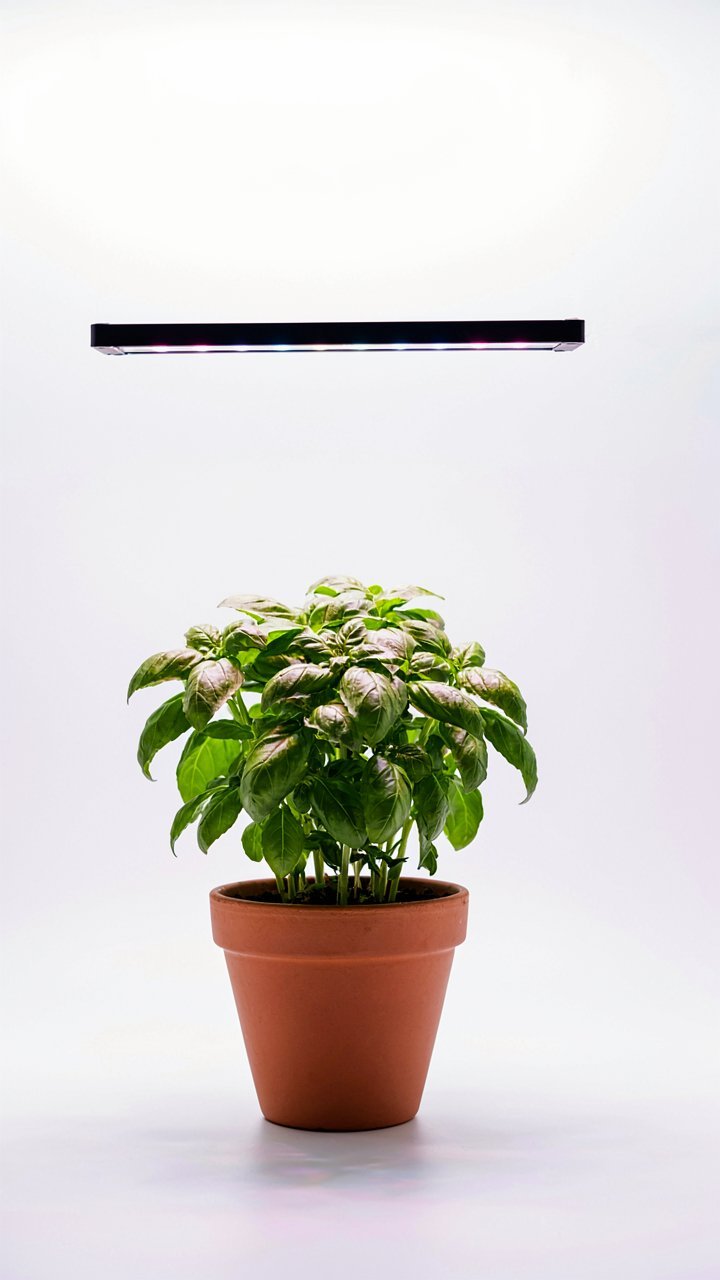
Six to eight hours of direct sunlight daily is the minimum threshold, not a suggestion. Indoor growers under inadequate light produce weak, leggy plants that bolt prematurely and lack the oil concentration that makes basil worth growing. Window placement matters less than total daily light accumulation. South and west-facing locations work best in northern hemispheres; north-facing windows consistently fail. If natural light falls short, supplemental grow lights positioned four to six inches above the canopy close the gap.
Rotate For Even Canopy Development
Most growers leave basil static under light and wonder why one side grows denser than the other. Light doesn’t reach uniform angles on a stationary plant. Rotating the pot ninety degrees every three to four days ensures each side of the plant receives equivalent direct exposure over time. This prevents the common failure where one hemisphere becomes productive while the other remains sparse and underdeveloped.
Consistent rotation also trains the plant to grow symmetrically rather than leaning toward the light source. Asymmetrical growth reduces harvestable leaf yield and creates structural weakness in the main stem. Establish a rotation schedule that you execute on a fixed day, ideally when you water, so the habit embeds into your routine. Without this simple protocol, even well-positioned basil underperforms.
Soil Alchemy: Building A Basil Powerhouse
PH And Nutrient Balance
You want basil to grow fast so you feel like you’re not wasting effort. The mechanism is simple: basil doesn’t care about perfection, it cares about availability. Think of soil chemistry like currency exchange rates in economics. Your plant trades nutrients based on what’s soluble at the right pH. Basil thrives in soil between 6.0 and 7.0 pH. Below 6.0, key nutrients like phosphorus and potassium lock up. Above 7.5, iron and manganese become inaccessible. The plant starves surrounded by food.
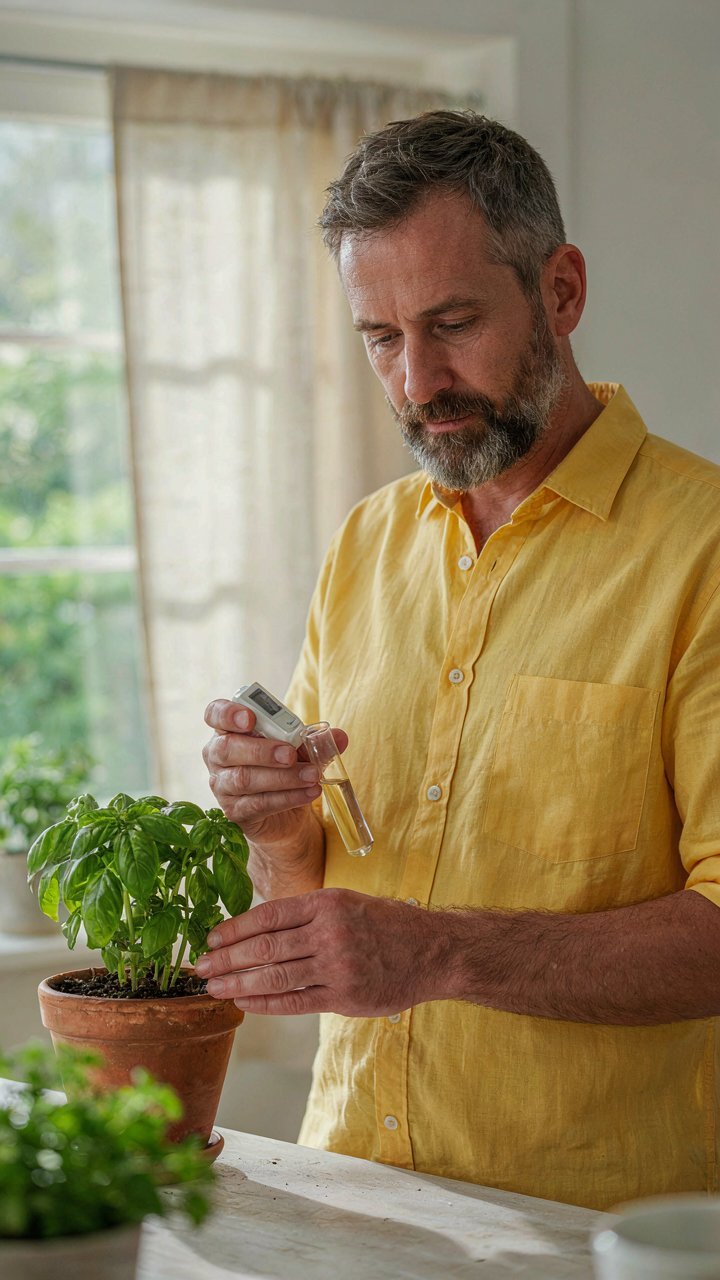
Nitrogen, phosphorus, and potassium are the three basil demands. Most potting mixes start neutral or slightly acidic, which works. If you’re using garden soil, test first or amend with lime to raise pH or sulfur to lower it. Don’t guess. A cheap soil test strips your assumptions. Basil needs consistent nutrient availability, not sporadic feeding schedules. Feed every two weeks at half strength once plants establish. The goal is steady soil chemistry, not feast and famine.
Drainage Without Root Rot
This is where most growers fail. The common advice says “loose soil” and “drainage holes,” then people wonder why roots still rot. The actual problem is water velocity. Soil that drains too fast starves roots between waterings. Soil that drains too slowly creates anaerobic pockets where pathogens explode. You need the Goldilocks zone: water moves through, then stops moving.
Basil demands a soil mix that holds water 24 to 48 hours after saturation. Use a base of quality potting mix, not garden soil. Add perlite or coarse sand at 15 to 20 percent by volume to create air pockets, not just speed drainage. Container choice matters more than soil texture. A five-inch pot with drainage holes lets roots dry slightly between waterings without soil staying soggy. Water when the top inch of soil feels dry to touch, not by calendar. This single protocol prevents 90 percent of basil failures.
The Water Paradox: Less Is Often More For Basil Growing
Watering Deeply And Infrequently
You want to believe that consistent daily misting keeps basil happy because it feels like control. Here’s what actually happens: basil roots respond to soil moisture like a thermostat responds to temperature. In biology, we call this turgor pressure. When you water deeply but infrequently, roots stretch downward seeking moisture, building a stronger root system that handles stress better. Shallow daily watering trains roots to stay near the surface where they’re vulnerable to heat and drought.
Water until it drains from the pot bottom, then wait. The soil should dry to about one inch below the surface before you water again. This cycle forces the plant to develop resilience instead of dependency. Stick your finger into the soil. If it feels damp, wait another day. The frequency depends on temperature, pot size, and humidity, not on a fixed schedule.
Spotting Overwatering Versus Underwatering
Most growers confuse these because both cause wilting, which is lazy diagnosis. Overwatered basil shows yellowing leaves that feel soft and mushy. The stems turn dark and may smell sour. Roots rot in waterlogged soil because they can’t access oxygen. Underwatered basil shows crispy leaf edges that curl inward first. The plant looks dull overall, and leaves drop before turning yellow.
The real tell is stem condition. Squeeze the base gently. If it’s soft and bends without resistance, you’re drowning it. If it’s firm and snaps clean, you’re withholding water. Once you identify overwatering, repot immediately into fresh dry soil and reduce frequency by half. For underwatering, water immediately and establish a rhythm where you check soil moisture every other day until the pattern stabilizes.
Pruning For Proliferation: The Perpetual Harvest Method
Aggressive Pinching For Bushier Growth
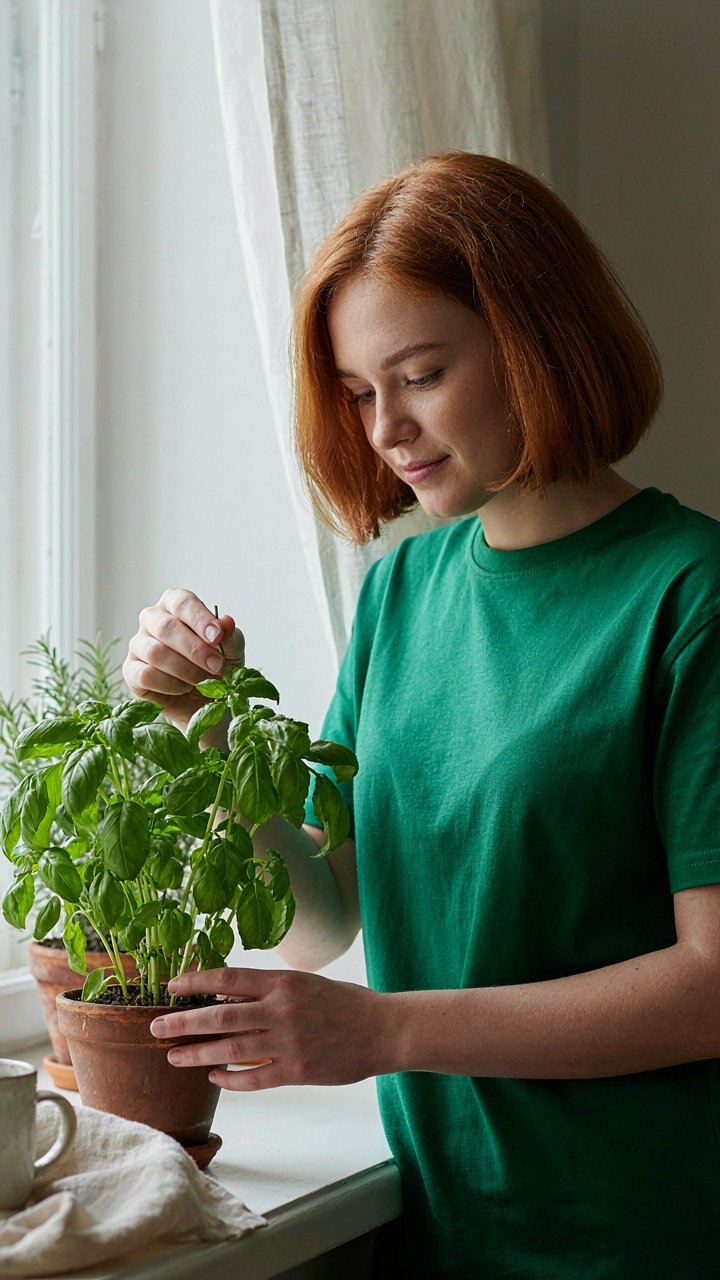
You want more basil without replanting. That’s the real reason you’re reading this. The mechanism is simple: basil grows as a single stem until you interrupt it. Pinching removes the apical meristem, the growth tip that suppresses lateral buds. Without that tip, the plant redirects energy into two new shoots where one existed. This is branching, not healing. Do it early and often.
Start pinching when the plant reaches six inches tall. Pinch the top half inch of the stem with your thumb and forefinger, removing the uppermost leaf pair and the growing tip just above it. Repeat this on every new shoot that emerges. Each pinch triggers two shoots. After three to four cycles of pinching, you’ll have eight to sixteen growth points instead of one. The plant thickens, not because it’s healthier, but because you’ve mathematically multiplied its harvestable surface area.
- Pinch at the right height: Remove growth tips when shoots reach two to three inches. Pinching too low wastes energy on regrowth of woody tissue instead of new leafy branches.
- Pinch before flowering: Once flower buds form, the plant stops branching and redirects everything into seed production. Stop pinching the moment you see tiny flower clusters emerging.
- Pinch consistently: Stagger your pinches across the plant over several days. This prevents the plant from going into flowering mode as a stress response to total defoliation.
- Timing matters for indoor basil: Indoor plants with 12 to 14 hours of light need pinching every 5 to 7 days. Outdoor plants under full sun can handle pinching every 3 to 4 days.
- Use clean fingers or scissors: Crushing the stem with dull tools introduces infection points. A clean pinch or a single snip with sanitized scissors heals faster than torn tissue.
The goal is perpetual harvesting. Once you establish this pinching rhythm, you stop waiting for the plant to mature. You’re farming yield density, not plant age. Every pinch you make today determines your harvest volume in two weeks.
Flowering Prevention For Extended Yield
Most growers miss the actual trade-off here. The moment basil flowers, it stops investing in leaves and starts investing in seeds. You can delay this, but you cannot reverse it. The plant will flower eventually. Your job is to recognize when flowering pressure peaks and decide whether to let it happen or buy yourself more time.
Basil flowers when day length and temperature stability trigger reproductive mode. Indoor basil flowers slower than outdoor basil because light duration is inconsistent. Outdoor basil in summer heat can flower in six to eight weeks. Remove flower buds the moment they appear by pinching the stem below the flower cluster. This buys three to five more days of leaf production before new buds emerge. Each removal costs energy, though. If you’re at week eight of growth and harvests are already heavy, let it flower. The plant is signaling it’s ready to exit. New seed-started plants will replace it. If you’re at week four, remove flowers aggressively to extend the harvest window. The decision depends on your planting schedule and output needs, not on generic timelines.
Nutrient Cycles: Feeding Your Basil Plant Like A Pro

What Nitrogen Actually Does
You want to skip this section because you think fertilizer is fertilizer. It isn’t. Think of nitrogen like a military supply line—basil doesn’t just need the resource, it needs it at the right concentration and frequency, or the entire operation collapses. Basil demands nitrogen to build leaf tissue, and leaf mass is profit. A 3:1:1 NPK ratio (nitrogen, phosphorus, potassium) drives vigorous vegetative growth. Feed nitrogen every two to three weeks during the growing season.
Phosphorus and potassium matter less for basil than nitrogen does, but they’re not irrelevant. Phosphorus strengthens root systems and flower development. Potassium regulates water uptake and stress tolerance. Most basil growers obsess over nitrogen and ignore the others, then wonder why their plants plateau. The real move is consistent feeding at moderate strength rather than occasional blasts at high strength. Weak, frequent nutrition outperforms strong, sporadic nutrition every time.
Soil Amendments Versus Liquid Feeds
Most gardening advice frames this as a lifestyle choice. It’s not. It’s a speed and control problem. Organic amendments like compost, worm castings, and fish emulsion release nutrients slowly over weeks. Synthetic fertilizers deliver nitrogen immediately, within days. Basil grows fast enough that it notices this difference. If you’re starting with poor soil, you need organic matter built in for water retention and microbial life. But once basil is established, liquid feeding (synthetic or organic fish emulsion) gives you weekly control over nutrient availability.
The hybrid approach works: start with compost-rich soil, then supplement with liquid feeds every 7 to 10 days. Synthetic urea-based fertilizers work faster and cost less, but fish emulsion and seaweed extract do the job if you’re philosophically opposed to synthetics. The constraint isn’t the source. The constraint is consistency and timing. Skip feeding for three weeks, and basil slows down regardless of whether your fertilizer came from a bag or a bucket.
Pest & Disease Defense: The Biosecurity Blueprint
Check Your Plants Before Problems Own You
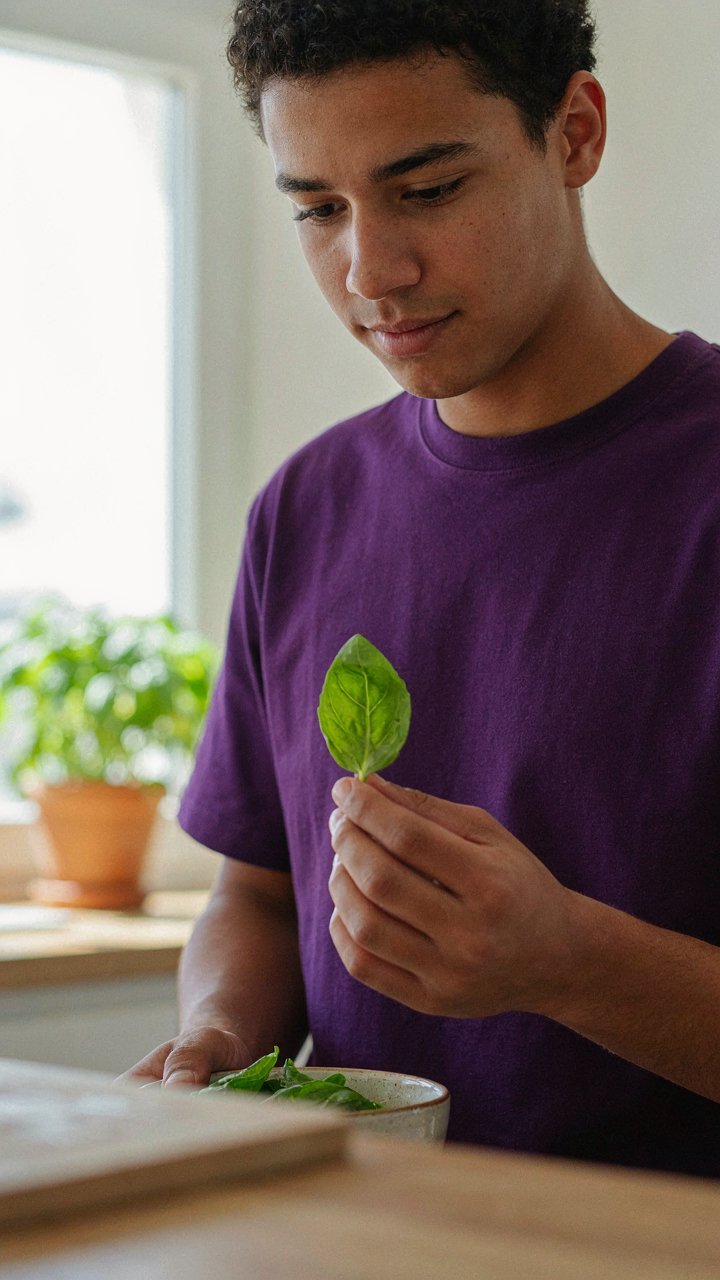
You want to avoid looking incompetent when bugs trash your basil. The mechanism is simple: pests establish colonies exponentially. You catch them at day three, not day thirty. Walk your basil plants three times weekly. Flip leaves. Look for webbing, discoloration, holes, or insects. Fungal diseases show as brown spots or white powder on stems. Bacterial wilt causes sudden drooping without dry soil. Early spotting means you intervene at the multiplication stage, not the invasion stage.
Most growers wait until damage is obvious. By then, a handful of aphids became hundreds. Spider mites colonize faster than you replant. The cost of weekly inspection is ten minutes. The cost of replanting is weeks of growth and money wasted. Document what you see with photos dated and timestamped. This creates a record of what appeared when, which tells you if the problem is accelerating or contained.
The System That Actually Prevents Infestations
Integrated Pest Management pulls strategy from military doctrine: you don’t fight every threat the same way. Remove the condition that lets pests thrive before you kill individual insects. Basil aphids cluster on new growth because soft tissue is easier to pierce. Prune growth tips weekly, removing the target. Spider mites explode in dry air below forty percent humidity. Mist basil leaves in morning, creating hostile conditions. Both actions eliminate the invitation without chemicals.
Cultural controls come first. Isolation works: keep infected plants away from healthy ones. Air circulation prevents fungal diseases like fusarium wilt, which thrives in stagnant moisture. Space plants so leaves don’t touch. Only water soil, not foliage. If you must use intervention, start with insecticidal soap or neem oil on isolated plants before exposure spreads. The sequence is habitat change, then removal, then chemical only if those fail.
Container Gardening Vegetables: Maximize Limited Space Output
Pot Dimensions And Material Selection
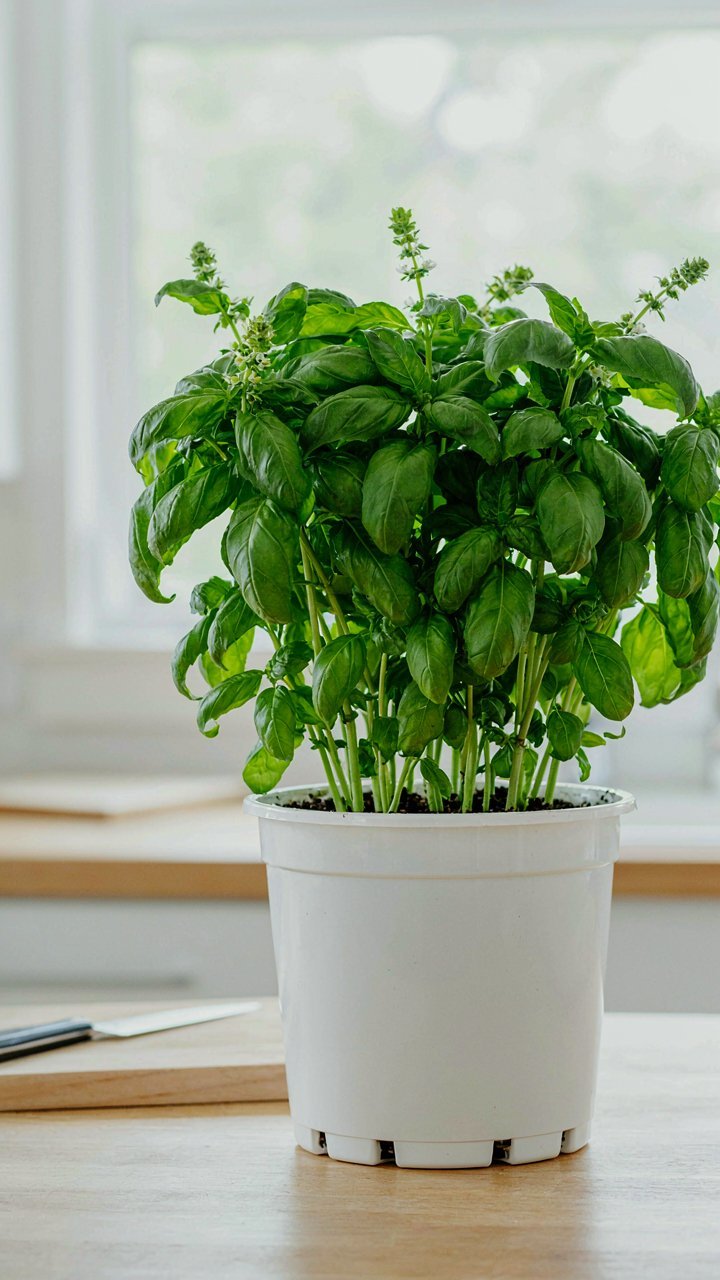
You want to believe a coffee mug works fine for basil. It doesn’t. The real mechanism is root zone volume—basil needs soil mass to buffer temperature swings and retain consistent moisture without waterlogging. A five-gallon container (or ten liters) is the practical floor. Anything smaller creates a feast-or-famine cycle where roots dry out or rot within days, killing your plant faster than neglect would.
Material matters because it directly controls evaporation rate and heat absorption. Terracotta breathes aggressively, losing water fast in hot climates but preventing root rot in humid ones. Plastic retains moisture longer, which works in dry conditions but suffocates roots if drainage holes clog. Ceramic offers middle ground but weighs more when full. Choose based on your climate’s humidity, not aesthetics. Drill extra drainage holes in any container—one hole is insufficient.
Strategic Plant Pairing For Growth Amplification
Companion planting operates on resource partitioning, the ecological principle where organisms use different niches in the same space. Basil occupies the upper canopy layer. Below it, plant parsley or cilantro in the same container—they root shallower and won’t compete for nutrients. They also serve as sacrificial cover crops, blocking direct sunlight from drying out basil’s soil surface while you’re away.
Marigolds planted at the container edge deter spider mites and whiteflies without chemical intervention. The mechanism is simple: marigolds produce sulfur compounds that repel common basil pests. Avoid pairing basil with fennel or rue in the same pot—they release allelopathic chemicals that stunt basil’s growth. A single container can hold basil, parsley, and marigold without competition if spacing follows the twelve-inch minimum rule for mature foliage.
Harvesting Efficiency: The Energy Transfer Model
When Picking More Leaves Costs You
You want to know if you’re extracting maximum value from your basil plant. That’s not actually about feeling productive. It’s about whether you’re accelerating the plant’s decline or its growth. Economics calls this marginal utility: the benefit of one additional unit drops with each new unit consumed. On basil, this means every leaf you remove has a different return depending on timing and plant maturity.
Early harvests from weak seedlings destroy future yield. Late harvests from established plants trigger exponential branching. The plant doesn’t care about your dinner tonight. It cares about reproducing before frost. When you understand this distinction, you stop picking randomly and start timing harvests to the plant’s actual growth stage, which is the only variable that matters.
Fuel Cost Versus Fuel Return
Biology frames this plainly: a plant stores energy in leaves to fund new growth. Remove a leaf and you remove that stored energy. The plant must redirect resources to replace it instead of expanding. Energy expenditure versus caloric return means you’re calculating whether the leaf you pick was mature enough to have generated surplus energy beyond its own maintenance cost. Most growers pick too early, when leaves are still net consumers rather than net producers of plant energy.
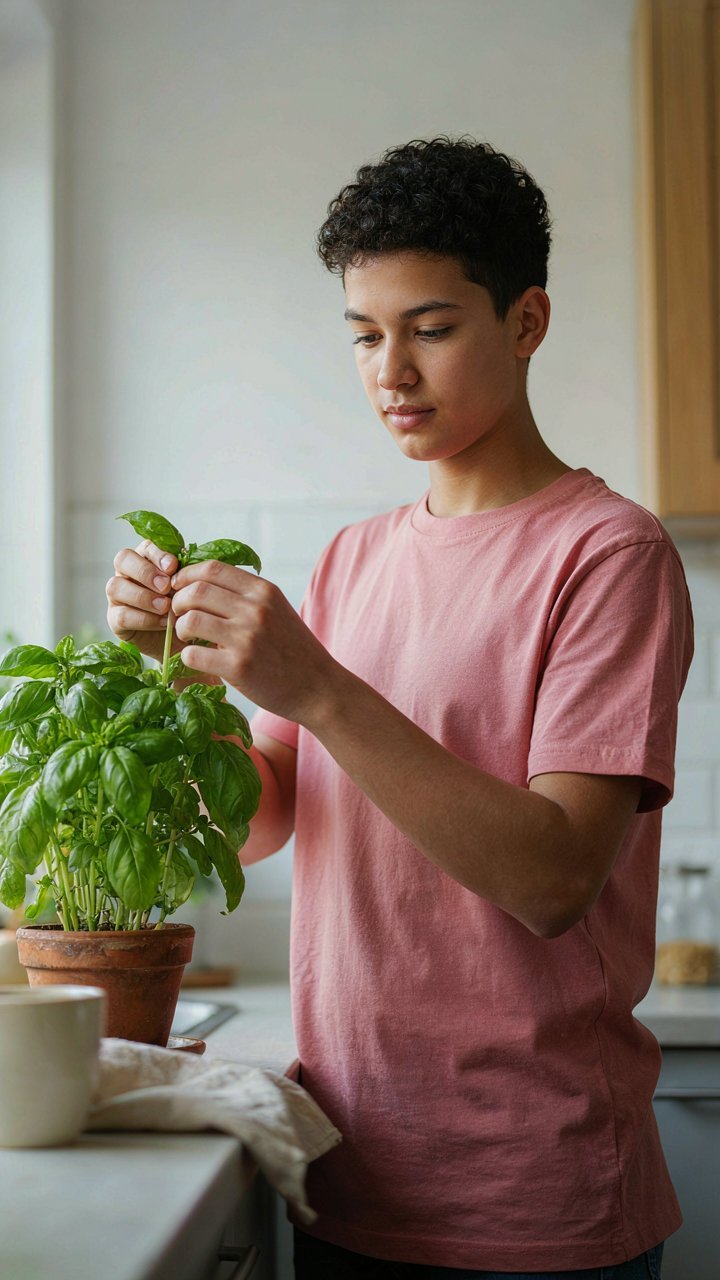
A fully mature basil leaf has stopped its rapid growth phase and now runs at maintenance efficiency. This is your harvest window. Pick before this point and you’re stealing growth capital. Pick after and you’ve already captured the energy gain. The protocol is simple: wait until leaves reach full size for their node position, then harvest from the top down in sets of two leaves paired at a single node. This triggers two new shoots instead of one malformed stem.
Overwintering Strategies: Extending Basil Lifespan
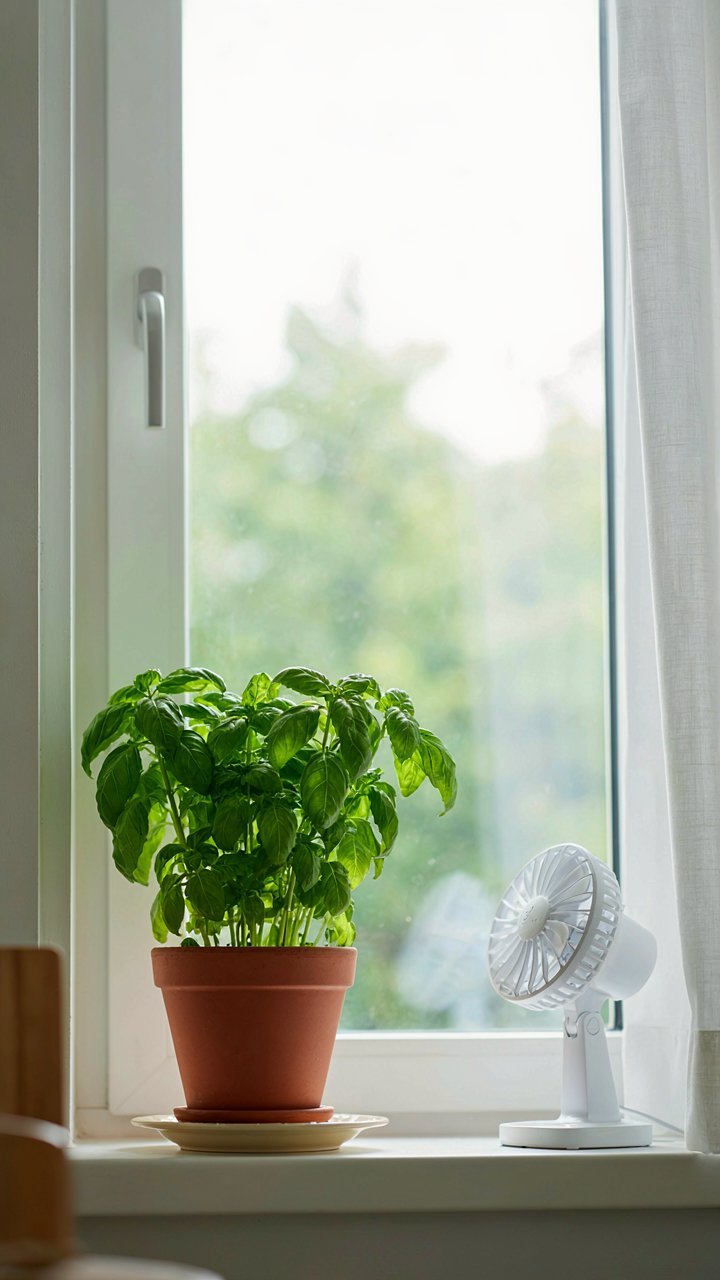
Bringing Basil Inside For Winter
You want basil year-round because buying it costs money and the grocery store version dies in three days. Here’s the mechanism: basil doesn’t survive frost, so the only play is moving it indoors before the first hard freeze arrives. Temperature control becomes your only variable that matters.
Set up a south-facing window or use grow lights positioned 6 inches above the plant. Basil needs 6 to 8 hours of direct light daily indoors. Keep soil moist but not waterlogged, and maintain room temperature between 65 and 75 degrees Fahrenheit. Air circulation matters too—use a small fan on low speed to prevent mold and strengthen stems. Don’t repot at this stage; just move the existing container.
Moving Basil Without Killing It
Transplanting shock is real biology, not garden folklore. Think of it as a supply chain disruption: the plant’s root network suddenly can’t access water and nutrients at the same rate it needs them, so leaves yellow and drop. Most guides skip the actual sequence that prevents this.
- Water heavily 24 hours before moving: Saturated soil clings to roots and reduces air exposure during transport, protecting the root hair network.
- Move during cool hours: Transplant early morning or late evening when the plant isn’t transpiring at peak rate and heat stress is minimal.
- Avoid root disturbance: Keep the root ball intact; don’t shake soil loose or loosen compacted roots when moving to the indoor container.
- Acclimate over 5 to 7 days: Place the plant in indirect light first, then gradually increase light exposure to prevent leaf scorch and allow physiology to adjust.
- Hold off on fertilizing: Wait 2 to 3 weeks before feeding; nutrient uptake is compromised during transition and excess fertilizer burns damaged roots.
After the acclimation window closes, resume normal watering and monitor for pest activity, which increases indoors. Mist leaves weekly to replicate humidity that outdoor plants lose. Once the plant stabilizes under grow lights for 10 days without visible decline, you’ve locked in survival through winter.
The Real Obstacle To Epic Basil Is Your Fear Of Aggressive Intervention
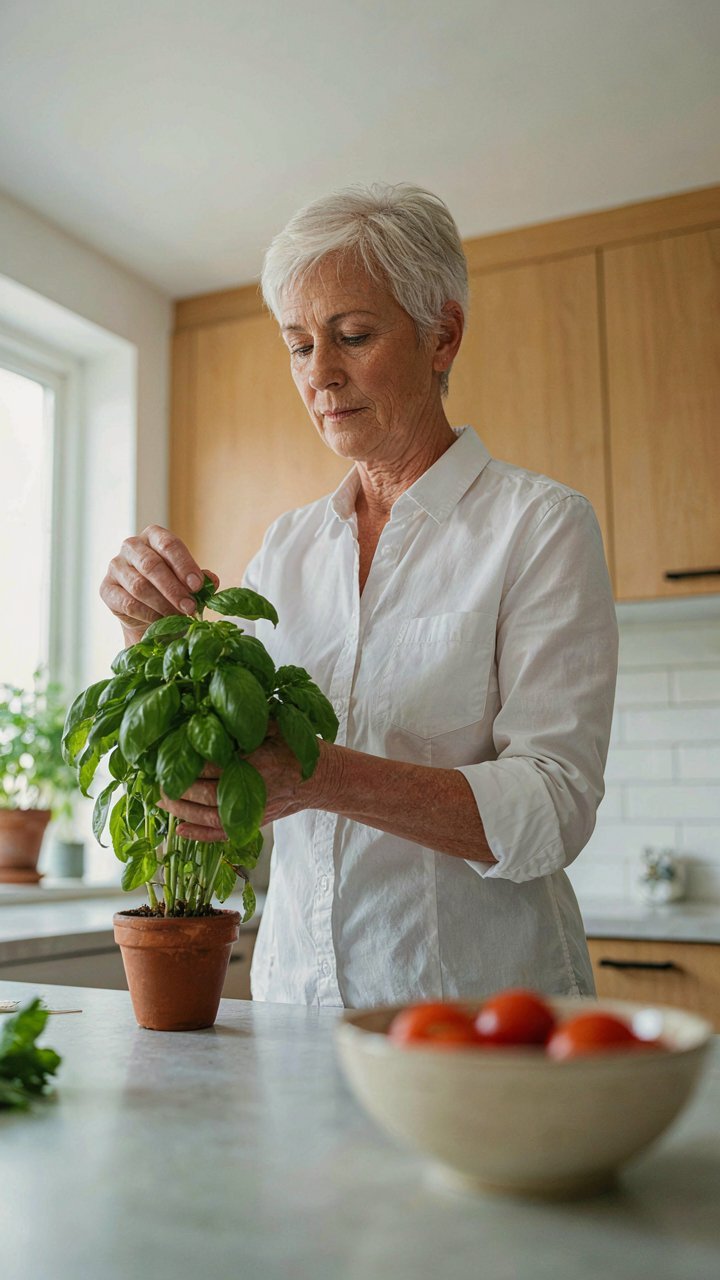
Most people kill their basil by playing it safe. You hesitate to pinch back the stem. You wait too long to harvest. You coddle it like it’s fragile when basil actually thrives under pressure. Stop watering it out of guilt. Stop treating it like a pet. Today, grab your basil and pinch off the top third of the plant. Watch what happens next. Aggression builds abundance.