

The Illusion Of Easy: Why Generic Advice Fails Your Window Box Flowers

Dispelling The Myths That Waste Your Money
You want to believe window box color combinations are simple because admitting they’re not means you’ll have to actually think instead of copying what you saw on Instagram. The mechanism is this: standard advice treats color as decoration when it’s actually a constraint system. You pick three colors that “look good together” without understanding how light hits your specific box, how plants actually perform in confined soil, and how those colors shift across seasons. This isn’t laziness on your part. It’s that everyone selling window boxes has incentive to make the process sound frictionless. They don’t profit from your failure to understand the variables.
Real color design in window boxes follows the same principle as signal-to-noise ratio in engineering: every color choice must either anchor the display or support the anchor. Most people add colors randomly. A complementary pair (opposite on the color wheel) pulls attention. A triadic scheme (three colors equally spaced) creates vibration. Analogous colors (neighbors on the wheel) recede. You need to know which effect you want before you buy plants. The generic advice says “plant what you love.” The actual mechanism requires you to decide whether you want harmony or contrast, then commit to plants that deliver that specific outcome in your light conditions.
The Real Cost Of Uninspired Plant Selection
Lazy window box combinations don’t fail quietly. They fail visibly every single day. When you plant a sun-loving purple petunias next to a shade-preferring impatiens in the same box, one thrives and one deteriorates by mid-July. The colors you picked in May no longer exist by August because one plant is leggy and sparse while the other is dense and faded. You’ve created a temporal color problem disguised as a design problem. The box looks wrong not because of poor color theory but because you ignored the growth habits and light requirements that determine whether the color even shows up.
The uninspired approach also ignores substrate continuity. Window boxes dry faster than ground beds. This means delicate shade plants struggle in full sun boxes even if the color combination is theoretically correct. Moisture stress changes pigmentation in most flowering plants, washing out reds and darkening purples. You end up with a muted, inconsistent display that photographs poorly and makes you blame your eye instead of your plant selection process. The fix isn’t better colors. It’s matching plant vigor to light exposure first, then building your color story around plants that will actually look like their pictures from July through September.
The Ocular Dominance Protocol: Designing For First Impressions

Color Creates Perceived Equity
You want people to think your home is worth more money than it actually is. That’s the real reason you care about window box color. Here’s the mechanism: color saturation and contrast trigger rapid appraisals in the human brain before conscious thought engages. Real estate research shows that exterior color choices influence buyer estimates within seconds. High-contrast combinations between box, flowers, and facade create visual weight. That weight reads as intentionality, maintenance, and wealth. Low-contrast setups feel accidental and neglected, regardless of actual care.
The psychology here runs through economics, not aesthetics. Saturated greens paired with white trim against brick read as “established” because the contrast creates visual hierarchy. Muted tones against siding read as “budget conscious” for the same reason. You’re not decorating. You’re deploying color as a signal. The combination you choose broadcasts maintenance status before anyone steps onto your property.
Placement Determines Perception Order
Most people scatter window boxes randomly across a facade and wonder why nothing registers. Wrong approach. Visual gravity follows the principle of dominance from graphic design: your eye lands where contrast and saturation peak first. Front-facing windows at street level command attention because they sit in the viewer’s natural line of sight before upper windows or side elevations. A high-contrast combination there anchors the entire exterior composition and forces the eye to read intentionality downward.
The sequence matters more than the individual boxes. Place your boldest color combination on the most visible elevation, then repeat that pairing on secondary windows at lower saturation. This creates visual consistency without monotony. A viewer processes this as “the owner made a plan” rather than “these got added over time.” The mechanism is pure attention economics: your most valuable visual real estate gets your highest-contrast combination first, then you scale down. This single protocol beats random placement every time.
Beyond The Bloom: The Unsung Role Of Foliage In Window Box Planter Ideas Full Sun

When Leaves Matter More Than Flowers
You want your window box to look intentional, not like you threw whatever was on sale into the soil. Here’s the mechanism: foliage provides the structural scaffolding that makes flowers pop instead of float randomly. Borrowing from graphic design, foliage functions as negative space in window box color combinations. It creates boundaries, rhythm, and visual weight. Without it, you’re relying entirely on bloom cycles to carry the display. Flowers fade. Leaves don’t, not in the same way.
The common advice says to pick flowers first, then add greenery as filler. Wrong. Start with foliage form and texture. Choose plants with specific leaf shapes, sizes, and colors that complement your color combination. Silver dusty miller, burgundy Persian shield, chartreuse potato vine, or deep green ivy each change how surrounding colors read. The foliage becomes the canvas. Flowers then become intentional accents, not the whole story.
Structure That Doesn’t Wilt
Full sun window boxes demand foliage species that handle heat without collapsing into brown mush by August. Vinca vine, ornamental grasses like purple fountain grass, and succulents like echeveria provide visual architecture that survives heat stress. These plants grow on a predictable schedule. They thicken, spread, and maintain form week after week. Flowers bloom and drop. Foliage endures.
Year-round visual interest doesn’t come from planting different flowers every season. It comes from selecting foliage that shifts subtly through the seasons while staying in the box. Sedums change color in cooler months. Ornamental grasses develop seed heads in fall. Ivy deepens in tone. These shifts create natural variation without the work of replanting. The window box stays planted. Only the foliage performance changes. That’s the mechanism that actually sustains interest.
The Horticultural Hierarchy: Matching Plants To Purpose For Full Sun Window Box Ideas

Light, Water, And The Non Negotiable Baseline
You want a window box that looks curated without thinking about it. That requires understanding one fact: plants don’t care about your color scheme. They care about photosynthetic output, water retention, and nutrient availability. Borrow from plant physiology here. In that field, “limiting factors” determine growth. For window boxes, your limiting factor is usually light intensity combined with water stress from shallow soil. Full sun boxes receive six to eight hours of direct sunlight. This changes which species survive and which wither within weeks.
The mistake everyone makes is treating all full sun boxes the same. A south-facing box in Phoenix operates under different constraints than one in Seattle. Soil temperature, evaporation rate, and UV intensity all shift. Start by measuring your actual sunlight hours with your phone or a simple app. Then match plant water needs to your watering frequency. Most window box failures happen because the plant’s transpiration rate exceeds the owner’s commitment to watering. Pick plants that tolerate your neglect, not plants that demand your devotion.
Color Combinations Built On Staying Power
Skip the nursery advice about “seasonal rotations” unless you enjoy replanting every eight weeks. The real strategy is selecting species that bloom across overlapping periods without needing constant deadheading. Portulaca, calibrachoa, and vinca tolerate heat and produce consistent color under full sun stress. These aren’t flashy. They’re reliable. That distinction matters.
Build your color palette around plants that sustain themselves, not ones requiring intervention to maintain appearance. Pair heat-tolerant species with complementary foliage tones. Dusty miller’s silver pairs with deep purple petunias because both handle sun and heat without fading or dropping leaves. The color combination works because the plants share the same survival threshold. Choose your colors by matching horticultural needs first, aesthetics second. This reversal eliminates the visual disappointment that kills most window boxes by mid-summer.
Color Theory As Weapon: The Art Of Intentional Contrast And Harmony
Why The Color Wheel Actually Works
You want your window box to look effortless. That’s the real reason you’re reading this. The mechanism behind the color wheel isn’t magic or taste. It’s proportion. The wheel maps hue relationships as angles. Complementary colors sit 180 degrees apart. Analogous colors cluster within 60 degrees. These relationships determine how your eye processes the combination. Your brain either finds harmony or friction in those intervals. Master the intervals, and you control the outcome.
The standard color wheel divides the spectrum into twelve segments. Red, orange, yellow, green, blue, violet, and their intermediates. When you plant petunias, marigolds, and dusty miller together, you’re not choosing randomly. You’re positioning colors at specific distances on that wheel. Triadic combinations use three colors equally spaced at 120 degrees apart. Split complementary uses one base color and two neighbors of its opposite. The wheel predicts which combinations read as unified versus chaotic before you buy a single plant.
Grouping Creates Order
Gestalt psychology studies how humans perceive grouped elements as unified wholes rather than separate parts. Apply this to window boxes: your brain treats clustered similar colors as a single visual unit, not competing elements. When you mass three magenta petunias together instead of scattering them, you create a focal point. The grouped color dominates perception. The surrounding complementary colors feel intentional rather than accidental.
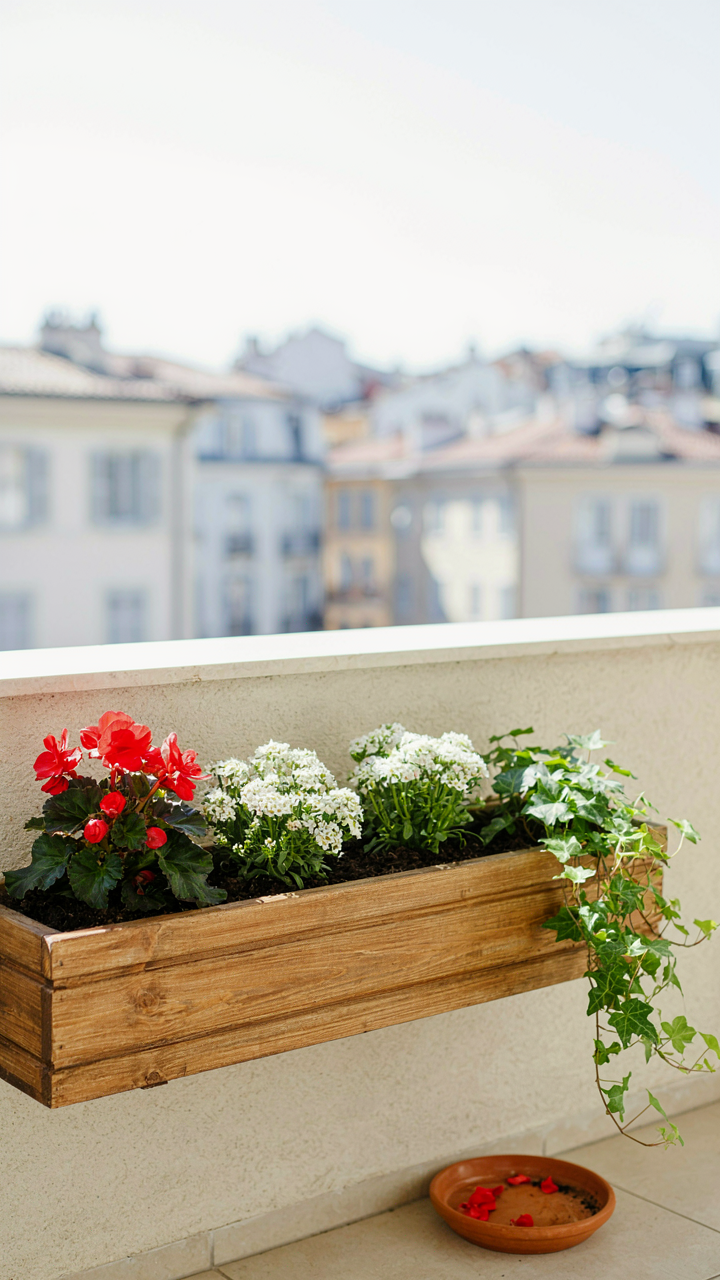
Most people scatter colors evenly across the box. That creates visual noise. Instead, plant in blocks. Put five red begonias on one side, three white alyssum in the center, two trailing ivy on the other. Your eye groups the reds together, the whites together. The arrangement reads as composed. The negative space between color blocks becomes part of the design. This clustering technique works whether you’re using two colors or five.
Seasonal Cycles, Strategic Shifts: Fall Window Boxes And Beyond
When Summer Ends, Your Box Doesn’t Have To
You care about this because watching your window box die in August feels like failure. The real mechanism is simpler: plants have hard stops. Heat stress, day length, pest cycles, and soil depletion hit simultaneously in late summer. Most people ignore this timing and plant static combinations year-round, wondering why everything looks like it survived a drought by October.
Fall demands a swap, not a refresh. You pull spent annuals in late August when they’re already declining. This isn’t cosmetic. You’re resetting the soil, resetting pest populations, and matching plant energy to incoming conditions. A fall window box planted in September operates under completely different light angles, humidity levels, and frost windows than June. Treat it as a new installation, not maintenance.
Plants That Survive The Transition
Choose species based on cold hardiness ranges and frost dates for your zone, not on what looks good in the garden center. This is basic horticultural triage. Cool-season crops like ornamental kale, snapdragons, and pansies gain color intensity as temperatures drop. They weren’t bred for tropical conditions. They perform when conditions turn hostile.
The mistake most people make: they plant fall boxes too late. By October, soil temperatures drop fast and roots struggle to establish before hard freeze. Plant your fall combination in mid to late August when soil is still workable and you have a six to eight week window before first frost. Pair perennial options like dwarf conifer varieties with seasonal annuals for structural continuity through winter.
The Container Conundrum: Choosing Your Window Planter Boxes Wisely

Material Science Determines Your Color’s Lifespan
You want your color combinations to look deliberate and intentional, not faded and neglected six months in. Here’s the mechanism: material choice controls three variables that kill color—drainage rate, soil temperature, and UV exposure. Terracotta breathes but dries fast, forcing frequent watering that leaches pigment from foliage. Plastic insulates poorly, cooking roots and stressing plants into pale versions of themselves. Wood rots and requires sealing, which blocks the pores that regulate moisture. Resin and fiberglass retain moisture longer and regulate temperature better, which means healthier plants that hold their color saturation.
The material you pick determines which plants survive long enough to display the combination you designed. Terracotta works if you commit to daily watering in heat. Plastic works for shade-tolerant plants that need less frequent watering. Wood works if sealed with marine-grade products that won’t degrade in UV. Fiberglass and resin work for most combinations because they balance drainage, insulation, and durability without fussy maintenance. Choose based on your actual watering frequency, not aesthetic preference.
Proportion Drives Whether Your Box Looks Intentional
Your window box needs to occupy between twenty and thirty-five percent of the window’s visual width to integrate with the architecture rather than appear grafted on. Oversized boxes dwarf the window frame and create visual chaos. Undersized boxes look like an afterthought or placeholder. The depth matters equally: boxes need six to eight inches minimum to prevent root binding, which stresses plants and dulls their color output. Width follows the window opening, but depth is non-negotiable.
Measure your window frame first, then source the box. Most standard windows accept twelve to twenty-four inch boxes without looking disproportionate. If your window is shallow, pick a box with vertical depth rather than horizontal length to maintain root zone volume. The combination colors you select will only read correctly if the plants have enough rooting space to develop full leaf coverage and pigmentation. Install the box at sill level or six inches above it—never directly on the sill, where water damage occurs.
Maintenance Mastery: Sustaining Your Window Flower Box Ideas Full Sun

Water On Schedule, Not On Feeling
You’re scared your flowers will die, so you water them to feel in control. That’s backwards. Full sun window boxes in containers dry faster than ground soil, and overwatering kills more plants than drought. Soil biology requires oxygen between waterings, which means the root zone must cycle wet and dry.
Check soil moisture two inches down with your finger before watering. In peak summer heat, full sun boxes need water every one to two days. In cooler seasons, stretch it to three to four days. The mechanism is simple: container plants have no access to deep soil reserves, so consistent moisture timing replaces what nature provides in ground gardens. Water early morning to minimize evaporation and fungal pressure.
Feed The Soil Biology, Not Just The Plant
Soil is an ecosystem, not a delivery system. Most people dump fertilizer on struggling flowers and wonder why they still decline. Full sun flowers burn through nutrients faster because heat and light accelerate metabolism, so depleted soil can’t keep up with demand.
Feed every two to three weeks with a balanced, water-soluble fertilizer during the growing season. Better: mix a slow-release granular fertilizer into your potting soil at planting time, then supplement with liquid feeding mid-season. This gives roots steady access to nitrogen, phosphorus, and potassium without the feast-famine cycles that trigger stress and disease susceptibility in container plants.
Inspect Weekly, Treat Never
Pest and disease prevention is not about spraying when problems appear. It’s about catching pressure before it compunds. Full sun window boxes sit exposed, which means spider mites, aphids, and powdery mildew find them fast if conditions allow. Early detection stops infestations at the source.
Walk your boxes every five to seven days. Look under leaves, check stem joints, and feel for webbing. Remove any visible pests by hand or spray with water. Powdery mildew appears as white coating on foliage, treated early with sulfur spray or neem oil. Thin crowded plantings to improve air circulation, the primary defense against fungal pressure. This one act prevents 80 percent of disease problems before they start.
Full Sun Window Boxes: Cultivating A Signature Aesthetic
Stop Copying Trends And Start Building Recognition
You want your window boxes to signal taste without effort. The mechanism is this: trends die fast because everyone copies them at once. Personal style survives because it operates on constraint, not abundance. In full sun, where plant options narrow and light exposure intensifies color, you’re forced to make deliberate choices. That friction is where signature aesthetics live. Most people avoid it by following whatever palette Instagram shows them that week. You won’t.
Consistency in full sun creates compound visual authority over time. When neighbors see the same color structure across seasons, it becomes readable. Recognition requires repetition. Your brain treats repeated visual patterns as intentional design, not accident. Pick a dominant color that tolerates full sun stress, then anchor it across multiple seasons. Marigolds fade differently than petunias under intense heat. Know this before committing. The same coral that works in spring may look washed out by August. Plan for that degradation and choose colors that evolve predictably rather than colors that disappear.
The Underrated Power Of Choosing Less
Constraint breeds distinctiveness. Designers who win work with limitations; amateurs ignore them and wonder why their output looks generic. Full sun eliminates cool-toned flowers effectively. Impatiens wilt. Begonias bleach. You’re left with hot reds, oranges, yellows, and whites that actually thrive. Most guides pretend this is optional advice. It’s not. Your palette is already smaller than you think. Accept it and lean into it instead of fighting it.
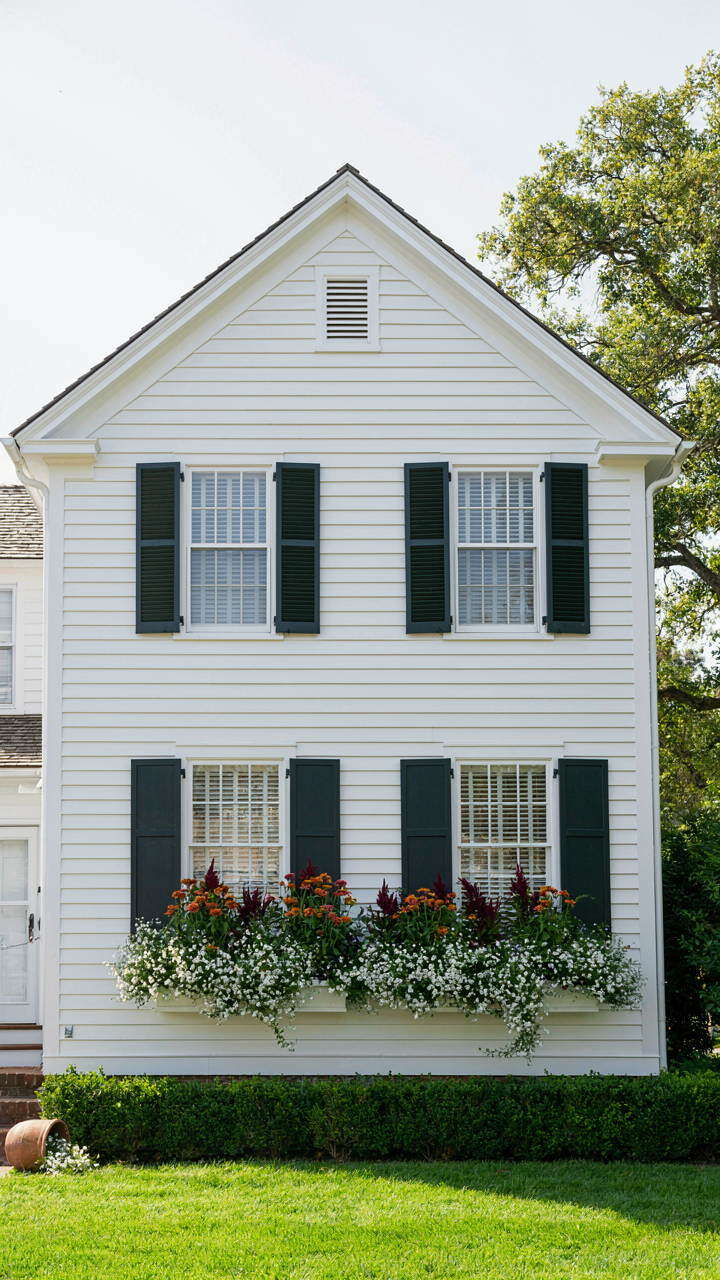
When you accept your actual constraints, you stop wasting resources on plants that fail halfway through summer. White alyssum combined with rust-toned zinnias and deep burgundy celosia creates visual depth in full sun without complexity. That’s three elements, not ten. This combination photographs identically from June through September because these plants hold color under stress. Repeat this same trio year after year. People start expecting it. That expectation is your signature. Lock it in by ordering the same seeds and checking them twice before planting.
Your Fear Isn’t Complex Design; It’s Revealing Your Lack Of Deliberate Choice

Most people don’t fail at window box color combinations because they lack taste. They fail because they never decide. They grab whatever blooms the nursery has in stock and call it a day. Pick one dominant color today. Commit to it. Buy the flowers. Plant them. Stop waiting for permission to have an opinion about your own front door. Your window box doesn’t need to be perfect. It needs to be yours.



