

The Vertical Garden Wall Illusion: Why More Material Isn’t Better
Choose One Material System, Not Ten
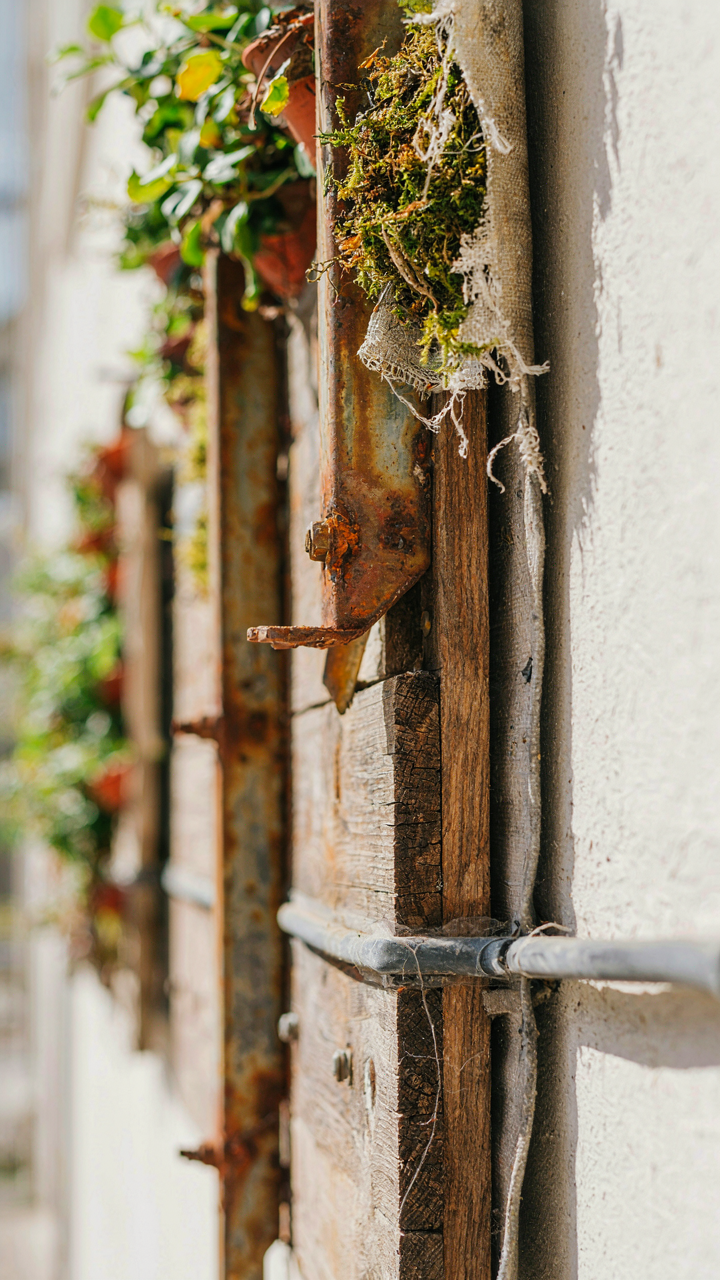
You want people to think you’ve mastered something complex. The truth is simpler and harder: restraint looks like expertise. Most vertical garden failures happen because people layer incompatible materials—mixing fabric, plastic grids, wood frames, metal brackets, and living moss walls without understanding how each one ages differently. The mechanism here borrows from material science: every material has a fatigue curve, a point where UV exposure, water absorption, or structural stress causes failure. Stack ten materials together and you’re stacking ten different failure timelines. Your wall doesn’t fail once. It fails in stages, each one requiring replacement work.
Pick one primary structural system and commit to it. Modular felt panels on steel frames work together because they’re designed as a unit. Wood slat screens with integrated drip lines work because the material choices support one another’s lifespan. When you choose materials that operate on the same failure timeline, replacement becomes a single event instead of an ongoing crisis. Your maintenance schedule becomes predictable. Your budget doesn’t scatter across emergency fixes.
The Real Cost Of Material Mixing
Everyone talks about initial material cost. Nobody talks about replacement cycles, and that’s where the actual expense lives. A vertical garden wall made from incompatible materials forces you into a trap: you can’t replace one component without disturbing others. The felt panel fails at year three. The metal bracket it’s attached to lasts seven years. The plastic clips holding the drip line last four. Now you’re doing piecemeal replacement work constantly, each intervention risking damage to surrounding components that still function.
Material fatigue compounds because water moves through your system unpredictably. Moisture trapped between incompatible materials accelerates corrosion in metal, degrades fasteners, and breaks down adhesives. A unified material system—where substrate, frame, and attachment hardware age at the same rate—lets you plan one full replacement cycle instead of managing perpetual triage. Calculate the real cost: initial materials plus labor for three replacement interventions over ten years. Then calculate one full system replacement on schedule. The scheduled approach costs less and kills the chaos.
Gravity’s Law: Optimizing Structural Integrity In Vertical Gardens
When Weight Distribution Becomes Non Negotiable
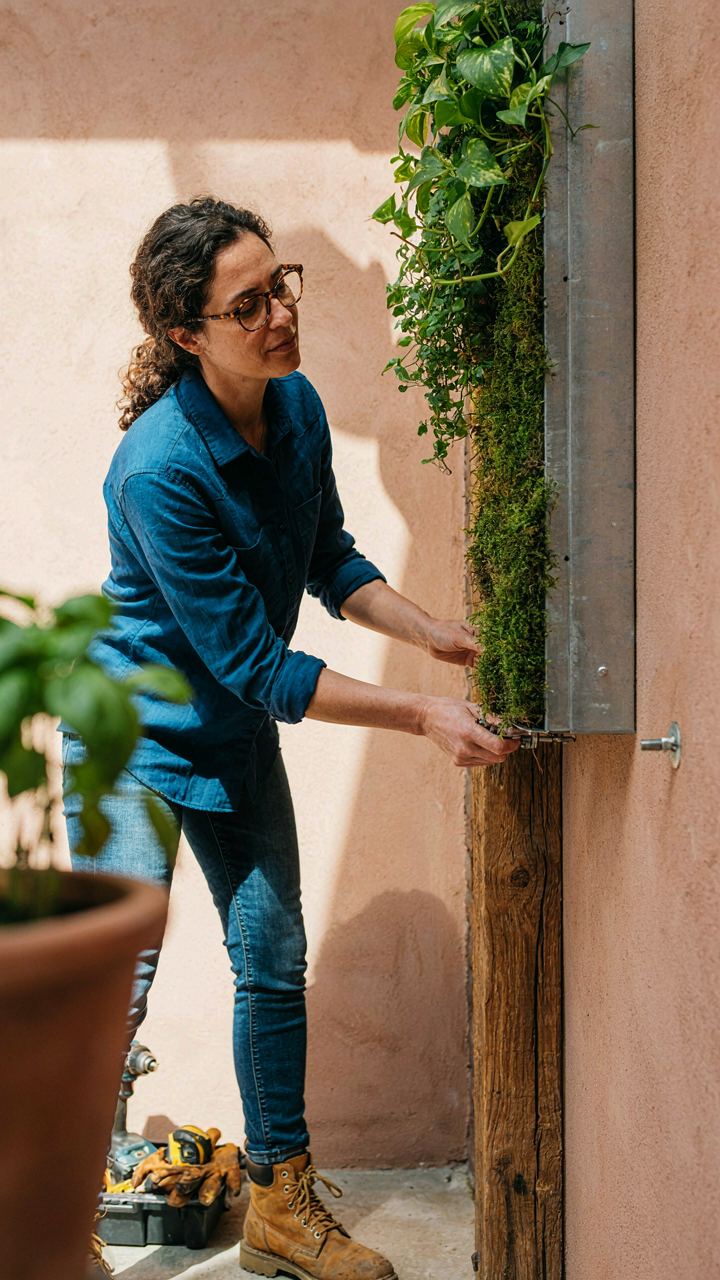
You want your vertical garden to look effortless. That’s the trap. The real reason you care about this section is that a failed wall means dead plants, wasted money, and a damaged structure you’ll stare at for months. Physics doesn’t negotiate. Load-bearing in vertical systems works like a tension network: weight distributes downward through connection points, not evenly across the entire panel. Each fastener, bracket, and substrate layer must account for the cumulative load of wet soil, plants, and the growing medium itself.
Most people underestimate substrate weight. Saturated growing media can weigh 60 to 80 pounds per cubic foot. A 4-by-8-foot wall panel holds hundreds of pounds of water alone, before adding plant mass. Your structure must transfer that load directly into supporting beams or wall studs, never into drywall or thin sheeting. The fastening method determines whether your system holds or fails. Expansion anchors into concrete, lag bolts into wood, or structural brackets welded to steel are non-negotiable. Everything else is decoration.
Materials Against What Actually Happens
Vertical gardens face forces nobody discusses in design blogs. Wind load, thermal cycling, and constant moisture exposure degrade cheap materials in one season. Galvanized steel withstands moisture better than untreated metal, but it corrodes at fastener points where bare steel contacts water. Composite materials like engineered polymer backing resist rot but fail under sustained UV exposure in direct sun. Stainless steel solves both problems and costs three times more. Cedar and pressure-treated wood absorb water, swell unevenly, and split at connection points within two years unless sealed annually.
The substrate container itself must handle hydrostatic pressure. Flimsy plastic liners puncture or degrade under constant saturation and root penetration. Commercial-grade geotextile or HDPE liners maintain integrity for five to seven years. Your irrigation system’s water velocity also matters. High-pressure drip lines erode soft substrates and shift soil, creating voids and dead zones. Slow, controlled percolation through porous materials prevents this. Choose materials based on what will actually attack them, not what looks good during installation.
The Permaculture Material Protocol: Design For Longevity
Closed Loop Systems Beat Resource Extraction
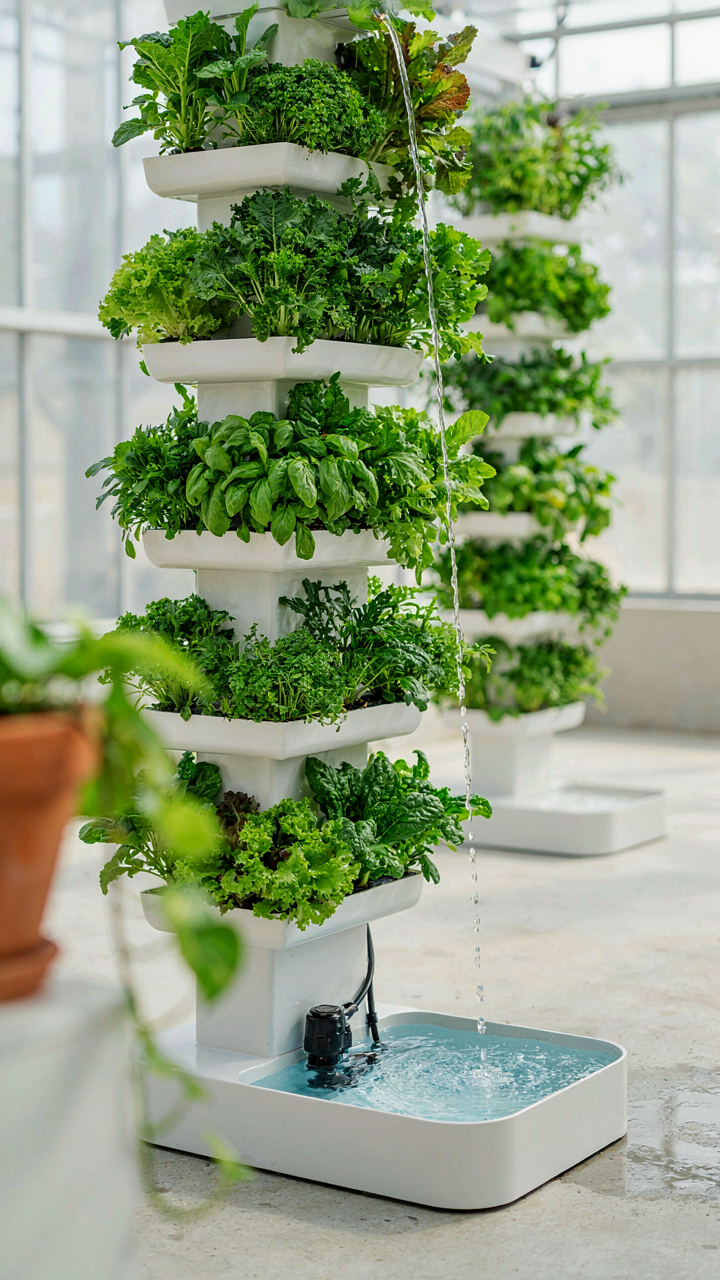
You want your vertical garden to look effortless and permanent. That requires stealing a concept from systems engineering: feedback loops. In closed-loop material systems, waste from one layer becomes input for another, eliminating the constant need to replace degraded components. Most gardeners ignore this and buy new materials annually.
The mechanism is simple. Design your vertical structure so water runoff feeds back into the soil medium. Use decomposable growing substrates that break down and regenerate nutrient cycles. Metal frames that rust get replaced. Wood frames that rot get replaced. Modular material systems that stack and reconfigure eliminate waste during redesign. Pick materials that either last decades without degradation or decompose predictably into soil amendments.
Regenerative Materials Hold Their Function
Regenerative doesn’t mean recycled or sustainable. Those words describe sourcing. Regenerative means the material actually improves or stabilizes over time rather than declining. Coconut coir compacts and loses structure after two seasons. Mineral-based clay aggregates retain porosity for years. Recycled plastic composites degrade under UV exposure. Untreated wood fiber composites maintain stability longer because they don’t experience the stress cycling that exposed wood endures.
Test material performance in your specific climate before committing to a full installation. High moisture environments demand materials that resist fungal breakdown: mineral substrates, recycled rubber, sealed composite panels. Arid climates need materials that won’t crack from expansion and contraction cycles. Stainless steel hardware outlasts galvanized by five to seven years in salt air. The material choice determines whether your system operates for three seasons or ten.
Microclimate Engineering: Material Choices For Vertical Garden Outdoors
Heat Retention Without The Guesswork
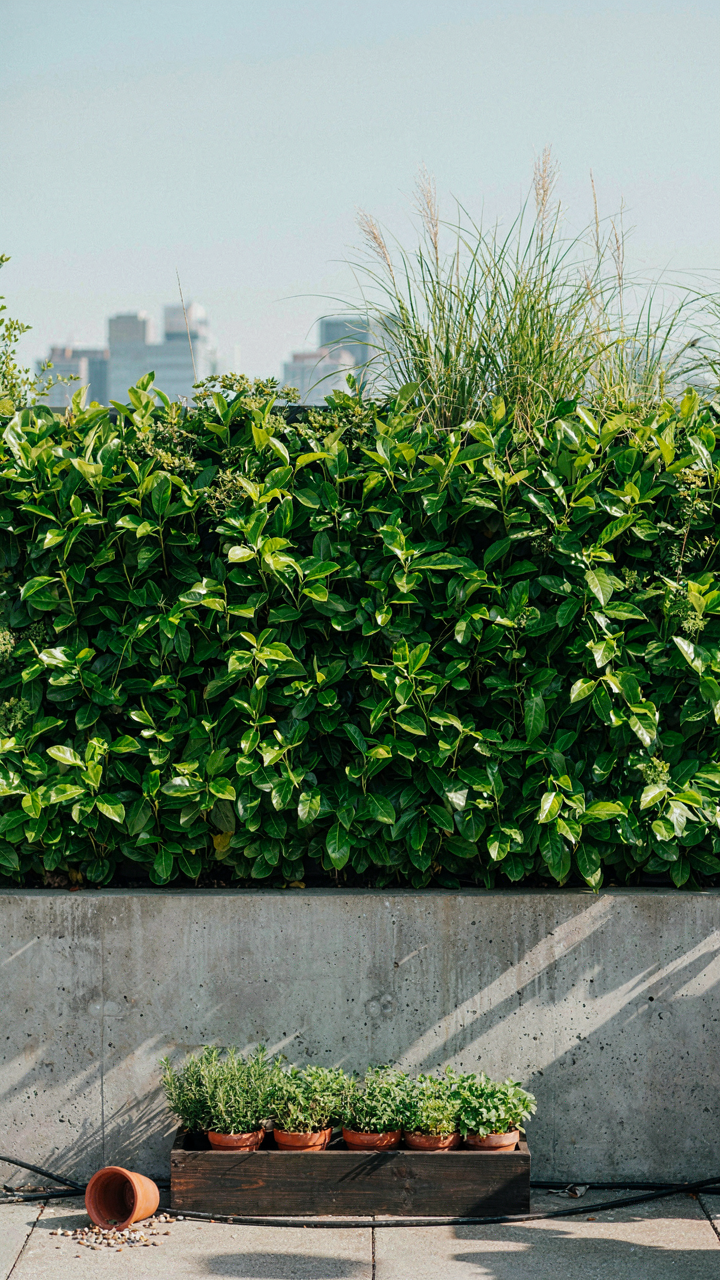
You want your vertical garden to survive winter without replacing half your plants come spring. That’s the real calculation here. The physics of thermal mass applies directly: materials that absorb and release heat slowly moderate temperature swings that kill roots. Concrete, stone, and clay-based substrates store solar energy during the day and release it at night, creating a buffer zone around your plants.
Most people default to lightweight foam or plastic because they’re cheap and easy to move. Wrong choice for outdoor verticals. Heavy materials like cinder block backing, stone-faced panels, or terra cotta containers create the thermal drag your system needs. The backing material matters as much as the growing medium. A south-facing vertical with concrete backing in a cold climate outperforms a lightweight equivalent by 8 to 12 degrees Fahrenheit on average winter nights. Install dense material as your structural layer, then build your growing substrate on top.
Water Moves Downward, Not Sideways
Vertical gardens fail because people treat them like horizontal gardens stacked upright. The drainage principle is physics, not opinion. Water follows gravity immediately. Your material stack must account for this before saturation pools and roots suffocate. Capillary action is minimal in vertical systems, so relying on it to distribute moisture is a beginner mistake.
Use stratified substrate layers: coarse drainage material at the base (perlite, pumice, or expanded shale), then a transition layer of coconut coir or peat, then your growing medium. Geotextile fabric between layers prevents migration without blocking flow. Drip irrigation threaded through the top feeds water at the source, not at some theoretical midpoint. The system must shed excess water completely within minutes of irrigation or your upper plants drown while lower ones dry out. Build a catch basin at the base and either recirculate it or channel it away entirely.
The Biomimicry System: Learning From Nature’s Vertical Structures

How Plants Stick Without Glue
You want this section because you think nature has solved problems you haven’t, and you’re right, but the actual mechanism matters more than the inspiration. Biology doesn’t use adhesives the way you think. Ivy clings through root-like structures called holdfasts that mechanically interlock with surface irregularities. Climbing fig uses aerial rootlets with mucilage that creates suction bonds. The pattern: nature uses friction, mechanical interlocking, and micro-scale surface geometry, not universal stickiness. Your vertical garden materials should replicate this specificity.
When you select climbing support structures, the texture matters more than the material itself. Rough surfaces with defined peaks and valleys allow more contact points for plant attachment. Moss poles wrapped in coconut fiber work because the woven structure creates thousands of anchor points. Plastic sheeting fails because it’s too smooth. Engineered vertical systems should mimic bark texture or natural stone rather than polished surfaces. Install climbing plants on substrates that match the scale of their natural attachment mechanisms.
Materials That Heal Their Own Damage
Most advice says vertical garden materials last longer if you protect them. That’s backwards. Natural systems don’t avoid damage, they absorb it and repair continuously. Mycelium networks in soil heal ruptures by depositing new growth. Bark splits and compartmentalizes damage rather than preventing it. Cork material, harvested from cork oak bark, regenerates after harvesting, meaning the tree heals its own wound and grows new cork over years. This is the self-repair protocol nature uses.
Substrate layering mirrors this mechanism. Biochar mixed into growing media absorbs excess moisture and nutrients, then releases them as conditions shift. Coconut coir fibers absorb water and compress under pressure but regain structure as they dry. Fabric-backed systems with mycorrhizal inoculants allow fungal networks to actively reinforce degrading sections. Rather than choosing materials that resist deterioration, select materials that degrade predictably and support biological repair cycles alongside structural integrity.
The 3 Layer Eco Friendly Vertical Garden System
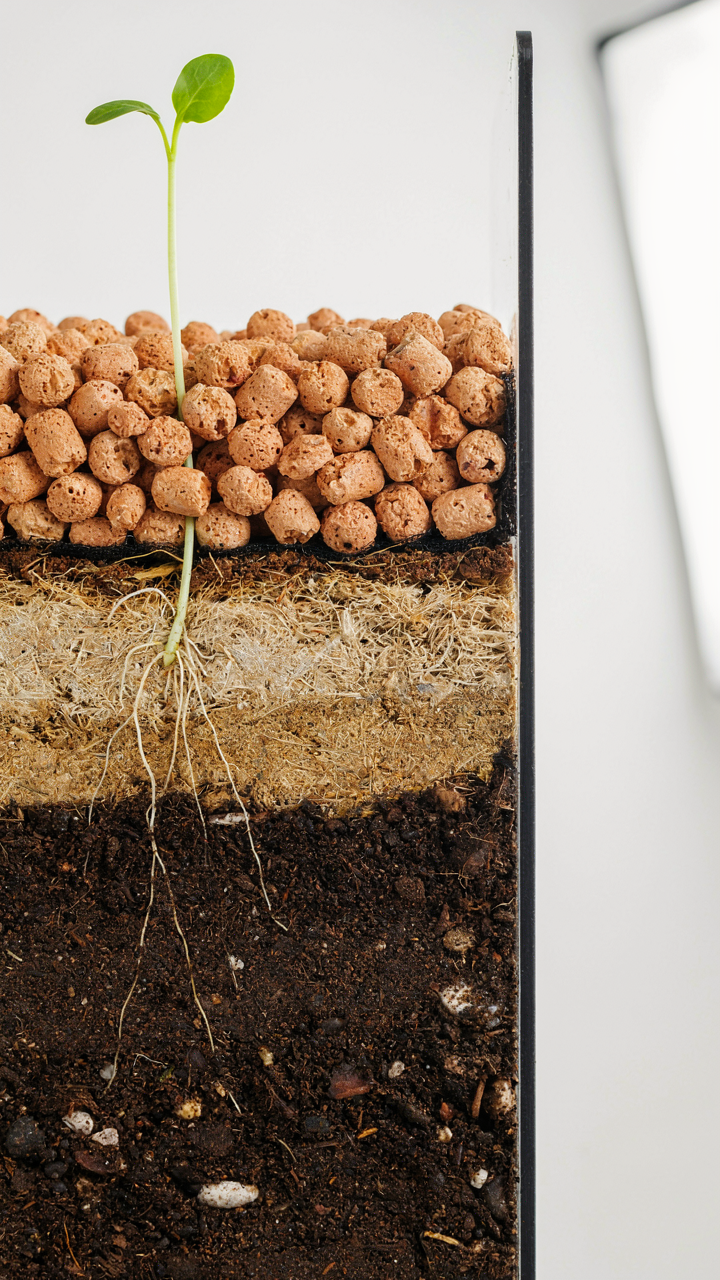
What Actually Lives In Your Root Zone
You want your vertical garden to look effortless, which means you need the root zone to fail invisibly. Here’s what nobody says plainly: the material you choose determines whether your plants survive or slowly suffocate in plain sight. Borrowing from soil science, think of your root zone like a capillary system in hydraulics—it moves water and air through channels, not just holds moisture. Most people grab coco coir or peat moss and call it done. Wrong. The root zone material must balance water retention with oxygen availability simultaneously.
The mechanism is chemical: roots need oxygen to respire and metabolize nutrients. In a vertical system, gravity works against you. Water pools at the bottom and compresses lighter materials, cutting off air flow. High-quality growing media for vertical applications combines expanded clay pellets with coconut coir at a 60-40 ratio by volume. The clay provides structural integrity and air pockets that don’t collapse under pressure. The coir adds water-holding capacity without becoming anaerobic. This ratio survives repeated wet-dry cycles without degrading into slurry.
Framing For The Long Run
The structural layer keeps your entire system from becoming expensive compost in season two. Common advice says to use geotextile fabric and call it stable. That’s incomplete. The structure must resist three forces: the weight of saturated media (which can exceed 60 pounds per square foot), the mechanical stress from irrigation lines expanding and contracting, and UV degradation if exposed.
- High-Density Polyethylene backing: Creates moisture barrier between structure and plant media. Resists puncture without becoming brittle in temperature swings. Lasts 7-10 years in direct sun conditions.
- Rigid aluminum or steel frame: Handles compression and shear loads without warping. Aluminum oxidizes but remains structurally sound. Steel requires powder coating to prevent rust in irrigation-heavy environments.
- Drainage matrix layer: Prevents media from blocking irrigation drip lines. Use perforated PVC or recycled plastic channels rather than gravel, which compacts over time and creates blockages.
- Reinforced pocket fabric: Holds individual plants upright against root expansion pressure. Must be 300-400 GSM minimum weight to prevent tearing during seasonal growth cycles.
- Fastening hardware stainless steel: Prevents corrosion where metal meets plastic and fabric. Regular steel rusts and creates weak points where sections separate under load.
The structural layer works as a system, not isolated components. A weak backing ruins an excellent frame. Poor fabric choice stresses the aluminum. The mechanism is load distribution: every material absorbs and transfers force differently. Test your assembly under full saturation before installation.
Vertical Garden Ideas: Beyond The Kit Sourcing Smarter

Reclaimed Materials Work Better Than New
You want to feel resourceful and different, which is fine, but the real reason reclaimed materials outperform kit components is structural integrity and cost density. Reclaimed wood, metal, and stone have already survived weathering cycles. They’ve proven themselves. New materials come pre-weakened by manufacturing shortcuts and cost-cutting that happens invisibly in supply chains. A salvaged pallet or reclaimed brick carries embedded durability you cannot buy fresh.
The mechanism is simple: old materials were built to last longer because production standards were higher or because survival itself selected for quality. Reclaimed wood from demolished buildings often contains old-growth timber with tighter grain and higher density than anything milled today. Metal salvage from industrial sites uses material compositions that modern manufacturers abandoned for cost reasons. When you source reclaimed, you’re not being nostalgic. You’re selecting for proven performance. Find these materials through deconstruction companies, architectural salvage yards, and demolition sites before materials hit the landfill.
Local Sources Compress Your Supply Chain
Materials sourced within fifty miles of your location eliminate the hidden costs embedded in distant supply chains. This isn’t environmental messaging. This is economics applied to vertical gardens. Transportation costs, warehousing delays, and quality degradation during shipping all compress your timeline and budget when you work local. Stone from a regional quarry arrives fresher than imported stone. A local fabricator can modify materials on demand without the lead time and markup of national distributors.
Start by mapping what actually exists near you: stone yards, reclaimed material facilities, local nurseries with growing media, and fabrication shops. Call them directly. Tell them you’re building vertically. Ask what they have in surplus, what they’d recommend, and what they can modify affordably. Relationships with local suppliers also give you flexibility when a material fails or a design needs adjustment mid-project. They’ll adapt because they see you as ongoing business, not a one-time order.
The Green Vertical Matrix: Interconnected Material Ecosystems

When One Material Fails, Everything Cascades
You want to believe your vertical garden will look the same in year two as it does in month two. It won’t. You’re really asking: how do I stop it from falling apart? The mechanism borrowed from biology is symbiosis, where organisms succeed or fail based on their relationships, not their individual strength. Your materials work the same way. A fabric that wicks moisture perfectly will rot your wood backing if the wood can’t breathe. A metal frame that handles weight beautifully will corrode and stain your substrate if they touch without separation. The materials either support each other’s longevity or they trigger cascading failure.
Most vertical garden advice treats materials as independent units. Pick a good substrate. Pick a good frame. Pick a good backing. Wrong. You’re not assembling parts, you’re engineering a system where each material extends or shortens the life of every other material. Geotextile fabrics prevent substrate loss while allowing drainage, but only if the substrate itself won’t compress and trap water against the backing layer. Metal frames prevent sagging, but corroded metal particles leach into growing zones. Wood backing provides structure and aesthetics, but wood touching wet substrate rots faster than isolated material would suggest. The interaction multiplies the degradation rate.
Mapping Material Decay Before It Happens
You can’t stop decay. You can only schedule it. Most builders ignore this and act shocked when a system fails after three years instead of eight. Decay isn’t random. Each material has a documented failure timeline that changes depending on what touches it and what stays wet. Untreated wood exposed to constant moisture fails in two to five years. Galvanized metal lasts eight to twelve years before the zinc layer compromises. Landscape fabric without UV protection breaks down in one to three years. But these timelines collapse when materials interact. Wood touching wet fabric accelerates rot. Metal touching substrate minerals corrodes faster. Plastic touching untreated wood leeches into soil.
Map material decay by starting with the wettest zone and working outward. The substrate layer itself degrades fastest, becoming compacted and hydrophobic within two to three seasons. Directly behind it, whatever backing material touches the substrate faces maximum moisture exposure. Separate these with a barrier layer or accept accelerated degradation. The frame experiences decay pressure based on what moisture touches it, not just environmental exposure. A wood frame supporting direct substrate weight decays faster than a wood frame holding up fabric that holds up substrate. Anticipate which materials will fail first, second, and third, then replace them on rotation rather than waiting for system collapse.
Your Vertical Garden Fails Not From Lack Of Materials, But From A Deficit Of Conceptual Clarity

Most people buy materials before they buy a vision. They stack trellises and soil and forget to ask: what problem does this garden solve? Stop browsing. Spend thirty minutes today sketching one wall in your space and defining what you actually want from it—food, privacy, aesthetics, or oxygen. The materials follow the intention, not the other way around. You don’t need better supplies. You need a reason that matters enough to maintain them.



