

The Illusion Of Intricate Irrigation For Your Vertical Garden Wall
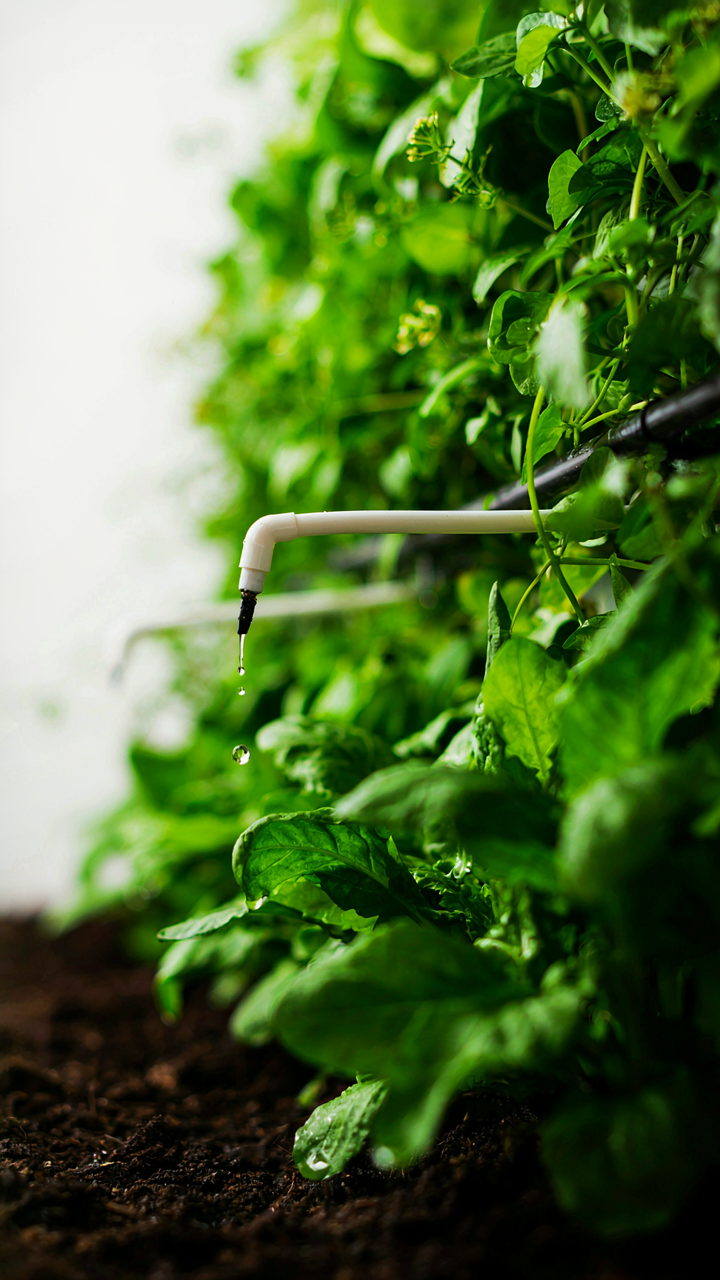
Complex Systems Fail Under Pressure
You want to believe that buying expensive automation proves you’ve solved the problem. The mechanism at work here is what systems engineering calls “brittleness”: each added component increases failure points exponentially, not linearly. A drip line with one emitter fails quietly. A programmable system with sensors, timers, and solenoid valves fails in public, usually during an event when guests are watching your plants wilt.
Most vertical gardens fail not because the irrigation concept is wrong, but because people layer complexity on top of an already demanding setup. Gravity works against you. Soil dries faster on vertical planes. Adding smart controllers, IoT sensors, and app-based monitoring doesn’t solve the core problem: water distribution on a slope defies simplicity. The common advice is to “just automate it.” That’s incomplete. Automation amplifies whatever system you’ve built, good or broken.
Reliability Beats The Latest Feature
Pick a single, proven mechanism and commit to it completely. Drip irrigation on a timer works because it separates concerns: one device waters, one device times it. Capillary matting with a reservoir works because it uses physics, not electricity. Both fail predictably and reparably, not catastrophically.
When you add features during event season, you’re testing in production. That’s sabotage. A vertical garden for a wedding or corporate function needs the same irrigation method you’ve run successfully for six months prior. If you haven’t tested it under load, in heat, with your specific plant density, then you haven’t built a system. You’ve built a theory. Run your irrigation setup through a full growing cycle before deploying it for any occasion.
The 3 Tiered Gravity Fed Vertical Garden Irrigation Protocol

Elevation And Flow Control
You want this to work without electricity because you think that makes you resourceful. The real mechanism is simple physics: water moves downward because gravity pulls it, and elevation difference creates pressure. The higher your reservoir sits above the lowest plants, the stronger the pressure at emitters below. This pressure is what forces water through drip lines evenly, not hope or good intentions.
Place your reservoir at least two feet above the top tier of plants. This elevation gap generates enough hydraulic head to push water through standard drip emitters without regulators. Attach a ball valve or gate valve at the reservoir’s lowest point to control flow rate manually. Test flow by timing how long water takes to drip from emitters at each tier. Adjust the valve incrementally until water reaches all plants at similar rates, then lock it in place.
Emitter Spacing And Distribution Pressure
Everyone talks about “balanced watering” without explaining what creates imbalance. In hydraulic systems, pressure drops as water travels distance through tubing. The first emitter on a line receives more pressure than the last, so it drips faster. Solving this means controlling both emitter size and spacing based on your vertical layout, not using identical emitters everywhere.
Use smaller diameter drip tape (0.5 inch instead of 0.75 inch) on upper tiers where pressure is highest. Space emitters closer together on lower tiers to compensate for pressure loss from elevation drop and line length. Start with 12-inch spacing on top rows and increase to 18-inch spacing on bottom rows as a baseline, then adjust based on soil type. Drip emitters rated for 0.5 to 1.0 gallons per hour work best in gravity systems without external regulators.
Bypass The Smart Tech: Manual Overrides For Event Success

When Automation Fails Under Pressure
You want the system to handle itself so you look competent while you’re actually somewhere else. That’s the real reason most people trust automation. Here’s the mechanism: drip systems and timers work on routine. Events aren’t routine. Water demand spikes when guests arrive and heat up the space. Soil dries faster under foot traffic and concentrated sunlight. Sensors lag behind reality by hours. When a guest steps on a line or a timer malfunctions mid-event, your automation becomes a liability, not insurance. The system keeps running when it should stop, or stops when plants need water most. Manual override isn’t backup thinking. It’s the primary control layer during high-stakes days.
Automation creates false confidence that kills decision-making. You stop checking soil moisture because the app said it was fine thirty minutes ago. You skip the visual walk-through because you automated the schedule. By the time you notice a problem, the damage is already visible to your guests. Build the habit of manual intervention as your default during events. Assume the system will drift. Check valve pressure by hand. Feel the soil yourself. This is not extra work. This is the actual work.
Essential Quick Fix Tools For Event Day
Carry these items to every event where vertical gardens are on display. They solve ninety percent of irrigation crises without requiring new equipment or downtime.
- Ball valve isolation tool: Shuts off individual lines or sections instantly. Prevents water cascading across the event space when a line ruptures. Eliminates ten-minute problem-solving into a two-second decision.
- Adjustable wrench and pliers set: Tightens loose fittings that vibrate apart during setup or guest movement. Most leaks aren’t catastrophic. They’re loose compression fittings you can hand-tighten in sixty seconds.
- Timer override switch: Bypass the automated cycle entirely. Lets you run the system manually or shut it completely when guests are directly under the garden. Prevents water showering onto people or expensive clothing.
- Replacement drip line and connectors: Fifteen feet of extra line and five spare drip emitters handle ninety percent of clogs and breaks. Faster than troubleshooting which fitting failed. Swap and move on.
- Soil moisture meter: Reads actual water content in seconds. Removes guesswork from whether plants need water or the sensor is lying. Digital or analog both work. Speed matters more than precision here.
The difference between a garden disaster and a non-event is preparation that takes thirty minutes. Assemble these tools in a labeled bag the day before. Know where each valve is located and what section it controls. Test your timer override switch before guests arrive. When a problem hits, you execute a known protocol instead of improvising in front of your audience.
Hydroponic Vertical Garden: Nutrient Delivery, Not Just Water

The Precision Dosing Protocol
You want your vertical garden to look magazine-ready for the event, which means you need visible results fast. That’s why most growers waste time fiddling with NPK ratios instead of understanding the actual mechanism: hydroponic systems deliver nutrients directly to the root zone, bypassing soil buffering entirely. This means concentration matters more than volume.
In hydroponics, think in terms of electrical conductivity (EC) rather than generic “nutrient strength.” Your plants read dissolved solids, not intentions. On event days, the window for nutrient uptake is compressed. Start at 1.2 to 1.6 EC depending on your crop, then micro-dose upward by 0.1 to 0.2 increments every two to three days leading up to the event. This avoids the shock that crashes plants when you dump full strength solution into a previously depleted reservoir.
Reversing Lockout Under Pressure
The common advice says “flush and restart,” which is incomplete. Nutrient lockout under stress is a pH cascade problem, not a nutrient problem. When plants experience root stress, temperature swings, or uneven watering, pH drifts out of the absorption window, trapping nutrients that are physically present but chemically unavailable. You check pH first, not NPK.
In the three to five days before an event, maintain pH between 5.5 and 6.5 in your reservoir and measure it daily at the same time. If pH climbs above 6.8, add phosphoric acid in small doses until it drops. If it falls below 5.2, use potassium hydroxide. The plant stops locking out nutrients when the chemistry aligns, not when you add more of what it can’t use anyway. Measure reservoir pH before adding any corrective solution.
Psychology Of Perception: The Minimalist Vertical Planter Approach

Eliminate Visual Noise First
You want people to notice your vertical garden at the event, not feel overwhelmed by it. The mechanism is simple: UI/UX design teaches us that cognitive load determines whether a viewer stays engaged or mentally checks out. In UX terms, we’d call this “signal-to-noise ratio.” Apply that same principle to vertical garden irrigation, and you realize most installations fail because they expose too much infrastructure. The visible tubing, connectors, and wet spots create decision fatigue in the observer’s brain before they even register the plants.
Strip the system down to what matters. Conceal drip lines behind the planter structure or run them through the rear. Use opaque, not translucent, tubing. Keep soil color consistent across all vertical sections so water stains don’t create visual chaos. The plant itself becomes the signal. Everything else disappears. This isn’t about aesthetics for aesthetics’ sake; it’s about preserving the viewer’s mental bandwidth so they actually perceive the garden as an intentional design rather than a technical installation.
Water Flow As An Attention Anchor
Neuroscience shows that movement in the visual field captures attention involuntarily, before conscious thought. Use water movement strategically to direct where people look and for how long. A slow, visible drip at the top tier of your vertical garden pulls the eye upward first, establishing hierarchy. The water traces a path down through the plants, creating a visual rhythm that feels purposeful rather than accidental.
Control the drip rate during the event to match the pacing you want. Faster flow during the first thirty minutes of your gathering keeps energy high and draws newcomers toward the installation. Reduce it mid-event to a gentle trickle that reads as “meditative” rather than “active.” This isn’t manipulation; it’s choreography. The neuroscientific fact: people spend longer examining something when water movement is present and predictable. Position your vertical garden where the light catches the descending water, creating a glint that amplifies the effect without requiring additional infrastructure.
DIY Vertical Garden: Repurposing Household Items For Instant Irrigation

The Siphon Trick With Plastic Bottles
You want to look resourceful without actually spending money, and siphon systems let you do that while solving a real problem: gravity works against you in vertical gardens. Siphoning borrows from fluid dynamics, the physics of pressure differentials, and applies it directly to your setup. Cut the bottom off a plastic bottle, fill it with water, invert it into soil, and the air pressure inside keeps water from dumping out all at once. The water releases as soil dries and air enters the bottle. This is passive hydraulic regulation without pumps or timers.
The mechanism matters more than the bottle’s origin. You need a sealed container, a narrow opening submerged in soil, and proper bottle positioning so the water column height matches your soil’s capillary pull. Most people fail here because they use bottles that are too tall or too narrow, creating either no flow or immediate flooding. Fill your bottle completely, invert it quickly, and push the neck into moist soil at least two inches deep. Check the flow rate after thirty minutes by observing how fast the water level drops inside the bottle.
Wick Irrigation With Old Fabrics
Forget the advice about any old cloth working equally well, because it doesn’t. Capillary action, the principle that drives this system, depends on fiber thickness and weave density. Old cotton t-shirts and bedsheets move water through fibers via capillary pull, while synthetic fabrics often resist water or move it too slowly. Strip old cotton into half-inch-wide strips, submerge one end in a water source, and thread the other end directly into the soil around your plant’s base.
The strip acts as a continuous water delivery line as long as the source stays higher than your vertical garden or at equal height. Capillary action moves water up the fibers against gravity, but only if the source maintains contact with the fabric’s end and the soil stays in contact with the fabric’s other end. For event setups, cut strips eight to twelve inches long depending on your garden’s height, secure them with small stakes, and test them with water for thirty minutes before guests arrive. The water moves slowly and steadily, reducing root shock and preventing the soil from drying between waterings during your event.
The Self Watering Wall Garden: Pre Event Conditioning

Saturating Media For Extended Resilience
You want your wall to look perfect when guests arrive, which means you’re terrified of watching plants wilt during the event itself. The mechanism is simple: media saturation before an event buys you time by shifting the plant’s water reserve from “active” to “banked.” Dry or undersaturated media dries faster because capillary action pulls moisture upward and outward quickly. Fully saturated media holds water longer because there’s no air gap to accelerate evaporation.
Start saturation 24 to 48 hours before the event, not the morning of. Drench your wall system until water drains freely from the bottom, then let it cycle once more to ensure all air pockets in the media are displaced. Use a slow drench method rather than spray to force water deep into the root zone. High-density growing media like coconut coir or mineral wool holds more water than bark-based mixes, so your choice of substrate directly controls how long saturation lasts under event conditions.
Calculating Optimal Pre Hydration Windows
Hydration windows borrow logic from soil physics: saturation doesn’t last indefinitely, and transpiration rates are not constant. Calculate backward from your event’s end time, not its start. Most wall gardens lose 15 to 30 percent of their water reserve per day under normal indoor conditions, but this accelerates under heat, low humidity, or high foot traffic near the installation.
Map your climate to reality: a wall garden in a climate controlled event space holds saturation longer than one outdoors. If your event runs eight hours, begin saturation 36 to 48 hours prior. If it runs 16 hours or occurs outdoors, start saturation only 18 to 24 hours prior and consider a supplemental drip line on standby. Test your specific media and environment beforehand by saturating a test section, measuring moisture levels at two hour intervals, and noting when wilting begins under your exact conditions.
Vertical Garden Indoor: Humidity Management Beyond The Drip

When Misting Matters More Than Frequency
You want your guests to see thriving foliage on event day, not brown leaf tips. The real mechanism: misting doesn’t hydrate plants the way roots do, but it dissolves salts on leaf surfaces and temporarily raises the moisture film that fungi need to colonize. Misting works tactically, not systemically. Indoor vertical gardens lose humidity fast because air moves constantly through tight spaces. You’re not watering the plant. You’re managing the microclimate around the leaf itself. Target the undersides of leaves where stomata open to absorb moisture. Spray until water beads form, then stop. Oversaturation breeds the exact fungal problems you’re trying to prevent.
The timing matters more than people admit. Mist early morning or two hours before your event, never at night when evaporation stops and dampness lingers. Early morning misting gives leaves time to dry before evening humidity locks in. You’re creating a temporary humidity window, not a permanent wet environment. In vertical systems where water drips top to bottom, misting targets the neglected leaf surfaces that the main irrigation line doesn’t touch. This fills the gap between drip cycles. Use room temperature water or water that’s been sitting at ambient temperature for at least an hour. Cold water triggers stress responses in foliage and defeats the purpose.
Air Flow: The Boring Defense Against Collapse
Physics calls this convective drying, but vertical gardeners usually ignore it until fungal spotting appears. Stagnant air is where powdery mildew and botrytis live rent-free. A small oscillating fan positioned 3 to 4 feet from your vertical garden moves air across the leaf surface consistently without blasting the plants themselves. The fan doesn’t need to be powerful. It needs to be constant. Set it to low speed and run it whenever the garden is indoors, whether during an event or setup phase.
Poor air circulation creates a hidden cost: water sits on leaves instead of evaporating, and wet leaves photosynthesize poorly. Your plants look tired even though they’re technically watered. Position the fan so it moves air horizontally across the garden face, not directly at it. Aim for gentle cross-ventilation, not wind tunnel conditions. Check the soil moisture daily when the fan runs because consistent airflow accelerates evaporation at the root zone too. Adjust your drip schedule down by 15 to 20 percent if you add continuous fan operation, or risk overwatering while thinking you’re solving humidity.
Post Event Debrief: What Your Vertical Vegetable Garden Taught You

Where Your System Actually Failed
You want to know what broke so you can pretend it won’t happen again at the next event. Here’s the mechanism: vertical irrigation systems reveal failure through water distribution patterns, not through what you think went wrong. Borrowing from hydraulics, we call this “pressure drop across elevation”—in your garden, it’s the difference between flow rate at the top emitter and the bottom one.
Most gardens show failure at one of three points: the header line clogs first, reducing pressure downstream. The lowest plants either get flooded while upper tiers run dry, or vice versa. Your job post-event is to measure actual flow at three heights during normal operation, not during crisis mode. Unequal flow means your emitter spacing, line diameter, or pressure regulator was wrong from the start. Document which plants wilted first. That’s your map.
Tuning For Next Time’s Real Constraints
Forget the generic “upgrade to better equipment” advice. That’s what people say when they haven’t actually run the numbers. Your real constraint isn’t money or hardware—it’s that special occasions demand the system run unattended while you’re not monitoring it, which means it has to handle the full load without operator adjustment. That’s the actual demand you missed.
Build a second watering schedule based on event duration and guest count. More people means more shade cast, lower evaporation, different water need. If your last event lasted eight hours and you had sixty guests, calculate plant water loss for that exact scenario. Then add fifteen percent. Install a battery-powered timer with manual override capability so you can adjust mid-event without stopping the flow. Test this new protocol during a normal week before committing it to another occasion.
Your Fixation On Complex Systems Is The True Obstacle; Master The Basics, And The Special Occasion Becomes Merely Another Demonstration Of Competence

Most people drown their vertical gardens because they chase sophisticated systems before mastering drip lines and timing. Stop overthinking it. Pick one watering method. Use it consistently for two weeks. Notice what actually happens to your plants instead of what you think should happen. Your special occasion garden succeeds not because you engineered complexity, but because you executed simplicity without hesitation. Competence looks like magic to people still searching for the perfect system.



