

Beyond The Instagram Façade: Real Reasons For A Vertical Flower Garden
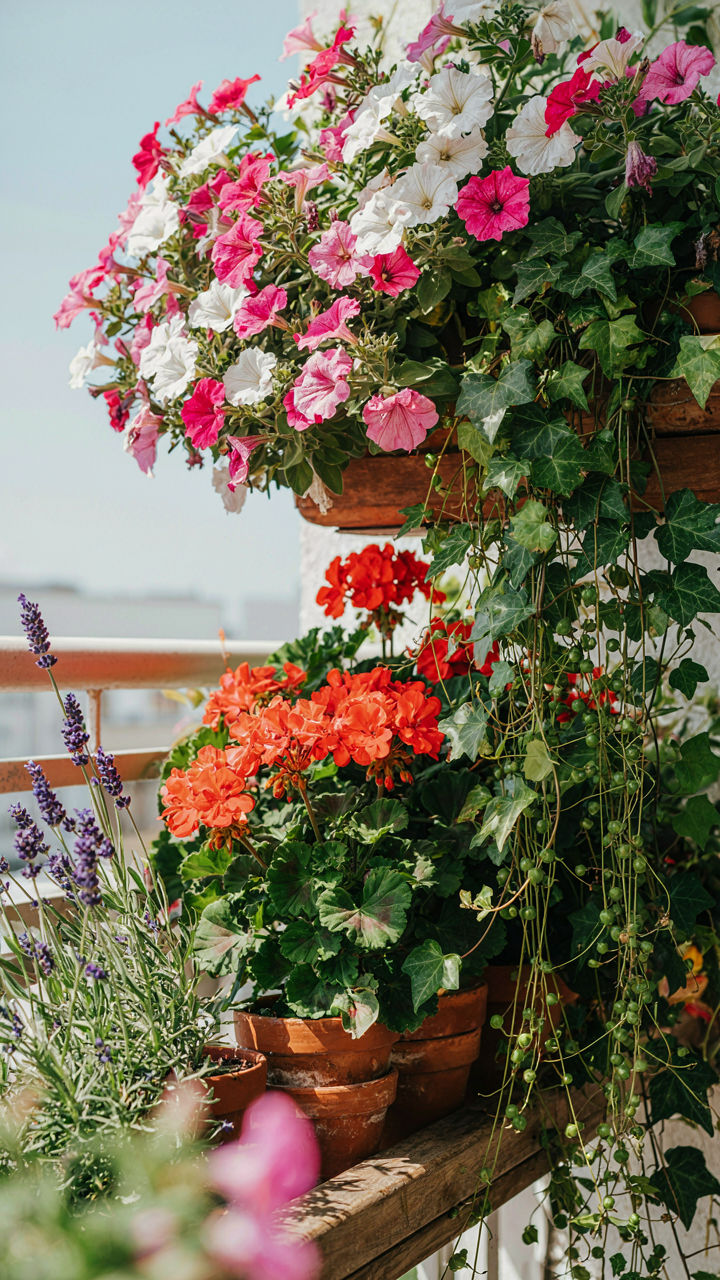
What Vertical Gardens Actually Solve
You want proof that your space matters to people who matter. Here’s the mechanism: a vertical flower garden compresses aesthetic impact into constrained square footage. Like leverage in physics, it amplifies visual output with minimal input. Most people call this “maximizing space.” That’s incomplete. You’re actually solving the signal problem. Limited floor space forces a choice: occupy it with mass or with density of visual information. Vertical gardens choose density. They make small rooms read as intentional, not cramped.
The common advice says vertical gardens save space. Wrong angle. They don’t save space, they weaponize it. A 2-by-6-foot vertical structure produces the same presence as a 12-foot horizontal planting bed, but occupies one-sixth the footprint. This matters for apartments, patios, and event spaces where square footage costs money or doesn’t exist. The structural reality: gravity pulls everything down, so vertical gardening fights that pull through support systems. Trellises, pocket systems, and tiered frames become the infrastructure that makes the flowers visible. Without them, you have a plant arrangement. With them, you have a statement.
The Validation Loop Is Real, But It Points Somewhere Useful
You’re hoping people notice the flowers, then notice you for caring enough to grow them. Don’t pretend you aren’t. The deeper dynamic: vertical gardens remove plausible deniability. A horizontal garden can look accidental or neglected. A vertical one cannot. The structure itself signals intention. This matters for special occasions because it compresses the time between setup and perceived permanence. A vertical installation reads as “I planned this” within minutes of arrival, not months of gradual growth. That’s not manipulation, that’s efficient communication.
The real mechanism isn’t about validation from strangers, it’s about proof of concept for yourself. Vertical gardens force a commitment structure. You can’t water them absentmindedly. You can’t ignore them. The vertical orientation means drainage, airflow, and moisture distribution require actual systems, not assumption. This creates accountability. For special occasions specifically, this becomes tactical: you’re not betting on a garden to impress people, you’re betting on a garden to prove to yourself that you can execute something with moving parts under time pressure. That’s the actual value being exchanged.
The Vertical Garden Wall Flowers Fallacy: Why More Isn’t Better

The Crowding Trap
You want impact. You think filling every pocket means maximum visual punch. That’s backwards. The real mechanism at work here is negative space—the same principle architects use in minimalist design. A vertical flower garden crammed with blooms competes with itself. Each flower fights for attention instead of commanding it. Your eye lands nowhere because it lands everywhere. The result is visual noise, not drama.
Density kills hierarchy. When you pack plants into every available slot, you eliminate the contrast that makes focal points work. A single specimen in strategic placement draws the gaze harder than twenty flowers scattered across the wall. Restraint amplifies impact. That’s not aesthetic philosophy—it’s perception. Your special occasion needs the viewer to know where to look.
Focal Point Logic Over Filler
Placement wins competitions, density doesn’t. Think like a gallery curator, not a gardener filling space. You choose the prime position—eye level, dead center, or architectural alignment—and anchor your statement bloom there. Everything else serves that focal point. Secondary plantings create rhythm and balance without competing.
A vertical flower garden structured this way lasts longer through the event too. When plants occupy every gap, they share water and nutrients inefficiently. Root systems tangle. Air circulation drops. Disease spreads faster. Strategic spacing solves both the visual and the mechanical problem at once. Map your placements first, then fill gaps with greenery that doesn’t demand attention.
The Unseen Mechanics Of A Dynamic Vertical Flower Wall

Water Distribution As System Regulation
You want to believe your vertical garden will just work once you build it. It won’t. Borrow systems thinking from ecology: your wall functions as a self-regulating ecosystem where water moves like currency through a closed loop. Gravity pulls moisture down. Capillary action pulls it sideways through soil. Evaporation removes it from the top. Plants drink from the middle. Each force checks the others.
The mechanism is this: a vertical structure concentrates these competing forces into one plane. Unlike a traditional garden bed where water spreads horizontally and drains predictably, vertical walls compress the system. Wet zones emerge at the bottom. Dry zones emerge at the top. Your job isn’t to fight this gradient, it’s to design the structure so the gradient serves your plants instead of starving half of them.
Plant Health As The Diagnostic Signal
Every dying plant tells you something about your water or nutrient loop. Most people blame themselves. Most people are wrong. The real culprit is feedback. Your vertical wall has no built-in signal for imbalance until damage appears.
Water stress at the top exposes bad nozzle placement or inadequate pressure. Nutrient deficiency signals a flow rate problem, not a fertilizer shortage. Fungal spread indicates trapped moisture, not bad luck. The moment you stop treating symptoms and start reading what the wall is actually telling you, you switch from guessing to operating. Adjust flow rates based on leaf color. Change soil depth based on drainage speed. Test runoff salinity every two weeks to catch nutrient buildup before it locks up plant roots.
Optimizing Vertical Garden With Flowers: The Minimalist’s Advantage

Plant Selection For Dense Spacing
You want to believe that more variety means more impact. It doesn’t. The real mechanism here comes from horticulture: vertical gardens operate under constraint of light penetration. Unlike horizontal beds where light hits everything equally, vertical surfaces create shadow zones. Plants in lower tiers receive less direct light than those above. Choose species that tolerate partial shade or thrive in it. Sedums, ivy-based flowers, and shade-adapted perennials perform where sun worshippers fail. The constraint forces you to pick right the first time.
Resilience matters more than aesthetics at the design phase. A single plant species that survives your microclimate beats five beautiful species that wilt by week three. Sedums handle neglect. Calibrachoa tolerates density. Native groundcover flowers suit regional water availability. Test your chosen plants in one section first. Success there justifies scaling up. Failure there saves you from wasting the entire structure.
Water And Nutrient Delivery Systems
The advice to “water consistently” is lazy. It assumes your vertical garden has uniform drainage, which it doesn’t. Gravity pulls water downward. Upper pockets drain fast. Lower pockets stay wet. Standard drip irrigation fails here because it treats vertical space like flat ground. Use a timer-controlled micro-irrigation system with emitters sized per tier. Upper sections get 5 to 10 minute cycles. Lower sections get 2 to 3 minute cycles. This isn’t guesswork. It’s compensation for physics.
Nutrient delivery needs the same precision. Soil in vertical gardens compacts and depletes faster than ground beds. Water leaches minerals downward. Use slow-release fertilizer pellets matched to your plant type, or switch to weekly diluted liquid feeding through the irrigation line. One protocol beats improvisation every time. Set the system once, monitor soil moisture at each tier for two weeks, then adjust cycle length based on what you observe. The adjustment step separates working gardens from failed experiments.
The Deceptive Simplicity Of A Flower Wall Outdoor Garden

Materials That Actually Survive Weather
You want this to look effortless and permanent, which is why you’re avoiding the real work: materials fail fast outdoors. The mechanism is simple: water infiltration destroys most systems within two seasons. Wood rots. Steel rusts. Cheap plastics degrade under UV. The structures that hold vertical gardens fail not because they’re poorly designed, but because people choose materials based on cost or aesthetics instead of failure modes.
Galvanized steel frames, cedar treated for outdoor use, and composite backing systems outlast everything else. Galvanized steel resists rust through a zinc barrier that self-heals minor scratches. Cedar contains natural oils that slow rot, though it still requires maintenance every three years. Composite materials like recycled plastic lumber don’t rot, don’t rust, and don’t require sealing, making them the lowest-maintenance option despite higher upfront cost. The frame carries the weight and handles the weather; the planting medium and irrigation carry the flowers. Pick one material for longevity, not Instagram appeal.
Wind, Sun, And The Physics Of Drainage
Structural engineering applies directly to vertical gardens: load distribution determines whether your wall stands or fails. Wind doesn’t push evenly. It creates uplift on the back side and pressure on the front, which means a wall with poor anchoring lifts at the edges first. Most people ignore this until installation, then bolt things down half-competently.
- Wind Load Testing: Vertical gardens catch wind like sails. Position walls perpendicular to prevailing winds or brace them every four feet to prevent rotation and uplift failures.
- Sun Exposure Mapping: Full sun accelerates soil drying in vertical systems. East or west-facing walls dry faster than north-facing ones. Match flower varieties to actual sun hours, not assumptions.
- Drainage Layering: Water moves downward through gravity, but pooling happens at seams and backing material. Install a moisture barrier behind the planting medium, then slope the backing slightly for runoff.
- Irrigation Placement: Top-fed systems deliver water to upper plants first, meaning lower plants get runoff and sediment. Start irrigation at mid-height and let gravity do the distribution.
- Foundation Stability: Wet soil weighs significantly more than dry soil. Calculate total weight when saturated, not dry, and anchor accordingly into solid structural supports, not siding.
Drainage fails because people assume water flows straight down. It doesn’t. Capillary action pulls water sideways. Standing water rots roots. The protocol: build the backing with a slight forward tilt, install a permeable moisture barrier, then use a planting medium that drains within six hours of full saturation. Test this before planting by running water through an empty system and timing how long it takes to drain.
Designing A Flower Wall Outside Vertical Gardens: The Neglected Principles

When Your Structure Meets Its Background
You want the wall to look intentional, not like flowers got stapled to concrete. Here’s what nobody says plainly: your vertical garden exists in relationship to what’s behind it and around it. Borrowing from architecture’s figure-ground principle, the flowers are the figure and the wall surface is the ground. Most people treat them as separate problems. They’re not. The wall material, color, and texture either amplify or kill the impact of every bloom.
Your backdrop determines flower visibility more than flower count does. A dark brick wall swallows soft pastels. A white stucco wall makes red blooms look aggressive. A green fence creates visual noise that buries variation. Choose the wall finish before you choose the flowers, not after. This sounds basic. Most people skip this step entirely.
Where Your Eye Actually Lands
Everyone says “create balance” or “avoid clutter.” Both are useless directions. What works is placing one dominant feature so strong that everything else becomes support, not competition. This is restraint disguised as design. Pick one area on the wall where the flowers are densest, most colorful, or tallest. Make it impossible to miss. Everything else should fade in intensity as it moves away from that zone.
The common advice here is backwards. People think more variety means better impact. It doesn’t. A wall packed with six flower types looks chaotic. A wall with two flower types positioned to create one visual landing point looks intentional. The mechanism is simple: your eye needs a place to rest, not a place to jump around. Build the wall so that place exists clearly.
The Tactical Selection: Vertical Flower Garden With Colorful Flowers

Color Psychology Drives Attendance
You want people to remember your event, which means you want them to feel something specific when they walk past your vertical garden. Color isn’t decoration. It’s a psychological trigger. Design borrows from color theory, a framework that maps wavelengths and hues directly onto emotional and physiological responses in humans. Your vertical flower garden functions as a color delivery system. Red accelerates heart rate and draws focus. Blue calms and creates distance. Yellow demands attention but exhausts quickly. The mechanism is simple: wavelength hits the eye, signal travels to the brain, emotion registers before conscious thought catches up.
Most people throw together whatever blooms they like and call it done. Wrong move. You’re not arranging flowers. You’re engineering a mood that serves your event’s purpose. If you’re hosting a product launch, saturated reds and oranges create urgency and energy. If you’re hosting a retreat, cool greens and purples establish calm and contemplation. The garden’s color intensity, saturation, and distribution control how long people linger and whether they take photos. Plant your color story first, then choose the species that deliver it.
Bloom Stagger Extends Usability
The common mistake: people plant for peak bloom on one day. Your vertical garden dies visually within a week. Stagger is the mechanism that keeps the garden relevant across the entire event window or season. Select species with overlapping but distinct bloom windows. Early bloomers open when setup begins. Mid-season varieties carry color through the event. Late bloomers extend the display afterward and serve as documentation for social proof.
Map your species by their natural bloom sequence before you buy anything. A vertical flower garden with petunias (8-10 weeks), zinnias (6-10 weeks), and dahlias (8-12 weeks) planted simultaneously gives you continuous color instead of a two-week peak followed by decline. Plant early-blooming varieties two weeks before your event date, mid-season three days before, and late-bloomers during setup. This timing creates a sustained visual asset instead of a props that dies on schedule.
Pallet Garden Principles: Reclaiming Utility For Beauty

Repurposing Materials Into Living Structure
You want to feel resourceful without actually doing the work. The real mechanism is simple: pallets work because they’re load-bearing platforms already engineered for stacking and weight distribution. A standard wooden pallet handles lateral stress through its three support beams, the same principle that supports a vertical flower garden. Repurpose that geometry intentionally. Don’t slap soil onto random wood and hope.
Wood pallets were designed to move cargo. Their dimensional consistency, cross-beam support, and existing drainage gaps make them function as vertical garden frames without modification beyond basic cleaning. The spacing between planks naturally creates airflow around roots. Treatment matters here, though not obsessively. Food-grade pallets or heat-treated pallets avoid chemical leaching into soil. Untreated wood rots faster but poses no toxicity risk to edible flowers or ornamentals used for events.
Load Capacity And Root System Anchoring
Structural failure isn’t theoretical risk in vertical gardens, it’s a calculation you need to make before stacking soil and plants. Engineering calls this bearing load, and in pallet gardens it’s the gap between what the wood supports and what wet soil actually weighs. Saturated growing medium weighs three to four times more than dry soil. A single pallet stacked vertically holds roughly 300 to 400 pounds before wood compression becomes visible. Water adds 60 pounds per cubic foot of soil volume.
Mount pallets to a wall or frame to distribute weight downward rather than relying on the pallet itself as a cantilever. Secure the top pallet first with L-brackets to the surface behind it, then stack downward. This transfers load to the wall structure, not the wood grain. For ground-level pallet gardens without wall support, use cross-bracing between pallets and limit height to two or three units. Check fasteners monthly during growing season. Roots expanding in soil create micro-movements in wood that loosen bolts.
Flowers For Vertical Garden: Beyond The Obvious Choices
Drought Tolerant Plants That Actually Perform
You want the vertical garden to survive without constant maintenance so you can claim you have a green thumb. The real mechanism is this: vertical systems drain faster than ground beds because water moves downward through gravity, not pooling. Soil moisture depletes 40 to 60 percent faster on walls than traditional gardens. Pick plants bred for water scarcity, and the system becomes self-sustaining rather than a daily obligation.
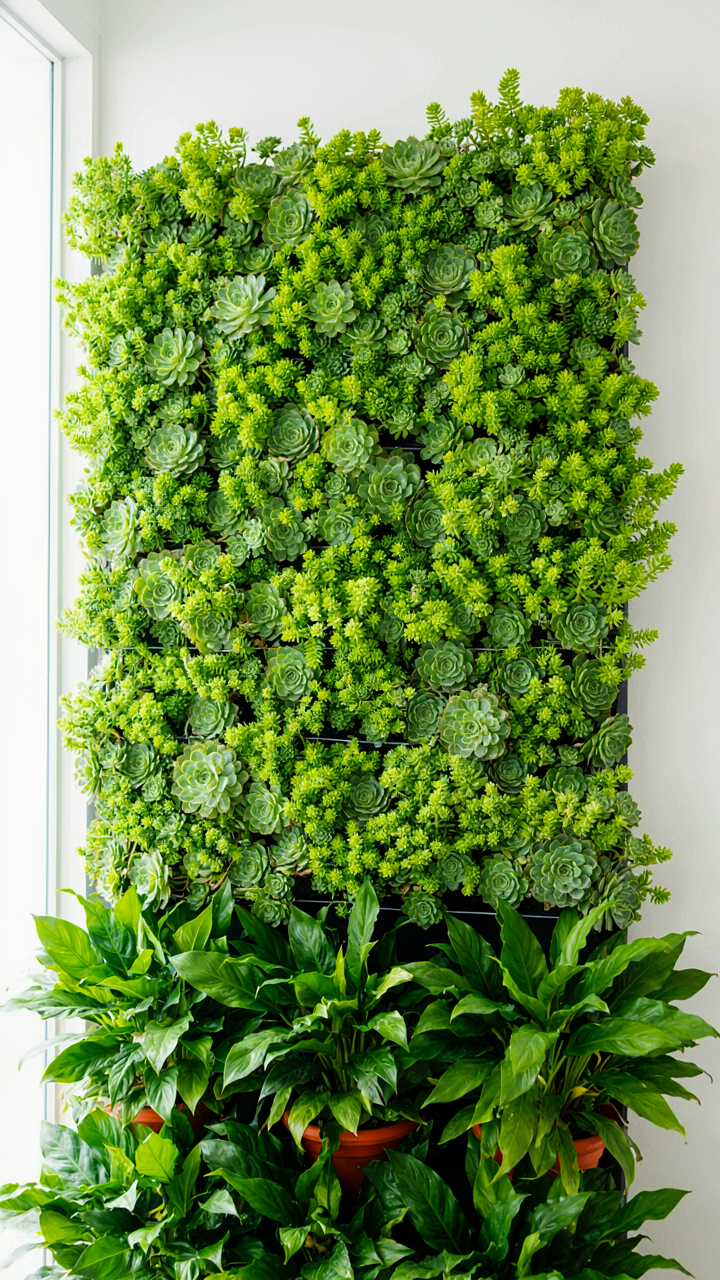
- Sedum varieties: Fleshy leaves store water internally. Sedums tolerate full sun and poor soil. They establish quickly in vertical pockets and require watering only during extended dry spells.
- Sempervivum: Cold hardy succulents with dense rosette forms. They handle temperature swings and neglect equally well. Install them in upper sections where water drains fastest.
- Lavender: Woody perennial with silvery foliage and purple flower spikes. Blooms for months. Prefers lean soil and full sun. Vertical placement improves air circulation around roots.
- Calibrachoa: Trailing annual with small trumpet flowers. Tolerates heat and irregular watering better than petunias. Works well in middle-tier pockets where some moisture lingers.
- Diascia: Low-growing annual that flowers prolifically with minimal intervention. Prefers drier conditions than impatiens. Colors range from coral to deep pink.
The system fails when you fight plant biology instead of working within it. Choose varieties already adapted to Mediterranean or arid climates. These plants evolved to thrive with minimal resources. Install drip irrigation at the top and let gravity handle the rest. Skip the daily watering routine entirely.
Textured Plants That Create Visual Depth
Nobody talks about foliage because flowers are easier to photograph. This is a design problem from landscape architecture: you need contrast and layering to make the eye move through the composition, not just land on color. Flowers fade. Texture stays for the entire growing season.
Mix fine, feathery foliage against broad, architectural leaves. Asparagus fern creates airiness above solid-leaved begonias. Dusty miller’s silver tones push back visually, making pink flowers appear closer. Ornamental grasses add movement and line. Coleus varieties deliver color through leaf pigmentation alone, independent of blooms. The mechanism is simple: variation in leaf size, color depth, and surface quality forces the viewer to engage with the entire wall, not just scan for flowers.
Install textured plants in staggered rows rather than uniform spacing. Place fine foliage in upper sections where backlighting shows delicate detail. Position dense, broad leaves lower where they anchor the composition and hide irrigation lines. Switch out seasonal bloomers while keeping the textured base intact year-round. This approach turns a vertical garden into an actual design statement instead of a generic flower wall.
The Event Horizon Protocol: Vertical Garden As Timeless Display
Build For Decay, Not Perfection
You want the garden to look flawless months after the event ends. That’s the real fear underneath. The mechanism is simple: vertical gardens fail when designers treat them as static installations instead of living systems in constant flux. Botany doesn’t care about your event date. Plants age, seasons shift, light angles change. The gardens that last are engineered around mortality, not against it.
Structure determines survival rate more than plant choice does. A vertical garden framework needs drainage that prevents root rot in month three, soil depth that sustains roots without compacting, and access points for replacement without dismantling the whole system. Most people skip this layer because it’s invisible. The visible plants matter less than the infrastructure that keeps them alive. Build the skeleton first, plant second.
Rotation Strategy Before First Bloom
Seasonal rotation isn’t about variety for variety’s sake. It’s about staggering maturity cycles so the garden refreshes itself without replanting from scratch. Think of succession planning from agriculture: you don’t harvest everything at once, you stagger crops so yield continues. Apply this to vertical gardens. Spring bloomers exit before summer heat stress kills them. Summer performers replace them. Fall mums follow. Winter structure plants hold through frost.
The rotation schedule matters more than the plants you select. Map out what blooms when, how long each species holds color, and what date you pull it. This isn’t aesthetic. It’s operational. You need a written calendar tied to your framework’s zones, sunlight hours per zone, and water needs per season. Without it, you’ll replant reactively when sections die. With it, you replace on schedule before failure occurs. The calendar becomes your maintenance protocol.
Your Fear Of Inadequate Aesthetics Is The True Constraint, Not Garden Space

You’re not stuck because you lack square footage. You’re stuck because you’re waiting for permission to build something that matters. A vertical flower garden isn’t a storage solution for excess plants. It’s a statement. Pick one wall in your home today. Measure it. Sketch what you actually want there, not what Instagram told you to want. Your guests won’t judge the installation. They’ll judge whether you had the guts to try. Everything remarkable starts with someone choosing a wall and refusing to leave it blank.



