
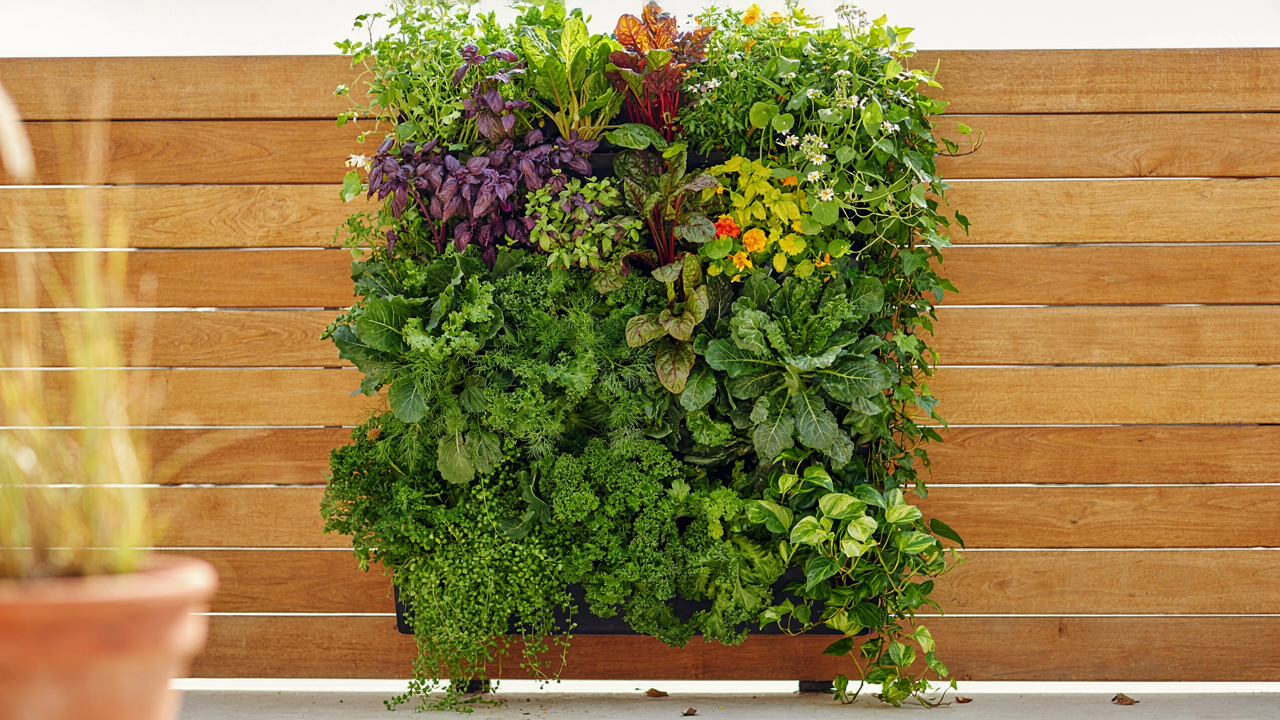
The Vertical Planter Fallacy: More Than Just “Saving Space”

The Economics Of Consumption Versus Production
You want to feel like you’re doing something without actually changing your life. That’s the real motive here. The mechanism is simple: vertical gardening borrowed from economics the concept of efficiency frontier, but most people stop at the visible output without examining the input cost. A pallet vertical garden forces you to choose between buying produce and growing it. That choice is the actual pivot point, not the vertical arrangement itself.
The DIY pallet garden exists because industrial agriculture made growing food seem impossible for regular people. Pallets became the workaround, the permission slip to attempt self-sufficiency without buying expensive raised beds or greenhouse kits. When you build a pallet garden, you’re not just organizing plants in space. You’re deciding that your time and attention have more value than the convenience of store-bought produce. That decision determines whether the garden becomes a prop for social media or an actual income statement on your household resources.
When Aesthetics Becomes The Enemy Of Yield
The common advice says make it look nice. That’s backwards. A pallet vertical garden that prioritizes appearance over density will fail to produce enough food to justify the effort. The real mechanism is this: every square inch of pallet real estate competes for sunlight, water delivery, and your maintenance time. Cram leafy greens and herbs into tight spacing and you get yield. Space them for Instagram angles and you get a decoration that costs more than grocery store equivalents.
Vertical gardens on pallets work because gravity handles distribution and airflow reaches multiple plants simultaneously. Most people waste this advantage by underplanting or choosing ornamental species instead of calorie-dense crops. The tangible output depends on your crop selection and planting density, not the frame. Start with herbs and lettuce, pack them tight, and measure your actual harvest weight and cost against what you spent on materials and time to build and maintain the system.
DIY Pallet Planter Wall: The Architecture Of Autonomy

Find Pallets That Won’t Collapse Under Weight
You want to believe any pallet works because free materials feel like a win. They don’t. Structural integrity determines whether your garden hangs or fails, and most pallets are engineered for one-time horizontal stacking, not vertical load bearing. The real mechanism: pallets marked “HT” (heat treated) are safe. Pallets marked “MB” (methyl bromide) are banned in most countries and toxic. Avoid pallets that previously held chemicals, pesticides, or reactive materials.
- Heat Treated (HT) Pallets: Safe for food contact and gardening. Kiln dried to eliminate pests without chemical fumigation. Standard for export shipments and grocery distribution.
- Pressure Treated Wood Pallets: Reject these entirely. Contains copper compounds that leach into soil and accumulate in edible plants over time.
- Weight Capacity Per Board: Examine the thickness of each plank. Two-inch lumber supports more weight than one-inch. Pallets with five or six boards per layer handle heavier soil loads than three-board designs.
- Visual Rot And Splits: Look for soft spots, mold discoloration, or cracks that run perpendicular to the grain. These indicate structural failure is already underway and will accelerate under moisture and weight.
- Source Verification: Obtain pallets from produce distributors, not construction sites. Construction pallets carry paint residue, adhesives, and treated wood. Produce pallets have predictable material history.
The inspection happens before you transport. Check each board by hand. Press your thumbnail into the wood at three points per board. If it leaves an impression, the wood is compromised. Reject the pallet immediately. One rotten board fails the entire structure.
Assembly Demands Precision Over Speed
The common advice here is wrong: most guides treat pallet assembly as a casual weekend project. Wrong. Vertical mounting means gravity works against every fastener and every joint. The mechanism is load distribution. In structural engineering, load paths direct force through the framework. With vertical gardens, uneven fastening creates stress concentration points where boards separate first. Your assembly speed directly determines your system’s lifespan.
Use lag bolts, not nails. Nails shear under tensile stress. Lag bolts create compression locks that tighten as the wood shrinks. Drill pilot holes first. Drill a hole slightly smaller than the bolt diameter, then insert the bolt. This prevents wood splitting and ensures the bolt seats fully. Pre-drill every single fastener point. Space bolts every eight inches along load-bearing seams. Mount the pallet frame to wall studs with heavy-duty brackets rated for at least 50 pounds per bracket. Attach at a minimum of three points. Test the structure by applying 200 pounds of downward pressure on the lowest planter box before adding soil or plants.
Palette Planter Systems: Beyond Dirt And Water
How Water Actually Moves Through Pallets
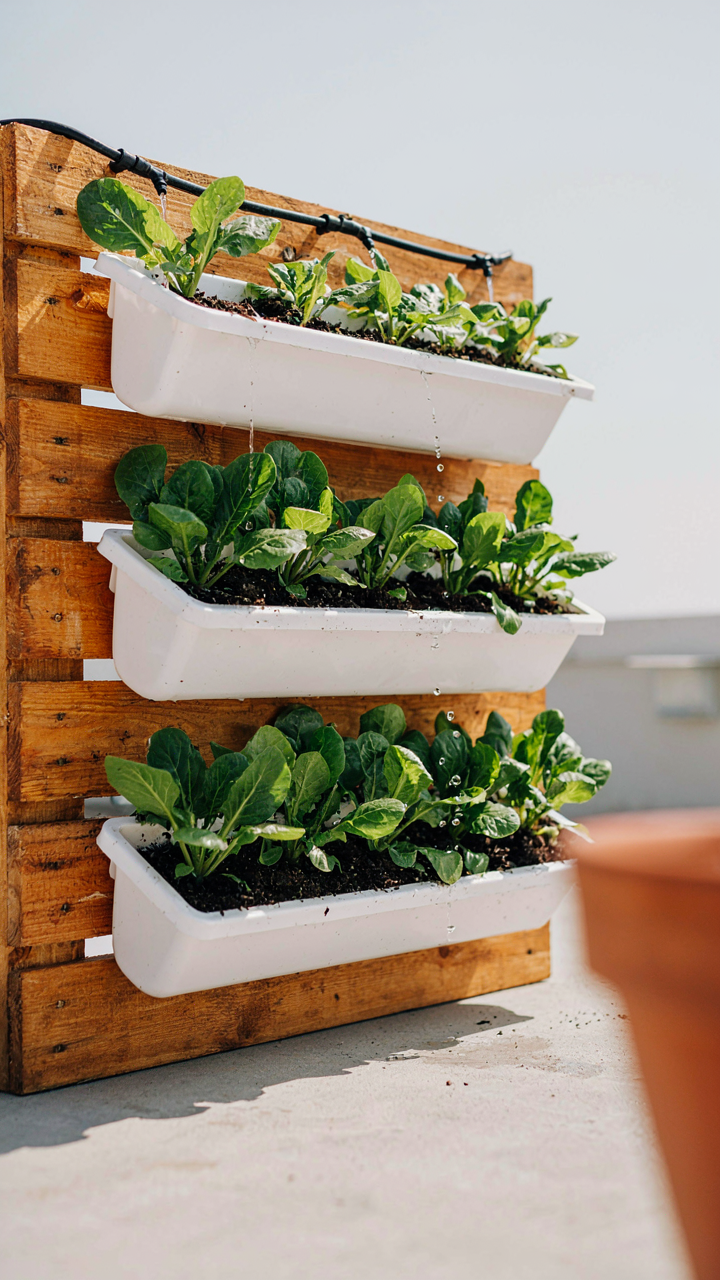
You want your pallet garden to look effortless, like it runs itself. That’s the real appeal. But the mechanism is physics, not magic. Gravity is your only free worker here. In hydraulic systems, engineers call this “head pressure” – the vertical distance water travels under its own weight. A pallet garden works the same way. Water enters at the top, gravity pulls it down through soil, and capillary action distributes it laterally. Get the height wrong and you starve lower plants or drown upper ones.
The mistake most people make is treating pallet irrigation like a flat landscape problem. It isn’t. You’re stacking vertical resistance. Soil density, root density, and material porosity all compound as water descends. A three-foot pallet needs different water delivery than a two-foot one. Drip lines work better than sprayers because they fight less air resistance. Install your drip source at the absolute top, use a timer that delivers water for short intervals multiple times daily, and let gravity do the work rather than fighting it with pressure.
Nutrient Cycling In A Closed Loop
Most pallet garden advice ignores biology entirely. You’re told to “water and feed” like you’re operating a vending machine. But pallets create something different: a miniaturized ecosystem where decomposition, nutrient uptake, and waste cycling all happen in compressed space. In ecology, this is called a “closed-loop system” – inputs are limited, so outputs must recycle. Your pallet garden survives by converting dead plant matter back into available nutrients faster than open-ground gardens do.
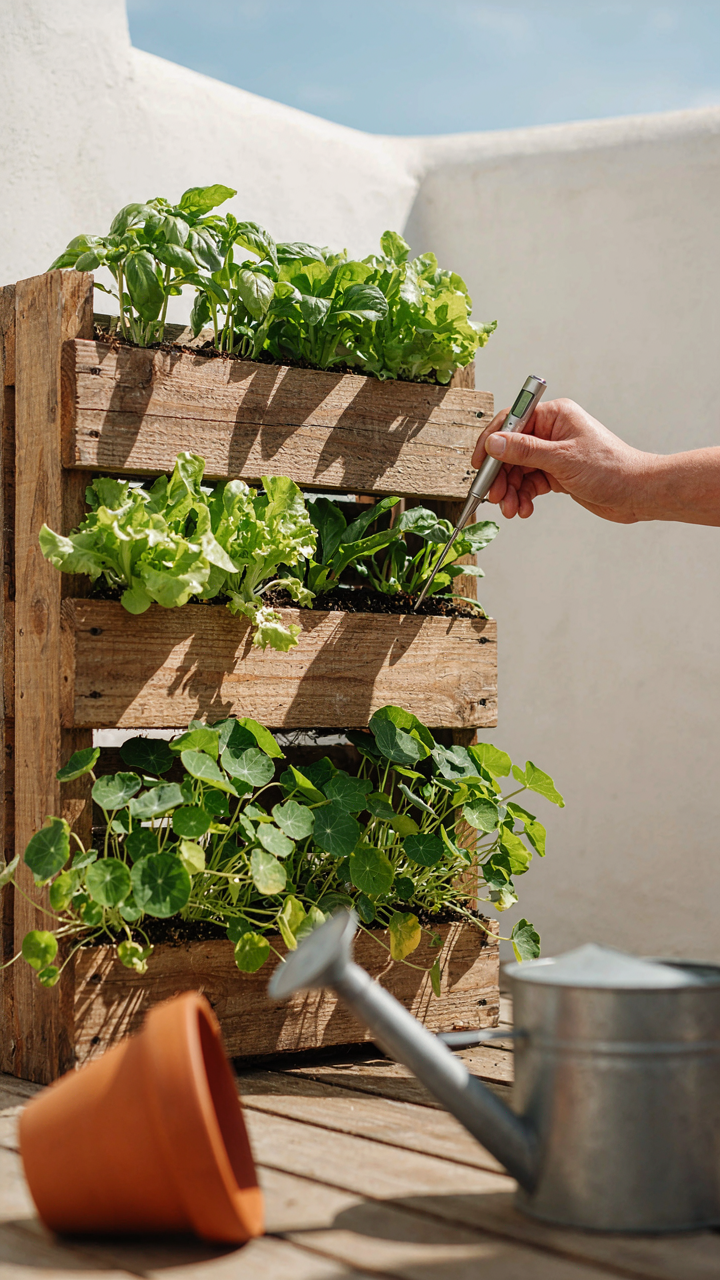
The real lever is soil microbiology. Dense pallet soil heats up faster in sunlight, accelerating bacterial activity. Dead leaves, root exudate, and insect waste break down quicker in warm, moist, confined space. You don’t need chemical fertilizer if you build the right microbial population first. Add compost to your pallet base layer before planting anything. Monitor soil temperature with a basic thermometer. When it hits 60 degrees consistently, your decomposition cycle activates. From that point, side-dress with finished compost every four weeks and let biology feed your plants instead of you guessing at NPK ratios.
Pallet Garden Walls: Maximizing Your Edible Footprint

Light Exposure Determines Everything
You want a vertical garden that looks intentional, not like you’re compensating for limited space. Here’s what actually matters: light exposure dictates which plants survive, not your preference. This is basic botany. Pallets facing south in northern hemispheres receive direct light for 6-8 hours. East-facing pallets get morning sun and afternoon shade. North-facing pallets stay in shade most of the day. Map your wall’s orientation before choosing crops.
Shade-tolerant plants like lettuce, spinach, and mint survive north-facing walls. Sun-demanding crops like tomatoes, peppers, and basil need 6+ hours of direct light daily. Growth rate accelerates with light exposure, so a south-facing pallet produces faster yield than the same plants on a north wall. Plant height and spacing matter too. Tall plants cast shadows on lower pockets, so position them on the north side of your wall to avoid blocking light from shorter crops below.
Succession Planting Beats Crop Rotation
The standard advice says rotate crops yearly. That’s incomplete for vertical pallets. What actually works is succession planting, borrowed from agricultural scheduling. You’re not moving crops to new soil. You’re planting new seeds or seedlings into the same pocket every 2-3 weeks as harvests finish. This maintains continuous yield without waiting for soil recovery.
Leafy greens mature in 30-45 days. Plant new lettuce every three weeks to stagger harvests. Root out spent plants, refresh the growing medium in that pocket with fresh compost, and replant immediately. For longer-season crops like herbs, prune aggressively rather than replant. Basil produces more leaves when you remove the top growth regularly, signaling the plant to branch outward. This approach keeps your wall productive year-round instead of cycling through dead seasons.
Vertical Pallet Garden: The “Minimalist Impact, Maximum Output” Protocol
Crops That Don’t Demand Your Attention
You want to look like someone who grows food without actually becoming a farmer. Here’s the mechanism: most people fail vertical gardens because they plant what looks good in seed catalogs, not what tolerates shallow roots and inconsistent moisture. Biology teaches us about resource allocation—in a pallet garden, your constraint isn’t soil volume or sunlight, it’s water retention and root depth. Pick crops engineered for scarcity.
Lettuce, spinach, arugula, and Swiss chard are non-negotiable. They root shallow, tolerate crowding, and bounce back from neglect. Herbs like basil, oregano, and thyme survive on minimal soil. Strawberries work because they sprawl horizontally and produce across months. Avoid tomatoes, peppers, and root vegetables—they demand deep soil and consistent feeding that a pallet simply cannot deliver without daily intervention. Your output scales when you stop fighting the system’s constraints.
Water Systems That Actually Conserve
First paragraph introducing water harvesting before the list.
Drip irrigation solves the core problem: water evaporates before roots absorb it in shallow pallet beds. Vertical exposure multiplies this loss. Capture and cycle water deliberately rather than hoping overhead watering sticks around.
- Drip Lines or Soaker Hoses: Run tubing along each pallet row to deliver water directly to soil, eliminating evaporation losses. Attach to a timer for consistency without daily work.
- Mulch Layer: Cover exposed soil with wood chips or straw to reduce surface evaporation by up to 70 percent. This single step cuts watering frequency in half.
- Catchment Basin Below: Position a tray or gutter beneath the pallet to capture runoff. Redirect collected water back to the top tier, recycling it through the system twice before loss.
- Wicking Fabric: Layer landscape fabric between soil and pallet to slow drainage and extend soil moisture between watering cycles. Water climbs up through capillary action, not gravity.
- Moisture Sensors: Use cheap soil probes to measure actual moisture before watering. This kills the guessing game that wastes water and kills roots through overwatering.
The pallet’s vertical design means water flows downward fast—gravity works against retention. A layered system fights back. Stack these techniques and your water use drops while plant survival climbs. Measure soil moisture before adding water, every single time.
Garden Decor Projects: Aesthetics As An Afterthought

Wood Preservation Without The Marketing
You want your pallet vertical garden to look intentional, not like you salvaged it from a dumpster last week. That’s the real fear. Here’s the mechanism: untreated wood fails through moisture infiltration and UV breakdown. Paint masks this problem temporarily. Natural finishes actually address it. Linseed oil penetrates the wood fiber and hardens as it dries, creating a water-resistant barrier without forming a surface film that peels or cracks over time. This works because linseed chemically bonds to cellulose.
The common advice says stain your pallets for color. That’s incomplete. Stain sits on top of wood and offers no protection. If protection matters to you, use oil-based finishes that cure within the wood itself. Teak oil, Danish oil, or boiled linseed oil all work. Apply thin coats, let them cure fully between applications, and reapply annually in climates with heavy moisture. The finish then becomes maintenance, not a one-time cosmetic choice.
Anchoring Your Garden Into Existing Space
Your pallet vertical garden fails aesthetically when it looks bolted on rather than integrated. This is an architectural problem, not a decoration problem. In spatial design, negative space is as important as positive mass. Your garden occupies volume. It needs to relate physically and visually to the structures around it. A pallet garden mounted on a blank wall reads as disconnected. Mounted beside a pergola, fence line, or built-in planter it becomes part of a cohesive outdoor room.
Start by measuring sight lines from the primary viewing angles of your yard. Position the pallet garden where it echoes the horizontal or vertical lines of existing structures. If your fence runs horizontal, stack pallets vertically to create contrast and balance. If your deck has vertical posts, align the pallet frame edge with those posts. This isn’t decoration. It’s spatial composition. The alignment signals intentionality and makes the whole landscape read as planned rather than assembled.
Pallet Garden: The Urban Survivalist’s Secret Weapon

Why Pallet Gardening Beats Dependency
You want control. That’s the real reason this matters. You’re tired of relying on supply chains that break when they’re tested. A pallet vertical garden borrows from systems thinking in supply chain resilience: redundancy. The mechanism is straightforward. You build production capacity in your own space, distributed across multiple growing zones on a single structure.
Most people treat gardening as hobby decoration. Wrong. A pallet garden produces measurable calories and nutrients. Even a modest 4×4 foot structure growing leafy greens, herbs, and shallow-rooted vegetables yields genuine food output across nine to twelve months depending on climate. You’re not getting rich, but you’re removing a single point of failure from your food intake. That changes the math on actual security.
Building Competence That Transfers Elsewhere
Pallet gardening teaches you systems thinking that has nothing to do with dirt. You learn to diagnose problems by observation: yellowing leaves means nitrogen or light, wilting during wet soil means drainage failure. These aren’t gardening lessons. They’re debugging skills that transfer to any system you maintain.
The skill compounds fast because feedback is immediate and visible. Soil pH, drainage, spacing, water retention, and pest pressure all show up in real time. You run experiments on a small scale where failure costs nothing. That becomes your operating system for decision-making across other projects. Start with a single pallet structure and document what works. Your second installation gets built in half the time because you’ve already solved the variables.
Wall Garden & Garden Markers: The Intelligent System

Document Your Growth Patterns
You want to believe your pallet garden runs on instinct. It doesn’t. You’re hoping to skip the work of tracking because tracking feels like overhead. Here’s the mechanism: plants telegraph their state through visible signals, but you only catch those signals if you’ve documented the baseline. Without a record, you’re guessing instead of deciding.
Photograph each pallet section weekly from the same angle and distance. Note planting date, first sprout date, flowering date, and harvest date for each crop. Record watering frequency, sunlight hours, and soil moisture levels alongside visual changes. This data reveals which crops thrive in your specific microclimate and which ones consistently underperform. Seasonal patterns emerge only after you stop relying on memory.
Connect Irrigation To Measurement
The standard advice about drip irrigation on pallets is incomplete. Most people install it and assume consistency. The real leverage isn’t the system itself, it’s feedback automation. Drip irrigation solves delivery. Smart sensors solve the knowing part, which is where most pallet gardens fail.
Install soil moisture sensors at different pallet depths because water pools unevenly in vertical structures. Pair these sensors with a simple timer that adjusts watering cycles based on actual soil moisture rather than a fixed schedule. This prevents root rot from overwatering and stress from underwatering, both of which kill yields silently. Your system learns the pallet’s water retention pattern and self-corrects. Check sensor readings against your weekly documentation to catch equipment drift before plants show stress.
The Real Obstacle Isn’t Space Or Skill; It’s Your Internal Resistance To Self-sufficiency

You don’t build a pallet vertical garden because you lack wall space or gardening talent. You don’t build one because you’ve never allowed yourself to want something you grow with your own hands. The friction isn’t external, it’s the voice telling you to wait for the perfect moment. Stop waiting. Grab a pallet today, nail it to your wall, and plant one herb. That act rewires how you see yourself. Self-sufficiency isn’t a destination you arrive at someday, it’s a daily choice you make right now.



