

The Myth Of Automated Greenery: Why “Self Watering” Fails Most

What Everyone Gets Wrong About Passive Systems
You want to believe a box can water itself so you don’t have to think about your plants. That’s the real draw here, and it’s exactly why most self-watering window boxes underperform. The mechanism is hydraulic pressure, borrowed from plumbing: water sits in a reservoir below the soil, and capillary action pulls it upward through a wicking material. Except capillary action isn’t magic. It moves water up only as high as soil tension demands, which means if you oversize the reservoir or use the wrong soil composition, you get stagnation instead of delivery.
The common advice says just fill the reservoir and walk away. That’s incomplete. Most people miss that capillary wicking only works when soil moisture is already moderate. Start with bone-dry soil and capillary action fails to initiate. Start with waterlogged soil and roots rot before wicking even matters. The system needs a specific moisture band to function at all, and nobody tells you how to establish that band on day one.
Why Systems Fail In Practice
Reservoir design kills most self-watering boxes within three weeks. The problem isn’t complexity but poor feedback. You can’t see the water level without removing the box or tipping it, so you either overfill and drown roots or underfill and let the wick dry out completely. Once the wick dries, capillary action breaks. Rewetting it takes deliberate intervention that defeats the automation premise entirely.
Soil selection determines survival more than any other factor. Standard potting mix compacts and loses its capillary properties after two watering cycles. You need a blend that holds moisture without becoming anaerobic, typically requiring perlite or horticultural charcoal. Most users grab whatever’s cheap and wonder why their petunias die. Check the soil’s water retention rating before buying anything. If the box doesn’t specify soil requirements, the manufacturer doesn’t understand how their own product works.
The Reservoir Effect: Engineering Optimal Planter Box Watering Systems

How Water Actually Moves Through Soil
You want a self-watering box that works without you thinking about it. The real mechanism is capillary action, borrowed directly from physics. Capillary rise is the force that pulls water upward against gravity through soil pores, and it’s the entire system that separates a working window box from a failed one. Most people obsess over reservoir size and ignore this.
Water moves through soil because soil particles create tiny spaces between them. These spaces generate adhesive and cohesive forces that pull water up from the reservoir into the root zone. The height water travels depends on soil texture, pore size, and how thirsty the plant actually is. A wick sits between reservoir and soil, amplifying this natural pull. Without understanding this pull, you’ll either drown plants or leave them dry.
Matching Reservoir Depth To Plant Demand
The common advice is “bigger reservoirs mean longer watering intervals.” That’s incomplete. The actual principle: reservoir depth must match the wicking distance your specific plant needs based on its root system and the soil medium you’re using. A shallow-rooted trailing petunia requires different architecture than deep-rooted ornamental grasses.
Most window boxes use a 2 to 4-inch reservoir depth. This works because it creates consistent capillary pressure without overwatering shallow feeders. Taller reservoirs increase water column pressure, which speeds wicking but risks root rot in sensitive plants. The wick material matters equally—cotton and felt wick water faster and higher than synthetic blends. Measure your box dimensions first, then select reservoir depth based on the plant’s typical rooting depth, not aesthetics or what fits your shelf space.
The Self Watering Planter Box Protocol: Setup For Success
Container And Wicking Material Selection
You want this to work without thinking about it. The real issue is that most people buy the wrong container material, then blame the system. The mechanism is capillary action, borrowed from soil physics: water moves upward through a material against gravity when that material has the right pore structure. Your container must hold water in a separate reservoir while the wicking material bridges the gap between water and soil, pulling moisture up on demand.
Terracotta fails here because it’s porous everywhere, bleeding water through the sides and preventing any reservoir from forming. Plastic or glazed ceramic works because it contains water where you need it. The wicking material itself matters more than most people admit: felt, cotton rope, or fiberglass cord all work, but they need direct contact with both the water surface below and the soil above with zero air gaps. A single gap breaks the chain and the system fails silently.
Soil Composition For Sustained Moisture Release
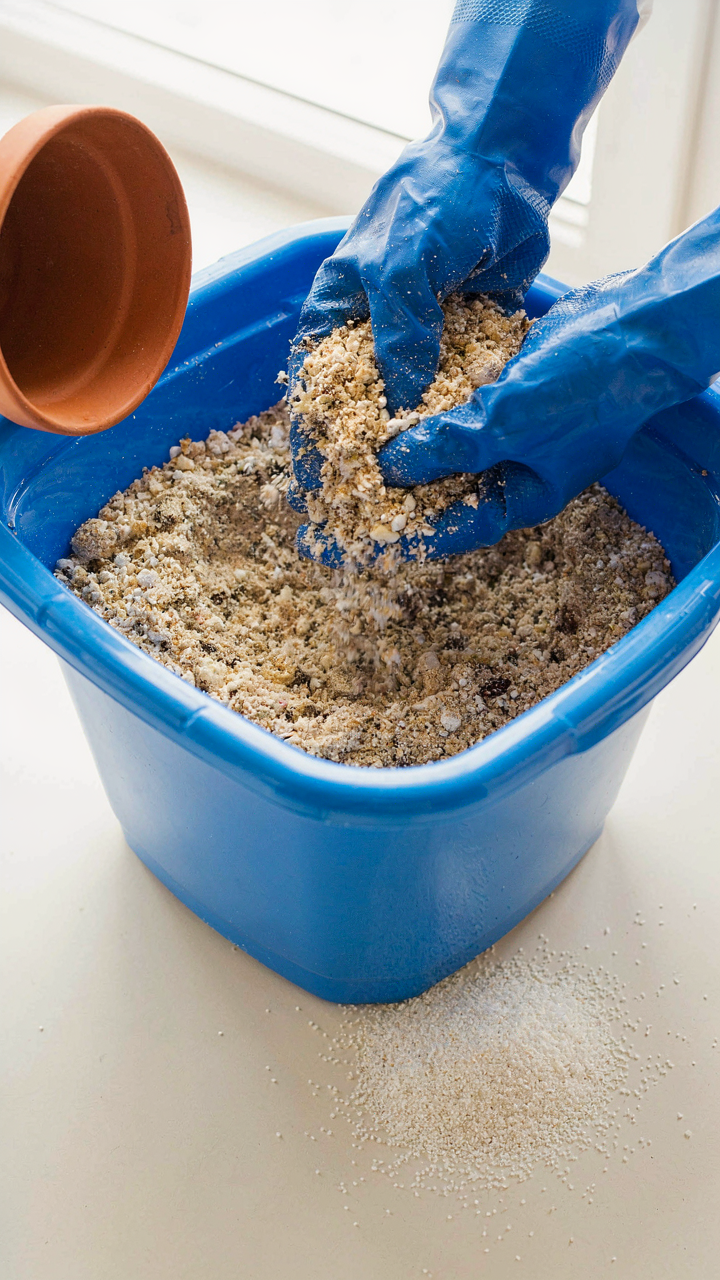
The advice to use regular potting soil is incomplete and sets you up for failure. The real mechanism is water retention capacity paired with drainage rate. You need soil that holds moisture without becoming compacted or waterlogged. Standard potting soil compacts over time and traps water in dead zones where roots suffocate. Add perlite or orchid bark to your base potting soil at a 3 to 1 ratio to create air pockets that stay open under the pressure of water weight.
The second layer is substrate amendment for sustained release. Coconut coir or peat moss increases water-holding capacity without compression, but they need to be mixed, not layered. Fill your box with blended soil, place your wicking material before adding soil, and ensure the wick reaches the reservoir floor. Test your system immediately with water: the soil should feel evenly moist within six hours, not soggy or crumbly.
Drip Vs. Reservoir: The Window Box Drip Irrigation Distinction

When Active Drip Irrigation Outperforms Passive Systems
You want passive systems because they feel simpler and cost less upfront. That’s actually backwards thinking. In hydraulics, active systems (pumped or pressurized) move fluid against gravity or resistance, while passive systems rely on gravity or capillary action alone. Self watering window boxes use passive capillary wicking, but active drip irrigation outperforms it in one scenario: when soil depth exceeds eight inches or plants demand consistent water faster than capillary rise can deliver it.
Passive systems fail at scale because capillary action weakens with distance. Water travels up soil pores through adhesive forces, but loses momentum vertically. A window box deeper than eight inches creates a dead zone at the bottom where moisture stays inconsistent. Active drip systems bypass this entirely by delivering water directly where roots need it, making them mandatory for dense plantings or thick-rooted specimens like small shrubs. Choose drip when your box holds anything larger than trailing petunias.
Integrating Drip Lines For Large Scale Window Boxes
Most advice says run one drip line per box and call it done. That misses the actual problem: uneven water distribution across multiple emitters on a single line. Pressure drops as water travels through tubing, so the first emitter releases more than the last. For large window boxes spanning more than thirty inches, this creates over-watered zones near the line entry and dry zones at the far end.
The fix is compensated drip tubing or a secondary collection loop that cycles water back. Compensated lines maintain pressure throughout their run, ensuring equal flow at every dripper. For window boxes longer than thirty inches, install drippers every six to eight inches and use pressure-regulated emitters rated at 0.5 to 1 gallon per hour. Connect the drip line to a timer on your main water source and run it daily for fifteen to twenty minutes, adjusting based on soil moisture checks at the box’s deepest point.
DIY Window Box Gardening: Building Your Own Optimized System

What You Actually Need To Buy
You want to build one yourself because you think it’ll be cheaper than commercial boxes. It won’t. But you’ll learn how the mechanism actually works, and that knowledge becomes useful when nothing functions right. A DIY self-watering system is a hydraulics problem first, not a gardening problem. You need to control water flow through gravity and capillary action, which requires precise material selection.
- Reservoir Container: Food-grade plastic basin, minimum 4-6 inches deep. Prevents algae and maintains structural integrity through seasonal temperature swings.
- Potting Soil Medium: Standard indoor potting mix, not garden soil. Garden soil compacts when wet and blocks capillary rise, killing your system’s core function.
- Capillary Wick Material: Cotton rope, felt strips, or nylon webbing. These transport water upward against gravity. Synthetic beats natural fibers for consistency and durability.
- Water Level Indicator: Clear plastic tube or simple dowel marked in inches. Lets you monitor reservoir depth without guessing, eliminating overwatering failures.
- Drainage Layer: Perlite or small gravel at the box bottom. Creates air pockets so roots don’t sit in standing water and rot despite the system’s design.
The materials work together as a closed loop. Wick moves water from reservoir into soil. Soil holds moisture without flooding. Indicator shows you when to refill. Most people skip the drainage layer and wonder why their plants die in a “self-watering” system.
Assembly That Actually Functions
Stack materials in this order: reservoir base, drainage layer, capillary wick seated into reservoir, potting soil packed around the wick, then plants. The wick placement matters more than box size. Position it so the bottom half sits submerged in the reservoir while the top half threads through the soil. If the wick doesn’t straddle both zones, capillary action fails and you’ve built a box that holds water, not distributes it.
Fill the reservoir first through the indicator tube, not the top. Top-filling compacts soil and displaces the wick. Let the system sit for 24 hours before planting. Soil needs time to saturate and settle. The wick won’t work if soil remains dry at the root zone. After that window, your only job is monitoring the water level indicator weekly and refilling when it hits the one-inch mark.
Plant Selection: The Overlooked Variable In Self Watering Planter Box Ideas
Match Water Demand To Reservoir Depth
You want the system to work without thinking about it. That’s the real reason you’re reading this. But self-watering boxes don’t care about your preferences—they care about the gap between what the plant demands and what the reservoir can supply before it runs dry.
Think in hydraulic terms: a self-watering system is a closed loop with finite capacity. The reservoir holds X milliliters. The plant transpires Y milliliters per day. Soil wicks Z milliliters into the root zone. Mismatch any variable and the system fails. Most people ignore this entirely and just jam plants into boxes.
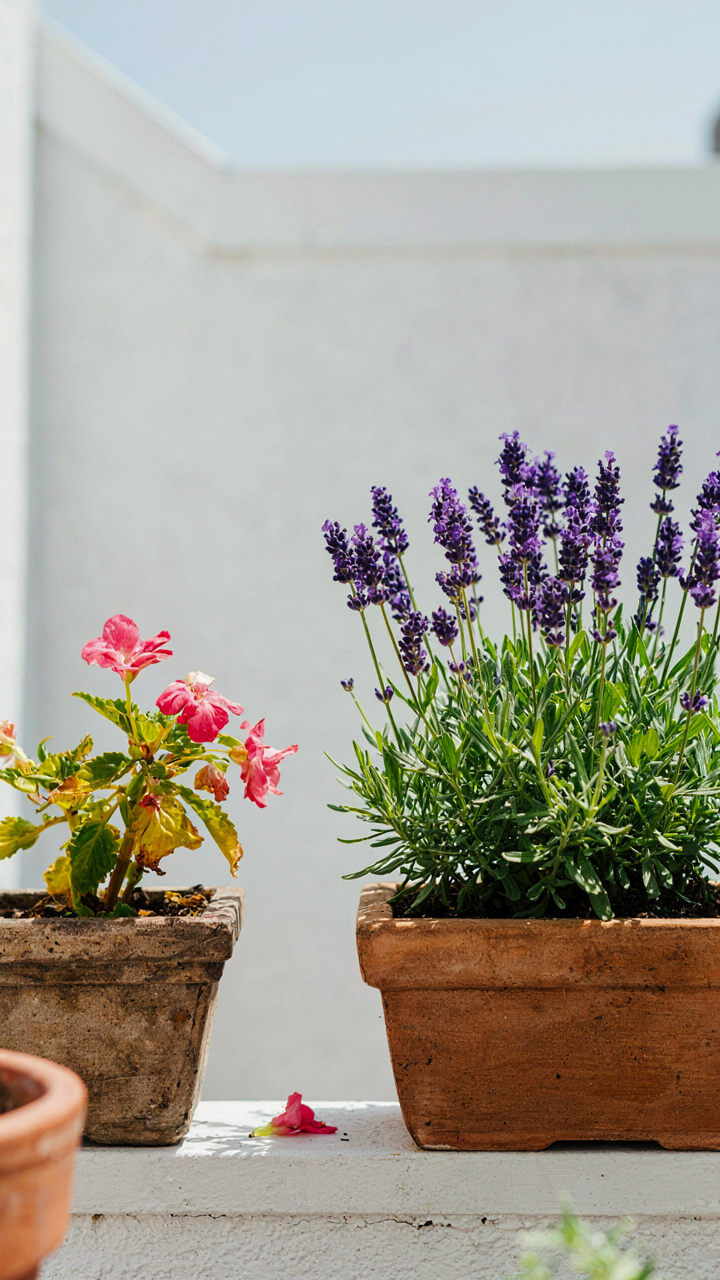
A shallow-rooted annual like impatiens depletes a two-inch reservoir in three to five days during growth season. A deep-rooted perennial like lavender pulls inconsistently and tolerates dry cycles. Standard self-watering boxes hold between one and three liters depending on design. Do the math: if your box holds two liters and your petunias transpire half a liter daily, you get four days of autonomy in hot weather. That’s your real window, not the marketing promise of “worry-free weeks.”
The mechanism works like this: know your plant’s daily water consumption, measure your reservoir volume in milliliters, divide one by the other, and you have your true watering interval. Build your plant selection around that constraint, not around what looks good in the catalog.
Plants That Actually Perform Versus Plants That Decline Slowly
The common advice says “drought-tolerant plants work best in self-watering boxes.” This is incomplete and misleading. Drought-tolerant plants evolved to survive dryness, not to thrive in consistent moisture. Many will rot or develop fungal issues in a self-watering environment where soil stays damp.
Begonias, impatiens, calibrachoa, and trailing verbena actually perform in self-watering systems because they evolved for forest understory or tropical conditions where soil stays moist between rains. Their root systems expect it. Sedums, echeveria, and other succulents will survive but decline—they store water in leaves and stems precisely because their native habitat dries out. Put them in a constantly moist self-watering box and you’re fighting their biology. They don’t die fast. They just never flourish. The difference between survival and thriving is the difference between a system that works and one that wastes your money and time.
Test plant choice by matching growing conditions, not by matching growth habit. A shallow-rooted plant with high water demand wins in self-watering. A deep-rooted plant with low water demand loses. Pick plants that evolved in environments with regular moisture and you eliminate the guesswork entirely.
Window Box Self Watering System Maintenance: The Long Game

Keeping Reservoirs Clean And Functional
You want your window box to work without thought. That’s the real fear here: that neglect will kill the system, waste your money, and prove you can’t keep plants alive. The mechanism is simple biology. Algae grows wherever light hits water. Minerals accumulate because tap water contains dissolved solids that evaporate and crystallize inside the reservoir. Both clog the fill tubes and wicks that deliver water upward to soil.
The fix isn’t complicated but it demands consistency. Empty and rinse the reservoir every two to three weeks during growing season. Use a soft brush to scrub mineral deposits from interior walls and the wick contact points. If algae blooms, a weak bleach solution (one part bleach to ten parts water) kills it fast. Do this before refilling. The goal is preventing buildup, not recovering from it.
Timing Your System For Season Changes
Biology teaches us about dormancy and active growth cycles. Self watering window boxes operate on the same principle: plant demand for water shifts with temperature, daylight, and humidity. Spring and summer mean constant transpiration and soil evaporation. Fall and winter mean both slow dramatically. Running the same system through all four seasons kills roots or starves them.
In spring and summer, check reservoir levels every four to five days. In fall, extend that to seven to ten days. Winter might stretch to two weeks depending on your climate and whether the box sits in direct sun or shade. Drainage holes matter too. Summer heat can waterlog soil if drainage isn’t open. Winter cold can freeze standing water inside the reservoir, cracking it. Clean drainage holes monthly and ensure nothing blocks them. This single protocol prevents ninety percent of failure.
The Economics Of Effort: Calculating Your True ROI On Self Watering
Time As Currency You Cannot Reclaim
You want permission to stop thinking about your plants. That’s the real ask here. Self watering window boxes operate on the same principle as economics calls “resource scarcity”—your attention is finite, and daily watering demands extract a measurable cost. The mechanism is simple: a reservoir system delays water depletion, extending the interval between refills from daily to weekly or longer. You don’t eliminate the task. You compress it into fewer decision points.
Most people frame this as “convenience.” That’s incomplete. The actual advantage sits in batching. You shift from fragmented daily micro-actions to a single planned maintenance window per week. That consolidation frees cognitive load. Your brain stops tracking whether the soil is dry. The box handles it. You only intervene when the reservoir empties, typically every seven to ten days depending on climate, container size, and plant selection.
What Happens When You Reclaim Those Hours
Stop pretending this is about having nicer plants. Self watering systems return discretionary time, and time directed toward income-generating work compounds faster than a thriving windowsill ever will. The opportunity cost calculation is direct: if daily watering takes five minutes and you own four window boxes, that’s thirty-five minutes weekly. Over a year, you recover roughly thirty hours. At any meaningful hourly rate, those hours have economic value you can redirect.
The secondary benefit is less obvious but more durable: eliminated decision fatigue around plant care reduces the mental load that drains your judgment on actual priorities. When a system removes a recurring decision, you conserve the cognitive bandwidth that low-stakes choices consume. Self watering boxes perform this labor in the background. Your attention stays available for what generates results.
DIY Window Box Planting: Beyond Aesthetics, Towards Resilience

Plants That Survive, Not Just Photograph
You want plants that won’t die on you because dead plants expose that you’re not actually consistent. The real mechanism here is osmotic pressure. A self-watering window box holds a water reserve below the soil line, and plants absorb moisture through their roots based on soil moisture levels, not on your schedule. This means you need species with root systems that tolerate both saturation and dry periods without rotting or wilting. Sedums, ornamental grasses, and calibrachoa handle this swing better than fussy annuals. Choose plants bred for container life, not garden beds.
The mistake everyone makes is confusing “low maintenance” with “drought tolerant.” Low maintenance plants still need the right soil structure to work with your box’s watering system. Use a soilless mix with perlite or bark to prevent compaction, which kills the capillary action that feeds water upward to roots. A plant’s survival in a self-watering box depends entirely on whether its root system can find moisture in a soil that stays evenly moist but never waterlogged. Succulents and Mediterranean herbs do this naturally. Test your mix by pressing it: it should feel damp but crumble apart, not clump.
Staggered Demand Zones In One Box
Plants in the same box don’t need the same water. Think of your window box like an agricultural watershed where different crops occupy different elevation zones. Trailing plants at the edges stay drier because they extend beyond the box’s moisture retention. Upright plants in the center sit closer to the water reservoir and stay wetter. The self-watering mechanism creates this gradient automatically, but you need to use it strategically rather than fighting it.
Place high-water plants like begonias and impatiens toward the center where soil stays consistently moist. Move succulents and trailing sedums to the edges where soil dries faster between watering cycles. This staggered approach prevents the common failure mode where you either overwater succulents or underwater demanding plants. The box’s capillary system works in your favor once you stop treating it as a uniform moisture environment and start treating it as zones. Match plant placement to the box’s actual moisture gradient, and your seasonal survival rate climbs dramatically.
Drainage: The Unsung Hero Of All Window Boxes
Why Proper Window Box Drainage Prevents Root Rot
You care about this because dead plants look like a failure you can’t hide. Here’s the mechanism: root rot happens when soil stays saturated and oxygen disappears from the root zone. Roots need air as much as water. When drainage fails, anaerobic bacteria colonize the soil and destroy root tissue faster than you can notice it. Self watering window boxes create a false sense of security because the reservoir keeps soil moist, but without proper drainage, that moisture becomes stagnant water.
Think of drainage like respiration in biology. Just as lungs cycle air through tissue, drainage cycles water through soil and expels excess back out. A self watering box without drainage is a closed system that traps moisture. The soil compacts, water pools at the base, and roots suffocate within days. Even premium potting mix fails under these conditions. The solution isn’t better soil or more careful watering schedules. It’s building drainage that actually works before the self watering mechanism ever activates.
Overflow Mechanisms And Drainage Layer Strategy
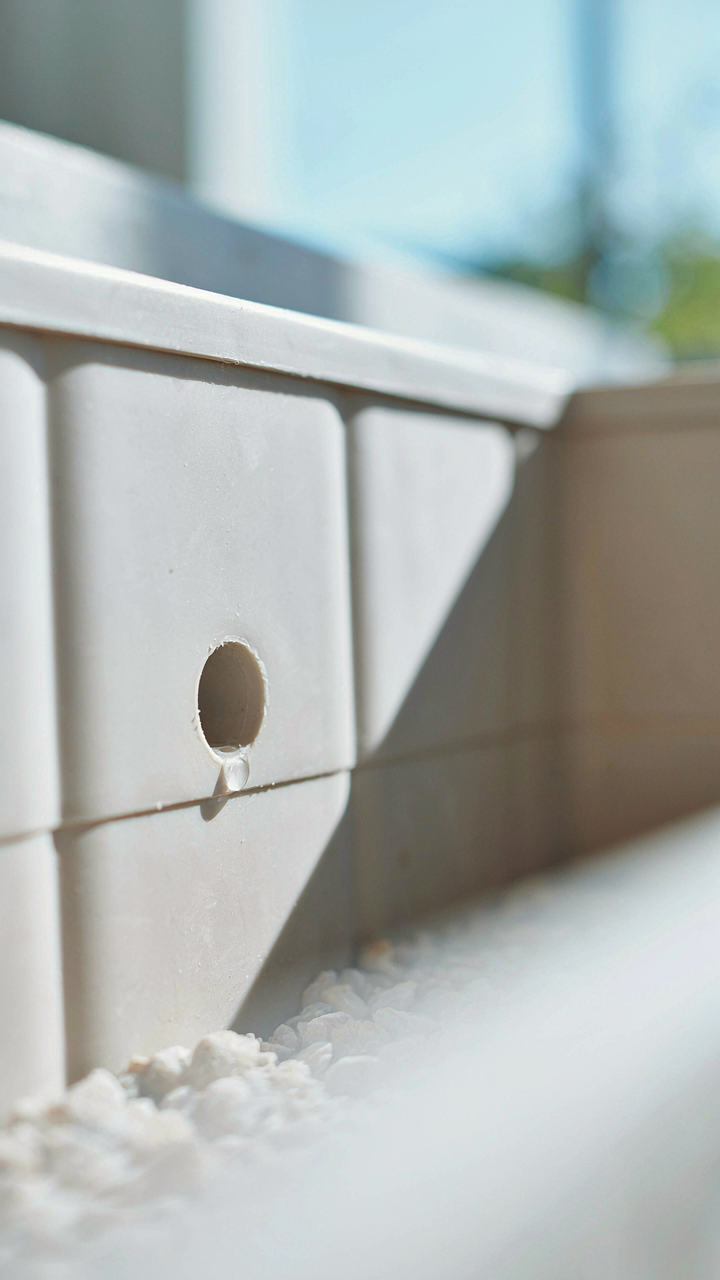
Most people install a single drainage hole and call it done. That’s incomplete. Self watering boxes need two drainage systems working together: an overflow outlet positioned above the water line, and a drainage layer at the box bottom. The overflow prevents water from rising past the root zone even when the reservoir fills completely. Without it, water climbs into the soil column through capillary action and creates the saturated conditions that kill plants.
The drainage layer should sit between the box floor and soil. Use a half inch of gravel or broken terracotta shards. This creates air pockets and prevents soil from compacting directly against the drainage hole. Position your overflow hole on the side wall one inch above where your water line sits at full capacity. Drill or cut this hole before planting. When water reaches that height during irrigation, it flows out instead of rising further. This single structural change stops root rot from becoming inevitable in humid climates or indoor settings where evaporation is minimal.
The Real Obstacle Isn’t Your Window Box, It’s Your Flawed Mental Model Of ‘effortless’ Gardening
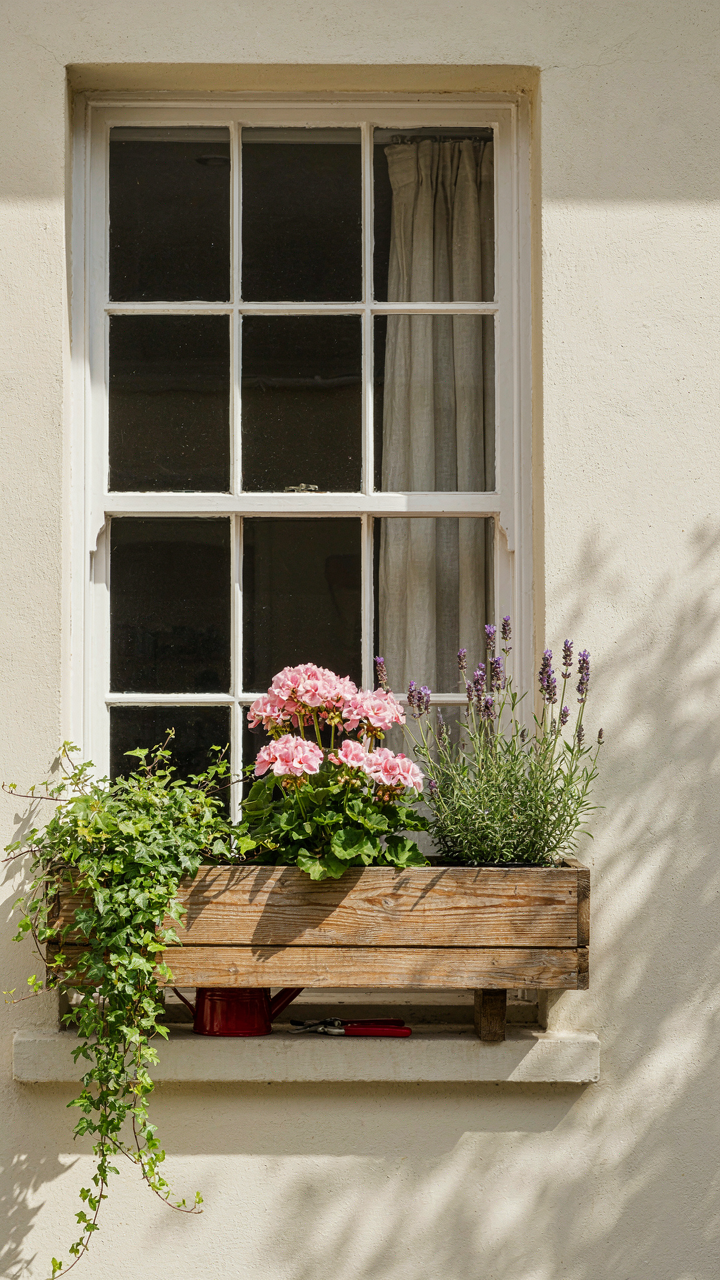
Self watering window boxes don’t fail because the technology sucks. They fail because you expect them to eliminate the one thing that actually matters: your intentionality. You still have to choose the right soil, monitor the water level, and adjust for seasons. The box automates logistics, not decisions. Stop hunting for a system that thinks for you. Pick one today, set a phone reminder for weekly checks, and watch what happens when you actually show up. The paradox isn’t that self watering boxes require work, it’s that pretending they don’t is what kills your garden every single time.



